Poetry Anyone?

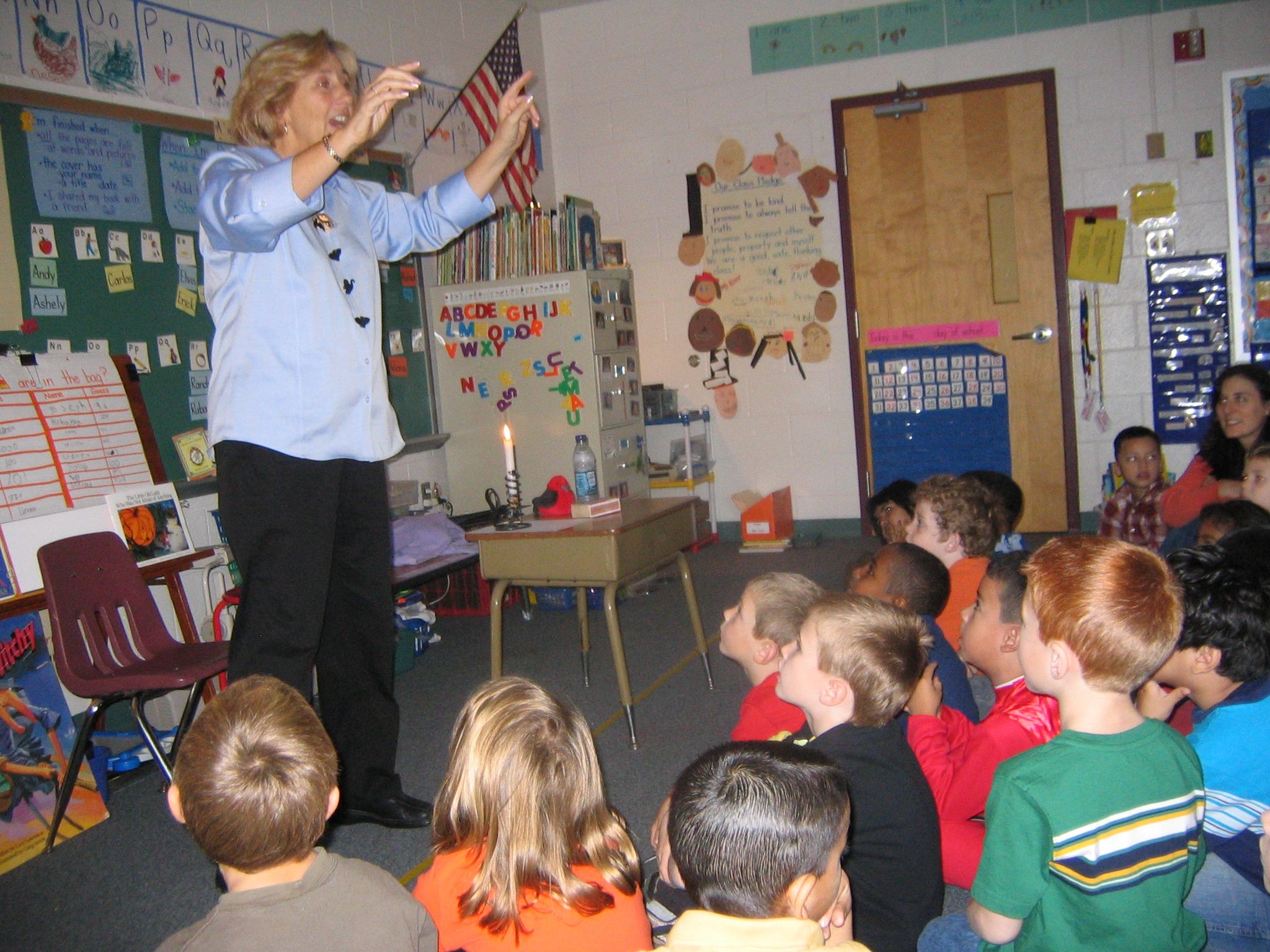
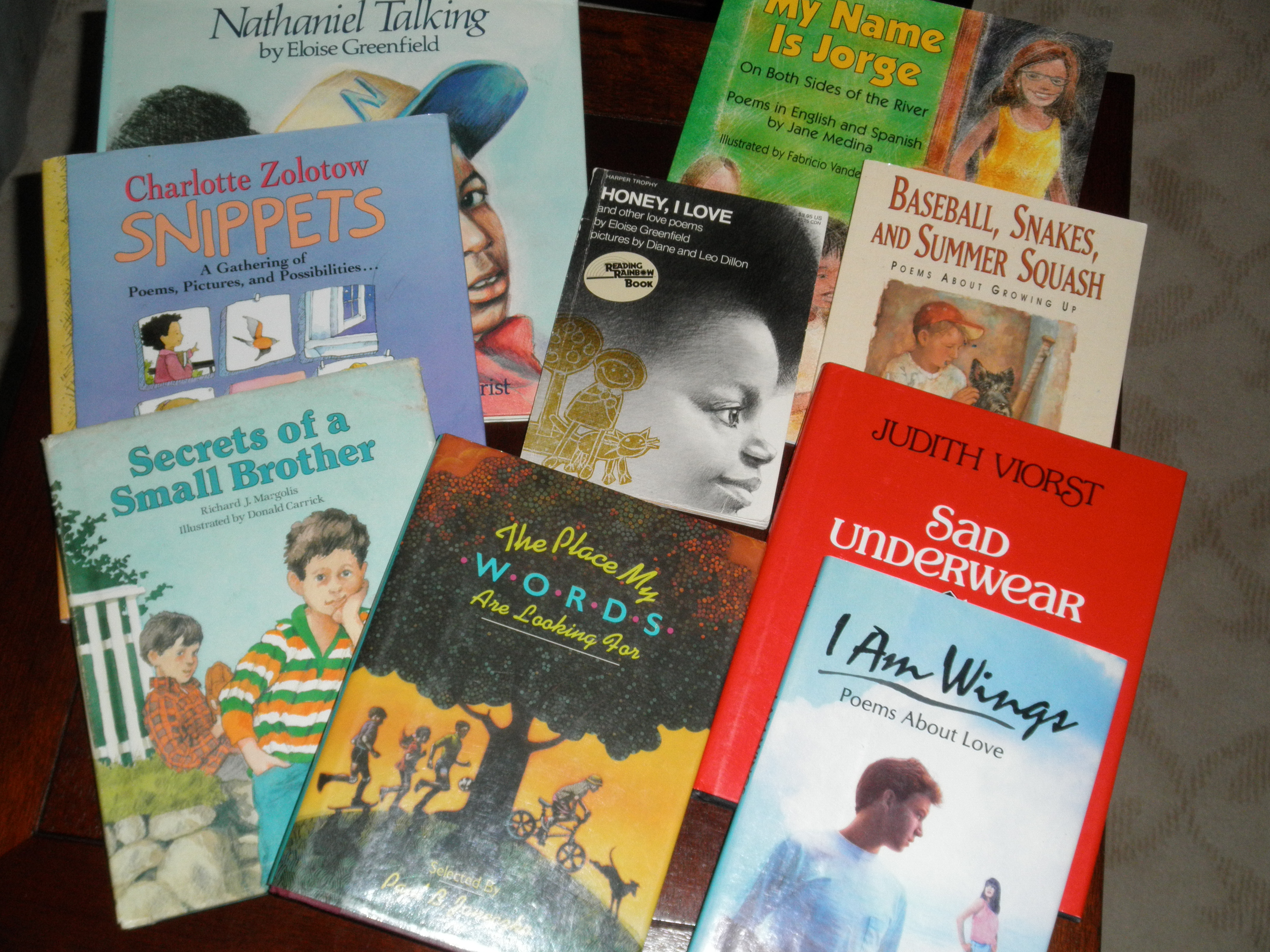
I had a discussion the other afternoon with a teacher who wanted to work on a poetry unit with her students.  I dug out all my notes from workshops I had given on poetry over the years and shared ideas with her.  First off, we talked about gathering up as many poetry books as she could from the school and public library and I lent her many of mine.  We agreed that each day there would be time for the students to read and write poetry. We talked about various topics that could develop into mini-lessons for the opening of reading/writing workshop. I adapt the poems I use in mini-lessons to the different grade levels, but basically my lessons center around these points:

  1. Many poems are meant to be read out loud.  Poets use ‘white space’ to help us decide how they want their poems to sound.
  2. Poems are meant to be enjoyed, shared, talked about, and understood.
  3. We can all write great poems.
  4. When poets write they use certain tools or think in certain ways.
  5. Poets love to play around with language in many ways.
  6. All the kinds of standards surrounding poetry (things that might be asked on standardized tests) can be taught and woven throughout the workshop unit. Examples are: stanzas, rhyme patterns, free verse, alliteration, onomatopoeia, narrator of the poem, metaphors, and so on.
  7. Sometimes we need to talk about poems with others to help us make meaning or create the story behind the poem.

Throughout the whole unit there are two charts that are available for the students to write on.  Each one is blank, except for the heading. The first one is titled, “Things we are discovering about poetry.”  The second says, “Poets we are enjoying and learning about.”

You would be surprised what the students write.  On the first chart, I’ve gotten things like: poems can be about anything; not all poems rhyme; some poets use repeating lines; some poets use nonsense words; sometimes a poem is shaped funny on the page; there are lots of poems about nature/animals/food.

When we start the unit, most students can only name two poets — Shel Silverstein and Jack Prelutsky.  But by the end, they know many poets, such as: Eve Merriam, Eloise Greenfield, Lee Bennett Hopkins, David McCord, Judith Viorst, Langston Hughes, Nikki Grimes, Ralph Fletcher, Richard Margolis, Lilian Moore, Myra Cohn Livingston, J. Patrick Lewis, Georgia Heard, and many more.

Over the next few weeks, I will be taking each of the above points and telling in more detail how I might relate the topic to students and what poems I might share during that mini-lesson.

Here are the additional poetry posts – enjoy!
Reading Poems Out Loud

Poems and Movement

Kids Write Poetry

Thanks, Ralph!

Borrowing from other Poets

Change in Character

In chapter 9 of our book, Catching Readers Before They Fall, we talk about teaching students to infer as they read.  As readers, we want them all to be able to go deeper than the literal level of books, to get beyond the explicit ideas to the implicit ideas in the text.  There are so many things readers use inference for – setting, character’s thoughts or feelings, author’s message, metaphors, subtle humor, and so on.

One of the discussions you can have with your students, whether they are in kindergarten or fifth grade, is about how characters change from the beginning of the story to the end.  Primary students can see how Lilly changes her mind about her baby brother in Julius, The Baby of the World by Kevin Henkes. Throughout most of the story, Lilly is sickened by her parents’ behavior towards this new baby. She tries everything to get rid of this new addition to the family.  But when Lilly’s cousin begins to make fun of the new baby, Lilly has a change of heart and jumps to the little fellow’s defense.

In a fifth grade classroom, I used some of the picture books that the students were familiar with to jumpstart the discussion on “changes in characters.”  Using Julius, Weekend with Wendell, Edward the Emu, and Ish, the students easily identified the change in each main character.  From there, several students shared characters in the chapter books they read.

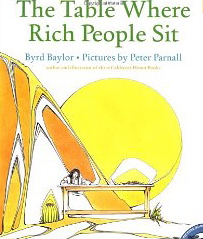
In choosing the read aloud book for that day, I wanted to share one that wasn’t quite as easy to determine the change in the character.  So I chose The Table Where Rich People Sit, by Byrd Baylor.  In this text, the little girl calls a family meeting because she thinks her parents are keeping the family “poor” because they don’t have jobs like the other moms and dads.  The parents eventually ask her to make a list of the different things they value, for example, it’s worth $20,000 to them to always work outdoors and another $5,000 to be able to hear the birds and coyotes as they work.  Slowly the little girl catches on to the parents’ way of thinking and changes her mind about how much things in life are valued.

After the reading, the students jotted down ideas to three questions before coming back to the whole group for a discussion:

1.)  What is the issue about which Mountain Girl calls the family meeting? What is her feeling toward that issue?

2.)  How does the main character change?

3.)  What caused the change?

On other days, with other texts, we brainstormed a list of why characters change:

* The character learned a lesson

* Something/someone changed the character’s point of view

* The character got a taste of his/her own medicine

* The character realizes something/comes to a new understanding

* A critical event took place

What kinds of conversations are you having with your students around this topic?  Any picture books you would like to suggest?

Story Conflicts Continued

Recently I posted a blog about working with upper elementary students on the four types of story conflicts.  As you continue to read other picture books and have discussions about the type of conflict they exhibit, you may come across some of these issues.

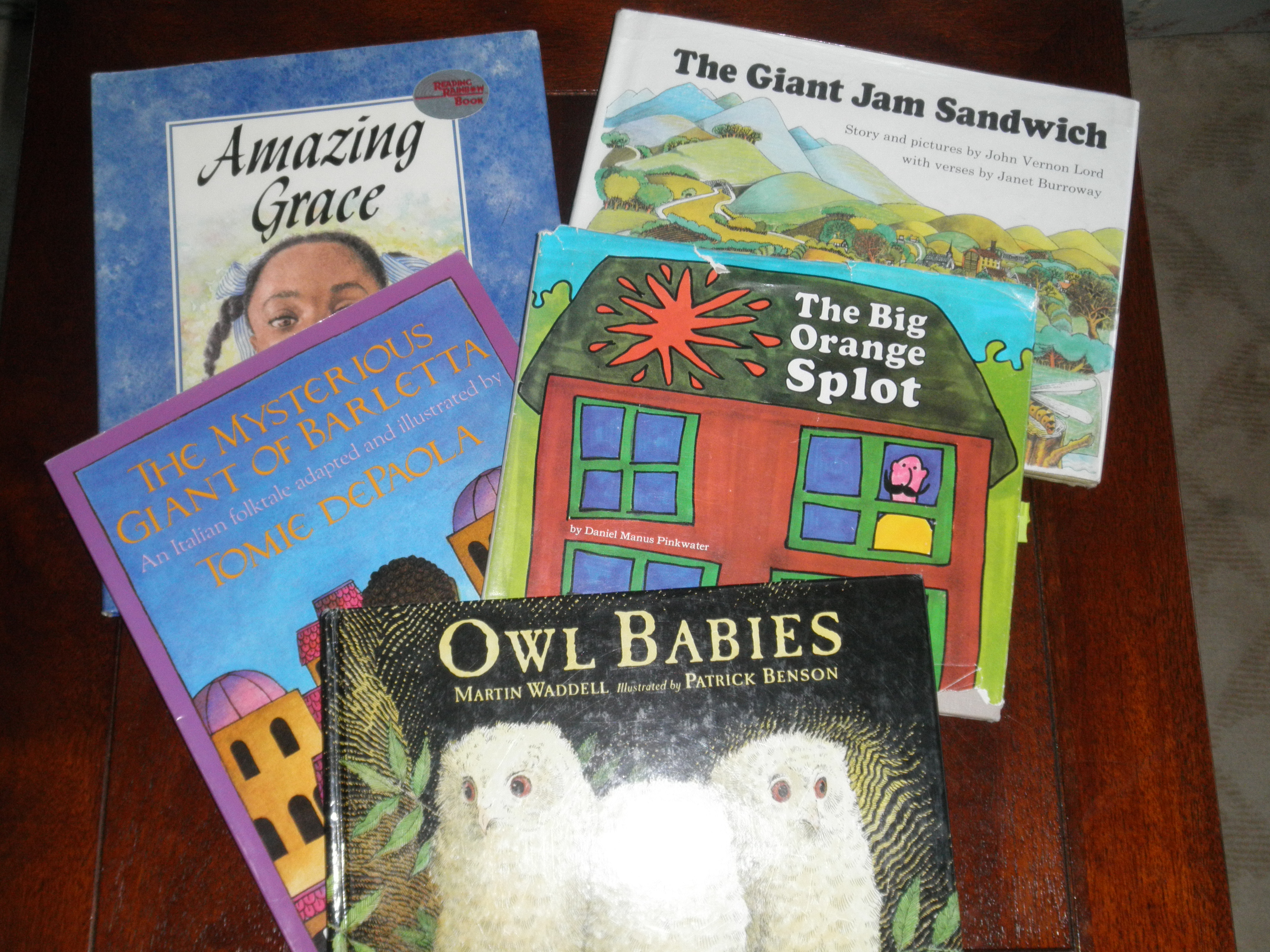
Sometimes students get confused when the ‘person’ is actually many people.  A few students thought that the army in The Mysterious Giant of Barletta represented ‘society.’ They eventually came to realize that ‘person’ can mean one, two, or a whole group of people, or even animal characters.  Later when we discussed ‘person vs. society’ they realized that that type of conflict had more to do with ‘societal issues.’  Many students had read The Giver and we talked about how that future society was set up in a different way than what we are used to today.  At first the main character was excited to receive his job on the day the assignments were given out.  But as the story continued, we get a real sense of a ‘person vs. society’ type of conflict.  In the end, Jonas is ready to separate himself totally from the society.

Oftentimes it’s not really clear which category the book falls in.  But those discussions with the students just take their thinking to a deeper level.  In Amazing Grace the class is going to put on a Peter Pan play.  When Grace wants to play the part of Peter, some class members point out that she can’t be Peter because she is black or because she is a girl.  Some students thought the text was a ‘person vs self’ text because Grace gains more confidence in her dancing ability and convinces her classmates that she is indeed the best person to play the role. But others felt it was Grace against those other classmates and therefore it was ‘person vs. person.’

And what about The Big Orange Splot?  Is that a conflict of one man against society because the community in which he lives believes that all houses should look exactly the same?  Or is it a person vs person conflict of the main character against all his neighbors?

We found the ‘person vs self’ type of conflict to be the hardest to find examples of.  We first saw Owl Babies as this type of conflict.  The baby owls try to get over their fear by telling each other reasons why the mom has disappeared; then they gather together all on one branch to protect each other.  Some argued that it was more of a person vs nature story because the owls are feeling scared because of many of the things in the dark woods.

In the book Suddenly, Preston is constantly almost being attacked by the Wolf.  It seems obvious that it’s the pig vs the wolf.  But is it really a person vs. person conflict if Preston, the pig, never actually realizes that the Wolf is about to attack him? He doesn’t escape his conflict by his own strength or cleverness; it’s always just a coincidence.

There were many books that the students examined during independent reading time —Jumanji, Stega Nona, Big Anthony and the Magic Ring, Sylvester and the Magic Pebble, Caleb and Kate – to name a few.  Students will notice that the main character in each of these books has a problem; he is in conflict with something.  But most of these books made us wonder if there shouldn’t be a fifth story conflict of “person vs magic.” And to that I say, “Why not?”

Four Types of Story Conflicts

One of the standards listed in our district for fifth graders is to learn about the four types of story conflicts.  Remember them? Person vs. person; person vs. nature; person vs. self; and person vs. society. I didn’t learn about them until junior year in High School when we discussed Huck Finn, Moby Dick, and The Scarlet Letter.  That difference, in when we teach certain literary elements, makes me wonder if we aren’t pushing curriculum down too much too fast, but I’ll save that argument for another day.  Because kids may someday get “tested” on these conflicts, then teach them we must.

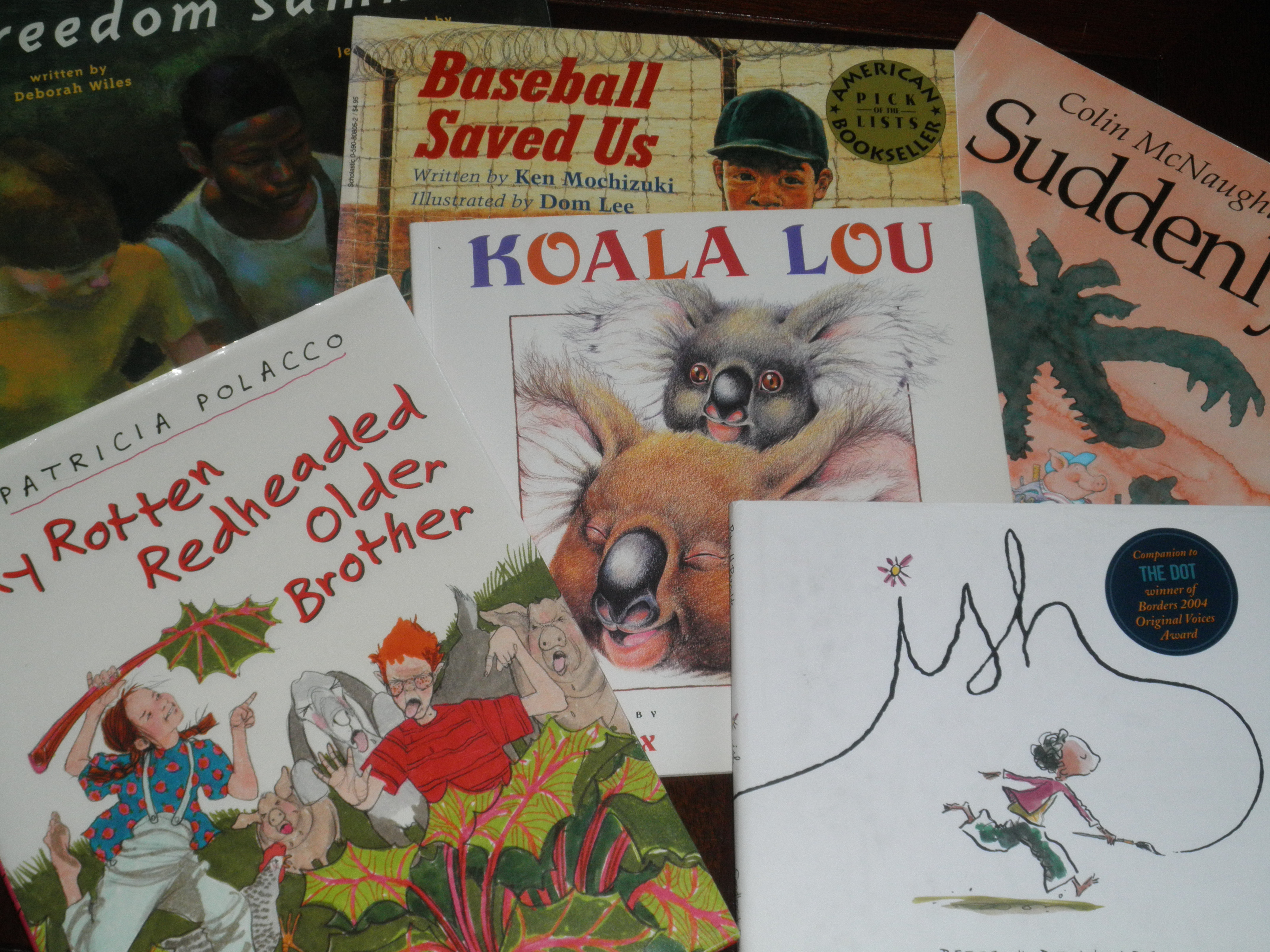
I like to start out just chatting with the students about some books that several kids in the class have read or ones that have been read aloud to the whole group in previous years.  They easily realize that Harry Potter vs. Voldermort and the Narnia kids vs. the Ice Queen fall into the first category.   Many students have heard about Number the Stars and realize that it falls into the last category because of the people who fought against the Nazi society.  Any story of survival against the forces of nature, like Hatchet or My Side of the Mountain, is identified as a person vs. nature conflict. Then we discuss several picture books that have been read in the last few weeks and the kids decide that Ish is about the boy gaining confidence with his own artistic abilities, thus a person vs self text.

Over the next few weeks we read and discuss picture books in relation to these conflicts.  Below are some ideas you may wish to use.

Person vs. Person:

Dogzilla (Dogzilla vs. the mice army of Mousopolis)

My Rotten Red-Headed Older Brother (a Polacco favorite)

The Three Wolves and the Big Bad Pig (a spoof on the 3 Pigs)

The Mysterious Giant of Barletta (giant vs. advancing army)

Suddenly (Preston the pig vs the menacing wolf)

Person vs. Self:

Koala Lou (realizes his mom loves him no matter what)

Owl Babies (conquer their fear of being left without Mom)

Edward the Emu (any story like this works – where the character is not comfortable being who he is and wants to be something else.)

Person vs. Nature:

Brave Irene (fights the blizzard in order to deliver the dress)

Ghost Eye Tree (the little boy fears the spooky tree)

Person vs. Society:      Holocaust books work well here (Let the Celebrations Begin, the picture book version of the Diary of Anne Frank,  The Lily Cupboard.)

Books about racism towards African Americans: Teammates; Freedom Summer; Freedom School, Yes!

Books about the Japanese Internment camps during WWII: The Bracelet, Baseball Saved Us, The Lucky Baseball, Journey Home

I suppose even the issue of homelessness would be considered a societal issue: Fly Away Home, Lady in the Box.

I’m going to do a part II of this post in a day or two to talk about some questions that arise in discussions with kids around these four story conflicts.  Please comment or list some other titles that come to mind that you have used.

January 2nd – What Are Teachers Doing?

People across the nation were so glad when January 1st fell on a weekend because we would all get the extra day, January 2nd, to regroup and relax after a busy season.  But on my walk this morning I stopped in a breakfast cafe to use the facilities and there was Kassia, a kindergarten teacher friend.  She had her computer propped up in front of her, the writing professional book Already Ready tagged and marked up with stickies, and a pile of picture books on the table.  She told me about Hero Cat by Eileen Spinelli that she planned to use this week to talk about how illustrators use colors to match the tone and mood of the story.

As I continued my fast walk, I thought about Katie (another K teacher) who would be driving back from Florida today with Joseph.  I can guarantee you that besides the kayak on the roof and the bikes on the back of the car, there is also a backpack filled with picture books and a few professional books. I thought Katie was crazy not driving back til the last day of vacation, but then I remembered that she is my tech-savvy, paperless friend. She carries everything she needs with her — iPhone, iPad, and computer. I know she’ll be planning lessons for hours while Joseph drives.

I thought maybe it was just kinder teachers, so I made a few phone calls.  Sure enough, I got the same story, no matter what grade they taught.  Teachers were using the extra day to plan, reflect, and organize.

“I have an idea for….”

“I want to try out a different arrangement for my guided reading schedule…”

“I’m thinking about how I will need to revisit a few routines and anchor charts so that….”

“I’m going through some writing samples I brought home to see where to head with my writing mini-lessons…”

And what about me? Well, with all the company from the week finally gone by six o’clock last night, my husband and I went out to a coffee shop for breakfast.  He read his newspaper and I read two chapters of a literacy professional book.  The rest of my day will include: going through my poetry stuff so I’ll be prepared to meet with a teacher who requested time to chat about a poetry unit she’s starting; emailing the teacher whose class I’m volunteering in this Thursday to make sure my lesson matches seamlessly with what she is working on; and thinking through a few lessons I did just before the holidays to see which ones might turn into blog posts that might help other elementary teachers.  Wait a minute!  I’m supposed to be semi-retired!  I guess, once a teacher always a teacher.

Don’t take my word for it.  Check it out yourself and contact a few friends today by phone, text, or email.  See if it’s true.  Teachers are busy working today.  Hats off to them!  And the interesting thing is that they are not complaining.  They may make a few jokes about “yuck, back to the real world tomorrow,” but there is excitement in their voices.  They are invigorated by the New Year – the chance to try a new idea, refine some old ones, organize or schedule in a different way, rethink how to support that group of strugglers, and so on. Some people may argue with me and say that it’s just the people I know who sound like “workaholics” or “type A personalities.”  But, if that’s the case, then all I can say is, “How lucky am I to have such a terrific group of friends who are whole-heartedly dedicated to the children they teach!”

Best of luck to all teachers as they start the New Year!

Time to Catch Up

If you are like Katie and I you try to read some favorite blogs daily (for Katie) or a few times a week (for Pat).  But things always come up and you get behind.  Sound familiar?  So Katie and I have decided to take a break from writing blogs (not for long, just during the winter break) and instead catch up on reading past posts of some of our favorite sites.  If you are interested in catching up also, we’d like to suggest a few great posts that we’ve come across:

“In a teaching world filled with data, I think the best thing about the first days of school is getting to know kids not by numbers, but by living beside them.” This wonderful quote by Cathy Mere is from a blog post last fall. I want to revisit this post as we start our first days of 2012, as well as her many other thoughtful posts.

I was lucky to meet Ruth and Stacey of Two Writing Teachers at NCTE this year. What inspiring, dedicated teachers and writers they are! I love this post on blogging – and writing habits.

Choice Literacy – We get a weekly newsletter from them (you can too, sign up for free on their site) and we never have enough time to read all the interesting articles that are posted each week. We plan on taking some time to search for topics we’re interested in and read the articles as well as view the many videos on the site.

Podcasts from Language Arts NCTE – these are free podcasts available on the NCTE website.

Mandy’s posts at Enjoy and Embrace Learning share new must-read titles, projects she is doing with her kids and reflect her love of teaching. I look forward to catching up on these posts!

Math Exchanges – this blog from our colleague Kassia Omohundro Wedekind is a thoughtful sharing of math and literacy ideas. Her post on Math and Storytelling from the NAEYC conference is a good one to revisit.

And, of course, we wish you a happy and safe holiday season.  Enjoy your family and friends at this special time. We’ll be back writing right after the first of the year. Please feel free to add a comment about a post or article that you really enjoyed this school year that you wouldn’t want others to miss!

Enjoy your time off to reflect, renew, rejuvenate and relax.

Story Structures and Rising Action

We’ve been working on story structures with the upper elementary students recently.  Of course, there are many helpful graphics to use on this topic.  We’ve been using one story structure graphic that begins with students identifying the rising action, moving to the climax/turning point, and then the falling action and solution.  We modeled a few and did some together as shared demonstrations. Before beginning this work, the classroom teacher and I thought that the hardest part would be identifying the climax.  But what we found was that the students had the most problems with the rising action.  They had a hard time picking out what would be the important information and what would be a detail.  So we planned a lesson on that concept.

I read aloud the Tomie DePaola story “The Mysterious Giant of Barletta.”  The students enjoyed the story of the giant statue that comes alive to cleverly save a town from destruction by an advancing army.  The students were able to discuss the problem and solution quite easily, but before they filled out the graphic we wanted to scaffold their thinking about the rising action.  We listed 15 statements on the Smartboard in random order:

Every night Zia Concetta looks out her window at the statue.

There is a mysterious statue in the middle of town that no one knows how it got there.

The old woman and the mysterious giant hatch a plan.

Sometimes the boys sit at the giant’s feet and watch girls go by.

The people of Barletta love their statue in the middle of town.

The statue came alive and got down off his pedestal.

The people heard that an army was destroying all the towns along the coast.

The town had no generals, captains, or soldiers.

The giant statue loved when all was peaceful and calm and birds came and sat on him.

Zia Concetta asked the Mysterious Giant for help.

The people of the town would ask for good luck from the statue as they made their way to market.

Screams and shouts echoed off the buildings.

The people were scared.

Everyone was getting ready to run from Barletta.

Zia Concetta told the townspeople to hide, bring a large onion, and don’t ask questions.

Together we discussed and starred the important ones and crossed out ones we agreed were small details.  We encouraged the students to combine some if they thought it appropriate and to rearrange the order of the statements to fit the rising action’s correct sequence.  (This was amazingly easy to do with the Smartboard as lines of text can be manipulated so quickly – every classroom needs one!)

When the students went off to fill in their graphic, they were able to use the discussion and the shared activity to support their thinking.  We’ll be looking for which students might need more “do it together” time in small group to further support their understanding of how to pick out important parts.


Rereading

Have you ever reread a favorite book as an adult? And have you shared that idea with your students?  Recently a friend forwarded me an article by David Bowman from the NY Times, called “Read it Again, Sam.”  Bowman wrote about several famous authors and the books they choose to read over and over.  Stephen King has reread Lord of the Flies 8-9 times and All the Kings’ Men 3-4 times. The novelist and critic Dale Peck attempts to read The Waves annually because it gives him a spiritual feeling. He said. “I always feel like a better person after I put it down.” My husband, an avid reader of science fiction and fantasy books, says he rereads the Lord of the Rings trilogy and the Dune series every five years. I, too, have reread my favorites on various occasions.  Often in my book group I’ll suggest a book in September that I’ve already read and the club puts it on the schedule for 6 months later.  I land up rereading (March, Life of Pi, Room, Hunger Games) because I want it fresh in my mind for the discussion.  With every second reading I not only enjoy the book even more but deepen my understandings as well.

“For many readers the habit started in childhood,” writes Bowman. It’s true that teachers always encourage K-2 students to put books in the bookboxes and reread them.  For the most part, we are hoping that by rereading books the students’ problem solving of words will become quicker, their fluency will increase, and the reading process system will strengthen.  The K-2 students often love when we read favorite pictures books during read aloud time.  They also enjoy several readings of favorite Big Books.

But I wonder if we are chatting enough about this idea with kids in our upper elementary classrooms, 3-6 grades. Think about the reasons why adults might reread a favorite book:

  • To return to the beautiful writing
  • Because we love the characters
  • To get back some of the feelings we were left with after the first reading
  • Because we enjoyed the storyline
  • To deepen our understandings and reflect more on the ideas or issues
  • Because we realize it will enrich the discussion with others.

Wouldn’t they be the same reasons for kids?

When The Giver first came out, I remember reading it several times as I facilitated discussions with various groups of students over a three year period. I still loved that book the fifth time through!  What if the students had read it two or three times?  Would our discussions have been even richer?

Have you talked to your students about the value of rereading?

Feeling strategies at work

I started thinking the other day about how much has been written lately about getting kids to use their strategies as they read.  We want them to use these strategies to make sense of text and to help them get unstuck when they get stuck.  In one 5th grade class, the teacher and I have been talking about, modeling, and doing shared demonstrations with the kids since September on all kinds of useful strategies, but I decided to come at it from a different angle.  I wanted them to feel how natural and automatic their strategies came into play when the text was something that was extremely easy.  So the day before Thanksgiving I did some storytelling for the class (now don’t stop reading because you are NOT a storyteller; you can do this same lesson with a read aloud book.)

I storytold the folktale “Tinderbox” first.  After the kids did a quick turn and talk about what they liked about the story, we looked at a chart with pre-written words — visualizing, predicting, making connections, questioning, inferring (and under inferring it said, “characters, underlying ideas, word meanings.”)  As we talked about each one, the kids had so much to say. I was amazed!  There was no “pulling teeth” to keep this discussion going. Here are a few snippets from that conversation:

Pat: When I was telling this tale I had no book or props in front of me.  Did you get any pictures in your mind?  What mental image was clear to you during the telling?

The 5th graders described in great detail the chamber with three doors, the enormous dogs sitting on top of each sea chest, the witch sitting by the large oak tree, and many more scenes.

As we discussed predicting, almost every student said they predicted that the third sea chest would contain gold.  Following that, other kids shared ideas of when their predictions didn’t come true.  One student said, “I thought sure the witch was going to kill the soldier when he wouldn’t give up the tinderbox, but I was surprised that she was the one who burst into 1,000 pieces.”  Another said, “when you said the princess was locked in a tower, I thought this story was going to turn into Rapunzel, but it didn’t.”  It was easy to lead the discussion into the idea that sometimes we need to rearrange our predictions as we get more information.  The discussion continued with connections to other books and questions or wonderings the students had during and after the story.

My favorite part of the discussion came when the kids realized how easy it was to infer word meanings when they were totally engaged in the story.  I asked them to figure out what it meant when I told about the witch having a hard time pulling up the soldier with the rope “because he was so laden down with all that gold.”  Though that’s certainly not a word they use, they quickly figured out what it meant.  Several students were also able to come up with a word that described the main character of the soldier (another way to infer) — greedy, clever, self-centered, careless with money — and gave evidence from the story to back up their idea.

Pat:  We also said that inferring had a lot to do with reading deeply and trying to “see more.”  Did you get any idea about how women were treated back in these medieval times?

Serena: Not so great.  That princess didn’t get to decide who she wanted to marry.  Her parents wanted to decide for her.

Chris: Yeah, and the soldier wasn’t very respectful of the witch.  I mean, she was just an old lady, but because she was ugly, he called her a witch.  And she made him rich, but he still wouldn’t give her back her tinderbox.

I ended the discussion (which could have gone on and on!) with reminding the kids that what they were doing was feeling their strategies at work.  I said, “You see, you own these strategies.  They are yours.  It’s like you have powers – thinking powers – that can help you understand what you are reading. It was so easy for you to do it with a story that’s not hard to comprehend, but they will work just as well when you are reading on your own in your chapter books.”

I felt this lesson had a strong impact on the struggling readers in the group, and yet everyone in the class enjoyed the telling of “Tinderbox” and later “Tailypo.” How visible are you making those comprehension strategies for kids?  Are you giving kids time to really feel how the strategies can work for them?

Inferring themes and more

The classroom teacher of the 5th grade class I work in suggested I do the interactive read aloud the other day — my favorite thing!  Since this is a Literacy Collaborative school, reading workshop is opened with a ‘readers’ statement,’ (a short statement about something readers do that helps anchor our instruction and focus our students) so I began with “Readers often read deeply and try to ‘see more’ than just the surface storyline.”

Since the start of school we have been talking about inferring, reading between the lines, figuring out the underlying message of a picture book if there is one. The class had read Ish and Crow Boy, along with a few others, and had some great discussions about the message or theme. (By the way, the teacher and I don’t worry much about whether students can define the words ‘infer’ or ‘theme’.  We feel it’s more important that they actually DO infer, read deeply, support their opinion about a theme they’ve discovered, comprehend well and so on.)

We’re finding that the students are not familiar with a lot of themes in the literature they read (after all they are only 10 and 11 years old), so we’ve been trying to support them by guiding their thinking as we discuss texts together.  They don’t realize as easily as we do that themes can be things like: courage, honesty, standing up for what you believe in, fighting against peer pressure, survival, the power of friendship, believing that everyone has strengths and weaknesses, and so on. The more experiences we give them with interactive read alouds, allowing time to negotiate the deeper meanings of texts together, the greater the chance that they will be able to do this on their own.  Basically, it’s just another way of scaffolding their thinking processes.

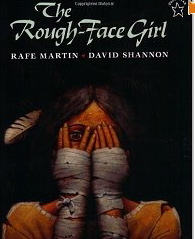
I wanted to begin with an easy theme to spot, so I told the students that a very popular theme in books is the idea of ‘good vs. evil.’ Some students quickly suggested books like the Harry Potter series and Lightning Thief.  From there we talked about Fairy Tales and how the characters in them are often so clearly all good or all bad.  As we wondered why ‘good vs. evil’ is such a popular theme and has been around for centuries, I shared with them what I learned from reading the note in the front cover of Rough Face Girl.  The note suggests that humans have always craved justice.  We like to see good get rewarded and evil punished.

After a fun read aloud (I love doing the voices of the characters in different ways) the students talked with partners about the evidence supporting the theme of ‘good vs evil’ as well as ideas comparing this book to the Cinderella tale.  They were interested to learn that there are 1500 versions of Cinderella.  Next week I’ll read Mufaro’s Beautiful Daughters (another Cinderella tale from Africa) and our conversation will continue.

Here are a few questions for you to ponder: What picture book do you enjoy reading to kids that has some sort of theme or underlying message? How do you support students in learning about themes? What sort of lessons are you doing in primary grades related to ‘reading deeply’? We welcome your comments.

Also, Katie and I talk more about inferring (it’s not just about identifying themes) in Chapter 9 of Catching Readers Before They Fall. We also did a video webcast  for the Reading Recovery website. You can view our presentation slides and link to the video webcast here.