It’s Their Day, Too

2014-12-05 12.41.58I recently read a blog post written by a mother, sharing how frustrating some days can be. I related to this post not as a mother, but as a teacher. It’s easy to get caught up in things that can suck the energy out of our teaching – the trainings that often don’t directly relate to the work we do with our students, the new mandates and requirements that are handed out, the lack of planning time, the lack of support from our administration, colleagues, (or even our nation), the slow response of systems that are supposedly in place to help our kids, the constant addition of things we must do, the lack of time to do these things, the endless assessments, the constant raising of the bar, the negative perception of how we do our jobs and how we all just need to work harder/better/faster. It can be exhausting.

2014-12-05 14.36.46When I find myself getting sucked into this frustration, I have to stop and get grounded again. It’s not all about my day and my huge to-do list and my deadlines, benchmarks and expectations. It’s about the kids. It’s about being present and in the moment. It’s about listening.

Our children come to us each day to learn, to grow, to have fun. To laugh, to explore, to be in awe of something. To discover things for the first time, to have that “a-ha” moment, to change perspectives, to open their eyes to a new way of thinking, to find a passion. It’s their day, too.
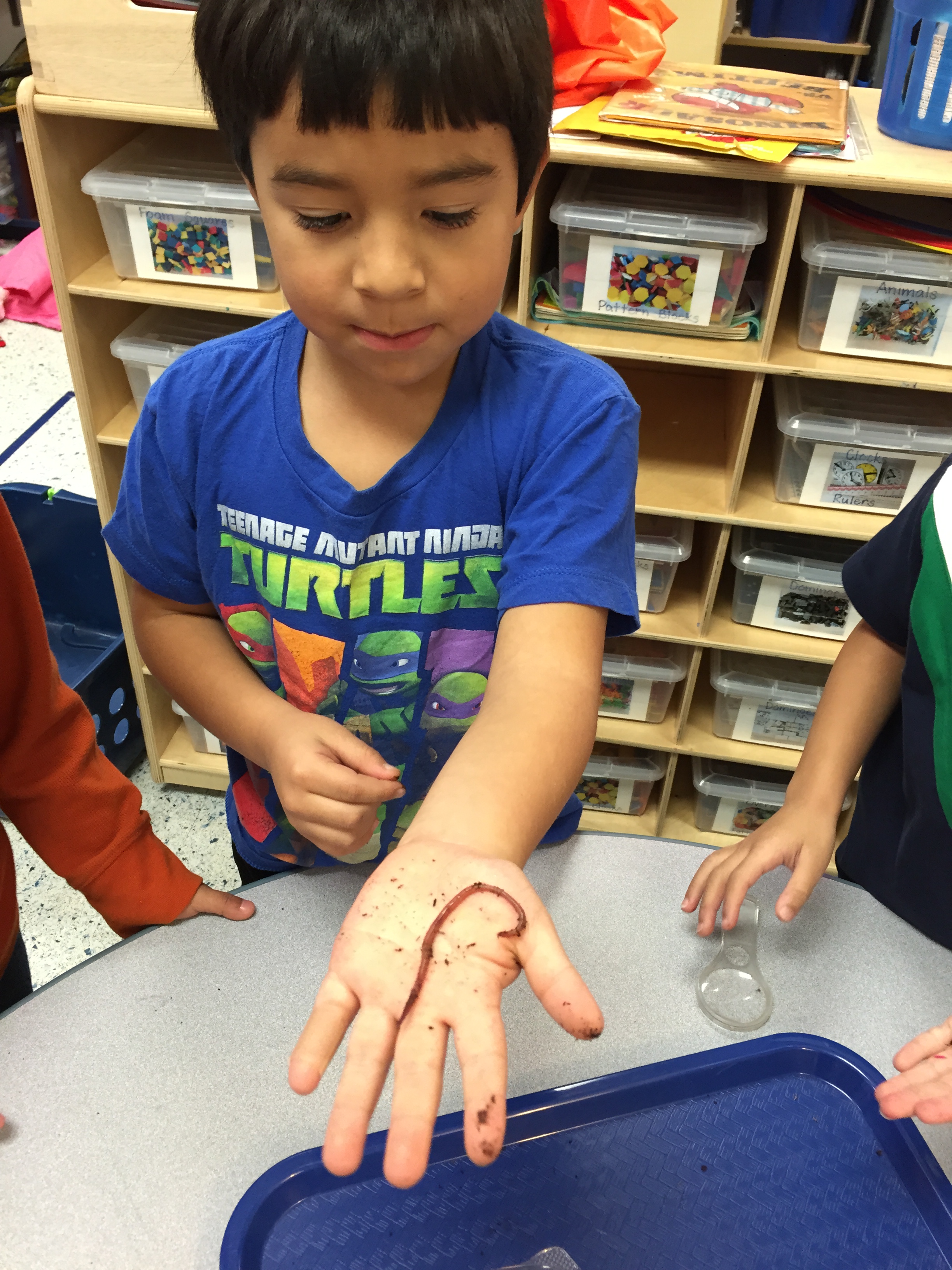
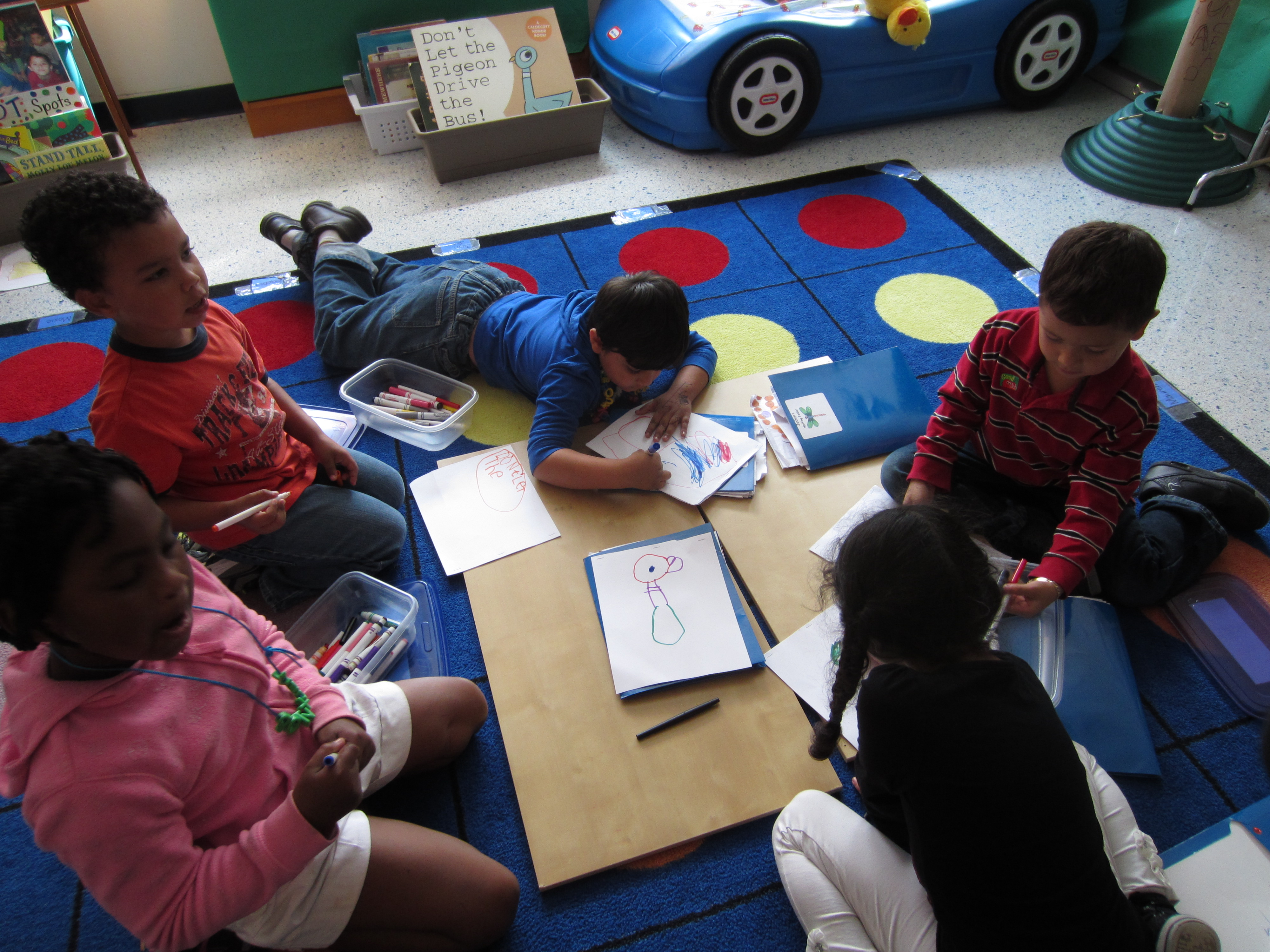
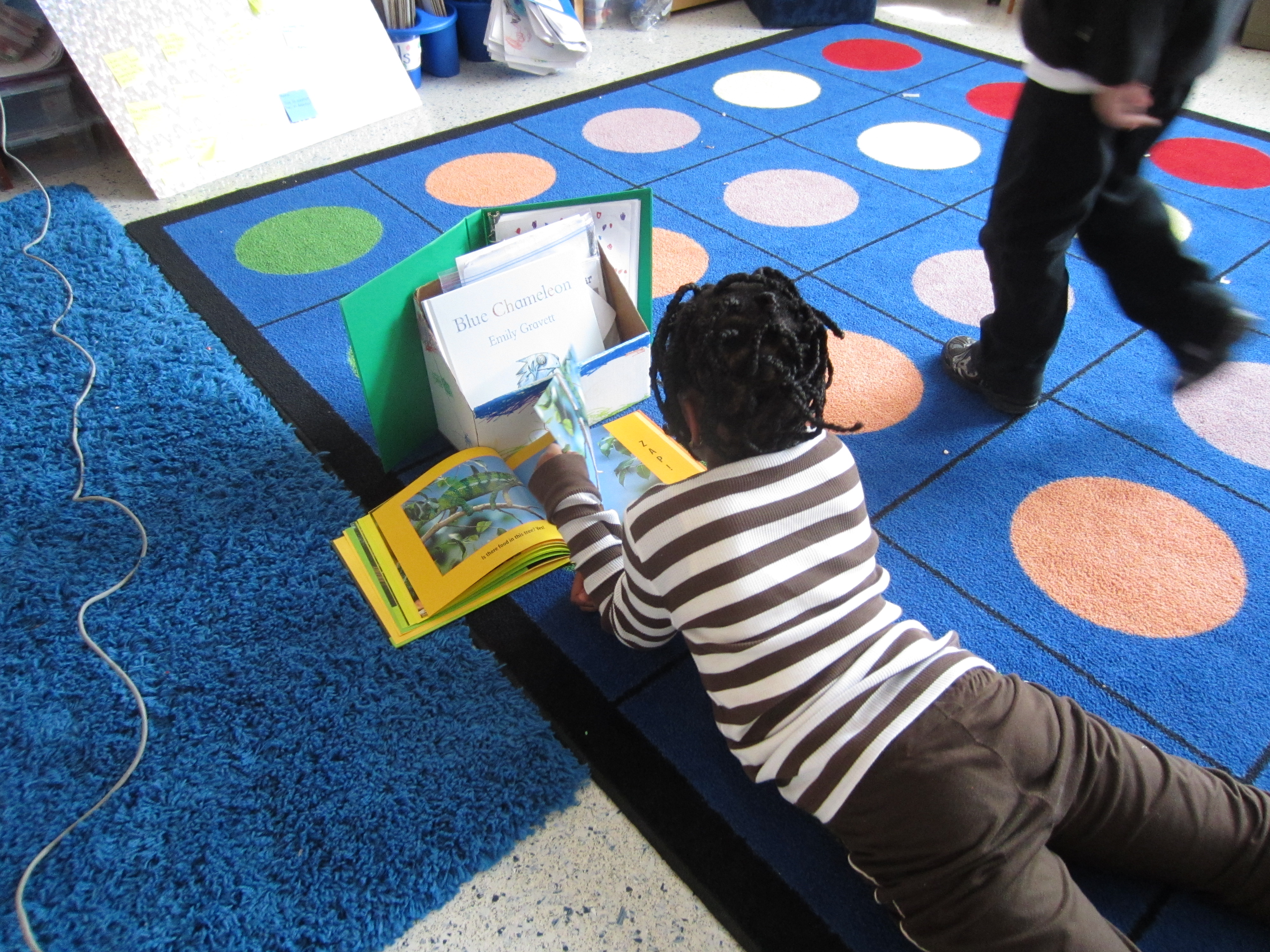
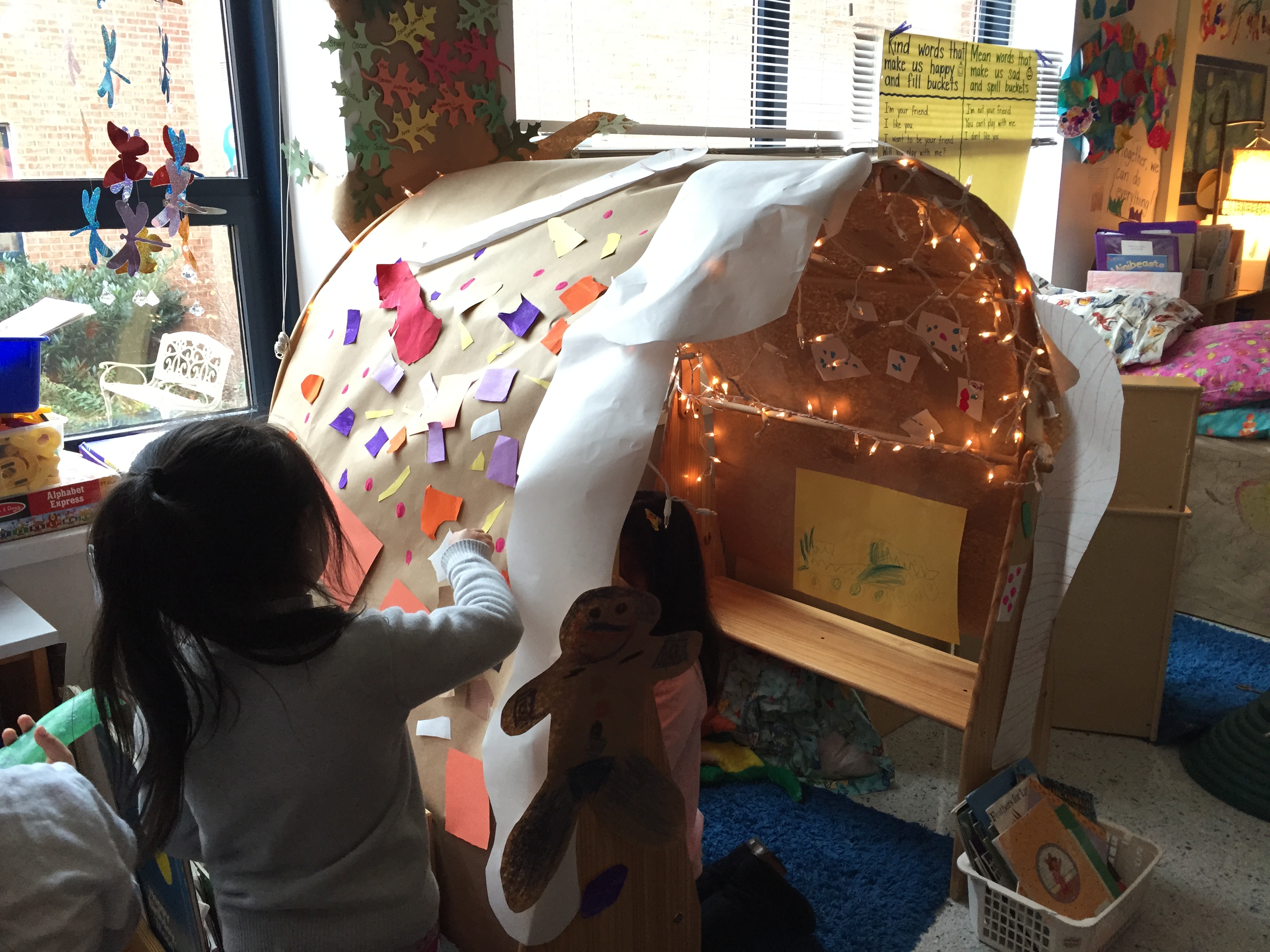
2014-12-05 14.36.50Some of my best days of teaching look nothing like what’s on the lesson plan. They come from listening to my kids, following their lead, and remembering why I am a teacher. Some days the lesson plans and assessments need to be pushed aside and I need to sit down with my kids while they explore worms in a nature box. I need to be there to help them find a worm book in the class library and listen as they wonder and investigate the worms crawling on their hands. I need to laugh with them, wonder with them and encourage them.  I need to run to the art room for paper to cover our play stand because they decided a gingerbread house needs to be built today. Not next week, but NOW. Because NOW is where five year olds live. I need to stand back as they gather all the gingerbread men books we’ve read to decide what characters they should make to put inside the gingerbread house. I need to listen and be responsive to what they need.

2014-12-05 12.41.51Now. In this moment.

Because it’s their day, too.

On mentors

MentoringHands-0A mentor is defined as someone who guides another to greater success. I’m mentoring a new-to-kindergarten teacher this year, and it has caused me to reflect on who my mentors are. Of course, I could list so many of the authors of the books that line my walls – Nancie Atwell, Katie Wood Ray, Lucy Calkins, Donald Graves, Dick Allington, Ken and Yetta Goodman, Marie Clay, Debbie Miller, Steph Harvey and Anne Goudvis – just to name a few.  We all have those mentors. The people we get excited to see in person at NCTE or IRA, the authors we wait in line for the chance to speak a word or two, the authors whose voices echo in our mind as we teach every day.

But as I reflected on this, I started thinking of the teachers I have taught with throughout the years. Teachers I have worked with who were in their first year or their twentieth have made an impact on my teaching to this day. I fear that we are entering an age of teaching where collaboration and sharing are discouraged. Stories of competition between teachers in the name of test scores frighten me. (for many reasons) Teaching can be a lonely profession. We can easily be isolated in our classrooms. Sharing and learning from our colleagues is so important and sometimes the littlest thing can stick with that teacher across the hall forever.

I want to thank a few of my teaching mentors I think about daily. You’ve given me ideas and inspiration that I carry into my classroom every day. I realize the danger of doing a post like this – I’m sure I will leave someone out. And really, everyone who I’ve had the privilege of teaching with has impacted me in some way. Thanks to Zoya Bankley Lucas, I still hand out “love notes” – tiny pieces of paper with fun messages – to my kids every day as we say good-bye for the day.  Christy Thompson, Sam Straker, and Susan Cox are my inspirations for creating community in my classroom. They have taught me so much about honoring and respecting children and listening to them. I can hear their voices every day as I interact with my kindergarteners. Julie King taught me how important enthusiasm and patience are in a classroom. The joy she showed for her job and students, even in the face of challenges and frustration, is something I think of often when faced with difficulties. Pat Johnson’s voice comes to me often as I work with my young readers and writers. “What would Aunt Pat do?” is a thought I have at least once a day. Rosary Lalik and my cohort for the Literacy Studies master’s program at Virginia Tech truly transformed who I am as a teacher. Your voices blend into a symphony of support and encouragement to challenge me to think outside the status quo and always question and speak up for what is right for children. You help me be brave in my teaching. Melanie Rick taught me so much about arts integration. The lessons we planned and taught together help me every year as I integrate the arts into my teaching. Ann Mabry has helped me achieve balance in my life. I learned that I could be a good teacher and have a rich life outside of school through her. Kassia Omohundro Wedekind, Jessica Shumway, Debbie Gates and Michelle Gale, you have taught me to love teaching math. You come into my math workshop with me every day and help bring excitement, inquiry and fun to math. Shannon Christie, Lauren Price and Althea Greenstone make up my current kindergarten team. I learn from each of you and feel so grateful to be a part of a team who shares a common, child-centered philosophy and love for teaching kindergarten.

Thank you all.

Who are your teaching mentors? Who can you thank today for making you a better teacher?

facebook_photo_download_30972877888

Our Virginia Tech Literacy Studies cohort

Writing on Day One of Kindergarten

Writer's Workshop

Writer’s Workshop

“The fastest way to teach a child to read is to teach them to write.” -Mem Fox

In one week, I will start my 24th year of teaching with a group of eager, squiggly, excited kindergarteners. One of the things we do on the very first day is start Writer’s Workshop. I begin by reading David Shannon’s ever popular book, No, David! In the front of the book is an author’s note, explaining how he got the idea for No, David! I share that with my kindergarteners and then tell them that they are authors, just like David Shannon. And in our classroom, they will get to make books every day – just like David Shannon! I then pass out a 5 page stapled blank book to each student and send them off to make a book. After four years of doing this with kindergarteners, I have never had a student ask what to write about, say they couldn’t write or question this task at all. They get excited and carry on – making books. Just like David Shannon. It’s really quite amazing to watch.

Last year I was invited by the folks at #kinderchat to participate in their Campfire Chat series. I did two Blackboard Collaborate sessions and wrote a blog post about writing in my classroom. If you would like to hear more about the possibilities of writer’s workshop in kindergarten and beyond, check out Campfire Chat 1 and Campfire Chat 2 – Writing Joyfully. When you launch these, you may have to download the Blackboard Collaborate Launcher. Once the program opens, click Playback – Player – Play on the top bar. You will then get the hear and view the recorded presentation. Enjoy and have a great year of writing with your class!

Recreating Our Classroom Community – Part 2

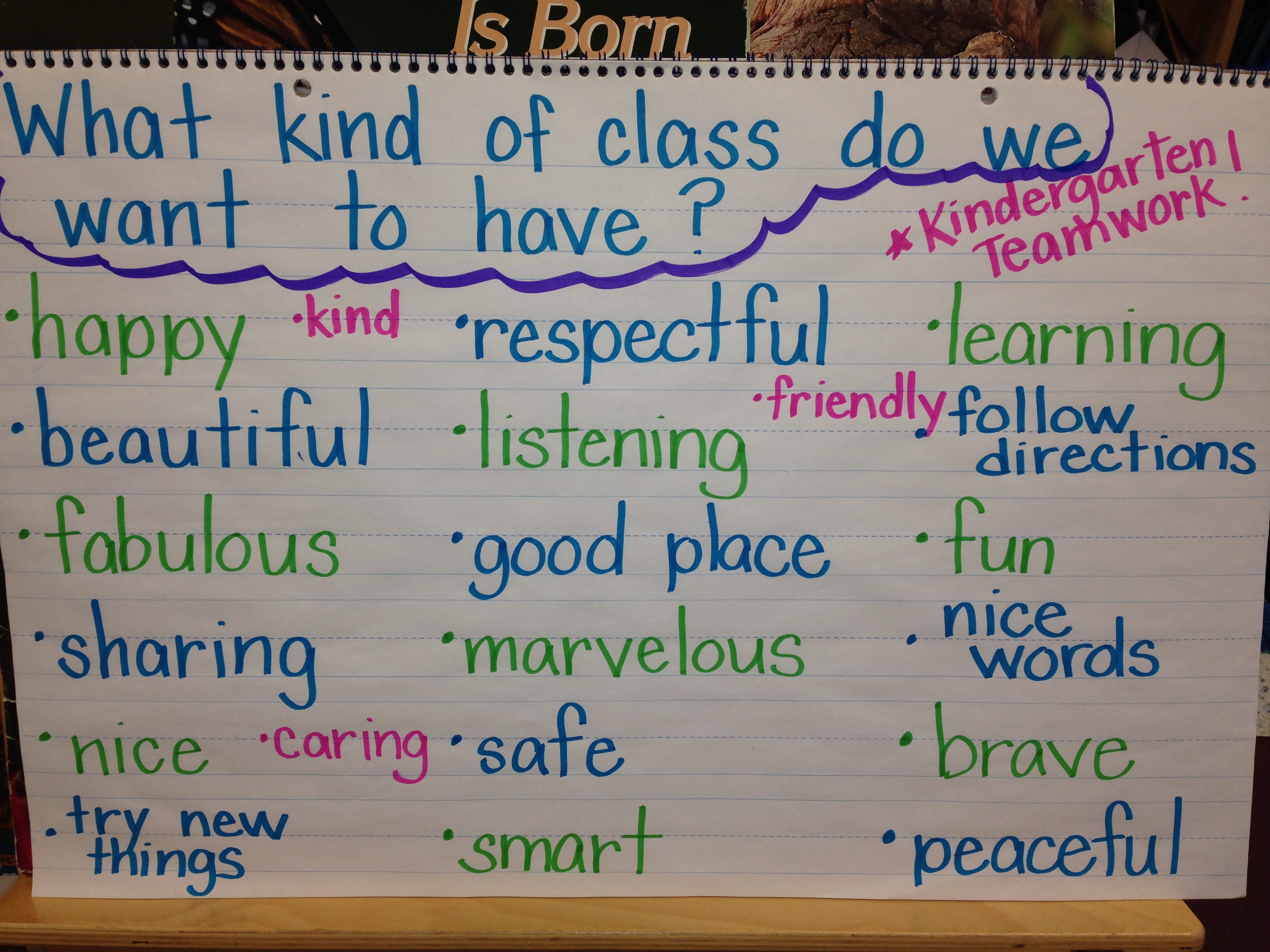
2014-01-09 15.38.53In my previous post, I shared some thoughts on the importance of reconnecting and recreating our community as we went back to school after winter break. January has turned into a constant dance of recreating routines with many snow days and 2-hour delays. It’s been a challenge to try to maintain a predictable schedule and keep routines flowing as Mother Nature continues to hand us arctic temperatures, snow and ice. My kindergarteners and I created this chart on our first day back from winter break. It’s been an anchor for us during the month of January. We read it together each morning during our Morning Meeting and I ask the students to turn and talk to a partner about what word they are going to focus on for the day.   We share out and then revisit the chart through the day as I notice children trying hard to live the vision we created together for our class. At the end of our day, during Closing Circle, I ask children to reflect on how the day went and how we are working together to have the classroom we imagine. This has resulted in some great conversations with children acknowledging areas that we need to work on and celebrating areas that we are successful in showing. As February approaches, I will continue revisiting our vision for our classroom and hopefully we will be able to get back into a routine. We shall see what else this winter holds in store for us!

How are you managing all the snow days and late openings? Have you tried this in your classroom? We’d love to hear from you!


Recreating our Classroom Community in the New Year

IMG_4581It’s Sunday afternoon and here I sit, looking at my to-do list, planning for the week ahead in kindergarten, working on a presentation for later in January, checking Facebook…daydreaming out the window about how great the past two weeks of winter break have been. It’s a new year (on the calendar, at least) and I’m excited about seeing my kids tomorrow. I’m a bit worried too. While these two weeks off have been wonderfully fun and relaxing, well…it’s been TWO WEEKS OFF from school and routines for my kindergarteners. I know how important it is to rebuild our community, revisit expectations and routines and to make a plan for the rest of our year together. In a lot of ways, I see it almost like a second First Day of School. It’s a refreshing fresh start and a new beginning.

Tomorrow I want to be sure and listen to every child. I am sure they will be full of stories to tell and memories to share from their two weeks off. I don’t want to jump right into the new math unit or literacy unit of study right away. I want to make time to welcome the children back to our classroom family, to allow them to reconnect, play, enjoy each other, share their hopes and dreams for 2014 and to ease back into our routines and life in the classroom. I want to start our morning meeting by making a chart of “What kind of class do we want to have in 2014?” with the kids – creating a future for us together in the new year. I want to remember that community is at the heart of our classroom and when we’ve been apart for two weeks we need time to reconnect and recreate. What a fun opportunity as we return to our classrooms tomorrow! Enjoy the time with your students and I wish you a most excellent 2014!

What are you focusing on as you go back to school after winter break?

Don’t Stop Believing

2013-11-07 13.28.43This past year has been an amazing year in my running life. I’ve run over 17 ultra marathons and have set personal best times in several big races.  Yes, I’ve put in the training miles and have my nutrition perfected – and I am passionate about running – but there is something even more important that has helped me achieve my goals this past year. It’s the people I run with and having a whole team of friends who believe in me. I was lucky enough to be welcomed into a close-knit group of runners last year who have been there for me in more ways than I can count – on the trail and off. They laugh with me, support me, run many long miles with me, and believe in me. I can’t help but see the connection between this and the students I work with every day.

I truly feel that my job as a teacher is to believe in every child – to believe they can learn and to expect wondrous things from them. I have to focus on what they CAN do, not what they can’t do (yet), and build upon that foundation. Kindergarten can be an overwhelming grade to teach. I look at my state standards (which are remarkably similar to those I had when I taught first grade several years ago…that bar just keeps being raised) and then I look at my students – this year over 7 of them JUST turned 5. They have only been on this planet for barely 5 years and we expect them to learn so much in the short year we have them. And they do. They learn to count to 100. They learn to read. They learn to make books that stay on topic. They learn about the monarch migration and how magnets work. They learn to solve problems, be independent, to tie their shoes and wash their hands after they go to the bathroom. They learn to use their words, be brave, be strong, put on their mittens, be kind and that they can make a difference in their world. We teach them all of these things, but we also believe in them. We believe they can do it. And they do.

And if we’ve done our job well, they will believe in themselves.

“I think that the best thing we can do for our children is to allow them to do things for themselves, allow them to be strong, allow them to experience life on their own terms, allow them to take the subway… let them be better people, let them believe more in themselves.”  – C. JoyBell C.


A Home Connection for Shared Reading

Illustrating the Poetry and Song Notebook

Illustrating the Poetry and Song Notebook

Every week we do a lot of shared reading in our kindergarten classroom. I typically choose two new songs or poems and one or two new mini-books each week, in addition to a big book or two. The purpose of shared reading is to make texts accessible to all children, allowing them to experience what it feels like to be a proficient reader. It is a time for us to teach about the reading process and serves as a gateway to guided reading and independent reading. A focus for a shared reading lesson at this time of the year, could include, but is not limited to the following:

*concepts about print such as voice-to-print match, left-to-right reading with return sweep, reading the left page before the right, and punctuation and what it means for the reader

*using meaning, structure and visual information to solve words and comprehend

*searching and gathering information to support word solving or comprehension

*word work and word study analogies

I feel that it’s important for families to see the shared reading we do each week and to give their child a chance to read the poem, song or book to them at home. One way that works quite well is to send home a weekly Poetry and Song Notebook. This is a 3-ring binder where children keep copies of all the poems, songs and mini-books we read each week. Every Friday we pass out copies of our shared reading and give the children a few minutes to illustrate them. They are then put in the binder and sent home for the weekend. We stress the importance of bringing these binders back to school on Monday, since they are kept in the child’s individual book box and are familiar texts that children can read independently during our reader’s workshop. I take photos of the actual charts, (thanks to a great suggestion by my teammate Sam), and put those in the binders. Here are a few examples.

Our charts are stored here for children to read during Reader's Workshop

Our charts are stored here for children to read during Reader’s Workshop

The opening letter and first song in our notebooks

The opening letter and first song in our notebooks

The charts are photographed so children see what we read in class

The charts are photographed so children see what we read in class – this is a mini-book we did after The Kissing Hand

I love to watch you…

Day 5 Kid pix 006A few weeks ago an article circulated Twitter, Facebook and the daily news I read.  The title, 6 Words You Should Say Today, caught my eye and I read the article. It’s beautifully written and made me think immediately of the kindergarteners I teach. It was one of those articles that I kept coming back to, seeing so many connections with my daily teaching.

Our words are powerful. They create (or break down) our communities. They support (or discourage) our friends, the children we teach, our family and ourselves. Peter Johnston has written extensively about the power of language in our classrooms in Choice Words and Opening Minds and I have read and reread his books numerous times. They have shaped who I am as a teacher in many ways. I think a lot about the words I use in my daily teaching and am constantly reflecting on how I talk to my students.

After reading this article, I immediately started using the words they refer to. They are just perfect as we are creating our new community of learners in our classroom – as I am observing, kid watching and gently guiding us to becoming caring, kind, passionate learners who live and work together for 180 days. I’ve noticed such big smiles on my kiddos faces as I watch them busy at work and then say,

“I love to watch you do math.”

“I love to watch you make books.”

“I love to watch you play.”

“I love to watch you dance.”

“I love to watch you take care of each other.”

It’s so simple, yet so powerful. Six (plus) words that I am making sure I say all day long – because I do love to watch these young learners discovering what school, learning and life is all about. I want them to know how important they are. Important enough for me to slow down, observe, reflect and share with them how much I love what I do.

NEW Mrs. Wishy-Washy Books and a Giveaway!

We love Mrs. Wishy-Washy!

We love Mrs. Wishy-Washy!

We love Mrs. Wishy-Washy in our kindergarten classroom. She becomes an old friend early in the year when we read the many  early stories of her adventures with the cow, duck, and pig. The big books become treasured items in our classroom. We act out the stories using tiny toys and create interactive writing pieces based on the books. The children beg for more stories about her and get very excited when Mr. Wishy-Washy is introduced.  Last year at the Reading Recovery conference, I was excited to see that there is a whole new series starring Mrs. Wishy-Washy by the wonderful Joy Cowley. I bought single copies of the books and they became fast favorites in our classroom.

Recently, I was contacted by the publisher, Hameray Publishing, and asked to review these new titles. I turned this task over to my kindergarteners. We read the books and used them in our study of story elements including characters, setting, problem and solution. Here are some thoughts from the voices of five and six year-olds – the perfect audience for the Mrs. Wishy-Washy series.

*I like the books because they have animals in them. I like Mrs. Wishy-Washy.

*They are so funny because Mrs. Wishy-Washy is always trying to give them a bath. I liked when the animals went to a car wash. (in the book Mrs. Wishy-Washy and the Big Wash) That was so funny!

*Joy Cowley is a smart writer. She knows how to make kids laugh. I love Mrs. Wishy-Washy!

*Mrs. Wishy-Washy is the best character ever. I like her and the Pigeon (from Mo Willems) the best!

*It was so funny when the animals put on Mrs. Wishy-Washy’s clothes (in the book Wishy-Washy Clothes). They looked funny and it made me laugh so hard!

*Joy Cowley writes books for kids that kids like. She makes the characters solve problems in a funny way. Sometimes Mrs. Wishy-Washy gets tricked by the animals. I like that!

As a teacher, I love these new books too! The Early Birds Collection is perfect for emergent readers, with easy to read text, meaningful story lines and engaging pictures and text. I’ve used these books for small group shared reading and independent reading. If I had multiple copies, they would be ideal for guided reading. The Joy Cowley Collection is excellent as well. These books are a bit more challenging, but still perfect for late kindergarten, first and second grade readers. The books engage children and provide multiple opportunities for predicting and thinking beyond the text. The stories are highly engaging and truly appeal to children at this age. Again, I have used these books in small group shared reading and for independent reading. They would be perfect guided reading texts as well.

I encourage you to visit the Hamaray website and see the new Mrs. Wishy-Washy series, as well as new books with Dan the Flying Man, the Meanies and the Hungry Giant. They also make finger puppets with the characters – perfect for a retelling station. If you love  Mrs. Wishy-Washy, you will love this new series! And if you’d like to win some of these books for your classroom, or a for the classroom of a favorite teacher, then read on…

The Joy Cowley Classroom Giveaway calls for teachers, parents, friends, relatives and anyone else who wants to nominate a classroom to possibly win 90 new titles from The Joy Cowley Collection and The Joy Cowley Early Birds Collection by beloved author and Mrs. Wishy-Washy creator, Joy Cowley! These two new collections of leveled readers, for K-2nd grade classrooms, are developed for shared, guided and independent reading. Finger puppets and 3 audio CDs will also be included. Please nominate your favorite early childhood classroom here. You can also find out more about Hameray Publishing, Mrs. Wishy-Washy and other fun activities on Pinterest, Facebook and Hameray Publishing. You can use the discount code, ZJCC13 for a 20% discount that expires 6/30/13.

Hamaray Publishing is also generously donating a Joy Cowley Big Book as a prize to a lucky winner on our blog! All you need to do is leave a comment below with your name and the grade level you teach before 5pm April 28. We’d love to hear your thoughts on using Joy Cowley’s books in your classroom as well! The winner will be randomly chosen April 28. Check back that evening to see who the winner is!

A few of our favorites...

A few of our favorites…

Disclosure: I received complimentary products for review. All opinions are my own and this is not a compensated post. 

Planning for Progress

IMG_4464As spring begins, we look even closer at our learners, deciding which kiddos may need extra support with a child study support team or which of our little friends may not make the end of the year benchmark. We step up our instruction with extra interventions, after school sessions, more 1:1 instruction and more attention to those children who we are concerned about. This can be stressful and cause us to panic about all the progress that still needs to be made and how will we ever fit in those “double dips” of instruction and daily time with our students who need us the most. As I start to feel that way, I have to remind myself to take a step back, breathe and make a specific plan to meet the needs of these students – while keeping our classroom a fun, engaging and happy place to be. If I am stressed and worried, that energy will determine the climate of our classroom and make it a negative, stressful place – something I don’t want to do – and something that will not serve the learners in our room.

Pat and I write about establishing clear expectations and goals for our students who struggle in Chapter 10 of Catching Readers Before They Fall. This is something that has proven to be very effective for me in focusing my instruction on my students who need so much. We recently worked with our math specialists to do this for our math students and then I did a similar form for literacy. The thinking process we went through looked like this:

1 – What is our learning goal? What do we want the student to be able to do?

2 – What can the student do now? How can we use this to build upon the known?

3 – What specific interventions do we have planned? Who is working with this child, what is the frequency of the intervention, what are the specific activities, instruction that we have planned for this child?

4 – What will be evidence of understanding? How will we assess or measure this learning and BY WHEN?

I take these planning forms and use them to plan my daily groups and 1:1 instruction. It helps me keep my focus clear and concise. It gives me a specific, measurable result to aim for and makes my teaching more purposeful. It also relieves some of the overwhelming feeling and stress of worrying about those students who are not making the progress we would like to see. While these are the questions we used, you need to ask yourself what will help you best meet the needs of your learners. This isn’t one more thing to do for someone else, but rather a specific plan to help YOU and YOUR LEARNERS. I hope this will help someone who is struggling right now and feeling the “spring stress”. Please feel free to share how you plan for progress. We would love to hear about it!