Writers Playshop

“Once upon a time there was a magical forest. And a lion lived there. But he didn’t have a friend. So one day he found a girl who wanted to live in the magical forest with him. She had a crystal that lighted up when she was with kind people. The lion loved the girl and they were friends. They lighted up the crystals to find other friends and be kind. They loved the animals, the magic forest and everyone. The end.”
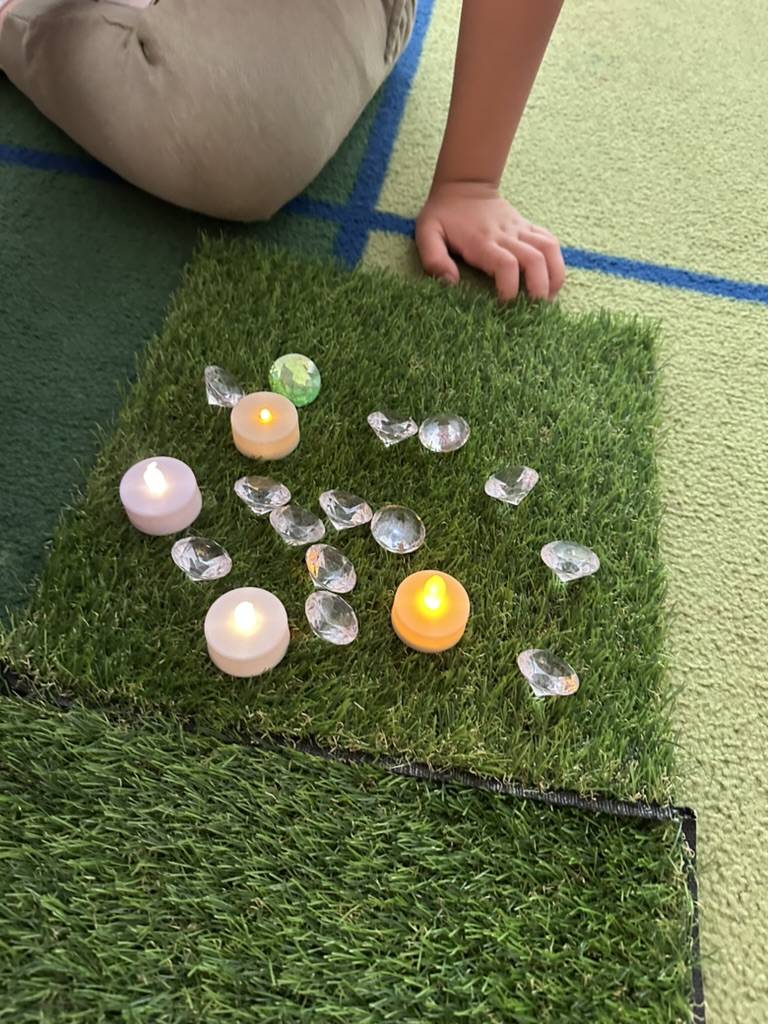
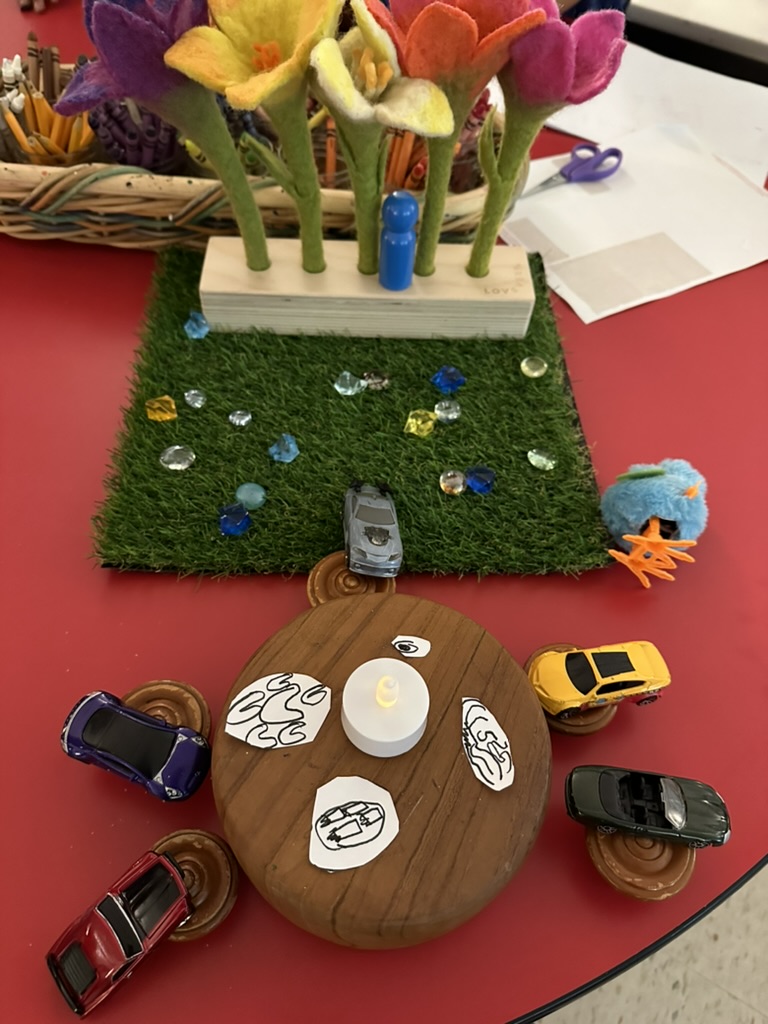
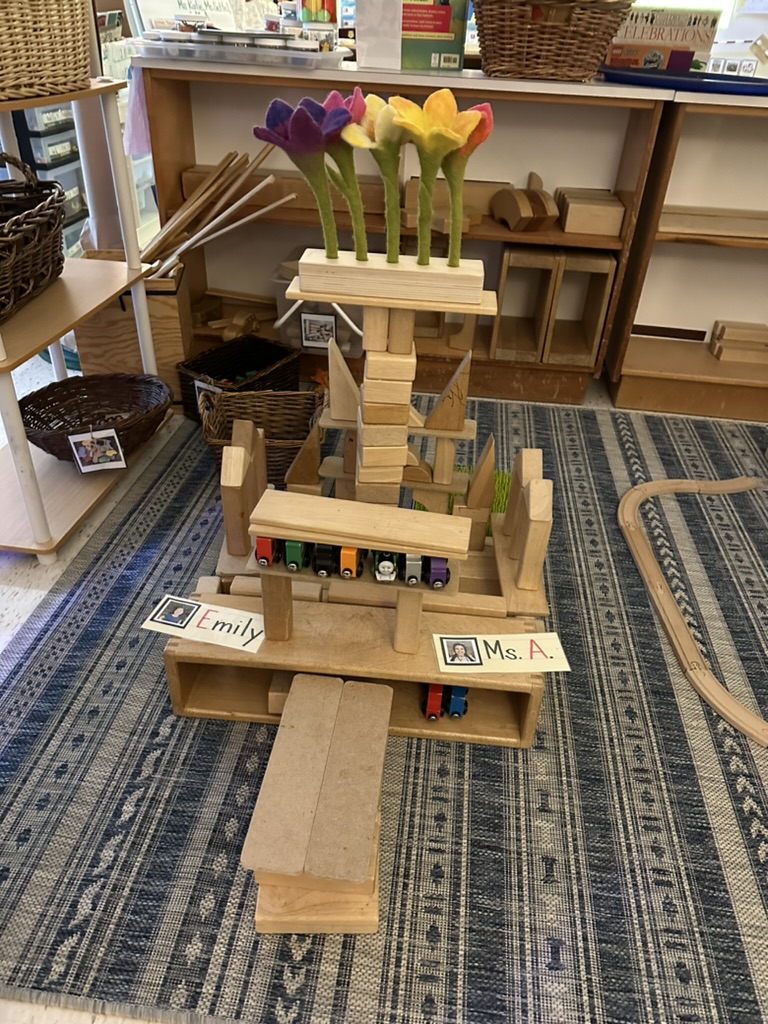
Storytelling in kindergarten. It’s my “magical forest”. From our first day together, children are encouraged and invited to find the stories in our classroom. Susan Harris MacKay inspired me to believe and to share with children that “stories live everywhere”! And their job (our job!) is to find them and share them. Each day that first week of school, I bring a material to our gathering rug. It might be blocks, paper, loose parts, clay, sand, magnetic tiles, etc. – any material that is in our room out for them to play and engage with. I make up a simple oral story using the materials and then invite the children to find their own stories in our room.

“Stories live everywhere! What story will you find today? Off you go!”

They don’t need to be asked twice. Children eagerly run off to find their stories. They find stories as they play at the light table, the dramatic play area (equipped with minimal props – real kitchen items, scarves, baby dolls), the block area, the music area, the art table or the Story Shelf (our shelf with loose parts that I add to on a regular basis – starting very small and simple and expanding as the year goes on). They soon discover that stories do, indeed, live everywhere. I roam around the room, eagerly listening to their wonderful stories. And then I invite them to put their story in a book, so it can live forever. There are blank 3 page books in our art area and many of the children choose to make a book with their story right away. But some wait a while to take this next step. And that’s okay. After listening to their classmates tell their stories, while looking at a photo I took and projected, or sitting beside the storyteller, or listening to an author share the book they made – all children will eventually want to make books so their stories can live forever.

But for now, the joy is in the process of finding stories and sharing them with one another. Oral language is a key component of a kindergarten classroom. We learn about characters and setting and children delight in knowing those words and purposefully plan these elements in their stories. They realize that stories live in the cafeteria, in our specials classes and on the playground. I continue with loads of storytelling as we create our story together as a community. They lean into an identity as a storyteller. They become confident in their oral language and their ability to capture the attention of peers and adults with their words. They learn story language and what makes sense. They learn how to answer questions from friends and add details to make their stories clearer. These first days set the stage for the rest of our year together. Our Writers Playshop follows a predictable structure of a whole group focus lesson, story making time and ending with a sharing time. But our story telling focus quickly expands.

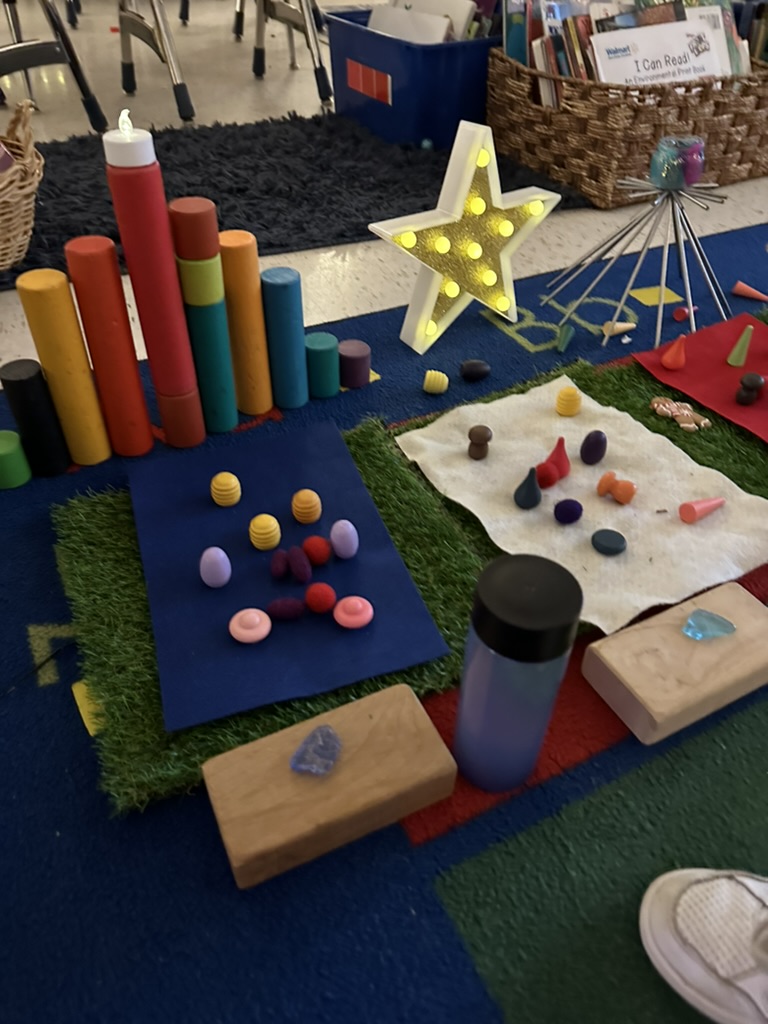
We move into story acting – where children dictate a story to me and then they become the director as they choose actors and actresses to act out their story in front of an audience of their friends. We take our storytelling into math, where loose parts and tiny toys help children create math stories to explore mathematical thinking. We grow into our identity as authors and illustrators as book making takes off and our classroom library becomes full of the books we make. And we grow into our identity as readers, as we listen to many, many rich read aloud books and ask ourselves, “what did we hear or read today that might help us as story makers, authors and illustrators?”.
This work is not new, nor is it exclusively mine. I stand on the shoulders of so many wonderful educators such as Katie Wood Ray, Lisa Cleaveland, Donald Graves, Lucy Calkins, Matt Glover, Trisha Lee, Vivian Gussin Paley, Michelle Kay Compton, Robin Chappele Thompson, Georgina Ardalan, Angelique Thompson, Kenisha Bynoe, Susan Harris MacKay, Matt Karlsen, Angela Stockman and the many, many educators I’ve connected with through the years of studying writing, literacy and the Reggio Emilia approach to learning and teaching. Our Writers Playshop (named “Playshop” several years ago by a child who asked me why it was called “workshop” when it was really play) is a product of my 33 years of teaching, learning, unlearning, observing, reading, writing, researching and reflecting. It changes often, and I continue to learn and listen to what the children are telling me. There is not a script or a program to follow. It’s about following the children. I’ve found that the standards and expectations of a public school kindergarten classroom can be far surpassed with this way of teaching. Children go way beyond what is typically expected in a kindergarten curriculum. Writers Playshop is a powerful way of teaching that honors, challenges, supports and celebrates children and their learning – for life, not just for school.
If you’d like to get started, here are a few resources you might check out. Stay curious, keep reading and talking with colleagues and most of all, trust the children. Play is how children learn. Jump in tomorrow – join your children in finding stories, telling them and writing them down. Trust the children. Story creates our communities and brings joy to our lives. It’s truly magical.

Story Workshop: New Possibilities for Young Writers by Susan Harris MacKay
Princesses, Dragons and Helicopter Stories by Trisha Lee

StoryMaking: The Maker Movement Approach to Literacy for Early Learners by Michelle Kay Compton and Robin Chappele Thompson

The Gift of Playful Learning by Angelique Thompson and Kenisha Bynoe

About the Authors: Writing Workshop with Our Youngest Writers by Katie Wood Ray and Lisa Cleaveland

“Children have a right to high-quality, vigorous instruction intended to support their academic skills within the discipline of literacy. But those skills must be inextricably linked to stories – to the paths every child determines need clarity in their own life. Increasing literacy skill should be seen as a means by which the stories flowing through each of us are supported as the effort they are to make better sense of the world in which we experience the complexity of our everyday lives. Literacy skills are no end in and of themselves, and treating them as such takes us further from the capacity every child has to use them to find and share our stories.

Susan Harris MacKay in Story Workshop: New Possibilities for Young Writers
Storytelling and Beyond

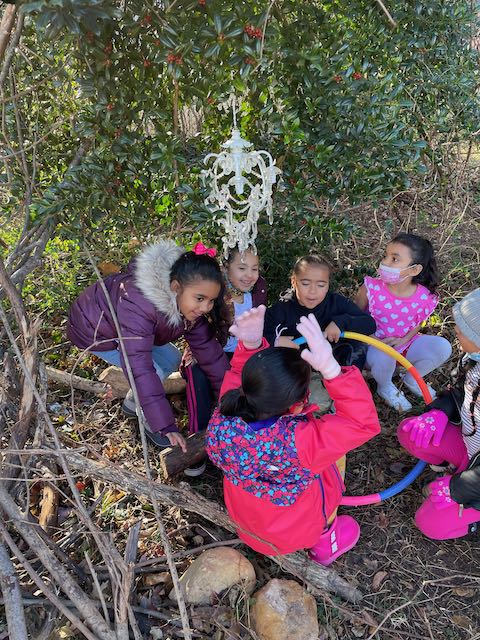
Storytelling is a tremendous way to engage in meaningful literacy learning and play in your classroom – no matter the age of your learners. I encourage you to welcome the stories your students bring into the classroom, to encourage the wonderings and noticings of the stories that live in the land we learn and play on, and to make the space for children to explore these stories in multi-modal ways. Children deserve to have stories fill their lives and to have their stories be listened to and celebrated.

I wrote a guest post on the CCIRA blog! Please visit their page to read the post in its entirety. Enjoy!

Writers Playshop

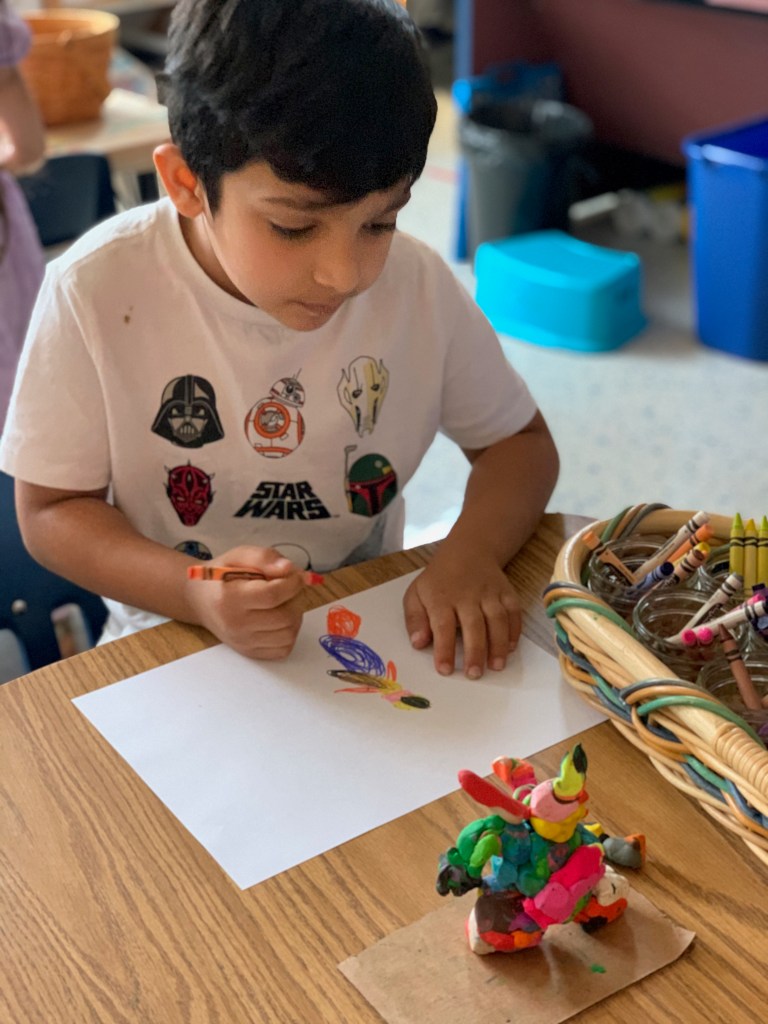
Playing a story with clay

I’ve been playing around and exploring the idea of Writers Workshop being more like a makerspace or play space for several years. Katie Wood Ray, my number one mentor of writing with young children, speaks of writers “making stuff” in many of her professional books, and I’ve always loved this. While I fully embrace the idea of kids making books, I don’t privilege book making over other making – writers “make stuff”, and a list, a puppet or a lightsaber might be exactly what that child writes today. As I thought about how my thinking surrounding Writers Playshop has evolved, many mentors come to mind. Karen Wohlwend’s work in Literacy Playshop was one of the first books I read that challenged my thinking about workshop. Brad Buhrow and Anne Upczak Garcia showed me many different possibilities for writing in their book, Ladybugs, Tornadoes and Swirling Galaxies. I began to use their ideas many years ago when I taught first grade. This is one of my most often revisited professional books. Angela Stockman’s Make Writing was the first book I read that helped me to really envision what this might look like in the classroom. Her work continues to inspire me and make me question, revise and reflect on my practice. A few years ago, I saw Michelle Compton and Robin Thompson speak about their story workshops – they now have a wonderful resource called StoryMaking, that was published last year. When I discovered the amazing Opal School’s work at a NCTE conference three years ago, and saw the beauty that is story workshop unfolding in magical videos, articles and stories, I was in awe of what’s possible for our writers. They continue to inspire, challenge and guide my thinking. Opal School, and the resources they provide, are truly a gift to educators and to children. Building on best practice, new learning, new thinking, questioning, wondering, playing, kidwatching and reflecting, I continue to transform the way our Writers Workshop – or Writers Playshop looks. Here’s a peek into Writers Playshop in our kindergarten classroom.

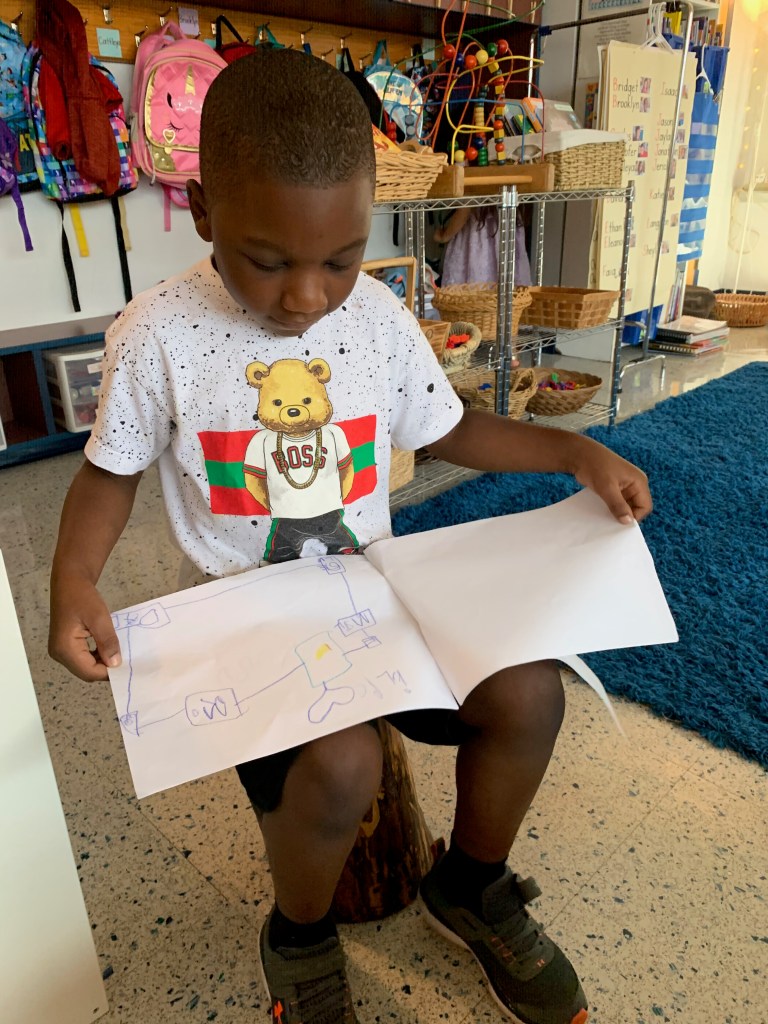
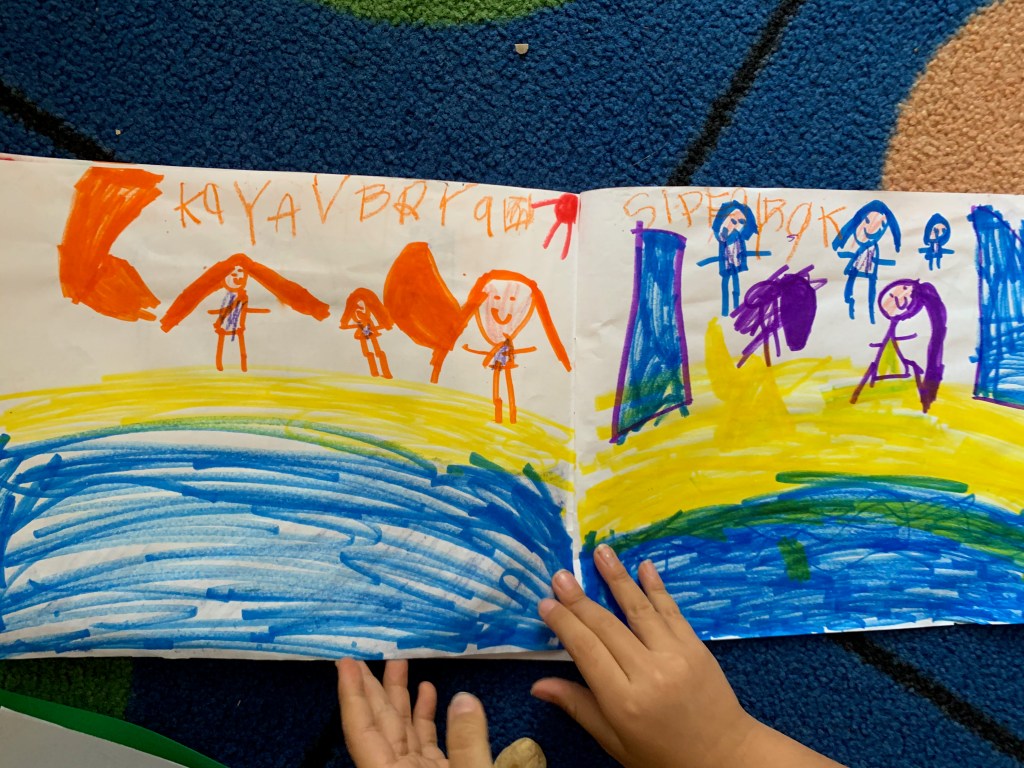
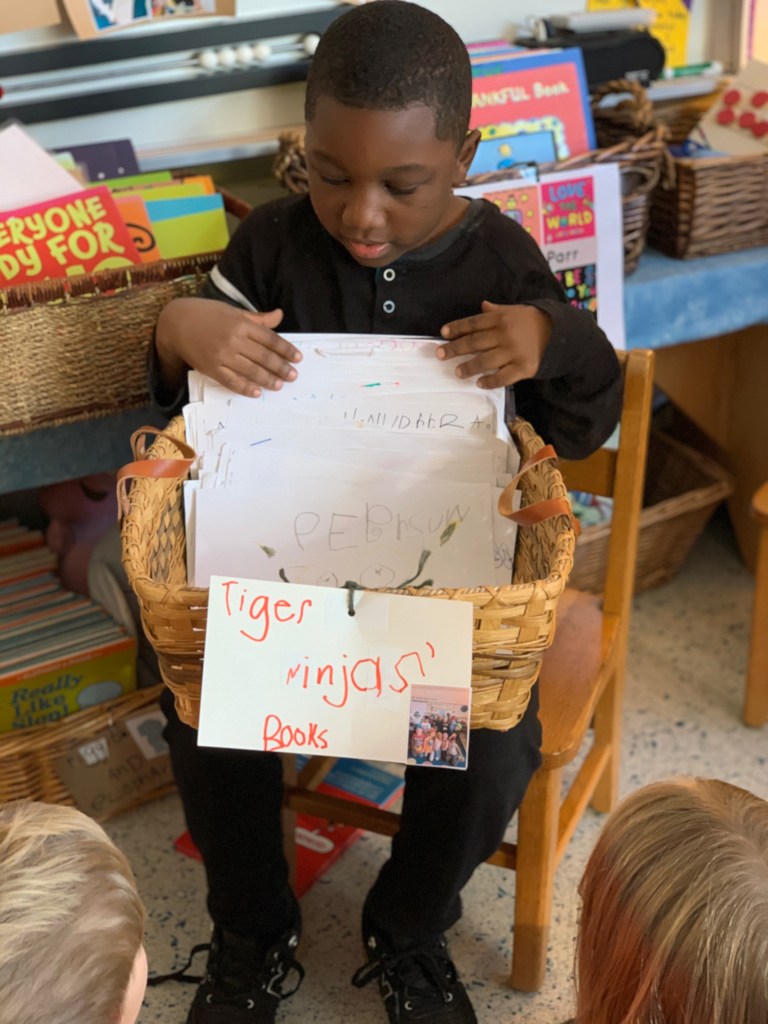
Sharing a book

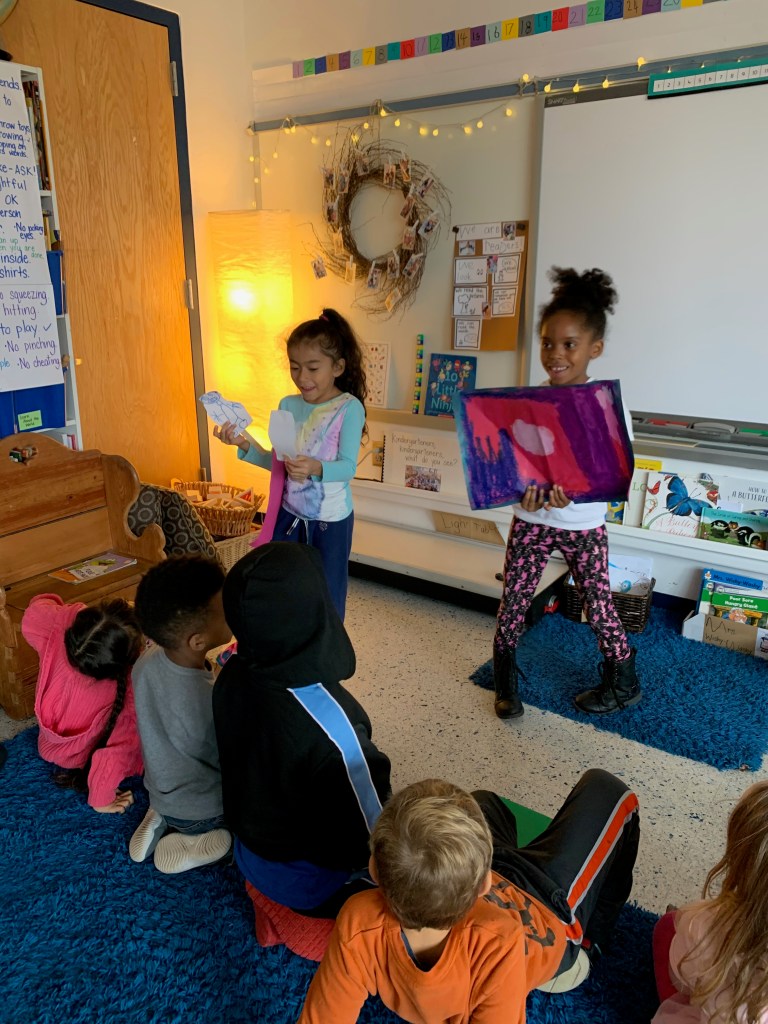
Our Writers Playshop is a scheduled hour every day, although kids often choose to write and do Writers Playshop activities during Explore, our free play times. We start with a short, whole group focus lesson (mini-lesson), that might be on craft, process, mechanics, genre study, interactive writing, introducing a new material, modeling a way to play out a story, oral storytelling, looking at a mentor author or reviewing routines. Then we move into our Playshop where kids are finding their stories through play of all sorts, making books, making posters, writing letters, making puppets, reading, making art or creating in some way. I confer with kids, play with kids and occasionally meet in small guided writing groups. We end our Playshop with sharing. This sharing and celebrating time often becomes another focus lesson with the kids leading the class to teach others what they tried today. You’ll notice the structure and foundation is solidly built on workshop teaching as written about by Donald Graves, Lucy Calkins, Nancie Atwell, Mary Ellen Giacobbe, and others, with choice, time, response, identity and community at the heart of the workshop.

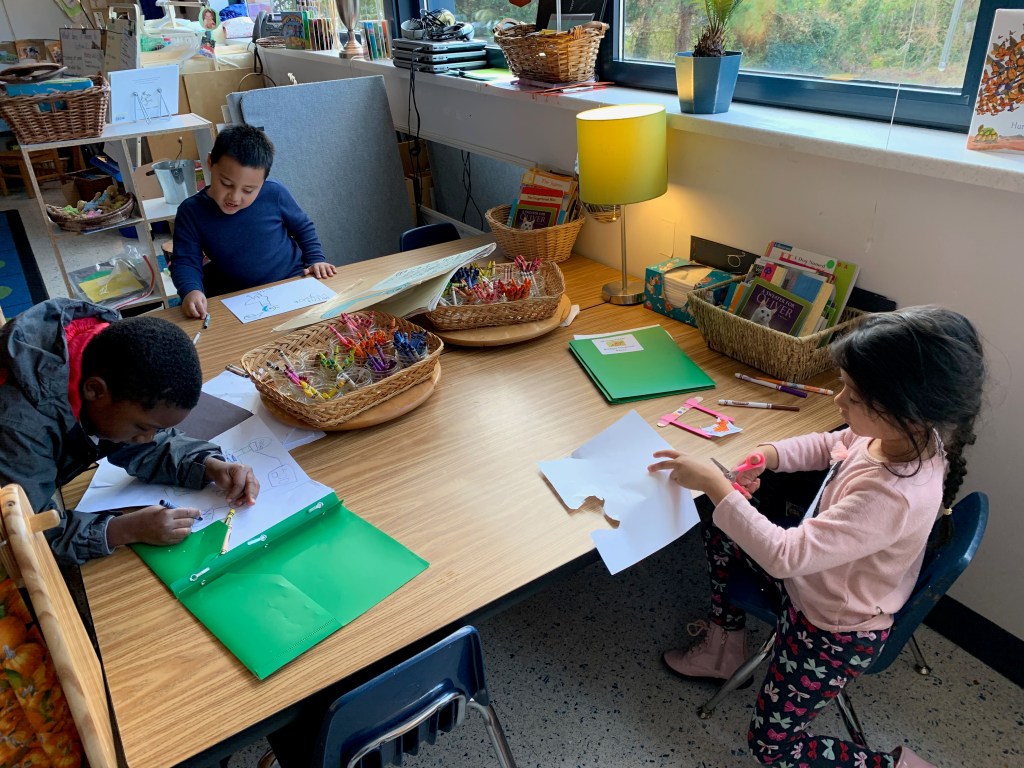
Writers making books and making “stuff”

If you are new to writing workshop, or an experienced workshop teacher, this is an excellent resource. I’ve also written about writers workshop, here, here and here – listing many of my favorite resources. The older posts speak to my foundational beliefs about teaching writing. While my thinking has evolved and expanded over time, I still hold these beliefs true – all children are writers and writing can start on day one in kindergarten (and all grades). I start our Writers Playshop by helping children see themselves as writers and establishing identities as writers, authors and illustrators. I start this on day one in kindergarten by introducing blank books and inviting children to make books about something that is important to them – just like their favorite authors do.

Making books
Sharing a story made with painting and puppets

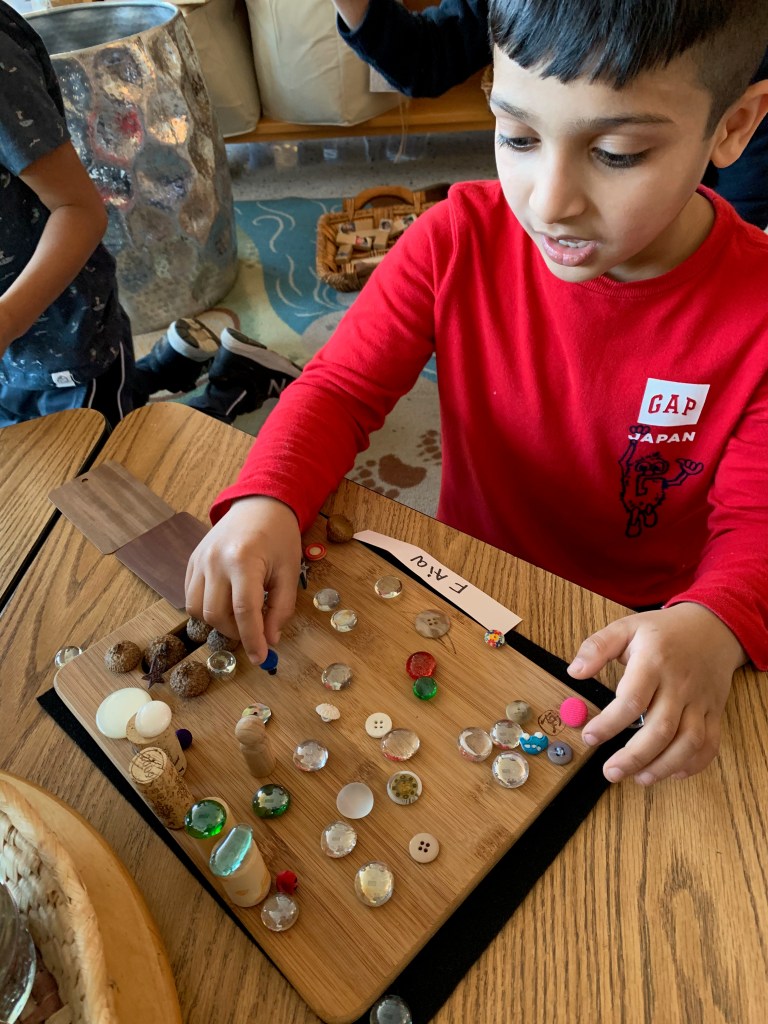
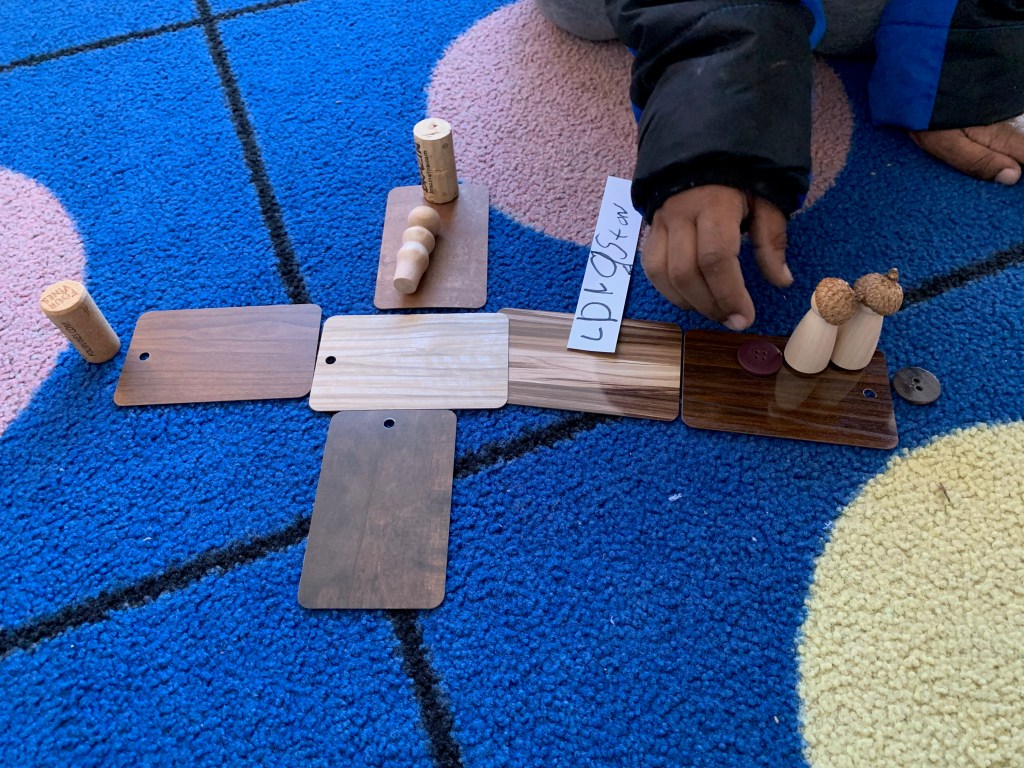
I then begin to add in the play component of our Writers Playshop. I slowly introduce new materials as possibilities to make stories (clay, blocks, paint, loose parts, puppets, dramatic play, etc.) – often modeling them to make a story in Writers Playshop, shortly after I’ve introduced these materials in Explore. I invite the children to find a story in these materials during Writers Playshop. I then always follow up with the invitation, “after you play your story, you could write it in a book if you want it to live forever!”. The kids take it from there!

Playing a story with loose parts

We made an anchor chart together to show the difference between our Explore (free play) time and Writers’ Playshop. This helped kids I noticed weren’t yet making a story or an information text via oral storytelling or written bookmaking during Writers Playshop. I felt that it gave them a little nudge when they knew the expectation was to find a story and think of how they might share that story. We also made anchor charts about where stories live and what a story might be. Their story might be something that happened to them, a make believe story or a true story about something they know a lot about, like squirrels or winter.

How are Explore and Writers Playshop different and the same?
Ongoing “where do stories live” chart
What is a story?

Writers Playshop is a favorite time of each day! My kindergartners find stories in so many things, and are inspired to make books (and many other writing pieces) that will “live forever”. They see themselves as authors and illustrators. The making and play space of our Writers Playshop is accessible to all, and highly engaging. It is playful literacy and pure joy.

“We need a basket of OUR books in the library!”

Here are a few more of my favorite resources if you’re interested in bringing play to your writers workshops: Opal School Story Workshop Blog Post 1; Opal School Story Workshop Blog Post 2; Story Workshop Video; Equity and Access Through Story Workshop; Starting With Story Workshop – Opal School Please share your stories of how you make writing a playful, joyful time in your day! Happy playing and happy writing!

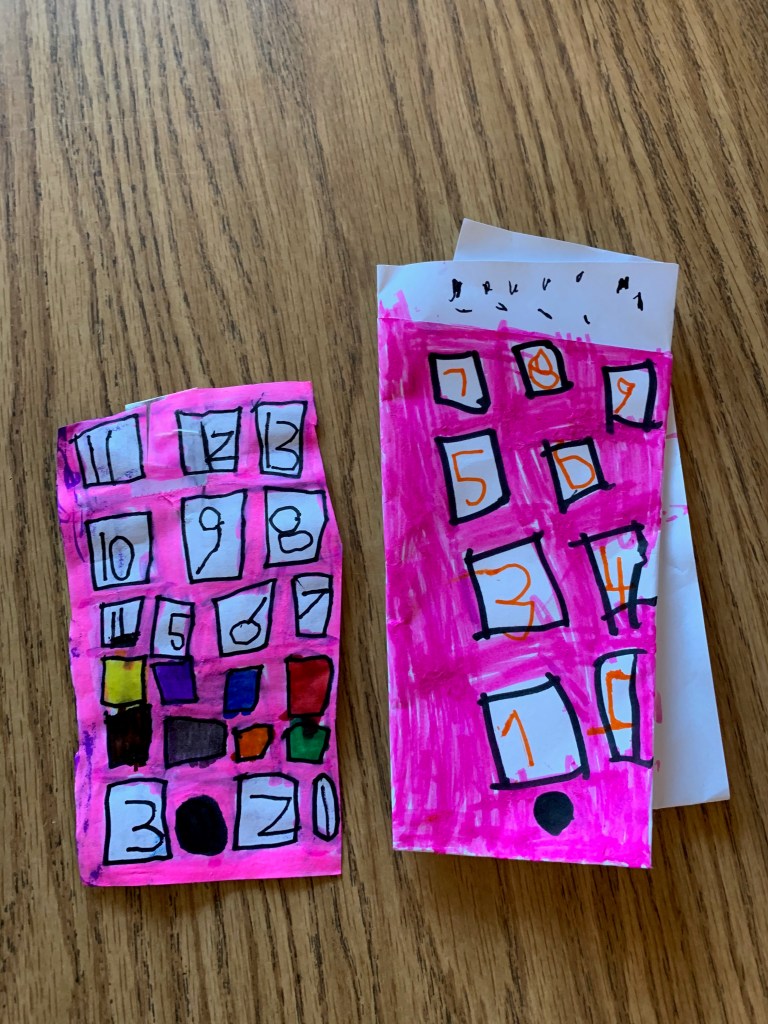
Cell phones made during Writers Playshop
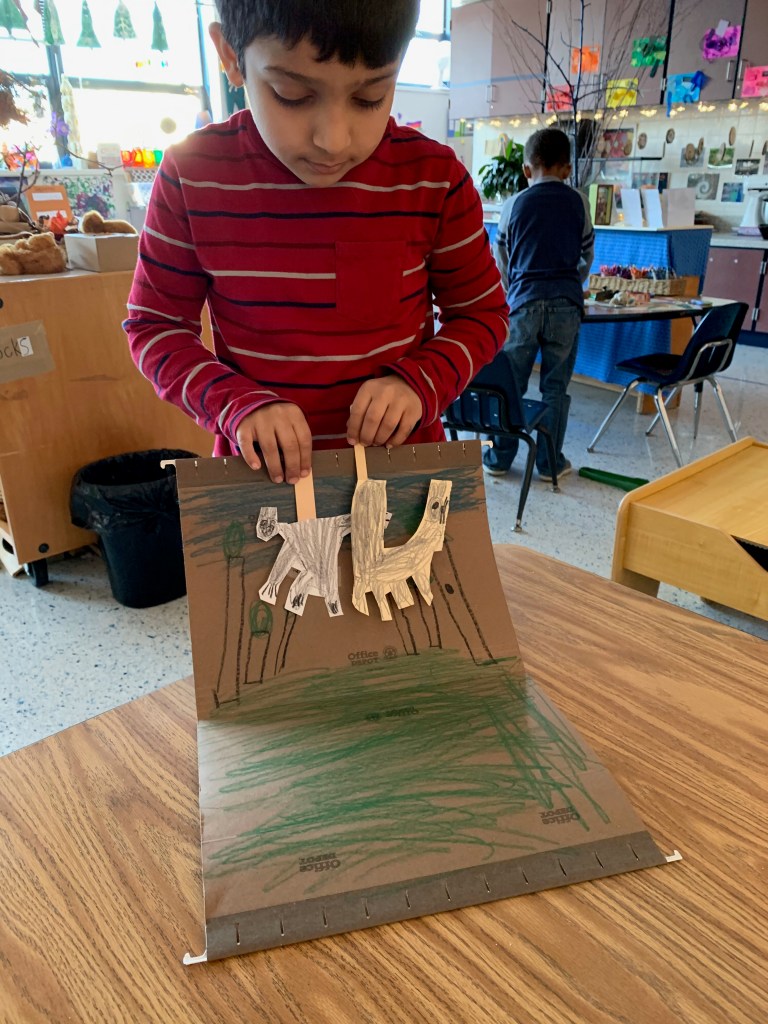
Puppets and a file folder setting to tell a story

“Play, while it cannot change the external realities of children’s lives, can be a vehicle for children to explore and enjoy their differences and similarities and to create, even for a brief time, a more just world where everyone is an equal and valued participant.”

Patricia G. Ramsey – Renowned Early Childhood Educator

Interactive Storytelling

This past fall I attended a wonderful conference in Washington, DC. – the Children Are Citizens conference. While I left with much to think about and try in my classroom, the one thing I implemented immediately was storytelling. Georgina Ardalan, @georgina_in_dc, led an outstanding session on interactive storytelling. She shared a video with Ben Mardell using Vivian Paley’s storytelling and story-acting approach, and then shared how she uses this in her pre-K classroom. Finally, the participants got to experience this fun interactive storytelling. It was amazing!

I took this back to my classroom and started it the next day. The process is simple, but I’ve found it to be extremely powerful and so much fun. It’s definitely a favorite part of our day.

First, the storyteller thinks of a story. We have a storyteller each day and their name is on our calendar so they know when it’s their day. I encourage them the day before to think about what their story might be. The storyteller tells their story to me, as the class listens. I write it down as they tell the story – on my clipboard, writing fast to keep up with the story. This is not a shared writing. The writing is just for me. Most stories at this point in kindergarten are 5-6 sentences long. After the story is told, I read it back to the storyteller – one sentence at a time, asking them if that’s what they want it to say and making any revisions. The class listens and asks any questions or for clarifications they might need. This on-the-spot revising has been really wonderful in helping kids elaborate and use more details in their stories.

Next, we determine who the characters are, and what the setting is. We do this together. Then we decide what parts we need actors and actresses for. Often the kids want someone to play roles beyond the characters. For example, if a story takes place at the beach, someone will play the beach. If there’s a toy or piece of furniture in the story, a child will pretend to be that. I let the kids decide what roles we need people to pretend to be. The storyteller then chooses whether they want to play a role in the story or if they want to be in the audience. Then the other roles are assigned to kids.

Next, we move to the space on the rug where the audience sits, and the actors and actresses get on the rug space that is the “stage”. I give them a minute to talk and plan how they are going to play their roles, and then we start the story-acting! I read the story as the kids act it out. We usually have time to act out the story twice, with different kids playing the different roles, in our daily 15 minute storytelling time.

Through this daily storytelling, I’ve seen the kids have a much deeper understanding of and enjoyment with:

  • oral language and communicating with others in a clear way
  • community building through sharing stories that are important
  • characters and setting
  • beginning, middle and end
  • adding details to stories to help your reader or listener
  • revising to make a story clearer
  • adding dialogue to make a story even better
  • how to use movement and facial expressions to communicate an idea or feelings
  • listening and asking questions to understand a story better
  • listening and enjoying a performance – what is the role of the audience
  • creating stories on their own during Writers’ Playshop (I always remind the storyteller that they can make a book of their story so that this story will live forever – many kids choose to do this.)

At the end of first quarter, we did an assessment of the books that children have written. Every single child in our classroom is able to write a 3-5 (or more) page book, on one topic, with a beginning, middle and end. Many of the books had details I would expect to see much later in the year such as, dialogue and more complex story lines, characters and settings. I think the daily storytelling has played a huge role in this. The transfer from the oral, interactive storytelling to the children’s own writing is clearly evident. And the fun we have every day during this time is the best!

Below are two videos from storytelling in our classroom. Enjoy!

Storytelling Part 2

The other day I shared a little bit about a session that I did with two other teachers at NCTE.  The topic was about weaving storytelling into your reading, writing, and math workshops. I promised participants that I would post two videos of stories that have easy patterns.  Yesterday’s story was Sody Sallyrytus and today’s is Tipingee.  Below is how I interpret and tell the tale to primary students.  Both these stories are easy to learn to tell and both are also easy for the kids to reenact. If the video below doesn’t work for you, go directly to YouTube at:  youtu.be/p9vwzV5ReAk

You can google either of these tales and you will find other storytellers who tell these stories on YouTube.  You might notice two things — that Sallyrytus can be spelled many different ways and that most people pronounce Tipingee with a hard ‘g’ rather than the soft ‘g’ that I use.

We All Have Stories to Tell

I recently read an excellent blog post from Cathy Mere in which she said,  “In a teaching world filled with data, I think the best thing about the first days of school is getting to know kids not by numbers, but by living beside them.” How true and wise these words are. They have echoed in my mind since I read the post. Living beside our students, establishing trust and relationships and getting to know who they really are as people is the foundation of a good year.

The first three days in my new kindergarten class have been full of getting to know my students and beginning to establish a strong community for us to live and learn in all year. For many of my kids, this is their first experience of school. It’s so important for me to make our learning community one where we know each other well, and care about each other. One of the routines I established on day one was an oral storytelling time. It quickly became my favorite time of the day. It’s all about getting to know each other and sharing ourselves in this new community together.

I started our first storytelling time by reading No, David! and sharing the author’s notes by David Shannon on why he wrote that book. Then I said, “you know – everyone has stories to tell, just like David Shannon did. I have stories and I’ll bet you have stories too!” Then I shared a story about my dog Cayo and how she barks at the mailman every day. The kids were spellbound, listening to me weave a story out of an everyday occurrence. I then asked if any of them had a story to tell. All hands went up. These kindergarteners, many of them English language learners, on the first day of school, sat still and were engaged for over 20 minutes while story after story was told by their classmates. It was magical. I realized then that this was a necessary part of every day. We were getting to know each other by sharing what was important to us and by sharing the stories of our lives. What a great way to connect with each other, realize similarities and begin to build a strong community.

As my year continues, I plan to keep our storytelling time as an important part of our day. While I will eventually get to know my kids by numbers, I want to keep living beside them every day, listening to the stories they tell and getting to know them as people.