Reflecting on Reggio – A Series of Wonderings

Wondering #1 – How can I set the classroom up to honor participation and relationship?
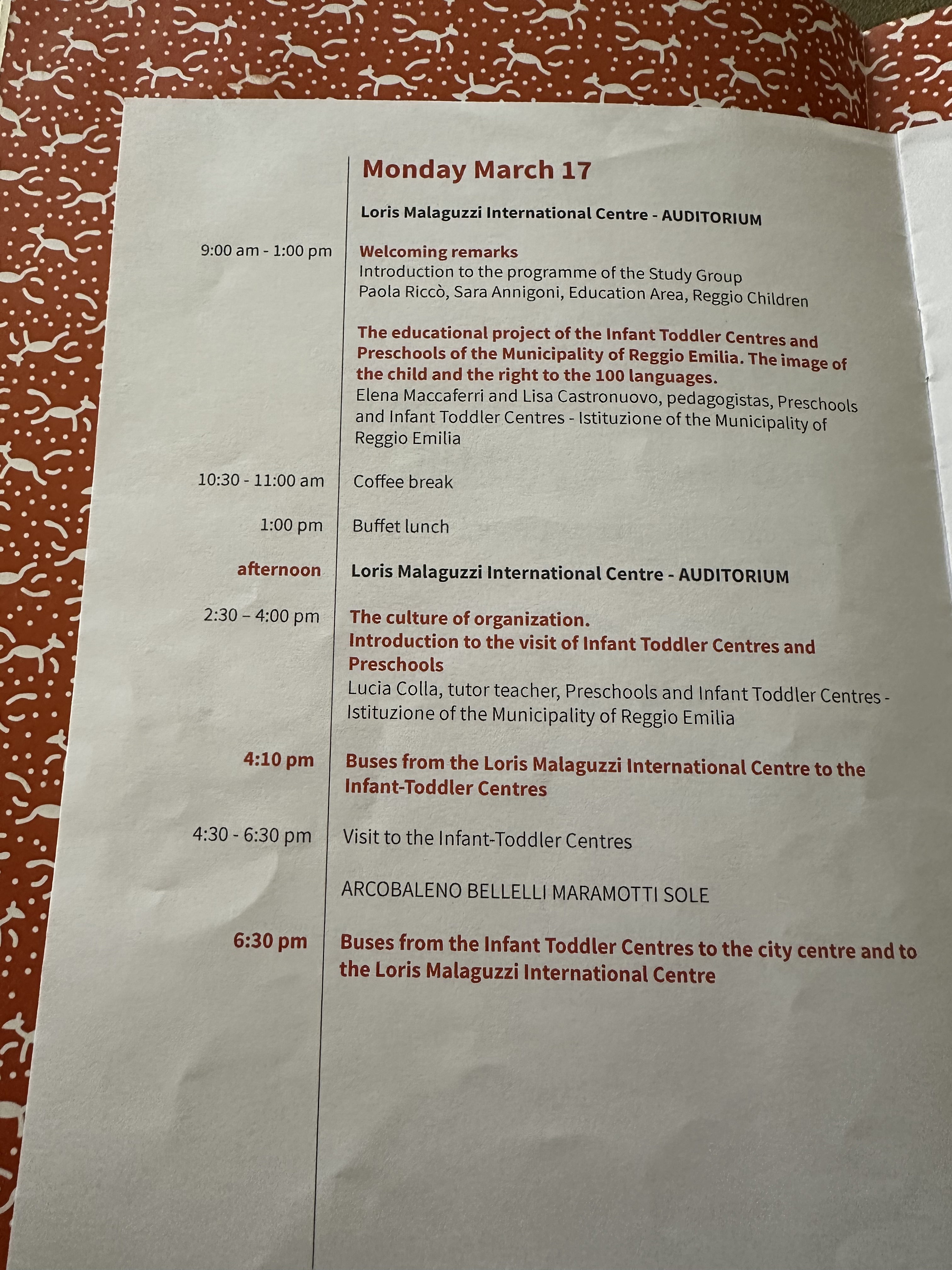
I was fortunate to be a part of a Reggio Emilia Study Group with the Vancouver Reggio Association in March 2025. I filled a notebook with words, my brain with wonderings, and my heart with joy and a sense of what’s truly possible in education. It’s an experience like no other – a tapestry of professional growth and personal growth in one full week of joyful learning, connecting and collaborating. This is the first in a series of posts as I compile my reflections on my week at the Loris Malaguzzi International Centre, the schools and the community of Reggio Emilia, Italy.
“The environment should act as an aquarium which reflects the ideas, ethics, attitudes and culture of the people who live in it.” Loris Malaguzzi

As I look back at my notes from day 1 in Reggio Emilia, I’m left with more questions than answers. This happens often when immersed in the pedagogy of Reggio Emilia. A new school year is beginning and teachers have the privilege of setting up the classroom environment. This is at the top of my mind right now, so I share these wonderings with you, in hopes that it gives you a new way to think about setting up your classroom environment as I ponder setting up mine, with a goal of participation and relationship.

Participation is the way to live in day-to-day relationship. Participation gives substance to rights. It is a way to achieve being a community.” Elena Maccaferri and Lisa Castronuovo, pedagogistas

What if we considered participation as a metaphor for relationship and learning? We participate to have fun and for joy. So how can we encourage participation in our classroom? Participation that children choose willingly and joyfully. I’m thinking of a new way to define “participation” – a definition that goes beyond doing what the teacher says. Rather, participation as a way of relationship and community.

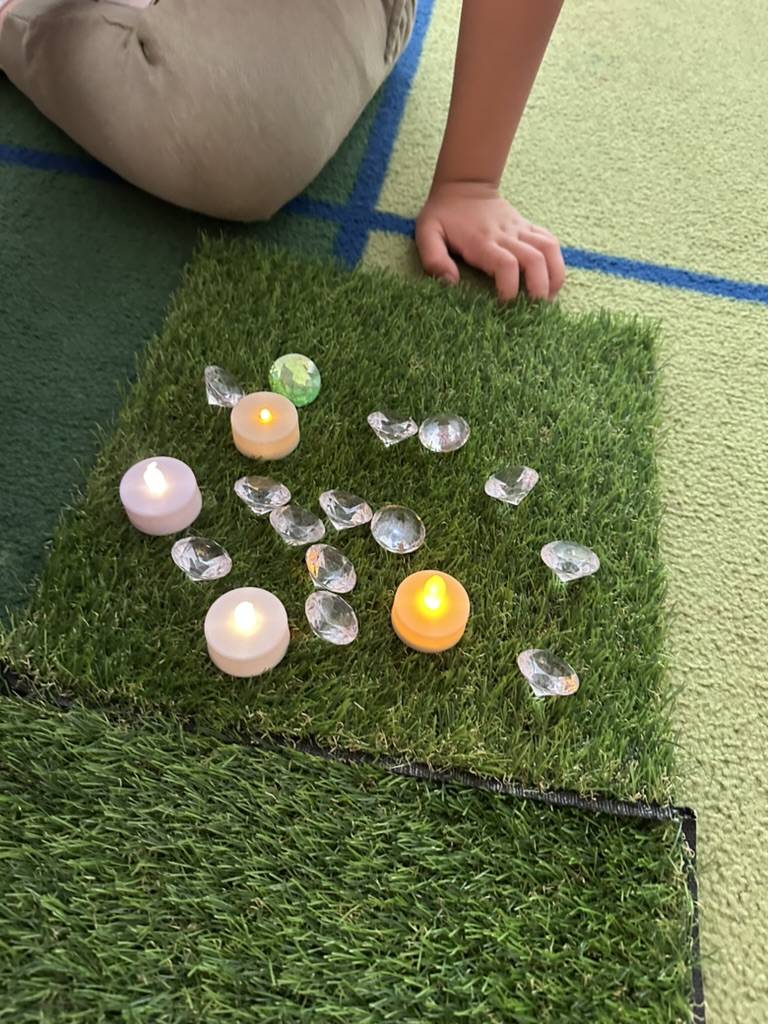
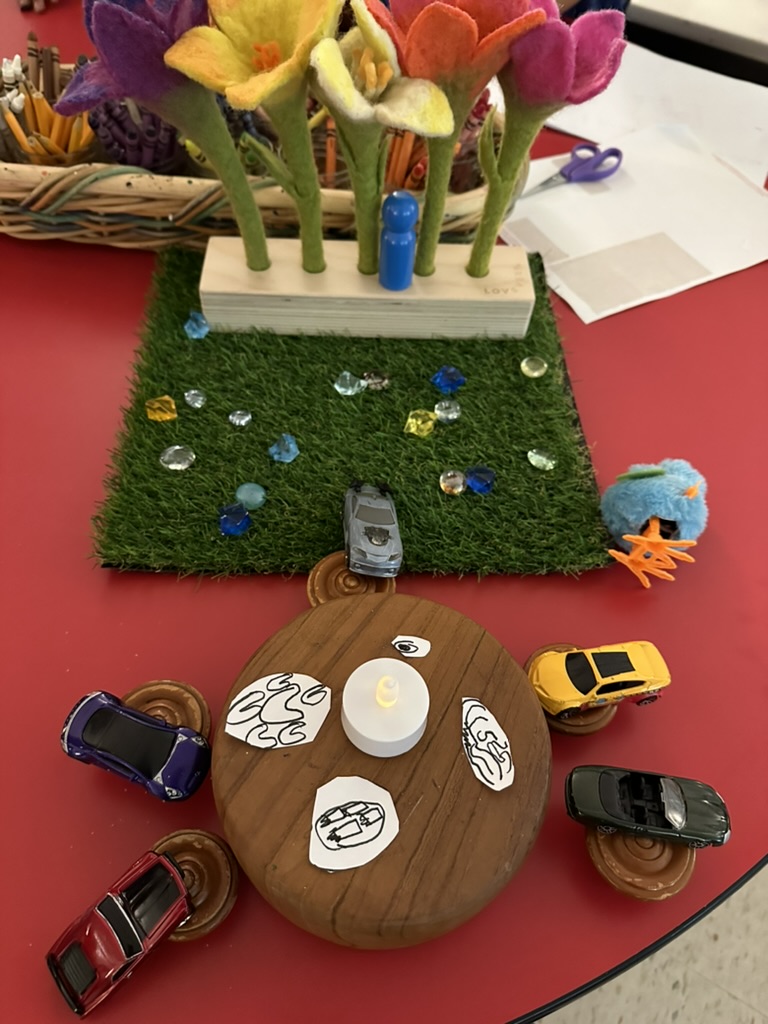
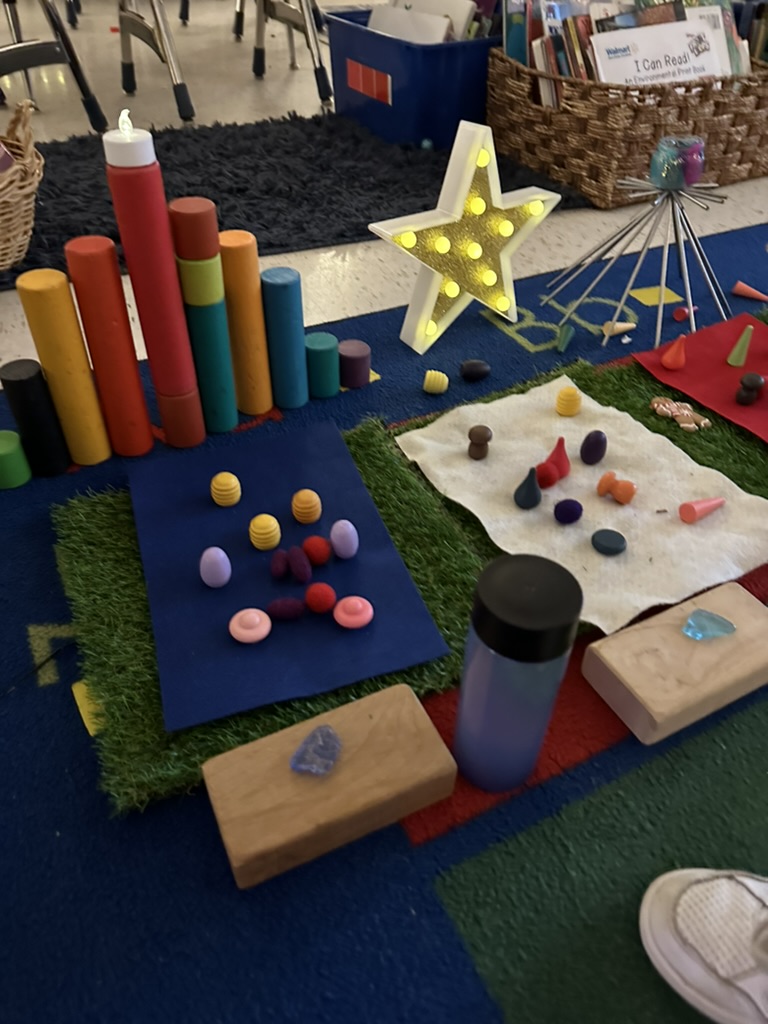
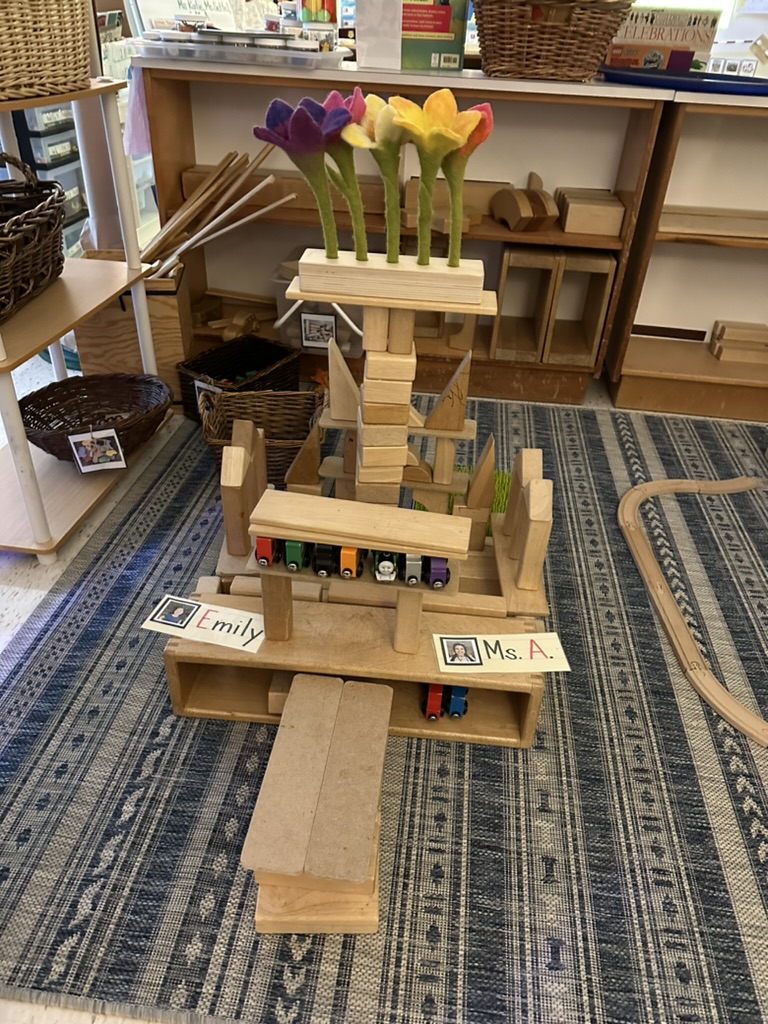
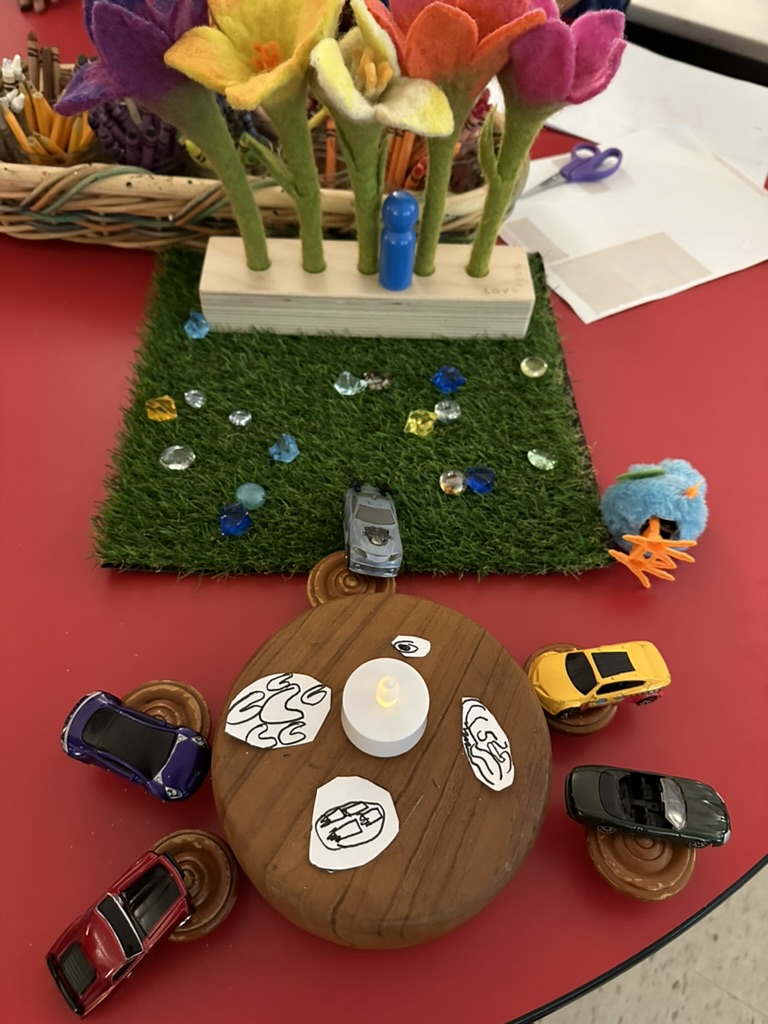
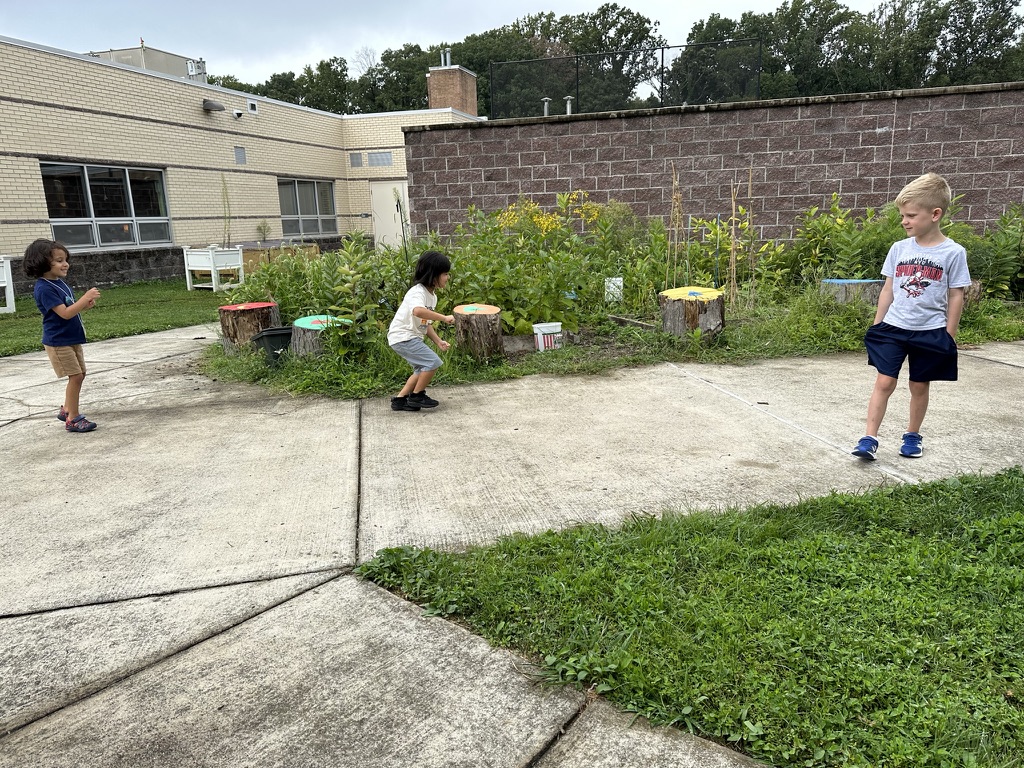
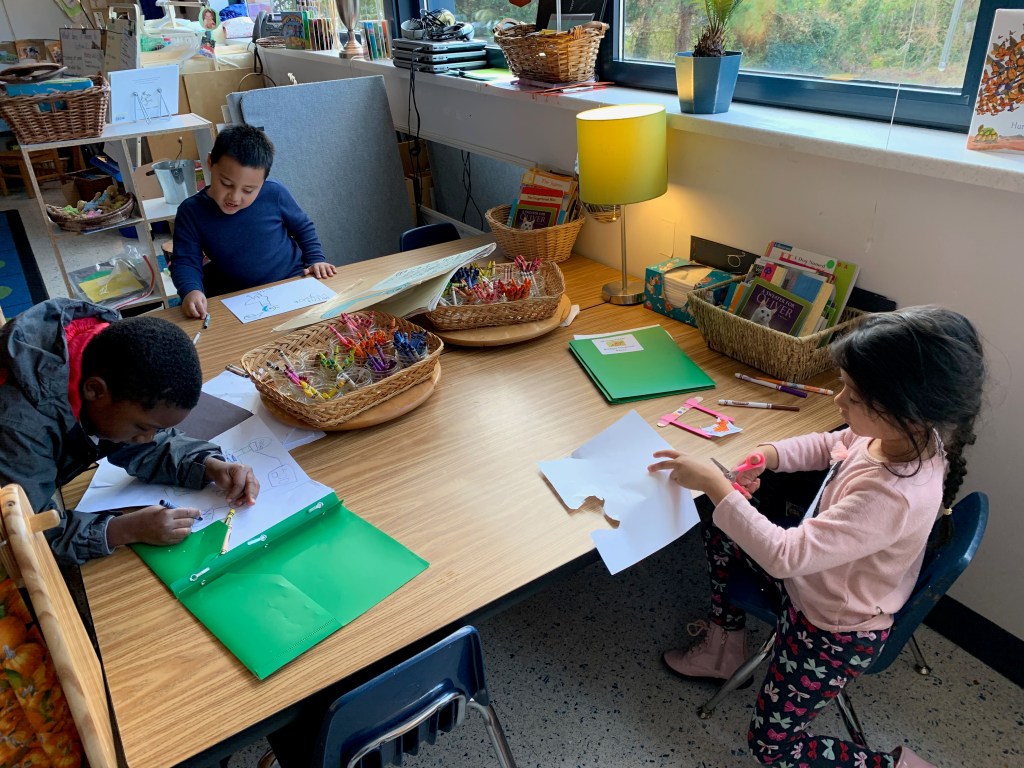
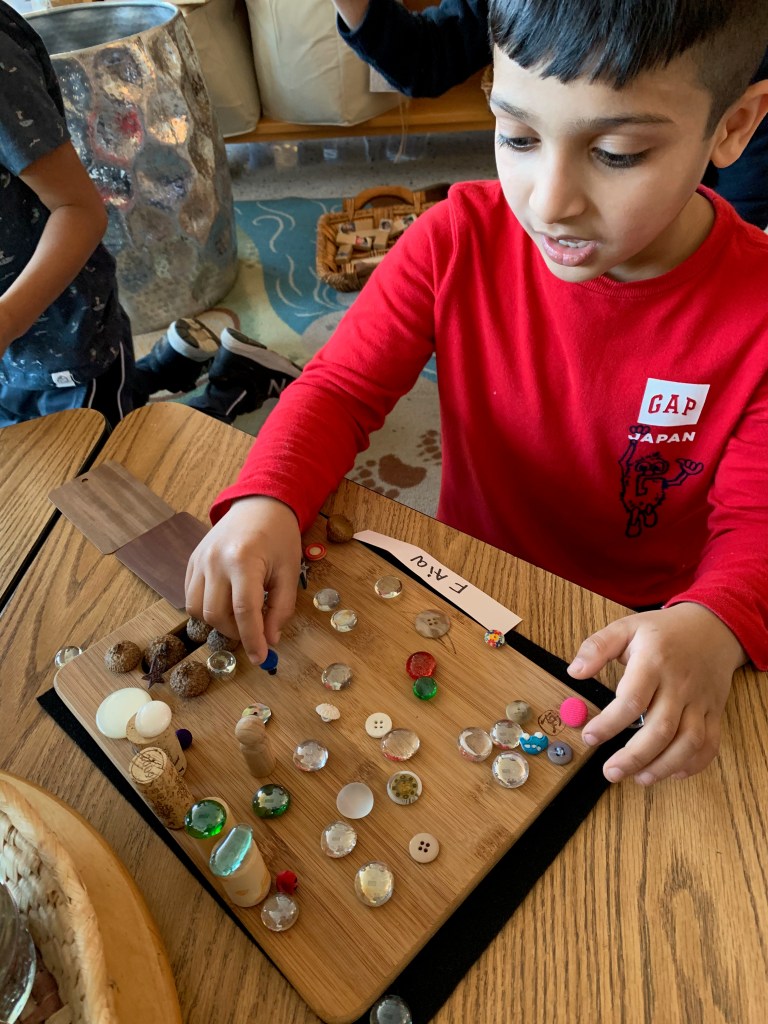
What if we considered that the body is fundamental to learning? It’s where our sense of being in the world lies – with listening, feeling, being and becoming. How might this change our thinking as we plan the classroom space? For me, this means paying attention to the aesthetics. What senses are activated as I enter the classroom? What do children hear, smell, feel, see? What invitations are available for children as they explore the classroom? Can I invite children in to their space without having to say, “no, don’t touch, that’s for later, etc..”? Is it truly their classroom? Can they find cozy spaces with things familiar to them – such as family photos, favorite books from prior grades, stuffed animals of favorite characters, invitations to play with colorful and interesting objects? I want to fill my classroom with natural lighting or lamps, not the harsh overhead lighting. I will have larger areas for children to move and areas that are more compact, where children can make a tent or fit themselves into a smaller space. There will be a large group gathering area that is surrounded by shelves with our classroom library, so children feel like they are being hugged by favorite authors and the books we will love and learn with. I will have spaces to explore sensory materials, such as sand and water. I will have tables for children to work at, as well as spaces to stand and work or be on the floor. I don’t assign seats, as I believe that children can choose where they work best. This is something I will teach right away. Giving children control of as much as possible will help our classroom community come together and will give children a sense of agency and self-efficacy. I am continually asking myself what I can let go of controlling and hand over to the children. There are a surprising amount of things that teachers think we need to do that children are quite capable of doing! What might you give over to the children this year?

Do our classrooms honor children, who they are and who they are becoming? Do they honor the ideas, ethics, attitudes and cultures of the children and the teachers, as a community? I want to be sure my classroom is a blank page, so to speak, when children enter it. The walls are empty – with the exception of our linear calendar wall, family photos, our daily routines and a few select pieces of art that appeal to me and to children (Kandinsky, VanGogh, Picasso) or collaborative art from previous classes. The rest of the room will eventually be filled with children’s art and the tracks of their learning. I will have the fundamental space set up in a way that reflects what I know about young children and how they learn, but it will have many possibilities to be formed into a space that honors our community. The context is always evolving in response to what I observe and what the children tell me. Last year’s class loved blocks and our block area kept growing. The upcoming class might be the same, or they may need a larger art area. Time will tell. As I get to know them, we will negotiate the space to work for all of us. I want to be sure to keep my classroom clutter-free and well taken care of. I want to be sure that all materials I put out have a specific purpose and are taken care of. I model this and trust that children will take care of things. Children notice the “un-taken care of” in a space and it sends a message. When we take great care of our environments, the children will follow. Our environment is constantly transforming and evolving, as we follow the children and our community as it is being created.

Care takes care and brings care.” Bellelli School teacher

What are your wonderings as a new school year approaches? How can you help make your environment an “aquarium”, reflecting the community of learners in the space this year?

Check back soon for the next post reflecting on Reggio.

Writers Playshop on the NCTE Blog!

The National Council of Teachers of English (NCTE) is currently doing a blog series celebrating the National Day on Writing®.

I was excited to have our work in Writers Playshop be featured on their blog. You can read the post here.

Be sure to check out the many other posts by teachers passionately committed to teaching young writers. I promise these posts will inspire and engage you. Enjoy!

I’ll be at NCTE this year, presenting on Friday at 3:30 in Room 256 with Kassia Omohundro Wedekind and Christy Thompson. I hope we will see you there!

Dear thinkers, learners, wonderers…teachers,

This letter is for the teachers who are thinkers. Learners. Wonderers. Observers. Reflective practitioners. Teachers, in the most real and authentic definition of that term. 

How are you doing? 

I write this because I see the struggle. I see the frustration. I see the joy being sucked out of our profession. I see the joy being sucked out of our learners.  I feel it as well. And I am concerned. Deeply concerned. I am concerned for what this means for teachers, for children, for families, for communities, for society, for the future. 

Teaching and learning go hand in hand. As teachers, we must be life-long learners. We must always question, wonder and dig deeper to truly understand how we can meet the needs of our children and understand the “why” behind what we do. If our profession is relegated to following a scripted program and spending precious planning time reading a curriculum program and not learning, questioning, talking, looking at children’s brilliant thinking and designing research-based instruction that serves the learners in our classroom at this moment, then we have failed as a system.
We have a great opportunity right now to use current research on literacy learning (and much has been, and continues to be, published by literacy researchers), to stay abreast of literacy learning and combine this with how we know children learn, based on years of research in learning and education. There are understandings that will be replaced in light of current research, but some things are still supported by research and should not be replaced. We can use all that we’ve learned in our careers as educators to bring the very best instruction to our children each day. Veteran teachers can help new teachers understand how to learn and reflect as a teacher. But there needs to be time and opportunities for conversation and true learning. Not more trainings where you are told “you don’t even have to think” or that there “is no space for questions”. We need questions and thinking now, more than ever.

Learning is at the heart of what we do. Research gives us new things to practice and new approaches and considerations to incorporate into our teaching. Science helps us understand the “why” behind what we do and helps us learn better and stronger ways to reach the children we teach. But research and science MUST be paired with deep thinking and talk about our methodology and our pedagogy and must always be connected with the learners in our classrooms and the teachers. There is no one-size-fits-all curriculum, as much as some might hope for this. Teaching is a science, AND an art. And when the agency and trust of teachers is taken away and replaced with a program to be followed verbatim, written by publishers who do not know the teachers or children, then we have big problems. When teachers are told to follow a written script with no conversation, reflection, understanding or learning as an educator trusted to teach the children, it will not be sustainable and will result in a serious lack of learning, joy for learning and longevity in the teaching profession. We need to bring back the learning to our profession. 

Teachers, I see you. I hear you. And I’m with you. Please find a way to take care of yourself and fuel your learning minds and hearts. You, and the children you teach, deserve that.

With love and hope,

Katie

Please feel free to comment, vent, share your feelings, share your hopes, share how you are sustaining yourself in this profession…anything that can help you in this magical, and so very hard, job we do. I truly do want to know how you are. We need to take care of each other. You are not alone.

Writers Playshop

“Once upon a time there was a magical forest. And a lion lived there. But he didn’t have a friend. So one day he found a girl who wanted to live in the magical forest with him. She had a crystal that lighted up when she was with kind people. The lion loved the girl and they were friends. They lighted up the crystals to find other friends and be kind. They loved the animals, the magic forest and everyone. The end.”

Storytelling in kindergarten. It’s my “magical forest”. From our first day together, children are encouraged and invited to find the stories in our classroom. Susan Harris MacKay inspired me to believe and to share with children that “stories live everywhere”! And their job (our job!) is to find them and share them. Each day that first week of school, I bring a material to our gathering rug. It might be blocks, paper, loose parts, clay, sand, magnetic tiles, etc. – any material that is in our room out for them to play and engage with. I make up a simple oral story using the materials and then invite the children to find their own stories in our room.

“Stories live everywhere! What story will you find today? Off you go!”

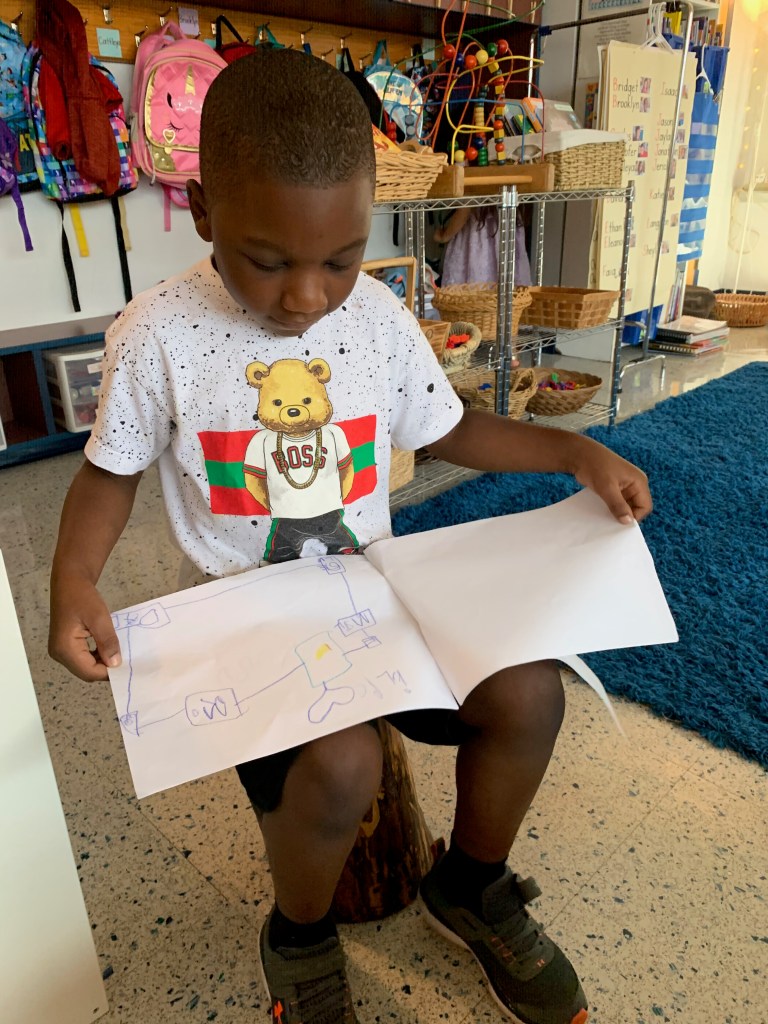
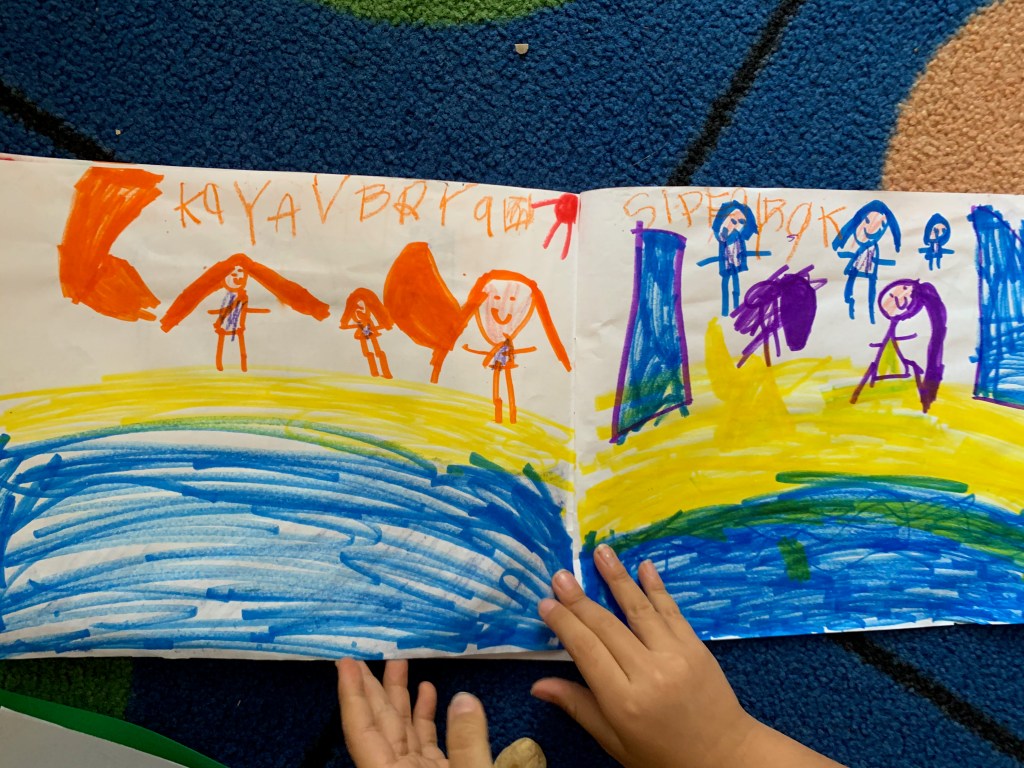
They don’t need to be asked twice. Children eagerly run off to find their stories. They find stories as they play at the light table, the dramatic play area (equipped with minimal props – real kitchen items, scarves, baby dolls), the block area, the music area, the art table or the Story Shelf (our shelf with loose parts that I add to on a regular basis – starting very small and simple and expanding as the year goes on). They soon discover that stories do, indeed, live everywhere. I roam around the room, eagerly listening to their wonderful stories. And then I invite them to put their story in a book, so it can live forever. There are blank 3 page books in our art area and many of the children choose to make a book with their story right away. But some wait a while to take this next step. And that’s okay. After listening to their classmates tell their stories, while looking at a photo I took and projected, or sitting beside the storyteller, or listening to an author share the book they made – all children will eventually want to make books so their stories can live forever.

But for now, the joy is in the process of finding stories and sharing them with one another. Oral language is a key component of a kindergarten classroom. We learn about characters and setting and children delight in knowing those words and purposefully plan these elements in their stories. They realize that stories live in the cafeteria, in our specials classes and on the playground. I continue with loads of storytelling as we create our story together as a community. They lean into an identity as a storyteller. They become confident in their oral language and their ability to capture the attention of peers and adults with their words. They learn story language and what makes sense. They learn how to answer questions from friends and add details to make their stories clearer. These first days set the stage for the rest of our year together. Our Writers Playshop follows a predictable structure of a whole group focus lesson, story making time and ending with a sharing time. But our story telling focus quickly expands.

We move into story acting – where children dictate a story to me and then they become the director as they choose actors and actresses to act out their story in front of an audience of their friends. We take our storytelling into math, where loose parts and tiny toys help children create math stories to explore mathematical thinking. We grow into our identity as authors and illustrators as book making takes off and our classroom library becomes full of the books we make. And we grow into our identity as readers, as we listen to many, many rich read aloud books and ask ourselves, “what did we hear or read today that might help us as story makers, authors and illustrators?”.

This work is not new, nor is it exclusively mine. I stand on the shoulders of so many wonderful educators such as Katie Wood Ray, Lisa Cleaveland, Donald Graves, Lucy Calkins, Matt Glover, Trisha Lee, Vivian Gussin Paley, Michelle Kay Compton, Robin Chappele Thompson, Georgina Ardalan, Angelique Thompson, Kenisha Bynoe, Susan Harris MacKay, Matt Karlsen, Angela Stockman and the many, many educators I’ve connected with through the years of studying writing, literacy and the Reggio Emilia approach to learning and teaching. Our Writers Playshop (named “Playshop” several years ago by a child who asked me why it was called “workshop” when it was really play) is a product of my 33 years of teaching, learning, unlearning, observing, reading, writing, researching and reflecting. It changes often, and I continue to learn and listen to what the children are telling me. There is not a script or a program to follow. It’s about following the children. I’ve found that the standards and expectations of a public school kindergarten classroom can be far surpassed with this way of teaching. Children go way beyond what is typically expected in a kindergarten curriculum. Writers Playshop is a powerful way of teaching that honors, challenges, supports and celebrates children and their learning – for life, not just for school.

If you’d like to get started, here are a few resources you might check out. Stay curious, keep reading and talking with colleagues and most of all, trust the children. Play is how children learn. Jump in tomorrow – join your children in finding stories, telling them and writing them down. Trust the children. Story creates our communities and brings joy to our lives. It’s truly magical.

Story Workshop: New Possibilities for Young Writers by Susan Harris MacKay

Princesses, Dragons and Helicopter Stories by Trisha Lee

StoryMaking: The Maker Movement Approach to Literacy for Early Learners by Michelle Kay Compton and Robin Chappele Thompson

The Gift of Playful Learning by Angelique Thompson and Kenisha Bynoe

About the Authors: Writing Workshop with Our Youngest Writers by Katie Wood Ray and Lisa Cleaveland

“Children have a right to high-quality, vigorous instruction intended to support their academic skills within the discipline of literacy. But those skills must be inextricably linked to stories – to the paths every child determines need clarity in their own life. Increasing literacy skill should be seen as a means by which the stories flowing through each of us are supported as the effort they are to make better sense of the world in which we experience the complexity of our everyday lives. Literacy skills are no end in and of themselves, and treating them as such takes us further from the capacity every child has to use them to find and share our stories.

Susan Harris MacKay in Story Workshop: New Possibilities for Young Writers

Your Brain on Art

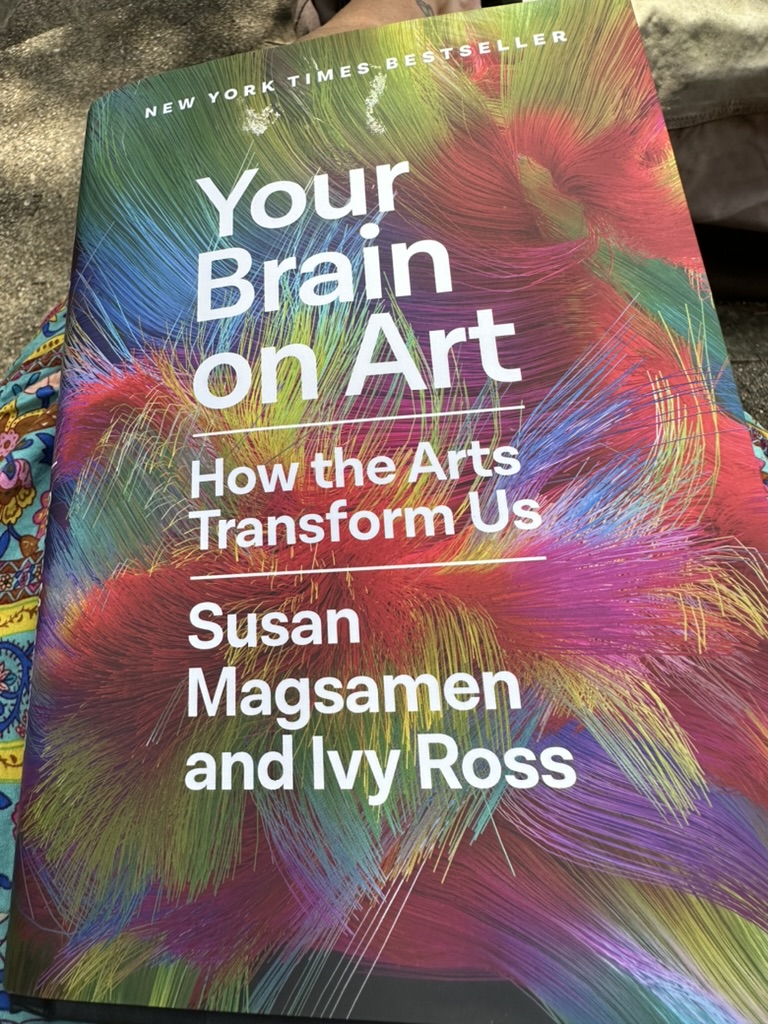
I just finished reading Your Brain on Art: How the Arts Transform Us by Susan Magsamen and Ivy Ross. There was so much to consider while reading this book! The folks at The Studio for Playful Inquiry are doing a book study this month, and I’m excited to dive deeper into this book with others.

I was left with the understanding of how art is (or should be!) essential in our lives – for physical health, for emotional wellness, for connection, for relationship, for making sense of the world we live in, for relating to others, for self-expression, for being fully human – for pretty much everything. The importance of the arts is scientifically proven and well-researched in the field of neuroaesthetics (the scientific study of the neural bases for the contemplation and creation of a work of art). Art experiences should be available to everyone.

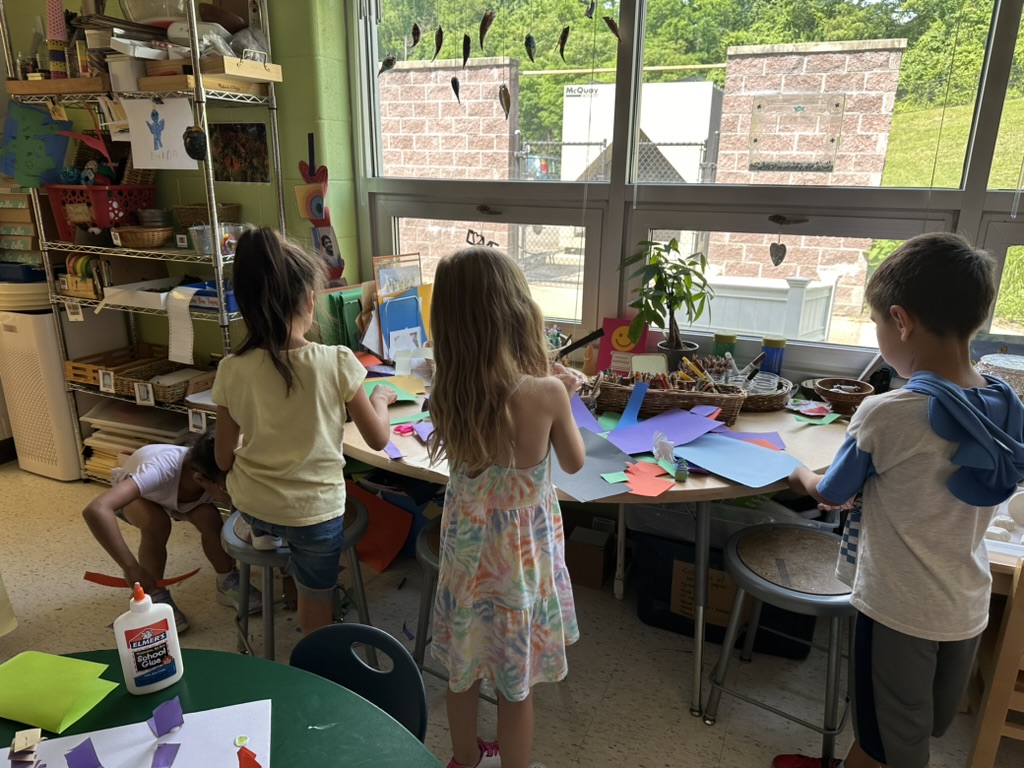
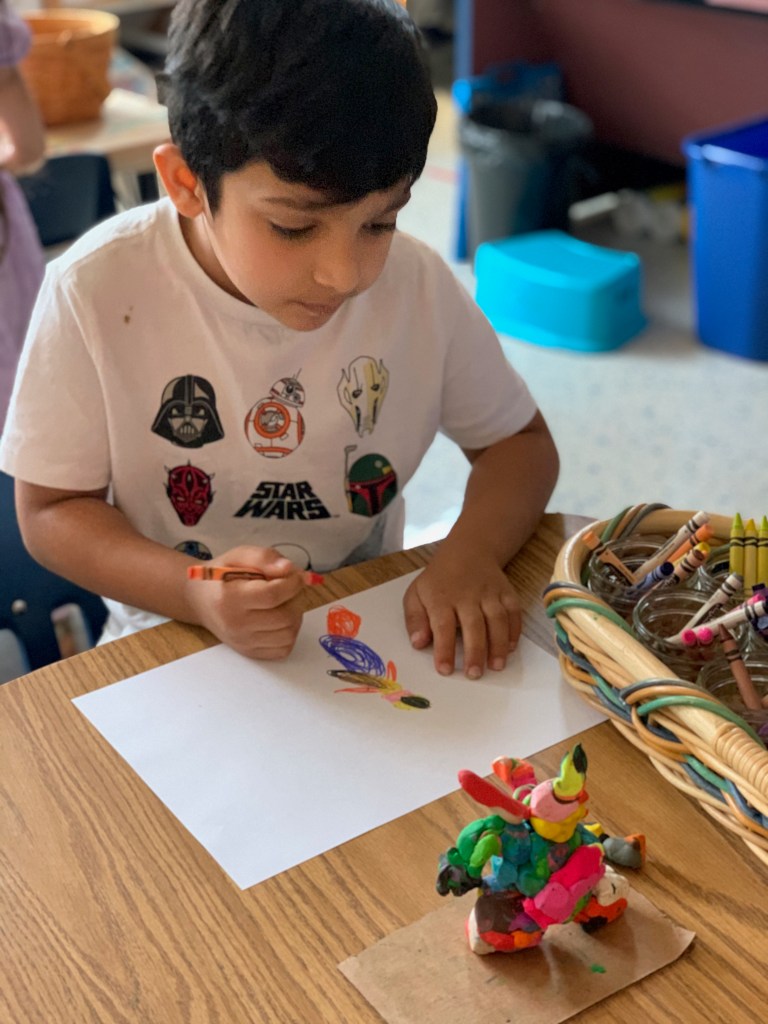
And school is one place we can make those art experiences available! I believe art is a right for children. And to be clear, I’m not talking about crafts – where children are instructed to follow the teacher’s lead and example to create something that looks like everyone else’s craft. I’m talking about art experiences that are open-ended, process oriented (focused on experimenting and exploring materials as one creates), playful, unique and limitless. Art is a way children can play, communicate, process experiences and feelings, use their imagination and negotiate meaning in endless ways. Our art experiences include paper, clay, loose parts, nature, markers, paint, pens, keyboards, drums, rhythm sticks, storytelling, drama, nature walks, light boxes, projectors, pencils, chalk, scissors, wire, cardboard, beads, staplers, tape and more.

In our kindergarten classroom, the art area is a favorite space to go – and this art area often expands throughout the room – and outdoors. I provide a multitude of materials, adding more things as children request them or when I see that a new material is needed. Materials are displayed and arranged in ways that children can access them independently. Children are invited to make and create in the art center during morning arrival, our Readers and Writers Playshop time and Choice Time throughout the day.

I introduce artists and their works throughout the year. Andy Goldsworthy, Alma Thomas, Howardena Pindell, Wassily Kandinsky, Picasso, Monet, Henri Matisse, Jackson Pollock, Joan Miro, Paul Klee, Fanny Sanin, Bisa Butler, Jean-Michel Basquiat, Jeffrey Gibson, Sonia Delaunay, Alan Shields, Georgia O’Keefe and Alexander Calder were some of the artists we discovered this past year. I also spend a great deal of time talking and learning about illustrators in the books we read. I teach the children to read art with the “I see, I think, I wonder, I feel” thinking routine from Project Zero. Each time we look at art or think about art, I make the connection that they are artists, too – and they might be inspired by the artists we get to know, or each other. I want the children to see themselves as artists and to have a sense of self-efficacy surrounding art and being creative. Creativity is an essential piece of our lives and our classrooms should nurture and allow for creative experiences.

“Creativity seems to emerge from multiple experiences, coupled with a well-supported development of personal resources, including a sense of freedom to venture beyond the known.” Loris Malaguzzi

How can you provide experiences and creative opportunities and invitations for the children you teach? How can art become another language in your classroom? And what might that mean for you, as an educator? Having a “sense of freedom to venture beyond the known” makes me think of limitless possibilities for children, and for us as educators. I think art can provide that space for us.

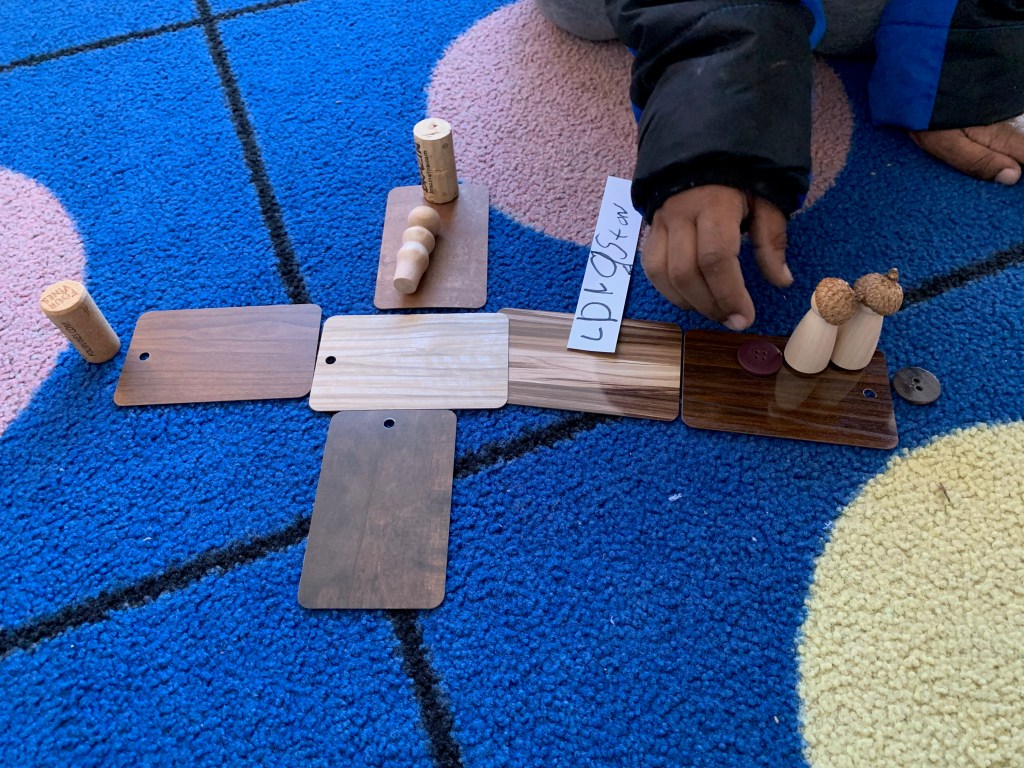
Using loose parts, paper and pen to tell a story
Making stories in the garden

Catching Readers, Sparking Joy

Welcome (back, perhaps?) to the Catching Readers blog – with the new name of “Catching Readers, Sparking Joy”. My last post on this blog was two and half years ago and my, how things have changed since then. It’s been quite challenging to know how (or why) to continue with this blog. But part of teaching for me is always learning, always growing, always questioning and always wondering. And I feel as if my head and notebooks have been filling with ideas that will help me (and perhaps some of you) navigate this current world of education. While Instagram has been my preferred space for sharing lately, I’ve missed writing. I intend to use this blog as a space to joyfully continue my learning, growing, questioning and wondering through writing, reflection and photos. I hope this blog sparks joy for you as an educator and for the children you teach.

Can we live without joy?

Can we teach without joy?

“Nothing without joy.”

Loris Malaguzzi

Writers Playshop

Playing a story with clay

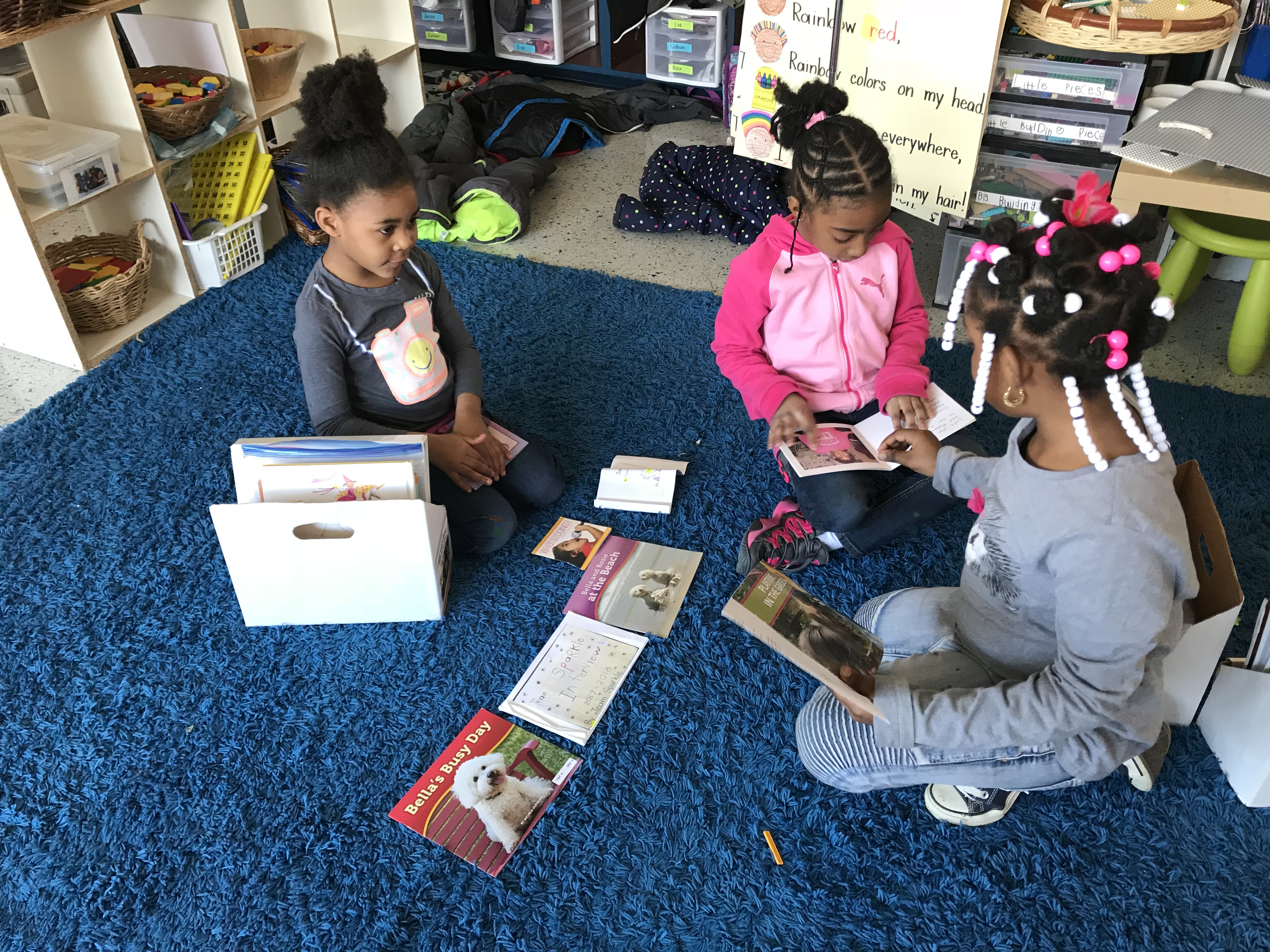
I’ve been playing around and exploring the idea of Writers Workshop being more like a makerspace or play space for several years. Katie Wood Ray, my number one mentor of writing with young children, speaks of writers “making stuff” in many of her professional books, and I’ve always loved this. While I fully embrace the idea of kids making books, I don’t privilege book making over other making – writers “make stuff”, and a list, a puppet or a lightsaber might be exactly what that child writes today. As I thought about how my thinking surrounding Writers Playshop has evolved, many mentors come to mind. Karen Wohlwend’s work in Literacy Playshop was one of the first books I read that challenged my thinking about workshop. Brad Buhrow and Anne Upczak Garcia showed me many different possibilities for writing in their book, Ladybugs, Tornadoes and Swirling Galaxies. I began to use their ideas many years ago when I taught first grade. This is one of my most often revisited professional books. Angela Stockman’s Make Writing was the first book I read that helped me to really envision what this might look like in the classroom. Her work continues to inspire me and make me question, revise and reflect on my practice. A few years ago, I saw Michelle Compton and Robin Thompson speak about their story workshops – they now have a wonderful resource called StoryMaking, that was published last year. When I discovered the amazing Opal School’s work at a NCTE conference three years ago, and saw the beauty that is story workshop unfolding in magical videos, articles and stories, I was in awe of what’s possible for our writers. They continue to inspire, challenge and guide my thinking. Opal School, and the resources they provide, are truly a gift to educators and to children. Building on best practice, new learning, new thinking, questioning, wondering, playing, kidwatching and reflecting, I continue to transform the way our Writers Workshop – or Writers Playshop looks. Here’s a peek into Writers Playshop in our kindergarten classroom.

Sharing a book

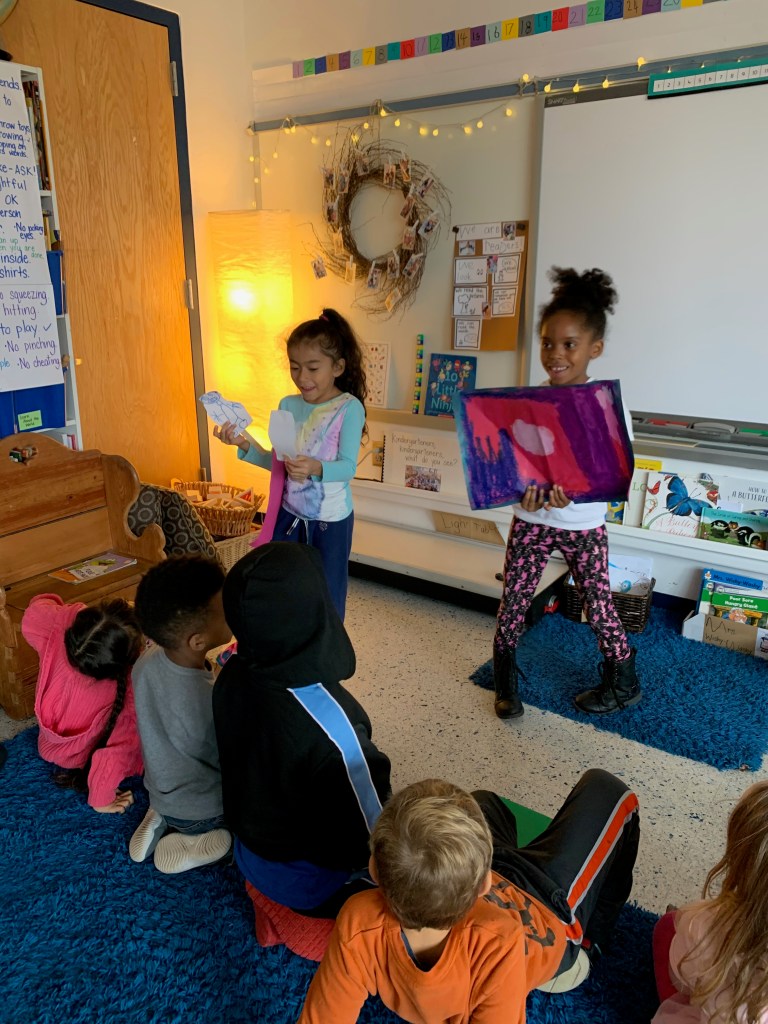
Our Writers Playshop is a scheduled hour every day, although kids often choose to write and do Writers Playshop activities during Explore, our free play times. We start with a short, whole group focus lesson (mini-lesson), that might be on craft, process, mechanics, genre study, interactive writing, introducing a new material, modeling a way to play out a story, oral storytelling, looking at a mentor author or reviewing routines. Then we move into our Playshop where kids are finding their stories through play of all sorts, making books, making posters, writing letters, making puppets, reading, making art or creating in some way. I confer with kids, play with kids and occasionally meet in small guided writing groups. We end our Playshop with sharing. This sharing and celebrating time often becomes another focus lesson with the kids leading the class to teach others what they tried today. You’ll notice the structure and foundation is solidly built on workshop teaching as written about by Donald Graves, Lucy Calkins, Nancie Atwell, Mary Ellen Giacobbe, and others, with choice, time, response, identity and community at the heart of the workshop.

Writers making books and making “stuff”

If you are new to writing workshop, or an experienced workshop teacher, this is an excellent resource. I’ve also written about writers workshop, here, here and here – listing many of my favorite resources. The older posts speak to my foundational beliefs about teaching writing. While my thinking has evolved and expanded over time, I still hold these beliefs true – all children are writers and writing can start on day one in kindergarten (and all grades). I start our Writers Playshop by helping children see themselves as writers and establishing identities as writers, authors and illustrators. I start this on day one in kindergarten by introducing blank books and inviting children to make books about something that is important to them – just like their favorite authors do.

Making books
Sharing a story made with painting and puppets

I then begin to add in the play component of our Writers Playshop. I slowly introduce new materials as possibilities to make stories (clay, blocks, paint, loose parts, puppets, dramatic play, etc.) – often modeling them to make a story in Writers Playshop, shortly after I’ve introduced these materials in Explore. I invite the children to find a story in these materials during Writers Playshop. I then always follow up with the invitation, “after you play your story, you could write it in a book if you want it to live forever!”. The kids take it from there!

Playing a story with loose parts

We made an anchor chart together to show the difference between our Explore (free play) time and Writers’ Playshop. This helped kids I noticed weren’t yet making a story or an information text via oral storytelling or written bookmaking during Writers Playshop. I felt that it gave them a little nudge when they knew the expectation was to find a story and think of how they might share that story. We also made anchor charts about where stories live and what a story might be. Their story might be something that happened to them, a make believe story or a true story about something they know a lot about, like squirrels or winter.

How are Explore and Writers Playshop different and the same?
Ongoing “where do stories live” chart
What is a story?

Writers Playshop is a favorite time of each day! My kindergartners find stories in so many things, and are inspired to make books (and many other writing pieces) that will “live forever”. They see themselves as authors and illustrators. The making and play space of our Writers Playshop is accessible to all, and highly engaging. It is playful literacy and pure joy.

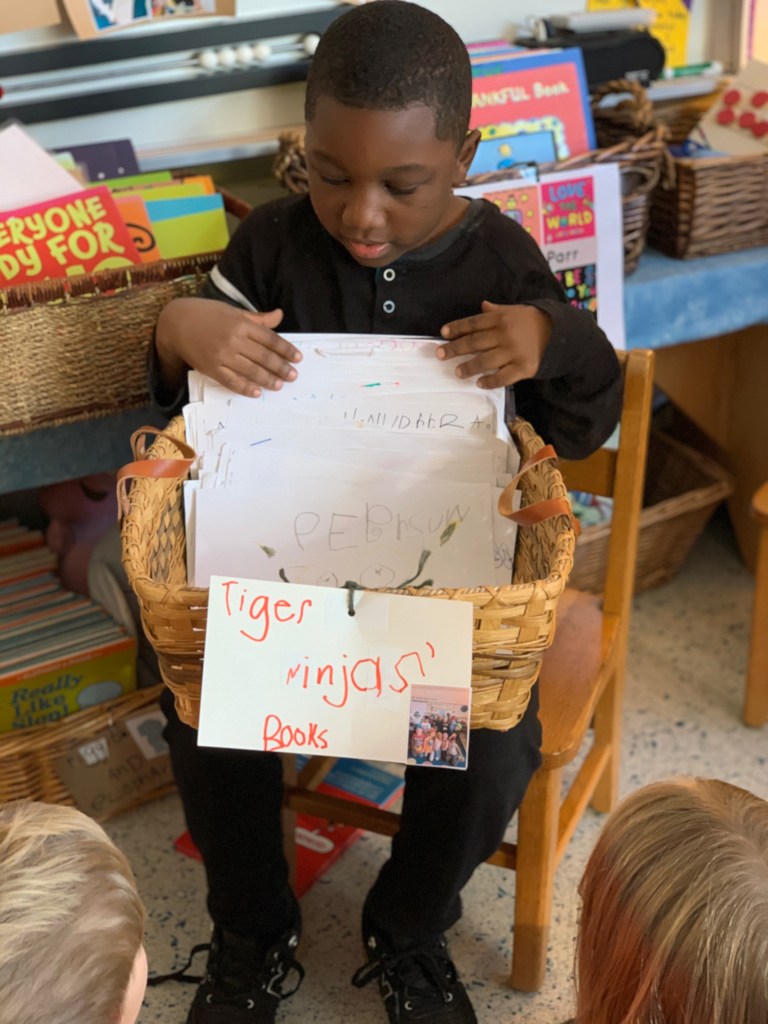
“We need a basket of OUR books in the library!”

Here are a few more of my favorite resources if you’re interested in bringing play to your writers workshops: Opal School Story Workshop Blog Post 1; Opal School Story Workshop Blog Post 2; Story Workshop Video; Equity and Access Through Story Workshop; Starting With Story Workshop – Opal School Please share your stories of how you make writing a playful, joyful time in your day! Happy playing and happy writing!

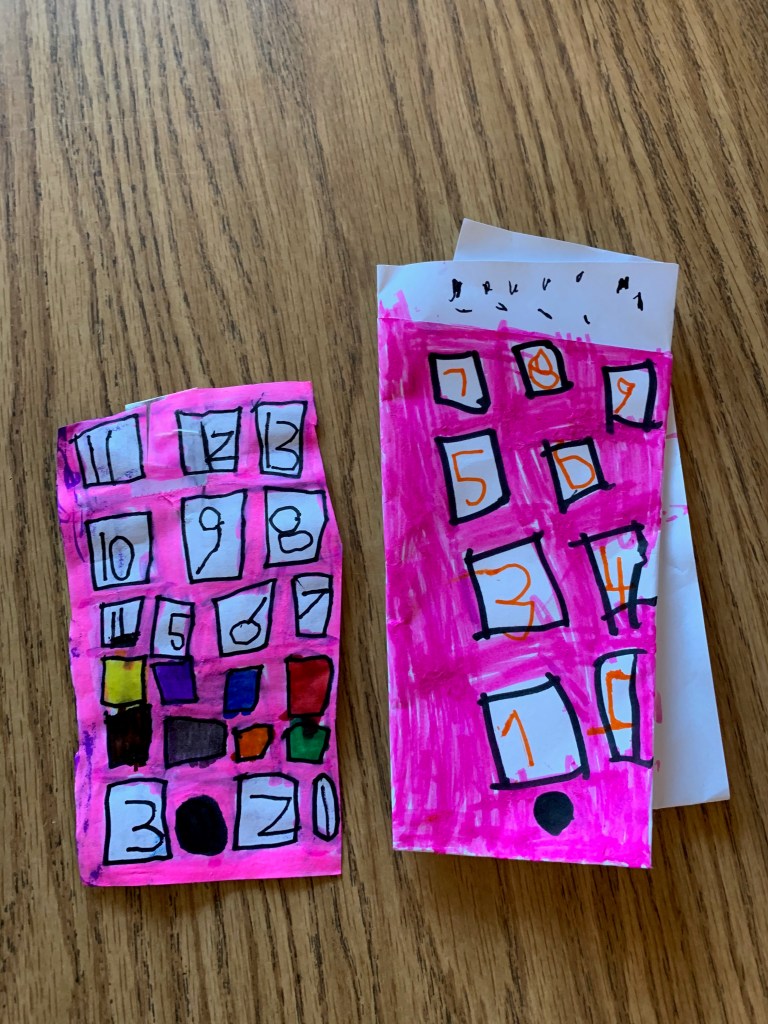
Cell phones made during Writers Playshop
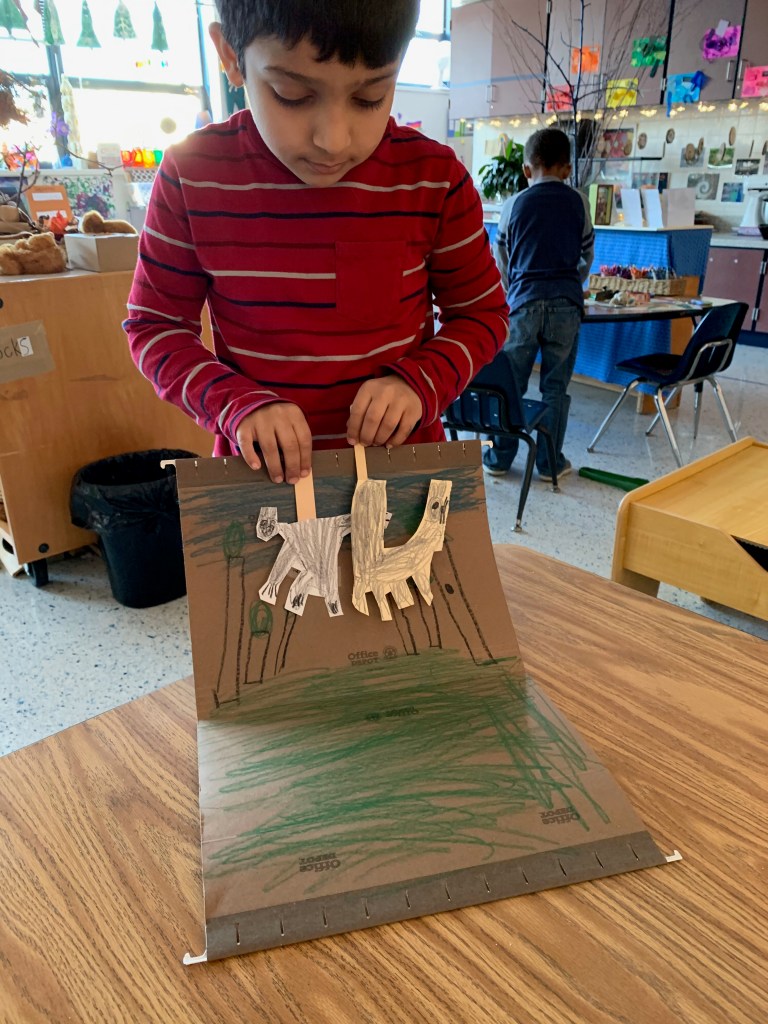
Puppets and a file folder setting to tell a story

“Play, while it cannot change the external realities of children’s lives, can be a vehicle for children to explore and enjoy their differences and similarities and to create, even for a brief time, a more just world where everyone is an equal and valued participant.”

Patricia G. Ramsey – Renowned Early Childhood Educator

Leprechauns and Jaguars

It’s Friday afternoon Explore time in my kindergarten classroom and we have a lot going on. The room is buzzing with the happy sounds of children learning, talking, playing, negotiating problems and enjoying each other. It’s how we begin and end every day.

IMG_7212.jpg

A group of kids are working intently on building a leprechaun trap. They are debating ways in which to catch the leprechaun without hurting him. Or “her”, as the conversation turns to deciding what gender leprechauns are, because, “leprechauns can be girls, too…it wouldn’t be fair if leprechauns were all boys, right? Fairies can be girls or boys and leprechauns are the same way.” They decide that having a whole lot of tape on the walls, floor and ceiling will make the leprechaun stick no matter where it runs around in the trap. They then contemplate what will happen if we do catch a leprechaun. Will we build it a house…or maybe it can just live in the fairy house? That one is still up for debate.

IMG_7210.jpg

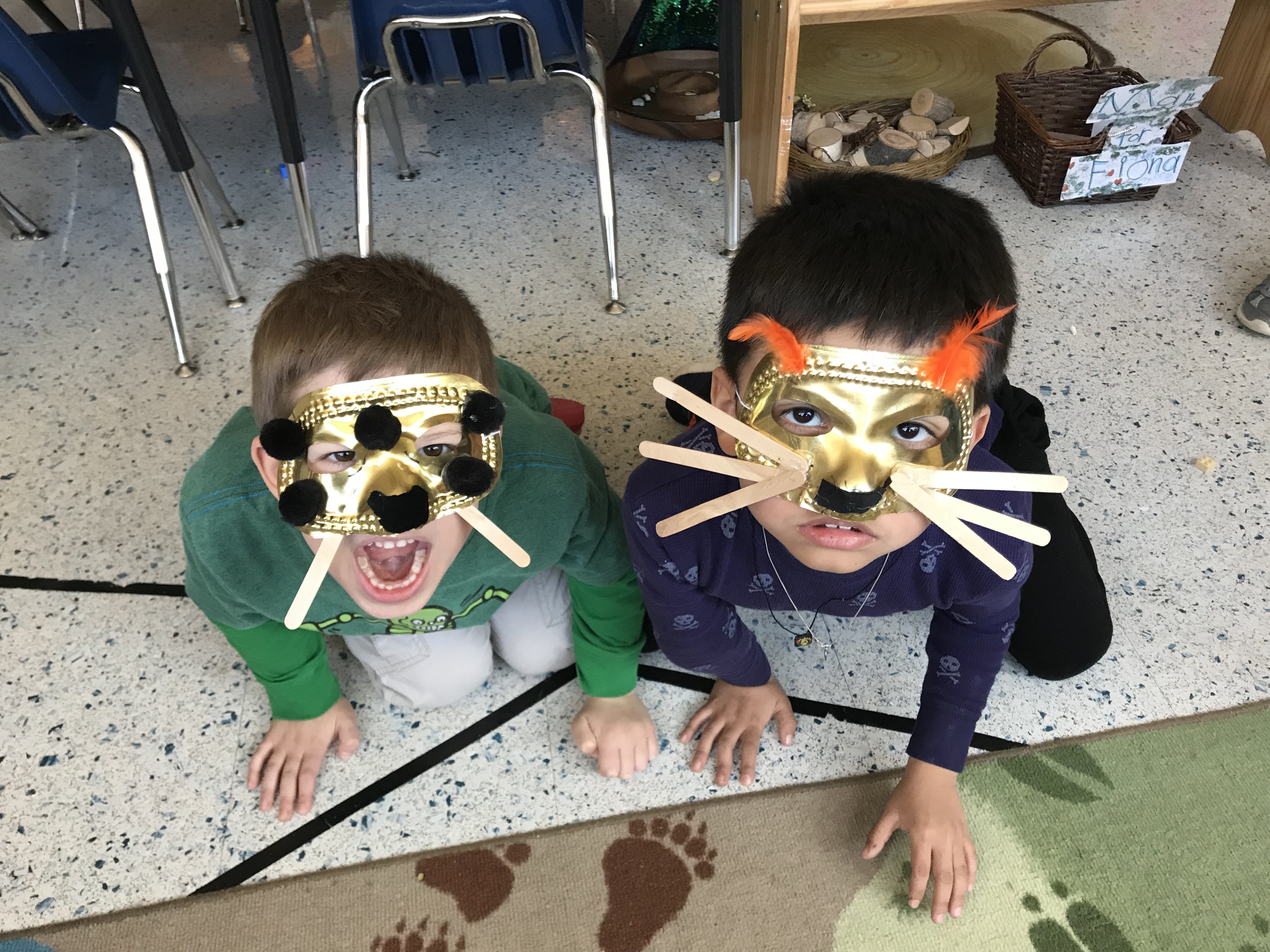
At the art table, two kids are carefully constructing masks to be jaguars in our rainforest dramatic play area. They are looking closely at a picture, talking about the teeth, counting the number of whiskers, picking out materials that will make the mask look and feel like a jaguar and making big plans for the jaguar play that will begin next week. (ummmm…that may be my SOL on Monday…yikes.)

IMG_7218.jpg

Meanwhile, a group of kids are building a structure with MagnaTiles and unifix cubes. The unifix cubes are Minecraft people who live in the structure made of squares, triangles and rectangles. The kids talk about what shapes they are using, how to make the structure stronger and deciding roles that each person will play as they go in and out of this structure. To be honest, I don’t really understand the Minecraft play, or the significance of 3 unifix cubes as a person, (and believe me, it HAS to be 3!) but the five kids deeply engaged in the play do. And that’s all that matters.

Finally, a few kids are making mobiles and sculptures inspired by Alexander Calder and our visit to the National Gallery. They are building their art and talking about what the shapes look like, what colors they are and how they could fit together. They are cooperating, collaborating and so very proud of their art.

IMG_7201.jpg

I stop and take it all in. Kidwatching. As I watch and listen, I am in awe, yet again, by the power of play. The thinking and creating that happens during our Explore time goes way beyond any standards or curriculum. It’s kid created, meaningful, authentic and deep.  I am grateful to be in a school where play is allowed, honored, encouraged and respected as a critical part of our early childhood classrooms. I wish all schools, and all children, had that gift.

Nothing without joy.

Screenshot 2018-03-01 22.18.35

Day 9


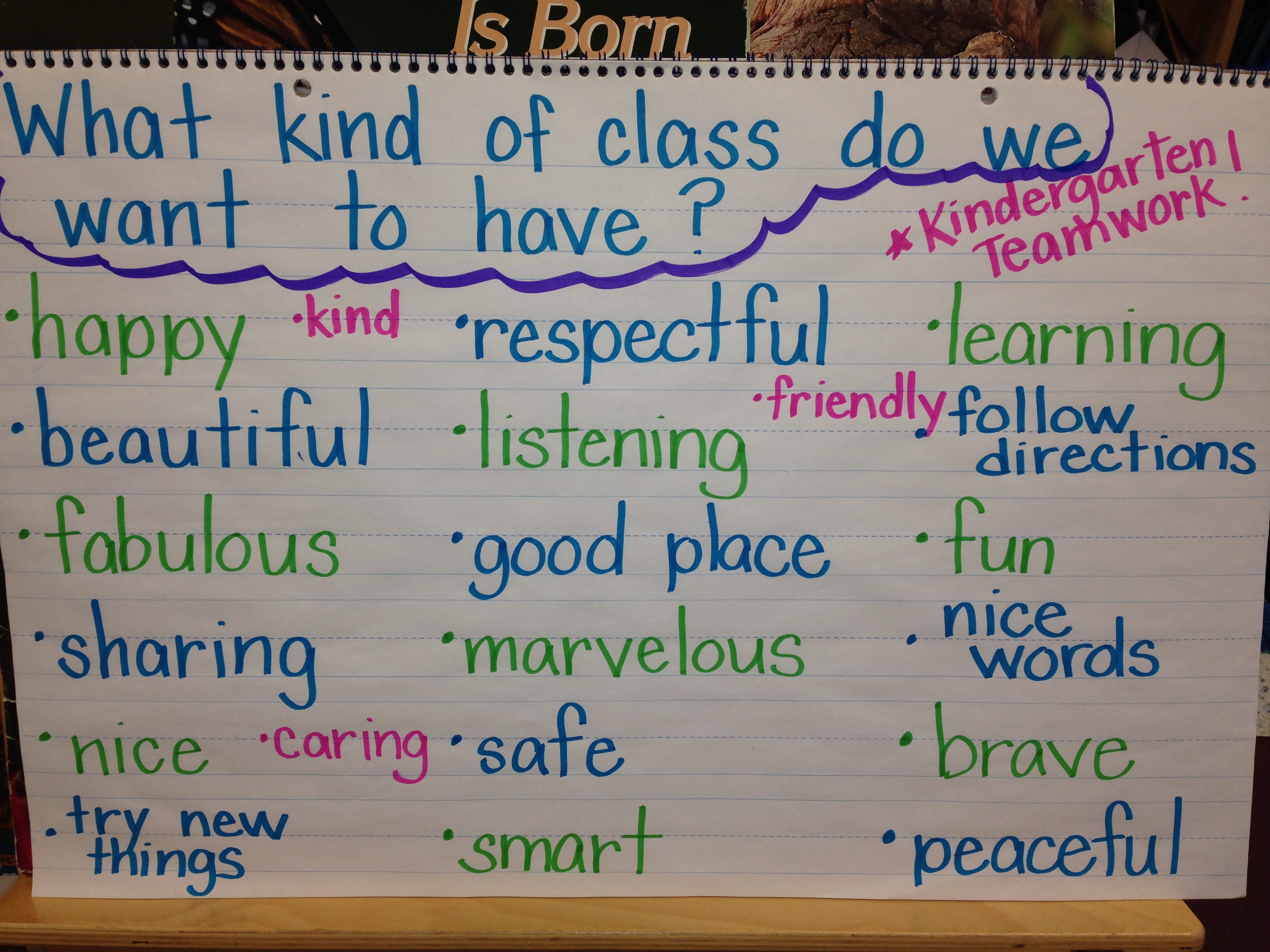
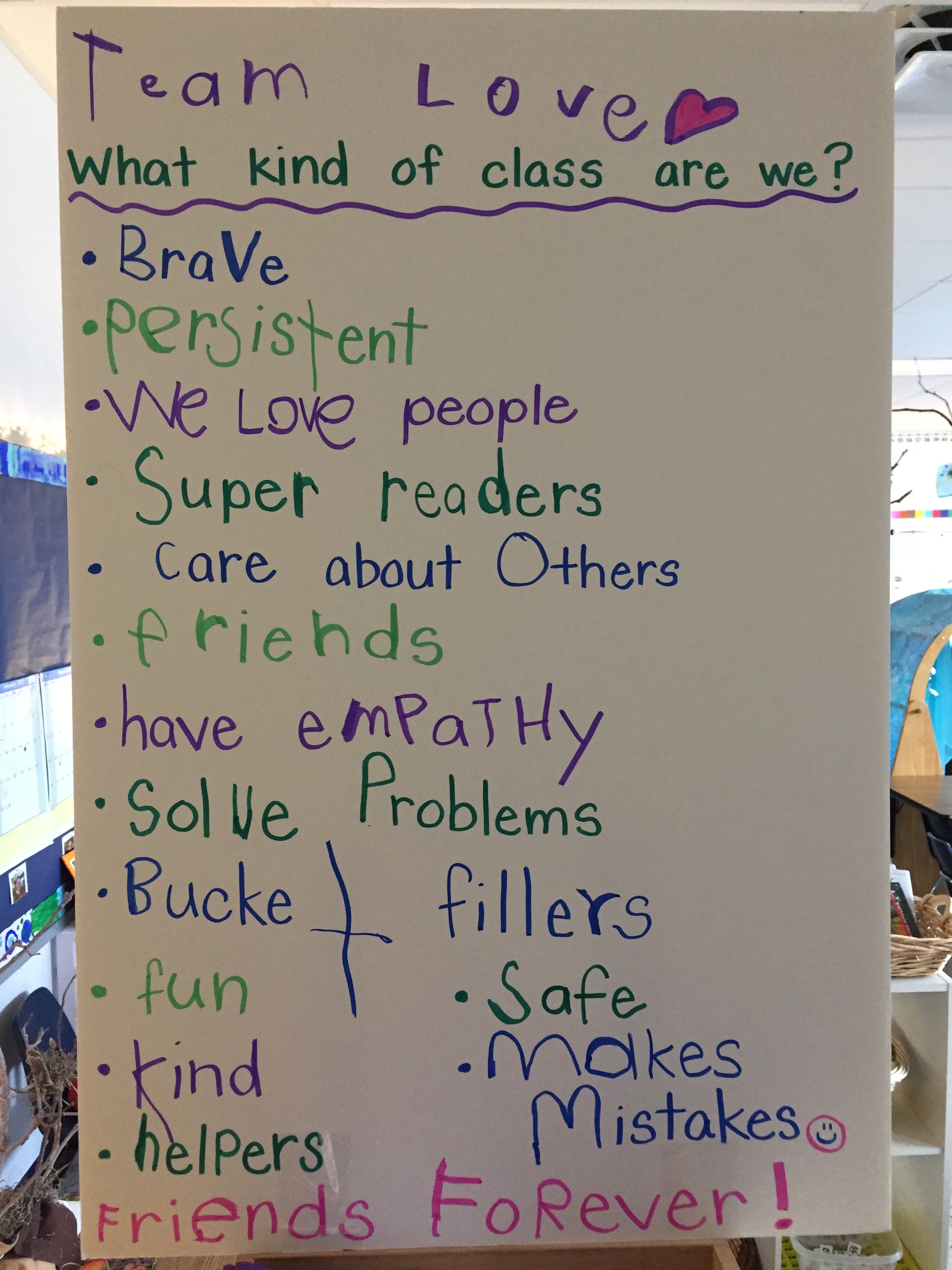
What Kind of Class Do We Want?

img_6072

*Update: After presenting at the WLU conference in July 2018, several people tweeted out my “Who We Are” charts. I’ve revised this previous blog post with charts from the past 3 years and updated book recommendations. Enjoy!

I love the way winter break is like pushing the reset button. I’ve enjoyed relaxed days with friends, family, books and the mountains. It’s been fabulous. It’s recharged my mind, my body and my soul. I’ve allowed myself to step away from my classroom (physically and mentally) and now I feel a renewed sense of excitement, energy and possibility as I get ready to return in a few days.

My kids and I have enjoyed 17 days off. While it’s been wonderful, I know that January 3rd is going to be like starting all over again in many ways. Seventeen days to a five and six year old is an eternity. But I love the idea of a second “first day” of sorts. It’s a chance to re-establish our community, to get to know one another again, to reteach those things that were falling apart in December and to revisit what kind of class we are. It’s like a blank slate that we can create together again.

One thing I always do that first week back is to ask my kids, “what kind of class do we want to be? What kind of community do we want to have? Who are we?” Those are big questions, but my kindergarteners never fail to think deeply, to reflect on what was working and what wasn’t, and to create a promise of sorts that guides us for the rest of the year.

We start this conversation in our morning meeting on the first day back. I take notes on chart paper as we talk and start to determine what really matters to us. We read new books and revisit old favorites that first week back and talk about what makes characters kind and likable, or unkind and unlikable, and how that might look in our classroom. We talk about what makes us special and unique and about how we are different and alike. We talk a lot about how we treat each other when we agree and when we disagree. We read books like Grumpy Bird, Each Kindness, It’s Okay to Make Mistakes – and any Todd Parr book, Red, A Crayon’s Story, I Used to Be Afraid, Walter Was Worried, The OK Book, Elephants Cannot Dance, Ish, The Invisible Boy, Have You Filled a Bucket Today?  and Last Stop on Market Street – just to name a few of our favorites. Some more favorites to add to this list are: Love, Love the World, Sparkle Boy, I Am PeaceBe KindThe Big Umbrella, In My Heart: A Book of Feelings, Brave as Can Be: A Book of Courage, All My Treasures: A Book of Joy,  The Skin You Live InJulian is a Mermaid, Why Am I Me?, I Am Enough,  She Persisted, Be Who You Are, Not Quite Narwhal, Chocolate Me!, and A Unicorn Named Sparkle. The main idea here is to determine what would make our classroom a wonderful place to be, how can we respect and celebrate each others differences, how can we live in a joyful place together, how can we make a difference  – and how can we contribute to that.

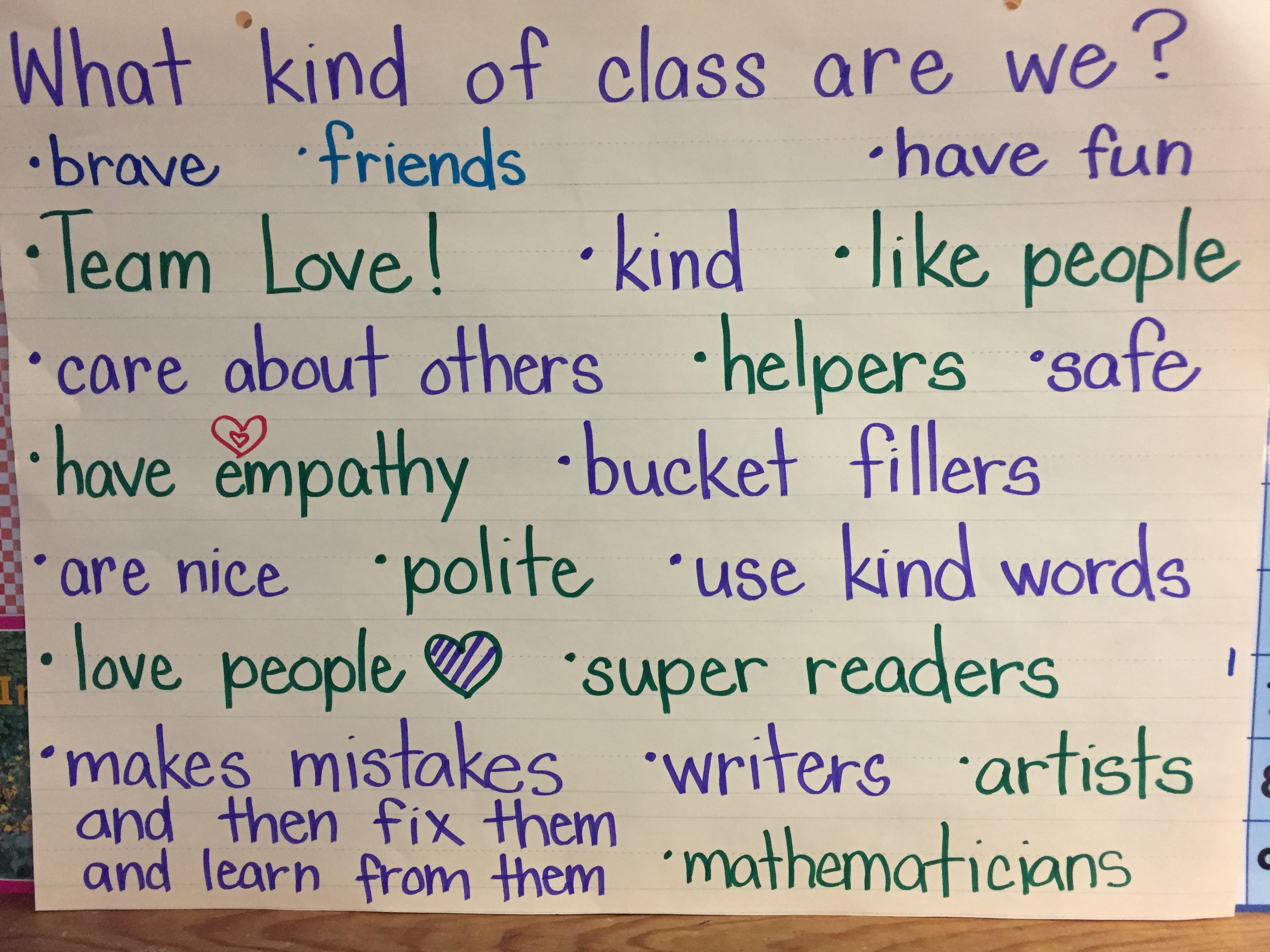
We revisit the chart daily, adding and revising our thinking. After a week or so, we create our own chart – through interactive writing – that reflects who we are in this classroom. We always display it in a prominent place so that, as one of my kids said last year, “everyone who comes in here knows that this is how they have to be. You can’t be mean and come in our room.”

2014-01-09 15.38.53

Last year’s chart as a work in progress – adding things to it as we discuss. (2016)

This document serves as a class pledge or promise for the rest of the year. We read it and use it as a tool to solve problems, resolve issues and remind us of what kind of class we are. It’s a powerful tool to come back to when the inevitable problems arise.

img_5638

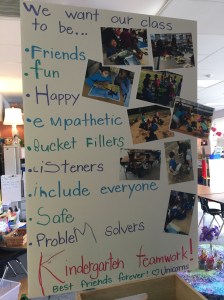
Last year’s  finished chart with photos! (2016)

How do you reset after a long winter break? Best wishes to everyone for a fantastic second “first day”!

Update: Here are the charts from 2017.

IMG_0826.jpgIMG_1036.jpg

And here are the charts from 2018:

IMG_5440.jpgIMG_5877.jpg

IMG_5926.jpg