Borrowing Ideas from other Authors

I became familiar with this book Painting the Wind at a session I attended at the NCTE conference and immediately went home and ordered it. Rose Cappelli shared some ideas for using this text with student writers. I emailed Rose to make sure it was OK  to share her lesson with our readers in hopes that teachers can take it and make it their own. Thanks Rose for saying YES! Rose and her writing partner Lynn Dorfman have written several books (Mentor Texts, Nonfiction Mentor Texts, and Poetry Mentor Texts) filled with dependable classroom ideas that work well with a variety of grade levels.

After sharing the book Painting the Wind, Rose asked us to focus on this paragraph:

“Summer is here.  And the painters come back to the island.  They come on the mail boat with their paints and easels and bags of books and favorite pots and pans. Some bring their children. All of them bring their dogs.”

As we noticed the variation in sentence length, she shared another from Sarah, Plain and Tall:

“The dogs loved Sarah first. Lottie slept beside her bed, curled in a soft circle, and Nick leaned his face on the covers in the morning, watching for the first sign that Sarah was awake.  No one knew where Seal slept.  Seal was a roamer.”

The variation in sentence length that Patricia MacLachlan uses certainly adds to the rhythm of the text.  But just getting kids to notice something about an author’s writing style will not guarantee that the students will take it on.  Rose and Lynn often follow this plan:

Hook the students with a great children’s literature that invites participation.

Share your purpose – tell the kids what the lesson is about

Brainstorm – real life writing ideas

Try a model – demonstrate what you are talking about in front of the kids

Shared/guided writing – let the kids try it with a partner

Independence – have the students look for opportunities in their own pieces

This format echoes all those other “greats” who also write about supporting student writers– from Calkins to Fletcher to Katie Wood Ray to Georgia Heard.


Here is what Rose did next.  She mentioned a passage from John Henry by Julius Lester and another from James and the Giant Peach (where the aunts are getting run over by the peach.) Both passages have a long rolling sentence with lots of motion followed by shorter sentences.

Rose asked the audience as she does with her students, “What is something in real life that has that fast, fast movement and then all of a sudden… stops?” The kids brainstormed:  recess, various sporting events, getting ready for school, etc.

Rose then modeled a paragraph in front of the students, writing about a basketball player.  “Mark crisscrossed to the other end of the court dodging his opponents and dribbling the ball in a staccato rhythm as the shouts and cheers from the fans echoed in his ears. He made the shot. The whistle blew. Victory!”
I think you can see how brilliantly Rose’s lesson would entice students to want to take a look at their own written pieces to see if varying their sentence length could spruce up their writing. Thanks Rose for sharing your lesson idea! Be sure to check out Rose and Lynn’s new book on Poetry.
Storytelling Part 2

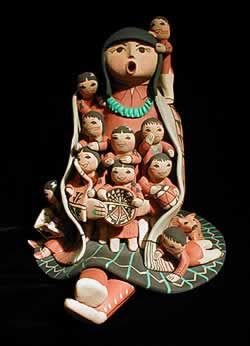
The other day I shared a little bit about a session that I did with two other teachers at NCTE.  The topic was about weaving storytelling into your reading, writing, and math workshops. I promised participants that I would post two videos of stories that have easy patterns.  Yesterday’s story was Sody Sallyrytus and today’s is Tipingee.  Below is how I interpret and tell the tale to primary students.  Both these stories are easy to learn to tell and both are also easy for the kids to reenact. If the video below doesn’t work for you, go directly to YouTube at:  youtu.be/p9vwzV5ReAk

You can google either of these tales and you will find other storytellers who tell these stories on YouTube.  You might notice two things — that Sallyrytus can be spelled many different ways and that most people pronounce Tipingee with a hard ‘g’ rather than the soft ‘g’ that I use.

Storytelling Part 1

Recently I presented a session at the NCTE conference with Katie Keier and Kassia Wedekind.  We shared how we use storytelling in classrooms.  Katie shared how she uses stories within her writing workshop while Kassia talked about storytelling in math.  My part of the presentation had to do with having students reenact or retell stories from Big Books or books read aloud or storytold.  I also shared how I use storytelling in grades 3-5 to reinforce reading strategies.

As I used my twenty minutes to try to inspire participants to become storytellers, I promised them that they could click on our website and see a telling of a tale that is easy to learn.  Click on the video below if you would like to see me telling the story called “Sody Sallyrytus” to two kindergarten classes. Then check back in a day or two when I will post the other story I suggested called “Tipingee.”

(If you have trouble with the video, go directly to you tube: youtu.be/Gas_zzxh9DQ) The story isn’t really 11+ minutes long. I start by introducing my story candle and teach the song that the students will help me with.

Be the Change – Reflections on #NCTE12

I just spent four days in Las Vegas at the NCTE annual conference engaging, learning and sharing with some of the most amazing educators on the planet. My head is spinning, my brain is full, and I cannot wait to get back in my classroom tomorrow. I have many thoughts to reflect on and share in upcoming blog posts, but for now, all I can think of is how lucky I am to be a teacher. The last four days reminded me of how much hope, possibility, passion and love there is in education. It is so easy to get bogged down in the day to day struggles, the isolation that can occur in our profession, the frustration from policies, standards, inequities, injustices and the overall feeling that teaching is being disrespected as a profession. But spending the last four days with thousands of educators who took time off school, flew across the country, many (if not most) on their own dime, prepared presentations to share the joyful work they are doing with students, and engaged in dialogue about making the world a better place through teaching, reminded me just how committed teachers are.

We can make a difference. And we are. Let’s keep the conversations that began at NCTE going, and let’s invite others in. Twitter is a fabulous place to see what was shared and discussed at NCTE (#NCTE12), and I’m sure there will be many, many blog posts, articles and even books that come out of the networking, conversations and pure possibility that occurred in Las Vegas. There are many teachers all over this country doing amazing work with children – engaging them in pursuing their passions, collaborating all over the globe, supporting them in making sense of struggle and injustices in our world while encouraging them to take action and teaching them that their words are power and that their voices matter.

It’s truly a great time to be a teacher. And as Mahatma Gandhi said, “be the change you wish to see in the world.”

What change will YOU be?

Name Books

Name puzzles

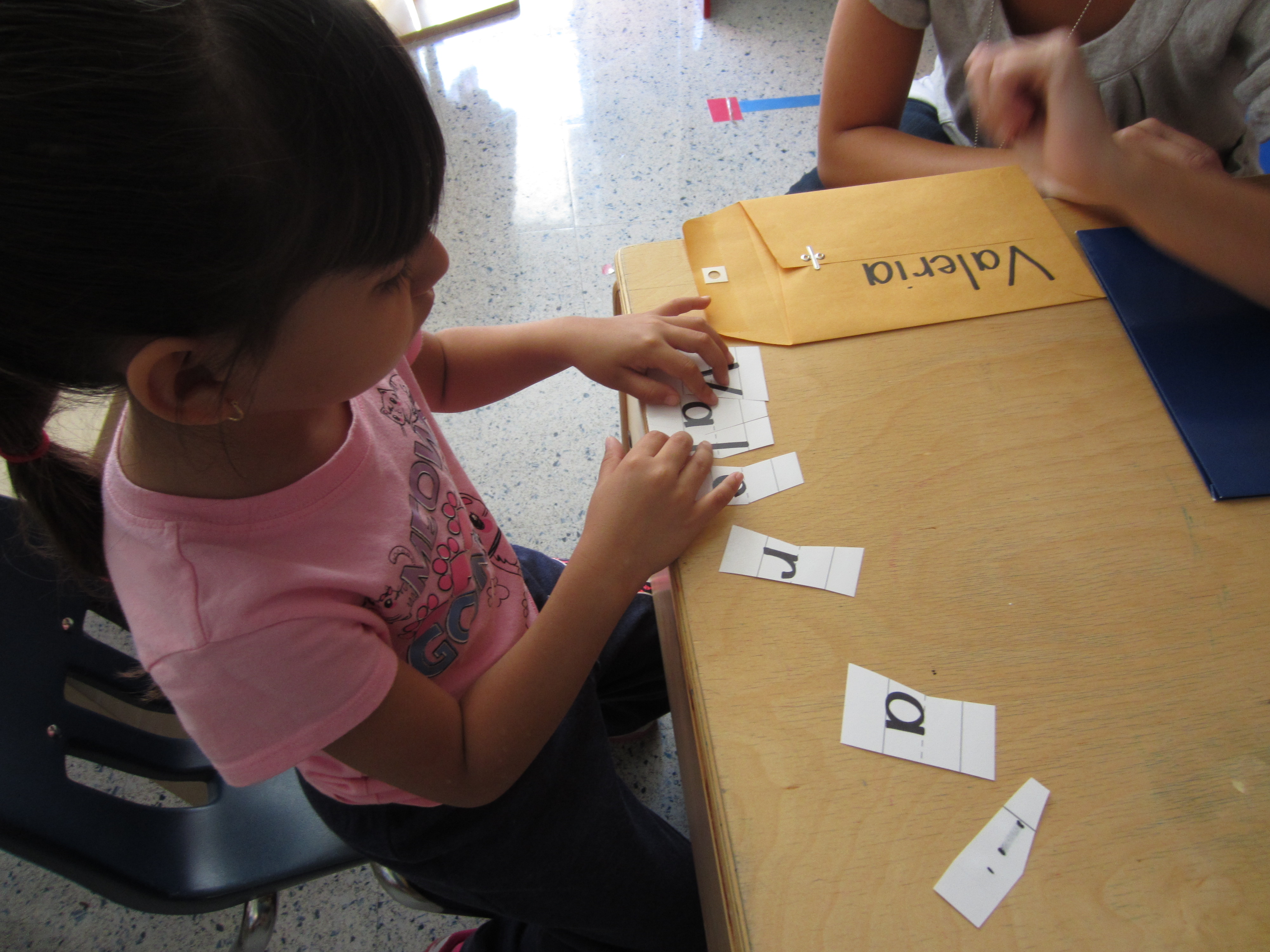
In my kindergarten class I have a wide range of learners – from the few who aren’t quite sure what a letter is to the few who are fluently reading Hattie and the Fox. I’m sure many of you can relate to this! I was reflecting on my work with the kids who had no known letters, or only a few, and wondering what our next steps were. I always start with the known, so names were my launching point. We did many name activities and these students were beginning to consistently know a few letters from their names. I wanted to create a book with them to keep in their book box and to help reinforce the teaching I was doing. These particular students were not quite ready to start an ABC book like the ones Pat and I refer to in Chapter 6 of Catching Readers. Since they had very limited letter knowledge, (2-5 known letters), I wanted to start with something more in their ZPD. So I decided to make them a “name book”.

“For almost every young learner, knowledge of one’s name unlocks a multitude of understandings. A name forms a link in helping a child learn about print.”

(Fullerton, 1997)

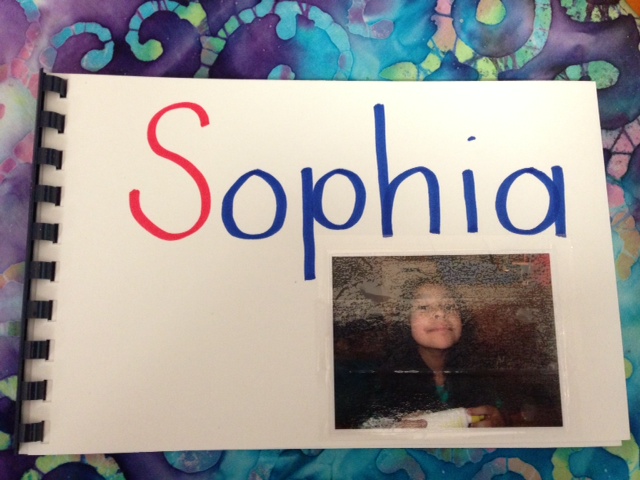
The cover of a name book.

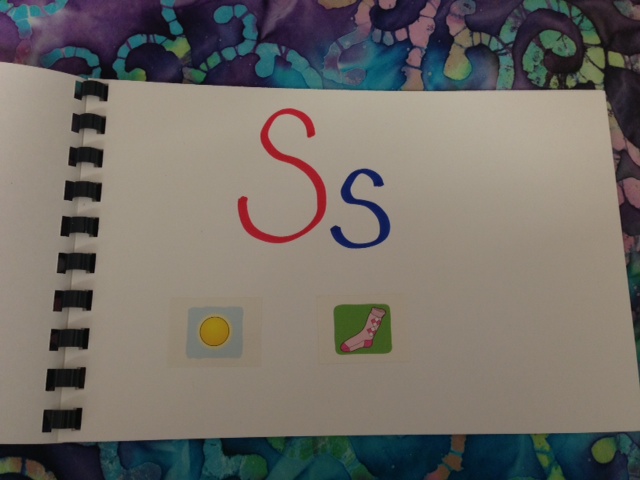
I made the books with enough pages for each letter in the child’s name and one additional title page. I wrote the full name (first name only – for now) on the cover, making the capital letters red and the lowercase letters blue. Then I put a picture of the child on the cover as well. On the inside pages I wrote the letters of the child’s name – one per page – again with the capital in red and the lowercase in blue. I sat down with each child as I created this and the child chose links (pictures or words) to go with each letter. They either put a sticker on that page or drew a picture. These books can now be read with the children, read independently and kept in book boxes or read with a buddy. Currently, I only made name books for my children who are working on learning their names and the letters in their names. But I think all the children would enjoy having one of these books. It would make a great book basket for our reading area and would allow children to learn each other’s names.The first page of Sophia's name book.

Some other concepts that can be taught by using names and the name books:

*The connections between letters and sounds

*That letters can be written in two ways (upper and lower case, like David)

*The same sound can be represented by different letters (Jasmin, Gerald)

*Concept of word vs. letter (“Jose’s name is a word. How many letters are in this word? Let’s count them.”)

*Long and short words (“Jackeline’s name is a long word, Bo’s name is a short word.”)

*Words have parts (“Let’s clap Alexander’s name. Let’s clap Ann. How many parts?”)

Names are such a powerful tool for teaching in the early grades. How else are you using children’s names to teach?

Together We Can Do Anything!

Hurricane Sandy is bearing down on the east coast as I write this. Like many of you, I made my preparations this weekend, and  am glued to the Weather Channel with flashlights, batteries, water and non perishables nearby. I went to visit my parents this weekend in central Virginia, and as I was driving back to DC Saturday evening there was a steady stream of convoys of utility trucks headed north on the interstate. They were coming from Alabama, Louisiana, Mississippi, Tennessee and Arkansas to help the mid-Atlantic states with what could very well be an unprecedented weather event. As I drove, I kept thinking of the amazing teamwork that utility companies must operate under. When others are in need, the calls are made and help is on the way. These men and women left their families back home to come and help millions of people who will be in need of their services. It brought tears to my eyes. While we may suffer through days of being inconvenienced with no power, the utility workers are risking their lives, far from home, to help restore power. I am very grateful for the brave men and women who do that job.

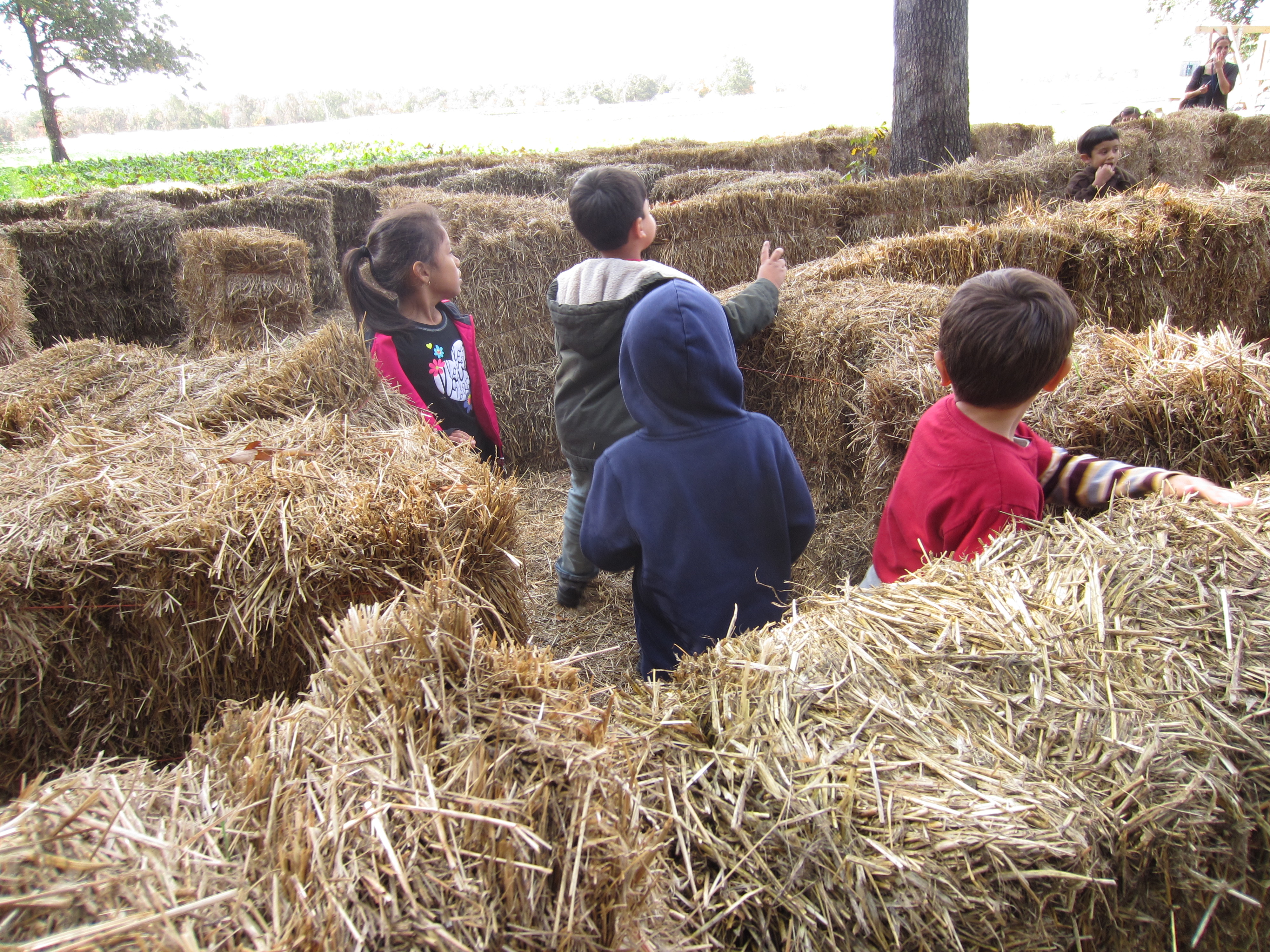
So what does this have to do with teaching? In education, I believe that teamwork, cooperation and community is at the heart of what we do. It’s what makes our classroom communities work and our professional learning communities successful. I worry about performance based pay situations or evaluation systems that are setting up teachers to compete against each other. How can that possibly be what’s best for kids or for teachers? Don’t we want schools and educational systems that are designed to help and support one another? I know that’s how I want my classroom to work. We recently took a field trip to a farm where they had a hay maze set up. The kids were running around and helping each other find their way through the maze. I didn’t think anything of it until the owner of the farm came up to me and said she had never seen another group of students help each through the maze. She was amazed at how well they worked together as a team. This was the best compliment we could have received as a class. Our community of learners focuses a lot on cooperation and teamwork. We have a class cheer  with hand motions – “kindergarten teamwork: together we can do ANYTHING!”- and I am constantly  asking kids how they can help each other and how we can work together to achieve a goal or complete a task. I don’t want to set my kids up to compete against each other. I want them to support each other, encourage each other and work together. Teamwork and cooperation are life skills that these 5 year olds will use for the rest of their lives. And it’s what will help them be kind to others as well as become confident readers, writers, mathematicians, scientists, artists, and more. For me, it’s a key part of our curriculum.

As my kindergarteners say, “together, we can do anything!” Teamwork and cooperation can help us in so many ways, whether it’s a new teacher evaluation system, a challenging situation in our classroom or school, a new set of standards – or a hurricane. Stay safe and take care of each other.

From Message to Theme to Big Picture

I often talk to teachers about teaching FOR strategies in ways that students will take them on and use them independently.  One of those strategies is inferring. What’s important is not that students have to define inferring or even tell us when they are using inferring to help them understand texts.  The real point is that students do it!  We want them to read closely, go deeper than the literal level, see things that are not explicitly put in the text by the author, but are implied.  A variety of things can be inferred – the setting, the narrator, the author’s point of view, the underlying meaning of a poem, the characters’ thoughts or feelings, and so on.

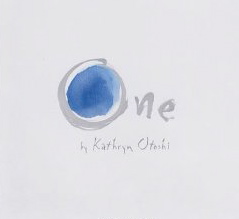
I recently read a picture book that I thought would fit well when working with inferring — One, by Kathryn Otoshi — which I’ll tell you about below. Keep in mind that one aspect of inferring is to get students to come up with a theme or a message that the author is trying to get across with the book. The Common Core Standards talk about students getting the message of a text in 2nd and 3rd grade, and by 5th grade, they call it “interpreting the theme” of a text.

I remember a conversation I once had with a second grade teacher, Steve.  He felt that his students could get the message for THIS BOOK or THAT BOOK (as it relates to the character or situation of that story).  BUT, he found their difficulty came when trying to generalize to a more universal theme – to life in general or to other situations in their own lives.  In other words, they could come up with the fact that Wilma Rudolph (in Wilma Unlimited) worked hard all her life and overcame many obstacles.  But they couldn’t extend that to a more universal theme of “hard work, effort, and believing in yourself can pay off no matter what gets in your way.”

The story, One, by Kathryn Otoshi has characters that are all colors. Green, Yellow, and Blue are all friends and have a good relationship, but Red is the obvious bully character.  Red picks on Blue constantly and in so doing gets stronger, bigger, redder, and hotter. The others try to reassure Blue, but no one stands up to Red, until 1 comes along.  1 talks back to Red and takes a stand that this bullying is not OK.  Soon the others join Number 1.  The story ends with the words, “Sometimes it just takes One.”

I wondered how Steve’s second graders would do with this.  After being able to come up with the message that worked for THIS particular book, how could Steve help them think more broadly?  Perhaps a teacher could ask the kids to substitute names for the color characters (not using anyone in the class’s name.)  Then ask them to think of something mean that one character could say to another.  Supporting them as they created stories about real children and real playground incidents might help them get closer to developing a more universal theme.

Could students in a 3-5th grade class get even further?  Could they think of persons, like Martin L King, who started out as “just one”? Could they relate this picture book to persons from history who took a stand on an issue, started a movement that others eventually joined, so that major wrongs could be righted? I would be curious to know if this helped students understand that theme is more than just a word (friendship, bravery, honesty), but rather is something part of the big picture of life. If you use this book in your classroom, please let us know what happens.

We are readers!

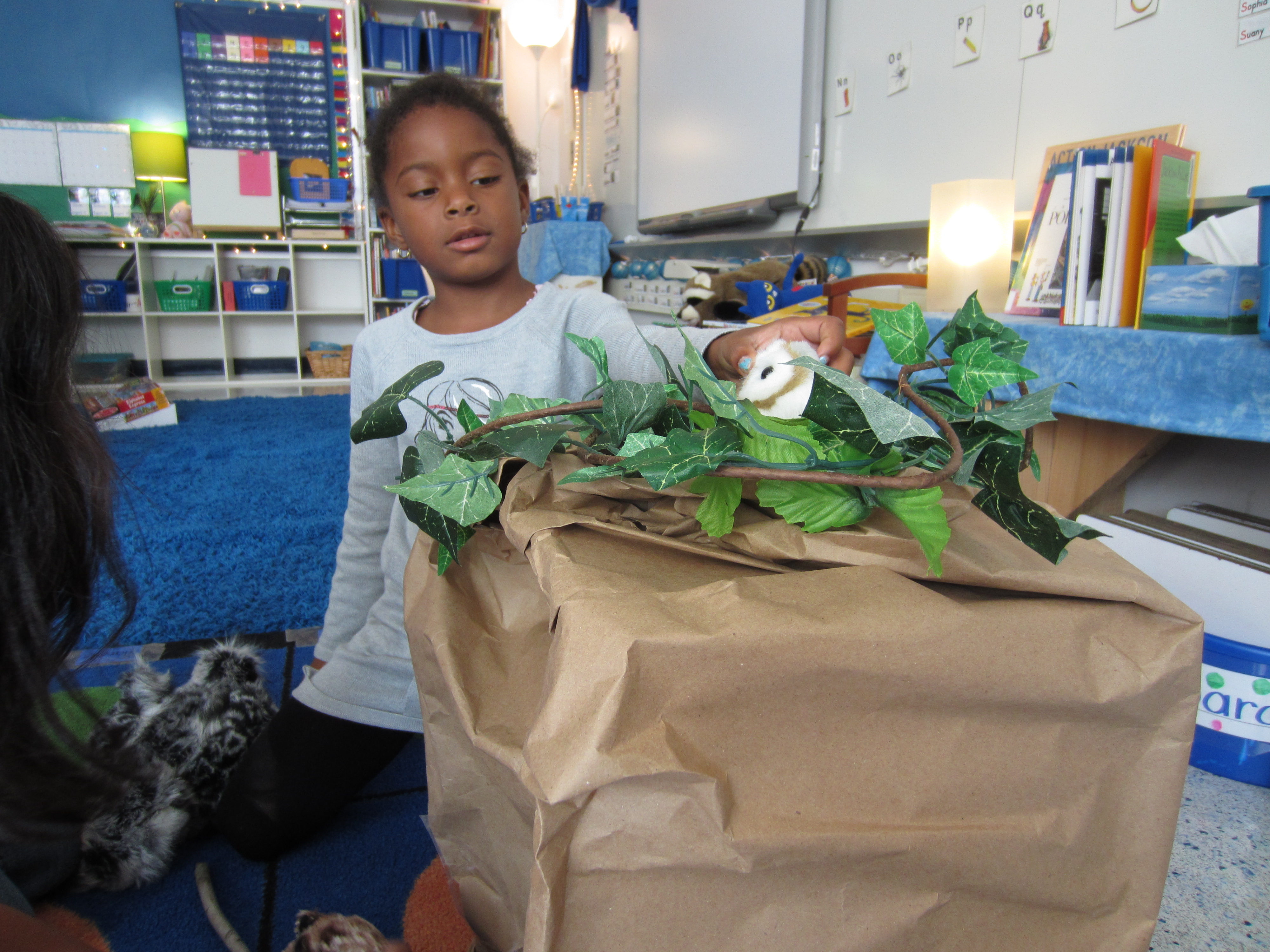
Retelling the story Owl Babies with props

My kindergarteners are readers. Every single one of them. Every day we read poems and songs together on charts, we read art, we read the morning message on our SMARTboard, we read labels in our classroom, we read books that we write, we read on the iPads, we read Tweets and blogs, we read books by ourselves and with buddies and we listen to lots of books read aloud. The kids are learning to read the pictures, read the words and talk about the books. We retell and act out our favorite stories with toys that go along with the books. We spend a lot of time talking about authors and what authors do. Some of our favorite authors are: Mo Willems, David Shannon, Eric Carle and Eric Litwin. I refer to my students as “readers” throughout the day. I am helping build  and create that identity and have them see themselves as readers. It’s the foundation we build in kindergarten that will carry our readers through to a lifetime of reading.

Who are some of your favorite authors? How are your readers building their identity?

Believe in Them

I was reading a one-page article this morning where Brad Meltzer (famous mystery/thriller writer) saluted and thanked his ninth grade English teacher (Parade/Washington Post 9/30/12).  He was honoring this teacher because she believed in him.  She saw the potential in him for writing and made sure she set high expectations for him.  Notice in the quote below that Meltzer is not thanking her for teaching him a particular skill or strategy.  He’s thanking her for acknowledging, supporting, and encouraging him.

“The teacher who changed my life didn’t do it by encouraging her students to stand on their desks, like John Keating in Dead Poets Society.  Or by toting a baseball bat through the halls, like Principal Clark in Lean on Me.  She did it in a much simpler way: by telling me I was good at something.”

This short tribute got me thinking about how all teachers can make a difference in children’s lives not only by seeing the sparks in those students who have special talents, but also by believing and supporting all students.  We need to accept their approximations as they learn and grow as readers and writers.  We have to acknowledge growth and effort and not just high scores and accuracy.  We need to be sending messages to students, like Peter Johnston tells us in Opening Minds.… messages that say, “learning takes time and effort, so trying hard is valued” and “the more you learn the smarter you become” and “collaboration is important and success requires it.”

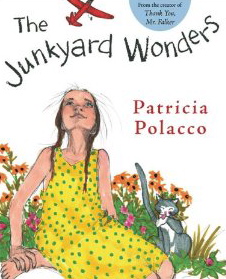
I am reminded this morning of Patricia Polacco’s stories of her struggles in school learning to read and write.  You are probably all familiar with her book Thank You, Mr. Falker, but if you haven’t seen the continuation of her learning journey in The Junkyard Wonders, you should take a look. In this book she has moved to a new school in Michigan.  Though she used to be considered “a dumb kid” in her old school, she hoped that she wouldn’t be labeled in her new school now that she had learned to read a bit. But much to her dismay, she gets placed in a special class with other students of varying disabilities. The teacher, Mrs. Peterson, define genius in a new way and as the story goes on, all the students learn to believe in themselves.  Don’t miss the epilogue where Polacco tells you about what became of those students in that class.

How are you showing that you are believing in your students this school year?  Do you only praise and value the ones who come to you already reading and writing?  Or are you looking for the sparks, the tiny gems in their writing, the baby steps, the growth that a struggling reader might be showing you?

Expressing ourselves in Writer’s Workshop

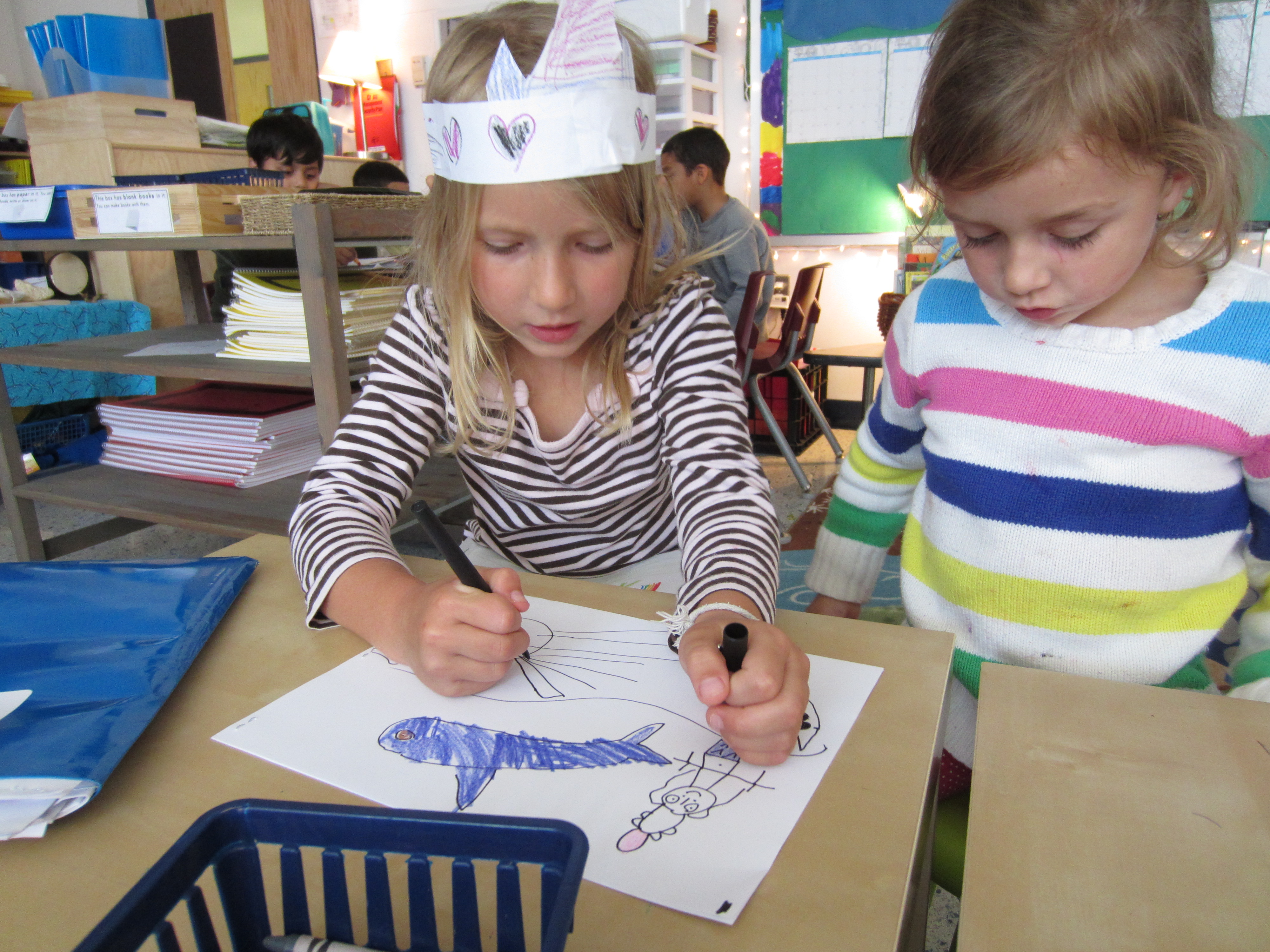
Co-authoring a book to give to a child who had a birthday in our room. The crowns were made first!

My young writers continue to amaze me! We make books daily in our 45 minutes to an hour Writer’s Workshop and many children protest when it’s time to stop. But what about those friends who only last 5 minutes or so? You know them…you hand them their writing folder and before you’ve finished passing out the rest of the pile you hear it…”I’m done!” When I taught first, second and third grade we learned on the first day (a la Lucy Calkins), “when you’re done, you’ve just begun!” Children knew that writers were  never “done”. They knew to add to the words or pictures, read their book to a friend for more ideas or start a new book.

But I think it’s different in kindergarten (and I would  now argue in first grade as well…and even second grade…). Developmentally, 4, 5 and 6 year olds may not be ready to stick with making a book for such a long period of time. A lot of them are – but there are kids in every classroom who just aren’t there yet. The last thing I want to do is to force them to sit quietly and make books. All that’s going to do is make them hate writing.

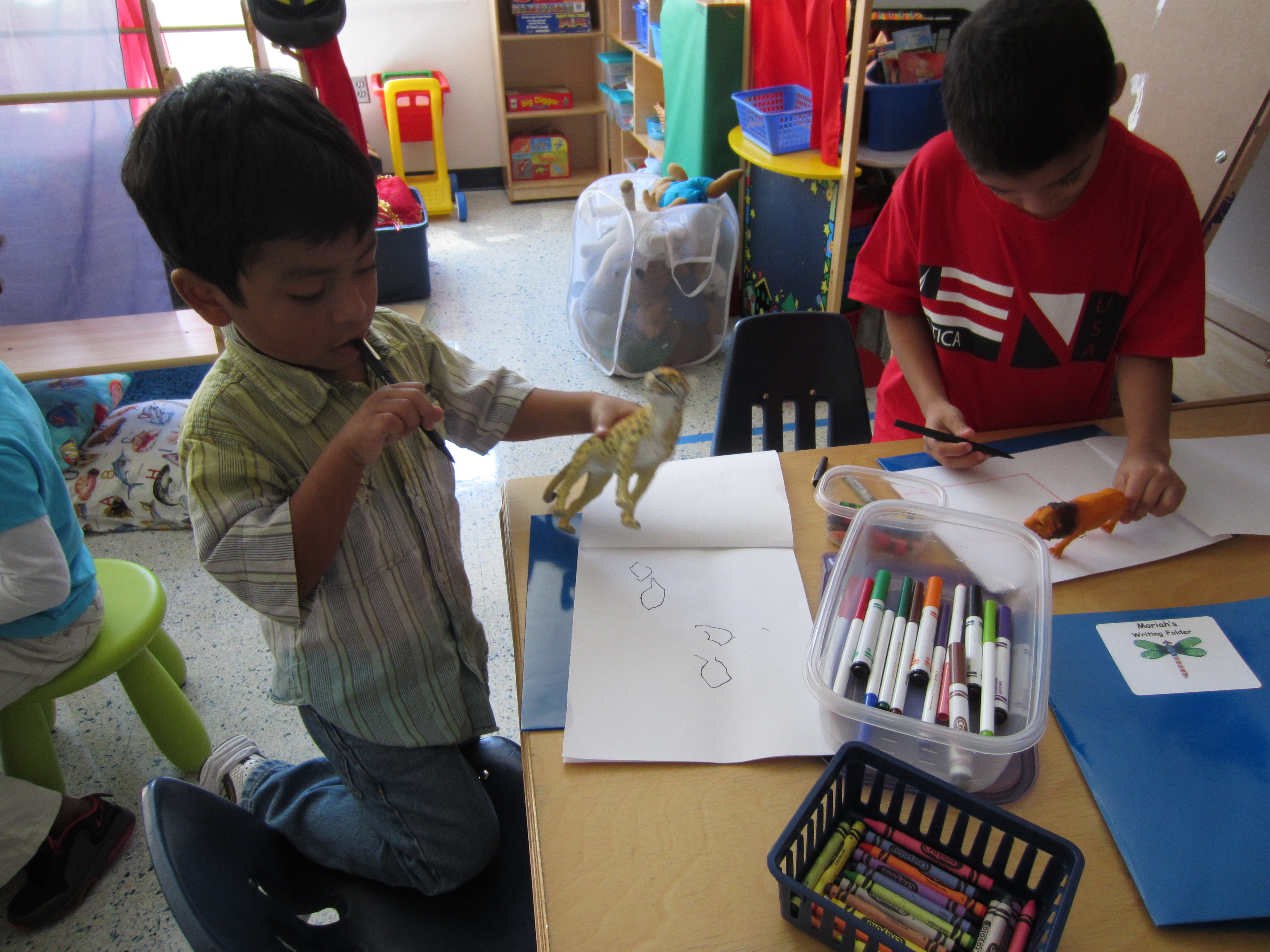
When children proclaim they are “done”, I first ask them to read their book to me. Of course, at this point in kindergarten it’s usually reading the pictures. Then I ask them what they need to do next as a writer. I make sure my talk during this time continues to refer to them as writers, and helps them see different possibilities for what “writing” might look like. Perhaps they need to go find a stack of Mo Willems books to look at to get an idea for their next book. Maybe they need to get the toy dinosaurs out and create a scene to get an idea for their next book. Maybe they need to pull out the storytelling kit that goes with a favorite read aloud and make up a new story. I honor what the needs are at that moment, and make sure I’m not forcing the writing piece. I play the role of a gentle encourager, helping my young writers see possibilities for sharing themselves with their classmates and the world.

As I writer, I know that some days I just don’t feel like writing. I want to express myself in another way. I know that I will get back to writing tomorrow, but for now I need something else. I think our young writers feel this way too. Sometimes what my writers are doing during Writer’s Workshop isn’t making books. Maybe today as writers they are making crowns or invitations for the afternoon Explore time when the princess party will resume. As I chat with these writers, I may suggest that a “how to make a crown” book might be just the thing for the future princess party attendees. Maybe painting a picture similar to an artist we are studying is what a writer is doing. They are using a piece of art as a mentor text instead of a book. Another child may be talking to an iPad or computer as he makes a book in one of the many creative apps we have on our iPads or computers. Maybe a group of children are composing a dance to share the butterfly life cycle. They are drawing the cycle and deciding ways to act it out. Maybe another group of children are Tweeting or blogging and talking to children all around the world. The point is, writer’s workshop can (and does) look different for all children, depending on what they need at that moment as a writer.

Playing with animals in Writer’s Workshop

While all of this is going on, many children are bent over their books and writing folders in what looks like a more traditional writer’s workshop – writing, drawing, creating. But others are moving, playing, talking, painting, creating like children do. And that’s OK. It’s the energy of children “making stuff”, as Katie Wood Ray talks about. And all of that “stuff” is and will become texts in many different modalities for children to share and express themselves through.

And that’s what really matters to me – that is the purpose of our Writer’s Workshop.