#nf10for10 Nonfiction Picture Book Event!

Screen Shot 2013-02-04 at 11.55.24 PMIt’s the 10 for 10 Nonfiction Picture Book Event! We are joining up with many of our Twitter and blogging friends to participate in this event celebrating nonfiction books. Check out the jog here to see all the other posts sharing favorite nonfiction picture books!

Children love nonfiction. It engages, excites and helps children wonder, reflect and celebrate the world we live in.  Here are a few of our favorites. Enjoy!


Pat’s Picks:
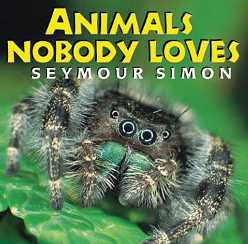
51BL21P6hlL._BO2,204,203,200_PIsitb-sticker-arrow-click,TopRight,35,-76_AA300_SH20_OU01_Anything by Seymour Simon is so well-researched and beautifully written.  Kids love reading about these animals who have been given a bad reputation.  Simon tells us, “Animals are not bad or evil.  They do what they must in order to survive.”  This one is written in easy-to-read text, but a few pictures might be too graphic for the very young.
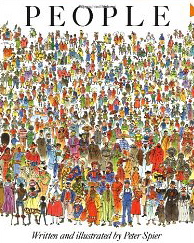


6146nrCbOwL._BO2,204,203,200_PIsitb-sticker-arrow-click,TopRight,35,-76_AA300_SH20_OU01_Yes, it’s been around a long time, but People, by Peter Spier, has always been a favorite of mine.  Of course, it’s perfect for helping kids realize the variations in homes, written languages, games, traditions, and so on, around the world. Not everyone considers the same things as “beautiful”, nor does everyone have the same tastes in foods. I love the message brought home on the last two pages of illustrations. “But imagine how dreadfully dull this world of ours would be if everybody would look, think, eat, dress, and act the same!”  This book pairs nicely with Mem Fox’s Whoever You Are. Both books will lead to great discussions, not only in schools with diverse populations, but in all schools.
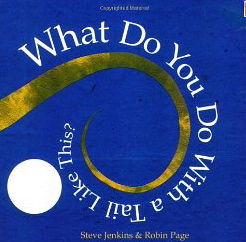
512-77Vd+aL._BO2,204,203,200_PIsitb-sticker-arrow-click,TopRight,35,-76_AA300_SH20_OU01_Steve Jenkins & Robin Page created the wonderful book What Do You Do With a Tail Like This? which is a Caldecott Honor Book.  I’m sure many of you already own this one!  It’s fun to learn what various animals do with their feet, eyes, ears, noses, and tails. I love the big question on a two-page spread (giving time for kids to wonder) and then the way the text is placed in so many different ways when the answers are given.
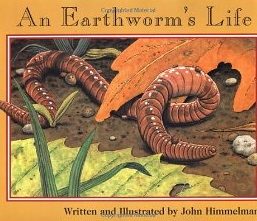


51M-XAFUa5L._BO2,204,203,200_PIsitb-sticker-arrow-click,TopRight,35,-76_AA300_SH20_OU01_With only one or two lines of text on each page, I’m amazed at how much information John Himmelman squeezed into his book.  Earthworms are so easy to find and set up for observation in the classroom.  My favorite part is when a little boy picks up the earthworm and moves him to the garden to avoid getting stepped on.  A good book for talking about respect for all creatures.


Here are three other titles that a librarian friend recommended to me that I have yet to find, but certainly will, because she never steers me wrong!
51HjAPgVnTL._BO2,204,203,200_PIsitb-sticker-arrow-click,TopRight,35,-76_AA300_SH20_OU01_

   51u-04HNT5L._SL500_AA300_51Qb7MzOl0L._SL500_AA300_

Katie’s Choices:

41kQ77hBvbL._SL500_AA300_Beautiful photographs and equally beautiful language make Step Gently Out a wonderful book to help children notice the world around them.
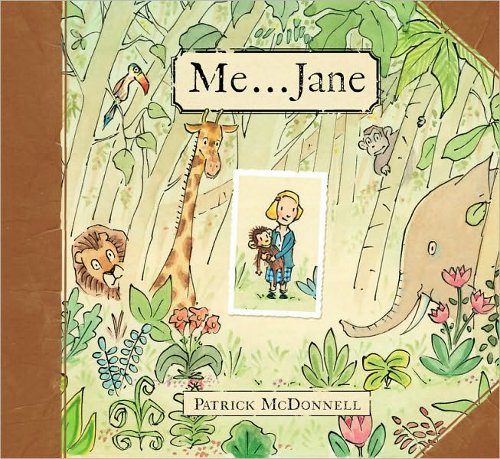


me-jane-coverMe…Jane is an amazing book that tells the true story of Jane Goodall. It inspires children to follow their dreams and live with wonder. It is written simply and is accessible to our youngest learners – and our older elementary or middle school students will also enjoy the story and the inspiration that Jane gives.
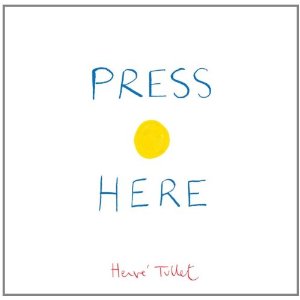


41fphodps0l__sl500_aa300_Press Here is one of the coolest books I’ve read in a while. It holds children spellbound as they interact and use their imagination in this magical book.
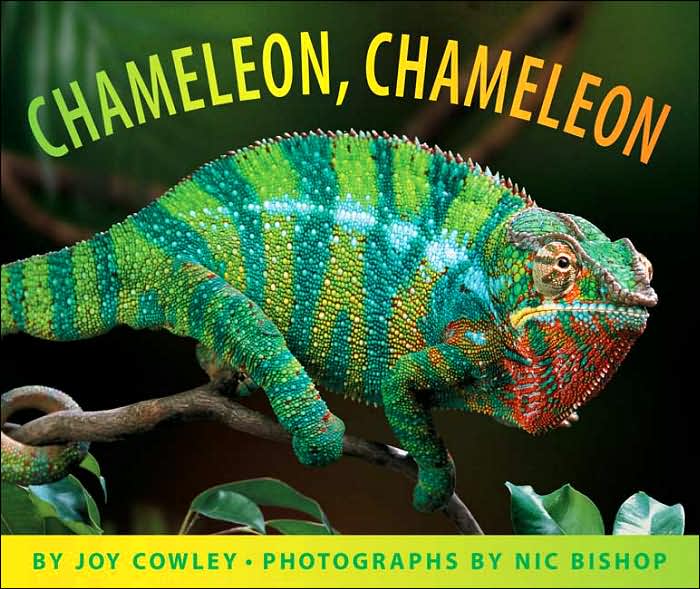


9780439666534-1Chameleon, Chameleon is a class favorite! I use this book early in the year as a writing mentor text. The children love the repetitive, yet rich, language and the detailed photographs. It is an excellent nonfiction text to read and reread.
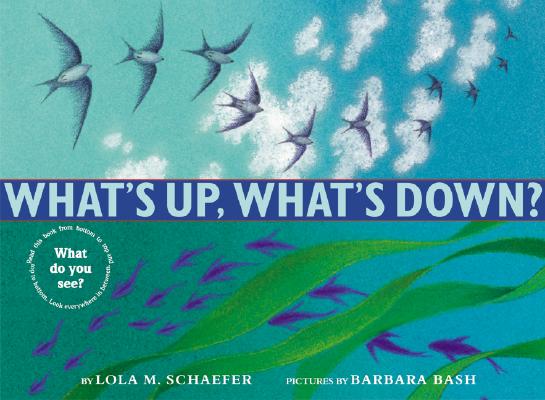


What-s-Up-What-s-Down-9780060297572What’s Up, What’s Down? is a book that is read in a variety of ways – from the bottom up, from the top down, sideways. It takes the reader on an exciting and engaging journey from many perspectives. Children will enjoy this fabulous celebration of nature as they read and interact with the book.


Thanks to Cathy and Mandy for starting this fun event! What are some of your favorite nonfiction books to read with children? Please share!

Signal Words

OLYMPUS DIGITAL CAMERAI first start thinking about developing a lesson on “signals and signal words” (a few years ago) after reading a short Nonfiction text with some 5th grade English Language Learning students.  When I wanted to return to some of the new vocabulary that had been presented in the text, I realized that the students had missed all the signals the author included.  I supported those students back then, but the incident kept me thinking, “Perhaps we need to be presenting mini-lessons on this idea earlier.”

OLYMPUS DIGITAL CAMERASo when a 3rd grade teacher asked me recently to model a whole class lesson that would support her students reading nonfiction text, I developed this lesson. I thought I’d share it with others in case you have some students who are running into similar difficulties.

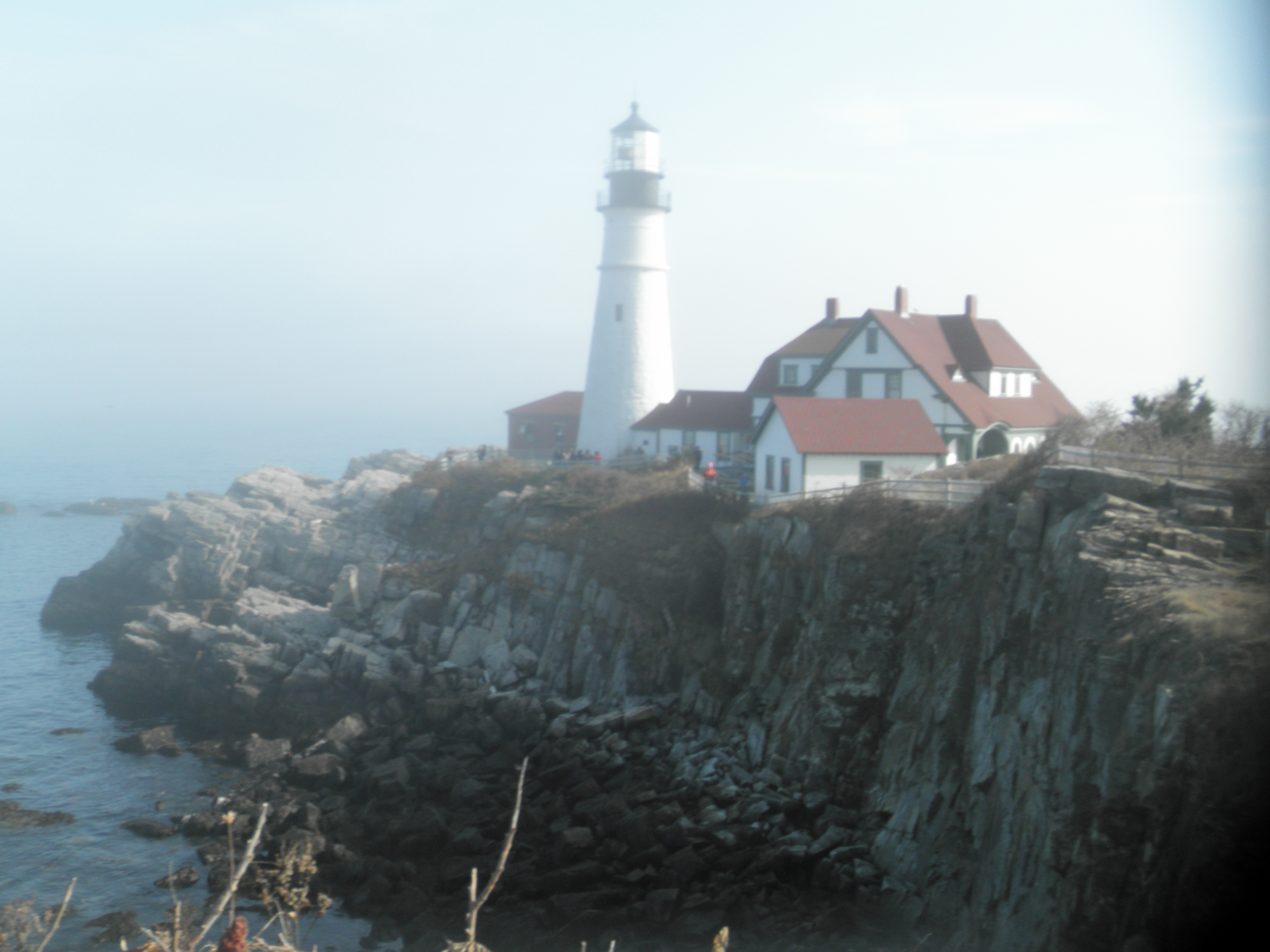
I began with a picture of a lighthouse and asked the students to do a quick turn and talk to a partner, “What is in this picture and what is it for?” Of course, they identified the lighthouse and said its purpose was to send out signals or warnings to the sailors so that the ships wouldn’t come close to the rocky coastline. (You’ll see how I carried that metaphor through my lesson below.)

Next I made sure the students knew the difference between Fiction and Nonfiction (NF) and they all did.  I asked if they noticed that NF often had bolded words or vocabulary that was printed larger or italicized. Then I continued, “We read NF to learn stuff, right?  And the authors who write the NF articles and books WANT us to learn new things.  So they try to help us. When they put in new and difficult vocabulary words, they try to help you.  They are NOT trying to trick you.  They actually send YOU, the reader, signals.  Just like the lighthouse is sending a signal to say, ‘Hey, look over here, there is something you should notice so you stay safe’, the NF author is sending you another kind of signal. It’s like the author is saying, ‘Hey, look over here.  This is where I am telling you what the hard word means.'”

Because I believe in demonstrating my thinking first, I shared several NF passages with the students.  Here are a few I shared using the document camera so that the text was large enough for all to see.

Over 800 species or types of bats feast on pesky insects that damage crops or spread disease.

Because octopuses are invertebrates, meaning they don’t have backbones, they can squeeze themselves into small spaces between the rocks to get out of reach of their predators.

Female elephants spend their lives with mothers, sisters, and children.  They form tight-knit herds of 10-20 members.  The matriarch – the oldest female elephant – takes charge.

After my three models, I wanted to turn responsibility over to the students. They picked one passage (out of three more examples) to work on with a partner and we shared their thoughts.

You can probably see where this lesson is going.  We were creating a class chart in two columns.  Signals, such as, dashes, parentheses, commas, etc. and Signal Words, such as,  is called, that is, which means, this means, or, etc.

The final activity was for the students to try this skill on a one-page NF article about fennec foxes.  They could choose to work alone or with one other partner.  The article contained several bolded words.  I asked the students to write on the back of the paper, not only the meaning of the word, but the signal or signal word that the author used to help them. I circulated the room to see which students were successfully using the skill and which students might need more practice in a small group setting.

Feel free to thumb through the power point slides below.  I recently used these to present this lesson to a group of teachers.

Signal word slides

Vygotsky Talk

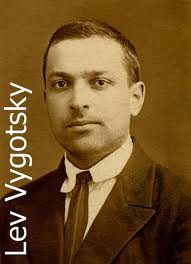
imagesI always love Vygotsky talk!  Whenever any teacher wants to talk about Vygotsky, I’m all ears.  Katie and I tried to make some of Vygotsky’s work understandable and relevant for teachers in Chapter 3 of our book.  If you enjoyed that chapter, “Vygotsky Takes a Seat in our Classrooms”, then you’ll probably want to look for this great article in January, 2013, Language Arts magazine.  It’s called “What Does Vygotsky Provide for the 21st Century Language Arts Teacher?” The author, Peter Smagorinsky, goes into several aspects of Vygotsky’s work. His words got me thinking.

1.  He explains how speech should be used as a tool. In other words, students shouldn’t be expected to speak in final draft form, but should be given opportunities for talking that allow them to figure out and work through what they are trying to say. Kids need to use speech to explore their ideas and opinions.  The author says, “Teachers overlook the potential of classrooms to encourage the development of thinking through the relatively unfettered opportunity to use speech as a tool for generating new ideas through the process of speaking.” This section has me thinking about and returning to Maria Nicols’ books – Comprehension Through Conversation and Talking about Texts.

2.  The author then addresses the issue of emotion and cognition.  In Vygotsky’s view,  emotions and learning are very interconnected.  “How we think and how we feel cannot be separated.” Smagorinsky asks us to think about a student who is constantly corrected for his use of English.  This student may then associate speaking in class with feelings of embarrassment or shame, which in turn would shut down his future participation in class discussions.  The author suggests “that teachers structure classrooms to promote empathy.”  Of course, this whole section had me thinking of all the great teachers I know who spend time building classroom communities.

3. There are several more sections to the article all of which are guaranteed to get you reflecting on your classroom practice. He talks about making curriculum meaningful for students; about how learning and thinking are social in origin and what that means for our classrooms; and about attending to matters of inclusion so that people of difference feel welcome in our schools.  If you work in schools with diverse populations, you will find the article particularly rewarding.  One last quote, “The culture of school serves some students better than others because some have far fewer adaptations to make in order to fit.  One solution is for teachers to create more hybrid classroom learning spaces that allow for broader legitimate participation in classroom activities.”

Let us know your ‘Vygotskian thoughts.’ Do you feel that his work has influenced you as a teacher?

Wordless Books

As teachers, we know to encourage kids to use the pictures to help them with the words. We’ve all, at some time or other, helped a parent (who thinks it’s best to cover up the pictures) to understand this. So what is the place of wordless books in primary grades?  Some may wonder, “Since the children are starting to learn to read, maybe all the books I use should have words in them.” But wordless books have tremendous benefits.

Why do we want students to create stories for wordless books?

  • It helps with retelling – a skill that they will be asked to do as time goes on
  • It makes great use of their imaginations
  • It helps with adding details in writing
  • In fact, it’s a great way to rehearse a story that could be told in writing
  • They learn to tell a story in order
  • It’s great for oral language practice and expansion of vocabulary
  • And it gets kids inventing what the characters could be thinking, feeling, or saying — which is inferring beyond the literal level.

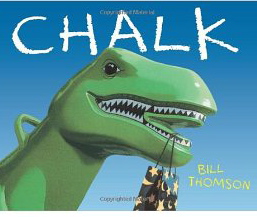
41mCUifyOJL._BO2,204,203,200_PIsitb-sticker-arrow-click,TopRight,35,-76_AA300_SH20_OU01_I recently shared Chalk, by Bill Thomson, with a group of primary teachers.  They all fell in love with it and couldn’t wait to go order a copy. Have you ever actually taught the kids to read a wordless book?  Are you assuming they already know how? Many children who haven’t been read to a lot at home may not know how to do this at all. Modeling with a wordless picture book is easy.  You know how stories work and how they sound.  Just use your storytelling voice and begin.  You will be amazed at how fast the kids will pick up on the process. Any of the books listed below would work well in grades K-2.  And think of the benefits to students with language delays or those who are learning English as a second language. Here are some old favorites, as well as some more recent titles, that would work well in any Kinder-2nd grade classrooms, special education classes, and with ELL students:

  • Rain or Circus, both by Peter Spier
  • The Snowman, Raymond Briggs
  • Deep in the Forest, Brinton Turkle
  • The Angel and The Soldier Boy, Peter Collington
  • Good Dog, Carl (and all the Carl books), by Alexandra Day
  • Good Night, Gorilla, Peggy Rathmann
  • A Boy, A dog, and A Frog, Mercer Mayer (there are many in this series)
  • The Lion and the Mouse, by Jerry Pinkney
  • The Red Sled, Lita Judge
  • The Red Book, Barbara Lehman
  • Chalk, Bill Thomson
  • The Adventures of Polo, by Regis Faller
  • Also Polo and Lily, Polo and the Dragon, Polo & the Magician, Polo & the Magic Flute51YcCdeJLoL._BO2,204,203,200_PIsitb-sticker-arrow-click,TopRight,35,-76_AA300_SH20_OU01_415chFKl5gL._BO2,204,203,200_PIsitb-sticker-arrow-click,TopRight,35,-76_AA300_SH20_OU01_41vGnbPb-QL._SL160_PIsitb-sticker-arrow-dp,TopRight,12,-18_SH30_OU01_AA160_
 

Borrowing Ideas from other Authors

I became familiar with this book Painting the Wind at a session I attended at the NCTE conference and immediately went home and ordered it. Rose Cappelli shared some ideas for using this text with student writers. I emailed Rose to make sure it was OK  to share her lesson with our readers in hopes that teachers can take it and make it their own. Thanks Rose for saying YES! Rose and her writing partner Lynn Dorfman have written several books (Mentor Texts, Nonfiction Mentor Texts, and Poetry Mentor Texts) filled with dependable classroom ideas that work well with a variety of grade levels.

After sharing the book Painting the Wind, Rose asked us to focus on this paragraph:

“Summer is here.  And the painters come back to the island.  They come on the mail boat with their paints and easels and bags of books and favorite pots and pans. Some bring their children. All of them bring their dogs.”

As we noticed the variation in sentence length, she shared another from Sarah, Plain and Tall:

“The dogs loved Sarah first. Lottie slept beside her bed, curled in a soft circle, and Nick leaned his face on the covers in the morning, watching for the first sign that Sarah was awake.  No one knew where Seal slept.  Seal was a roamer.”

The variation in sentence length that Patricia MacLachlan uses certainly adds to the rhythm of the text.  But just getting kids to notice something about an author’s writing style will not guarantee that the students will take it on.  Rose and Lynn often follow this plan:

Hook the students with a great children’s literature that invites participation.

Share your purpose – tell the kids what the lesson is about

Brainstorm – real life writing ideas

Try a model – demonstrate what you are talking about in front of the kids

Shared/guided writing – let the kids try it with a partner

Independence – have the students look for opportunities in their own pieces

This format echoes all those other “greats” who also write about supporting student writers– from Calkins to Fletcher to Katie Wood Ray to Georgia Heard.


Here is what Rose did next.  She mentioned a passage from John Henry by Julius Lester and another from James and the Giant Peach (where the aunts are getting run over by the peach.) Both passages have a long rolling sentence with lots of motion followed by shorter sentences.

Rose asked the audience as she does with her students, “What is something in real life that has that fast, fast movement and then all of a sudden… stops?” The kids brainstormed:  recess, various sporting events, getting ready for school, etc.

Rose then modeled a paragraph in front of the students, writing about a basketball player.  “Mark crisscrossed to the other end of the court dodging his opponents and dribbling the ball in a staccato rhythm as the shouts and cheers from the fans echoed in his ears. He made the shot. The whistle blew. Victory!”

I think you can see how brilliantly Rose’s lesson would entice students to want to take a look at their own written pieces to see if varying their sentence length could spruce up their writing. Thanks Rose for sharing your lesson idea! Be sure to check out Rose and Lynn’s new book on Poetry.

Storytelling Part 2

The other day I shared a little bit about a session that I did with two other teachers at NCTE.  The topic was about weaving storytelling into your reading, writing, and math workshops. I promised participants that I would post two videos of stories that have easy patterns.  Yesterday’s story was Sody Sallyrytus and today’s is Tipingee.  Below is how I interpret and tell the tale to primary students.  Both these stories are easy to learn to tell and both are also easy for the kids to reenact. If the video below doesn’t work for you, go directly to YouTube at:  youtu.be/p9vwzV5ReAk

You can google either of these tales and you will find other storytellers who tell these stories on YouTube.  You might notice two things — that Sallyrytus can be spelled many different ways and that most people pronounce Tipingee with a hard ‘g’ rather than the soft ‘g’ that I use.

Storytelling Part 1

Recently I presented a session at the NCTE conference with Katie Keier and Kassia Wedekind.  We shared how we use storytelling in classrooms.  Katie shared how she uses stories within her writing workshop while Kassia talked about storytelling in math.  My part of the presentation had to do with having students reenact or retell stories from Big Books or books read aloud or storytold.  I also shared how I use storytelling in grades 3-5 to reinforce reading strategies.

As I used my twenty minutes to try to inspire participants to become storytellers, I promised them that they could click on our website and see a telling of a tale that is easy to learn.  Click on the video below if you would like to see me telling the story called “Sody Sallyrytus” to two kindergarten classes. Then check back in a day or two when I will post the other story I suggested called “Tipingee.”

(If you have trouble with the video, go directly to you tube: youtu.be/Gas_zzxh9DQ) The story isn’t really 11+ minutes long. I start by introducing my story candle and teach the song that the students will help me with.

From Message to Theme to Big Picture

I often talk to teachers about teaching FOR strategies in ways that students will take them on and use them independently.  One of those strategies is inferring. What’s important is not that students have to define inferring or even tell us when they are using inferring to help them understand texts.  The real point is that students do it!  We want them to read closely, go deeper than the literal level, see things that are not explicitly put in the text by the author, but are implied.  A variety of things can be inferred – the setting, the narrator, the author’s point of view, the underlying meaning of a poem, the characters’ thoughts or feelings, and so on.

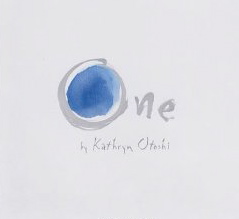
I recently read a picture book that I thought would fit well when working with inferring — One, by Kathryn Otoshi — which I’ll tell you about below. Keep in mind that one aspect of inferring is to get students to come up with a theme or a message that the author is trying to get across with the book. The Common Core Standards talk about students getting the message of a text in 2nd and 3rd grade, and by 5th grade, they call it “interpreting the theme” of a text.

I remember a conversation I once had with a second grade teacher, Steve.  He felt that his students could get the message for THIS BOOK or THAT BOOK (as it relates to the character or situation of that story).  BUT, he found their difficulty came when trying to generalize to a more universal theme – to life in general or to other situations in their own lives.  In other words, they could come up with the fact that Wilma Rudolph (in Wilma Unlimited) worked hard all her life and overcame many obstacles.  But they couldn’t extend that to a more universal theme of “hard work, effort, and believing in yourself can pay off no matter what gets in your way.”

The story, One, by Kathryn Otoshi has characters that are all colors. Green, Yellow, and Blue are all friends and have a good relationship, but Red is the obvious bully character.  Red picks on Blue constantly and in so doing gets stronger, bigger, redder, and hotter. The others try to reassure Blue, but no one stands up to Red, until 1 comes along.  1 talks back to Red and takes a stand that this bullying is not OK.  Soon the others join Number 1.  The story ends with the words, “Sometimes it just takes One.”

I wondered how Steve’s second graders would do with this.  After being able to come up with the message that worked for THIS particular book, how could Steve help them think more broadly?  Perhaps a teacher could ask the kids to substitute names for the color characters (not using anyone in the class’s name.)  Then ask them to think of something mean that one character could say to another.  Supporting them as they created stories about real children and real playground incidents might help them get closer to developing a more universal theme.

Could students in a 3-5th grade class get even further?  Could they think of persons, like Martin L King, who started out as “just one”? Could they relate this picture book to persons from history who took a stand on an issue, started a movement that others eventually joined, so that major wrongs could be righted? I would be curious to know if this helped students understand that theme is more than just a word (friendship, bravery, honesty), but rather is something part of the big picture of life. If you use this book in your classroom, please let us know what happens.

Believe in Them

I was reading a one-page article this morning where Brad Meltzer (famous mystery/thriller writer) saluted and thanked his ninth grade English teacher (Parade/Washington Post 9/30/12).  He was honoring this teacher because she believed in him.  She saw the potential in him for writing and made sure she set high expectations for him.  Notice in the quote below that Meltzer is not thanking her for teaching him a particular skill or strategy.  He’s thanking her for acknowledging, supporting, and encouraging him.

“The teacher who changed my life didn’t do it by encouraging her students to stand on their desks, like John Keating in Dead Poets Society.  Or by toting a baseball bat through the halls, like Principal Clark in Lean on Me.  She did it in a much simpler way: by telling me I was good at something.”

This short tribute got me thinking about how all teachers can make a difference in children’s lives not only by seeing the sparks in those students who have special talents, but also by believing and supporting all students.  We need to accept their approximations as they learn and grow as readers and writers.  We have to acknowledge growth and effort and not just high scores and accuracy.  We need to be sending messages to students, like Peter Johnston tells us in Opening Minds.… messages that say, “learning takes time and effort, so trying hard is valued” and “the more you learn the smarter you become” and “collaboration is important and success requires it.”

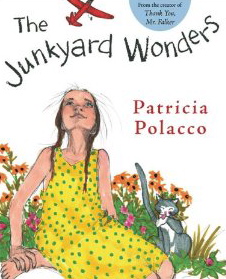
I am reminded this morning of Patricia Polacco’s stories of her struggles in school learning to read and write.  You are probably all familiar with her book Thank You, Mr. Falker, but if you haven’t seen the continuation of her learning journey in The Junkyard Wonders, you should take a look. In this book she has moved to a new school in Michigan.  Though she used to be considered “a dumb kid” in her old school, she hoped that she wouldn’t be labeled in her new school now that she had learned to read a bit. But much to her dismay, she gets placed in a special class with other students of varying disabilities. The teacher, Mrs. Peterson, define genius in a new way and as the story goes on, all the students learn to believe in themselves.  Don’t miss the epilogue where Polacco tells you about what became of those students in that class.

How are you showing that you are believing in your students this school year?  Do you only praise and value the ones who come to you already reading and writing?  Or are you looking for the sparks, the tiny gems in their writing, the baby steps, the growth that a struggling reader might be showing you?

Directionality and Backward Letters

A young mother recently asked me if she should worry about her daughter who had just started kindergarten that week.  She told me that her child could recognize and name all her letters and was very good with hearing most sounds, but when writing all on her own, she sometimes formed the letters backwards. Her preschool hadn’t done writing at all and so the child’s only experience with writing was playing in some workbooks at home that she enjoyed. Her mom happened to glance at a page where the little girl had filled in the first letters of cow, cat, snake, dog, and so on and more than 70% were written backwards.  The mom had heard that reversals are a sign of learning disabilities and she wasn’t sure if she should worry about this or not.

Writing letters backwards is very normal for many children, but at what point do we put a stop to it and help out?  When children are three and four years of age, I don’t interfere.  But the kindergarten year is a good year for some intervention.  I explained to the mom about many of the things the teacher might be doing throughout the day which would help her daughter start to realize that directionality does matter.  Every single day in many of her activities, the K teacher will be modeling writing in front of the students.  She’ll be talking about where to start the letter and how to form it as she does interactive writing and shared writing.  While the students are creating a real message together the teacher may have them use whiteboards to form some of the letters for practice. There will be so many hundreds of examples presented throughout the day that usually those backward letters will begin to disappear.

Keep in mind that when young children are learning to look at print, this is the first experience where order and directionality matter.  Prior to their encounters with print, they are used to recognizing things in their world in various positions.  Think about it.  There is really no sequential order or direction that matters when viewing a toy car.  The child will recognize it whether is it facing forward, backward, or upside down, and it is still a toy car, no matter what position it is in.  However, with printed text, such as words and letters, order and direction do matter.  A is only a when it is facing this way. An s is not an s if it is written backwards. I’m reminded of my own grandchild at 4 1/2 who wrote ‘cta’ on a piece of paper.  My husband asked, “What does that say?” She said, “It says ‘cat’.”  He told her that it really was only ‘cat’ when the ‘a’ was in the middle.  She answered quite confidently, “No Papa, it doesn’t matter, it’s still cat.” She, too, will soon learn that in the printed world, order does matter.

Now a word to kindergarten and first grade teachers.  This is the time to support children in learning how to form letters correctly. Does that mean I support 30 minutes of handwriting every day?  No.  In Chapter 5 of our text, Catching Readers Before They Fall, we talk about the comprehensive framework that we use in our classrooms. Please refer to that to see how Katie, in her primary classrooms, has always included directionality and learning letters and sounds through all sorts of reading and writing activities. If teachers are carefully observing their students during writing times, they can support them in learning ways not only to form letters, but also ways to become independent in checking on themselves. Problems only arise when children are left alone during their kinder and first grade years to make the backward letters over and over and over again.  Marie Clay says, “Only careful monitoring will assure me that the child is not becoming confused and practicing inappropriate behaviors…..(A child) may practice behaviors day after day for a year, and that will handicap his subsequent progress.” (Literacy Lessons I, page 11.) Therefore, kindergarten teachers should be constantly observing their writers.  It is so much easier to correct directionality issues at this early stage then to let it go and have a 2nd, 3rd, or 4th grade teacher try to ‘undo’ years of backwards letters and words.

I often recommend that K teachers make sure that the child has the letter ‘c’ under control.  Why?  Because ‘c’ is so useful in forming other letters that often become backward letters.  Make an ‘s’ – “It starts like a ‘c’ and then down and around.”  Make an ‘a’ – “It starts like a ‘c’ and then up and down.”  Make a ‘g’ – “It starts like a ‘c’, then up,  and the all the way down with a hook.”  So how do we get that ‘c’ solid; going in the right direction? It’s best to stand the child in front of a large white board or chalkboard (making the letter LARGE first is very helpful.)  If the child is right-handed, have her place her left hand, palm down on the board.  With the marker or chalk in her right hand, have her say, “towards my hand, ‘c'” as she is making the letter. (Reverse, if the child is left-handed, saying, “Away from my hand, ‘c’.”)

One last tip.  What about the famous b/d reversals?  I teach how to form these letters in two different ways.  When you teach both by starting with the stick, the child gets confused as to which side to put the ball on.  I teach ‘b’ by doing the stick first and then the ball, but then I give the child an index card with the capital B on it.  The child has to do the self-monitoring. Did I make the ball on the same side as the capital B? He now has a way to check it on his own.

For forming the letter ‘d’, I DON’T have them start with a stick. Instead I teach them to “start with a ‘c’ and then add the line.”  You can even sing the first four letters of the ABC song…. a, b, c, d (emphasize the letters c and d) as you form the letter ‘d’.

Hope this all makes sense.  It’s a lot easier to explain to someone who is right in front of me than to write it down.  The whole point is that for this particular mom it was too early to worry.  Her daughter seemed to be doing fine in all other aspects of literacy; she just had had little experience with writing. Hopefully with a strong kindergarten experience, the problem will take care of itself.  If, however, a teacher or parent finds the problems persist to the end of kindergarten and into first grade, you may want to try some of the activities on pages 117-119 of our text.  These would only be necessary in rare cases.