Writers Playshop

“Once upon a time there was a magical forest. And a lion lived there. But he didn’t have a friend. So one day he found a girl who wanted to live in the magical forest with him. She had a crystal that lighted up when she was with kind people. The lion loved the girl and they were friends. They lighted up the crystals to find other friends and be kind. They loved the animals, the magic forest and everyone. The end.”
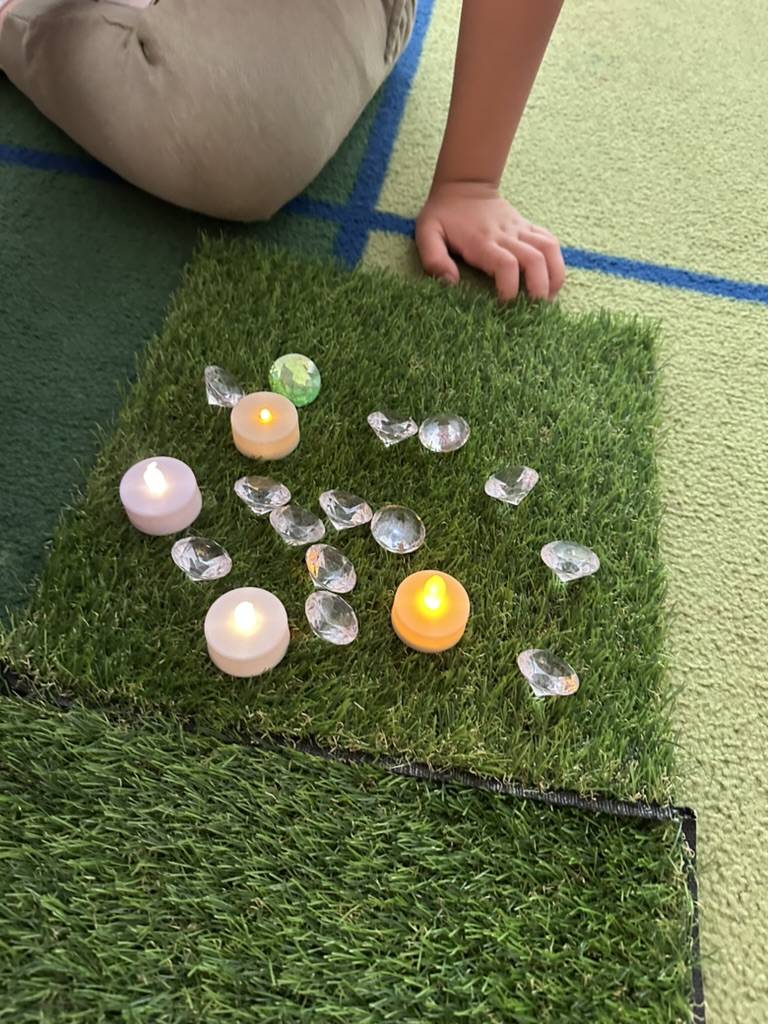
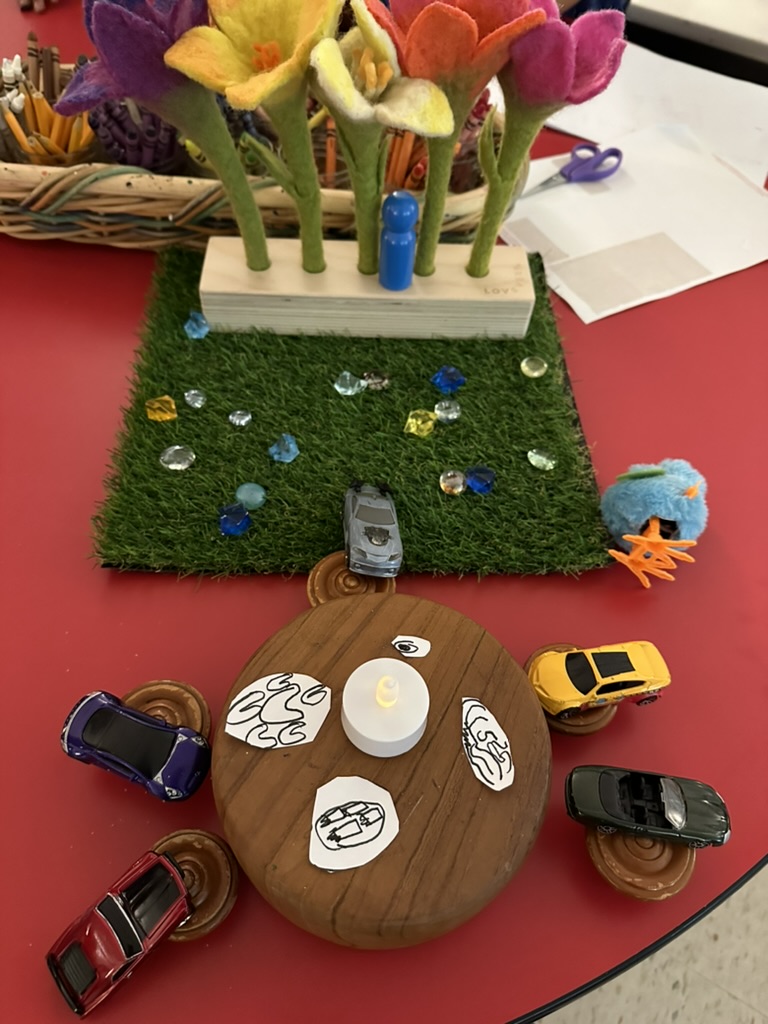
Storytelling in kindergarten. It’s my “magical forest”. From our first day together, children are encouraged and invited to find the stories in our classroom. Susan Harris MacKay inspired me to believe and to share with children that “stories live everywhere”! And their job (our job!) is to find them and share them. Each day that first week of school, I bring a material to our gathering rug. It might be blocks, paper, loose parts, clay, sand, magnetic tiles, etc. – any material that is in our room out for them to play and engage with. I make up a simple oral story using the materials and then invite the children to find their own stories in our room.

“Stories live everywhere! What story will you find today? Off you go!”

They don’t need to be asked twice. Children eagerly run off to find their stories. They find stories as they play at the light table, the dramatic play area (equipped with minimal props – real kitchen items, scarves, baby dolls), the block area, the music area, the art table or the Story Shelf (our shelf with loose parts that I add to on a regular basis – starting very small and simple and expanding as the year goes on). They soon discover that stories do, indeed, live everywhere. I roam around the room, eagerly listening to their wonderful stories. And then I invite them to put their story in a book, so it can live forever. There are blank 3 page books in our art area and many of the children choose to make a book with their story right away. But some wait a while to take this next step. And that’s okay. After listening to their classmates tell their stories, while looking at a photo I took and projected, or sitting beside the storyteller, or listening to an author share the book they made – all children will eventually want to make books so their stories can live forever.

But for now, the joy is in the process of finding stories and sharing them with one another. Oral language is a key component of a kindergarten classroom. We learn about characters and setting and children delight in knowing those words and purposefully plan these elements in their stories. They realize that stories live in the cafeteria, in our specials classes and on the playground. I continue with loads of storytelling as we create our story together as a community. They lean into an identity as a storyteller. They become confident in their oral language and their ability to capture the attention of peers and adults with their words. They learn story language and what makes sense. They learn how to answer questions from friends and add details to make their stories clearer. These first days set the stage for the rest of our year together. Our Writers Playshop follows a predictable structure of a whole group focus lesson, story making time and ending with a sharing time. But our story telling focus quickly expands.

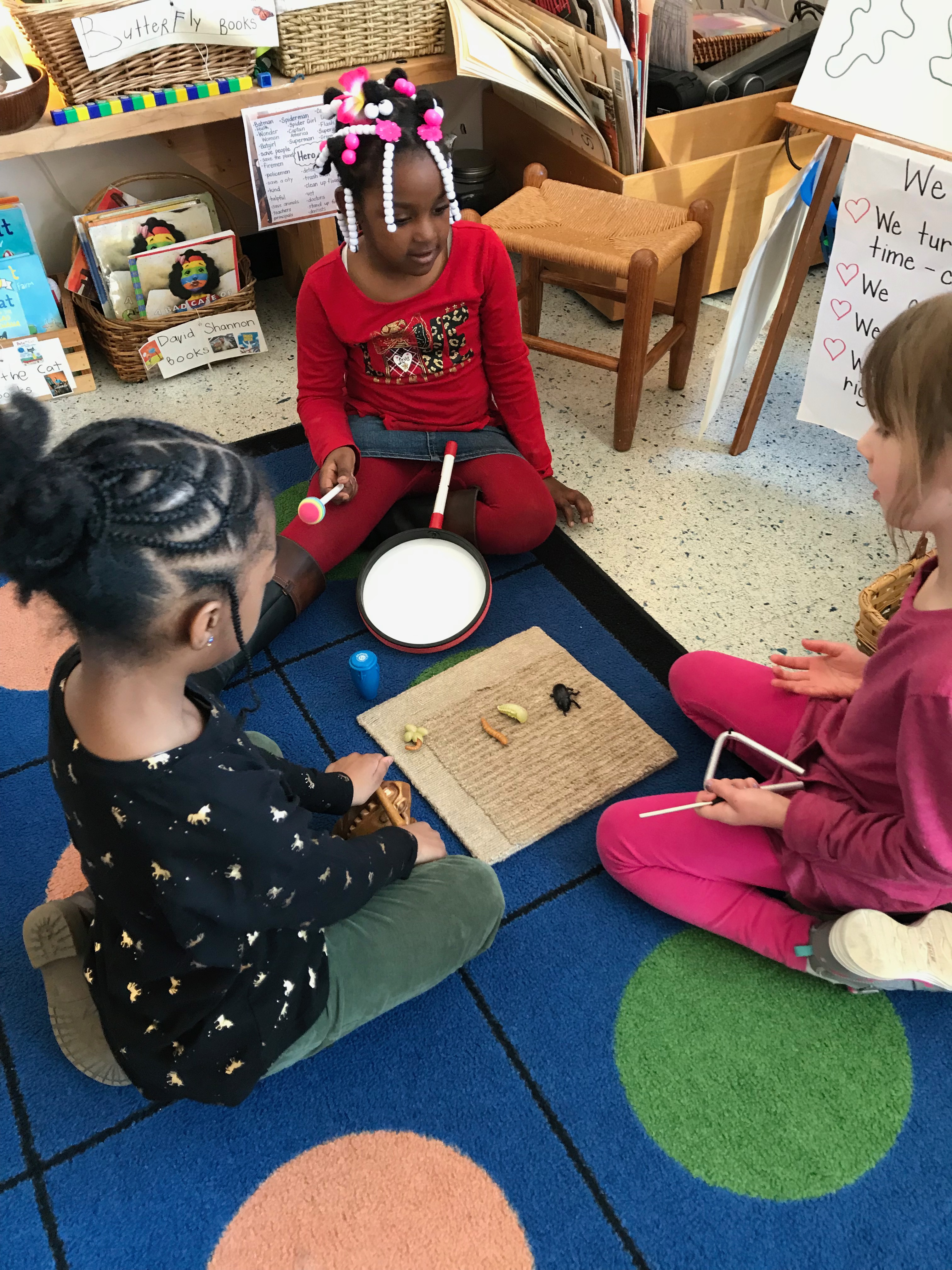
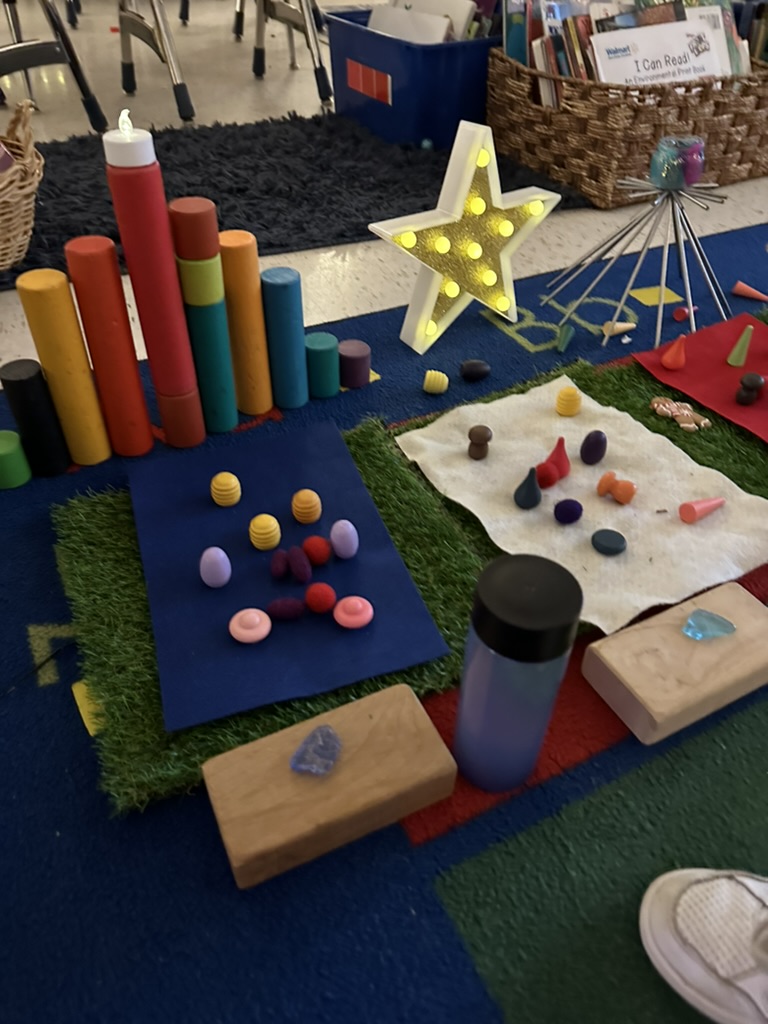
We move into story acting – where children dictate a story to me and then they become the director as they choose actors and actresses to act out their story in front of an audience of their friends. We take our storytelling into math, where loose parts and tiny toys help children create math stories to explore mathematical thinking. We grow into our identity as authors and illustrators as book making takes off and our classroom library becomes full of the books we make. And we grow into our identity as readers, as we listen to many, many rich read aloud books and ask ourselves, “what did we hear or read today that might help us as story makers, authors and illustrators?”.
This work is not new, nor is it exclusively mine. I stand on the shoulders of so many wonderful educators such as Katie Wood Ray, Lisa Cleaveland, Donald Graves, Lucy Calkins, Matt Glover, Trisha Lee, Vivian Gussin Paley, Michelle Kay Compton, Robin Chappele Thompson, Georgina Ardalan, Angelique Thompson, Kenisha Bynoe, Susan Harris MacKay, Matt Karlsen, Angela Stockman and the many, many educators I’ve connected with through the years of studying writing, literacy and the Reggio Emilia approach to learning and teaching. Our Writers Playshop (named “Playshop” several years ago by a child who asked me why it was called “workshop” when it was really play) is a product of my 33 years of teaching, learning, unlearning, observing, reading, writing, researching and reflecting. It changes often, and I continue to learn and listen to what the children are telling me. There is not a script or a program to follow. It’s about following the children. I’ve found that the standards and expectations of a public school kindergarten classroom can be far surpassed with this way of teaching. Children go way beyond what is typically expected in a kindergarten curriculum. Writers Playshop is a powerful way of teaching that honors, challenges, supports and celebrates children and their learning – for life, not just for school.
If you’d like to get started, here are a few resources you might check out. Stay curious, keep reading and talking with colleagues and most of all, trust the children. Play is how children learn. Jump in tomorrow – join your children in finding stories, telling them and writing them down. Trust the children. Story creates our communities and brings joy to our lives. It’s truly magical.

Story Workshop: New Possibilities for Young Writers by Susan Harris MacKay
Princesses, Dragons and Helicopter Stories by Trisha Lee

StoryMaking: The Maker Movement Approach to Literacy for Early Learners by Michelle Kay Compton and Robin Chappele Thompson

The Gift of Playful Learning by Angelique Thompson and Kenisha Bynoe

About the Authors: Writing Workshop with Our Youngest Writers by Katie Wood Ray and Lisa Cleaveland

“Children have a right to high-quality, vigorous instruction intended to support their academic skills within the discipline of literacy. But those skills must be inextricably linked to stories – to the paths every child determines need clarity in their own life. Increasing literacy skill should be seen as a means by which the stories flowing through each of us are supported as the effort they are to make better sense of the world in which we experience the complexity of our everyday lives. Literacy skills are no end in and of themselves, and treating them as such takes us further from the capacity every child has to use them to find and share our stories.

Susan Harris MacKay in Story Workshop: New Possibilities for Young Writers
Big Pedagogy

Learning is not the transmission of a defined body of knowledge, what Loris Malaguzzi refers to as a ‘small’ pedagogy. It is constructive, the subject constructing her or his own knowledge but always in democratic relationships with others and being open to different ways of seeing, since individual knowledge is always partial and provisional. From this perspective, learning is a process of constructing, testing and reconstructing theories, constantly creating new knowledge. Teachers as well as children are constantly learning. Learning itself is a subject for constant research, and as such must be made visible.

Carla Rinaldi and Peter Moss

It is our job as educators to learn as much as we can. To read, think, talk, question, wonder, challenge…and then do it all again. To be brave enough to challenge our own best thinking – to observe, listen, reflect, talk, learn and unlearn. We have to be researchers, kidwatchers and thinkers – alongside the children we teach, and in partnership with colleagues and knowledgeable others who can help us learn and push our thinking. We have to ask the hard questions, ponder the unanswerable questions, and keep growing as educators. We have to be willing to rethink our pedagogy, to observe and collect data, and to continue learning. We must continually ask “why?” Our children deserve this. We deserve this.

Our pedagogy is not small.

However, there are many movements to make our pedagogy small. Scripted programs, lockstep curriculum, plug and play slide decks, TikTok teaching, non-educators influencing and making decisions, etc… – these all can negate the knowledge of the teacher. They can negate the brilliance of the children. They can dumb down the learning. They can ignore the funds of knowledge our children and their families bring. They can take the trust and ownership away from the teachers and children. They can steal the joy and reduce teaching to following a script, a program or a curriculum made by people who have never known your children, your community, or you.

So how can we keep our pedagogy big and in service of the children, families, community and us?

Ever since I started teaching, I have devoured professional books, articles and journals. I’ve found people, as Katie Wood Ray said, “to stand on their shoulders” and learn from their brilliance. I’ve followed researchers, educators and wise thinkers who have done this work for a long time and who continue to contribute to our field. Whose shoulders do you stand on? Who are you reading, joining in conversations, following research, and learning from? How are you pushing back on teaching that is not best practice and can actually do harm to children? How are you collecting the research and continuing to learn in the context of the children you teach? How are you constructing knowledge and being open to different ways of seeing?

It’s time for teachers, as professionals, to stand committed to big pedagogy. I hope you’ll take some time this summer to find some shoulders to stand on, to think about what this might mean for you as a teacher, and most importantly, what it might mean for the children you teach.

I’ll start by sharing a short list of a few of my current favorites. Please join me in sharing yours – the shoulders we can stand on in this journey together. Happy learning!

What Matters Most? Toward a Robust and Social Just Science of Reading

Literacy Talk blog

Fact-Checking the Science of Reading: Opening Up the Conversation

Diane Kashin’s blog – Technology Rich Inquiry Based Research

The Studio for Playful Inquiry

In Conversation with Regie Routman

Science of Reading Unpacked – podcast with Elena Aydarova

Choice Words: How our Language Affects Children’s Learning by Peter Johnston

Shifting the Balance: Six Ways to Bring the Science of Reading into the Balanced Literacy Classroom by Jan Burkins and Kari Yates

Reading Above the Fray by Julia Lindsey

Hands Down, Speak Out: Listening and Talking Across Literacy and Math by Kassia Wedekind and Christy Thompson

Classroom Design for Student Agency: Create Spaces to Empower Young Readers and Writers by Lynsey Burkins and Franki Sibberson

Troublemakers: Lessons in Freedom from Young Children at School by Carla Shalaby

Our Environment

IMG_7080.jpg

“In order to act as an educator for the child, the environment has to be flexible: it must undergo frequent modification by the children and the teachers in order to remain up-to-date and responsive to their needs to be protagonists in constructing their knowledge.”

Lella Gandini (1998)


One of the “big kid” visitors who stops by our classroom every morning before school asked me, “why do you have so many cool things in your room?”. It was a question that has stuck with me. Why do I have so many “cool things” in our room?

IMG_7017.jpg

I’m a firm believer that the environment is the third teacher, responsive to both teachers and children creating learning together. We co-construct and negotiate the curriculum together. My classroom can’t look like a cookie cutter model, identical to the one across the hall or identical to the classroom from last year. It must grow and evolve based on who is living in the space right now. I believe that our classroom environment can help shape the identities of the children in that classroom and their relationships with each other. Our space gives power and agency to the children in our room.

IMG_6944.jpg

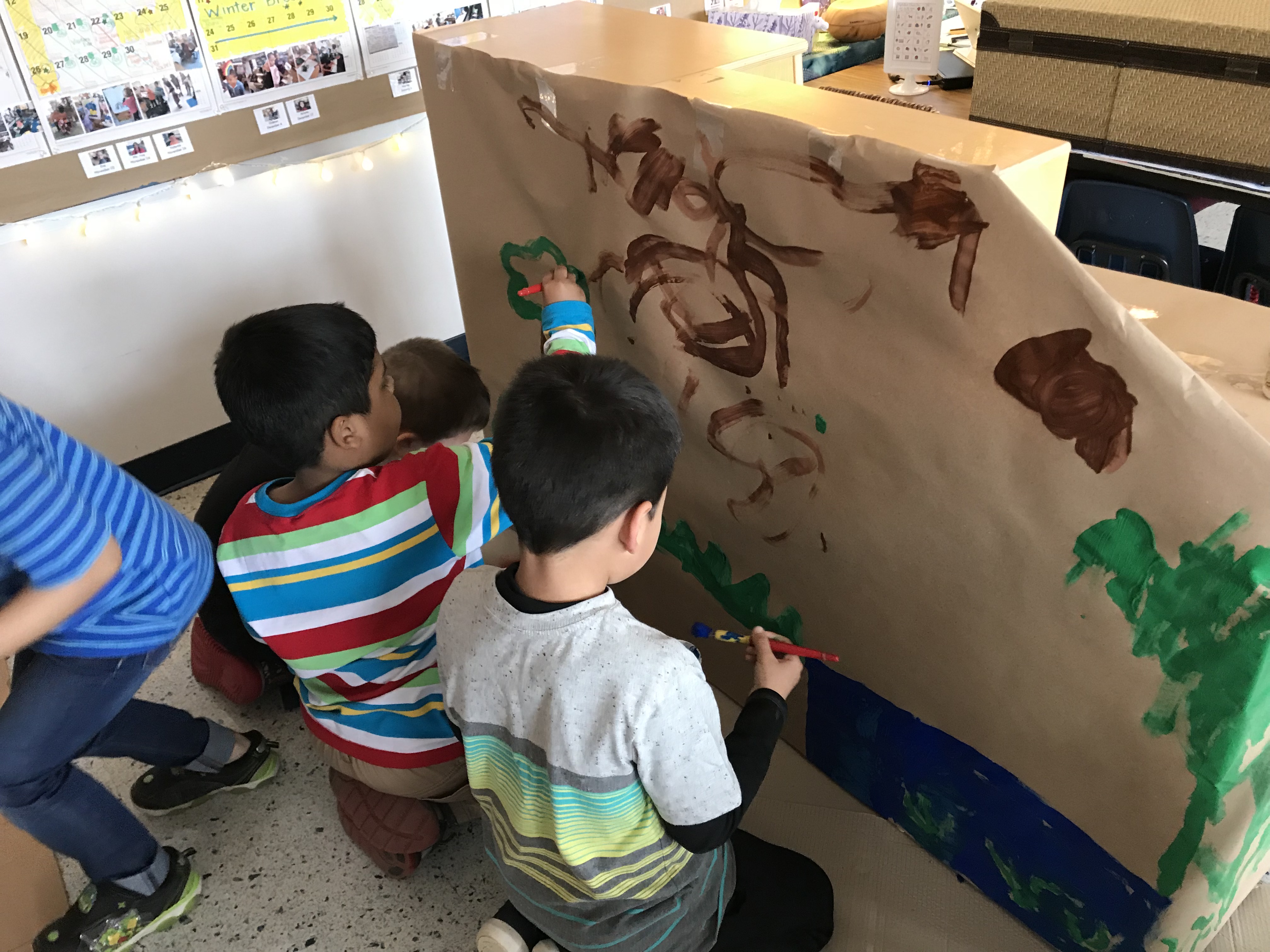
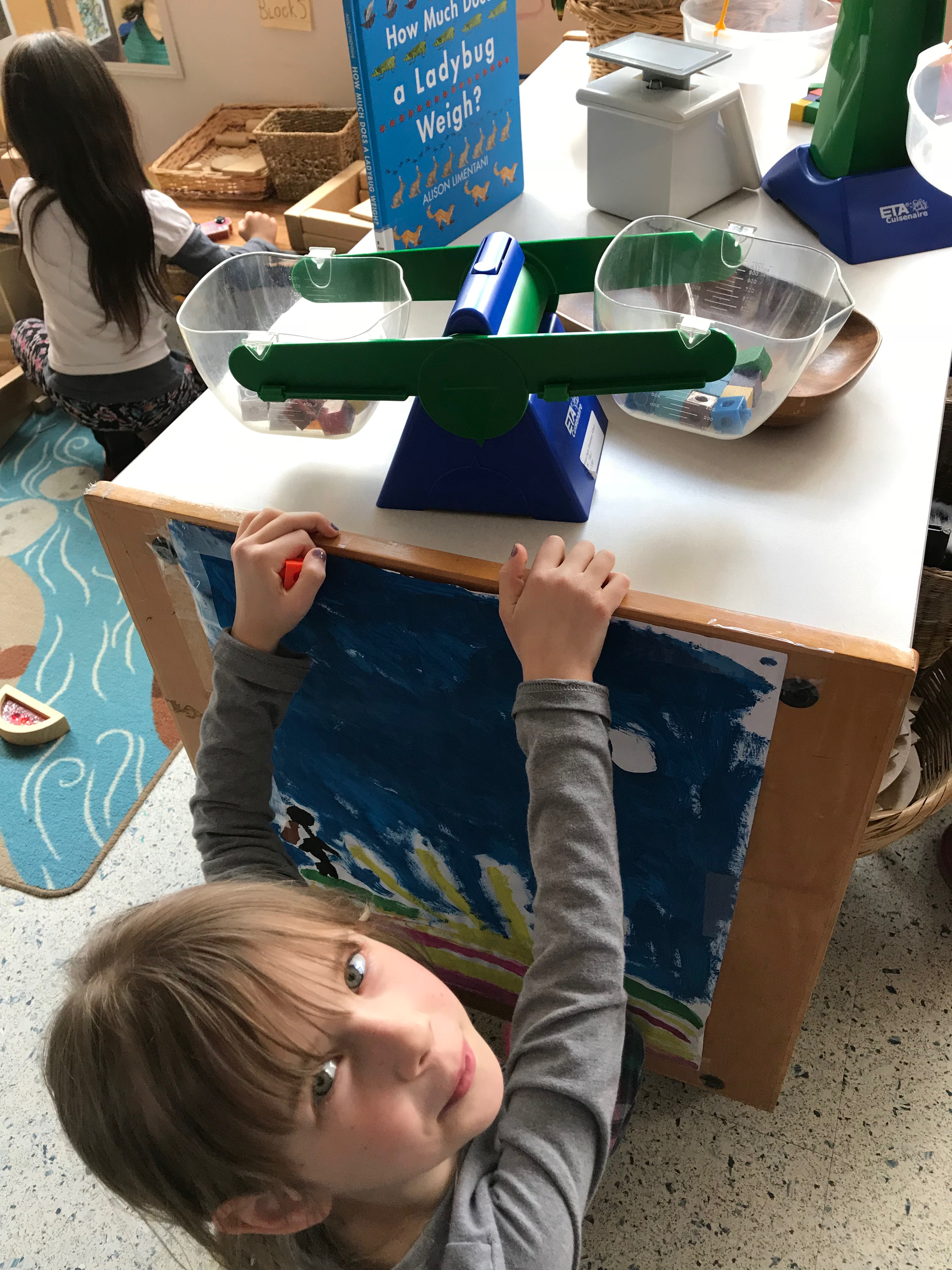
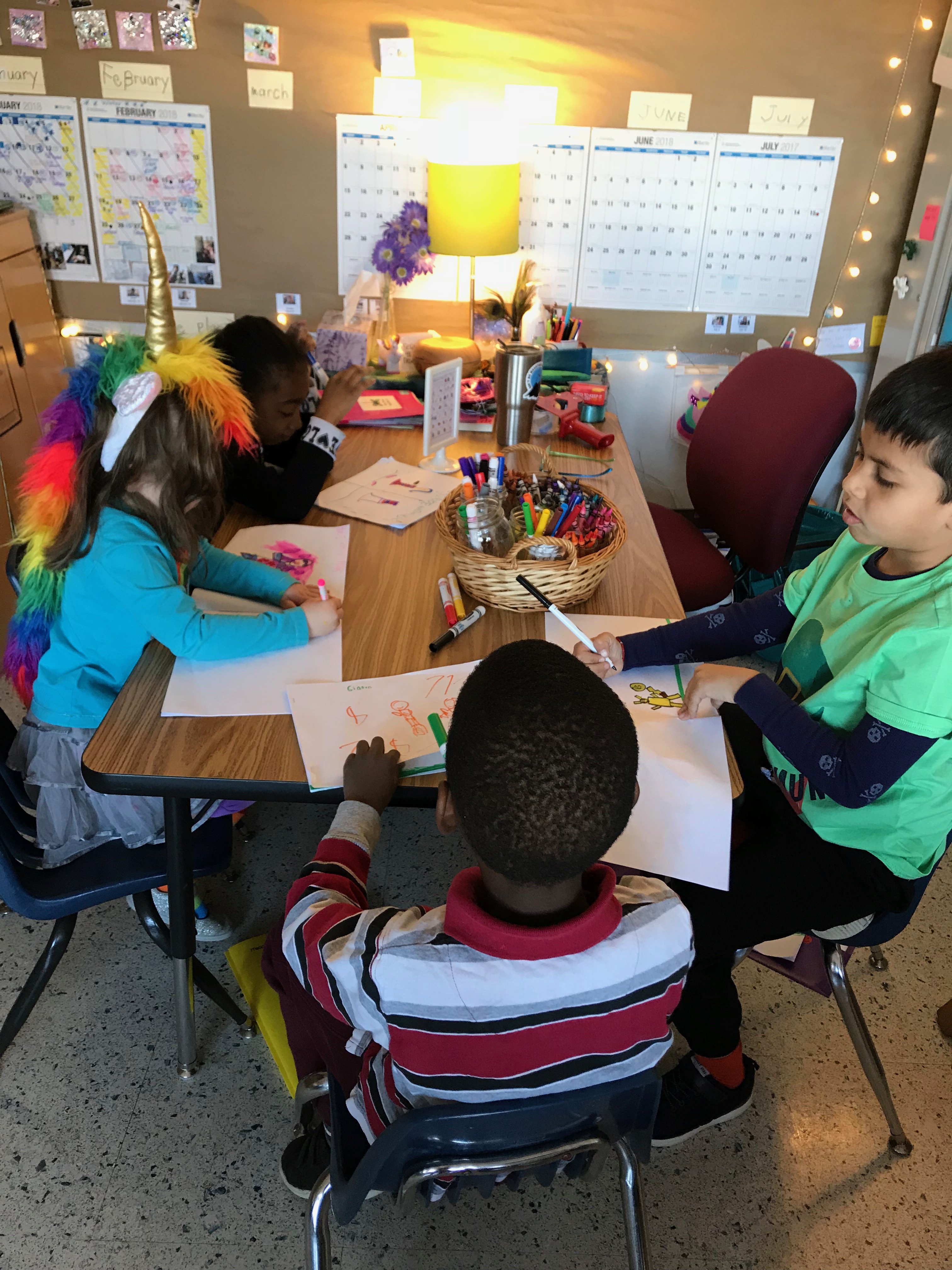
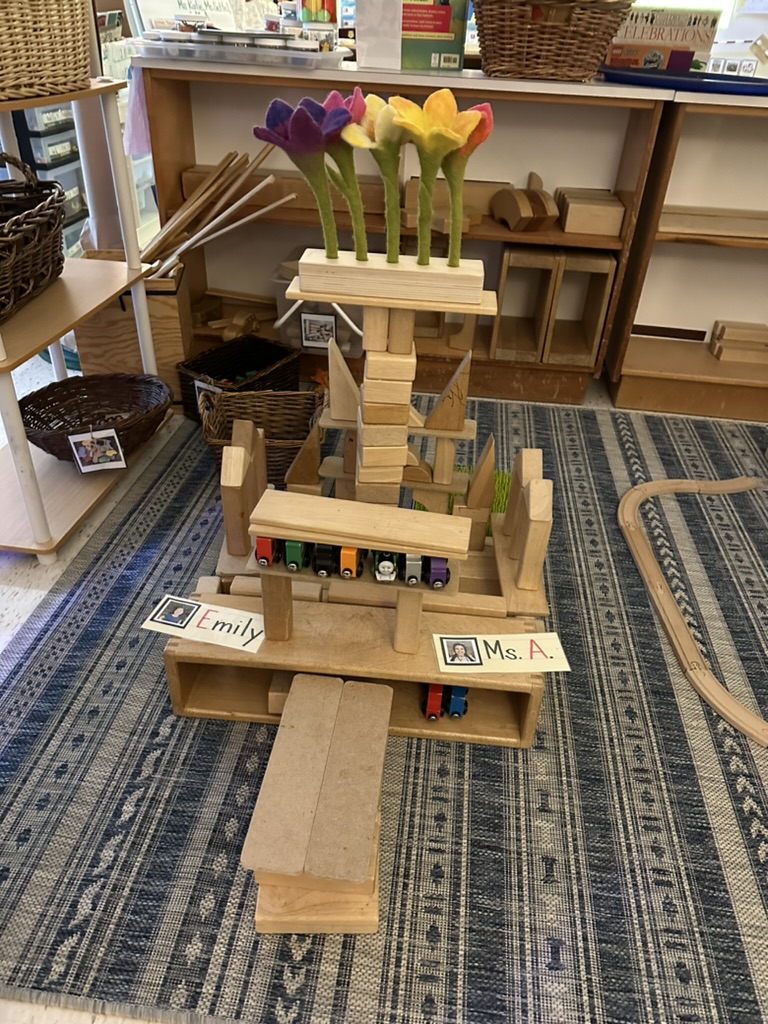
As I look carefully around the room, I see reflections of the children everywhere. The rainforest was created by them, planned, designed and brought to fruition by the kids who took on this challenge. The block area was redesigned by moving it into a bigger space to allow for more children to build – again, initiated by the children. The huge kidney shaped table is a large collaborative work space for art projects – not a reading table with the teacher at the center. The linear calendar reflects important dates for this class – important events, birthdays, field trips, learning experiences that keep track of our shared journey through this school year. One of our bookshelves became an engineering center to store the marble run, the legos, and other building tools because this year the kids are avid builders. Our storytelling kits reflect dances we’ve done (like our baby beetle dance) and books we have read, with tiny toys to retell the experiences we’ve had. There is a basket of Pokemon cards and Pokemon toys that kids have brought in. The kid’s book boxes are overflowing with books that have been chosen by the reader of each individual book box. The classroom library is arranged and labeled by these kids, in a way that works for them. The chandelier that hangs in the center of our room has pieces of art that each child created that is representative of who they are. The photos scattered throughout our room are of children and their families and shared experiences we want to remember. And because I am also a member of this community, my small teaching table has a few things that bring me joy and that I want to share with this community – a picture of me and Judy Blume, a unicorn tape dispenser, a peacock feather, a bowl of shiny rocks – but it is also a work space for children. The mandatory teacher desk I’m required to have in my room serves a great purpose as a stand up work space for provocations and displays that the children create. Currently, it houses materials to build Calder-inspired mobiles and sculptures.

IMG_7195.jpg

So why do I have so many “cool things” in our room? Because I have a lot of cool kids. The classroom a reflection of who they are – as individuals and as a community. They own it, and more importantly, they know they have a say in it. Their voices are heard and they are encouraged to contribute and create. They help negotiate what is in the classroom, what goes on our walls, what the space looks like and what is available to explore and create with. Their lives and interests are reflected in the space and it evolves as the children evolve. It’s a collaborative experience of many identities brought together in a year of learning.


Screenshot 2018-03-01 22.18.35

Day 10