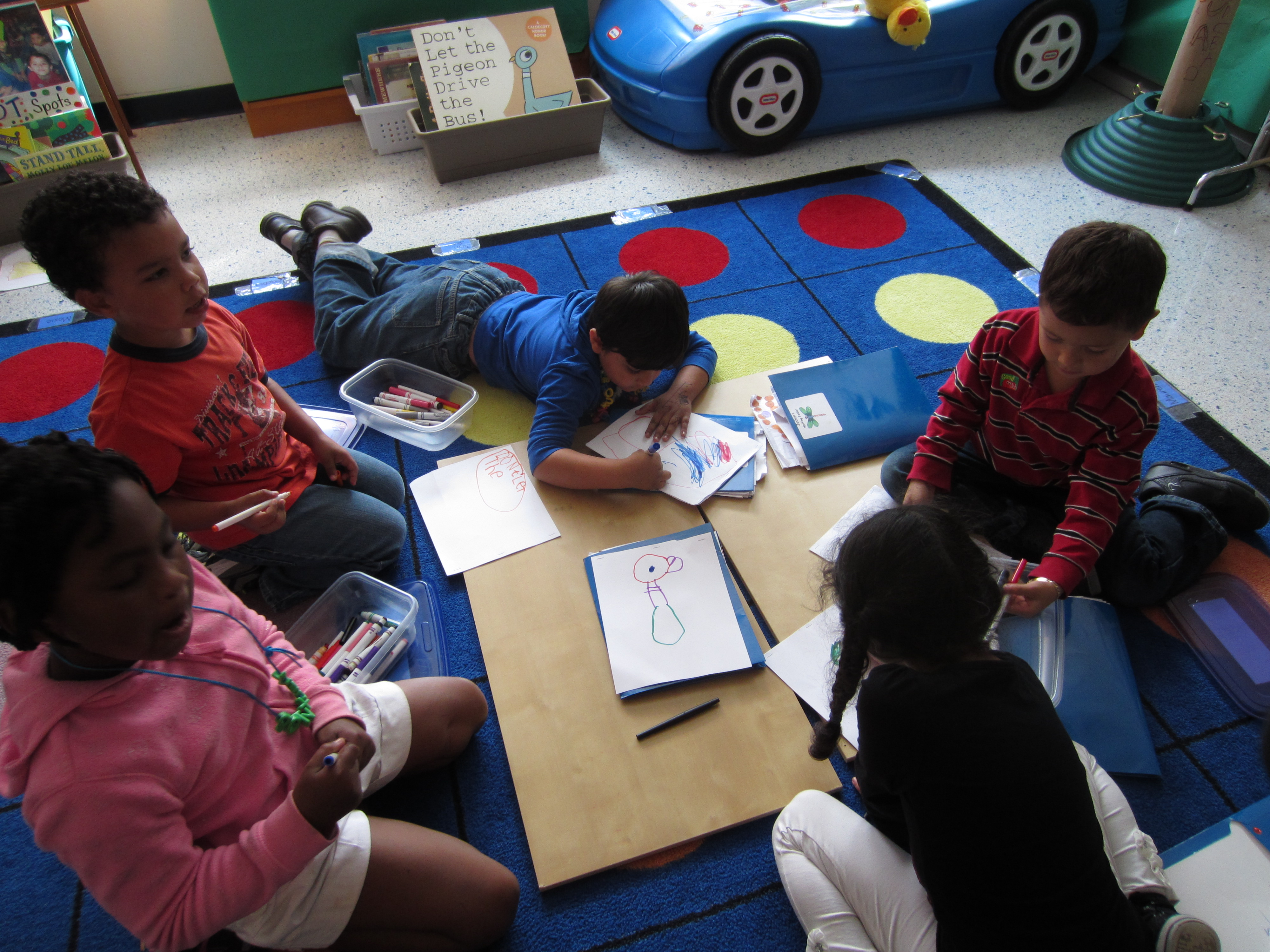
A Few Words for Parents

lt-blog-
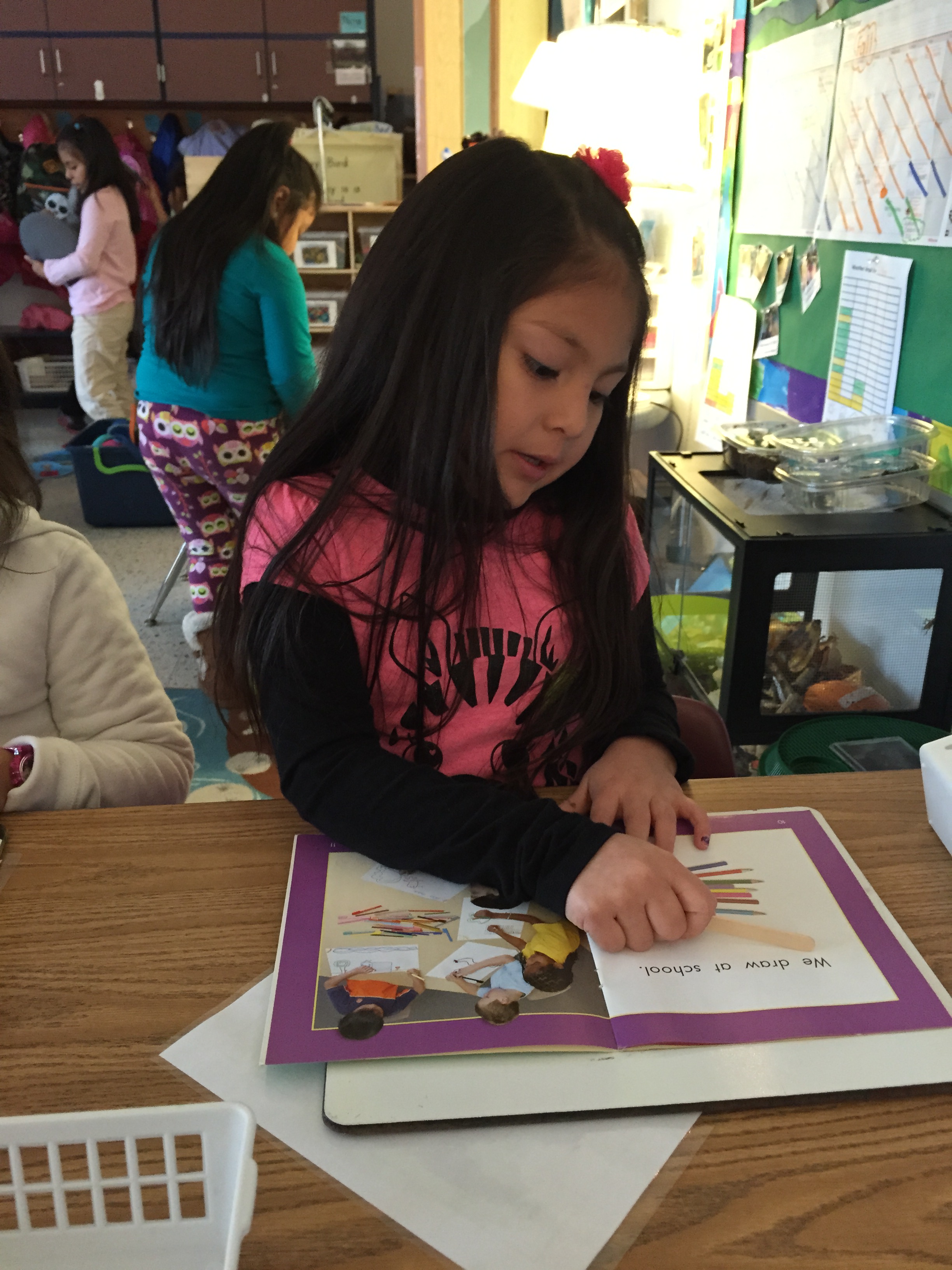
It’s evening story time and as your child reads through a new book she suddenly comes to a difficult word and stops. What do you do? Do you give her the word? Or do you say “sound it out”?

Many teachers are beginning to realize that, although “sound it out” often comes to their lips, it isn’t necessarily the best response. The English language is not consistently phonetic so it is not helpful, or even fair, to tell a child to “sound out” words like said, night, or know, just to cite a few familiar examples.

A better strategy is to give your child a little support by saying, “Hmm, what would make sense there?” or point to the picture. Sometimes encouraging the child to go back and reread the sentence from the beginning helps as well. It’s important for story time to remain stress-free, so if your child is getting frustrated by too many unfamiliar words, just give her the word or read the entire book to her.

Here are some answers to other common concerns parents have about their child’s reading:

My child memorizes books, instead of reading them. Is this OK?

This is not unusual for very young readers, but we don’t want them to get the wrong impression about reading. We want children to understand that reading is not about memorizing books or lists of words, but rather about making the story make sense. Figuring out the words, attending to the print, and making the sentence make sense are all part of reading. If you run into this problem, maybe your child is ready to move on to books where the pattern changes. It is OK for her to do some real work while reading.

My child seems to know a word one day, but then she forgets it the next day. Should I put the words on cards and drill her on them?

Kids need to see the same words many times in a variety of settings to get to know that word. It’s better for her to see a word in an actual book than on flash cards, out of context. She may come to think that reading is just about accurately calling the words and not about understanding the full story or book. It’s normal for beginning readers to have words that are only ‘partially known.’ The more they encounter those words in authentic reading and writing situations, the more familiar the words will become. Eventually those words will become fully known and instantly recognized.

Should I give my child prizes for every book she reads?

It is great to encourage a child to read more, but reading should be its own reward. When we offer kids pizza or stickers for reading a certain number of books, we are actually sending a message that reading is something unpleasant so we have to resort to prizes to get them to read. Also, when kids are counting the number of books they read in a race for a prize, they often sacrifice quality for quantity. When you take your child to the library or a bookstore, spend some time finding books she enjoys. Ask her what she wants to learn more about or what kind of books she likes to read. Make a special time each evening for you and your child to sit down and read together.

How do I know my child understands what she’s reading? What should I do when she finishes a book?

While she’s reading, you can tell if your child understands if she laughs at the funny parts, talks about what the characters are doing, or connects to an experience of her own. Encourage these responses. But if your child pauses or reads the punctuation wrong, these are hints that she might be losing the overall meaning of the story. Encourage her to slow down and reread those parts; talk together about what’s happening in the book. Just talking naturally will help you know whether your child understands the story. You can start a conversation with some questions like “What was your favorite part?” “Did it remind you of anything?” or “What did you think of that book?”

If my child is struggling with reading, should I take her to one of those learning centers or buy a kit to teach her how to read?

Talk to your child’s teacher if you think she is struggling. Learning centers and expensive computer programs might help your child pass a test, but they won’t help her build good reading strategies in the long run. A reading tutor who can support what is going on in the classroom and work together with your child’s teacher is a much better option.

Note: If you are a teacher reading this post, feel free to duplicate it to use in one of your parent newsletters or to give out at parent conference time.  Also look in Chapter 11 of Catching Readers Before They Fall for more Q/A for families.
2014-11-26 12.07.28

“The function of education is to teach one to think intensively and to think critically. Intelligence plus character – that is the goal of true education.”

Martin Luther King, Jr.

How do you encourage and celebrate thinking in your classroom?

Something to think about…

Should we teach kindergarteners to read?

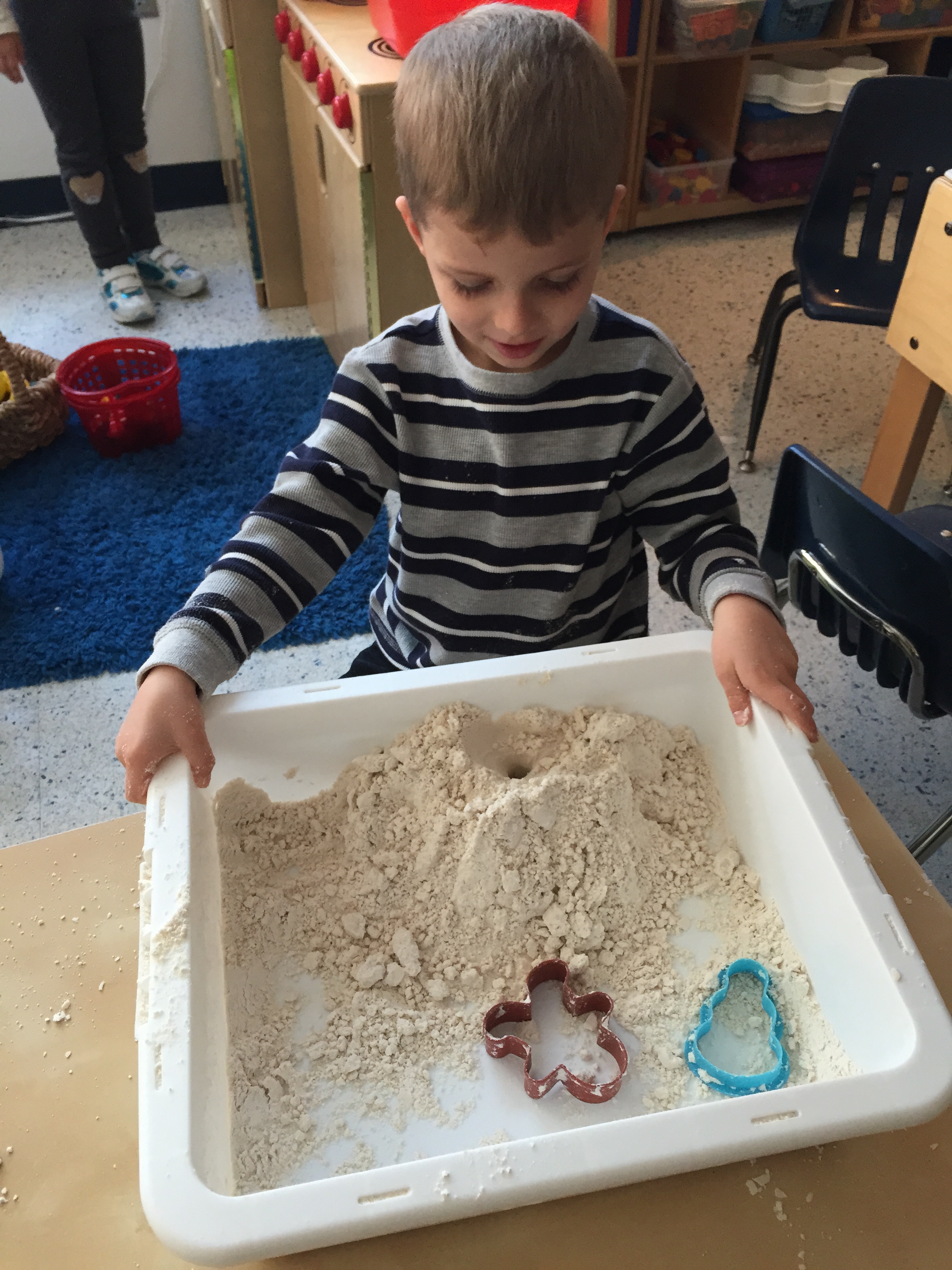
Playing with cloud dough

Making a volcano with cloud dough

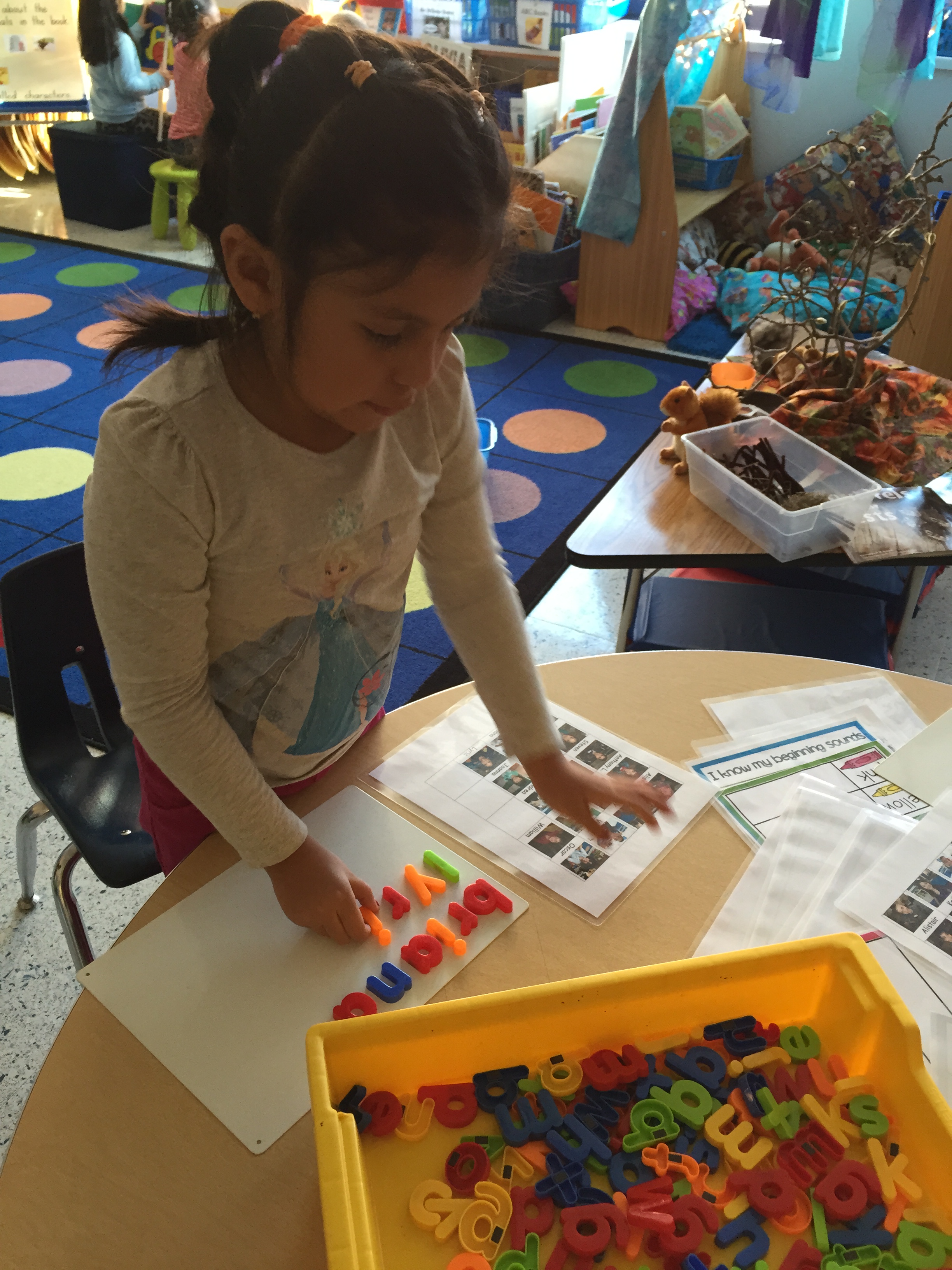
Making friend's names with magnetic letters

Making friend’s names with magnetic letters

This week I read an article citing a report saying that forcing kids to read before they are ready could be harmful. The report specifically references Common Core Standards in Kindergarten and says “there is no evidence to support a widespread belief in the United States that children must read in prekindergarten or kindergarten to become strong readers and achieve academic success”. While it was surprising to me to hear that there is “no evidence”, it was not surprising to read the other findings the authors reported. I hear over and over about blocks and dramatic play stations taken out of classrooms, recess taken away, and endless inappropriate assessments being given (an “online, practice quiz for kindergarten” should never, ever happen). Our children deserve better.

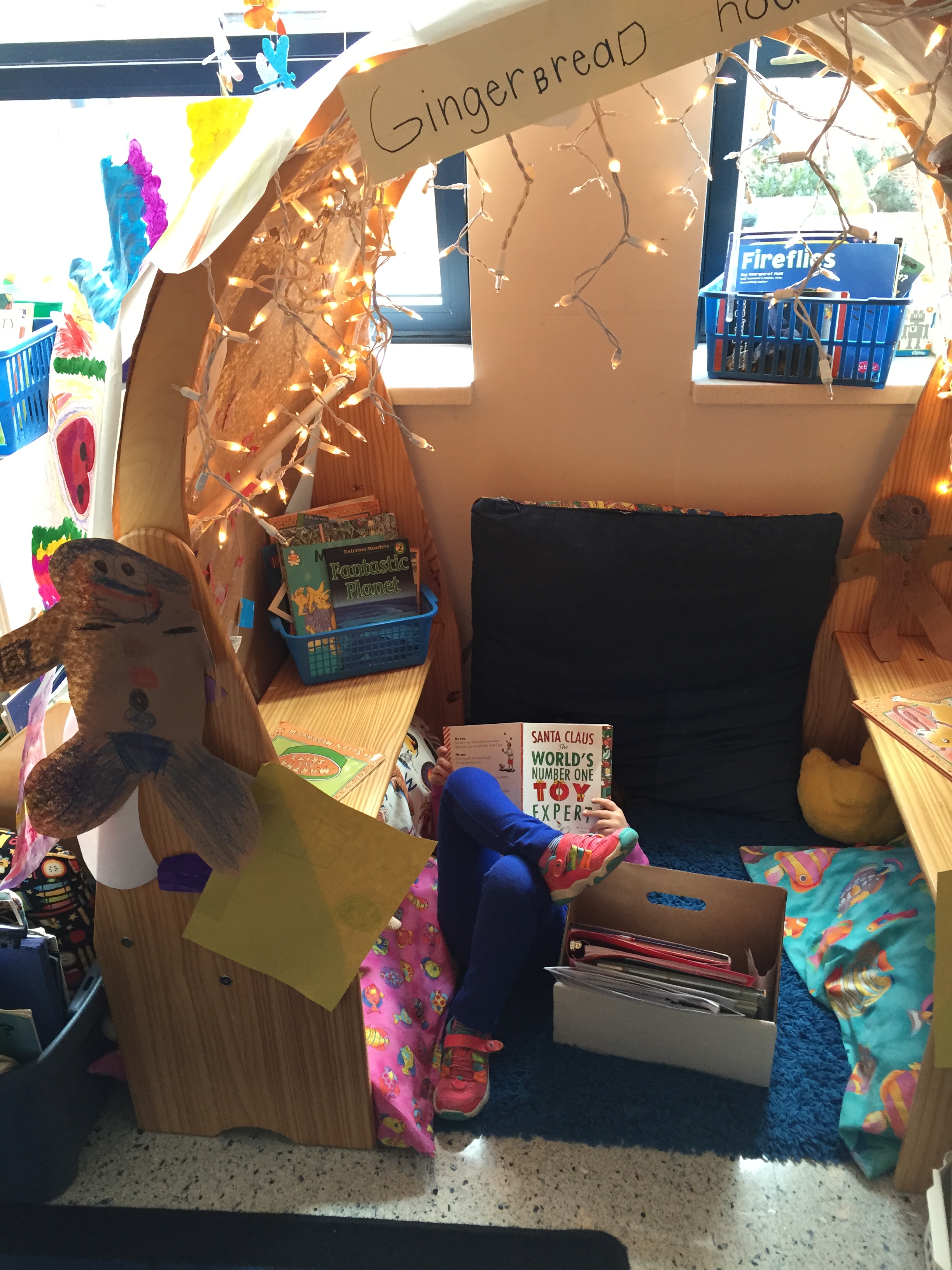
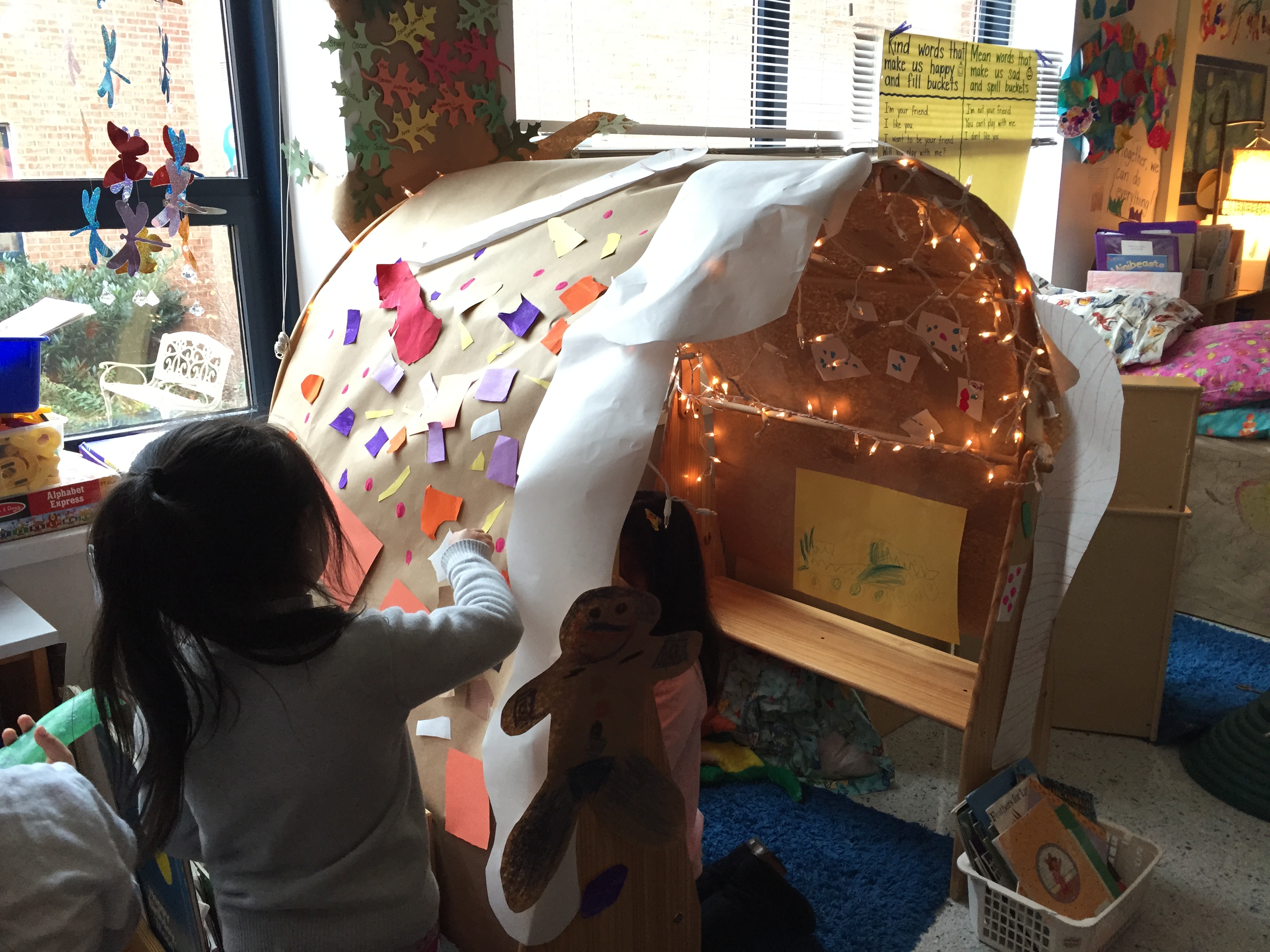
Reading in the Gingerbread House

Reading in the Gingerbread House

I agree completely with what the authors of the study share in the report. Children need to play – it is how they learn (and research does support this).  But I also think it’s important that we give our kids every chance to get that important school literacy piece as soon as possible – with developmentally appropriate practices. It is tragic that, as the article states, “teacher-led direct instruction in kindergarten has almost entirely replaced the active, play-based experiential learning that we know children need”. I don’t think that we should force children to read, but I do think we can immerse children in rich literacy experiences early on and ignite an interest in learning to read and write. We don’t need to have hours of drill and kill and teacher-led direct instruction. We don’t need worksheets and mindless one-size-fits-all instruction. We don’t need hours of assessments. We don’t need to make kindergarten (or first, second..or any grade, for that matter) full of these things.

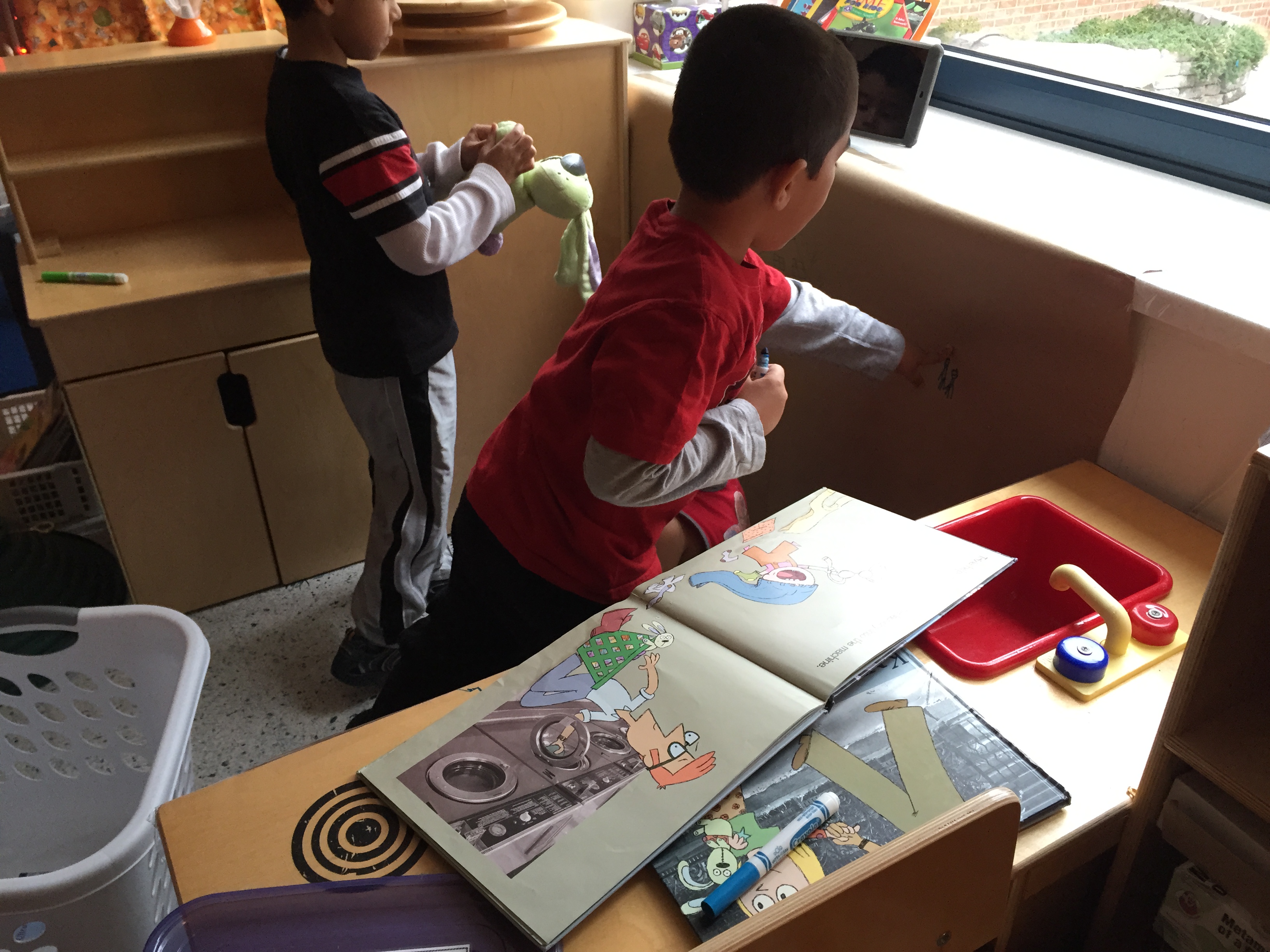
Acting out Knuffle Bunny in the "laundromat"

Acting out Knuffle Bunny in the “laundromat”

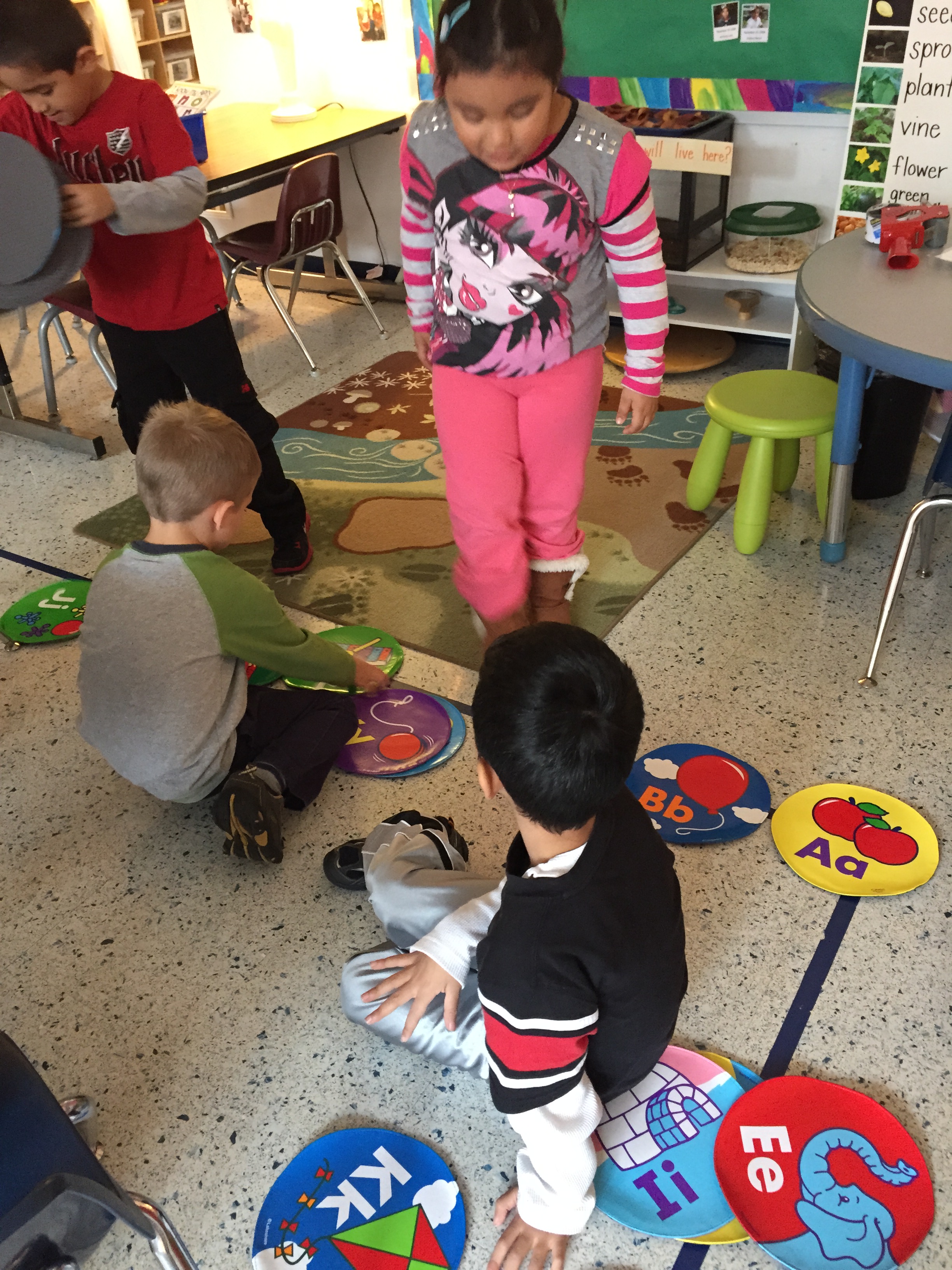
My classroom is a play-based kindergarten classroom, with a great deal of authentic and meaningful literacy experiences offered each day. We read aloud, we have choices throughout the day in curriculum, content and activities, we have a daily Writer’s Workshop, we play, we learn letters, sounds and links, we have 2 recesses each day, we have snack, we read pictures and words in books, we build things with blocks, we learn how to read,  we dress up in the drama center, we play in the kitchen/spaceship/laundromat, we put on puppet shows, we learn how to form our letters, we discover things in sensory boxes, we have guided reading groups, we explore things we are interested in, we read charts and poems, we wonder, question and grow and we do it all in an active, playful, meaningful and developmentally appropriate way. And at the end of the year, some of my kindergarteners are reading at the county-wide benchmark. And some aren’t. But they can all tell you a favorite author and what kind of books they like. They can all read books they’ve written and tell you what author/illustrator they see as a mentor.  They all see themselves as readers and writers. That is ultimately my goal.

Negotiating the order of the alphabet letters with friends

Negotiating the order of the alphabet letters with friends

I’m reminded of the phrase from medicine, “first, do no harm”. This needs to hold true in education. The last thing any of us want is a child refusing to go to school, locking himself in his bedroom, and hiding under his bed. We want children excited about learning, passionate about topics they are discovering at school, talking about favorite authors and illustrators, questioning, wondering and eager to learn, empowered because they know they have a voice in their learning. We don’t want to harm our children. If we are being asked to do things that we know are not developmentally appropriate and that may harm some children, then we need to speak up. It’s worth fighting for the blocks, the recess and the dramatic play. It’s worth fighting for our children. Thank you to the authors of the Defending the Early Years project study for giving us another tool to fight with.

Teaching with a Sense of Urgency

2014-12-08 10.12.48

Shared reading with a pointer

“When I suggest that we need to “teach with a sense of urgency” I’m not talking about teaching prompted by anxiety but rather about making every moment in the classroom count, about ensuring that our instruction engages students and moves them ahead, about using daily evaluation and reflection to make wise teaching decisions. Complacency will not get our students where they need to be. I am relaxed and happy when I am working with students, but I am also mindful of where I need to get them and how little time I have in which to do it. I teach every day with a sense of urgency.” – Regie Routman

These wise words have stuck with me since 2003, when I first read them in Regie’s wonderful book, Reading Essentials. This year they came back to me loud and clear. I have a group of fabulous students. They are kind, loving, thoughtful, fun, curious, passionate, inquisitive and they need A LOT in the area of school literacy and academics. Our beginning of the year assessments made it very clear to me that intentional teaching, with a sense of urgency, was essential for this year to be a success.

Urgency doesn’t mean that our classroom is a stressful, rigid place full of drill and skill activities. Do we have fun? YES! Do we play? Absolutely! (It’s how children learn!) Do I keep in mind that they are 5 and 6 years old and make sure that my practices are developmentally appropriate? Of course! Do I enjoy each day with my learners and do they enjoy being at school? For sure. Do I stay true to the belief that I teach children – not standards – every day? Indeed. Do I make sure my children have every opportunity to learn the necessary literacy skills to be successful? That’s my job.

Teaching with a sense of urgency is happy, relaxed, purposeful teaching. It’s making every moment count. And that makes an impact on student learning.

Here are a few structures I’ve put in place that are supporting my young learners and helping them make great progress in the area of literacy.

2014-12-10 14.38.09

The morning message on the SMARTboard.

-A stronger focus on letters, sounds and other “item-based” things in the context of meaningful literacy work. One example is our daily morning message. It’s a 10 minute, highly focused, literacy event that kids love. I highlight a letter and how to correctly form it, we find words that start with that letter and say the sound the letter makes, we find that letter in the message and we look for other letters and words we know. We talk about words vs. letters, capital vs. lowercase letters, spaces between words, what letters are first and last in a word, and punctuation – just to name a few things that come up during morning message. This is all done through a meaningful message – keeping in mind that meaning making comes first. This message goes home with the kids to share with their families. I print a copy before we do our work together and then another copy that shows the work we did – I copy it 2-sided and send it home. I plan my focus each day based on where my children are and what they need next in their learning.

Matching letters to ABC chart

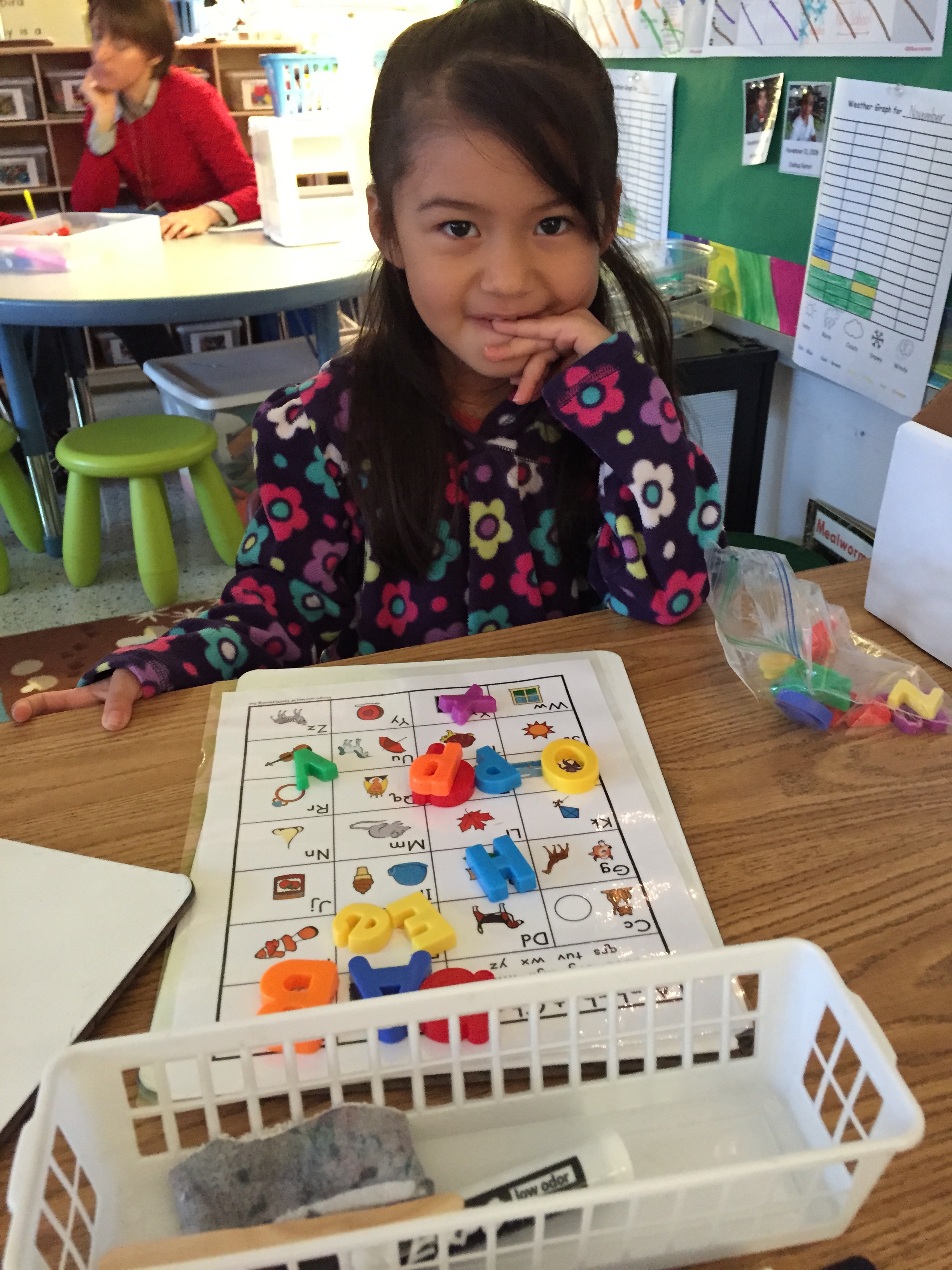
Matching letters to the ABC chart

-Guided reading groups with all children 3-4 times each week. Our kindergarten team is reading and discussing Jan Richardson’s book, The Next Step in Guided Reading. We looked carefully at the pre A – emergent lesson plans and structured our lessons around her framework. When I meet with my pre-A emergent groups (currently, 14 of the 18 children in my class – students who know fewer than 40 upper and lower case letters and hear few, if any, sounds and are lacking in early concepts of print), we go through a fast-paced, engaging lesson that includes working with names, working with letters, letter formation, working with sounds, a shared reading lesson where each child has a copy of the book and an interactive writing lesson. I have a record of where each child is in their letter, sound and link acquisition and can teach directly to their needs within the small group lesson. I love that these groups have the necessary item-based components AND the meaningful reading and writing piece that is so important. I reflect and assess often, changing the groups and the activities within the groups to make sure that they are matching the needs of my learners.

Our letter tracing books - known letters are marked with small Post-it notes.

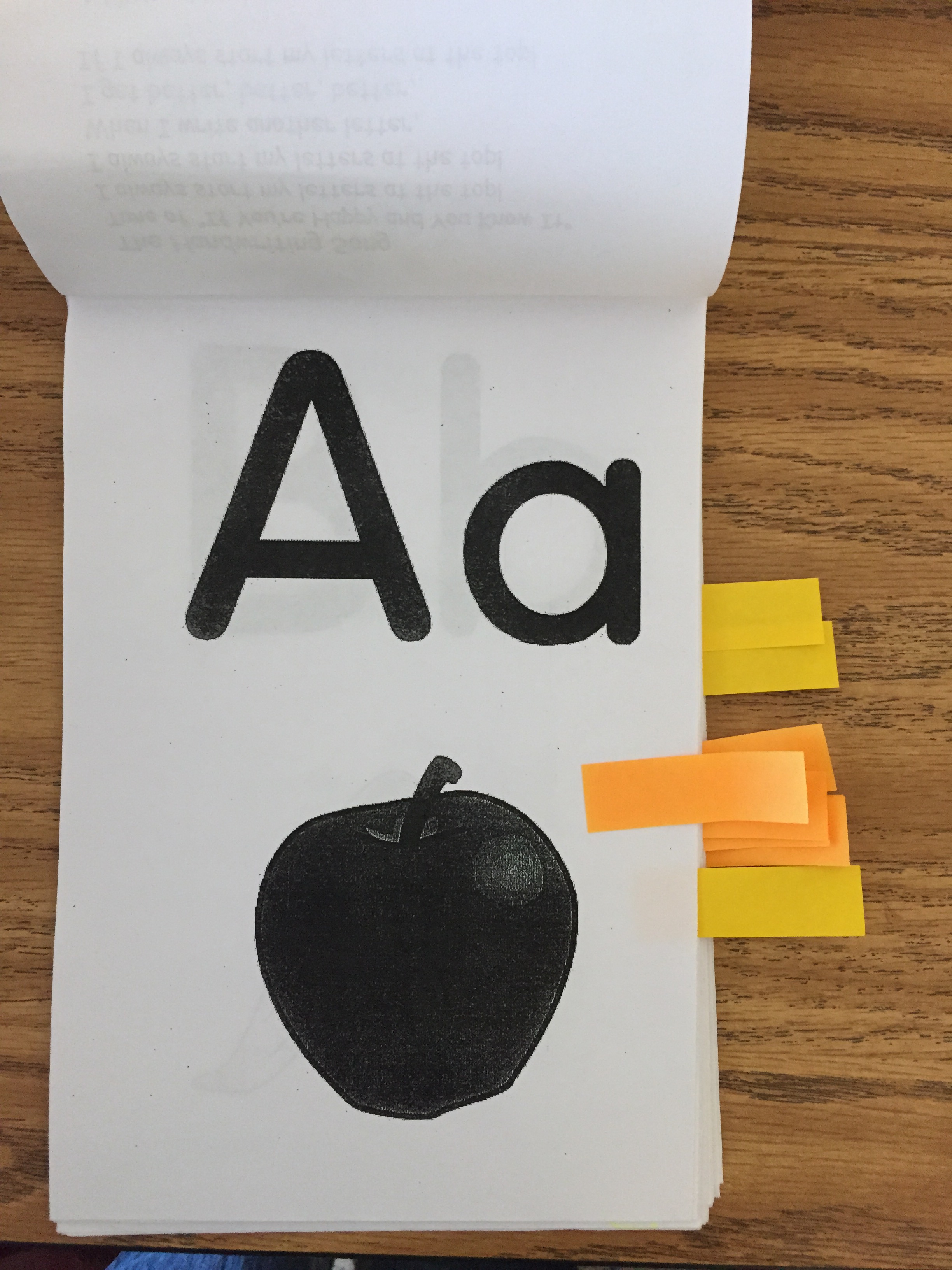
Our letter tracing books – known letters are marked with small Post-it notes.

-Daily letter tracing books with my instructional assistant. Jan Richardson talks about tracing alphabet books in her book. I made paper ABC books with upper and lowercase letters and a picture and started by tagging the letters in their name with a Post-it.  The students take their finger and trace the letters using the correct formation path, then say the link. (A a apple) As they learn the letters, we add new letters for them to learn – tagging those letters with Post-it notes. Each day, our students have a 3-5 minute session with an instructional assistant or a volunteer, tracing and saying the letter names and links that are tagged. Eventually, they will have all 26 pages tagged with Post-it notes and will be able to trace, say and identify the link for all the letters. We have seen remarkable results in letter identification through daily use of the letter tracing books.

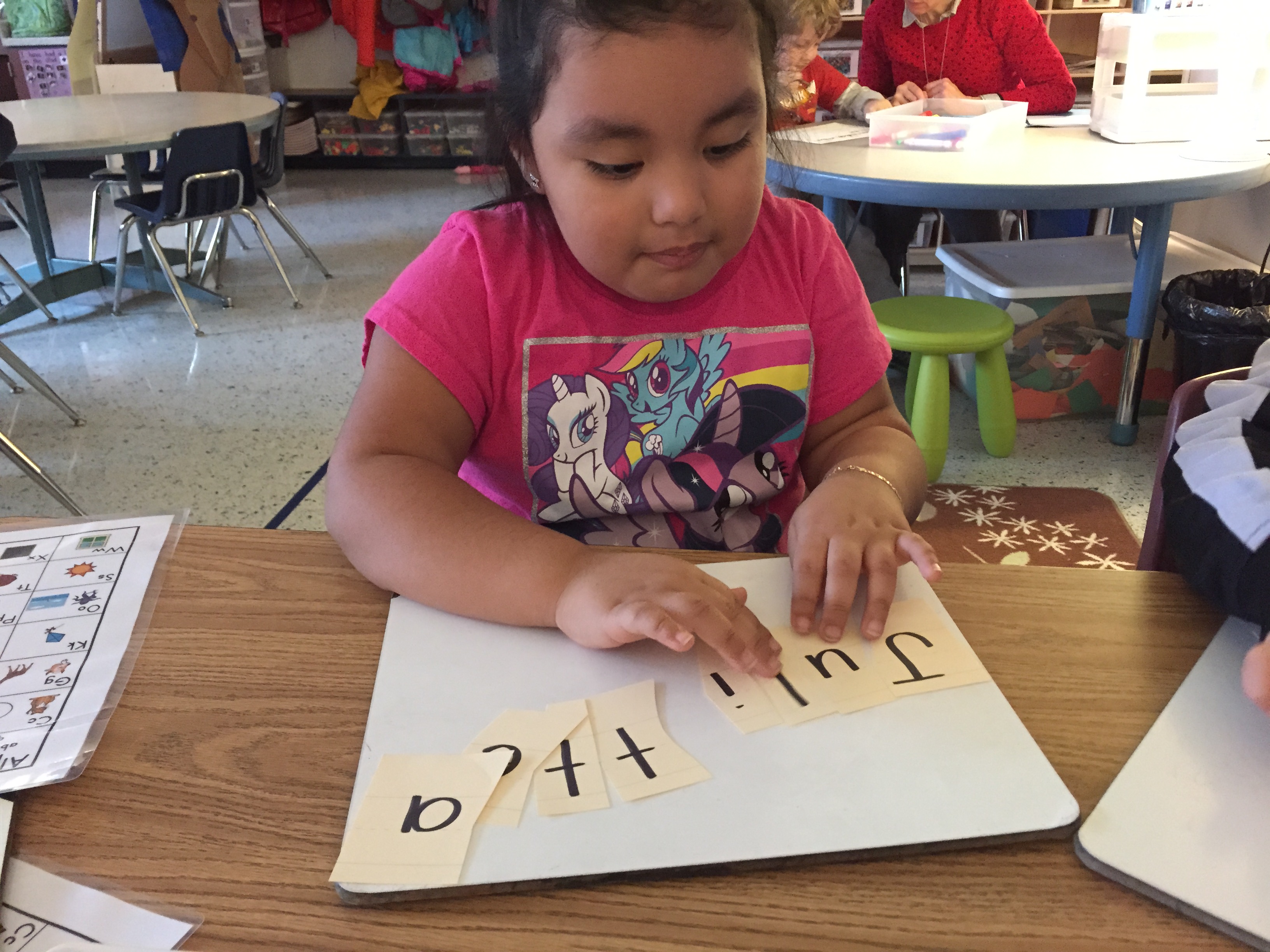
Name puzzles

Name puzzles

These are just a few of the ways I’m teaching with urgency this year. This is all in addition to many read-alouds throughout the day, rich discussions and purposeful talk in the classroom, a daily writer’s workshop, shared reading, community writing, inquiry based projects, listening to and responding to interests and wonderings that the children have, and building a strong community of learners.

One Little Word

Screen Shot 2015-01-02 at 12.12.22 PM

Happy New Year, friends!

Several years ago I was inspired by Ali Edwards, and her One Little Word and started a New Year’s Eve tradition of choosing a word to live into for the upcoming year. The past few years have been framed around peace, grow, balance, happy and brave. I’ve found these words to be an overarching mantra for how I live my life that year.  I’ve thought a lot about my word for this year and I think I’ve found one that speaks to all aspects of my life – my teaching, my learning, my running, my relationships. That word is Now. 

Screen Shot 2015-01-02 at 12.12.38 PM

NOW. This moment is all we have. The word now inspires me to:

-focus on each child I am working with and pay attention to where they are right now; not where I wish they were, or where they need to be for the benchmark, or where they “should” be.

-give my full attention to the child I am with; not taking a picture or video or anecdotal notes or some other form of documentation, but fully listening and engaging with that child – making sure the child knows I am with them right now, and then after that moment I can record my thinking, but when I’m with a child – be fully present and with them right now.

-focus on myself and where I am and what I’m doing right now; not where I wish I was, or what’s on my to-do list, or what other things I should be doing, but focus on where I am right now and who I am with right now. Striving to be fully present in each moment makes me a better listener, a better teacher, a better friend, a better family member, a better runner and a better person. There’s a sense of calm and peacefulness in living in the moment, living in the now. 

-stop procrastinating. If I am living in a now way of thinking, I will do what needs to be done now, not later, or when I feel like it, or when I have a spare moment. I will take care of what needs to be done now. 

-put down the phone, the iPad, the laptop and be present to what is going on in the real world around me right now. I saw this video and it stuck in my head for days. How often do I pay more attention to my phone or device than what is going on in my world, or more importantly WHO is in my world right in front of me? It definitely made me rethink how digitally connected I am and how it may be more harmful than good at times.

As a reminder of my word, I am having a small necklace made with the word Now on it. My friend Jenny makes beautiful jewelry and I am excited to have a constant reminder of my word, and my promise to myself around my neck. It’s going to be a great year…starting NOW!

Screen Shot 2015-01-02 at 12.12.53 PM

What’s your one little word for 2015? I hope it brings you great things in the upcoming year.

PS – Here is the beautiful necklace that Jenny Nichols at Mountain Prima Donna just finished and is en route to me now. So excited!

Screen Shot 2015-01-04 at 3.11.09 PM

Supporting Reading Process – Not just for First Graders

After taking some time to work in upper elementary classrooms, I have returned to volunteering in a first grade classroom.  Since I did Reading Recovery for 7 years, this is where my heart often returns to. I am absolutely loving my work with these little guys! But because I only see them once a week I want to be sure I’m using my time as expertly as I can.  Therefore, I looked back in Clay’s texts to make sure my teaching is as effective as it can be.  I find I can open to just about any page of a Clay book, read a few paragraphs, and I am filled with food for thought.  I’m going to copy a list of Clay’s (see bottom) that got me thinking in hopes that you too will spend some time reflecting on it. Perhaps you’d even like to take the list to a team meeting and get some discussion going.

Clay believes (as do I) that every reader must build their own self-extending reading process system. (You can read more about this system in Chapter 2 of Catching Readers Before They Fall.) Some children do this very naturally no matter how they are being taught to read.  But with children who struggle (beginning readers or those in upper elementary grades), they need to be scaffolded as they build that system.

The aim of all teachers of reading is to produce independent readers – readers who work at problem solving, fluently and flexibly; readers who self-monitor themselves; readers who self-initiate their own strategies and behaviors and don’t wait for the teacher to prompt, etc.

Here is Clay’s list.  She writes that children become more independent:

“ – if early behaviors are appropriate, secure, fast and habituated.

– if children learn to monitor their own reading and writing.

– If they search for several kinds of information in word sequences, in longer stretches of meaning, and in letter sequences.

– If they discover new things for themselves.

– If they check that one kind of information fits with other available information.

– If they repeat themselves as if to confirm what they have read or written.

– If they correct themselves, taking the initiative for making all the information they find fit the word they decide upon.

– If they solve new words through their own strategic activity.”
Marie Clay, Literacy Lessons Designed for Individuals, Part Two, Page 114.

When I reflect on these, I ask myself:

  • Am I making sure the students are monitoring for meaning and not just to see if they ‘got the words right’?
  • Am I giving them time to search and time to problem solve? Or am I jumping in too quickly?
  • Am I modeling the many ways they can search and gather information from the picture, the sentence, the meaning of the story, how the letters look, etc?
  • Am I encouraging rereading which will help them confirm, or check, or redo a word choice, or discover something new?
  • Am I sending the message (in all that I do and say) that it is their job to do the reading work? Do I encourage them to check and confirm for themselves instead of looking to me for confirmation?

There are just a few of the questions I want on the tip of my tongue as I work with first graders.  I hope they inspire some reflection in you also.

It’s Their Day, Too

2014-12-05 12.41.58I recently read a blog post written by a mother, sharing how frustrating some days can be. I related to this post not as a mother, but as a teacher. It’s easy to get caught up in things that can suck the energy out of our teaching – the trainings that often don’t directly relate to the work we do with our students, the new mandates and requirements that are handed out, the lack of planning time, the lack of support from our administration, colleagues, (or even our nation), the slow response of systems that are supposedly in place to help our kids, the constant addition of things we must do, the lack of time to do these things, the endless assessments, the constant raising of the bar, the negative perception of how we do our jobs and how we all just need to work harder/better/faster. It can be exhausting.

2014-12-05 14.36.46When I find myself getting sucked into this frustration, I have to stop and get grounded again. It’s not all about my day and my huge to-do list and my deadlines, benchmarks and expectations. It’s about the kids. It’s about being present and in the moment. It’s about listening.

Our children come to us each day to learn, to grow, to have fun. To laugh, to explore, to be in awe of something. To discover things for the first time, to have that “a-ha” moment, to change perspectives, to open their eyes to a new way of thinking, to find a passion. It’s their day, too.

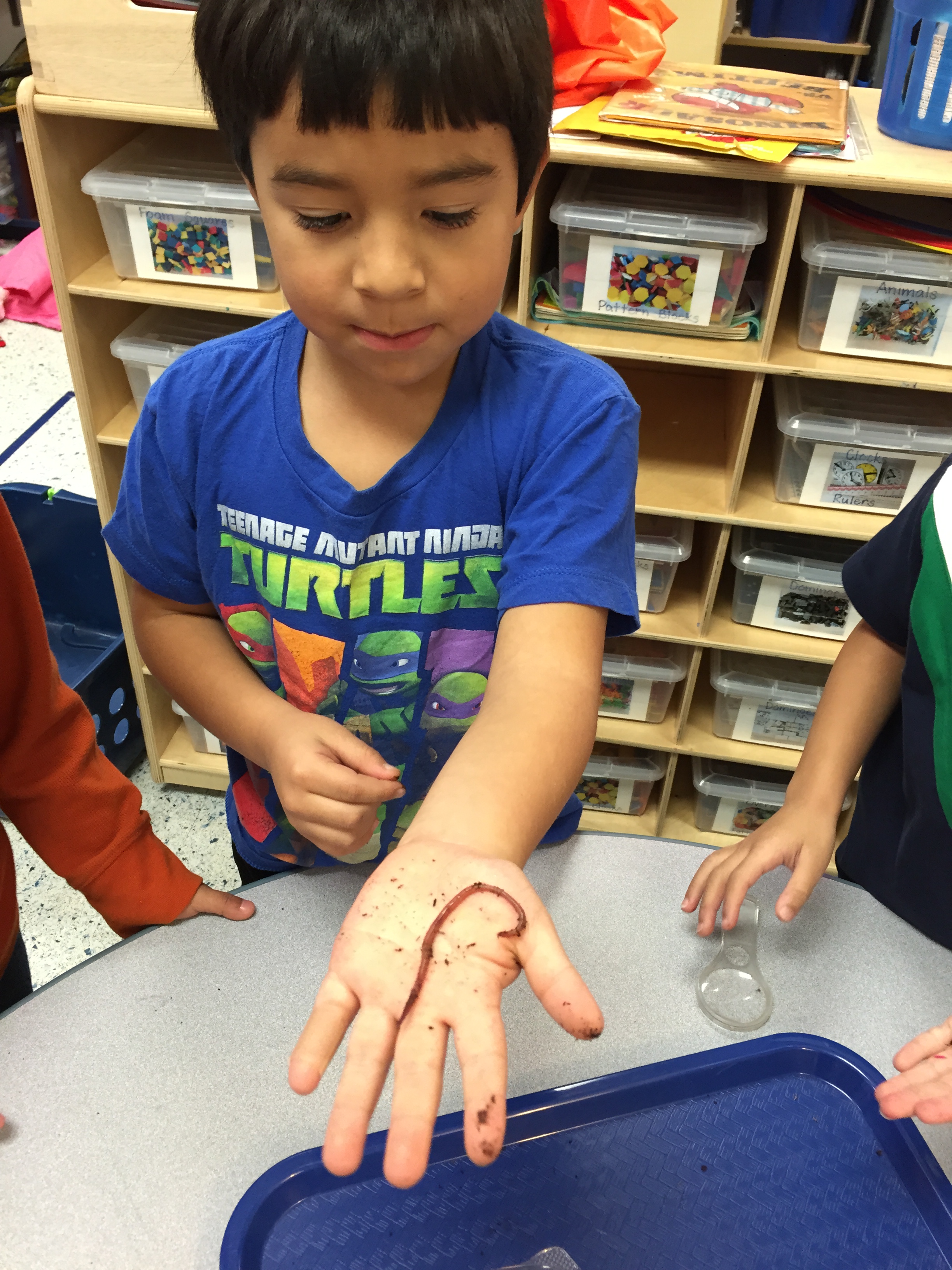
2014-12-05 14.36.50Some of my best days of teaching look nothing like what’s on the lesson plan. They come from listening to my kids, following their lead, and remembering why I am a teacher. Some days the lesson plans and assessments need to be pushed aside and I need to sit down with my kids while they explore worms in a nature box. I need to be there to help them find a worm book in the class library and listen as they wonder and investigate the worms crawling on their hands. I need to laugh with them, wonder with them and encourage them.  I need to run to the art room for paper to cover our play stand because they decided a gingerbread house needs to be built today. Not next week, but NOW. Because NOW is where five year olds live. I need to stand back as they gather all the gingerbread men books we’ve read to decide what characters they should make to put inside the gingerbread house. I need to listen and be responsive to what they need.

2014-12-05 12.41.51Now. In this moment.

Because it’s their day, too.

On mentors

MentoringHands-0A mentor is defined as someone who guides another to greater success. I’m mentoring a new-to-kindergarten teacher this year, and it has caused me to reflect on who my mentors are. Of course, I could list so many of the authors of the books that line my walls – Nancie Atwell, Katie Wood Ray, Lucy Calkins, Donald Graves, Dick Allington, Ken and Yetta Goodman, Marie Clay, Debbie Miller, Steph Harvey and Anne Goudvis – just to name a few.  We all have those mentors. The people we get excited to see in person at NCTE or IRA, the authors we wait in line for the chance to speak a word or two, the authors whose voices echo in our mind as we teach every day.

But as I reflected on this, I started thinking of the teachers I have taught with throughout the years. Teachers I have worked with who were in their first year or their twentieth have made an impact on my teaching to this day. I fear that we are entering an age of teaching where collaboration and sharing are discouraged. Stories of competition between teachers in the name of test scores frighten me. (for many reasons) Teaching can be a lonely profession. We can easily be isolated in our classrooms. Sharing and learning from our colleagues is so important and sometimes the littlest thing can stick with that teacher across the hall forever.

I want to thank a few of my teaching mentors I think about daily. You’ve given me ideas and inspiration that I carry into my classroom every day. I realize the danger of doing a post like this – I’m sure I will leave someone out. And really, everyone who I’ve had the privilege of teaching with has impacted me in some way. Thanks to Zoya Bankley Lucas, I still hand out “love notes” – tiny pieces of paper with fun messages – to my kids every day as we say good-bye for the day.  Christy Thompson, Sam Straker, and Susan Cox are my inspirations for creating community in my classroom. They have taught me so much about honoring and respecting children and listening to them. I can hear their voices every day as I interact with my kindergarteners. Julie King taught me how important enthusiasm and patience are in a classroom. The joy she showed for her job and students, even in the face of challenges and frustration, is something I think of often when faced with difficulties. Pat Johnson’s voice comes to me often as I work with my young readers and writers. “What would Aunt Pat do?” is a thought I have at least once a day. Rosary Lalik and my cohort for the Literacy Studies master’s program at Virginia Tech truly transformed who I am as a teacher. Your voices blend into a symphony of support and encouragement to challenge me to think outside the status quo and always question and speak up for what is right for children. You help me be brave in my teaching. Melanie Rick taught me so much about arts integration. The lessons we planned and taught together help me every year as I integrate the arts into my teaching. Ann Mabry has helped me achieve balance in my life. I learned that I could be a good teacher and have a rich life outside of school through her. Kassia Omohundro Wedekind, Jessica Shumway, Debbie Gates and Michelle Gale, you have taught me to love teaching math. You come into my math workshop with me every day and help bring excitement, inquiry and fun to math. Shannon Christie, Lauren Price and Althea Greenstone make up my current kindergarten team. I learn from each of you and feel so grateful to be a part of a team who shares a common, child-centered philosophy and love for teaching kindergarten.

Thank you all.

Who are your teaching mentors? Who can you thank today for making you a better teacher?

facebook_photo_download_30972877888

Our Virginia Tech Literacy Studies cohort

Writing on Day One of Kindergarten

Writer's Workshop

Writer’s Workshop

“The fastest way to teach a child to read is to teach them to write.” -Mem Fox

In one week, I will start my 24th year of teaching with a group of eager, squiggly, excited kindergarteners. One of the things we do on the very first day is start Writer’s Workshop. I begin by reading David Shannon’s ever popular book, No, David! In the front of the book is an author’s note, explaining how he got the idea for No, David! I share that with my kindergarteners and then tell them that they are authors, just like David Shannon. And in our classroom, they will get to make books every day – just like David Shannon! I then pass out a 5 page stapled blank book to each student and send them off to make a book. After four years of doing this with kindergarteners, I have never had a student ask what to write about, say they couldn’t write or question this task at all. They get excited and carry on – making books. Just like David Shannon. It’s really quite amazing to watch.

Last year I was invited by the folks at #kinderchat to participate in their Campfire Chat series. I did two Blackboard Collaborate sessions and wrote a blog post about writing in my classroom. If you would like to hear more about the possibilities of writer’s workshop in kindergarten and beyond, check out Campfire Chat 1 and Campfire Chat 2 – Writing Joyfully. When you launch these, you may have to download the Blackboard Collaborate Launcher. Once the program opens, click Playback – Player – Play on the top bar. You will then get the hear and view the recorded presentation. Enjoy and have a great year of writing with your class!