Math Exchanges Blog Tour Kickoff!
 Many of us have strong literacy workshops up and running. We are supporting our readers and writers through modeling, rich conversations, conferences and independent work. But what about our math time? Are we supporting our young mathematicians in a similar way? Kassia Omohundro Wedekind shows us the power of small-group instruction through a math workshop approach in her new book, Math Exchanges.
Math Exchanges stands on the shoulders of great literacy thinkers such as Regie Routman, Lucy Calkins and Debbie Miller, as Kassia shows us how conversation and reflection through the workshop approach in math is as powerful for teaching and learning with young mathematicians as it is for young readers and writers. Teachers will see how creating math workshops with “community, rigor, and joy” can be a powerful (and fun!) way to teach math in this book that is a joy to read. Filled with practical examples, glimpses into the minds of expert teachers interacting with students, and real life “kid talk” from mathematicians in grades K-3, this book will be a welcome addition to all teacher’s bookshelves.
We have the honor of kicking off this blog tour and sharing more of Kassia’s deep thinking about math with you. Enjoy our conversation with Kassia Omohundro Wedekind!
1. I love how you connect Lucy Calkins’ advice “teach the writer, not the writing” to math. “Teach the mathematician, not the math” is such a powerful way to think about our small group instruction, or “math exchanges” as you call them. In this day and age of pacing guides, curriculum maps and standards, how do you advise teachers to stay true to these words and focus on our young mathematicians, not what our pacing guide dictates?
This is such an important question…and such a hard one! I think the bottom line is that if you are teaching for true and deep understanding, you must teach responsively. If you’re teaching from a place that is way beyond a child’s understanding or you’re teaching only for surface-level understanding, a child may learn to mimic understanding or pass a test, but she won’t really understand mathematics. And unfortunately, we already have a society with a lot of people who don’t really understand or even like math. So, I think we, as teachers, can make a powerful choice to teach responsively, even in the difficult time in which we teach. We can show the amazing true understanding that comes from teaching a child to construct understanding rather than memorize isolated facts and procedures. We can change how people view mathematics in their lives and in the world.
Even the best curriculum resources, maps, standards, and pacing guides (and there are some useful ones out there) cannot replace the knowledge the teacher has of the child. So, my best advice is to become an expert on your students. Learn more about how children construct numeracy in their minds and take responsive steps based on that information. When people challenge you, use your unique understanding of each child and your understanding of how math is learned to lead the conversation. Bring your data (qualitative and quantitative) of what the child knows and what the next steps are. I think people respond to teachers who are experts on their children and have carefully crafted instruction for their specific learners.
2. Throughout your book you highlight the importance of meaningful talk amongst our young mathematicians. Pat and I agree that talk is the foundation for powerful learning. How do you go about establishing this at the beginning of the year?
Giving yourself permission to go slowly at the beginning of the year to establish a culture of talk in your classroom is critical. You will have (or at least I do!) those moments of “I should be moving faster!” or “I didn’t have time to get to…” Just keep telling yourself that the time you’re taking to establish a community in which children actively listen to one another, respond to each others’ ideas and push each others’ thinking is well worth the investment of time.
In the beginning of the year I spend a lot of my planning time thinking about how I will facilitate talk in the focus lesson, math exchanges, and the reflection parts of my math workshop. We chart and practice some language that helps us explain our thinking (“I think…because…), connect our thinking to that of our classmates (“I agree/disagree with Jeremy because…”, “My strategy is similar to/different from Marta’s because…”) and summarize one another’s thinking (“When my partner solved that problem first she…”). We practice looking at the person speaking. We learn to turn and talk and then explain the ideas of our partners. These are the kind of dialogue skills that are useful across the content areas (not to mention in life!).
These kinds of conversations look a little different at each grade level, but I truly believe all kids are capable of this. In my kindergarten class in which about 80% of students are English language learners, we have been having these kinds of conversations from the first week of school. I won’t say that it’s always easy or that we always have profound conversations, but we are learning how to talk math with each other. During our reflection time children share what they have worked on during their independent (well, in September we’re working towards independent!) math stations. As part of a focus on sorting and patterning, last week Jenny brought a sorting tray of pom poms she had sorted according to color and size to the circle for reflection. She explained “I put the same color together.” We opened the floor for discussion. “You also sorted by big, medium, small, and really small. It’s size and color,” said Kara. “Big blue,” responded Patricia, a girl whom I had never previously heard say a single color word or size word in English. Talk differentiates itself naturally. Everyone learns to bring something to the conversation.
3. One of my favorite quotes from your book is “Imagine if, at the end of the school year, all kindergarteners left understanding math as a medium through which to wonder about and investigate their world. Imagine if each child left kindergarten with a sense of ownership and agency in the world of mathematics. Imagine if all kindergarteners viewed mathematics as a place for play, creativity, and imagination. Imagine the possibilities for these young mathematicians. Endless.”
As someone who truly hated math all through school and for much of my teaching career, this book has changed how I view math and how I teach math. It’s now one of my favorite times of the day! I never knew it could be this fun. What advice do you have for teachers who don’t enjoy teaching math? How can they change their thinking and become better math teachers?
I’m right there with you! I was not someone who loved math. (Side story: A high school friend of mine who I recently reconnected with asked me “Kassia, you wrote a math book? Do you remember eighth grade algebra when about half way through the school year you decided you’d just retake the class the next year so you spent the rest of the year napping in the back of the class?” Yes, I remember…)
I did not see myself as a mathematician until I started to really study how young children construct mathematical understanding. I read about these amazing studies that have been done with babies as young as a few weeks old (some of which are explained in my book) that prove that we are hardwired from birth to think mathematically. In one study babies were shown images on two screens of one and two dots. One or two drum beats were played. When one drum beat was played, the babies spent more time looking at the one dot image. When two dots were played, babies spent more time looking at the two dot image. We are born with capacity for numeracy and problem solving that we need to learn how to better teach to. When a baby is born we assume that this child will develop linguistic fluency. We assume the baby will learn to speak her language fluently, to read it and write it. We assume linguistic competence because we know we are hardwired for language. We are just as hardwired for mathematical fluency, and yet, when a baby is born we don’t necessarily assume that he will be as mathematically strong as we assume he will be linguistically. We need to change that.
Go into a preschool or kindergarten class and watch children play. You can’t help but be amazed by what they do. They sort, they arrange items in order of size, they count, they combine groups, they estimate. No one has taught them to do this. Children come to us with intuitive strategies for math and problem solving. They use math to make sense of and organize the world. And that’s great news. It means that it is not our job to impose a foreign system of understanding and facts on these children. It is our job to be curious about what they know, understand the strategies they comes to school with, and build on these strategies as children learn about more formal mathematics.
I think what makes me love kindergarten so much is that, as the kindergarten teacher you cannot be cynical about the world. You just can’t. When you sit beside a child to read, to play, to count, amazing things happen. And not just once in a while, amazing things happen every single day. So if there is any place to feel great hope and endless possibility for the future of mathematics, it is in the kindergarten classroom.
Wow. This is definitely a book that will change how you view math, and how you teach your young mathematicians. It’s a much needed addition to professional resources for elementary teachers. Please follow this blog tour at the following sites to enjoy more interviews with Kassia about Math Exchanges, and have the chance to win a free book.
Our Camp Read-A-Lot, hosted by Laura Komos (October 4th)
Reflect and Refine, hosted by Stenhouse author and first grade teacher, Cathy Mere (October 5th)
Elementary, My Dear, Or Far From It, hosted by Jenny Orr (October 6th)
Please leave us a comment or a question about Kassia’s interview or her book – or your thoughts on this post. We will be raffling off a free copy of Math Exchanges (or another Stenhouse book if you already have Math Exchanges) at the end of the tour. Enjoy!
We are Versatile Bloggers!
 A huge thank you to Cathy at Reflect & Refine for nominating us for the Versatile Blogger Award! This blog has been a fun adventure to keep us writing after Catching Readers was published. After accepting this honor we are asked to:
1. Thank the person (people) who nominated you and provide a link back to their blog. 2. Share 7 things about you (us). 3. Pass this award along to 15 other blogs that you have discovered.
So here we go! Enjoy!
7 things about Pat:
1.) I’m an avid reader of adult fiction, professional books on teaching reading and writing, and children’s literature. (My favorite authors are Barbara Kingsolver, Geraldine Brooks, and Ann Patchett.)
2.) I walk 4-8 miles every day for exercise. It’s when I do most of my good thinking.
3.) I have four grandkids, two in Virginia and two in Phoenix, and love spending tons of time with them – going to parks, reading books, or just tickling and cuddling.
4.) I love talking with teachers, veteran and brand new, about how they can support their struggling readers, or any aspect of teaching reading and writing.
5.) I have over 30 years experience in education, mostly as a reading teacher in elementary schools, and I’m Reading Recovery trained.
6.) I’m a storyteller and often tell tales in my grand nieces’ and nephews’ classrooms near their birthdays.
7.) I enjoy dancing and even have a dance named after me called “The Aunt Pat.”
7 things about Katie:
1. I have a serious book addiction. I am in constant need of 1 more bookshelf. So there are always piles of books somewhere in my house (and Amazon boxes on my front porch).
2. I love to run. I recently started running ultra marathons (distances over the 26.2 marathon) mostly on mountain trails. I love spending time playing on the trails. Most of my writing & teaching ideas happen on the trail.
3. This is my 20th year of teaching. And my first year teaching Kindergarten. I’ve taught grades 1-8 (except for 6th), and have been a literacy specialist and a librarian.
4. I LOVE LOVE LOVE teaching Kindergarten. I laugh more every day than I ever have before. I love playing with the kids, and learning so much alongside of them.
5. I’ve taught in 8 schools (ranging from 100 students to 1000 students) in 3 states (CO, FL, VA)- and I’ve always taught in a Title 1 school.
6. I taught Kelly McGillis’ daughter when I taught in Key West. She was a very cool kid.
7. Helping kids discover new things is the best part of teaching for me. Whether it’s monarch caterpillars, a fun sensory box, making books, a Pete the Cat puppet or reading a book for the first time – it’s what I love about my job.
Here are 15 blogs to recognize. Enjoy!
1. Jenny at let the children play
2. Mari-Ann at Counting Coconuts
4. Tom at Teacher Tom
5. Sherry and Donna at Irresistable Ideas for Play Based Learning
6. MaryLea at Pink and Green Mama
8. Mrs. Mimi at It’s Not All Flowers and Sausages
9. Vanessa at Pre-K Pages
10. Patrick at All-en-A-Day’s Work
11. Yo-Yo Reggio!
12. Scott at Brick by Brick
13. My Mommy Reads
14. Langwitches Blog
15. Tammy at Apples With Many Seeds
Check out these new books on writing
 As you begin to set up your writing workshop with your students you might want to take a look at these two new exciting books that I just read.
I hope you read Katie’s blog post about the storytelling time she has set up in her classroom. The telling of stories can be so much fun and that foundational start with her kinders will lead to some great story writers, I’m sure. Her idea fits closely with Carolyn Coman’s new book from Stenhouse called Writing Stories: Ideas, Exercises, and Encouragement for Teachers and Writers of All Ages. This small book (seriously, it can almost fit in your pocket) is chock full of useful information that will help you as a writer and as a teacher of writing. Coman explains the difference between character-driven stories and plot-driven stories, teaches about developing voice in your writing, gives tips on using dialogue and speaker tags, shows us how she gets to know her characters deeply and why that’s important, and so much more. The exercises at the end of each chapter are easily adaptable to many grade levels. They are meant to be quick ideas for students to try out (not prompts) and lead students into a discussion about some aspect of writer’s craft. I highly recommend this text particularly for teachers of grades 2-6.
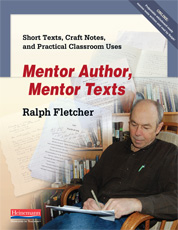 AND… the wait is over. Ralph Fletcher’s new book is out and ready for instant use in your class’s writing workshop. Mentor Author, Mentor Texts is right up there with all the other great texts that Fletcher has written for teachers and students (like many other folks, I’m a big fan!) Ralph has written 24 interesting texts, all short enough to be read in one sitting. Instructions are given as to how to access these whiteboard-ready texts, even with audio clips of RF reading his pieces. But don’t rush so fast to start projecting these pieces and leading discussions with students. Take the time to read and reflect on Ralph’s ideas on how mentor texts are being used and misused in some of today’s classrooms. He gives us a new direction on how best to make effective use of his and other authors’ excerpts, essays, non-fiction pieces, or poems. Rather than force-feeding our ideas or those of the author’s, Fletcher suggests we “put students in charge of what they notice.” Let them decide what the writer is doing, whether this craft or technique would work for them in their writing, and how they might use the idea in a future piece of their own. He cautions us to remember that young writers grow slowly. Wouldn’t it be magical to see “students apprentice themselves to an author they can springboard off to reach new heights on their own”? One of my favorite short texts in this book is “Interview with a Coho Salmon” — very funny (and Ralph said it was a blast to write too.) If you are using Fletcher’s new text in your classroom, please feel free to comment on how it’s going.
Also, stay tuned in a few weeks when Katie will be writing a review of another great book on writing meant for parents of preschoolers but also appropriate for teachers of PreK-2nd.
What else have you read on writing that has inspired your work with children?
And the Gap Gets Bigger
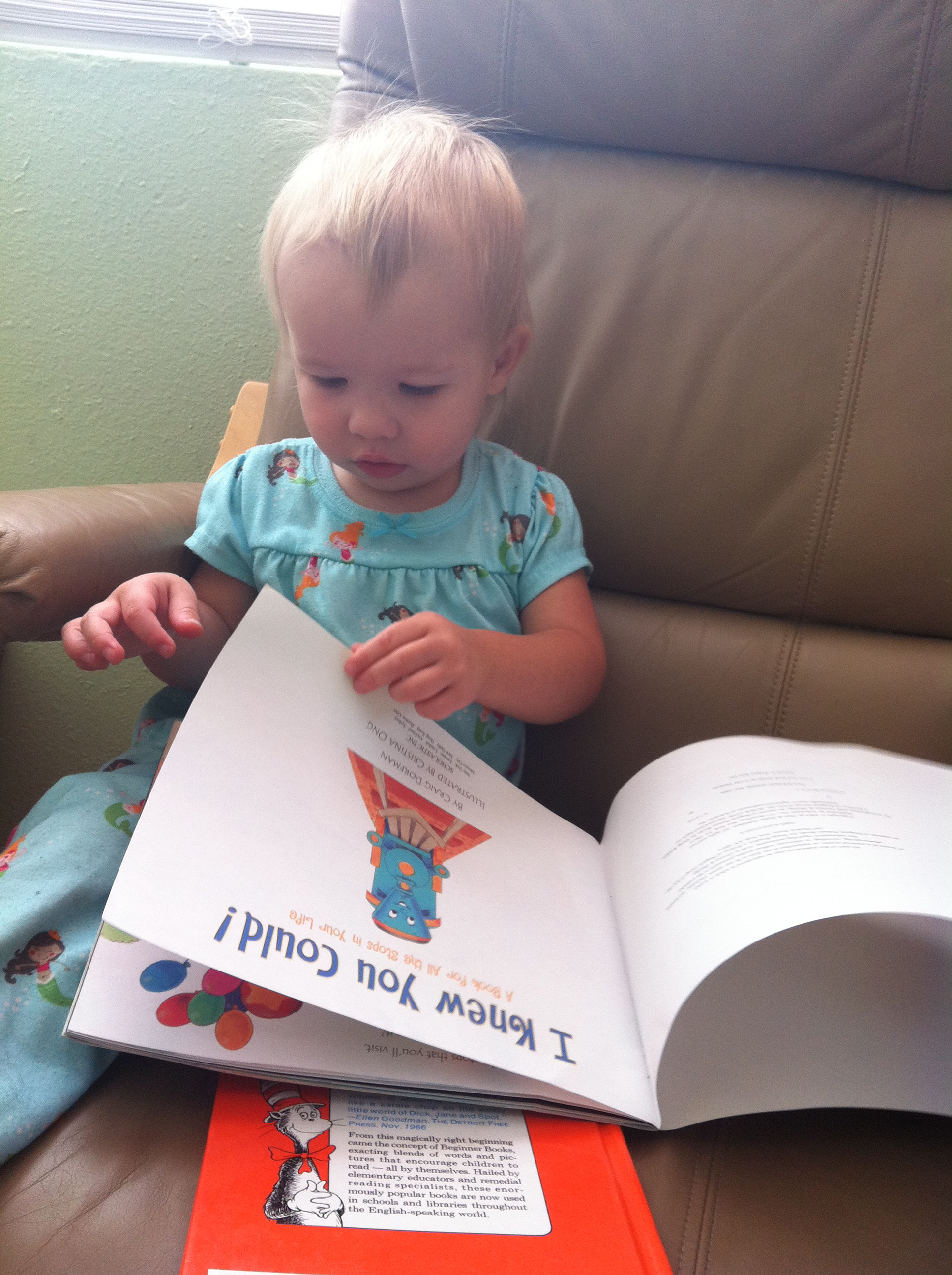
Recently my daughter (living 2400 miles away) sent me a video clip of my 22 month old granddaughter Brenna “reading” Brown Bear, Brown Bear. Of course I was thrilled to see how those months of reading aloud to her were paying off. She turned the pages, made up the story, and although her speech wasn’t always clear, you could hear the pattern every now and then “T-sher, T-sher, what do you see?” But though I’m excited about my own grandchild’s progress, I can’t help but wonder about all those other preschoolers who don’t have the advantages that Brenna has.
I worry a lot about all those homes with very little or no books, with no literate parents or adults in the home, no computers or internet access, and so on. Some parents I know work three jobs just to put food on the table – there is no extra money for books or supplies and no extra time to read, write, or tell stories with their children. No matter how you look at it, poverty plays a big role in affecting how much of a literate background some kids will begin school with. And the job of closing the gap falls on the teachers in those early grades. Blaming the parents or the home environment does nothing to solve the problem. We know that.
And let’s not forget the technology gap that will also affect these same students. I was listening to a discussion on NPR radio one day about how kids of the future will be so different because of all their computer knowledge. One father called in and told how he got smart phones for his children so that when they toured Washington D. C. they could log onto a special site that enhanced what they were observing at the museums. As the world gets more and more linked in, what is happening to the others who have very little opportunity and experience with technology? The poor won’t have those same advantages as the caller on the NPR program. And that gap will only get bigger. We have got to get to the root of the problem and do something about those families living below the poverty line! We have to admit that socio-economic status does correlate at times with children’s success in literacy.
I certainly don’t have all the answers, however, it would make sense to me if we turned our attention to (and poured more tax dollars into) more Headstart programs, more excellent quality pre-schools FREE for children living in poverty, more early intervention programs like Reading Recovery once children start school, and so on.
Here is a quote I keep on my desk at home: “Literacy is inseparable from opportunity, and opportunity is inseparable from freedom. The freedom promised by literacy is both freedom from — from ignorance, oppression, poverty — and freedom to — to do new things, to make choices, to learn.” Koichiro Matsuura (former UNESCO director.)
Brenna has four more school years at home (in daycare and preschools) before kindergarten. The literate background and extended vocabulary she will begin kindergarten with will be astounding! How will we (primary K-2 teachers) close the gap for all those other children? How can teachers support the literacy acquisition of every single one of their students?
We All Have Stories to Tell
 I recently read an excellent blog post from Cathy Mere in which she said, “In a teaching world filled with data, I think the best thing about the first days of school is getting to know kids not by numbers, but by living beside them.” How true and wise these words are. They have echoed in my mind since I read the post. Living beside our students, establishing trust and relationships and getting to know who they really are as people is the foundation of a good year.
The first three days in my new kindergarten class have been full of getting to know my students and beginning to establish a strong community for us to live and learn in all year. For many of my kids, this is their first experience of school. It’s so important for me to make our learning community one where we know each other well, and care about each other. One of the routines I established on day one was an oral storytelling time. It quickly became my favorite time of the day. It’s all about getting to know each other and sharing ourselves in this new community together.
I started our first storytelling time by reading No, David! and sharing the author’s notes by David Shannon on why he wrote that book. Then I said, “you know – everyone has stories to tell, just like David Shannon did. I have stories and I’ll bet you have stories too!” Then I shared a story about my dog Cayo and how she barks at the mailman every day. The kids were spellbound, listening to me weave a story out of an everyday occurrence. I then asked if any of them had a story to tell. All hands went up. These kindergarteners, many of them English language learners, on the first day of school, sat still and were engaged for over 20 minutes while story after story was told by their classmates. It was magical. I realized then that this was a necessary part of every day. We were getting to know each other by sharing what was important to us and by sharing the stories of our lives. What a great way to connect with each other, realize similarities and begin to build a strong community.
As my year continues, I plan to keep our storytelling time as an important part of our day. While I will eventually get to know my kids by numbers, I want to keep living beside them every day, listening to the stories they tell and getting to know them as people.
Math & Literacy
 Pat and I have the pleasure of kicking off a blog tour on October 3rd for a new math book from Stenhouse Publishers – Math Exchanges by Kassia Omohundro Wedekind. You may be wondering why we are reviewing a book on math here at Catching Readers. Well, Math Exchanges stands on the shoulders of great literacy thinkers such as Regie Routman, Lucy Calkins and Debbie Miller as the author shows us how conversation through the workshop approach in math is as powerful for teaching and learning with young mathematicians as it is for young readers and writers. If you are anxious to start implementing powerful small group instruction through a Math Workshop, Math Exchanges is now available and can be previewed on the Stenhouse website. Kassia also has a blog where you can read more of her great math thinking. Check back on October 3rd as we launch the blog tour!
Spaces to Live and Learn
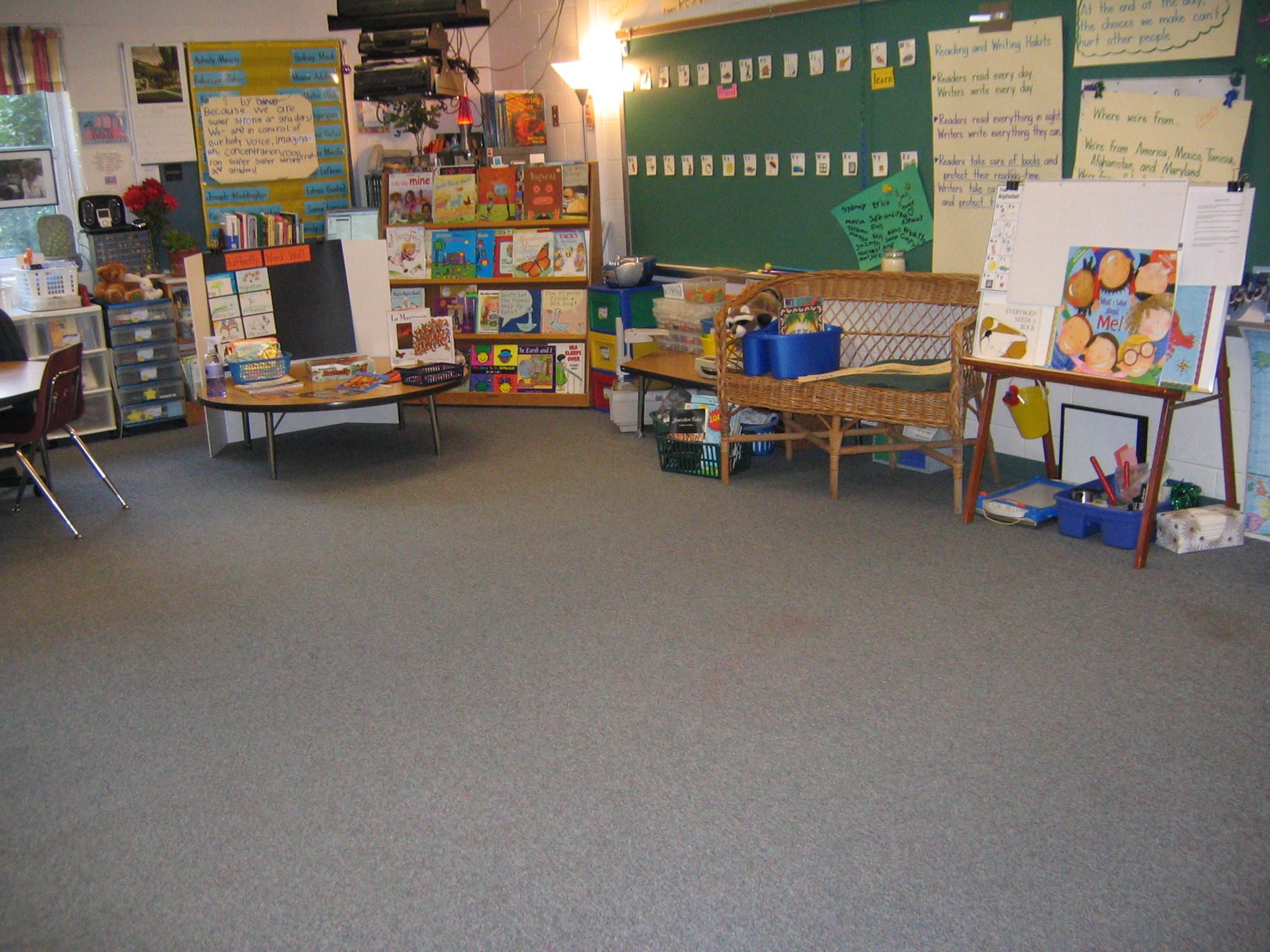 It’s that time of year again. The time where visions of my classroom dance in my head and trips to Ikea, yard sales and Target become very frequent. I am constantly on the lookout for things I need for my room. Just today I scored two blue and green lamps that a neighbor was taking to the Salvation Army! I have no shame in asking if I can have things – people love giving stuff to teachers. I find myself thinking of how I want our classroom space to look and envisioning happy children living and learning in a beautiful classroom.
Last year I took a year off from being a classroom teacher and was a literacy specialist. I enjoyed it, but I missed having my own classroom so much. One piece I missed a lot was creating a community and a space that is truly a home away from home. I cannot wait to begin setting up a classroom for our incoming kindergartners! The other day I was looking through pictures from many years past and jotting down ideas that I wanted to use or adapt for my new room. It was a lot of fun taking that trip down memory lane, remembering some great ideas and shaking my head at some of the “what was I thinking” ideas (recalling the year I took an entire day to carefully hang an actual parachute above my reading area…). I find that I am now so much more aware of the purpose for everything in my space. Yes, it must be beautiful, but it also needs to be purposeful. I have been inspired by the great thinking in Waldorf, Montessori and Reggio approaches and strive to make sure that our environment is truly the third teacher and is full of wonder and natural objects. I’ve moved away from bright primary colors and have chosen to focus on 2 calm colors (blue and green) as much as I can – one of the many ideas Debbie Diller recommends in her book, Spaces and Places. I’m also going to try to live by Debbie’s advice and assertion that you can set up your classroom in ONE day. Now that may be a true challenge, but I do know that I’m not going to spend one whole day hanging something from the ceiling!
I am a very visual person, and love looking at photos of classrooms. Chapter Five in Catching Readers has some ideas for setting up your classroom, as do these posts from last year (Designing Your Classroom Space, and Reflecting on Your Classroom Space). There are so many creative, inspiring teachers who create beautiful spaces to live and learn in. Pinterest has been an exciting new find with tons of great pictures from teachers. The folks at #kinderchat have graciously shared their spaces with us on Twitter. I decided to compile a bunch of my photos from years past and set up a Flickr account. I’ll continue to add photos of classrooms, charts, organizational ideas, etc. as the year goes on. I get to start setting up my room Friday – so look for pictures next week of my space this year! And if you’ve got a photo to share, please feel free to email me and I’ll be happy to feature it on the Flickr site. I look forward to seeing the wondrous spaces that our children will have to learn, create, grow and discover in.
How is your classroom set up this year? What are some great ideas that you would like to share?
Conferring with students about their reading
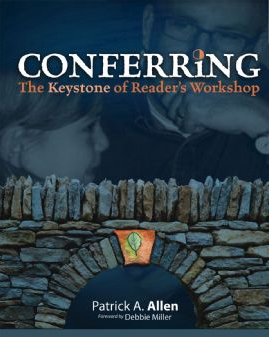 I read Patrick Allen’s book Conferring: The Keystone of Reader’s Workshop a while back, but reread it when Cathy Mere started a cyber discussion about it a few weeks ago. Recently, I was re-skimming the last few chapters and I got inspired to want to work with upper elementary grades again. Since retiring and moving into consulting work, I am only in a school one day a week for volunteering and research. For the past few years I’ve always been in first or second grades supporting classroom teachers with their struggling readers. But I’m thinking of taking a whole new direction this school year. I love the literature that 4th and 5th graders read and I have really missed it. Patrick’s book is so rich with scenarios of him sitting, chatting with kids, that I could feel myself right there! And I want to be there too.
I particularly like that Allen’s format of RIP (his structure for a reading conference) has three words for each part of his conferring framework. His RIP is so open and useable for any teacher to make his/her own. The “I” section can be instruction, insights, or intrigue. And that is so true. Sometimes it is just an insight into the child’s thinking that we make note of, sometimes we are surprised by a response given, but sometimes we need to do some hard teaching. It is the instructional piece that concerns me the most.
In many of the examples throughout the book Allen confirms or reinforces a strategy that the child has used or he names it for the child. One could tell that he had done incredible work at the beginning of the year to get all this going. His students select books well and for the most part comprehend them. But I have been in many situations (and I’m sure we can all say this) where the child doesn’t comprehend what he is reading. The student may be in a book that is way too hard to read independently; the student might have a fluency issue; it’s possible he’s not self-monitoring; it might be that his word analysis skills are lacking; there may be unfamiliar vocabulary and she’s not sure how to use the context clues to make it make sense; it could be that the child’s mind wanders and he doesn’t have strategies to help him stay engaged with the text, or any other number of things. As Patrick said, it’s hard to make a quick analysis of what this child needs right then at that moment, but with practice we will all get better. Our strongest teaching will come into play when the child we are conferring with is NOT understanding. The instructional piece then means that we have to support that child as we hook him/her back to an anchor lesson or a shared demonstration lesson.
v Remember when we read that ______ article together and we all thought of some questions we had before we read. I wonder if that will help you here. Let’s try it together.
v It seems like there were some words in this part that you were unsure of. Let’s go back to some of those together and I’ll show you what I might do.
v Poems say a lot in so few words. I find I understand them better when I make pictures in my mind. Would you like to try that with me here and see if it helps us understand this poem better?
Finding where to meet the child in his ZPD is such a challenge for all of us, but, for many struggling readers, it is during the 1:1 conferring that we can “do it together.” Vygotsky always said that the zone of proximal development is the place where the child can do it “with our help” and the conferring time is sometimes just the right moment for this specific teaching. As Allen says “it’s hard work” and “it ain’t easy.”
In the last chapters of Allen’s text he asks us to return to our chart we made earlier about “what emerges from a reading conference?” Luckily I had my paper stuck inside my book. I was amazed with all I had written and was happy to reflect on it once again. I will take my chart along with my book to school next year and see if there are 4th and 5th grade teachers who would like to explore conferring with me. I can’t wait for the fun (and the hard, but satisfying work) to begin!
August 10 for 10: 10 of our Favorite Picture Books!
Cathy Mere at Reflect and Refine and Mandy Robek at Enjoy and Embrace Learning invited us to join in this 2nd annual fun picture book event. We happily accepted the challenge to join our Twitter friends and choose just 10 of our favorite picture books and highlight them here. Enjoy reading our choices and then be sure to head over to their blogs here to read about all the other great picture book recommendations.
Pat decided to pick “oldies but goodies” – a selection of tried and true read alouds for elementary classrooms. Enjoy!
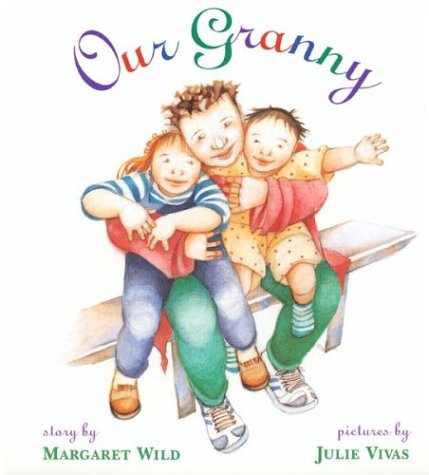 Our Granny, by Margaret Wild
In a celebration of grandmothers, Wild lists all the things grannies can be, all the places they can live, all the hobbies they can have, and so on. This book speaks to the diversity of the modern day granny. The illustrations by Vivas are fabulous and even comical at times!
Guess Who My Favorite Person Is, by Byrd Baylor (out of print – check your library)
Just like all of Baylor’s other books, the beauty of nature and being outdoors plays a big role. This time a little girl and a young man describe their favorite color or sound, favorite thing to touch or place to live, favorite smell or moving thing as they play a game lying in the grassy meadow. Try using this as a mentor text when talking about descriptive writing with students or just enjoy the beautiful language of the poetic free verse.
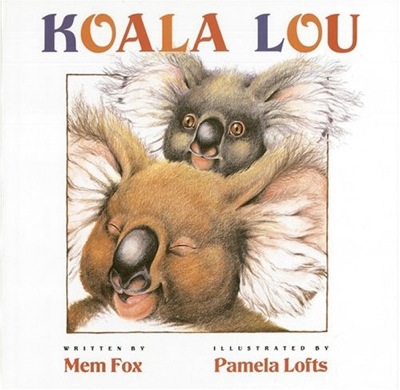 Koala Lou, by Mem Fox
I know it’s been around for a long time, but I still feel compelled to mention it because I love this book so much. The theme of a mother’s love is so beautifully intertwined with Koala Lou’s undying determination and endurance. I’ve never met a child or adult that couldn’t relate to this story. Don’t miss hearing Mem read it aloud on her website. Her voice will stay with you every time you read it.

Rough-Face Girl, by Rafe Martin
There are so many wonderful variations of well-known folktales, but this version of a Cinderella tale is one of my favorites. I love changing my voice to match the two haughty older sisters, or the timid Rough-Face Girl, and the sister of the Invisible Being who demands answers from each one of them who wants to marry her brother. I’ve had many great discussions with 4th and 5th grade students about ‘what is truth, beauty, and true love?’
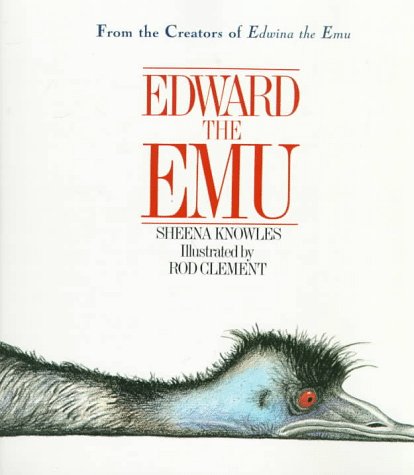
Edward the Emu, by Sheena Knowles
I practically have this one memorized, I’ve read it aloud so many times. It’s a commonly told story of one animal wishing he were something other than what he is, but realizing his value by the end. I like the rhyme and rhythm to the language. The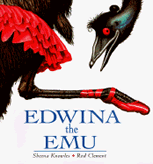 illustrations are incredible. And the ending adds a little twist… leading right into the follow-up book, Edwina the Emu.
Katie decided to narrow her choices down to 5 of her favorite NEW books! A few are brand new in the picture book world and a few are just new to her. She’s looking forward to sharing them with her kindergarteners this fall.
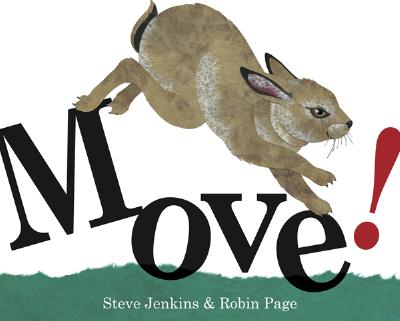 Move! by Steve Jenkins and Robin Page
A wonderfully fun nonfiction book that introduces kids to how animals move. It has beautiful language, “A crocodile leaps to snag its meal after slithering silently into the water…” with text that moves all over the page to show the motion being described. Children will love exploring how animals move with this book.
 Should I Share My Ice Cream? by Mo Willems
Another Piggie and Elephant adventure that will help teachers talk about sharing and friendship. The anticipation throughout the text and pictures, along with a twist at the end, will leave readers loving this new book by Mo Willems.
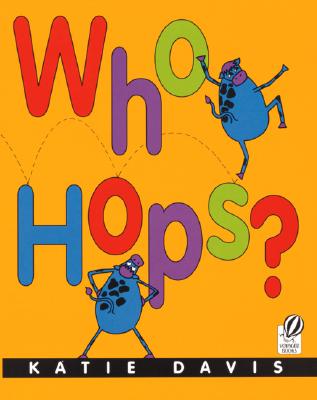
Who Hops? and Who Hoots? by Katie Davis
I can’t believe I’ve never heard of these books until now. They are amazing! I can’t wait to read these to my kinders. Fun, colorful pictures and an engaging text, “Frogs hop. Kangaroos hop. Cows hop. NO THEY DON’T!” will definitely pull young readers in and invite shared reading. I love how there are great nonfiction facts woven throughout as well. “Who squeaks? Hippos don’t squeak. Alligators don’t squeak. Mice don’t squeak. YES THEY DO! – Mice have very bad eyesight and give birth to lots of babies, and they definitely squeak!” Katie Davis has a great website, too!
 amazing! I can’t wait to read these to my kinders. Fun, colorful pictures and an engaging text, “Frogs hop. Kangaroos hop. Cows hop. NO THEY DON’T!” will definitely pull young readers in and invite shared reading. I love how there are great nonfiction facts woven throughout as well. “Who squeaks? Hippos don’t squeak. Alligators don’t squeak. Mice don’t squeak. YES THEY DO! – Mice have very bad eyesight and give birth to lots of babies, and they definitely squeak!” Katie Davis has a great website, too!
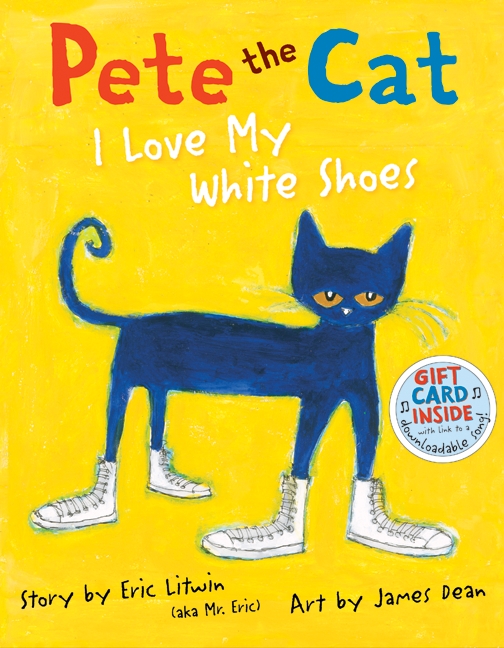 Pete the Cat: I Love My White Shoes and Pete the Cat: Rocking in My School Shoes by Eric Litwin
Pete the Cat quickly became my favorite read aloud last year, along with this fabulous YouTube video showing the author and illustrator performing the song. Eric Litwin and James Dean have come out with a new Pete the Cat story where Pete is rocking his school shoes as he goes on a tour of the school. This is the PERFECT first day read aloud! And yes, school is “all good”!
 with this fabulous YouTube video showing the author and illustrator performing the song. Eric Litwin and James Dean have come out with a new Pete the Cat story where Pete is rocking his school shoes as he goes on a tour of the school. This is the PERFECT first day read aloud! And yes, school is “all good”!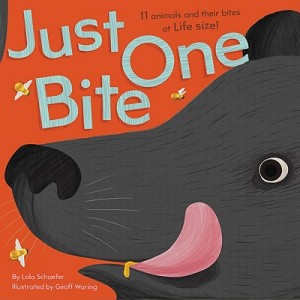
Just One Bite by Lola Schaefer
This HUGE nonfiction book shows kids how much animals eat in “just one bite”. The book shows the life size animals and all or part of the mouths, along with the food of choice. More details follow at the end of the book for kids to learn more about the eating habits of each of the animals. Kids will love this giant book and the great illustrations.
We hope you are starting your year with some old favorites and some new finds that will really get kids loving books and loving to read. What books are in your “top 10”?
 Catching Readers, Sparking Joy