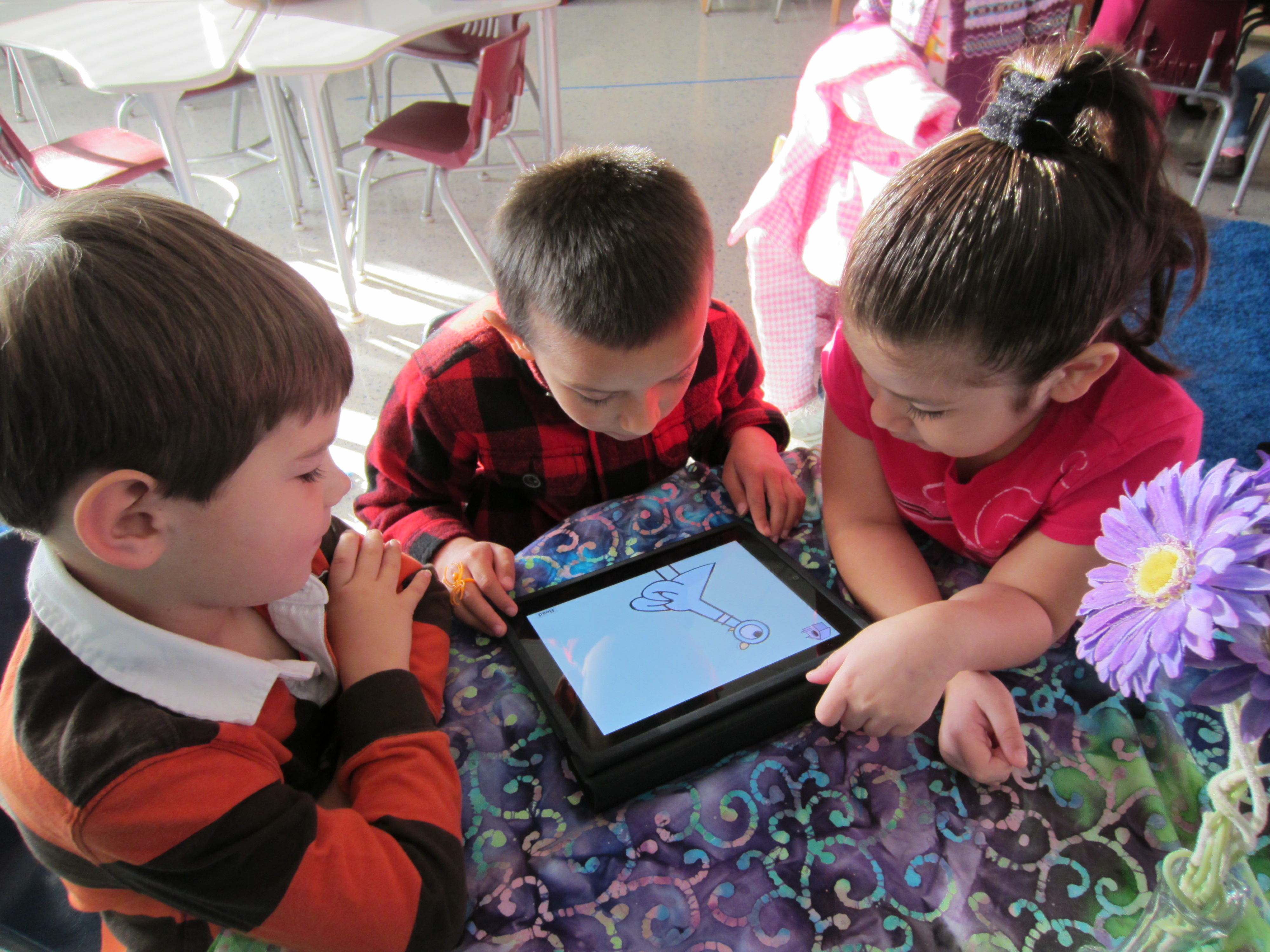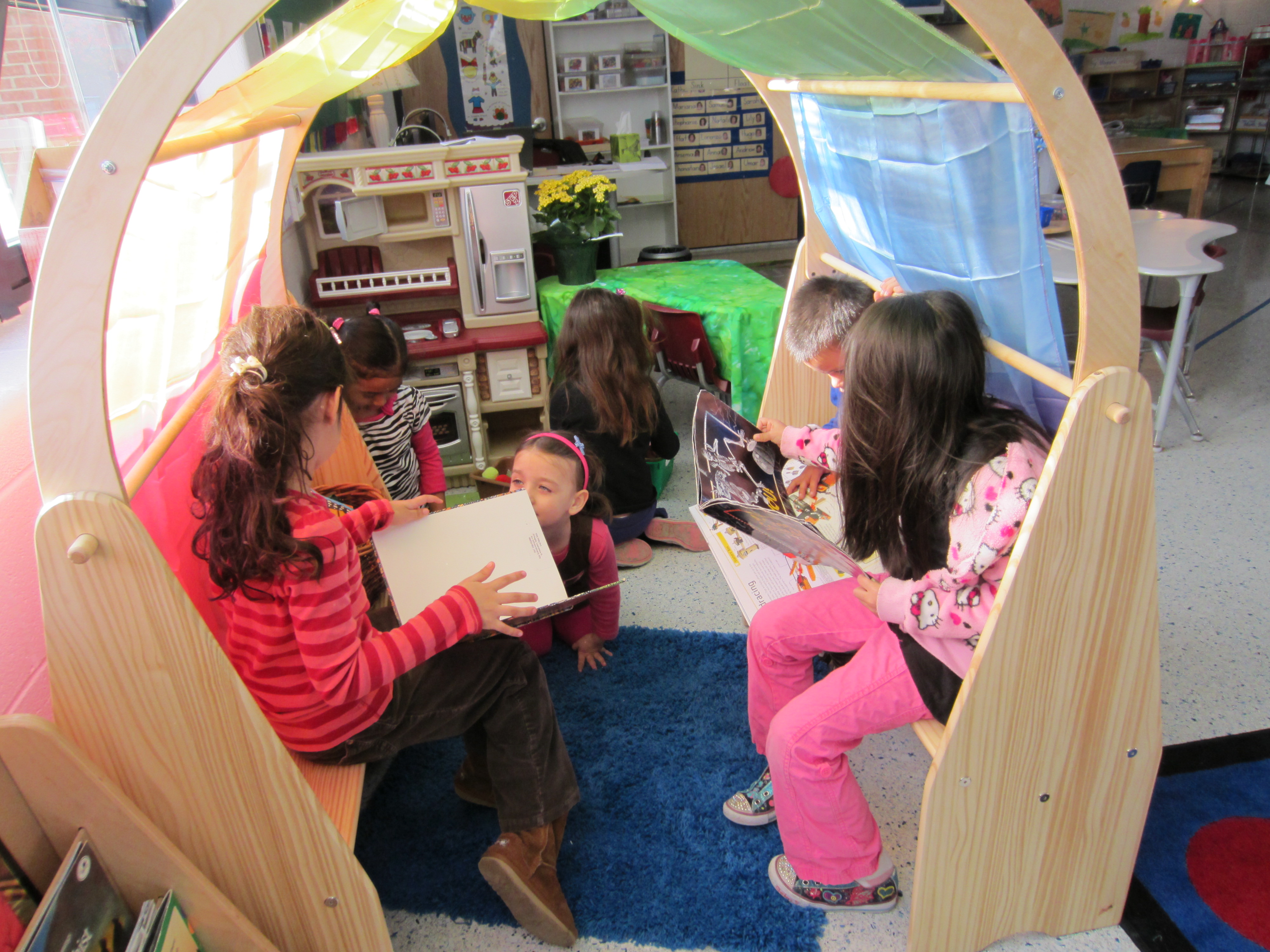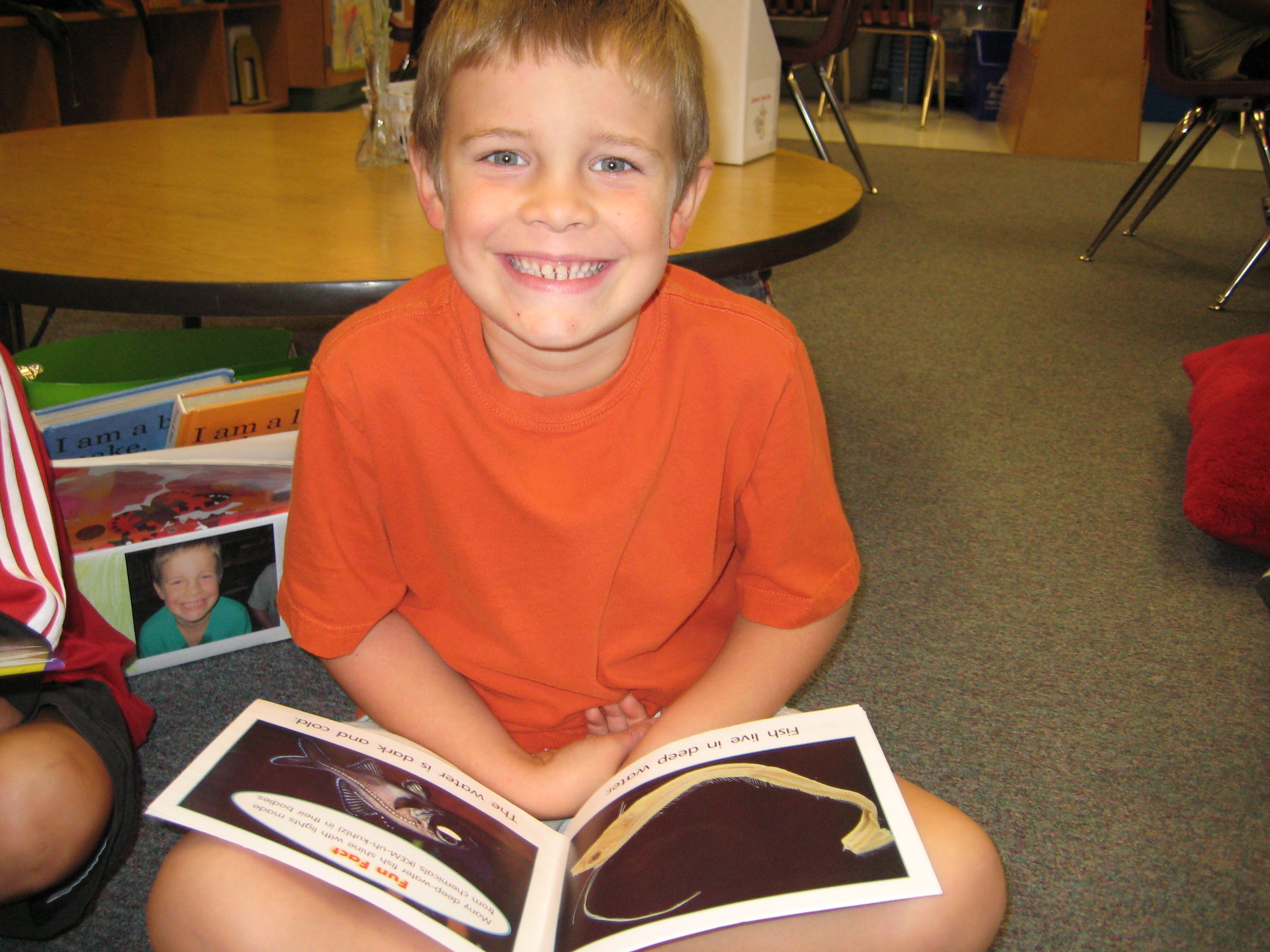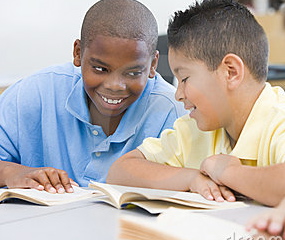
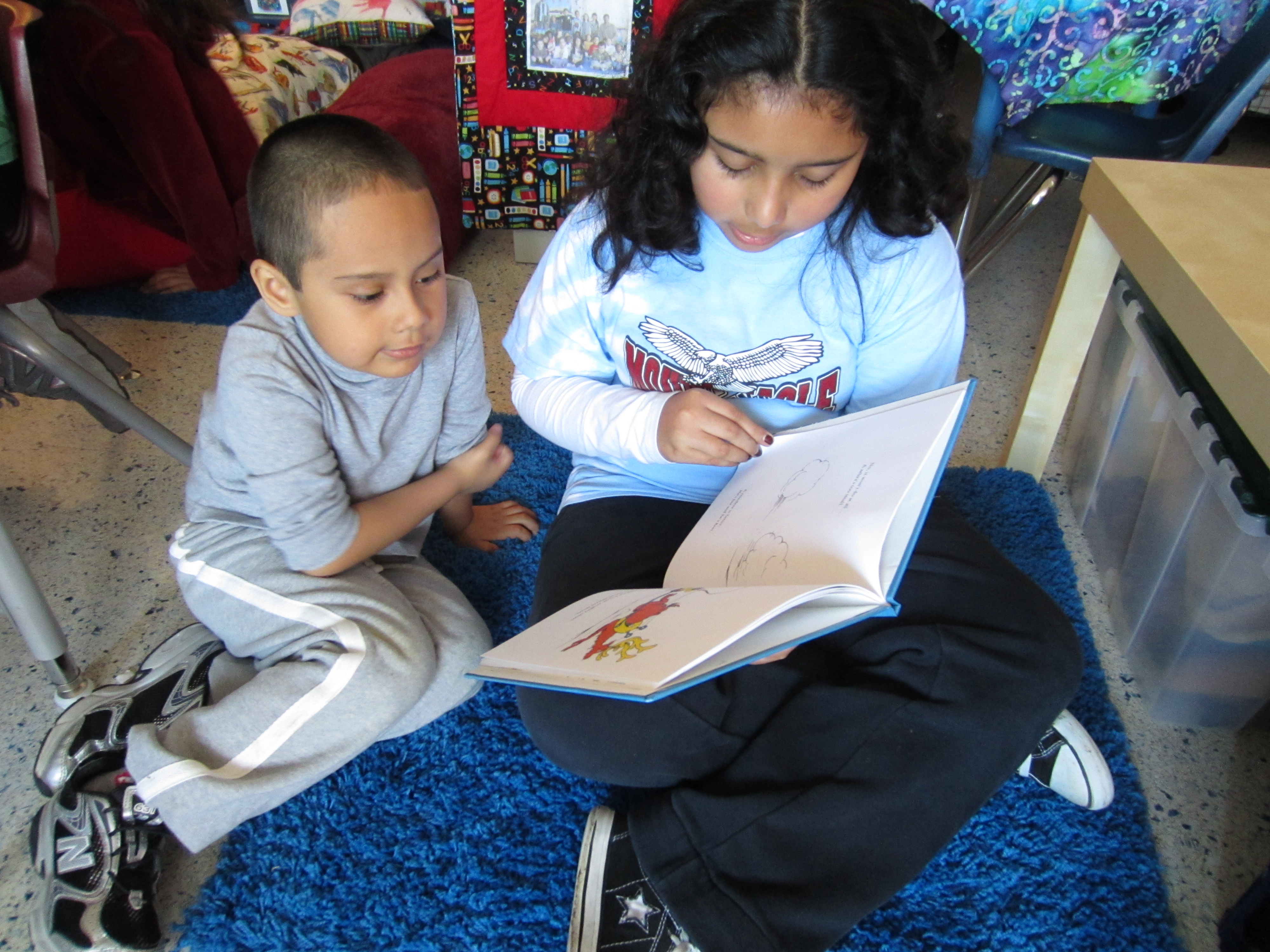
Just as teachers need strong mentors, so do our young readers. We are very lucky to have our 5th grade book buddies! Every other week, the 5th graders check out a library book to share with their kindergarten buddy. After they finish reading their book, the kinders pick a book from our classroom library to share with their book buddy. Last week we invited our 5th grade book buddies to do Explore with us. They loved playing with blocks, the iPad and pretending in the dramatic play area with their kindergarten buddies. It was so fun watching the kids interact and play together. Do you have a buddy class? We’d love to hear what you do!
January 2nd – What Are Teachers Doing?
People across the nation were so glad when January 1st fell on a weekend because we would all get the extra day, January 2nd, to regroup and relax after a busy season. But on my walk this morning I stopped in a breakfast cafe to use the facilities and there was Kassia, a kindergarten teacher friend. She had her computer propped up in front of her, the writing professional book Already Ready tagged and marked up with stickies, and a pile of picture books on the table. She told me about Hero Cat by Eileen Spinelli that she planned to use this week to talk about how illustrators use colors to match the tone and mood of the story.
As I continued my fast walk, I thought about Katie (another K teacher) who would be driving back from Florida today with Joseph. I can guarantee you that besides the kayak on the roof and the bikes on the back of the car, there is also a backpack filled with picture books and a few professional books. I thought Katie was crazy not driving back til the last day of vacation, but then I remembered that she is my tech-savvy, paperless friend. She carries everything she needs with her — iPhone, iPad, and computer. I know she’ll be planning lessons for hours while Joseph drives.
I thought maybe it was just kinder teachers, so I made a few phone calls. Sure enough, I got the same story, no matter what grade they taught. Teachers were using the extra day to plan, reflect, and organize.
“I have an idea for….”
“I want to try out a different arrangement for my guided reading schedule…”
“I’m thinking about how I will need to revisit a few routines and anchor charts so that….”
“I’m going through some writing samples I brought home to see where to head with my writing mini-lessons…”
And what about me? Well, with all the company from the week finally gone by six o’clock last night, my husband and I went out to a coffee shop for breakfast. He read his newspaper and I read two chapters of a literacy professional book. The rest of my day will include: going through my poetry stuff so I’ll be prepared to meet with a teacher who requested time to chat about a poetry unit she’s starting; emailing the teacher whose class I’m volunteering in this Thursday to make sure my lesson matches seamlessly with what she is working on; and thinking through a few lessons I did just before the holidays to see which ones might turn into blog posts that might help other elementary teachers. Wait a minute! I’m supposed to be semi-retired! I guess, once a teacher always a teacher.
Don’t take my word for it. Check it out yourself and contact a few friends today by phone, text, or email. See if it’s true. Teachers are busy working today. Hats off to them! And the interesting thing is that they are not complaining. They may make a few jokes about “yuck, back to the real world tomorrow,” but there is excitement in their voices. They are invigorated by the New Year – the chance to try a new idea, refine some old ones, organize or schedule in a different way, rethink how to support that group of strugglers, and so on. Some people may argue with me and say that it’s just the people I know who sound like “workaholics” or “type A personalities.” But, if that’s the case, then all I can say is, “How lucky am I to have such a terrific group of friends who are whole-heartedly dedicated to the children they teach!”
Best of luck to all teachers as they start the New Year!
Time to Catch Up
If you are like Katie and I you try to read some favorite blogs daily (for Katie) or a few times a week (for Pat). But things always come up and you get behind. Sound familiar? So Katie and I have decided to take a break from writing blogs (not for long, just during the winter break) and instead catch up on reading past posts of some of our favorite sites. If you are interested in catching up also, we’d like to suggest a few great posts that we’ve come across:
“In a teaching world filled with data, I think the best thing about the first days of school is getting to know kids not by numbers, but by living beside them.” This wonderful quote by Cathy Mere is from a blog post last fall. I want to revisit this post as we start our first days of 2012, as well as her many other thoughtful posts.
I was lucky to meet Ruth and Stacey of Two Writing Teachers at NCTE this year. What inspiring, dedicated teachers and writers they are! I love this post on blogging – and writing habits.
Choice Literacy – We get a weekly newsletter from them (you can too, sign up for free on their site) and we never have enough time to read all the interesting articles that are posted each week. We plan on taking some time to search for topics we’re interested in and read the articles as well as view the many videos on the site.
Podcasts from Language Arts NCTE – these are free podcasts available on the NCTE website.
Mandy’s posts at Enjoy and Embrace Learning share new must-read titles, projects she is doing with her kids and reflect her love of teaching. I look forward to catching up on these posts!
Math Exchanges – this blog from our colleague Kassia Omohundro Wedekind is a thoughtful sharing of math and literacy ideas. Her post on Math and Storytelling from the NAEYC conference is a good one to revisit.
And, of course, we wish you a happy and safe holiday season. Enjoy your family and friends at this special time. We’ll be back writing right after the first of the year. Please feel free to add a comment about a post or article that you really enjoyed this school year that you wouldn’t want others to miss!
Enjoy your time off to reflect, renew, rejuvenate and relax.
Story Structures and Rising Action
We’ve been working on story structures with the upper elementary students recently. Of course, there are many helpful graphics to use on this topic. We’ve been using one story structure graphic that begins with students identifying the rising action, moving to the climax/turning point, and then the falling action and solution. We modeled a few and did some together as shared demonstrations. Before beginning this work, the classroom teacher and I thought that the hardest part would be identifying the climax. But what we found was that the students had the most problems with the rising action. They had a hard time picking out what would be the important information and what would be a detail. So we planned a lesson on that concept.
I read aloud the Tomie DePaola story “The Mysterious Giant of Barletta.” The students enjoyed the story of the giant statue that comes alive to cleverly save a town from destruction by an advancing army. The students were able to discuss the problem and solution quite easily, but before they filled out the graphic we wanted to scaffold their thinking about the rising action. We listed 15 statements on the Smartboard in random order:
Every night Zia Concetta looks out her window at the statue.
There is a mysterious statue in the middle of town that no one knows how it got there.
The old woman and the mysterious giant hatch a plan.
Sometimes the boys sit at the giant’s feet and watch girls go by.
The people of Barletta love their statue in the middle of town.
The statue came alive and got down off his pedestal.
The people heard that an army was destroying all the towns along the coast.
The town had no generals, captains, or soldiers.
The giant statue loved when all was peaceful and calm and birds came and sat on him.
Zia Concetta asked the Mysterious Giant for help.
The people of the town would ask for good luck from the statue as they made their way to market.
Screams and shouts echoed off the buildings.
The people were scared.
Everyone was getting ready to run from Barletta.
Zia Concetta told the townspeople to hide, bring a large onion, and don’t ask questions.
Together we discussed and starred the important ones and crossed out ones we agreed were small details. We encouraged the students to combine some if they thought it appropriate and to rearrange the order of the statements to fit the rising action’s correct sequence. (This was amazingly easy to do with the Smartboard as lines of text can be manipulated so quickly – every classroom needs one!)
When the students went off to fill in their graphic, they were able to use the discussion and the shared activity to support their thinking. We’ll be looking for which students might need more “do it together” time in small group to further support their understanding of how to pick out important parts.
Book Boxes: From Shared to Independent Reading
Many teachers use book boxes or book bags in their classrooms as a place for students to keep the books they are reading and to use during independent reading time. We like using the book boxes from Resources for Reading in our primary grades, because they are big enough for the oversized picture books that our readers enjoy. I have a baggie in each book box to keep students “just-right” books. At this point in our kindergarten class, the baggies include: ABC books created with the student, familiar shared reading poems and songs that we have read multiple times in class (copied and stapled into books), books created with the students using their names, predictable books created from class shared writing charts (I can write. I can draw. I can play Nintendo. etc…) and guided reading books.
The book boxes also contain a Poetry Notebook where we add poems after we have read them all week during shared reading lessons. This is a 3-ring binder. I copy our new poem each week and we add it on Friday. Students illustrate the poem and take home the notebook every Friday to share with families. The Poetry Notebook is returned on Monday. (and yes, they are all returned – students LOVE reading from these all week, so they are really good about returning them) Students can also add 3-5 books from our classroom library as “look books”. These are favorites that have been read aloud or books that interest kids from our library. Students know they can read the pictures in these books, even if most of them can’t read the words.
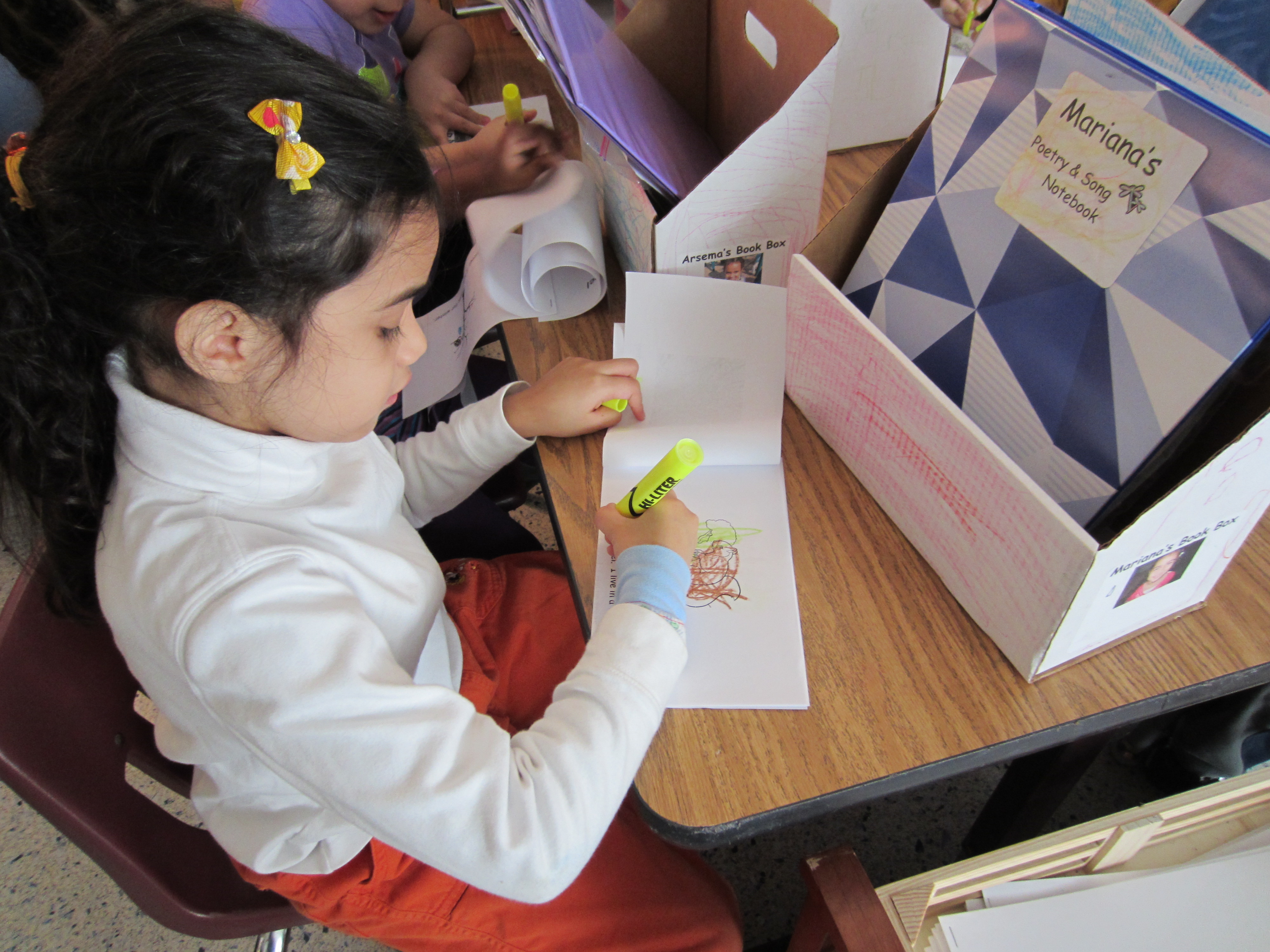
During shared reading I often use highlighter tape to highlight words we know from our word wall. The words that go on our word wall are high-frequency words that children are using a lot in writing and seeing in our shared reading texts. I also use the Fountas and Pinnell lists from their Phonics books to decide what words to focus on each week. We add 3 new words each week. We do a great deal of word work with our shared reading texts on large chart paper. These shared reading texts are put into student book baggies as paper mini books. During our book box independent reading time, students can get a highlighter pen and look for words they know from our word wall in the books from their baggies. (just the paper books!) I stress the importance of reading the book first, as I always want the focus to be on reading continuous text and making meaning from the reading. This activity allows the students to try this task on their own, in the books they are able to read from their book boxes. I model this very explicitly, as I don’t want it to turn into a “let’s color our book yellow” activity. Highlighters are a very fun tool for our young learners! We started with everyone finding one word from our word wall and highlighting it. The next time we looked for two specific words. After a few times of doing this whole group, I put out the highlighter pens and invited the children to do this for any of the word wall words during book box time.
These paper books stay in the baggies for several weeks, and then I send them home for the kids to share with families. I sent home a sturdy freezer Ziploc bag with a label saying “Books I Can Read”. I tell the students to keep these books at home in a safe place and to continue reading them at home. For students who do not have a lot of books in their house, this provides one way to keep books available at all times.
Using mini books and poems as shared reading texts and then putting these in book boxes has allowed everyone in the class to have a wide variety of texts they can read during independent reading time. There are many great places out there to look for mini books (see below for a list of some links) and of course, you can always create your own. My teammates are experts at creating books for our kinders to read based on the curriculum and what our interests are. When the kids are engaged and interested during independent reading time, you’ll have a hard time getting them to put the book boxes away!
How are you making sure your readers have lots of “just-right” texts at their fingertips?
Links to find mini books for making into charts for shared reading:
http://mrsjonesroom.com/teachers/minibooks.html
http://www.hubbardscupboard.org/printable_booklets.html
Pinterest also has some great links for printable books
Rereading
Have you ever reread a favorite book as an adult? And have you shared that idea with your students? Recently a friend forwarded me an article by David Bowman from the NY Times, called “Read it Again, Sam.” Bowman wrote about several famous authors and the books they choose to read over and over. Stephen King has reread Lord of the Flies 8-9 times and All the Kings’ Men 3-4 times. The novelist and critic Dale Peck attempts to read The Waves annually because it gives him a spiritual feeling. He said. “I always feel like a better person after I put it down.” My husband, an avid reader of science fiction and fantasy books, says he rereads the Lord of the Rings trilogy and the Dune series every five years. I, too, have reread my favorites on various occasions. Often in my book group I’ll suggest a book in September that I’ve already read and the club puts it on the schedule for 6 months later. I land up rereading (March, Life of Pi, Room, Hunger Games) because I want it fresh in my mind for the discussion. With every second reading I not only enjoy the book even more but deepen my understandings as well.
“For many readers the habit started in childhood,” writes Bowman. It’s true that teachers always encourage K-2 students to put books in the bookboxes and reread them. For the most part, we are hoping that by rereading books the students’ problem solving of words will become quicker, their fluency will increase, and the reading process system will strengthen. The K-2 students often love when we read favorite pictures books during read aloud time. They also enjoy several readings of favorite Big Books.
But I wonder if we are chatting enough about this idea with kids in our upper elementary classrooms, 3-6 grades. Think about the reasons why adults might reread a favorite book:
- To return to the beautiful writing
- Because we love the characters
- To get back some of the feelings we were left with after the first reading
- Because we enjoyed the storyline
- To deepen our understandings and reflect more on the ideas or issues
- Because we realize it will enrich the discussion with others.
Wouldn’t they be the same reasons for kids?
When The Giver first came out, I remember reading it several times as I facilitated discussions with various groups of students over a three year period. I still loved that book the fifth time through! What if the students had read it two or three times? Would our discussions have been even richer?
Have you talked to your students about the value of rereading?
Wordless Wednesday: Name Play
One of our favorite literacy stations is the sand boxes. I put a layer of colored sand in a plastic tub with letter beads. The children use class name cards to make names with the letters. They can also make the letters with their finger in the sand.
Don’t Say They Can’t Play
“Play is a child’s work.” – Jean Piaget
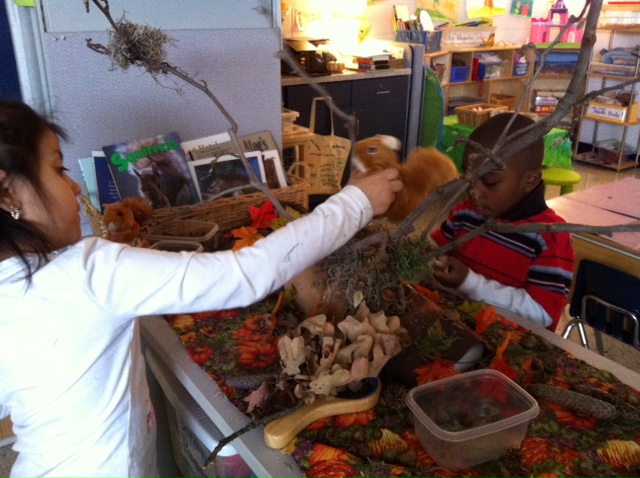
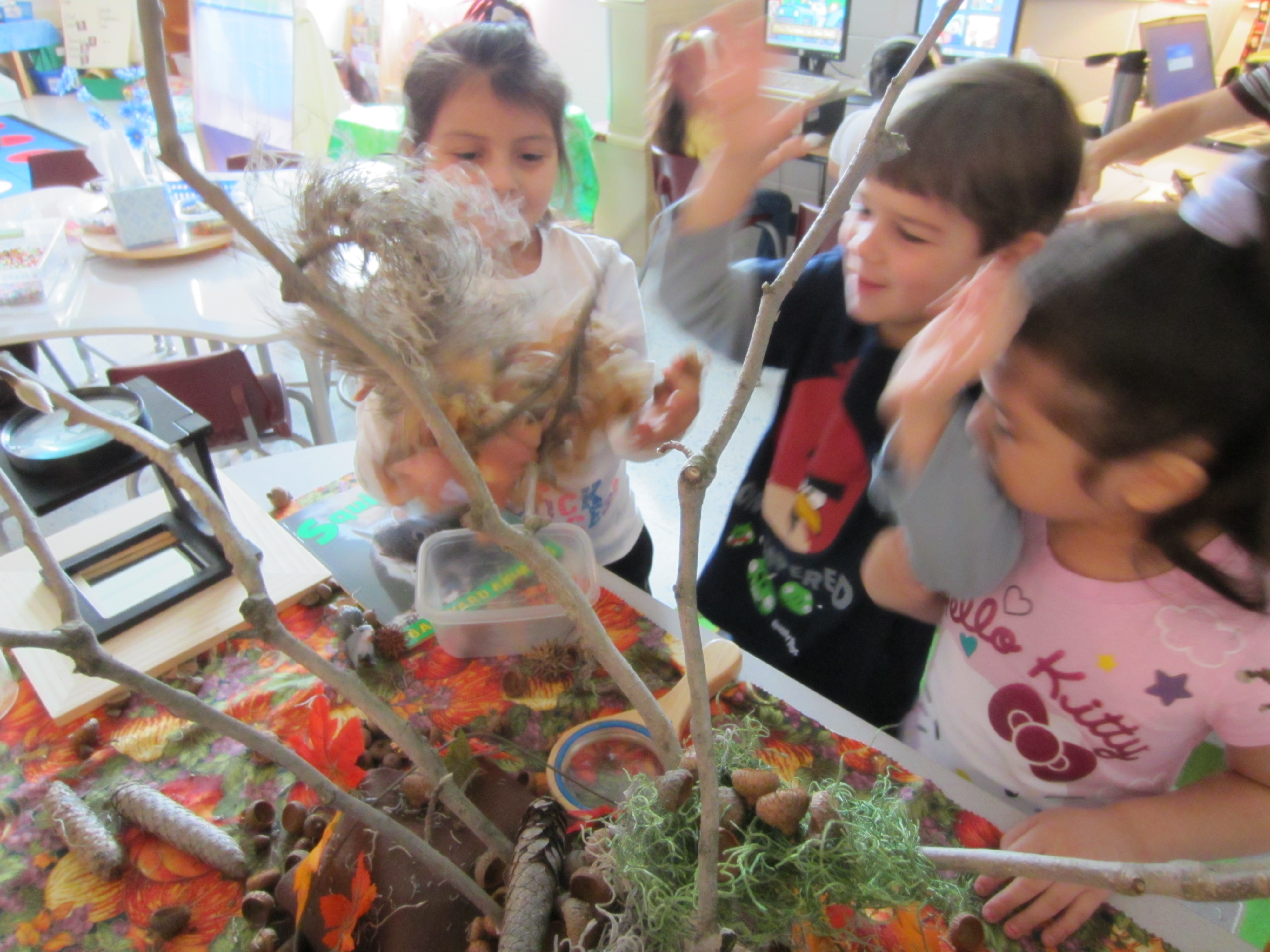
Last week we began a science study of squirrels in our classroom. Squirrels are a piece of our county curriculum and we are required to teach about these animals connected with winter. I integrated this science unit into our language arts time and we read several books about squirrels (comparing fiction to nonfiction), created vocabulary boards with key words, put up a squirrel feeder and binoculars in our window to observe the squirrels, danced to squirrel songs and created a squirrel habitat in our science center. It is through observing children playing in our habitat that I am seeing just how much they are learning. I provided branches, leaves, acorns, moss and several plastic and stuffed squirrels and stood back and watched as the play began.
The children made a drey (squirrel nest in a tree, in case you don’t know that term – I didn’t until this study), and a den (squirrel nest that is in a hole in a tree). Observing the children play I hear key vocabulary words used correctly, witness scientifically accurate construction of the dreys and dens (correcting each other if anything is not as depicted in our books), see them using different books we’ve read as references in building the nests and replicating what they see the squirrels doing in the pictures as well as what we’ve observed them doing outside. I watch them as the mother squirrel prepares her nest for her babies and then nurses them – using the larger stuffed squirrel as the mom and the smaller plastic squirrels as the babies. I watch them make the squirrels chase each other, scampering up and down the tree, gathering acorns and hiding them in their nests – declaring that winter is coming soon so we have to store lots of acorns. They have mastered the county objectives – plus much, much more. They have experienced squirrel life through imaginative play. They have turned into strong observers of squirrels outside so they can replicate it in their play. They have truly become squirrel experts – through play. Would this have happened with only a read aloud, or a squirrel worksheet? No.
Don’t say they can’t play. Let them play. It’s how they learn.
How are you facilitating and encouraging playful learning in your classroom?
Our Favorites
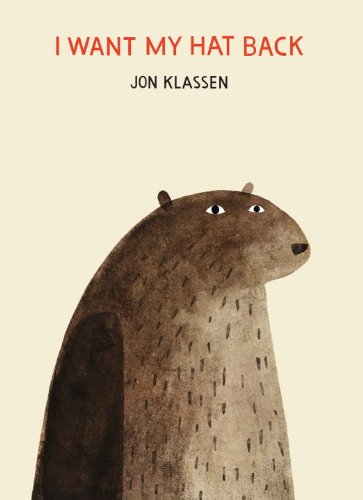
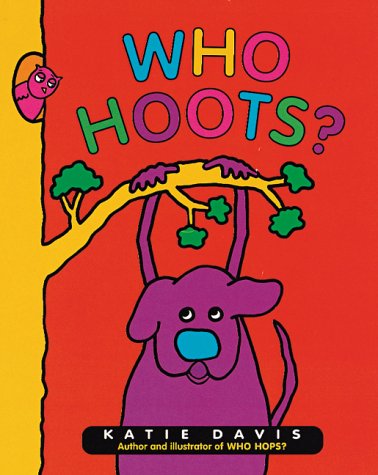
Reading aloud to kids is one of my most favorite things to do. This past week we read our 100th book of the year in my kindergarten classroom. Many of these books are put in the “Our Favorites” box, by request of the kids, to be reread many times. On a whim, I asked the kids what their 5 all time favorite books were for the year so far. They ran to the “Our Favorites” boxes and started pulling ALL the books out. I realized that question is just as hard for kids to answer as it is for me. My favorite book today may be different from my favorite book tomorrow. And just 5? Well, that quickly proved to be impossible. We had a fun time revisiting the books we’ve read since the beginning of the year and predicting how many books we would read by the end of the year. “A hundred million” was the most popular answer. Gotta love those kindergarteners – although I’m willing to take on that challenge! Here are just a few of our favorites so far this year. These are books that get the whole class yelling, “read it again!”, and the ones that have tattered covers out of love and frequent rereads. They are the ones that I hear lines from repeated over and over during play and throughout our day – “It’s all good!”, “Goodness, gracious me!”, “I’ll give you five bucks.”, “Can you believe this guy?” and “Aggle flabble!”. They are the books by authors that my students “stand upon the shoulders of” in our Writer’s Workshops – creating their own books about adventures of pigeons, Knuffle Bunny meets Power Rangers, animals that hop and hoot and many adventures of Pete the Cat. Hopefully you can discover a new one here that your class might enjoy or that a lucky kiddo will find wrapped under the Christmas tree. Enjoy!
Hattie and the Fox by Mem Fox
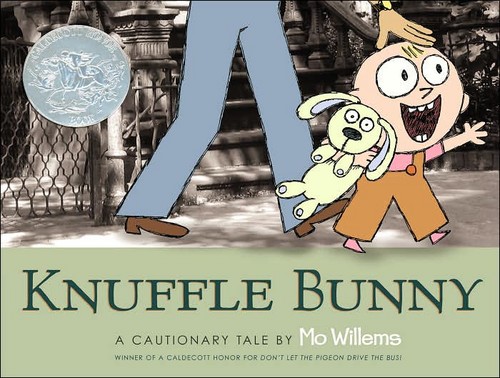
Knuffle Bunny series by Mo Willems
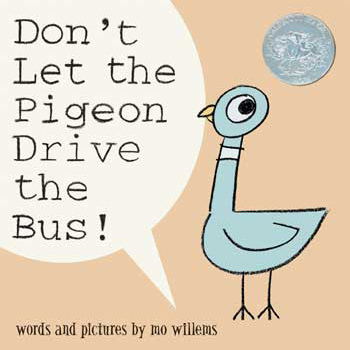
Don’t Let the Pigeon Drive the Bus (as well as the other “Pigeon” books in the series) by Mo Willems
Pete the Cat by Eric Litwin
I Want My Hat Back by Jon Klassen
Who Hoots? and Who Hops? by Katie Davis
Chalk by Bill Thomson
What are your class favorites this year? Please share!