Your Mindset and the Mindsets of Your Students

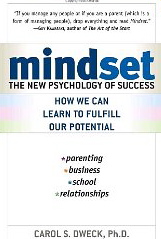
Sometimes you just get the urge to write about what you’re reading lately.  The book Mindset by Carol Dweck really had an impact on me.  I recently finished reading Peter Johnston’s latest book, Opening Minds (which is fabulous), and I noticed how often he referred to the work of Dweck.  Johnston’s fixed-performance theory of intelligence and knowledge vs. his dynamic-learning theory stems from Dweck’s fixed vs. growth mindsets.

Here is the basic premise of Dweck’s work.  She says that people have either a fixed mindset or a growth mindset (or a combination of those) and that “the view you adopt for yourself profoundly affects the way you lead your life.”  The folks with a fixed mindset believe that their qualities are more or less carved in stone; you have a certain amount of intelligence, a certain personality, and a certain moral character.  These are the people who say “I’m just not good at math” or “He has a natural talent for soccer” or when things go wrong, “Life stinks. I’m stupid.  Nothing good ever happens to me.” They also don’t cope with failures or mistakes very well because they see them as a reflection of their intelligence or character.  At times, they blame others when things go wrong.  And they often misestimate their true abilities.

The growth mindset people are oriented toward learning.  They think like this:  “If I’m not that good at math, I can put forth some more effort and improve.” “If I made a mistake in baseball that caused the team to lose the game, then there are certain skills I need to work on.”  “Just because I have a natural talent for golf, doesn’t mean that I can’t improve and work on my skills.” The growth mindset is based on the belief that your basic qualities are things you can cultivate through your efforts.

The wonderful thing about Dweck’s book is that she comes at this topic from so many different angles.  She shows how the two different mindsets work:

* In Sports – What’s the difference between a John McEnroe and a Michael Jordan? What’s different about the way some coaches coach athletes?

* In business – Why some CEO’s are better leaders than others and thus their companies are more successful?

* In relationships – Why do some marriages and relationships seem to work better than others?

* In parenting – How does the way we talk to our children affect the mindset they adopt?

* And in teaching.

I can’t recommend this book enough.  It has something for everyone.  As teachers, you will understand so much about children and they way they respond to situations, successes, and failures.  It will help you see “building self-esteem” and “motivating students” in a new light.  When reflecting on the CEO chapter, you can’t help but think about the qualities you want your principal to have.

The last chapters are filled with stories of people who have grown and changed.  Dweck’s advice can help anyone develop a growth mindset (obviously the better of the two for reaching your full potential.)  I hope others will read this book, especially if you are a person who loved Johnston’s Choice Words or Opening Minds.

Social Media: Inspiration, Collaboration & Contribution

I was talking with a friend the other day who doesn’t use any type of social media. She doesn’t blog, tweet, Facebook or use Pinterest. I asked her why and her comment was, “all of those things are just a way for people to say “look at me, look how great I am” and it’s all just way too narcissistic.” Wow. I had never thought about it this way. This conversation really got me thinking about why I blog, tweet, post status updates and pictures on Facebook and fill up my boards on Pinterest. It comes down to 3 reasons: Inspiration, Collaboration and Contribution.

I am so inspired from reading about other people’s experiences. Tweeting at @iseetrails, I am connected to my trail running community. Reading their tweets about personal bests, challenges, and seeing the workouts they post motivates me. Waking up at 4:45 and reading tweets about people heading out for their morning run helps me put on the running shoes instead of going back to bed. I don’t consider that they are bragging about running 10 miles before 5am, but rather they are sharing a piece of them with me – helping me see what’s possible in myself. Tweeting at @bluskyz, I am connected to my teaching community. Reading these tweets every morning always gives me something to think about, a new idea to try or a great resource to check out. I don’t see a picture of an amazing class creating ramps and pulleys as their teacher saying, “look how great I am”, but rather as inspiration to find out where to get those pulleys so my kids can have an awesome experience, too. I recently was interviewed for a running blog and loved sharing my thoughts on running. I hope to contribute to the running community and perhaps inspire others – just like many of my running friends inspire me. The education blogs I read weekly inspire me with thoughts about my math teaching, reviews and thoughts on books and stories from the classroom. I blog here to share my thoughts, to reflect on my teaching and perhaps inspire others as well.

Teaching is social, just like learning is. At least for me. I need to talk about what I’m doing, get ideas from others and have a place to go when I am staring at a blank planning sheet wondering what I’m going to do next week. Collaboration is a critical piece in a profession that can be somewhat isolated. In my 20 years of teaching, I’ve had times where I’ve just felt lost. Whether it’s thinking about how to reach that reader who is struggling, or how to create a meaningful learning experience around squirrels, or how to push our talk in small group math instruction or what good book to read next – I’ve needed others to help me make sure my teaching is the best it can be.  In addition to the wonderful colleagues I work with and talk with, Blogs, Twitter, Facebook and Pinterest do that for me. I feel like I have a global network of educators who push my thinking, challenge me, share wonderful ideas and help me when I am stuck. And I want to help others as well. I don’t want to always be the one taking ideas and suggestions – I want to give that back. I know how grateful I’ve been when I’ve read that “just-right” blog post that helps me have an “a-ha” moment over a struggling mathematician, or how excited I get when I see an idea on Pinterest that I can use or adapt and change to make it perfect for my students.

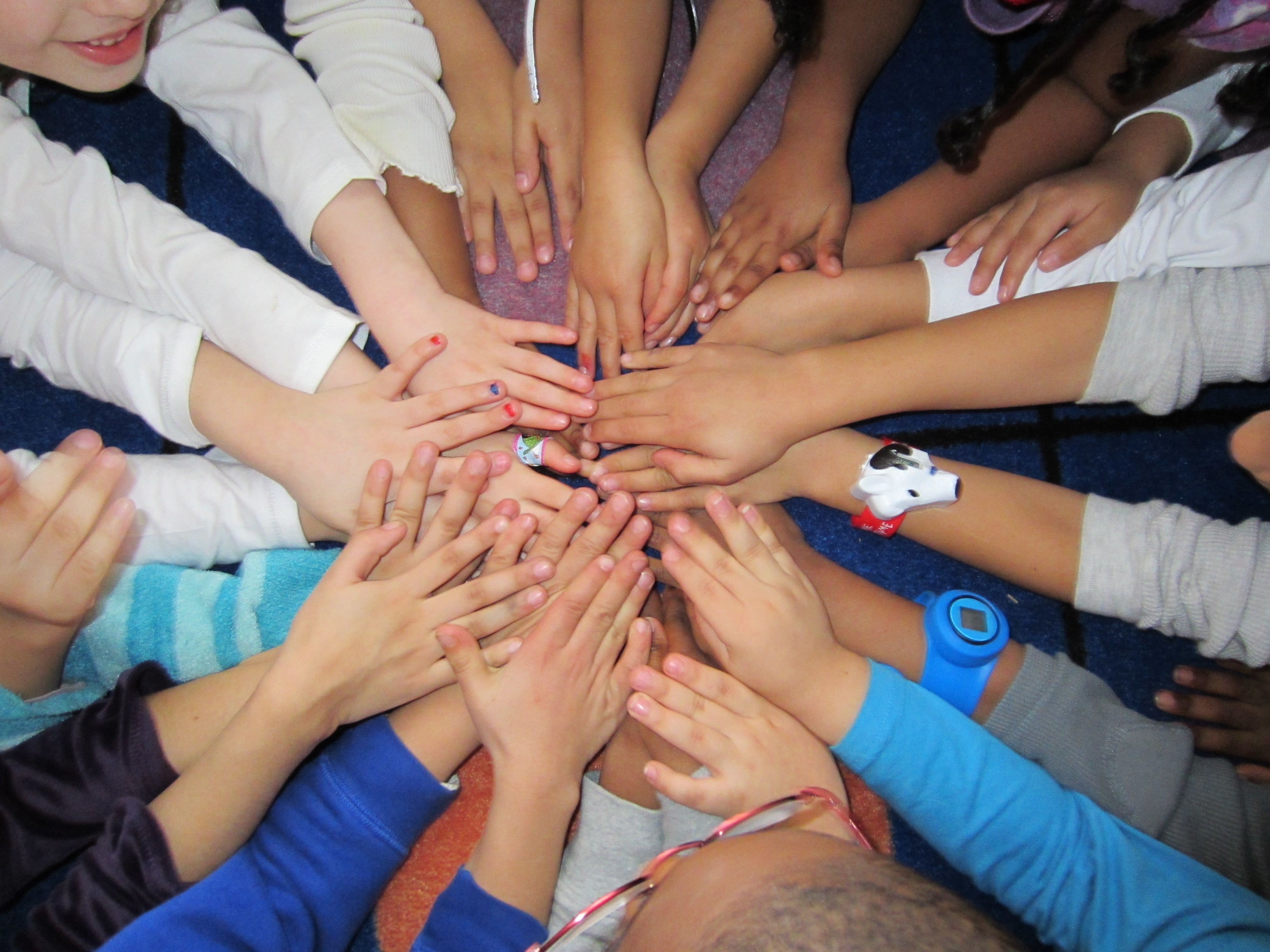
I don’t blog, tweet or pin for people to say “wow, look at her”. That’s the LAST thing I want people to say. It’s really all about contribution. I want to contribute to teachers, parents, students – and to the world. I want to make a difference and help someone get “unstuck”, just like so many others have helped me. I want to push people’s thinking, just like so many others push my thinking. I want to give back to the community of educators, just like so many have given to me. It’s through all of these contributions that I am the teacher I am today. My class has a kindergarten cheer we do (taken from a mix of ideas I’ve seen other teachers do – our movement comes from an adaptation of a handshake our dance teacher used to do – and our saying from a comment I read on a classroom wall years ago). We say “together, we can do ANYTHING!” It inspires us, encourages collaboration and helps us see that we all have something to contribute. Teachers need each other more now than perhaps any other time. How lucky we are to have so many places to pull from when we need something – and to contribute, when we have something to share. And together – we CAN do anything.

How do you use social media to inspire, collaborate or contribute to your teaching life?

What social media do you find helps you most in your teaching and learning?

Readers’ Statements

During my first year of Literacy Collaborative I was introduced to “Readers’ Statements”. They made a huge impact in my teaching, and carried over to writing, math, and science in my classroom as Writers’ Statements, Mathematicians’ Statements and Scientists’ Statements.

A readers’ statement is basically a sentence or two that states what readers do. Notice I’m not saying “good” readers. As Peter Johnston writes about in Choice Words, (an absolute MUST READ, if you haven’t already) when we identify someone as a “good” reader, it implies that there must be “bad” readers. “It leaves open the question of who the bad readers are and how you can tell.” I think this greatly impacts the identity our kids have as readers. I want all of my students to see themselves as “readers” – not as “good” or “bad”. So I choose to leave any qualifier off and simply use the term “readers”.

I use the readers’ statements as I plan my instruction, as I teach my focus lessons, as I meet with small groups and one-on-one with children, and throughout our day as I model what reading looks like and what readers do to make meaning from texts. Having a clear readers’ statement helps me stay focused on what I am teaching and allows the students to know what our focus is. When phrased in this way, “readers….” it helps students see themselves in the task. It creates an identity as a reader. They are readers (writers, mathematicians, scientists…) and this is what they do.

I typically choose one or two statements each week or so to focus on.  I write them on a chart or on a sentence strip and have them out in a place where we can see them and I can refer to them constantly. I plan this focus by looking carefully at my students and what they need next as readers. I may have one statement as our whole class focus that we look at through interactive read-aloud, shared reading and community writing. I then choose statements for each of my guided reading groups as well as the focus for my one-on-one conferences. Often, the statements I use in small group or 1:1 are ones we have used in the whole class that some students need additional time and practice with as they begin to internalize the strategy or skill we are focusing on.

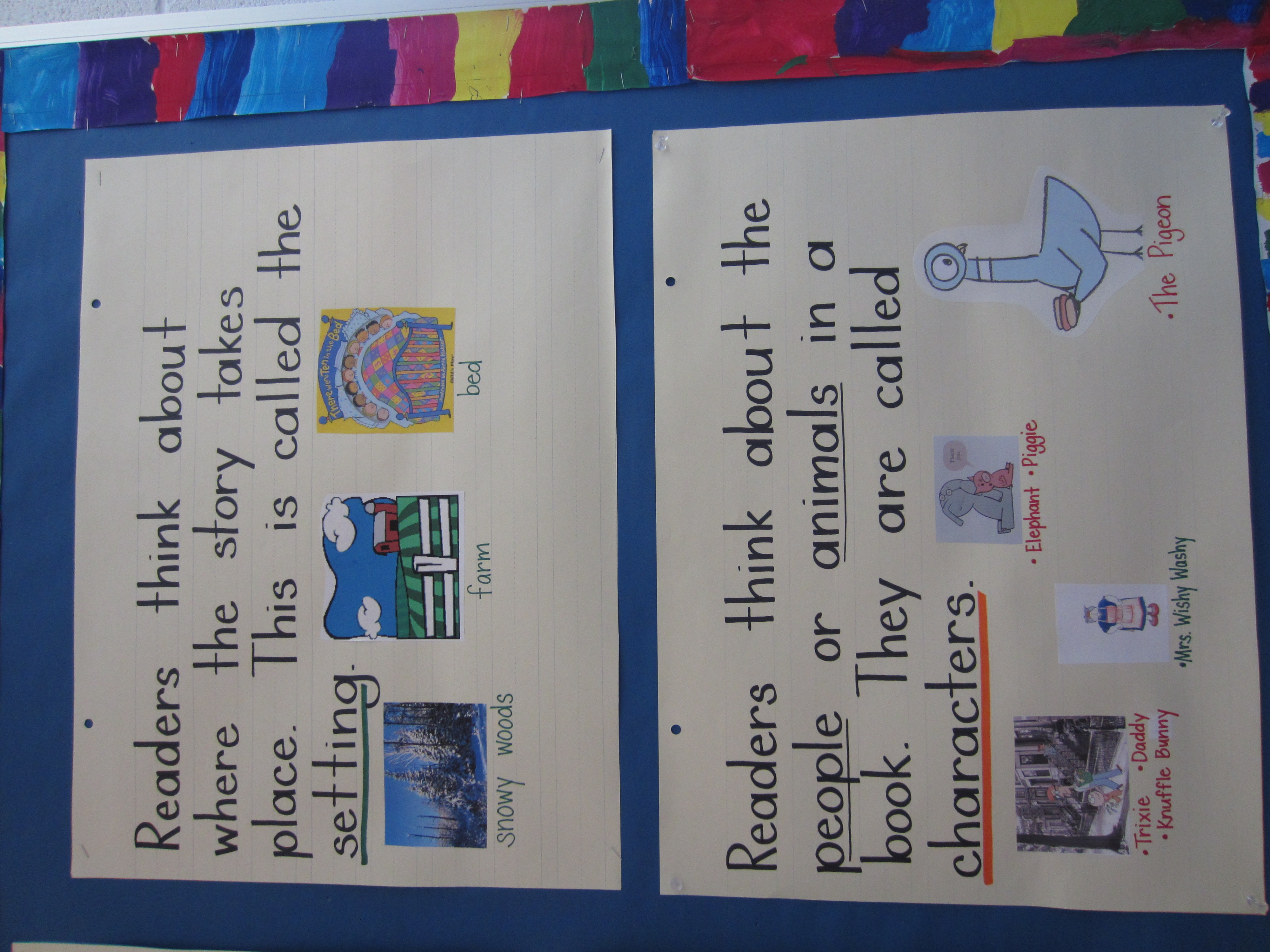
In kindergarten and first grade, I’ve found it’s very helpful to use the readers’ statements with photos to connect to prior learning and to help the children read and remember what our anchor charts say. Below are just a few examples of readers’ statements I’ve used this year. Take a look at your standards, the strategies you are teaching and what your students need next as readers to come up with your own statements.

Readers think about what they read.

Readers make sure what they read makes sense.

Readers get a picture in their head to help them understand what they read.

Readers notice that a book reminds them of something.

Readers look for words they know in their books. 

Readers think about what the characters are feeling.

Have you used readers’ statements? How do you see them supporting the readers in your classroom?

Borrowing from other Poets

When students are writing poetry we often encourage them to choose a poet as a mentor and to try on what the poet is doing.  Sometimes students notice how a poet uses rhythm, a patterned rhyme, repetitive lines, alliteration, or onomatopoeia.  Sometimes they notice that the poet seems to be talking to someone or something; or the poet is pretending to be an object, like a mountain, a desert, or an animal.  The student then tries to use the idea in his/her own writing.

One day we came across this poem by Livingston:

ALONE

By Myra Cohn Livingston

Alone…

is when I’m tucked in bed

and little things think in my head

Alone…

is splashing out to meet

the ocean waves beneath my feet

Alone…

is in the apple tree

with no one looking up at me.

We talked about how Livingston took various situations that made her feel alone and listed them in her poem. (The poem reminded me of Charlie Brown’s Happiness is…) We had previously been talking about feelings that were coming through in various poems.  We brainstormed a list of feelings: anger, jealousy, love, courage, happiness, sadness, disappointment, fright, and so on.

First we tried writing a poem together, trying to imitate the form that Livingston used.  I asked the students to work with a partner and write on a post-it something that made them feel frightened.  As we shared all the possible answers, I wrote in front of them on a chart.

Fright is…

Watching a horror movie

by yourself.

Fright is…

The fifth-grade writing test.

Fright is…

The phone ringing

in the middle of the night.

Fright is…

The sound of cars

crashing right in front of you. (and so on.)

A few students tried the idea on their own during writing that day.  Here is one from fifth-grader Chris:

Anger

Anger is lava melting

Anger is yelling

Anger is red hot

Anger is building up

Anger is like a fireball.

Ralph Fletcher says that it’s even OK to borrow a line or two from a poet.  His idea works well with reluctant writers who just can’t get started.  On page 120 of Poetry Matters, Fletcher writes a poem about a memory of sitting with his brother on his kitchen floor after bath time.  He suggests that students go ahead and borrow his first and last line and fill in the middle with a special memory of their own.

Sometimes I remember

the good old days

……..

I still can’t imagine

anything better than that.

Thanks, Ralph!

What teacher of writing has not been influenced by the work of Ralph Fletcher?  I know I have.  I’ve read just about everything that he has written for teachers and have experimented with dozens of his lesson ideas.  His series of books for kids on writing are also fabulous and I have taken many an idea from his Poetry Matters to develop lessons for students of all grades.  Here are just a few I’ve tried:

1. Repetitive lines.  It’s easy to find poems with repeating lines.   “Every Time I Climb a Tree” by David McCord is a favorite.  I show several poems to the students with repeating lines and we talk about why the poet might have chosen to do that.  Sometimes the repetition establishes the rhythm of the poem; sometimes it’s just an important point the author is trying to make. Fletcher says, “Repetition is important glue that can hold a poem together” and then he suggests that the students experiment with the idea.  Read pages 38-40 to the students and share the poem that a fifth grader wrote about his place in the family, repeating “Little old me, stuck in the middle.”

 2. Use fragments, not full sentences.   Sometimes it’s the fragments and short phrases that help the readers of poems get great pictures in their minds.  Most poems are written like this, not in full sentences.  Young children oftentimes tell a story in complete sentences but merely shape it on the page to look like a poem.  Fletcher says, “If it sounds like a story, then it is a story, not a poem.”  Fletcher takes a poem a 4th grader wrote about the New York City subway (pg. 61) and then rewrites it in full sentences.  Students discuss how much better the fragment-poem conveys the real sense of the crowded, busy subway. You can do this with any poem.  I also keep this idea in mind when helping students revise.  Sometimes they need support to discover the great phrases they have in their poems. Help them cut down those long, wordy sentences to shorter phrases and see a better poem emerge.

3. The last line counts.  On pages 71-73 Ralph Fletcher shows us how much endings matter in poems.  I often show kids a poem my husband wrote for me on my birthday (the 22nd of Nov.)  Being an accountant and very interested in numbers, Rick once read that you can find combinations that add up to any number if you look hard enough.  So this poem has lines in it of all the things that add up to “22,” like the letters in our names or the last digits of everyone’s age in our family. It goes on for a while with some very funny combinations.  But the last line of his poem says, “Our being together just adds up!”  Of course, that’s what makes the poem so special to me. Fletcher suggests that students take the first draft of their poem and look for their best line.  Then rewrite the poem in a way that makes that line come out last.  He’s tried this many times himself with much success.  Along with this lesson I also show another favorite by Jean Little where the last line is what makes the whole poem work. It’s from her book of poems and vignettes called Hey, World, Here I Am:

Clothes

I like new clothes.

They seem brighter, smoother, shinier.

I move carefully in them.

I remember to hang them up.

I feel taller in them – and prettier—

And I don’t climb over barbed-wire fences.

I like old clothes too.

I don’t think about them much.

They are part of me.

Going where I go, doing whatever I feel like doing.

They are less bother and more comfortable.

They don’t expect me to be so tall.

They know my size exactly.

You know, it’s a funny thing —

Friends are like clothes.


Kids Write Poetry

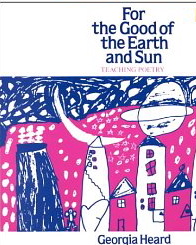
I recently heard Katie Wood Ray at the Ohio Reading Recovery Conference.  She told us that kids need to read a hundred poems before they start to write poetry.  Her point is that kids need models – mentor authors and mentor texts. She wants kids to apprentice themselves under a poet, notice what that poet does, and “try it on” for a while.  In a few video clips, she shared how the student brought a mentor text to the 1:1 conference and how she supported the child in noticing what the poet did.  She helped the child envision how his/her own poem could look and sound.  I, too, believe in immersing kids in great poetry books to make discoveries about what poets do.  I’ve learned so much from teachers like K. W. Ray, Georgia Heard, Ralph Fletcher, Regie Routman, and Lucy Calkins.  All of them have acted as mentors to me — so that I can improve as a teacher of poetry.

No matter what grade I am teaching, I want the students to get the message that we can all write poems, that poems can be about anything, and that poets choose their words carefully, reading their poems over and over to make sure they sound the way they want.  One of the easiest ways to get them started is to show poems written by other students, as Regie Routman does in her series of books on poetry from Scholastic.  Regie gives us many poems written by students (both very able students and ones who struggle with writing). I began with several of Routman’s before I collected an assortment of my own.  We discuss the whole poem, the title and topic, the shape or rhythm, the word choice, the expression of feeling – whatever the students notice.  By reading and discussing several, my students can’t help but think, “Hey, if those kids can do it, so can I!”

I’ve also used many of Lucy Calkins’ lessons (from her Units of Study Poetry book, K-2) on various ideas to get kids writing poetry.

*  Write about what matters to you (pages 32-38)

*  Start with a strong feeling (pages 81-87)

*  Poets write with fragments or phrases (pages 115-123)

*  Poets sometimes surprise us and compare things in interesting ways (pages 89-102)

Poets often write about vivid memories.  I remember Georgia Heard writing about that in one of her early books.  Georgia suggested getting the kids to 1) start with a strong feeling, 2) then connect that feeling to a memory, 3) now write about the memory.  I always think it’s important for teachers to actually do what they are asking students to do, so I model this in front of the students before sending them off to try it.

I tend to stay away from the formula poems, like acrostics, diamontes, cinquains, and so on.  Kids will write more (and better poems) when not constrained by rhyme or a formula.  Free verse takes a lot of the weight off their shoulders.  I’ll share what I learned from R. Fletcher in the next post.  If you have any thoughts on how you get your students writing poetry, please feel free to comment.

Poems and Movement

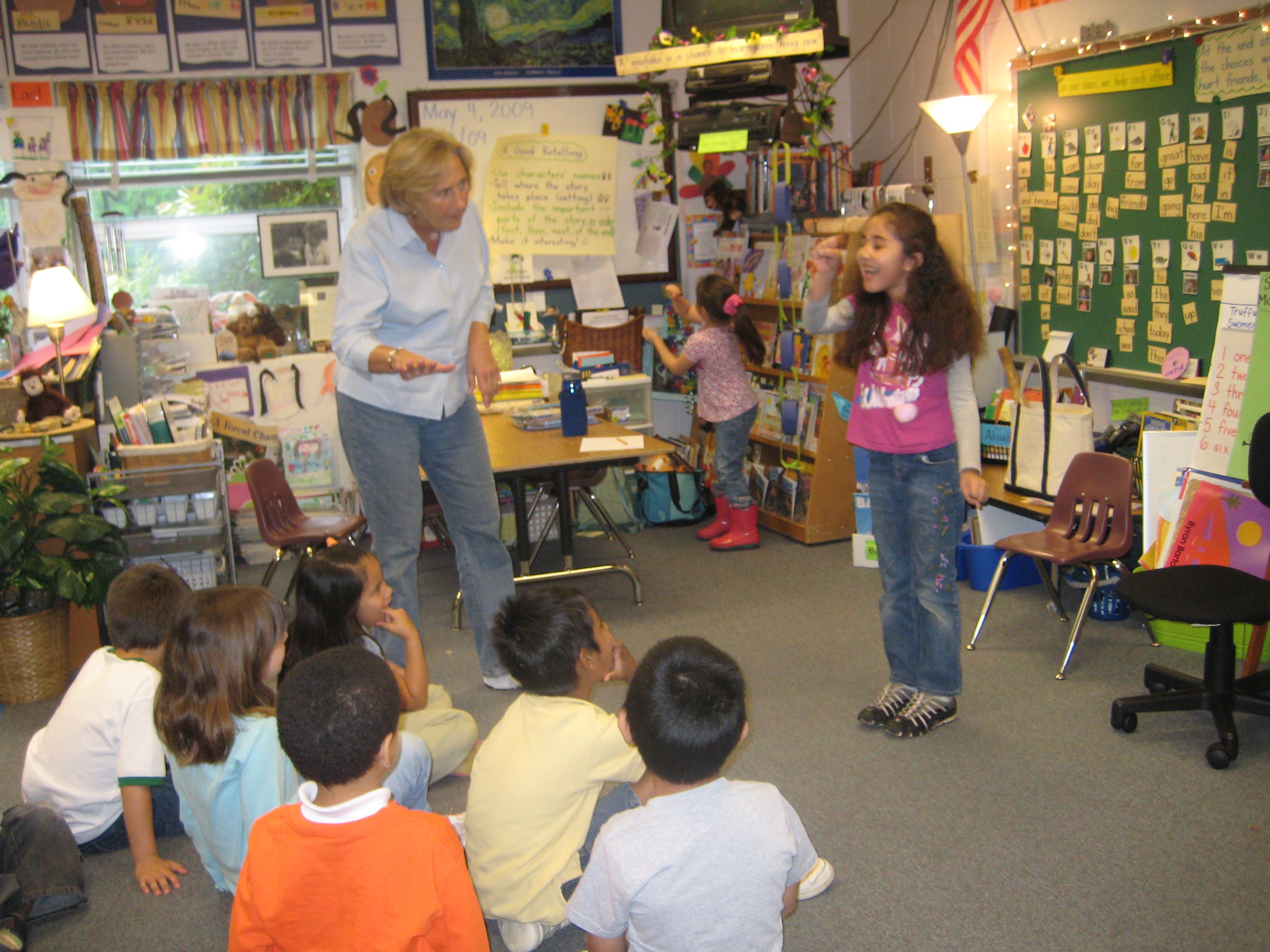
There is nothing more fun than getting kids to move with poems to enhance the meaning!  Here is how I do this lesson on creative dramatics and poetry.  Since it’s always important to gradually release responsibility when you are teaching something new, I start with modeling one poem, next I teach them how to put motions with another poem, then the students make suggestions for the motions of the next poem, and finally they are grouped into teams to plan a performance poem.  (Note: we don’t use props, just our bodies and our voices.)

I open by telling the kids we are going to move with the poems today; something I call ‘Creative Dramatics.’ We will use what the poem is about to help us decide how to move and what to do with our bodies.  In fact, I mention that I saw a group of students the other day moving with the Boa Constrictor poem. I begin by modeling with Shel Silverstein’s Lazy Jane.  The poem is short and easy to memorize.  Be sure to check out the picture that Shel has drawn with this poem. As I slowly say the first lines, “Lazy, lazy, lazy Jane. She wants a drink of water,” I slowly take three steps and plop into a chair. As I say “So she waits…. and waits….. and waits….” I merely lounge in that chair, pausing, sighing, and looking like I’m waiting.  And finally when I say the last line, “… and waits for it to rain,” I drop my head back with my mouth open towards the sky.  The kids clap and I say, “Great, thank you, that’s exactly what you should do when someone performs for you.” (I’m preparing them for later when I want them to applaud each of their group performances.)  We talk about the movements I chose and why I did it that way.  I even show them how it wouldn’t fit with the poem if I marched across the room quickly saying the first lines.

Next I teach them movements to the poem Jalopy by Sylvia Cassidy.  Don’t make the mistake of assuming kids know what a jalopy is; not one child in two 5th grade classes knew the meaning of the word.  We bounce in our chairs as we read most of the poem, using other motions for certain lines: “No top has my jalopy”/ wave your arm from front to back; “Drop, goes my jalopy”/ just dip your body down a bit; “Clop, goes my jalopy”/ stamp both feet… and so on.  You’ll figure it out.

Releasing a little more responsibility over to the students, I put up the poem When Tillie Ate the Chili by Jack Prelutsky.  After reading it through and talking about it’s meaning, I let different students offer suggestions of hand/body motions we can do for each line.  When all the motions are decided, we all perform it together.  (Note: for the line “she coughed, she wheezed, she sputtered” the students will model making coughing noises.  Be sure to tell them that they are just pantomiming the motion of coughing because they have to be saying the words of the poem.  Also, for the line “she ran totally amok” hopefully they will suggest running in place.)

They are finally ready to go off on teams to prepare their performances.  I use these four poems, but you can choose whatever you like.

Things, by Eloise Greenfield

Keep a Poem in Your Pocket, by Beatrice Schenk de Regniers

Rain Poem, by Elizabeth Coatsworth

The Storm, by Dorothy Aldis

If you haven’t been following my blogs on teaching poetry, feel free to check out the posts from February 3 and January 25th.

Reading Poems Out Loud

In my post on Jan. 25th I promised to write up some poetry lessons that I’ve done. I often begin with the idea that many poems should be read out loud.  On an overhead projector or Smartboard, I put up my first example, “All My Hats” from Richard Margolis’s Secrets of a Small Brother.  First I read the poem very fast, mumbling, in a monotone voice.  Then I read it a second time with all the vocal expression I can muster.

All my hats

Are hats he wore.

What a bore.

All my pants

Are pants he ripped.

What a gyp.

…… (several stanzas)

All my teachers

Call me by my brother’s name.

What a shame.

We then talk about which rendition was better and why, as well as some discussion of the meaning of the poem, which many kids can relate to personally.

I put up the poem Foghorns by Lillian Moore and read it aloud.  I tell the students that poets take time deciding how they want to arrange their poems on the page.  They not only use punctuation sometimes, but also white space.  The white space tells us where to pause and take breaths and how to read phrases together (for more on white space, read Fletcher’s Poetry Matters, pages 69-71.)  I show them the same poem Foghorns, but I’ve arranged it in two other ways on the page.  We practice how each one would be read differently because of the change in white space and arrangement of the words.

Now I want the students to get some enjoyment out of reading poems out loud together so we do some choral readings. (Eventually in future lessons we will do some creative dramatics and move with the poems, but today we are working only with voices.) We start with this one.

WASPS

by Dorothy Aldis

Wasps like coffee

Syrup

Tea

Coca-Cola

Butter

Me.

You might not think there is much to this poem.  But because of all the white space after each word, you must pause a lot.  Read it a few times and feel the beat in it; punch out the coke line.  The kids join me reading it with a beat. “Again, now clap it as we read.  Now snap it.  Now soft.  Now loud.”

Some other poems we read together are Good Books, Good Times, by Lee Bennett Hopkins.  This one works well in two voices, with one side of the room starting and the other side reading every other line. Another is Boa Constrictor, by Shel Silverstein.  The students enjoy having me read aloud a longer poem as they follow along, joining in on the repetitive lines.  I use Nathaniel’s Rap from Nathaniel’s Talking by Eloise Greenfield or Honey, I Love (and we belt out that line, “But, Honey, let me tell you that I love…”) Then I usually give out two pages with several poems that are fun to read aloud and have them try a few with a partner.  After that they all take a poetry book and read independently.  Many find a poem that they want to share with the whole group at share time.  In fact so many students wanted to do this that the teacher had to put up a sign-up sheet for three students a day for the next few days.

The wonderful thing I learned from doing these poems aloud with students is that they ALL wanted to participate.  Prior to doing this lesson, I had explained what I would do to the classroom teacher.  She worried a bit that her students were too shy or inhibited (worrying about what others might think, as fifth graders do).  But they were ready to roll!  They put all their energy into reading with the best vocal expression they had.