Summer Reading Pile

IMG_0291Ok, so I’m really late with my summer reading list, but I thought I’d join in anyway. Several blogger friends— Cathy Mere, Jill Fisch, and Laura Komos — have orchestrated their third year of #cyber PD.    Bloggers or tweeters can post a picture of the professional books they are planning to read this summer.  Then one book is chosen to read and discuss together on three Wednesdays in July.

You’ll notice that my list includes many books on writing.  I’ve been talking and writing about teaching reading so much for the past few years (particularly helping teachers think about their struggling readers) that I’m interested in getting back into the groove of teaching writing. So I’m including a few books on writing that have been on my TBR pile for a while.  Actually, I’m almost done with the Katie Wood Ray’s In Pictures and in Words and it’s just fabulous!

Also in my pile is Cris Tovani’s So What Do They Really Know? from Stenhouse.  I have learned so much from all of her other books, that I just have to delve into this one. And then you’ll see Creating Innovators in my pile — this one was mentioned in several places this past school year, so I thought it deserved a reading.

If I can squeeze it in, I’m sure I’ll reread What Readers Really Do, since I’ve been chatting it up to teachers all school year. I highly recommend this one.

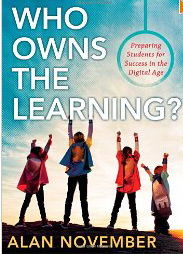
Since reading everyone else’s list, I just ordered three more books that I will definitely read this summer  – Join the Club by Katie D. Czerwinski; Who Owns the Learning? by Alan November and Teach Like a Pirate by Dave Burgess. And, by the way, the #cyberPD book for discussion this year is:51h8ptz5ZBL._BO2,204,203,200_PIsitb-sticker-arrow-click,TopRight,35,-76_AA300_SH20_OU01_

Bullying

51c9h9H025L._BO2,204,203,200_PIsitb-sticker-arrow-click,TopRight,35,-76_AA300_SH20_OU01_Lester Laminack and many others have helped to bring teachers’ attention to the need for talking about bullying in elementary schools.  Is there a grade that’s too early to begin these conversations?  I don’t think so.  I was recently in a kindergarten classroom where I was invited to be a guest reader.  At the kindergarten level, conversations about bullying usually include: not calling other kids names, not making fun of kids who are different from you in any way, appreciating and valuing differences, standing up if another child is being treated badly, and so on.

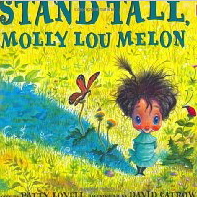
6164Kca-dDL._BO2,204,203,200_PIsitb-sticker-arrow-click,TopRight,35,-76_SX225_SY300_CR,0,0,225,300_SH20_OU01_I read Stand Tall, Molly Lou Melon by Patty Lovell.  Molly Lou is extremely tiny, has large eyes and buck teeth, a voice like a frog, and is very clumsy.  But she had a wonderful grandma who taught her to believe in herself, smile, stand tall, and sing out no matter how it sounds.  She uses grandma’s advice when confronted with the class bully who makes fun of her.  I merely stopped at a mid-point and at the end of the book to allow the kids time to turn and talk to a partner.  Then several students shared out what they were thinking.

31mYHweMB4L._BO2,204,203,200_PIsitb-sticker-arrow-click,TopRight,35,-76_AA300_SH20_OU01_The second book was called One, by Kathryn Otoshi.  I love this book and love to see how the kids interpret it.  All of the characters are colors, with Red playing the role of the bully who picks on Blue.  The other colors are friends with Blue, but never stand up to Red.  Finally ONE comes along and teaches them all to stand up to bullies.  It ends happily with the bully joining the group of friends.

I left one other book in the class for the teacher to read at another time.  The Recess Queen, by Alexis O’Neill  is another book on the topic of bullying.  Jean is a bossy girl on the playground who tries to control everyone, but the spunky little Katie Sue doesn’t buy into her methods. In her own friendly, patient way, Katie Sue changes Mean Jean for the better.

This experience, of beginning conversations on the topic of bullying with very young children, reminded me of an exceptional book I read years ago.  I highly recommend That’s Not Fair! A Teacher’s Guide to Activism with Young Children, by Pelo and Davidson if you are a pre-school or K teacher and interested in matters of fairness, gender inequality, and many other social justice issues (I noticed you can buy it used for under $4 on Amazon.)

Please comment if you have stories to share about conversations with your students on the topic of bullying and what to do about it.

Teaching Reading in Grades 3-5

teacher and student readingAs a Reading Teacher or Literacy Coach, you occasionally hear comments that are related to teaching reading in upper elementary grades.  Here are the “Top Ten” fallacies or misunderstandings that I’ve heard over the years.

  1. “The kids in my class already read chapter books, so there’s nothing left for me to teach them.”
  2. “All my students can pass the state tests, so why should I give up precious class time to reading?”
  3. “I’ve got a few struggling readers, but, to tell you the truth, I blame the primary teachers for not teaching enough phonics.”
  4. “I have way too much content — in Science and Social Studies — in my grade.  I can’t afford to give that much time to reading during the school day.”
  5. “I have so many English Language Learners and Learning Disabled students in my room, that I have to read the texts TO them.  They just follow along.”
  6. “I can’t possibly read all the books the kids are reading, so I always use whole class novels.  That way we all do the book together.”
  7. “My students do get time to read everyday, but it’s a homework assignment.  They are expected to read at home for ½ hour every night.”
  8. “I assess my students on reading with a word inventory and a spelling inventory.  I don’t’ have time for one-on-one conferring.”
  9. “I like my struggling readers to get pulled out by a resource teacher, so that I can really teach reading to the bulk of the class.”
  10.   “I have my students read chapter books each month, but the books have to connect with a content area topic.”

If you find yourself saying any of these —- STOP!!!—– REFLECT — and start a conversation with your colleagues.  Then find a group who would like to do a teachers-as-readers group with one of these books:

Sibberson & Syzmusiak  Still Learning to Read, Stenhouse

Tovani    I Read It But I don’t Get It, Stenhouse

Vinton/Barnhouse   What Readers Really Do, Heinemann

Schulman, Guided Reading in Grades 3-6, Scholastic

How are you handling comments like this in your schools?

The Talkers and the Non-Talkers

41m0N7IIcsL._BO2,204,203,200_PIsitb-sticker-arrow-click,TopRight,35,-76_SX225_SY300_CR,0,0,225,300_SH20_OU01_I’m reading Susan Cain’s book called Quiet: The Power of Introverts in a World that Can’t Stop Talking. (Love that title!) As teachers, we come across all kinds of kids in our classrooms, but I’m wondering how much thought we put into the activities we set up and how comfortable or uncomfortable they make kids feel.

The book is full of stories and ideas for forming better relationships between parents and children, husbands and wives, and friendships (whether one person is an introvert and the other an extrovert or both the same).  It’s not an ‘educational book,’ but I could not help but read it through a teacher’s lens, especially the chapter entitled “On Cobblers and Generals:  How to Cultivate Quiet Kids in a World That Can’t Hear Them.” Here, the author suggests that most schools are designed for extroverts  —- teachers teach many lessons to the whole group, calling on the children who raise their hands and constantly have something to say; some group work often allows the more gregarious child to take control; being aggressive in sports in highly valued in most schools; teachers often put on report cards comments like, “I wish Molly would talk more in class”; and so on.

Here are some ideas or comments that I drew from this text:

1.  Don’t think of introversion as something that needs to be cured.  If an introverted child needs help with social skills, teach her, but celebrate these kids for who they are.

2. Studies show that one third to one half of us are introverts, so you may have more introverted kids in your class than you think.  Balance teaching methods to serve all kids.  Extroverts tend to like movement, stimulation, and collaborative work.  Introverts prefer individual choice, downtime, quiet work places, and independent projects (or working with just one or two others).

3.  Don’t seat quiet kids in “high-interaction” areas of the classroom.  They will feel more threatened and will have trouble concentrating.

4.  Make it easy for introverted kids to participate in class, but don’t insist.  Communications professor McClosky says, “Forcing highly apprehensive young people to perform orally is harmful.  It will increase apprehension and reduce self-esteem.”

5. Introverts often have one or two deep interests that are not necessarily shared by their peers and sometimes they are made to feel freaky for their passions.  Build a community spirit in your classroom and value everyone’s uniqueness or strengths.  Strongly enforce anti-bullying programs.

6.  “One of the best things you can do for an introverted child is to work with him on his reaction to novelty.  Remember that introverts react not only to new people, but also to new places and events.  So don’t mistake a child’s caution in new situations for an inability to relate to others.  He’s recoiling from novelty or overstimulation, not from human contact. Introverts are just as likely as the next kid to seek others’ company, though often in smaller doses.” S. Cain,  p. 248.

I highly recommend this book if you are a parent of an introverted child, whether you are an introvert or extrovert yourself. Any thoughts or comments?

Where Have All the Big Books Gone?

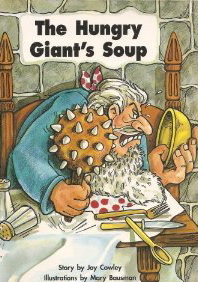
61R8vFnq1TL._SL500_AA300_I received an email recently from a school I am working with.  The preschool and K teachers had liked what I said about Shared Reading and they wanted to order some Big Books.  They asked me for my favorites, so of course, I mentioned Mrs. Wishy Washy, Dan, the Flying Man, The Hungry Giant, One Cold Wet Night, Who’s in the Shed?, Who Will be My Mother, The Enormous Watermelon and a bunch of others.  I emailed two other primary teachers I had worked with and asked for their recent favorites to add to the list I was recommending.  They reminded me of several non-fiction ones that were fabulous. It was definitely a GREAT list!

But here’s the catch.  When the teachers went to find out about ordering these, they ran into several dead ends.  I tried to help by researching where these could be found.  Except for some Mrs. Wishy Washy books (see Katie’s post), I didn’t have much luck either. Where have all the Big Books gone?

Then I read Shari Frost’s article just days later.  She expresses her concern about teachers who are not doing Shared Reading experiences in many K-2 classrooms. This is definitely a related issue that concerns me.  If you are lucky enough to HAVE these Big Books in your building, what are you doing with them?  I’m keeping my post short today, so that you can read Shari’s article (in case you don’t regularly read Choice Literacy.) It echoes my sentiments exactly.

What Were They Thinking?

4916846-thinking-man-and-question-mark-3d-rendered-illustrationIn my travels recently, doing workshops about supporting struggling readers, I’ve had several conversations about the loss of funding for Reading Recovery.  Teachers from North Carolina, New Hampshire, and even one from Halifax, Nova Scotia told me how much they value what they learned as Reading Recovery teachers, how much it has helped those children who are most at risk for learning to read in grade 1, how powerfully the Reading Recovery program has influenced their school, and so on.  Yet, these teachers also reported that their funding has been cut and they’ve been moved into other positions. I’m still scratching my head trying to make sense of this.

imagesCA29U2KIWhole districts, counties, and states have done away with Reading Recovery.  What in the world were they thinking? We know Reading Recovery has powerful results as an early intervention model, just check out the What Works Clearinghouse. Also keep in mind that RTI suggests not only quality classroom instruction, but also extra small group support on the next tier, and one-on-one help for students who still need additional support.  ALL OF THESE PIECES are crucial.  We can’t keep trading one for another.

I heard Richard Allington say (at an IRA conference a few years ago) that we KNOW how to help struggling readers; we KNOW what early intervention support is supposed to look like; and we even have enough money to do so. We are just NOT spending our money in the right ways. At this conference and in an article he wrote for Ed Leadership, he talks about what one-on-one help and small group support should look like. He also mentions what doesn’t work. He definitely sees the knowledge level of the teacher as a major important factor.  I cringe when I visit schools where I see a parent volunteer or untrained assistant working with the most at-risk students out in the hall.

One reason I heard for why Reading Recovery has been cut in many places has been that it was replaced with LLI kits.  Principals have said, “Why have a teacher working with one student when she can be working with three at a time?” I am sure Fountas and Pinnell (who developed the LLI kits) did NOT intend for this to happen.

So what happened in these places?  Who is to blame?  Did administrators break under pressure from above and not defend Reading Recovery in their buildings? Is there a relationship between Reading Recovery getting cut and the Common Core coming in? Did the money that used to fund Reading Recovery get spent on test prep materials? Did Reading Recovery teachers themselves not help enough to ensure that others understood its necessity? Did Fountas and Pinnell not make it clear enough what LLI kits were for?

girl-talking-backThanks for listening to me “sounding off” about this topic. I have no answers, only questions… and sadness, too.

NEW Mrs. Wishy-Washy Books and a Giveaway!

We love Mrs. Wishy-Washy!

We love Mrs. Wishy-Washy!

We love Mrs. Wishy-Washy in our kindergarten classroom. She becomes an old friend early in the year when we read the many  early stories of her adventures with the cow, duck, and pig. The big books become treasured items in our classroom. We act out the stories using tiny toys and create interactive writing pieces based on the books. The children beg for more stories about her and get very excited when Mr. Wishy-Washy is introduced.  Last year at the Reading Recovery conference, I was excited to see that there is a whole new series starring Mrs. Wishy-Washy by the wonderful Joy Cowley. I bought single copies of the books and they became fast favorites in our classroom.

Recently, I was contacted by the publisher, Hameray Publishing, and asked to review these new titles. I turned this task over to my kindergarteners. We read the books and used them in our study of story elements including characters, setting, problem and solution. Here are some thoughts from the voices of five and six year-olds – the perfect audience for the Mrs. Wishy-Washy series.

*I like the books because they have animals in them. I like Mrs. Wishy-Washy.

*They are so funny because Mrs. Wishy-Washy is always trying to give them a bath. I liked when the animals went to a car wash. (in the book Mrs. Wishy-Washy and the Big Wash) That was so funny!

*Joy Cowley is a smart writer. She knows how to make kids laugh. I love Mrs. Wishy-Washy!

*Mrs. Wishy-Washy is the best character ever. I like her and the Pigeon (from Mo Willems) the best!

*It was so funny when the animals put on Mrs. Wishy-Washy’s clothes (in the book Wishy-Washy Clothes). They looked funny and it made me laugh so hard!

*Joy Cowley writes books for kids that kids like. She makes the characters solve problems in a funny way. Sometimes Mrs. Wishy-Washy gets tricked by the animals. I like that!

As a teacher, I love these new books too! The Early Birds Collection is perfect for emergent readers, with easy to read text, meaningful story lines and engaging pictures and text. I’ve used these books for small group shared reading and independent reading. If I had multiple copies, they would be ideal for guided reading. The Joy Cowley Collection is excellent as well. These books are a bit more challenging, but still perfect for late kindergarten, first and second grade readers. The books engage children and provide multiple opportunities for predicting and thinking beyond the text. The stories are highly engaging and truly appeal to children at this age. Again, I have used these books in small group shared reading and for independent reading. They would be perfect guided reading texts as well.

I encourage you to visit the Hamaray website and see the new Mrs. Wishy-Washy series, as well as new books with Dan the Flying Man, the Meanies and the Hungry Giant. They also make finger puppets with the characters – perfect for a retelling station. If you love  Mrs. Wishy-Washy, you will love this new series! And if you’d like to win some of these books for your classroom, or a for the classroom of a favorite teacher, then read on…

The Joy Cowley Classroom Giveaway calls for teachers, parents, friends, relatives and anyone else who wants to nominate a classroom to possibly win 90 new titles from The Joy Cowley Collection and The Joy Cowley Early Birds Collection by beloved author and Mrs. Wishy-Washy creator, Joy Cowley! These two new collections of leveled readers, for K-2nd grade classrooms, are developed for shared, guided and independent reading. Finger puppets and 3 audio CDs will also be included. Please nominate your favorite early childhood classroom here. You can also find out more about Hameray Publishing, Mrs. Wishy-Washy and other fun activities on Pinterest, Facebook and Hameray Publishing. You can use the discount code, ZJCC13 for a 20% discount that expires 6/30/13.

Hamaray Publishing is also generously donating a Joy Cowley Big Book as a prize to a lucky winner on our blog! All you need to do is leave a comment below with your name and the grade level you teach before 5pm April 28. We’d love to hear your thoughts on using Joy Cowley’s books in your classroom as well! The winner will be randomly chosen April 28. Check back that evening to see who the winner is!

A few of our favorites...

A few of our favorites…

Disclosure: I received complimentary products for review. All opinions are my own and this is not a compensated post. 

Learning from Others

51OpWey8-FL._BO2,204,203,200_PIsitb-sticker-arrow-click,TopRight,35,-76_SX225_SY300_CR,0,0,225,300_SH20_OU01_I’m presently reading My Beloved World, the memoir by Sonia Sotomayor.  It’s wonderful!  There are so many places in the book where I feel she is speaking directly to me, as a teacher, or as a parent and grandparent. At other times, I can see her message loud and clear for kids, especially those who are trying hard to break the cycle of poverty in their families by getting a good education.

Sonia had a big aha moment in fifth grade.  She was an extremely avid reader as a child, but realized that a handful of students (not her) always got the top marks.  She finally got up the nerve to ask a top student how she studied.

“Donna Renella looked surprised, maybe even flattered.  In any case, she generously divulged her technique:  how, while she was reading, she underlined important facts and took notes to condense information into smaller bits that were easier to remember; how, the night before a test, she would reread the relevant chapter.  Obvious things once you’ve learned them, but at the time deriving them on my own would have been like trying to invent the wheel.”

This made me think of how important explicit modeling and gradual release of responsibility is when teaching our students.  I’ve often said that struggling readers do not realize what goes on inside the heads of proficient readers as they read. Hopefully teachers are sharing this knowledge as they teach FOR strategies— teaching in ways that the child sees how the strategy could help him, takes the strategy on, and uses it when independently reading. Teaching inferring or questioning or visualizing or making connections, and so on, is only useful if the child actually makes use of it when he/she is stuck on a word, phrase, or passage.

As Sonia Sotomayor continues this story she realizes what an important life lesson this was for her.  I wish all teachers would find a way to share it with their students.

“But the more critical lesson I learned that day is still one too many kids never figure out:  don’t be shy about making a teacher of any willing party who knows what he or she is doing.  In retrospect, I can see how important that pattern would become for me:  how readily I’ve sought out mentors, asking guidance from professors or colleagues, and in every friendship soaking up eagerly whatever that friend could teach me.” (p. 72)

What a wonderful way to live your life… learning from every person you come in contact with!  And, at the same time, being humble and respectful enough of others to realize that everyone has something to teach you.

How have you encouraged your students to learn from each other?  Are you the only teacher in the room?

Planning for Progress

IMG_4464As spring begins, we look even closer at our learners, deciding which kiddos may need extra support with a child study support team or which of our little friends may not make the end of the year benchmark. We step up our instruction with extra interventions, after school sessions, more 1:1 instruction and more attention to those children who we are concerned about. This can be stressful and cause us to panic about all the progress that still needs to be made and how will we ever fit in those “double dips” of instruction and daily time with our students who need us the most. As I start to feel that way, I have to remind myself to take a step back, breathe and make a specific plan to meet the needs of these students – while keeping our classroom a fun, engaging and happy place to be. If I am stressed and worried, that energy will determine the climate of our classroom and make it a negative, stressful place – something I don’t want to do – and something that will not serve the learners in our room.

Pat and I write about establishing clear expectations and goals for our students who struggle in Chapter 10 of Catching Readers Before They Fall. This is something that has proven to be very effective for me in focusing my instruction on my students who need so much. We recently worked with our math specialists to do this for our math students and then I did a similar form for literacy. The thinking process we went through looked like this:

1 – What is our learning goal? What do we want the student to be able to do?

2 – What can the student do now? How can we use this to build upon the known?

3 – What specific interventions do we have planned? Who is working with this child, what is the frequency of the intervention, what are the specific activities, instruction that we have planned for this child?

4 – What will be evidence of understanding? How will we assess or measure this learning and BY WHEN?

I take these planning forms and use them to plan my daily groups and 1:1 instruction. It helps me keep my focus clear and concise. It gives me a specific, measurable result to aim for and makes my teaching more purposeful. It also relieves some of the overwhelming feeling and stress of worrying about those students who are not making the progress we would like to see. While these are the questions we used, you need to ask yourself what will help you best meet the needs of your learners. This isn’t one more thing to do for someone else, but rather a specific plan to help YOU and YOUR LEARNERS. I hope this will help someone who is struggling right now and feeling the “spring stress”. Please feel free to share how you plan for progress. We would love to hear about it!

Deeper into Characters

51UydLm9V-L._BO2,204,203,200_PIsitb-sticker-arrow-click,TopRight,35,-76_AA278_PIkin4,BottomRight,-45,22_AA300_SH20_OU01_I love the idea of Readers’ Statements. Katie shared how she uses them in her kinder class here. I also noticed in rereading Kathy Collins’s wonderful book Growing Readers that she uses lots of them to focus her lessons.  With a reader’s statement you are saying to kids, “Look, kids, this is what we are working on today (or this week).  This is something that will help you as a reader.” When formulating what you want your reader’s statement to say, a teacher has to think about what it is that a reader really does and how you can best show that to your students.
41fOZSUvOzL._BO2,204,203,200_PIsitb-sticker-arrow-click,TopRight,35,-76_AA300_SH20_OU01_Recently I did a lesson in a first grade class with the text Edward the Emu, by Sheena Knowles.  I was introducing the teachers (who were observing the lesson) to readers’ statements.  After introducing myself to the kids and teaching them how to do a turn-and talk, I asked them to turn to a partner and talk about some things they do as readers that help them understand the books they were reading.  I let them share out their answers and complimented them on their great answers. Then I told them that today we’re going to learn one more thing that readers do to help themselves and I wrote the following sentence on a chart.

Readers think about the characters.

Emu lesson slide 1  I started with this basic sentence so that I could ask them, “Who are the characters in books?”  As they told me that characters could be people or animals, I drew stick figures for people and very basic animal sketches. (My drawings on my chart were a lot simpler than this power point slide:)

Emu lesson slide 2  Then I wrote on the chart: Readers think about how characters feel and what the characters are thinking. I wanted them to name lots of feeling words, so I flashed up the covers of some beginning leveled texts, similar to the type they were reading on their own. “How do you think the character in this book was feeling?” As they answered, “scared, happy, sad, upset, surprised, nervous,” I drew various feeling faces. Then I drew a head with a thinking bubble by the words, “what the characters are thinking.”

Next I read aloud Edward the Emu with the best expression ever!  The kids were hooked on the story.  (It’s important to read the book straight through, keeping the meaning of the book whole.) Then I reread my reader’s statement and returned to two different pages of the book to model what I meant.

“Look at this page, boys and girls.  Doesn’t Edward look bored?  If I made a speaker bubble right here (I draw one with my finger above his head), I think Edward is saying, “Man, I’m so bored.  I don’t like just sitting around in my emu cage.  I wish I could be some other animal…some animal that has more fun… maybe like a seal.”

I continue by retelling part of the story as I turn the pages, “Remember how he decided to sneak out when the zookeeper went home?  He tried being a seal for a day, but then he heard someone say that lions were better than seals.”  I show one or two pictures of Edward pretending to be a lion and continue with my modeling of what he might be saying.  The students catch on quickly, so I give them a turn.

I show them the illustration of the lion with Edward standing on its head and ask them to tell a partner what the lion might be thinking or saying to himself.  After doing a turn-and-talk, they share out:

“Get off my head!  You’re squishing me!”

“Hey, emu, what are you doing?  I don’t like you standing on my head.”

“I think he’s thinking, ‘I thought you liked being a lion. How come you’re leaving?’”

“Man, that hurts!”

The students try a few more pages and then head off to try their new thinking strategy with books of their own. Katie and I have used this idea in many grade levels.  (See Katie’s post as she tried it with kindergarteners.) And Mary Lee Hahn tried it while reading aloud The One and Only Ivan to her 4th graders.
410YjMufwcL._BO2,204,203,200_PIsitb-sticker-arrow-click,TopRight,35,-76_AA300_SH20_OU01_Also, in chapter 3 of Stephanie Parsons’s book, First Grade Readers:  Units of Study to Help Children See Themselves as Meaning Makers, she does several similar lessons during a unit called, “Bringing Books to Life.” A part of this unit focuses on “incorporating dramatic play into children’s work, encouraging them to act out parts of the books, pretend to be characters, or imagine dialogue for characters they see in their books.”  Check it out!