Leveled Books – Questioning our Practice

2015-09-29 10.30.25

Do your students know their reading level? Why? Why not?

Lately I’ve been thinking a lot about leveled texts and their purpose and place in the classroom. Thanks to Irene Fountas and Gay Su Pinnell for designing a text gradient based on Reading Recovery levels, teachers have strong support and guidance when they are matching books to readers. But the level of text is only one thing we can use as a resource when making decisions. We also need to know about the child’s interests, strengths and weaknesses,  what strategic actions they are using, how they are constructing a reading processing system, etc… But I am concerned how these levels are being used in classrooms across the country. Fountas and Pinnell intended for levels to be used by teachers, as a way to help teachers analyze texts and select “just-right” books for small-group reading instruction and as a support for teachers to guide readers in choosing books. They never intended levels to be used by students. The levels on books are for teachers, not students.

“We do not recommend that students use the levels of a gradient to choose books for independent reading. The levels should be very unobtrusive (if not totally invisible) in your classroom. Students need to learn how to choose books based on their own assessment of readability, interesting topics or plots, favorite authors, and general appeal. You can teach students how to assess the appropriateness of texts they find interesting for their present reading levels.”  

-Fountas and Pinnell, Teaching for Comprehending and Fluency, page 152.

I started thinking about teaching independence and how that connects to this quote. If our goal is to teach children to be independent, self-motivated, voracious readers – then aren’t we doing them a disservice by labeling books in our classroom with levels? This is going to encourage mindlessly choosing a book because “it’s a J” – not looking and thinking if it’s a good match. I think teachers have to teach children how to choose just-right books for themselves, not teach children to rely on a leveling system.  I’m very concerned about the authenticity of teaching children to use the level of a book as a guiding factor. What happens when that child goes to the book fair, the public library, the bookstore or to a pile of books at a yard sale? Real readers in the real world don’t use a level to choose their books.  If children have access to lots of books that are “just right” from guided reading and conferences – carefully selected by teachers for that student – and teachers are teaching kids what makes a “just right” book, then shouldn’t we be giving them the opportunity to practice this when choosing books from the classroom library, the public library, a bookstore or when out with their families? We want to create real world readers who can assess whether a book will be a good choice independently.

What happens when children are told their level? Often times that becomes the way a child defines himself as a reader – bragging “I’m a level M.” or, with head hung low, “I’m only a level E.” How do you define yourself as a reader? What would your answer be if someone asked you, “what kind of reader are you?” I would guess that no adult is going to identify herself as a level.  I want my kids to say things like, “I’m a reader who loves Mo Willems, who likes to read books that are about real things and who can’t wait to see what new books arrived at the library.” Perhaps asking your students this question might give you some insight into what kind of readers they are becoming. Do we want kids who can identify what kind of reader they are or who can tell us what level they are?

Another thing that I’ve seen is a high level of competition and comparing in classrooms where children know their levels. Instead of clamoring to read the new Mo Willems book, or an enticing picture book displayed at the library, children quickly dismiss books if they are not on their level and start to look down on children who are at a lower level. At the other end, I’ve seen strong readers held back by their level – being made to stay at a level when they can really take on much more challenging and interesting texts because they’ve been identified at a level lower than where they are really reading.  That level becomes part of the readers’ identity. Kids are ashamed to be reading at a level that is not associated with that grade level. The focus becomes all about a level instead of about reading, books, authors, genres, series books, or fabulous illustrations. When I sit down to confer with a child I never want the focus to be on what level we are aiming for. Do I have that in my head as a teacher? Of course. It’s a tool I use as a teacher. But I want children to be working on their reading and setting goals relating to thinking deeply about texts, authors, genres, a variety of topics, talking about reading with others, enjoying reading and creating a reading processing system that helps them in becoming fluent, flexible, strong readers. I don’t want their goal to be moving to the next level.

What happens when parents are told the level that their child is reading? Most parents have no idea what a “level J” book means. I’m concerned that this is making school reading and real world reading two different things. It’s creating a gap comparable to when we teach young children to use words like “schema” and “metacognition” – parents are mystified as to how reading instruction is happening.  Parents may start to compare their child with others in the neighborhood, or try to push reading books at a much higher level than that child can handle at the moment. What if, instead of sharing a child’s reading level at conferences, teachers showed families examples of books where that child is reading now, and examples of benchmark texts for where we are heading? This helps families understand what their child is working on and helps them understand much more than a “level J” text.

So do my students know their reading level? No. These are a few reasons why. But are leveled books important? YES! Check back for Part II tomorrow when I will post on how I use leveled texts in my classroom as an important tool for teachers.

I would love any thoughts on this post. I realize this may leave some people uncomfortable or unsure or questioning our practice. But isn’t that what we want to do as educators? I invite you to ask yourself, your team and your school “how are we using leveled texts, and why?” As Lucy Calkins wrote in my The Art of Teaching Writing book many years ago, “be brave enough to outgrow your own best teaching”. Questioning and challenging how levels are being used, and what messages we are sending, might be an area where we need to be brave.
First Days of Kindergarten Read Alouds

Screen Shot 2015-08-10 at 8.19.45 AMThanks to Cathy Mere (@cathymere) and Mandy Robek (@mandyrobek), August 10th is a special day for teachers and book lovers everywhere. It’s 10 for 10 Picture Book Day (#pb10for10)! I’ve decided to share my top 10 (ok, maybe a few more…) favorite read alouds for the first days of kindergarten. These are mostly old favorites, but they are loved, read and reread throughout the year. I find these books a perfect mix of nonfiction, fiction, wordless and repetitive text that draws readers in from the first day of kindergarten and leaves them begging for more after the first week. Enjoy and happy reading!

What are your favorites for the first week of school? Please share!

Screen Shot 2015-08-10 at 12.30.36 PM

A favorite nonfiction text that kids love to read and guess what animal is in the picture.

Screen Shot 2015-08-10 at 12.30.19 PM

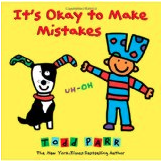
We love Todd Parr. This is a great book to start the year with. We live the mantra, “a mistake is a chance to learn something new”, and this book helps me teach this from day 1.

Screen Shot 2015-08-10 at 12.30.05 PM

A very fun book that helps children see that they can read the pictures as well as the words. The repetitive text and detailed illustrations help children begin to tell stories and understand that they are readers – reading the pictures and the words.

Screen Shot 2015-08-10 at 12.29.47 PM

We love, love, love this book! It’s a great story that begs children to guess what will happen next and to join in on the refrain. A class favorite throughout the year.

Screen Shot 2015-08-10 at 12.29.29 PM

A good nonfiction book with fabulous photographs and a simple text line to read aloud. Children love this. And after I introduce Mrs. Wishy-Washy, they love that Joy Cowley is the author of this book, too!

Screen Shot 2015-08-10 at 12.29.05 PM

A good partner to the Red-Eyed Tree Frog, with rich photographs and a simple text line. Children are extremely engaged in this nonfiction text.

Screen Shot 2015-08-10 at 12.28.49 PM

A timeless classic that helps me teach the important lesson of “team”. We are all in this together and we are here to help, support and love each other. It’s a must-read for the first week of school.

Screen Shot 2015-08-10 at 12.28.32 PM

A fun read aloud for math workshop. Rhyming text and silly pictures pulls kids in and gets them excited about books and math.

Screen Shot 2015-08-10 at 12.28.18 PM

This repetitive text is one that children love. They will read it along with you and beg for it to be reread. A favorite throughout the year.

Screen Shot 2015-08-10 at 12.28.04 PM

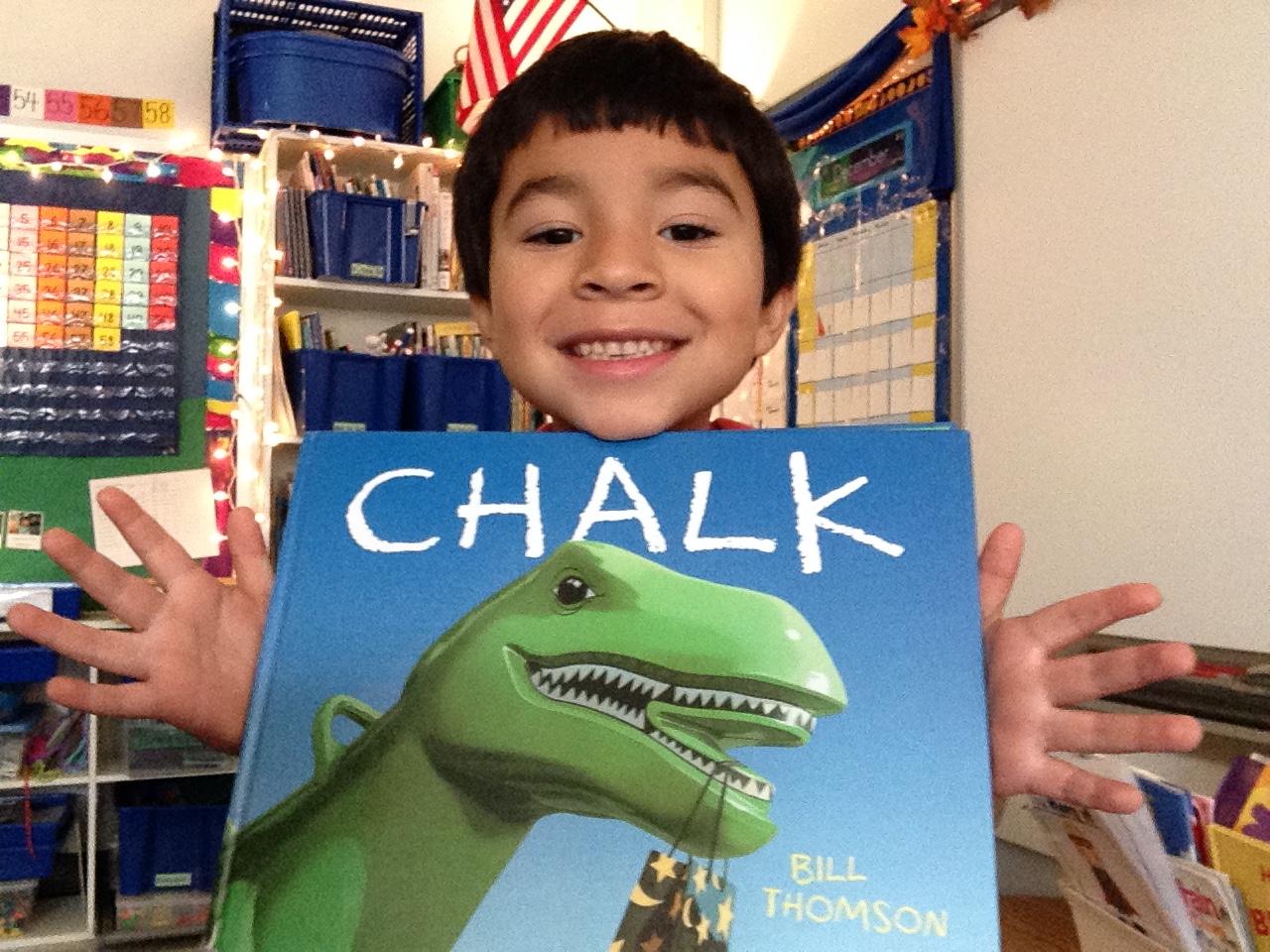
A simply wonderful wordless picture book that helps me teach that reading can be reading the pictures. Children love the adventure the characters have as their chalk drawings come to life.

Screen Shot 2015-08-10 at 12.27.44 PM

Who doesn’t love Pete the Cat? The book, the song, the characters and the authors…they are all a big win in kindergarten. The message of, “it’s all good”, is one that we revisit often throughout the year.

Screen Shot 2015-08-10 at 12.27.30 PM

A classic, that children just love. Skit, skat, skoodle doot, flip, flop, flee – who doesn’t love repeating that line?

Screen Shot 2015-08-10 at 12.27.09 PM

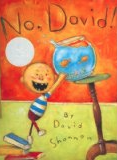
I launch our writer’s workshop with this book on day 1. The author’s notes in the front cover show children how David Shannon got his ideas for this book. We start making books on day 1 – just like David Shannon.


“Struggling” Readers in a Growth Mindset

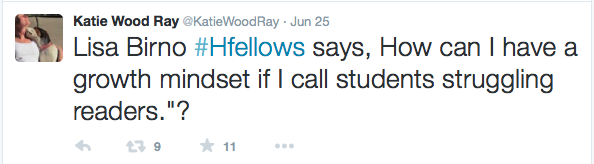
I was catching up on Twitter when this post caught my eye:

Screen Shot 2015-07-24 at 1.45.01 PM

I couldn’t stop thinking about it. What an excellent question! I only wish I had been at that conference to join in on what I’m sure was an amazing conversation.

2015-04-09 13.14.15The term “struggling readers” has always bothered me.  I’ve never liked “struggling” coming before “readers” (or writers, or mathematicians, or whatever identity you are describing). When Pat and I titled our book, we wanted to make sure that “readers” was the first, and most important, identity mentioned – so we decided on “Supporting READERS who Struggle”, instead of “Supporting STRUGGLING Readers”.  However, after reading this quote I couldn’t stop thinking about this. Is it the same thing? By labeling our readers “struggling” (either before or after labeling them as “readers”), are we implying that this is a fixed way of being? That they aren’t readers who are growing and learning – they are readers who are struggling?

But is “struggling” a bad word?

Can struggling be a sign of a growth mindset?

I read an article a few months ago about having and nurturing a growth mindset, where the authors question whether “struggling” might be a good thing. “That struggling means you’re committed to something and are willing to work hard. Parents around the dinner table and teachers in the classroom should ask, ‘Who had a fabulous struggle today?'” I love this. “A fabulous struggle.” I know that for myself, some of my “fabulous struggles”, like completing a 108 mile trail run in the mountains or finishing graduate school left me with a huge sense of accomplishment, pride and joy. It wasn’t easy. I struggled. A lot. And I had a lot of help and support. But it was worth it.

Learning to read isn’t always easy. It can be a struggle for some children. But what if we changed our conversation about what “struggling” means, and instead, teach children that struggling is a fabulous thing to do? That, if you are committed to something, and work really hard, you can feel that amazing sense of accomplishment and joy. I think the conversation we have with our students would be the easy part. None of my kindergarteners would tell you they are “struggling”. That word is never used, and they all see themselves as readers – whether they are reading pictures in books, the letters in their name, retelling a familiar book or reading all of the words in an Elephant and Piggie book. They are simply “readers”. It is the conversation with adults that we need to change. When we discuss children in our CT meetings and our progress monitoring meetings the word struggling comes up often. After all, it is our “struggling readers” that we are meeting about. But what if we framed our conversation about the “fabulous struggles” these kids are having and how we can support them and help them grow as readers and empower them? What if our conversations worked towards growth and empowerment and looked at effort, good teaching and moving our readers (and writers, mathematicians, etc…) towards growth and success?

I’m looking forward to exploring this more. My school is focusing on the growth  mindset as one of our professional learning strands for the upcoming school year. I think this question begs conversation, reflection and thought as we examine our language and our practice.

I would love to hear your thoughts on “struggling readers” and a growth mindset. Please share!

Independent Reading: A look in a kindergarten classroom

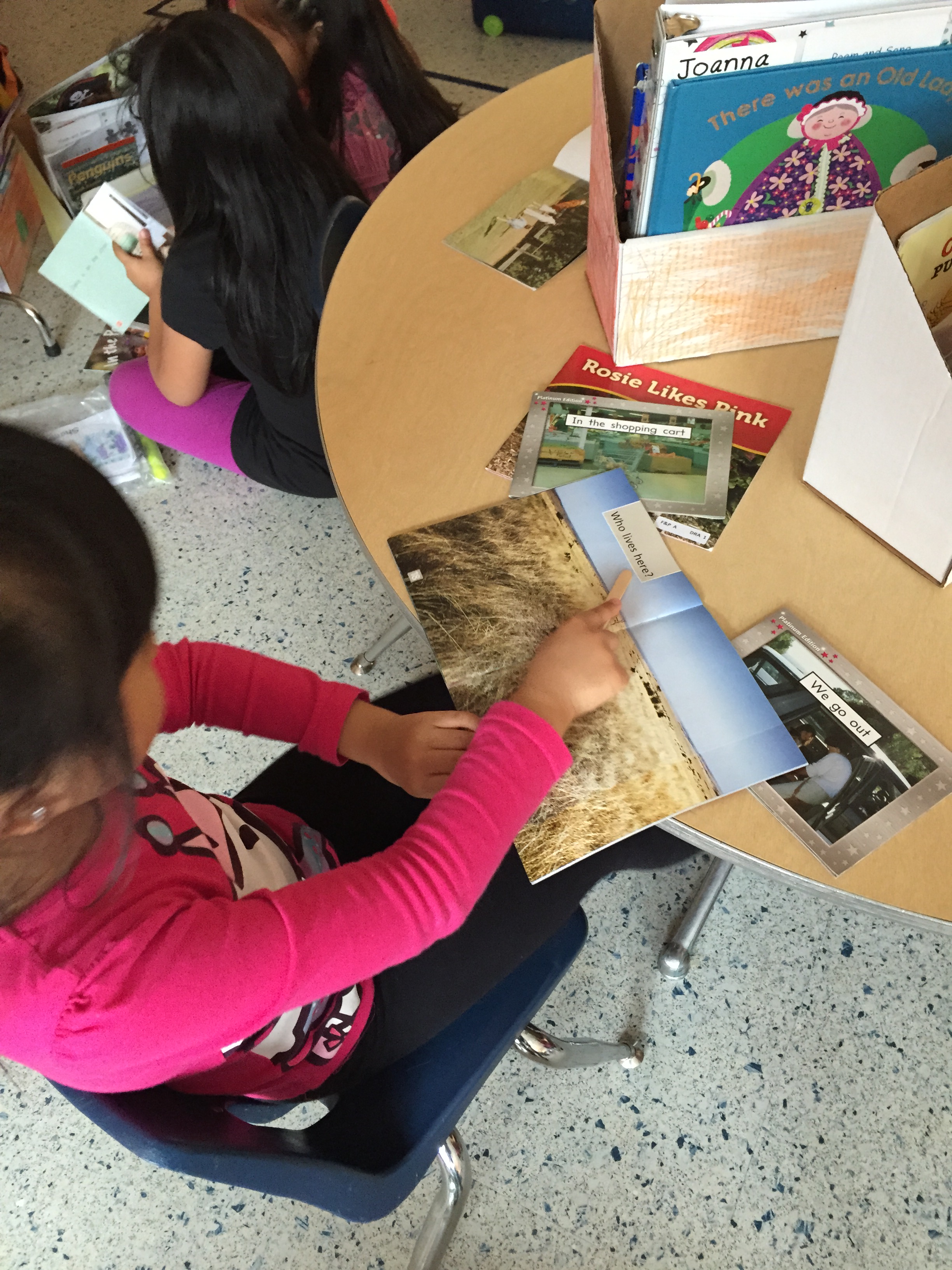
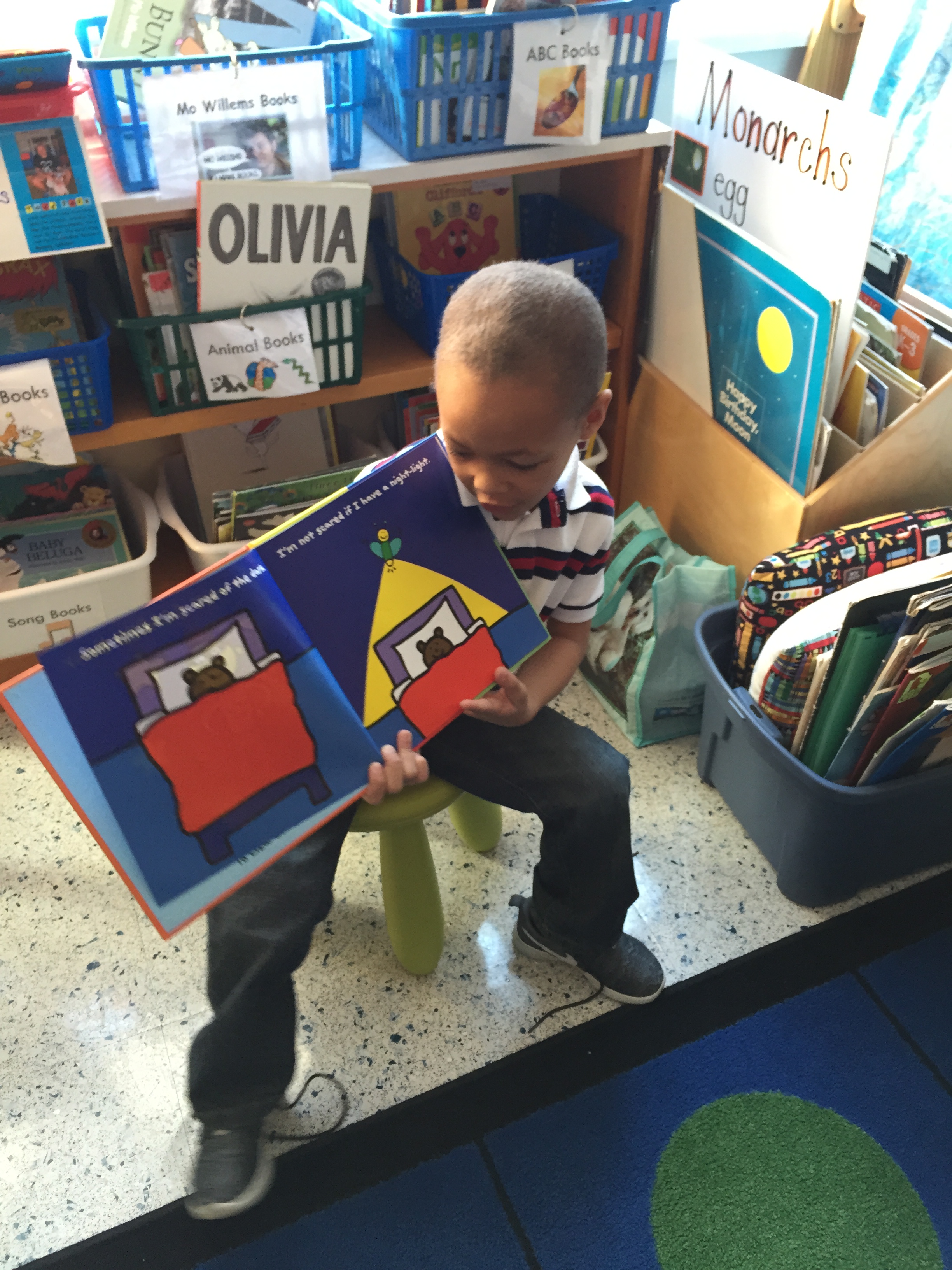
2014-12-17 11.45.29Independent reading time is a key component of any reader’s workshop. It looks different at every grade level. What’s important is that we have a time, daily, for kids to read by themselves or with a partner, to choose what they read, and to have time to talk about what they are reading. In my kindergarten classroom, we have book boxes and a book box time every day.  Every child has their own box. Inside the box is a variety of books. There is a Ziplock bag with their “just-right” books. In the bag there are guided reading books, paper books that we have read together as shared reading charts throughout the week, ABC charts, name books, cut apart sentences from guided reading groups and ABC books. Children know that they are to read their baggie books first. There are also “look books” – books they can read the pictures or retell the story. They can choose 5-7 “look books” to put in their book box. These are library books, books from our classroom library and favorites that have been read aloud. This might be a super cool book on snakes, a Pete the Cat book we’ve read out loud several times, a Mo Willems or Todd Parr book from our author study or any good book they find on our shelves. Finally, each child has a poem and song binder that is full of poems and songs we’ve read together as shared reading pieces. Our book box time is social, full of energy and full of engaged kindergarten readers – reading the words, reading the pictures, retelling the books, making decisions as readers and talking about books. Children choose a cozy nook to read, they decide if they are reading by themselves, with a partner or with a group, and they choose what they read – just like readers do. Here is a glimpse into our book box time. Enjoy!

A Look at Our Day

2015-01-09 12.23.28Lately I’ve had quite a few visitors in my kindergarten classroom. One of the questions that I’m asked over and over again is, “how do you fit it all in?”. I don’t have a magic answer. There is never enough time for all I want to do and explore with my kiddos. I integrate my curriculum as much as possible, teaching the content areas throughout the day and integrating literacy whenever I can. I’m always tweaking our schedule as the needs of my children change over the year. Our schedule doesn’t look the same in September as it does now – and it will change again before June, I’m sure. Here is a look at what our day looks like now and how I fit it all in.

Monday, Wednesday, Friday Schedule

8:30 – 8:45 Children arrive – read books, talk, share stories, connect with each other and me before we start our day

8:45 Morning news show

8:50 – 9:00 Morning Meeting, Part 1: Greeting (song, chant, game), Sharing (2 kids every day), Quick calendar check (look at schedule for the day and week), Read Aloud (a short, fun book for pleasure)

9:00 – 9:30 Explore Stations (Children are free to choose from play-based stations including play dough, sensory boxes, water play, dramatic play, legos, blocks, iPads, puzzles, sand table, science stations, math stations, reading books, making books, art, etc – anything we’ve done in our classroom is open at this time) I meet with guided reading groups (2 groups, 15 minutes each).

9:30 – 9:50 Morning Meeting, Part 2: Morning Message, Dance/Movement Activity, Interactive Read-Aloud and Reading Focus lesson

9:50 – 10:20 Reading/Writing Stations (Children are free to choose from literacy stations including big books, classroom library, sensory boxes with letters or words to find, magnetic letters, name writing, making books, wiki stix letters, sound boxes to sort toys by first letter, letter stamps, play dough letter making, rhyme and sound matching cards and games – they know they have to be doing reading or writing at this time) I meet with guided reading groups (2 groups, 15 minutes each).

10:20 – 10:40 Shared Reading (poem, chart, big book – usually 3 pieces of text each week, we do the same text every day for at least a week, this usually connects with a science or social studies topic), Community Writing (shared or interactive writing for a text we are working on over time  – it may be a mural, letter, labeling a science project, retelling, etc. – often is a content area topic)

10:40 – 11:00 Recess #1

11:00 – 11:30 Lunch

11:30 – 11:45 Book Boxes (Children read from individual book boxes including: “baggie books” – guided reading books and copies of books we’ve done as shared reading, “look books” – 3-5 books that they have chosen from our class library or school library and a poetry folder – a collection of all the charts we’ve done for shared reading) I have reading conferences with children.

11:45 – 12:30 Writer’s Workshop (Includes a focus lesson that is typically a read aloud or looking back at mentor texts, community writing or a conversation, then independent writing (making books), and sharing)

12:30 – 1:45 Specials (PE, Music, Drama, Library) *on Tuesday and Thursday I only have one special, so on these days we have a full hour for Writer’s Workshop 11:30-12:30, Book Box time at 1:05, and social studies, science or Explore stations from 1:20-1:45. Science and social studies are integrated throughout my day so we do a great deal of this in our literacy block with read alouds, explore stations and community writing.

1:45 – 2:00 Recess #2 and Snack (given to kids on the playground)

2:00 – 3:00 Math Workshop (includes whole group math stories, read aloud, math counting routines, math explore stations (I meet with small math groups during this time to do problem solving) and sharing)

3:00 – 3:15 Closing Circle (end of day math routines (calendar, counting days we’ve been in school), sharing, closing song, read aloud, passing out folders)

3:20 Dismissal

I hope this gives you a look into our classroom and how our day typically goes. Again, I am flexible to the needs of the kids. If I need to meet with extra reading groups or if the kids need more time with a particular project, I may schedule an end of day Explore time to meet with another group or work on a project. If you have a great scheduling idea, we would love to hear about it!

2014-11-26 12.07.28

“The function of education is to teach one to think intensively and to think critically. Intelligence plus character – that is the goal of true education.”

Martin Luther King, Jr.

How do you encourage and celebrate thinking in your classroom?

Something to think about…

Should we teach kindergarteners to read?

Playing with cloud dough

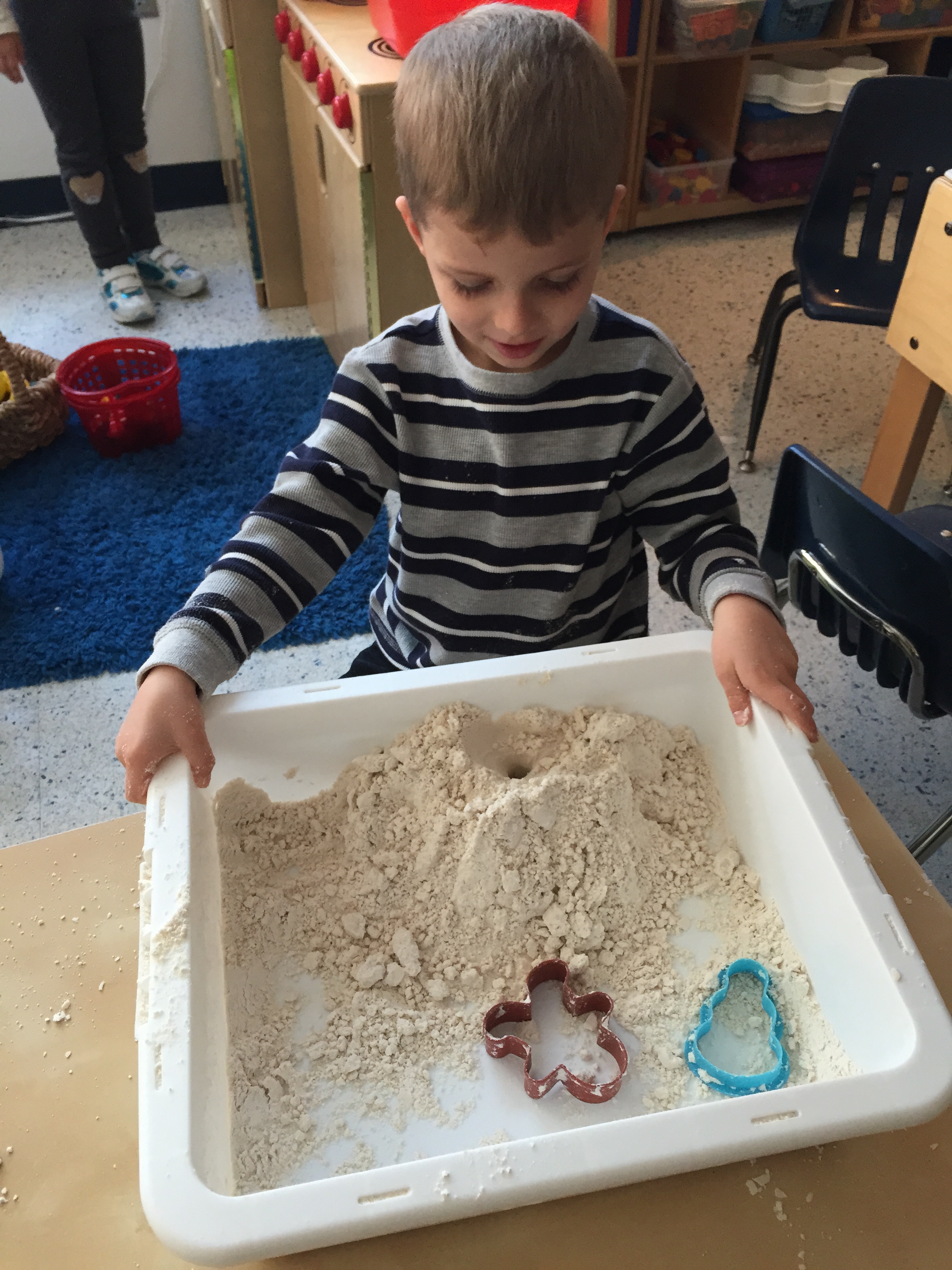
Making a volcano with cloud dough

Making friend's names with magnetic letters

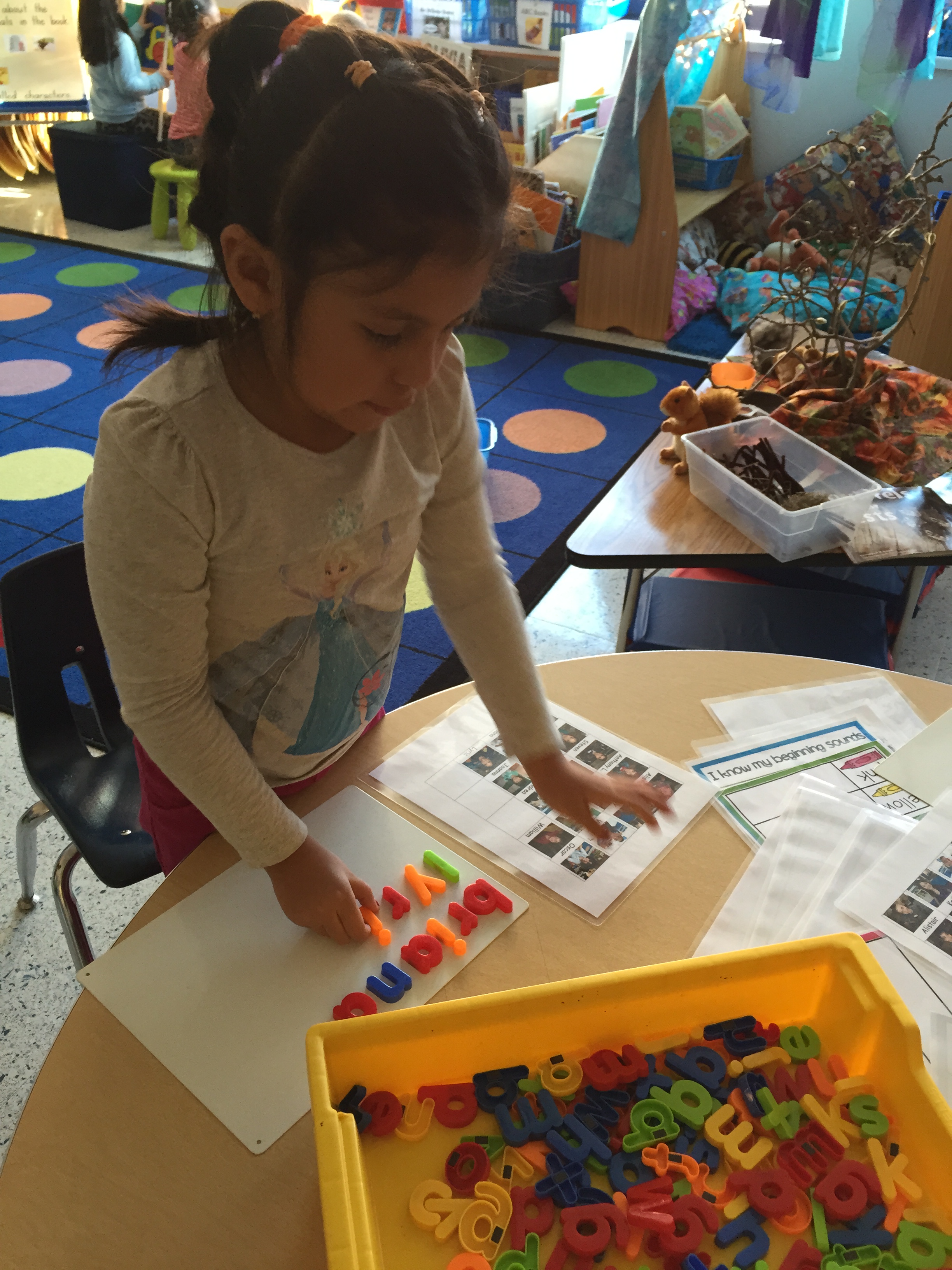
Making friend’s names with magnetic letters

This week I read an article citing a report saying that forcing kids to read before they are ready could be harmful. The report specifically references Common Core Standards in Kindergarten and says “there is no evidence to support a widespread belief in the United States that children must read in prekindergarten or kindergarten to become strong readers and achieve academic success”. While it was surprising to me to hear that there is “no evidence”, it was not surprising to read the other findings the authors reported. I hear over and over about blocks and dramatic play stations taken out of classrooms, recess taken away, and endless inappropriate assessments being given (an “online, practice quiz for kindergarten” should never, ever happen). Our children deserve better.

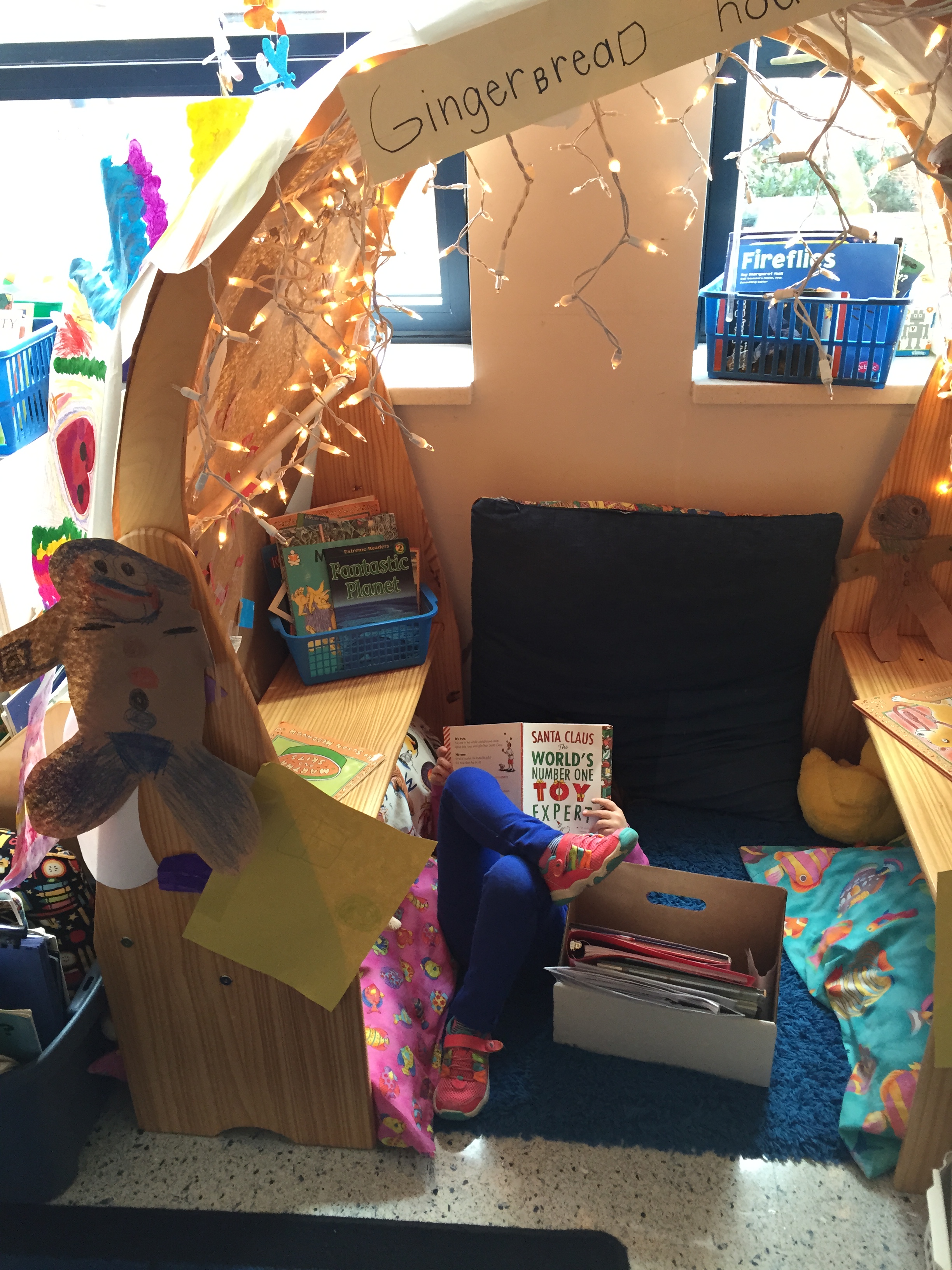
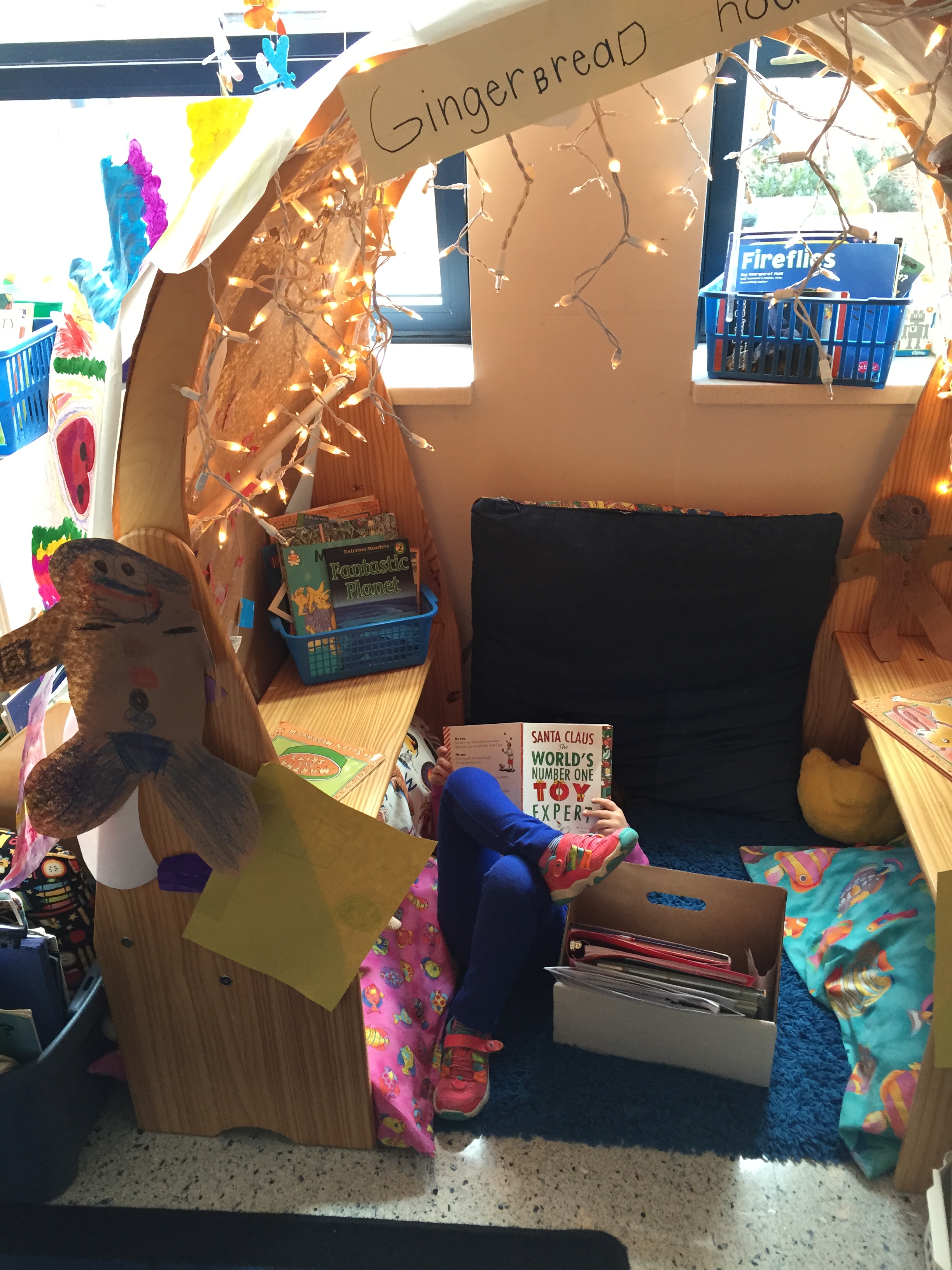
Reading in the Gingerbread House

Reading in the Gingerbread House

I agree completely with what the authors of the study share in the report. Children need to play – it is how they learn (and research does support this).  But I also think it’s important that we give our kids every chance to get that important school literacy piece as soon as possible – with developmentally appropriate practices. It is tragic that, as the article states, “teacher-led direct instruction in kindergarten has almost entirely replaced the active, play-based experiential learning that we know children need”. I don’t think that we should force children to read, but I do think we can immerse children in rich literacy experiences early on and ignite an interest in learning to read and write. We don’t need to have hours of drill and kill and teacher-led direct instruction. We don’t need worksheets and mindless one-size-fits-all instruction. We don’t need hours of assessments. We don’t need to make kindergarten (or first, second..or any grade, for that matter) full of these things.

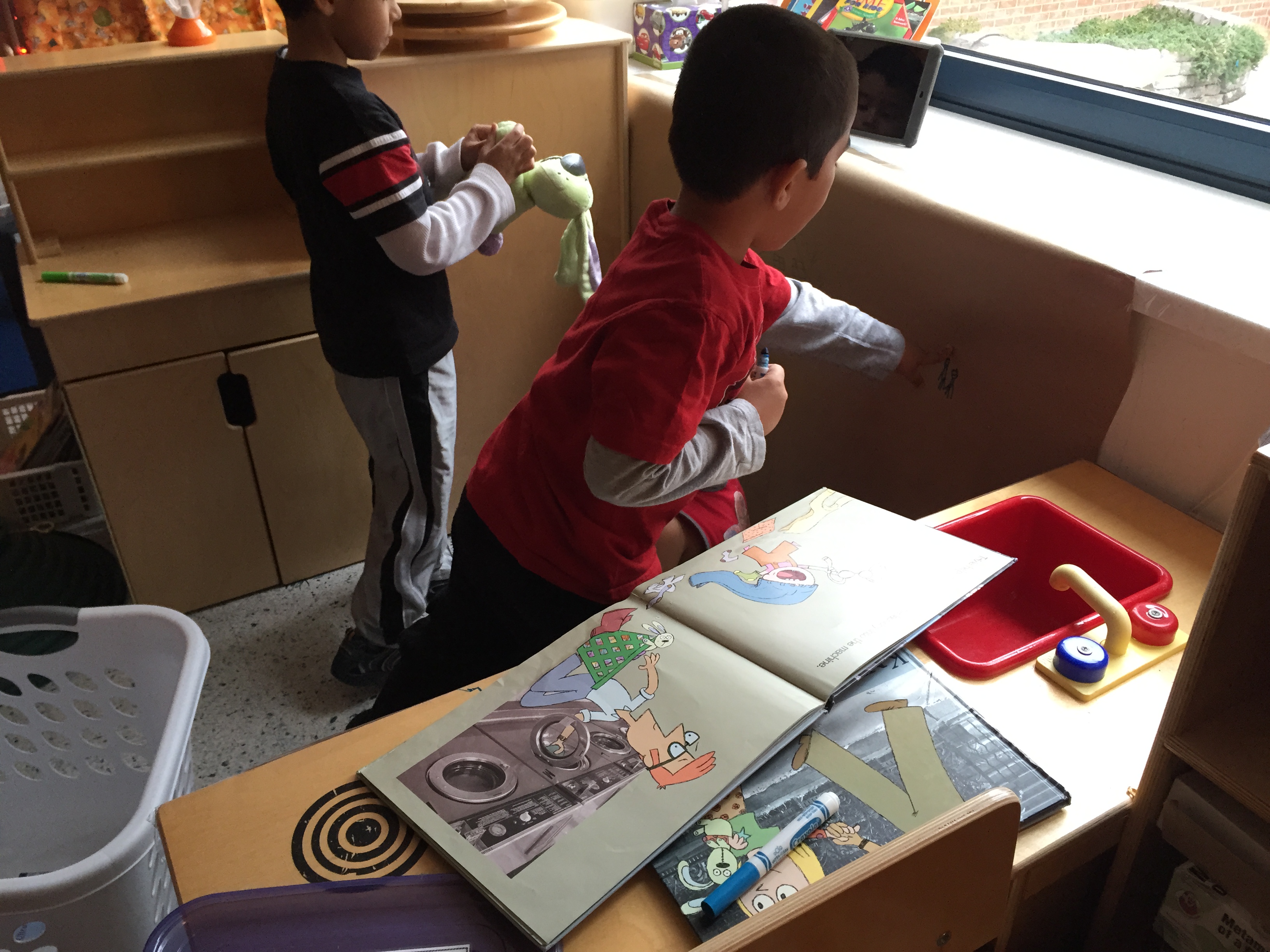
Acting out Knuffle Bunny in the "laundromat"

Acting out Knuffle Bunny in the “laundromat”

My classroom is a play-based kindergarten classroom, with a great deal of authentic and meaningful literacy experiences offered each day. We read aloud, we have choices throughout the day in curriculum, content and activities, we have a daily Writer’s Workshop, we play, we learn letters, sounds and links, we have 2 recesses each day, we have snack, we read pictures and words in books, we build things with blocks, we learn how to read,  we dress up in the drama center, we play in the kitchen/spaceship/laundromat, we put on puppet shows, we learn how to form our letters, we discover things in sensory boxes, we have guided reading groups, we explore things we are interested in, we read charts and poems, we wonder, question and grow and we do it all in an active, playful, meaningful and developmentally appropriate way. And at the end of the year, some of my kindergarteners are reading at the county-wide benchmark. And some aren’t. But they can all tell you a favorite author and what kind of books they like. They can all read books they’ve written and tell you what author/illustrator they see as a mentor.  They all see themselves as readers and writers. That is ultimately my goal.

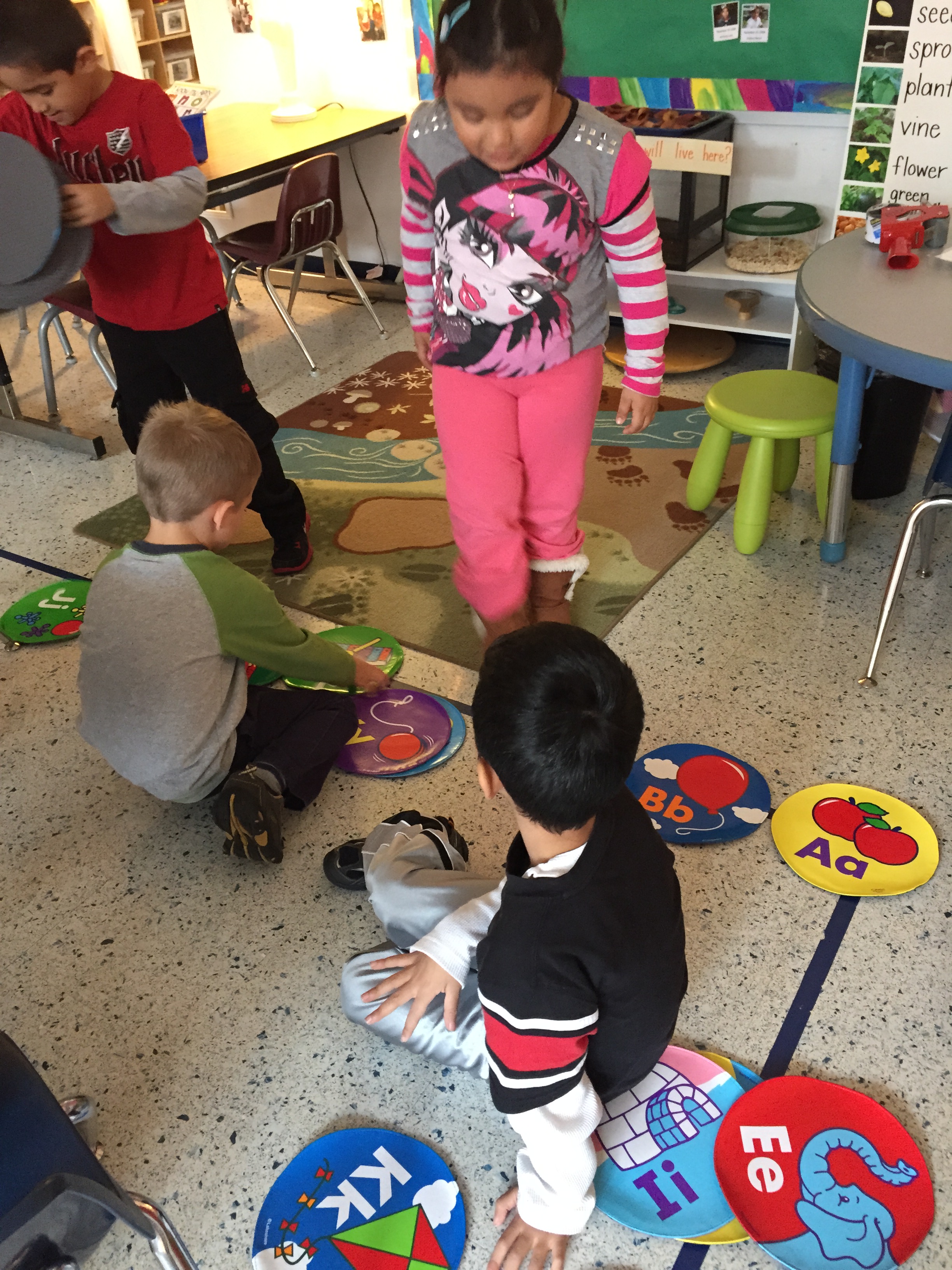
Negotiating the order of the alphabet letters with friends

Negotiating the order of the alphabet letters with friends

I’m reminded of the phrase from medicine, “first, do no harm”. This needs to hold true in education. The last thing any of us want is a child refusing to go to school, locking himself in his bedroom, and hiding under his bed. We want children excited about learning, passionate about topics they are discovering at school, talking about favorite authors and illustrators, questioning, wondering and eager to learn, empowered because they know they have a voice in their learning. We don’t want to harm our children. If we are being asked to do things that we know are not developmentally appropriate and that may harm some children, then we need to speak up. It’s worth fighting for the blocks, the recess and the dramatic play. It’s worth fighting for our children. Thank you to the authors of the Defending the Early Years project study for giving us another tool to fight with.

Teaching with a Sense of Urgency

2014-12-08 10.12.48

Shared reading with a pointer

“When I suggest that we need to “teach with a sense of urgency” I’m not talking about teaching prompted by anxiety but rather about making every moment in the classroom count, about ensuring that our instruction engages students and moves them ahead, about using daily evaluation and reflection to make wise teaching decisions. Complacency will not get our students where they need to be. I am relaxed and happy when I am working with students, but I am also mindful of where I need to get them and how little time I have in which to do it. I teach every day with a sense of urgency.” – Regie Routman

These wise words have stuck with me since 2003, when I first read them in Regie’s wonderful book, Reading Essentials. This year they came back to me loud and clear. I have a group of fabulous students. They are kind, loving, thoughtful, fun, curious, passionate, inquisitive and they need A LOT in the area of school literacy and academics. Our beginning of the year assessments made it very clear to me that intentional teaching, with a sense of urgency, was essential for this year to be a success.

Urgency doesn’t mean that our classroom is a stressful, rigid place full of drill and skill activities. Do we have fun? YES! Do we play? Absolutely! (It’s how children learn!) Do I keep in mind that they are 5 and 6 years old and make sure that my practices are developmentally appropriate? Of course! Do I enjoy each day with my learners and do they enjoy being at school? For sure. Do I stay true to the belief that I teach children – not standards – every day? Indeed. Do I make sure my children have every opportunity to learn the necessary literacy skills to be successful? That’s my job.

Teaching with a sense of urgency is happy, relaxed, purposeful teaching. It’s making every moment count. And that makes an impact on student learning.

Here are a few structures I’ve put in place that are supporting my young learners and helping them make great progress in the area of literacy.

2014-12-10 14.38.09

The morning message on the SMARTboard.

-A stronger focus on letters, sounds and other “item-based” things in the context of meaningful literacy work. One example is our daily morning message. It’s a 10 minute, highly focused, literacy event that kids love. I highlight a letter and how to correctly form it, we find words that start with that letter and say the sound the letter makes, we find that letter in the message and we look for other letters and words we know. We talk about words vs. letters, capital vs. lowercase letters, spaces between words, what letters are first and last in a word, and punctuation – just to name a few things that come up during morning message. This is all done through a meaningful message – keeping in mind that meaning making comes first. This message goes home with the kids to share with their families. I print a copy before we do our work together and then another copy that shows the work we did – I copy it 2-sided and send it home. I plan my focus each day based on where my children are and what they need next in their learning.

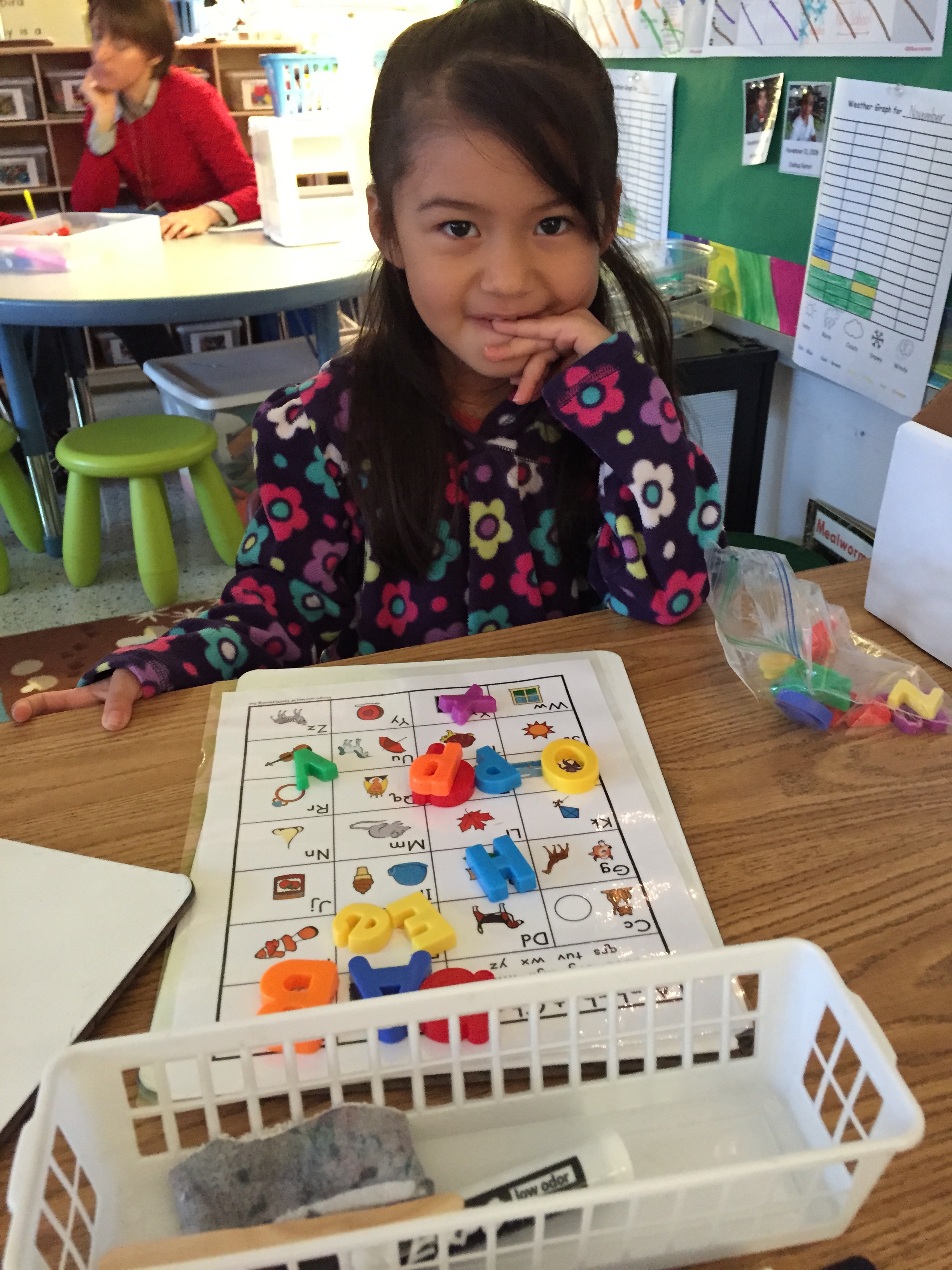
Matching letters to ABC chart

Matching letters to the ABC chart

-Guided reading groups with all children 3-4 times each week. Our kindergarten team is reading and discussing Jan Richardson’s book, The Next Step in Guided Reading. We looked carefully at the pre A – emergent lesson plans and structured our lessons around her framework. When I meet with my pre-A emergent groups (currently, 14 of the 18 children in my class – students who know fewer than 40 upper and lower case letters and hear few, if any, sounds and are lacking in early concepts of print), we go through a fast-paced, engaging lesson that includes working with names, working with letters, letter formation, working with sounds, a shared reading lesson where each child has a copy of the book and an interactive writing lesson. I have a record of where each child is in their letter, sound and link acquisition and can teach directly to their needs within the small group lesson. I love that these groups have the necessary item-based components AND the meaningful reading and writing piece that is so important. I reflect and assess often, changing the groups and the activities within the groups to make sure that they are matching the needs of my learners.

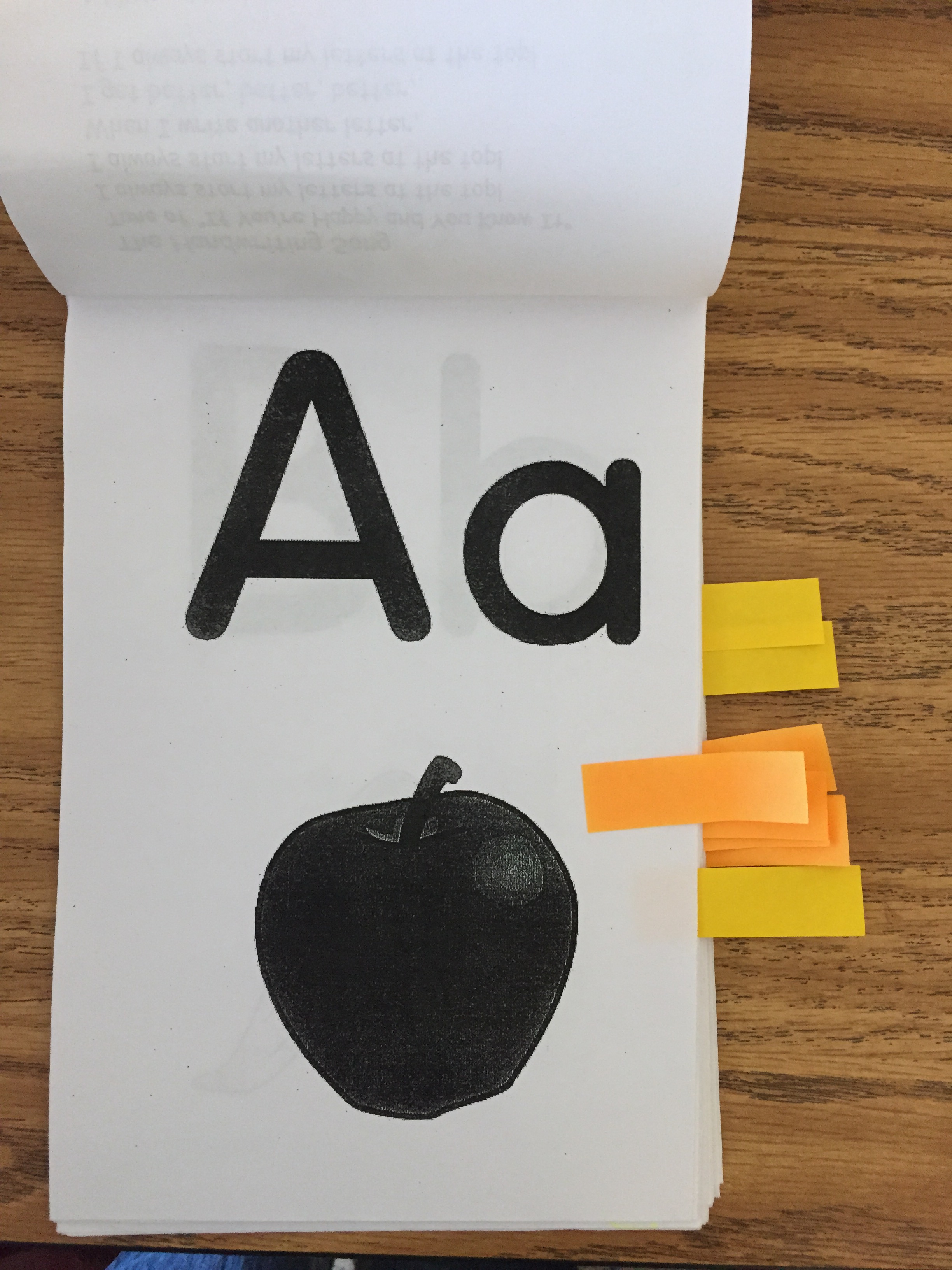
Our letter tracing books - known letters are marked with small Post-it notes.

Our letter tracing books – known letters are marked with small Post-it notes.

-Daily letter tracing books with my instructional assistant. Jan Richardson talks about tracing alphabet books in her book. I made paper ABC books with upper and lowercase letters and a picture and started by tagging the letters in their name with a Post-it.  The students take their finger and trace the letters using the correct formation path, then say the link. (A a apple) As they learn the letters, we add new letters for them to learn – tagging those letters with Post-it notes. Each day, our students have a 3-5 minute session with an instructional assistant or a volunteer, tracing and saying the letter names and links that are tagged. Eventually, they will have all 26 pages tagged with Post-it notes and will be able to trace, say and identify the link for all the letters. We have seen remarkable results in letter identification through daily use of the letter tracing books.

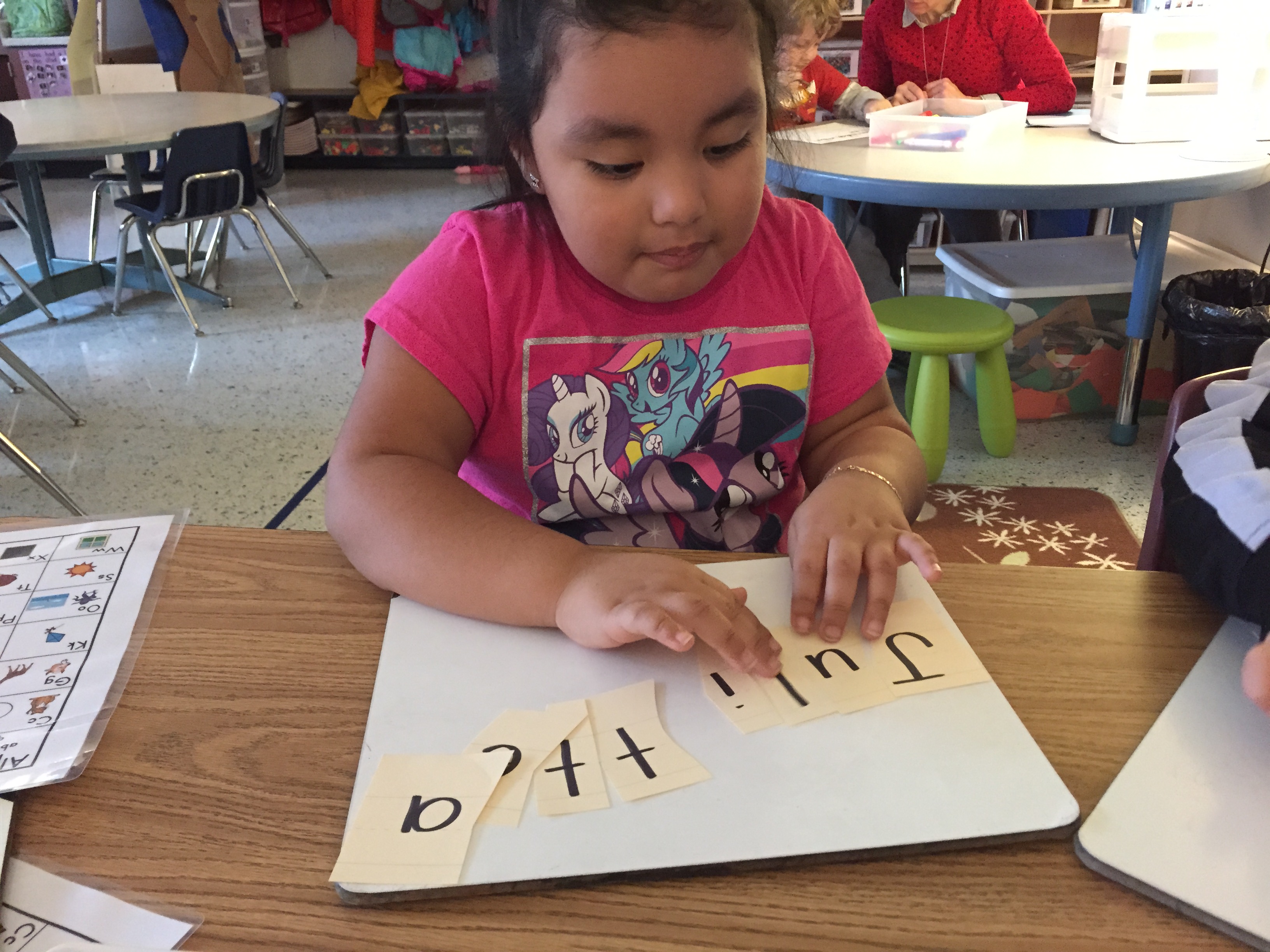
Name puzzles

Name puzzles

These are just a few of the ways I’m teaching with urgency this year. This is all in addition to many read-alouds throughout the day, rich discussions and purposeful talk in the classroom, a daily writer’s workshop, shared reading, community writing, inquiry based projects, listening to and responding to interests and wonderings that the children have, and building a strong community of learners.

One Little Word

Screen Shot 2015-01-02 at 12.12.22 PM

Happy New Year, friends!

Several years ago I was inspired by Ali Edwards, and her One Little Word and started a New Year’s Eve tradition of choosing a word to live into for the upcoming year. The past few years have been framed around peace, grow, balance, happy and brave. I’ve found these words to be an overarching mantra for how I live my life that year.  I’ve thought a lot about my word for this year and I think I’ve found one that speaks to all aspects of my life – my teaching, my learning, my running, my relationships. That word is Now. 

Screen Shot 2015-01-02 at 12.12.38 PM

NOW. This moment is all we have. The word now inspires me to:

-focus on each child I am working with and pay attention to where they are right now; not where I wish they were, or where they need to be for the benchmark, or where they “should” be.

-give my full attention to the child I am with; not taking a picture or video or anecdotal notes or some other form of documentation, but fully listening and engaging with that child – making sure the child knows I am with them right now, and then after that moment I can record my thinking, but when I’m with a child – be fully present and with them right now.

-focus on myself and where I am and what I’m doing right now; not where I wish I was, or what’s on my to-do list, or what other things I should be doing, but focus on where I am right now and who I am with right now. Striving to be fully present in each moment makes me a better listener, a better teacher, a better friend, a better family member, a better runner and a better person. There’s a sense of calm and peacefulness in living in the moment, living in the now. 

-stop procrastinating. If I am living in a now way of thinking, I will do what needs to be done now, not later, or when I feel like it, or when I have a spare moment. I will take care of what needs to be done now. 

-put down the phone, the iPad, the laptop and be present to what is going on in the real world around me right now. I saw this video and it stuck in my head for days. How often do I pay more attention to my phone or device than what is going on in my world, or more importantly WHO is in my world right in front of me? It definitely made me rethink how digitally connected I am and how it may be more harmful than good at times.

As a reminder of my word, I am having a small necklace made with the word Now on it. My friend Jenny makes beautiful jewelry and I am excited to have a constant reminder of my word, and my promise to myself around my neck. It’s going to be a great year…starting NOW!

Screen Shot 2015-01-02 at 12.12.53 PM

What’s your one little word for 2015? I hope it brings you great things in the upcoming year.

PS – Here is the beautiful necklace that Jenny Nichols at Mountain Prima Donna just finished and is en route to me now. So excited!

Screen Shot 2015-01-04 at 3.11.09 PM