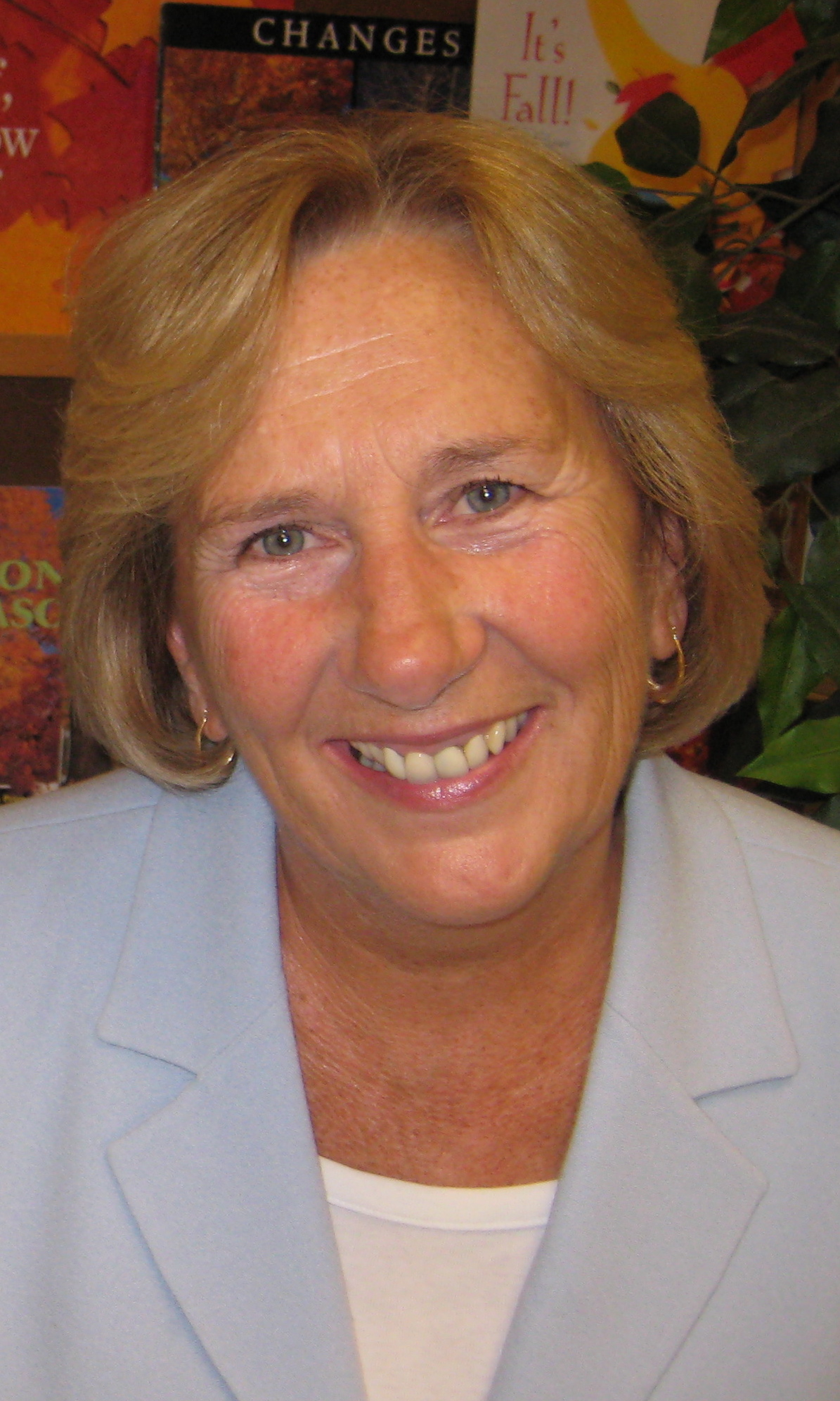
 Pat Johnson has supported both students and teachers as an elementary reading teacher for twenty-six years. Most of her career has been spent in schools with diverse populations in Fairfax County, Virginia. She is a Reading Recovery-trained teacher and has served as an adjunct faculty member for George Mason University. Presently, as a literacy consultant, Pat provides staff development for various school districts nationwide and has presented at state and national conferences. She is also the author of One Child at a Time: Making the Most of Your Time with Struggling Readers, K-6 (Stenhouse, 2006).
Pat is now retired and is no longer doing consulting and speaking engagements.
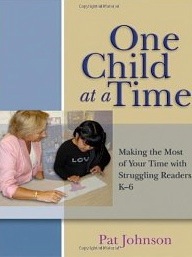
Every elementary teacher works with students who struggle as readers on a daily basis. Each struggling child is complex, and each has a unique history as a learner. In One Child at a Time, Pat provides a framework (here’s what, so what, now what, and then what) that enables teachers to focus carefully on the specific needs of each struggling reader. This framework helps classroom teachers assess and analyze children’s strengths and weaknesses, design targeted instruction, and then assess and refine the teaching in conferences with the students. The framework is by no means an easy answer to a difficult problem, but through its use teachers learn how the reading process works for proficient readers and how to support struggling readers as they construct their own reading process. Pat shows how she uses the framework successfully with a range of learners, including beginning readers, English language learners, and students in the upper grades who are stalled in their literacy progress.
 Catching Readers, Sparking Joy
Dear Pat,
I am an ELA Coach for Oakland County Schools in Michigan. My job is to help teachers as they work with reading and writing. Please give the names of the three stories that you tell to the students in lower and upper elementary classes. Also, where might I find these stories, and the titles of some great read-alouds for our students.
I was very interested in all of the work that you have done to help students to achieve success in reading.
Eyvonne –
Just saw your note today. Good luck on your work as an ELA coach in Michigan. Hope the school year goes well for you.
As a storyteller, I love to tell stories to the kids without the book. That way I can move about, move my hands for gestures, and of course change my voice for characters. Some of the stories I tell come from picture books, but most I learn from tapes of other storytellers. Three of the kids’ favorites that I tell that are in pictures book form are:
Heckedy Peg, by Don and Audrey Wood (ages K-3)
Tailypo, by Paul Galdone (but this is better for grades 3-5)
ANd Tinderbox (I’ve heard this is out in picture book form, but I’ve actually not seen it yet.)
Our Read Aloud Chapter in Catching Readers Before They Fall has wonderful ideas for read aloud books. And the appendix has a great list. Most can be found in public libraries or school libraries.
I’ve always had luck in grades 3-4 with “Rough Face Girl,” by Rafe Martin and with “Owl Babies,” by Martin Waddell for K-1, and with “Edward the Emu” and “Edwina the Emu” by Sheena Knowles with grades 1-2. Some great chapter books to read aloud to grades 3-6 are “Shiloh”, by P. R. Naylor or “Because of Winn Dixie,” by K. DiCamillo. There are tons of GREAT books out there. Often it depends on the group of kids and what you personally love. So just keep reading and you’ll find a few of your own favorites I’m sure.
Thanks for writing.
Pat Johnson
Pat,
We are a group of teachers K-2 that are excited to read your book “One Child at a Time” as part of our summer book study. I am wondering if there is a place we could find a study guide (if there is one) to help us break down your book and guide us in our discussions.
Very excited to get started. Thanks for sharing your knowledge!
Stefanie Taylor
Littleton, Colorado
Stefanie –
I am so sorry that I somehow missed this comment until just now. I’m also sorry that I did not create a study guide for “One Child” as we did for “Catching Readers Before They Fall.” Please feel free to email me questions (patjohnson222@gmail.com) as you are reading with the group. I’d be happy to answer emails.
PJ
Thank you for a great resource! I have just finished reading “One Child at a Time” and felt, that finally, here is a resource I can use with my struggling kiddos. I appreciate that you gave specific lessons/techniques to use that pertained to certain issues that students struggle with. I can’t wait to put it into practice next year. I do have a question, though. You mention that you use a “framework” when getting to know these readers. I imagine that is a tool you use to make instructional decisions for next steps. Can you share that “framework”?
Diane Moore
Diane – Sorry for the delay in responding. In One Child at a Time, I use the framework of “Here’s What, So What, Now What, and Then What.” It’s explained in the book in the early chapters. PJ
Dear Pat,
I am a doctoral student and have started reading the book you co-authored with Katie “Catching Readers Before They Fall.” It came highly recommended from a colleague, and I really want to lock myself in my office and read the whole thing, but because of so many “assignments” in my classes, I feel like I don’t have the time to devote to it. However, one of our assignments is to do a book review of a book we are interested in reading that might in some way apply to our future dissertation topic. I have done some research thus far regarding balanced literacy and think this book will be an insightful resource. Do you know if there is already a book review done? I searched the internet and did not find one (other than posts on Amazon). I would love to highly recommend this awesome book. As a traveling consultant, it is one I mention when I conduct workshops as “on-the-top-of-my-to-read-next list.” Let me know what you and Katie think!
Have a great week,
Judy K.
Judy – I’m glad you started reading the book and are enjoying what you are reading so far. I would not feel comfortable giving you a review of our book that someone else wrote for you to turn in for an assignment. Sorry. PJ
Sorry, I was not asking for someone else’s work. I want to write one to be published because I did not see that you had a full book review done, so I was thinking it would be an opportunity to get one out there for you to highly recommend your book while completing my assignment simultaneously. I would never consider submitting another person’s written work as my own. Sorry for the misunderstanding.
Judy
Hi Pat!
I was fortunate enough to be in attendance at the Summit in Kelowna last month.
My principal has a little extra money to buy more resources for the Literacy Room. I was wondering which high interest readers/programs/sets etc… you would recommend.
thanks so much for any suggestions!
I would highly recommend Pioneer Valley books. They have a wide variety of levels, genres, etc.. and kids LOVE reading them. I also love teaching with them! Here is the website: http://www.pioneervalleybooks.com
Pingback: All Quiet on the Prairie | To Make a Prairie
Pingback: Teacher to Teacher: Does Reading Aloud Really Matter? | write.share.connect
Please forgive me for posting this on here, but are you by any chance the Pat Johnson that did the voice narration partnered with Phil Crowley back in the 90’s of Psycho-Cybernetics (book written by Maxwell Maltz in 1959)? I’m just curious to know. Because if you are, then you’ve had a big impact on my life. The book Psycho-Cybernetics as well as the audio book has changed my life.
Aaron
I’ll reply for Pat, but I don’t think so?! Unless she hasn’t shared this with me? But I think she was busy teaching Reading Recovery in the 90’s.
Thank you for the reply ms. Katie, and sorry for posting here.