We are readers!

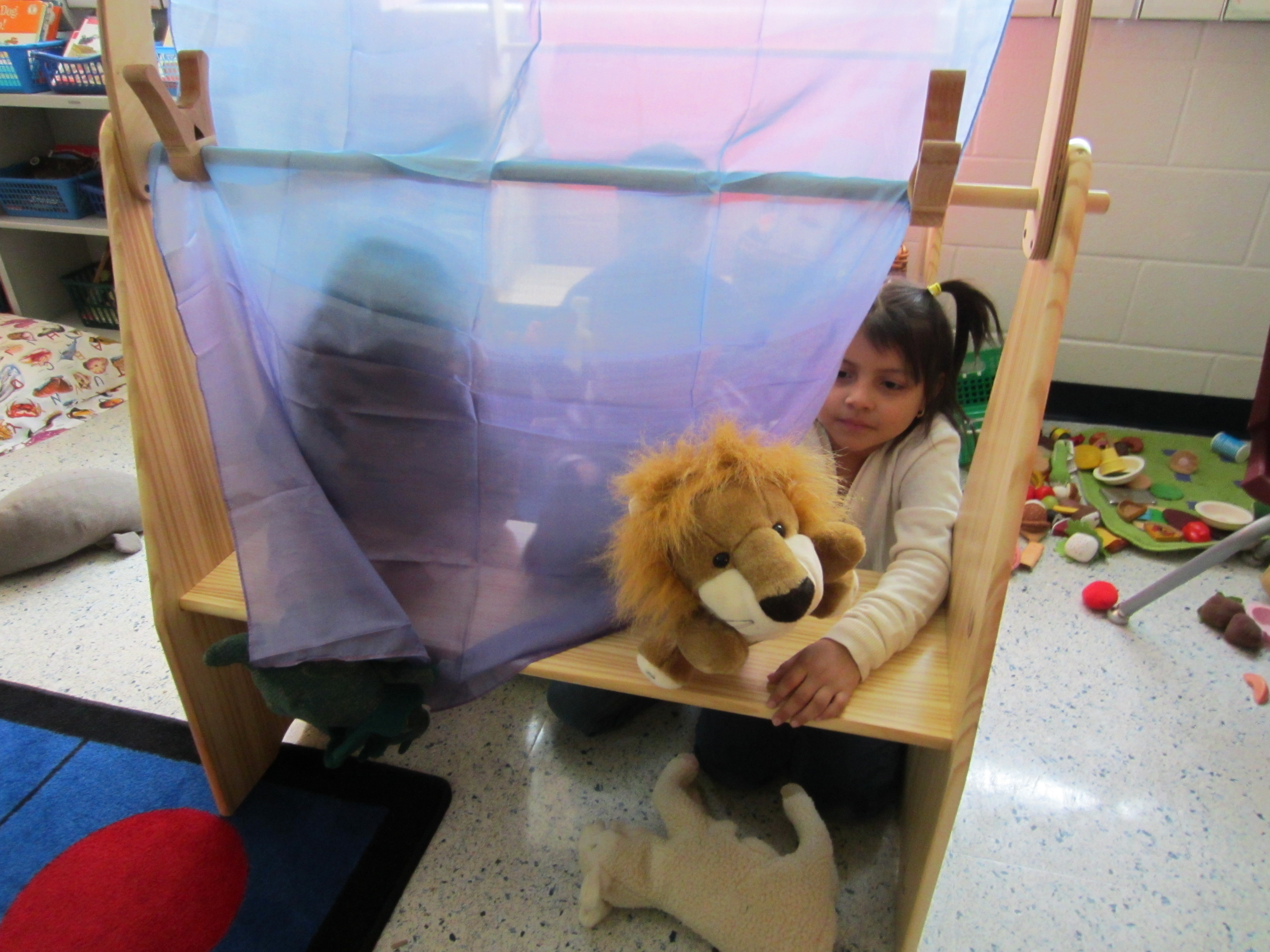
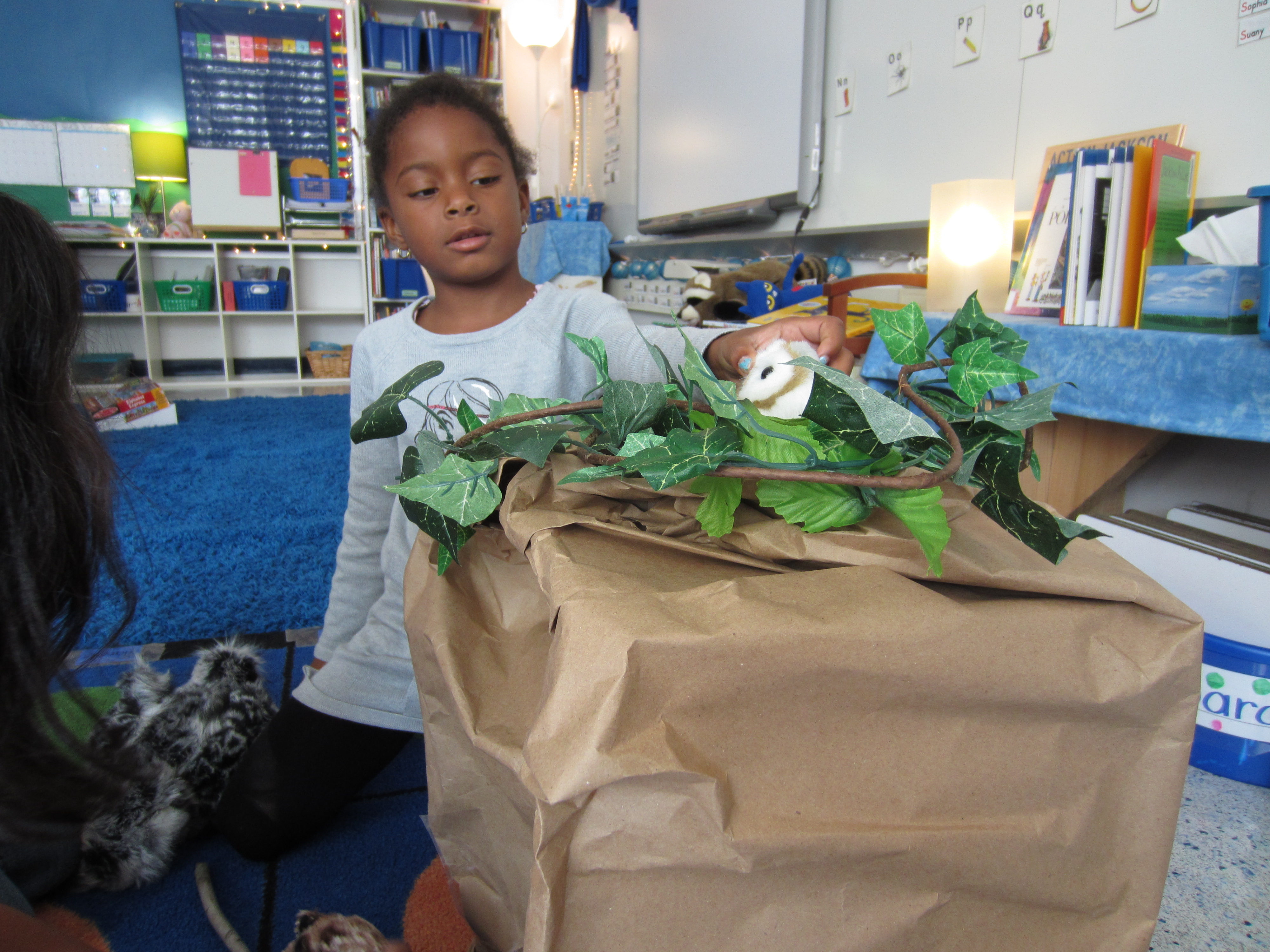
Retelling the story Owl Babies with props

My kindergarteners are readers. Every single one of them. Every day we read poems and songs together on charts, we read art, we read the morning message on our SMARTboard, we read labels in our classroom, we read books that we write, we read on the iPads, we read Tweets and blogs, we read books by ourselves and with buddies and we listen to lots of books read aloud. The kids are learning to read the pictures, read the words and talk about the books. We retell and act out our favorite stories with toys that go along with the books. We spend a lot of time talking about authors and what authors do. Some of our favorite authors are: Mo Willems, David Shannon, Eric Carle and Eric Litwin. I refer to my students as “readers” throughout the day. I am helping build  and create that identity and have them see themselves as readers. It’s the foundation we build in kindergarten that will carry our readers through to a lifetime of reading.

Who are some of your favorite authors? How are your readers building their identity?

Summer Reading

One of my very favorite things about summer is the time I have to read. I have vivid memories of riding my bike to the public library during summer vacations when I was in elementary school. I would check out 12 books (the most they would allow), balance them precariously in the basket of my bike, ride home and devour them on the screened in back porch and then ride back to the library to get 12 more. Summer days spent reading were the best. I still feel that way now.

I started my summer by reading several “just for fun” books. Elin Hilderbrand is one of my favorite “beach book” authors, as well as Chris Bohjalian. Now that I’ve decompressed a bit and am in full-on summer mode, I’m diving into my professional reading stack. Of course, I’ll make sure to mix up the professional reading with plenty of pleasure reading too.

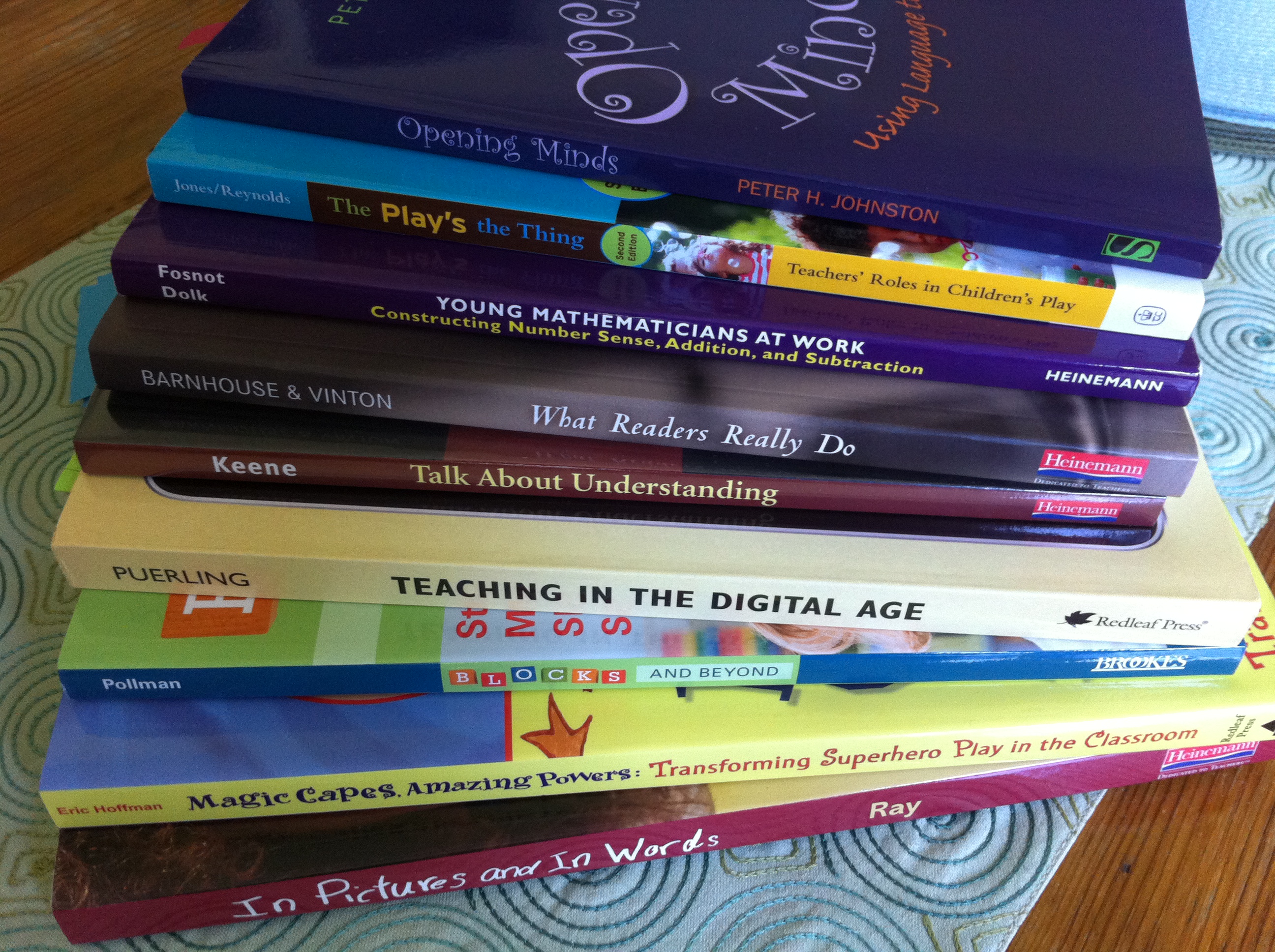
Here’s what’s on my professional reading list:

Teaching in the Digital Age: Smart Tools for Age 3 to Grade 3 by Brian Puerling

Talk About Understanding: Rethinking Classroom Talk to Enhance Comprehension by Ellin Oliver Keene

What Readers Really Do: Teaching the Process of Meaning Making by Dorothy Barnhouse and Vicki Vinton

Choice Words (I always reread this one in the summer) and Opening Minds by Peter Johnston

Blocks and Beyond: Strengthening Early Math and Science Skills Through Spatial Learning by Mary Jo Pollman

The Play’s the Thing: Teachers’ Roles in Children’s Play by Elizabeth Jones and Gretchen Reynolds

Magic Capes, Amazing Powers: Transforming Superhero Play in the Classroom by Eric Hoffman

Already Ready: Nurturing Writers in Preschool and Kindergarten (rereading & discussing with my Kindergarten team) by Katie Wood Ray and Matt Glover

Young Mathematicians at Work: Constructing Number Sense, Addition and Subtraction by Cathy Twomey Fosnot and Maarten Dolk

In Pictures and In Words: Teaching the Qualities of Good Writing Through Illustration Study (another reread but I want to do more with this next year) by Katie Wood Ray

Happy summer reading, friends! Enjoy.

What’s on your summer reading list?

Do you have favorite books you read and reread as a summer ritual?

Interacting with our Interactive Whiteboard

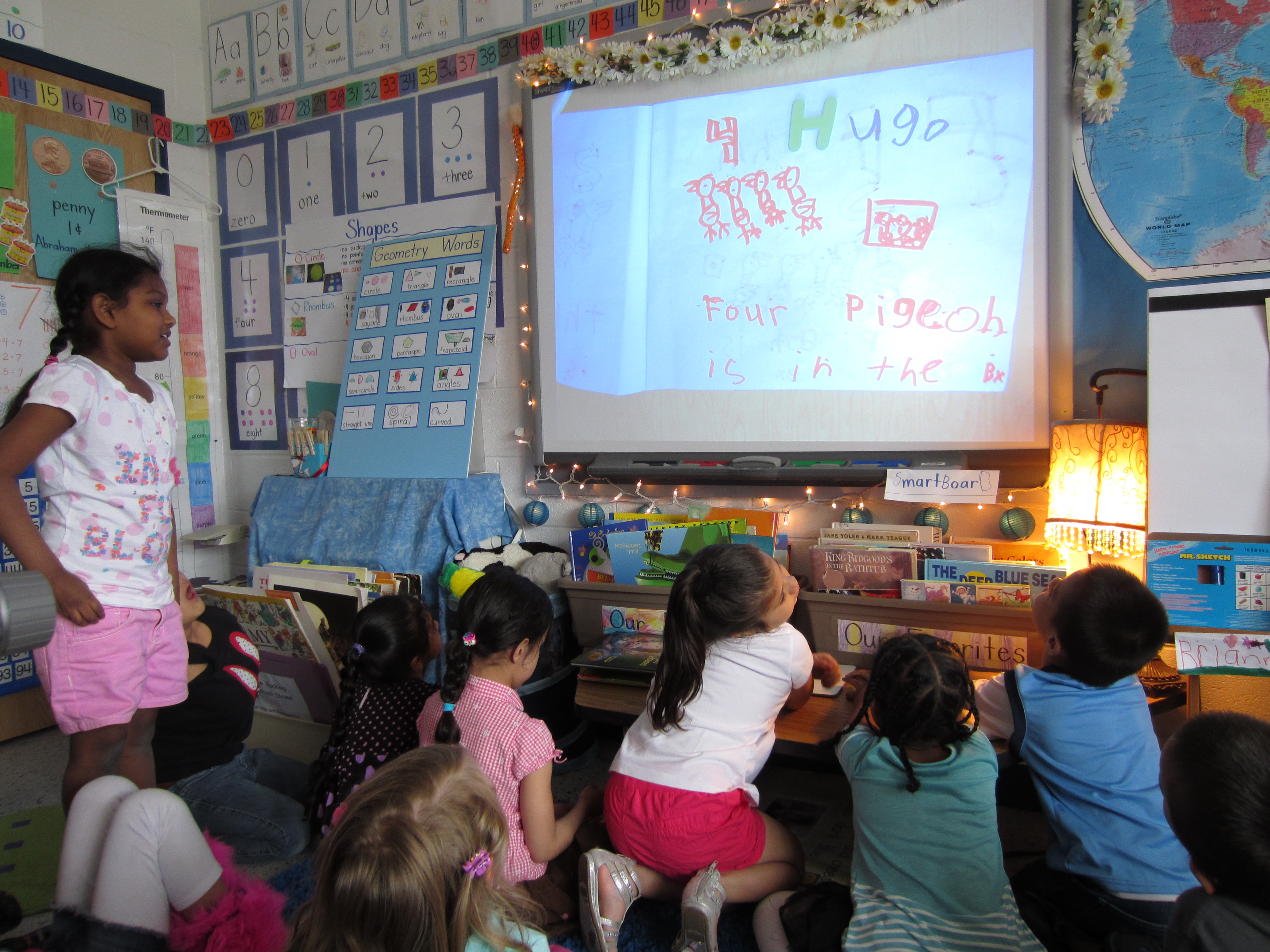
Sharing our writing on the SMARTboard through a document camera

“The principle goal of education is to create men and women who are capable of doing new things, not simply repeating what other generations have done.” – Jean Piaget (quote taken from Literacy Smarts)

I am fortunate to teach in a school where each classroom has a SMARTboard – an interactive white board mounted to the wall. I’ve challenged myself to find ways to use this technology tool to engage my students and move beyond simply using it as a projector screen or a digital worksheet. This is the fourth year I’ve had access to an interactive whiteboard and I’m continuing to learn so much from my colleagues, my students, a few workshops and simply playing around with the tools. Here are just a few ways that I use my interactive whiteboard in our classroom.

Morning Message

1. Morning Message

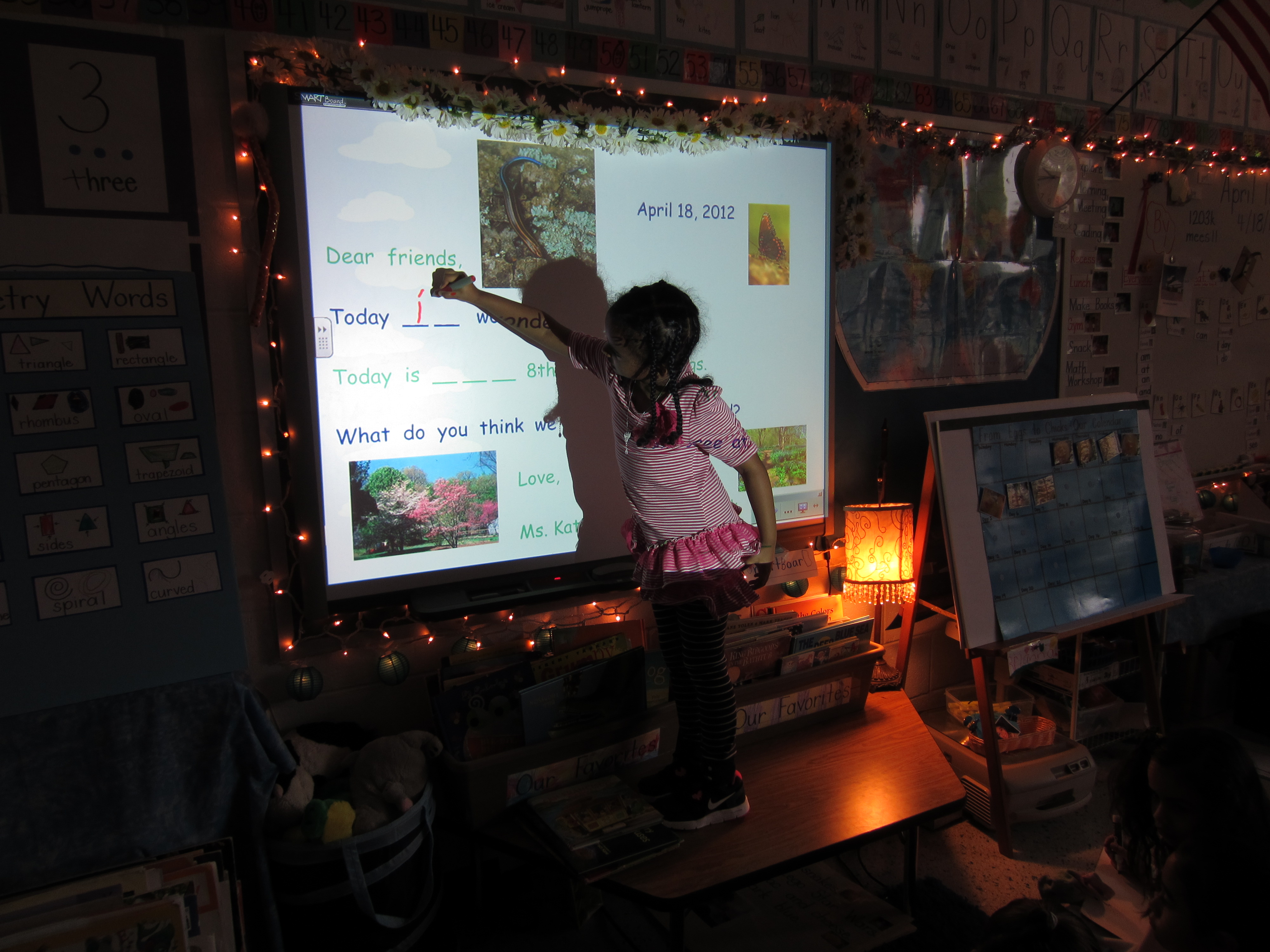
Every day I write a morning message in the form of a letter on the SMARTboard for us to interact with. I write one sentence per line in alternating colors so children can easily see different sentences. We read the message first, then fill in any missing words I left out for kids to write, read the message again to make sure it makes sense, looks right and sounds right, and finally use a variety of tools to highlight specific words, letters, punctuation, etc. Kids come up to the board to show us what they notice. For example, they may use the Magic Pen to spotlight a new sight word from the word wall. The highlighter pen is a favorite tool to highlight letters and words they know, as well as ending punctuation they are noticing. I may include a graph for kids to move their names to indicate what they would like for lunch on an upcoming field trip or what their favorite color is. All students have a traditional lap whiteboard of their own to follow along with what is happening on the SMARTboard. I find this helps keep all kids engaged and allows me to do a quick check of who is “getting it” and who needs additional support. I print one copy of the morning message before we interact with it. Then I print another copy when we are done that shows all the thinking and writing we have done. I then make a 2-sided copy to send home. This is the only homework I send home for my kindergarteners. Their job is to share the morning message with a family member and do the blank side with someone. Many of the kids “play school” with other siblings or their parents and they tell me they enjoy sharing the message at home. They do not return this to school. I ask families to save these at home in a notebook or folder for kids to revisit and read as the year goes on. It provides another text for kids to read and reread at home.

Exploring an alphabet poster on the SMARTboard

2. Playing with Art

We’ve done several projects focusing on visual art this year with the SMARTboard playing a key role in our unit. We used Kandinsky’s art to learn about geometry and recently we explored the alphabet through photographs. The children looked at alphabet posters on the SMARTboard and found the letters in the photographs. This was a station where kids could look at a variety of photographs and highlight the found letters with a variety of writing tools. We then went out and took our own alphabet pictures and are in the process of editing them into a slideshow and a poster like the ones we have studied. I love how the SMARTboard can allow children to see the art and interact with it. We have looked at a variety of art in math, science, social studies and language arts. With the SMARTboard the children have been able to experience the art as they write on it, trace over it, spotlight it, create their own and interact with it beyond what we can do with an art print. There are many art museums that allow you to download pictures of the art and save them. Google images also has many possibilities for images to use while teaching.

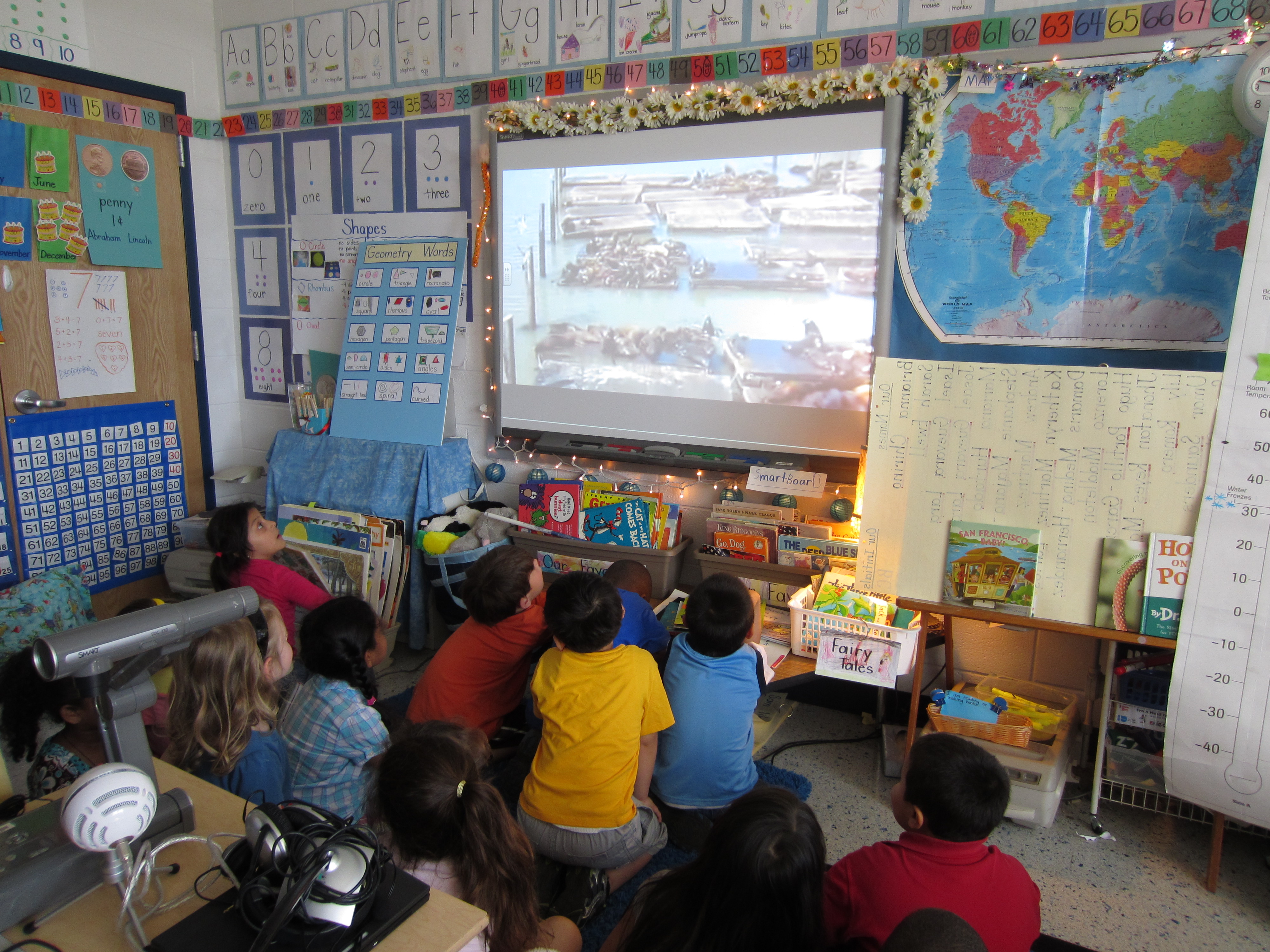
Watching a video clip of seals in Seattle from a student blog

3. Blogs, VoiceThread, Twitter

We use our SMARTboard not only to view and comment on class blogs that we follow, but also to create new posts on our class blog. We can do a shared writing piece with everyone participating as we create text to share on our blog and choose the accompanying photos. Recently, a student went to visit her grandparents and missed a week of school. She kept in touch with a blog. We looked at her blog every morning and commented on the posts she was writing. We’ve created several VoiceThreads this year and can use the SMARTboard to create, view and add new comments to existing VoiceThreads. We’ve shared favorite books, read a community writing piece and reflected on a field trip through VoiceThread. We also tweet on the SMARTboard – reading through our Twitter account and adding new tweets to our friends in other schools.

Making our space shuttle

4. Visual Texts

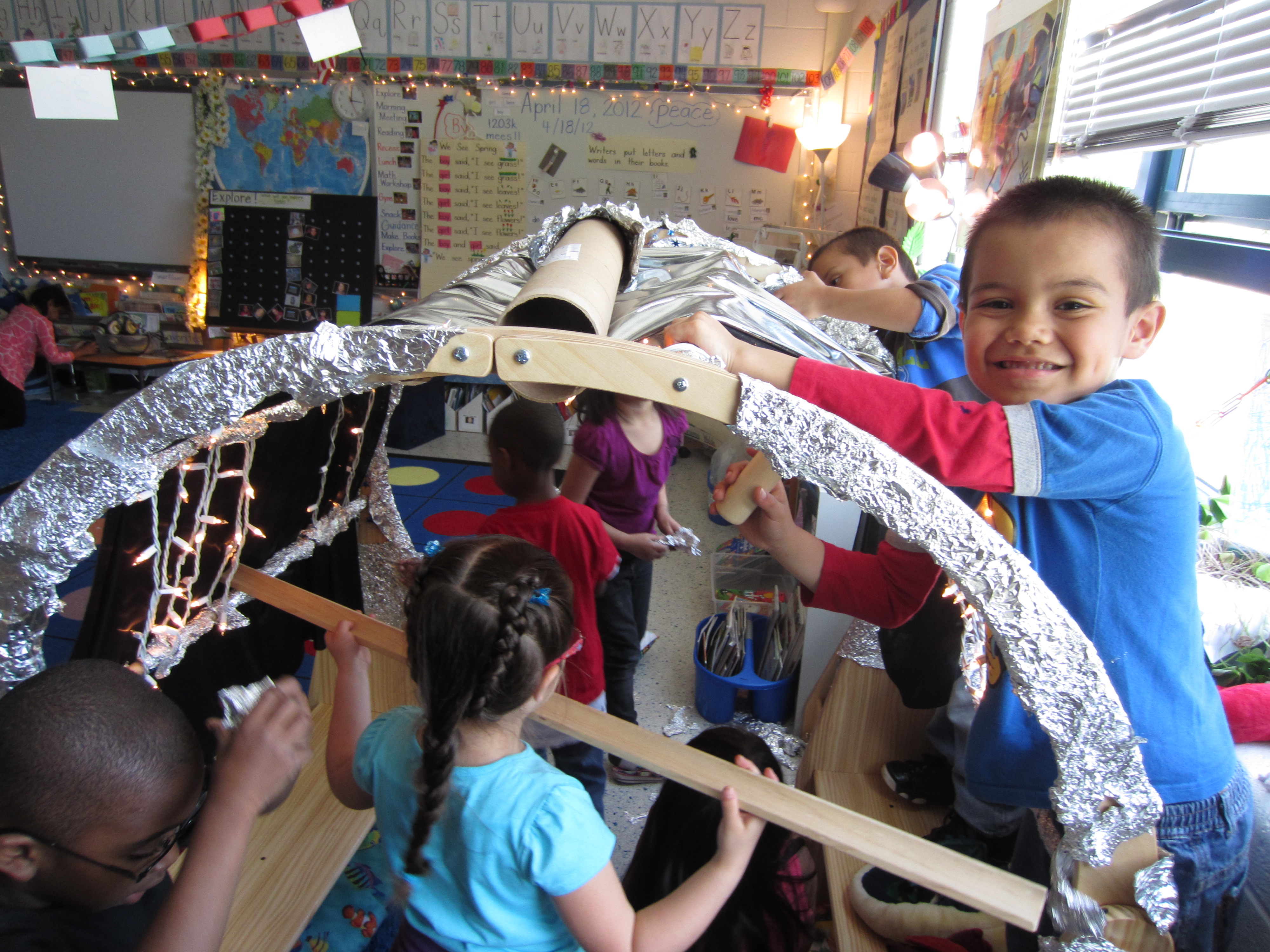
With an interactive whiteboard you can use screenshots from videos, YouTube clips, photographs, etc. and create with writing, drawing and audio right on the image. Recently the space shuttle Discovery flew over our school on its way to the Udvar-Hazy Center near Washington, DC. The kids were so excited to see this and wanted to learn more. I found clips of the space shuttle launch online, as well as a collection of photographs. I put them on the SMARTboard and the kids interacted with them, (while also using a collection of books I got from the library) – labeling parts they knew, circling parts they wanted to learn more about, creating a dialogue with the audio tool to talk about what they saw and what they still wondered about. Then they decided to build their own space shuttle in our classroom (with a LOT of aluminum foil!). This became a dramatic play area for a few weeks.

I feel like I learn and discover something new almost daily with my SMARTboard. We use it with Scribble Maps to draw on maps as we learn about geography to track the migration of monarchs, find a location from a book or to find where a Twitter friend lives. We use it with Pixie to model a visual representation of our thinking while sharing a math problem. We use it to practice concepts by sorting rhyming pictures or creating graphs for students to interact with. The possibilities are really endless!

One thing I feel strongly about, however, is that it’s not a replacement for shared writing on chart paper or a community writing book project. It can’t replace shared reading with big books or poems on charts. It’s a great resource to complement my teaching and I make sure my plans for using it have a specific purpose. I don’t use the SMARTboard for everything I do. I still use big books and highlighting tape for shared reading – but I may do a shared reading occasionally on the SMARTboard too if the text I want to use lends itself to being projected and used on the board and will benefit the kids this way. I view the SMARTboard as a tool FOR my students. It’s not just my board – it’s theirs too – that’s why it’s called interactive. I want them to use it independently, interact with it and be proficient with this tool.  I see the interactive white board as another tool to engage my students.

I recently read a great book published by Stenhouse called Literacy Smarts by Jennifer Harper and Brenda Stein Dzaldov. The authors share simple, yet meaningful, strategies for using an interactive whiteboard in your classroom. If you’re looking for more possibilities in using your interactive whiteboard, I highly recommend this book.

How do you use your interactive whiteboard in the classroom? We’d love to hear your ideas!

Community Writing

Last week we finished a community writing project that we’ve been working on for several weeks. After completing a unit of study on fairy tales, we decided to write our own version – calling it The Three Gingerbread Kids. I posted the story in a VoiceThread below so we could share it with others. There is also a slide show that shows the illustration process.

In Catching Readers, I talk about community writing in Chapter 5 as a key component to a comprehensive literacy framework. Sharing the pen with the students as we negotiate the text together provides many excellent teaching opportunities. My kinders are making books like crazy during writer’s workshop. They are trying a variety of genres and all of them are adding words to their books – from labels to detailed sentences. I wanted to use this community writing piece as a way to support all writers in taking even bigger risks in their writing. I wanted to have them create a continuous text, based on what they learned about fairy tales, and practice strategic reading and writing actions and skills while we composed and wrote the text together. Within the context of community writing, we not only learned about letters, sounds and how words work but also about decisions writers make, such as what to include, how to best structure a sentence and how to organize their thoughts into a coherent piece of writing with a clear beginning, middle and end. I am also seeing a huge transfer in their own writing. The books they are making in writer’s workshop have more words, more details and show a clearer story structure. Kids are taking more risks as they attempt to write the words they need to create their books.

I also wanted to focus on the writer’s statement, “Writers make sure the pictures match the words.” We looked closely at our read aloud favorites and noticed that indeed, all writers make sure the pictures match the words. We took this into our illustration days, thoughtfully planning how our illustrations could not only match the words, but build upon the story, just like Mo Willems, Jan Thomas and other favorite mentor author/illustrators do. We chose to illustrate the book using a method I learned about from Ann Marie Corgill in Of Primary Importance (an excellent resource for writing). We used Sharpie permanent markers to outline our drawings. Then we filled in the colors with crayons. The bold outlines really make the illustrations pop.

Community writing is one of my favorite teaching contexts. It’s just so rich, meaningful, engaging and differentiated. It does build community and allows all children to shine. Rereading the book every day before we added a page had this book soon become a known favorite. We have it displayed in our hallway to revisit during reader’s workshop and to share with our school. Enjoy our story!

Illustrating “The Three Gingerbread Kids” on PhotoPeach

Vodpod videos no longer available.


Vodpod videos no longer available.

Art as a mentor text

Talking about art while tracing shapes and lines

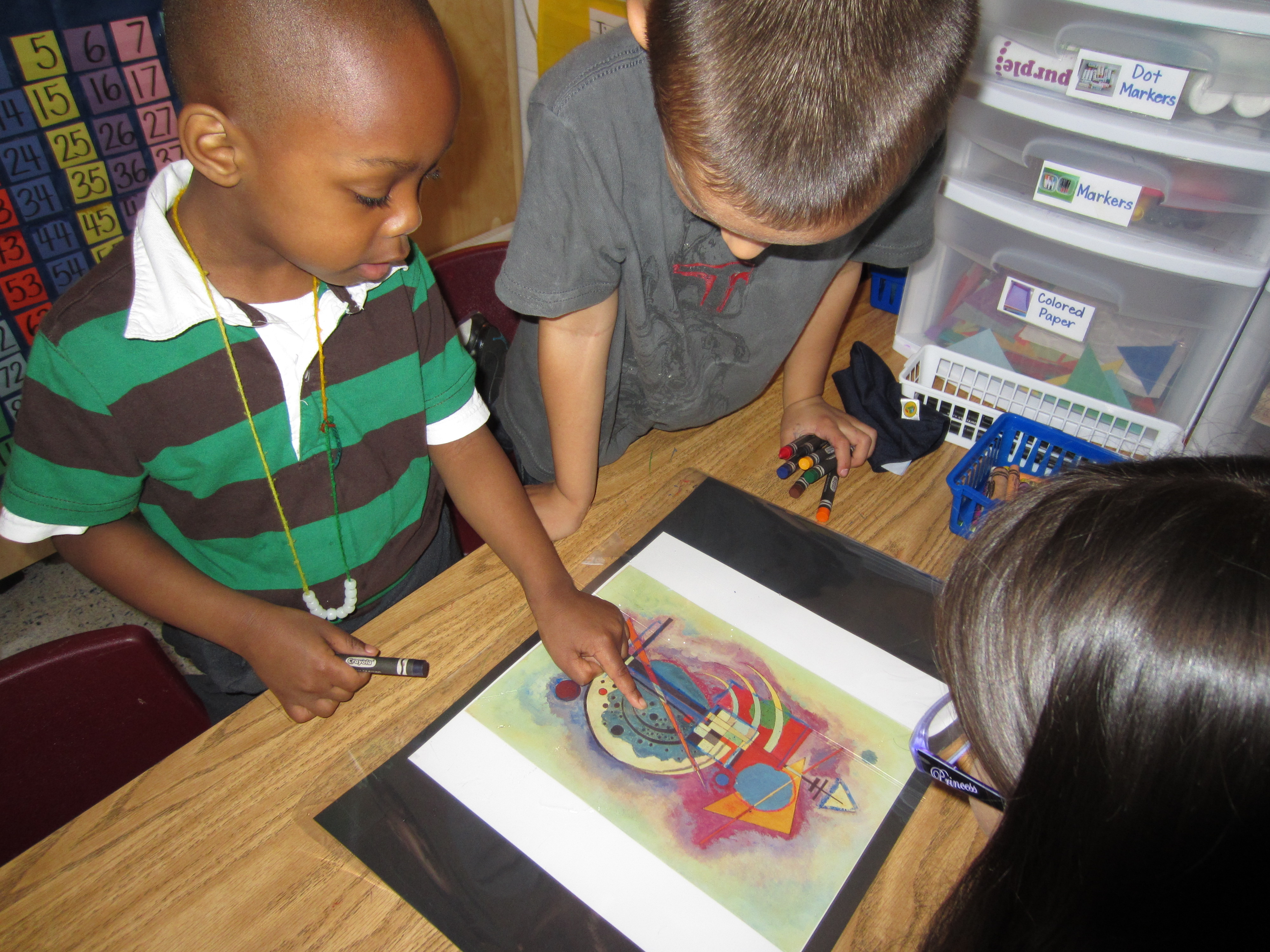
My kindergarteners have been looking closely at the artwork of Wassily Kandinsky as we learn about geometry in math. We are using his art to explore shapes, lines, color and important vocabulary for positional words that are part of our state standards. I’m using Kandinsky’s art just like I use mentor texts throughout my literacy workshop. It’s been very exciting to see how the children are learning math while “standing on the shoulders” (as Katie Wood Ray says) of this artist. His fascinating abstract art paintings engage my students and allow us to surround our math instruction with rich talk about a variety of geometric terms, as well as art terms. For example, mathematicians use the term “rhombus”, but artists use the term “diamond” to speak about the same shape. We  are creating an ongoing shared writing text with what we are noticing.  This writing that came from their talk looked like this: I see a red square next to a blue curved line. I see a big yellow curved line overlapping a black circle. I see 5 small circles under a pink rhombus. 

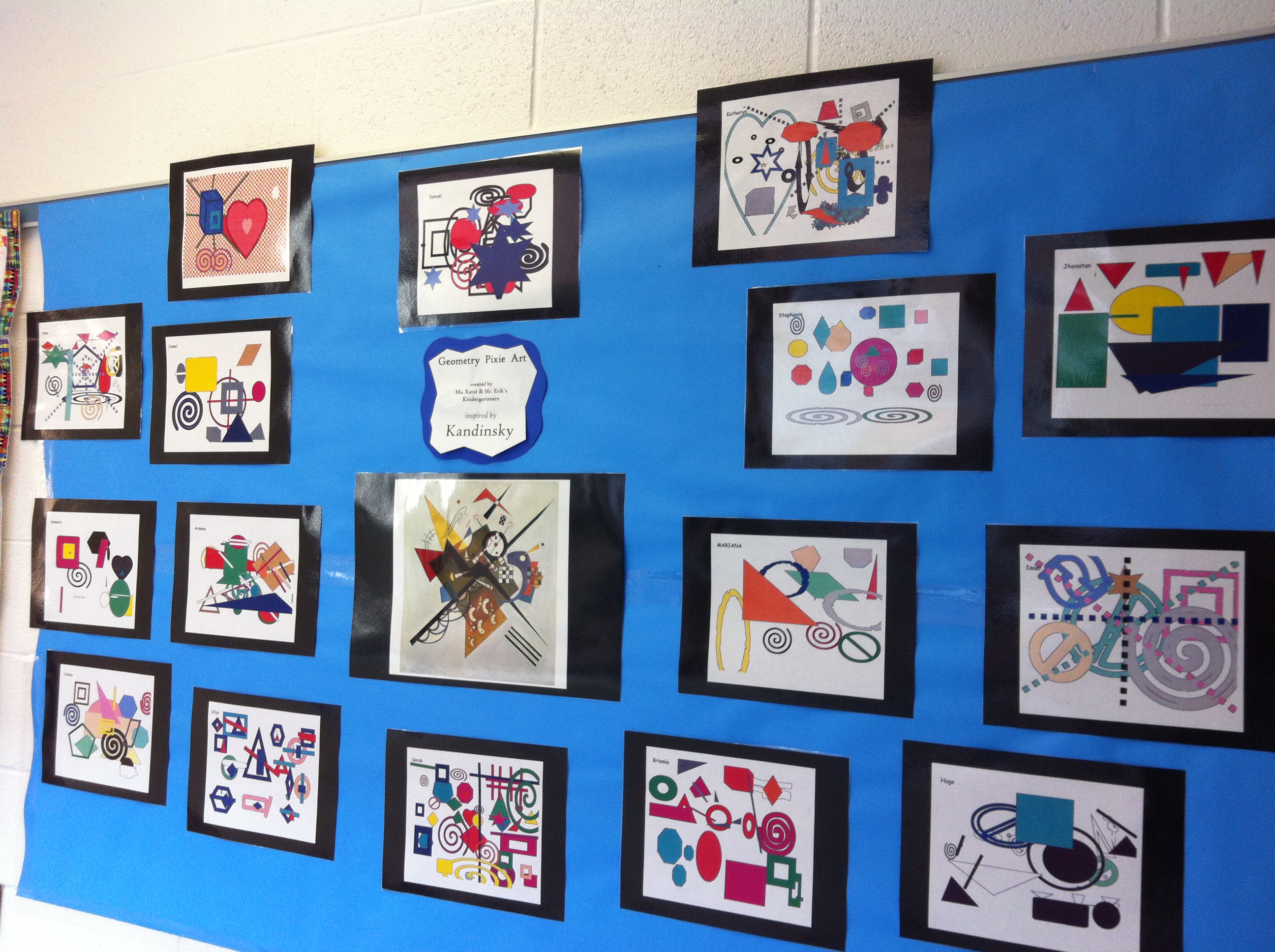
Last week we used the program Pixie in the computer lab to create our own Kandinsky inspired works of art. The students used a variety of shapes, colors and lines to create their own work of art. They talked about how they were choosing the placement of their shapes and carefully planned out their work.

This week we are creating our very own “Kindergarten Kandinsky” wall mural as we use his work as our mentor text to create a piece of art showing our knowledge of shapes, colors and lines. Stay tuned for an upcoming post about this!

I value the importance of visual texts, such as our Kandinsky pieces, as another form of literacy. Teaching children to read art, to create art from using artists as mentors, and to talk about art is a key piece of my literacy instruction.

How do you use visual art in your teaching? 

Our Pixie Kandinsky Inspired Art

Literacy Explore

Our kindergarten literacy block is structured with time for whole group instruction, small group & one on one instruction, book box time, sharing and choice stations. Literacy Explore is similar to reading and writing stations. In fact, I call it that so the children know that it’s not quite as open-ended as our Explore time. During this time I expect the kids to be engaged and playing in a literacy activity of their choosing. The children choose from the choices on our work board. They can move freely from station to station, as long as there is room. Reading from book boxes or our classroom library and writing are always a choice with no restrictions on how many kids can be doing this. I also have a time when everyone is reading from book boxes or the classroom library – in addition to our literacy Explore time. I want to make sure that everyone is engaged in texts of their choosing at some point in our day, in case they are not choosing this during Explore.
An example of some of the choices available as reading and writing stations are:

-reading around the room (children have pointers and can walk around the room looking for letters or words they know)

-writing around the room (children have clipboards and can walk around the room writing down letters or words they see)

-big books (all the big books we have read, as well as class big books we have made are in a bin for children to reread – I also have a big picture dictionary they love to read)

-puppets (I have a variety of puppets and stuffed animals from books we have read. Kids can create their own puppet stories or retell books we have read.)
-magnetic letters (a variety of magnetic letters and words on an oil drip pan and cookie sheets for kids to make words, match and sort letters, etc.)

-letter sand boxes (see this previous post for a photo and description)

-name bottles (we interviewed each child and then created a name bottle for them – it’s a bottle with all the letters of their name plus some glitter – kids can match a name bottle with a name card at this station) 

-story retelling (I have props for several stories we have read numerous times – the children can retell the story with the props)

-rhyming and letter games (various games where kids can match objects that rhyme, objects to a letter chart, objects with similar beginning or ending sounds, etc. – a good source for ordering lots of little objects is from Time for Tots on Etsy)

-poems and songs on charts (Children can reread familiar poems and songs with pointers at this station. I laminate all of our charts, tape a plastic hanger to them, and hang them on a chart stand. I have several hooks around the room for kids to hang the charts on while they are reading them.)

-iPad and iPhone (A variety of literacy apps are available at these stations – I especially like the digital story apps Fotobabble, StoryKit, and Storyrobe) as well as the SMARTboard (literacy games and websites).)

-letter stamps (Kids can make books, stamp names or words, sort letters, etc. with the ABC stamps.)

-flannel board (I love my “old school” flannel board! It is great for retelling stories and creating new ones from having multiple felt pieces available. Story Time Felts has a wide variety of stories available on felt and for a few dollars extra, they come pre-cut. Check with your librarian, many times old flannel boards are just in a closet, not being used.)
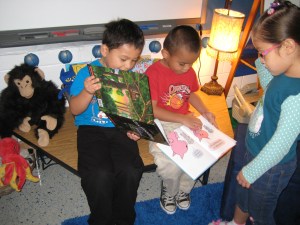
This is just a sampling of some ideas. I leave the choices up for a few weeks, adding new ones in and rotating ones out if I see that kids aren’t going to that station. I can then reintroduce a station later with renewed interest.

For our youngest literacy learners (and really, all literacy learners), I feel that it’s particularly important to make literacy accessible, playful, meaningful and engaging. When children have the opportunity to choose from a wide variety of stations they are certain to feel empowered, successful and in control of their learning. This helps set the foundation for strong literacy learning, and allows our stronger children the chance to go beyond the curriculum.

I’m sure there are many more literacy based exploration ideas out there. How do you do literacy stations? Please share!
Don’t Say They Can’t Play

“Play is a child’s work.” – Jean Piaget

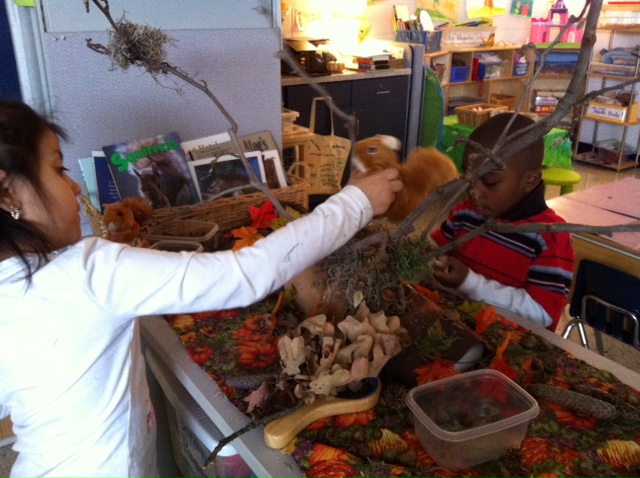
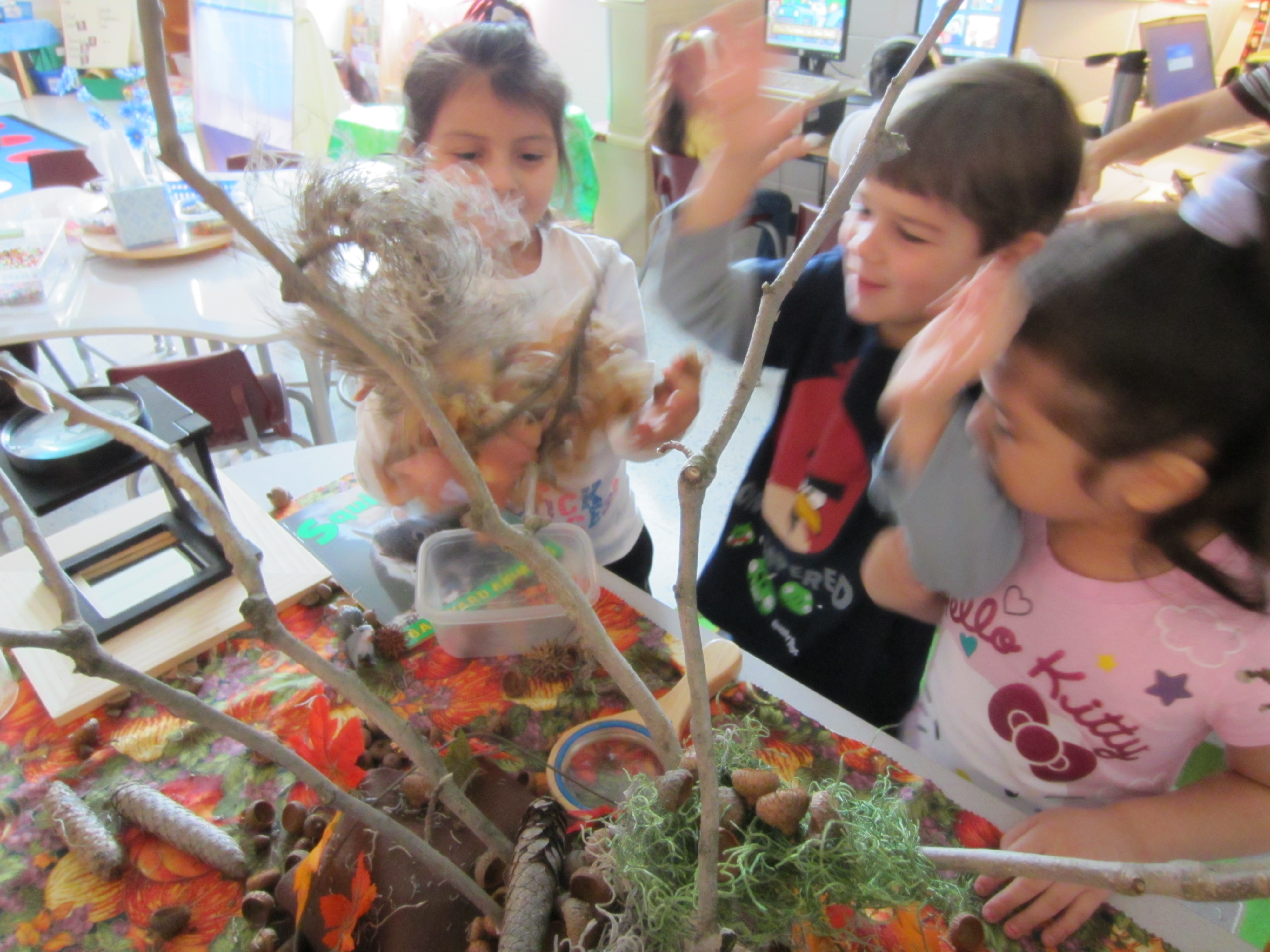
Last week we began a science study of squirrels in our classroom. Squirrels are a piece of our county curriculum and we are required to teach about these animals connected with winter. I integrated this science unit into our language arts time and we read several books about squirrels (comparing fiction to nonfiction), created vocabulary boards with key words, put up a squirrel feeder and binoculars in our window to observe the squirrels, danced to squirrel songs and created a squirrel habitat in our science center. It is through observing children playing in our habitat that I am seeing just how much they are learning.  I provided branches, leaves, acorns, moss and several plastic and stuffed squirrels and stood back and watched as the play began.

The children made a drey (squirrel nest in a tree, in case you don’t know that term – I didn’t until this study), and a den (squirrel nest that is in a hole in a tree). Observing the children play I hear key vocabulary words used correctly, witness scientifically accurate construction of the dreys and dens (correcting each other if anything is not as depicted in our books), see them using different books we’ve read as references in building the nests and replicating what they see the squirrels doing in the pictures as well as what we’ve observed them doing outside. I watch them as the mother squirrel prepares her nest for her babies and then nurses them – using the larger stuffed squirrel as the mom and the smaller plastic squirrels as the babies. I watch them make the squirrels chase each other, scampering up and down the tree, gathering acorns and hiding them in their nests – declaring that winter is coming soon so we have to store lots of acorns. They have mastered the county objectives – plus much, much more. They have experienced squirrel life through imaginative play. They have turned into strong observers of squirrels outside so they can replicate it in their play. They have truly become squirrel experts – through play. Would this have happened with only a read aloud, or a squirrel worksheet? No.

Don’t say they can’t play. Let them play. It’s how they learn.

How are you facilitating and encouraging playful learning in your classroom?

Our Favorites

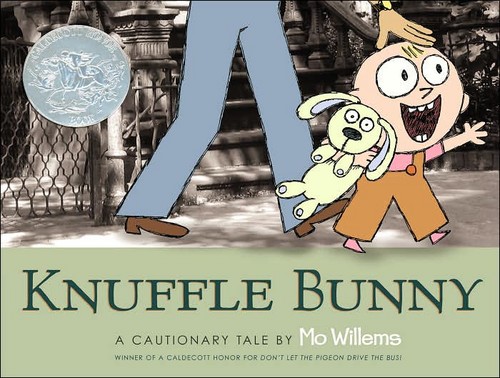
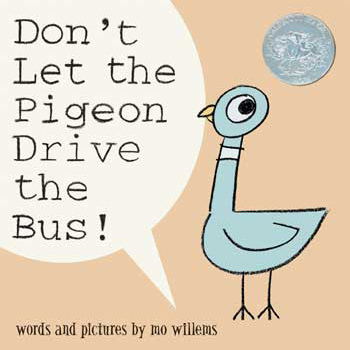
Reading aloud to kids is one of my most favorite things to do. This past week we read our 100th book of the year in my kindergarten classroom. Many of these books are put in the “Our Favorites” box, by request of the kids, to be reread many times. On a whim, I asked the kids what their 5 all time favorite books were for the year so far. They ran to the “Our Favorites” boxes and started pulling ALL the books out. I realized that question is just as hard for kids to answer as it is for me. My favorite book today may be different from my favorite book tomorrow. And just 5? Well, that quickly proved to be impossible. We had a fun time revisiting the books we’ve read since the beginning of the year and predicting how many books we would read by the end of the year. “A hundred million” was the most popular answer. Gotta love those kindergarteners – although I’m willing to take on that challenge! Here are just a few of our favorites so far this year. These are books that get the whole class yelling, “read it again!”, and the ones that have tattered covers out of love and frequent rereads. They are the ones that I hear lines from repeated over and over during play and throughout our day – “It’s all good!”, “Goodness, gracious me!”, “I’ll give you five bucks.”, “Can you believe this guy?” and “Aggle flabble!”.  They are the books by authors that my students “stand upon the shoulders of”  in our Writer’s Workshops –  creating their own books about adventures of pigeons, Knuffle Bunny meets Power Rangers, animals that hop and hoot and many adventures of Pete the Cat. Hopefully you can discover a new one here that your class might enjoy or that a lucky kiddo will find wrapped under the Christmas tree.  Enjoy!

Hattie and the Fox by Mem Fox


Knuffle Bunny series by Mo Willems


Don’t Let the Pigeon Drive the Bus (as well as the other “Pigeon” books in the series) by Mo Willems


Pete the Cat by Eric Litwin


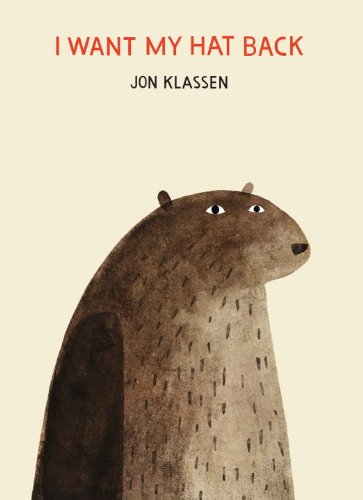
I Want My Hat Back by Jon Klassen


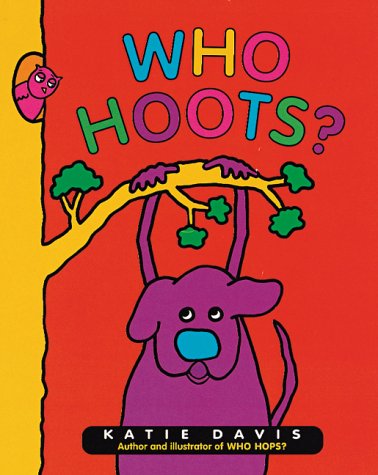
Who Hoots? and Who Hops? by Katie Davis


Chalk by Bill Thomson


What are your class favorites this year? Please share!