A Few Words for Parents

lt-blog-
It’s evening story time and as your child reads through a new book she suddenly comes to a difficult word and stops. What do you do? Do you give her the word? Or do you say “sound it out”?

Many teachers are beginning to realize that, although “sound it out” often comes to their lips, it isn’t necessarily the best response. The English language is not consistently phonetic so it is not helpful, or even fair, to tell a child to “sound out” words like said, night, or know, just to cite a few familiar examples.

A better strategy is to give your child a little support by saying, “Hmm, what would make sense there?” or point to the picture. Sometimes encouraging the child to go back and reread the sentence from the beginning helps as well. It’s important for story time to remain stress-free, so if your child is getting frustrated by too many unfamiliar words, just give her the word or read the entire book to her.

Here are some answers to other common concerns parents have about their child’s reading:

My child memorizes books, instead of reading them. Is this OK?

This is not unusual for very young readers, but we don’t want them to get the wrong impression about reading. We want children to understand that reading is not about memorizing books or lists of words, but rather about making the story make sense. Figuring out the words, attending to the print, and making the sentence make sense are all part of reading. If you run into this problem, maybe your child is ready to move on to books where the pattern changes. It is OK for her to do some real work while reading.

My child seems to know a word one day, but then she forgets it the next day. Should I put the words on cards and drill her on them?

Kids need to see the same words many times in a variety of settings to get to know that word. It’s better for her to see a word in an actual book than on flash cards, out of context. She may come to think that reading is just about accurately calling the words and not about understanding the full story or book. It’s normal for beginning readers to have words that are only ‘partially known.’ The more they encounter those words in authentic reading and writing situations, the more familiar the words will become. Eventually those words will become fully known and instantly recognized.

Should I give my child prizes for every book she reads?

It is great to encourage a child to read more, but reading should be its own reward. When we offer kids pizza or stickers for reading a certain number of books, we are actually sending a message that reading is something unpleasant so we have to resort to prizes to get them to read. Also, when kids are counting the number of books they read in a race for a prize, they often sacrifice quality for quantity. When you take your child to the library or a bookstore, spend some time finding books she enjoys. Ask her what she wants to learn more about or what kind of books she likes to read. Make a special time each evening for you and your child to sit down and read together.

How do I know my child understands what she’s reading? What should I do when she finishes a book?

While she’s reading, you can tell if your child understands if she laughs at the funny parts, talks about what the characters are doing, or connects to an experience of her own. Encourage these responses. But if your child pauses or reads the punctuation wrong, these are hints that she might be losing the overall meaning of the story. Encourage her to slow down and reread those parts; talk together about what’s happening in the book. Just talking naturally will help you know whether your child understands the story. You can start a conversation with some questions like “What was your favorite part?” “Did it remind you of anything?” or “What did you think of that book?”

If my child is struggling with reading, should I take her to one of those learning centers or buy a kit to teach her how to read?

Talk to your child’s teacher if you think she is struggling. Learning centers and expensive computer programs might help your child pass a test, but they won’t help her build good reading strategies in the long run. A reading tutor who can support what is going on in the classroom and work together with your child’s teacher is a much better option.

Note: If you are a teacher reading this post, feel free to duplicate it to use in one of your parent newsletters or to give out at parent conference time.  Also look in Chapter 11 of Catching Readers Before They Fall for more Q/A for families.
Should we teach kindergarteners to read?

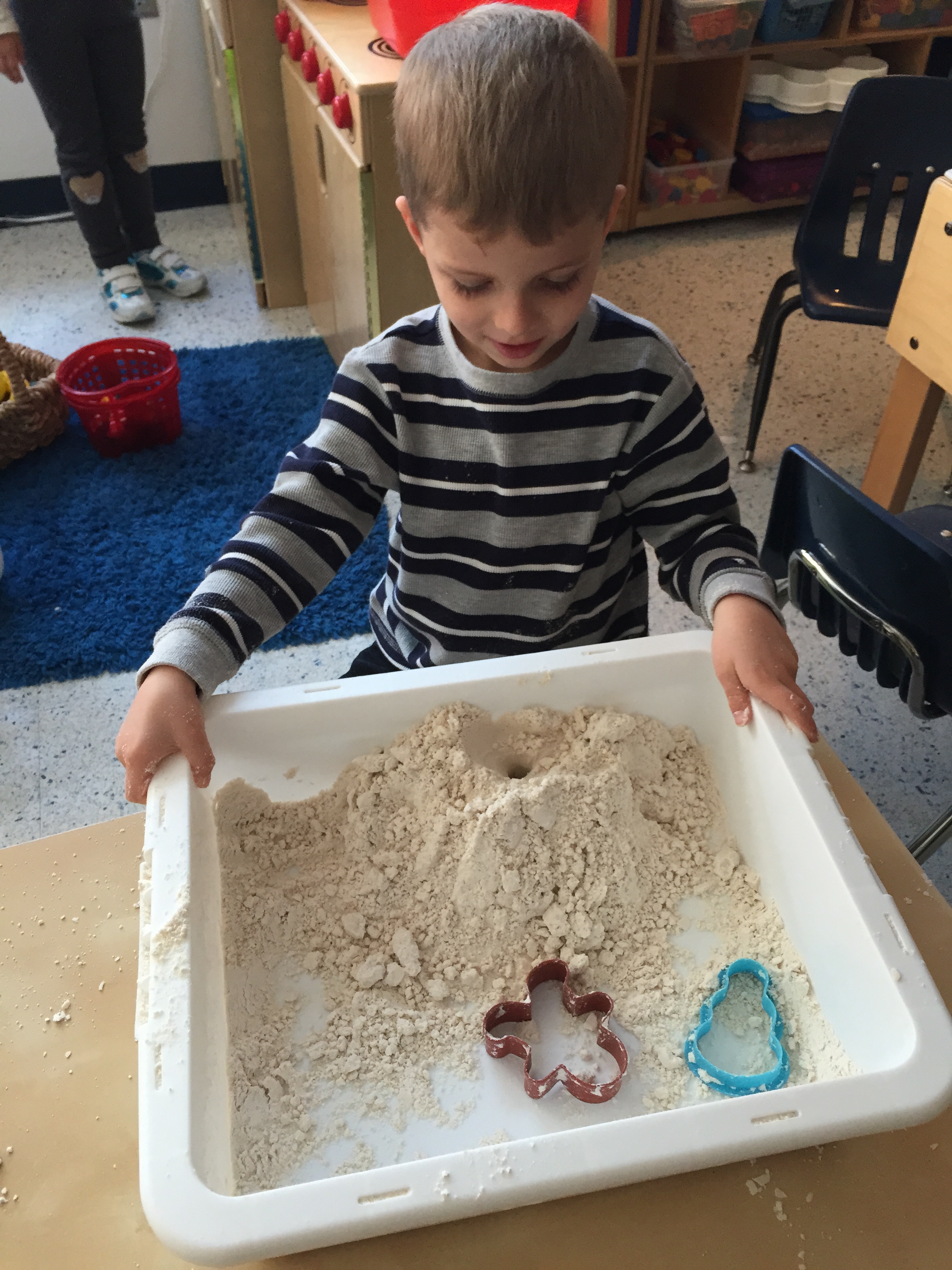
Playing with cloud dough

Making a volcano with cloud dough

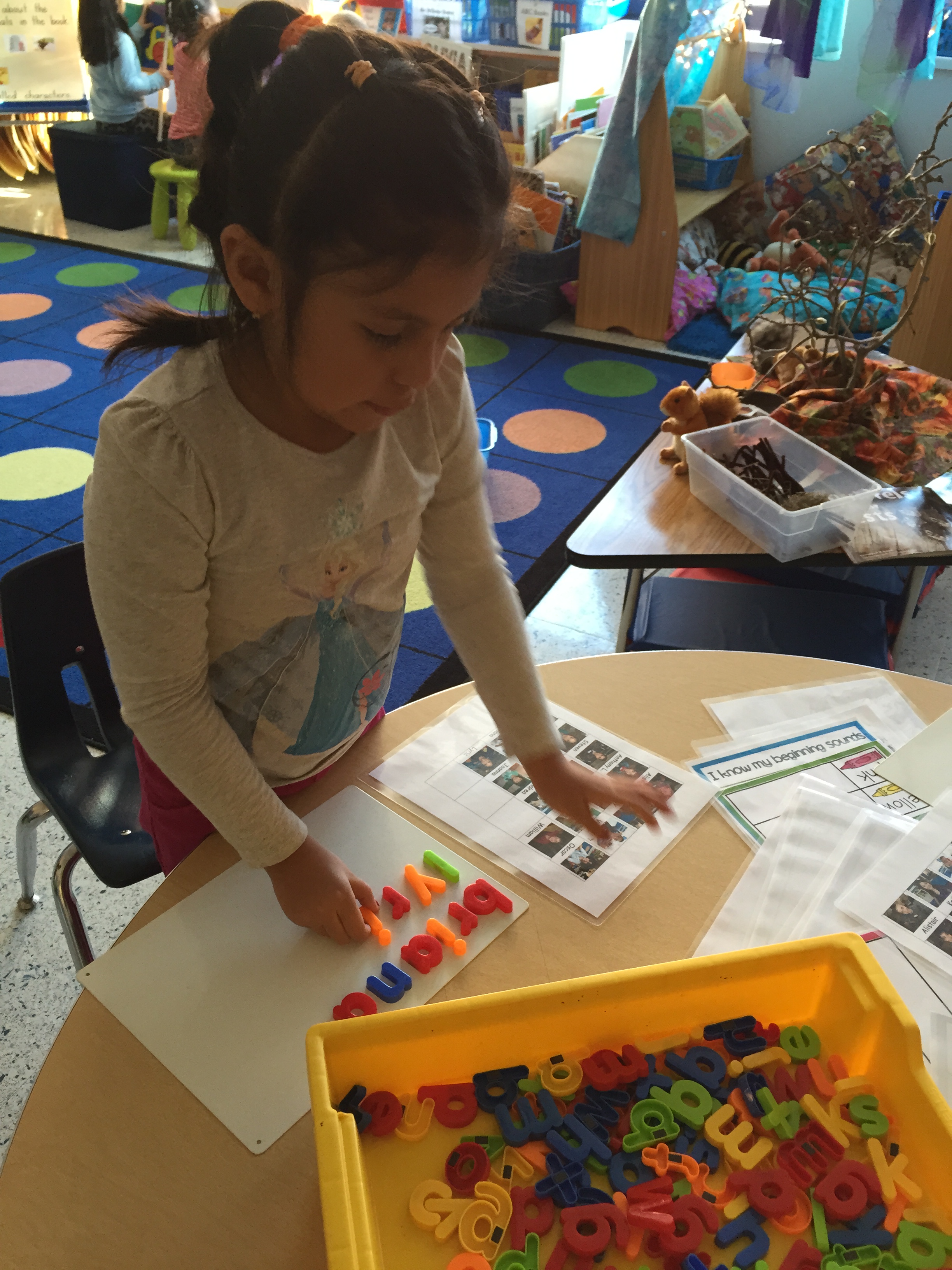
Making friend's names with magnetic letters

Making friend’s names with magnetic letters

This week I read an article citing a report saying that forcing kids to read before they are ready could be harmful. The report specifically references Common Core Standards in Kindergarten and says “there is no evidence to support a widespread belief in the United States that children must read in prekindergarten or kindergarten to become strong readers and achieve academic success”. While it was surprising to me to hear that there is “no evidence”, it was not surprising to read the other findings the authors reported. I hear over and over about blocks and dramatic play stations taken out of classrooms, recess taken away, and endless inappropriate assessments being given (an “online, practice quiz for kindergarten” should never, ever happen). Our children deserve better.

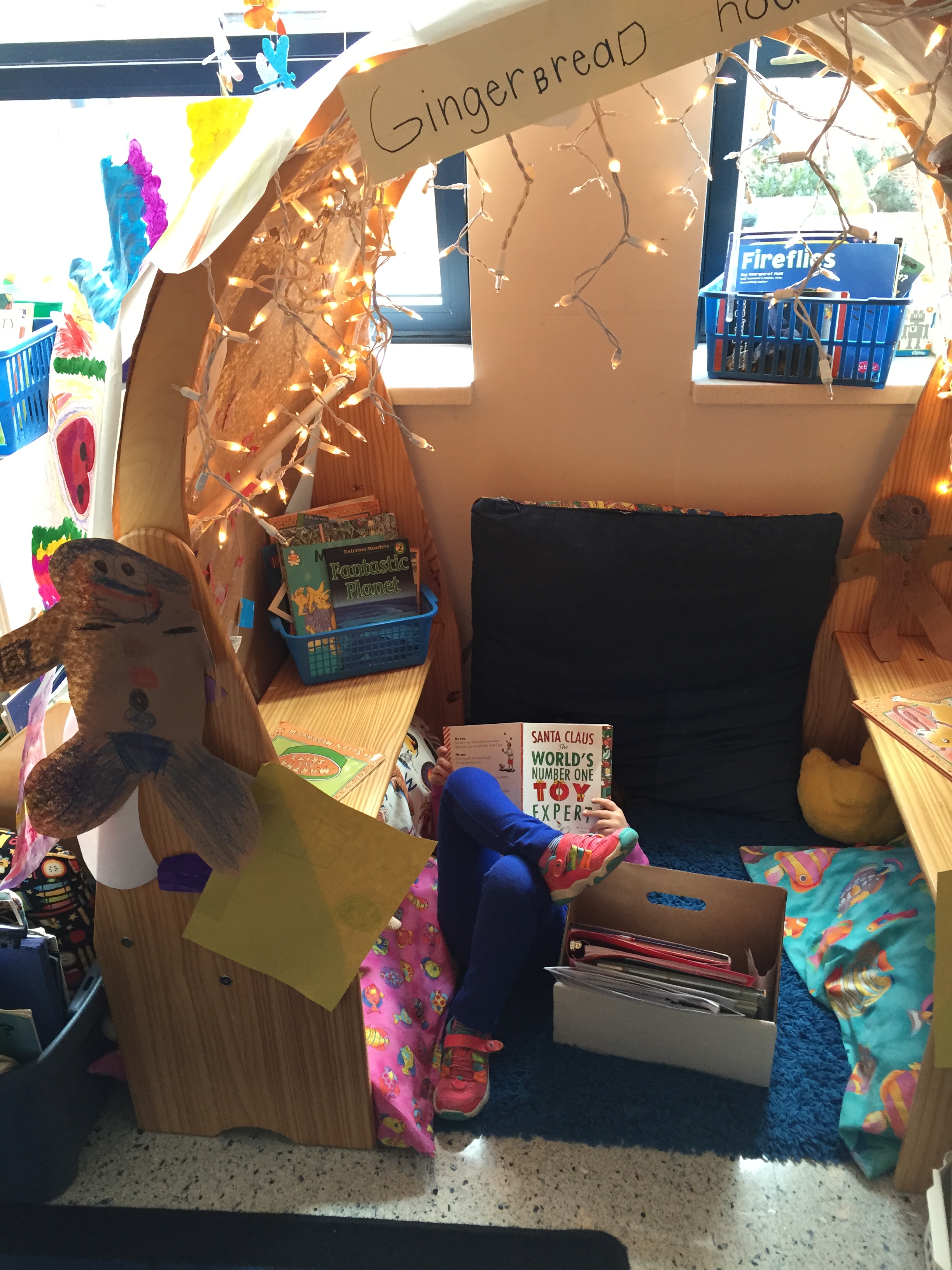
Reading in the Gingerbread House

Reading in the Gingerbread House

I agree completely with what the authors of the study share in the report. Children need to play – it is how they learn (and research does support this).  But I also think it’s important that we give our kids every chance to get that important school literacy piece as soon as possible – with developmentally appropriate practices. It is tragic that, as the article states, “teacher-led direct instruction in kindergarten has almost entirely replaced the active, play-based experiential learning that we know children need”. I don’t think that we should force children to read, but I do think we can immerse children in rich literacy experiences early on and ignite an interest in learning to read and write. We don’t need to have hours of drill and kill and teacher-led direct instruction. We don’t need worksheets and mindless one-size-fits-all instruction. We don’t need hours of assessments. We don’t need to make kindergarten (or first, second..or any grade, for that matter) full of these things.

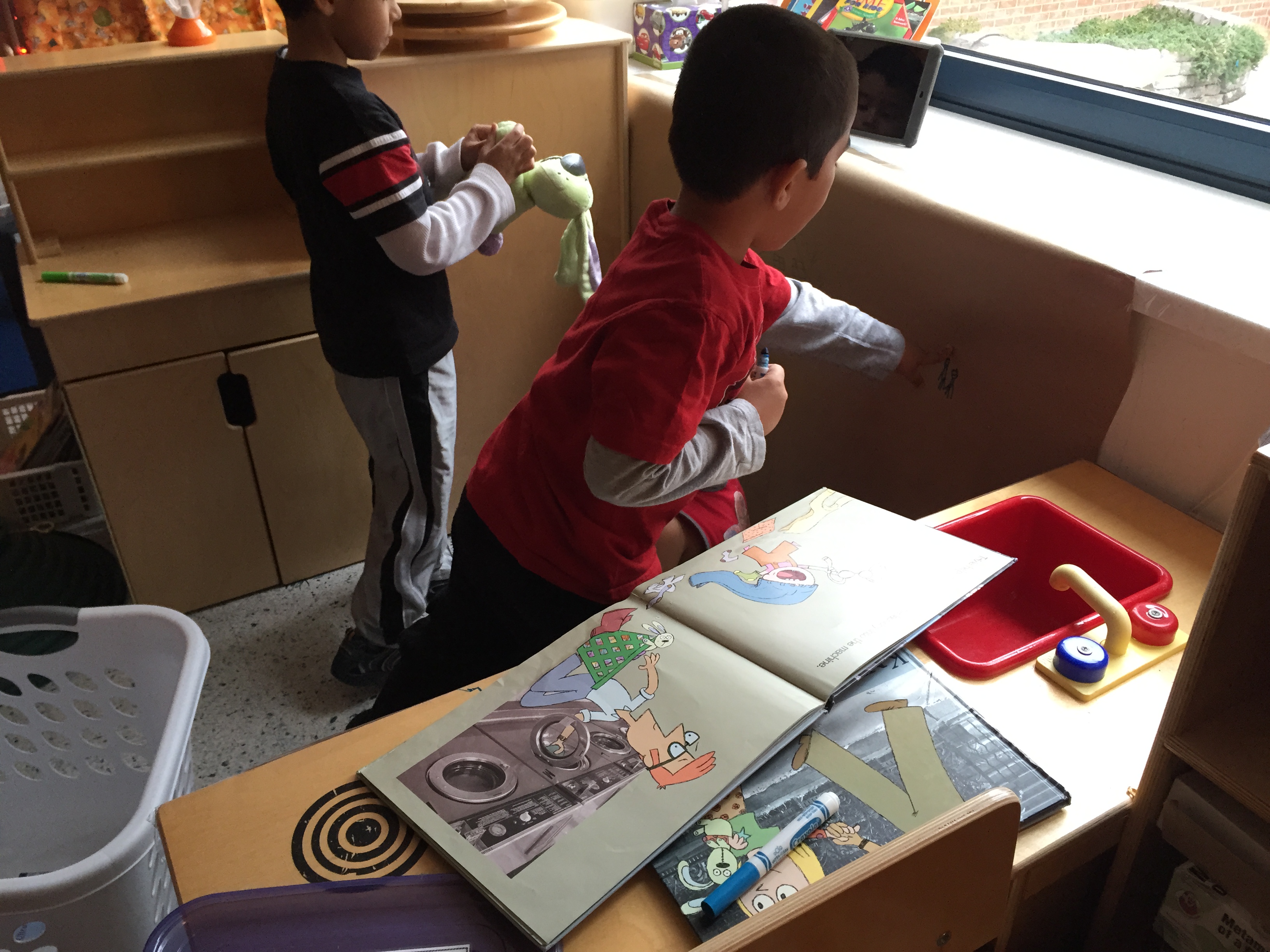
Acting out Knuffle Bunny in the "laundromat"

Acting out Knuffle Bunny in the “laundromat”

My classroom is a play-based kindergarten classroom, with a great deal of authentic and meaningful literacy experiences offered each day. We read aloud, we have choices throughout the day in curriculum, content and activities, we have a daily Writer’s Workshop, we play, we learn letters, sounds and links, we have 2 recesses each day, we have snack, we read pictures and words in books, we build things with blocks, we learn how to read,  we dress up in the drama center, we play in the kitchen/spaceship/laundromat, we put on puppet shows, we learn how to form our letters, we discover things in sensory boxes, we have guided reading groups, we explore things we are interested in, we read charts and poems, we wonder, question and grow and we do it all in an active, playful, meaningful and developmentally appropriate way. And at the end of the year, some of my kindergarteners are reading at the county-wide benchmark. And some aren’t. But they can all tell you a favorite author and what kind of books they like. They can all read books they’ve written and tell you what author/illustrator they see as a mentor.  They all see themselves as readers and writers. That is ultimately my goal.

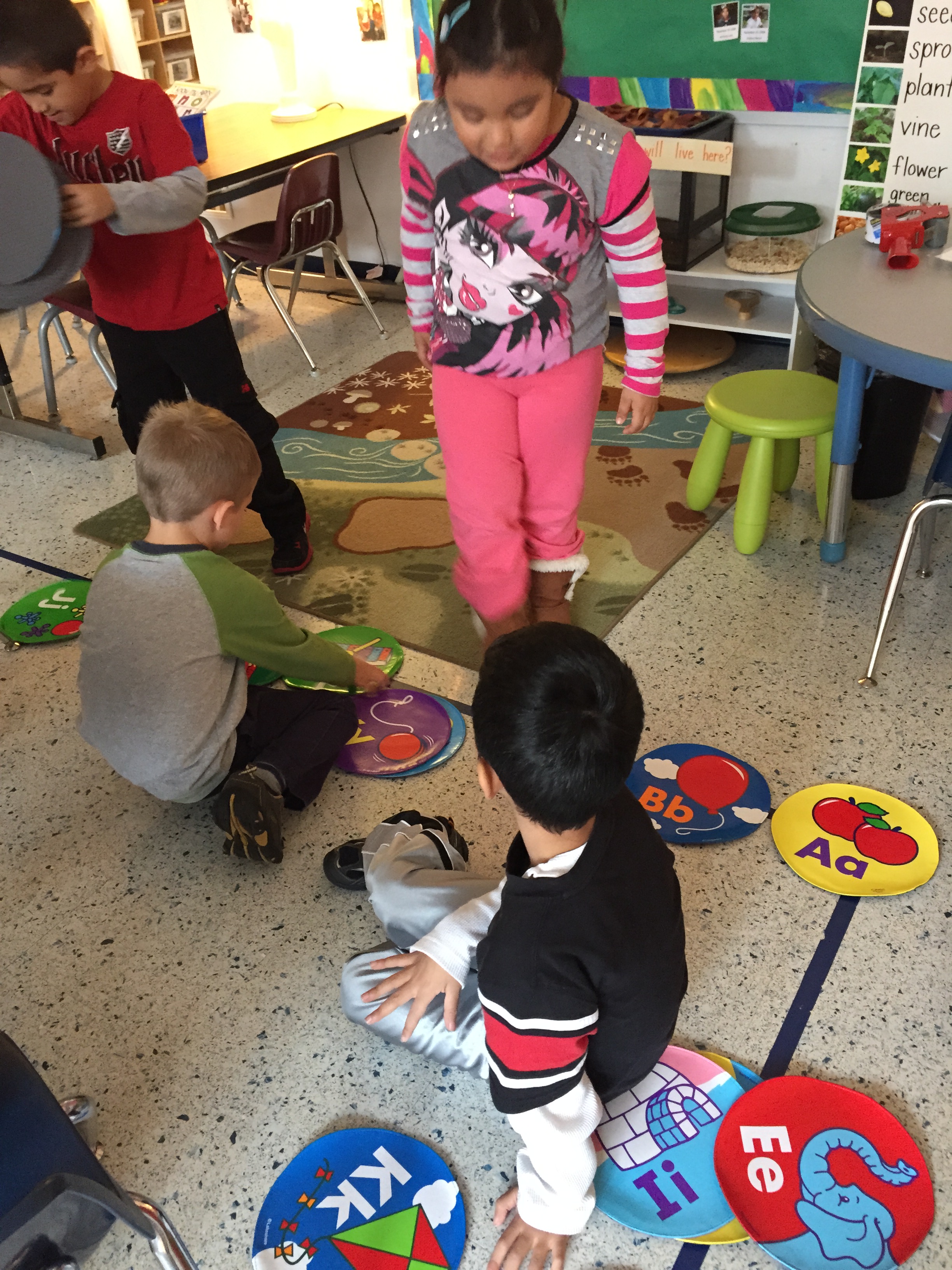
Negotiating the order of the alphabet letters with friends

Negotiating the order of the alphabet letters with friends

I’m reminded of the phrase from medicine, “first, do no harm”. This needs to hold true in education. The last thing any of us want is a child refusing to go to school, locking himself in his bedroom, and hiding under his bed. We want children excited about learning, passionate about topics they are discovering at school, talking about favorite authors and illustrators, questioning, wondering and eager to learn, empowered because they know they have a voice in their learning. We don’t want to harm our children. If we are being asked to do things that we know are not developmentally appropriate and that may harm some children, then we need to speak up. It’s worth fighting for the blocks, the recess and the dramatic play. It’s worth fighting for our children. Thank you to the authors of the Defending the Early Years project study for giving us another tool to fight with.

Teaching with a Sense of Urgency

2014-12-08 10.12.48

Shared reading with a pointer

“When I suggest that we need to “teach with a sense of urgency” I’m not talking about teaching prompted by anxiety but rather about making every moment in the classroom count, about ensuring that our instruction engages students and moves them ahead, about using daily evaluation and reflection to make wise teaching decisions. Complacency will not get our students where they need to be. I am relaxed and happy when I am working with students, but I am also mindful of where I need to get them and how little time I have in which to do it. I teach every day with a sense of urgency.” – Regie Routman

These wise words have stuck with me since 2003, when I first read them in Regie’s wonderful book, Reading Essentials. This year they came back to me loud and clear. I have a group of fabulous students. They are kind, loving, thoughtful, fun, curious, passionate, inquisitive and they need A LOT in the area of school literacy and academics. Our beginning of the year assessments made it very clear to me that intentional teaching, with a sense of urgency, was essential for this year to be a success.

Urgency doesn’t mean that our classroom is a stressful, rigid place full of drill and skill activities. Do we have fun? YES! Do we play? Absolutely! (It’s how children learn!) Do I keep in mind that they are 5 and 6 years old and make sure that my practices are developmentally appropriate? Of course! Do I enjoy each day with my learners and do they enjoy being at school? For sure. Do I stay true to the belief that I teach children – not standards – every day? Indeed. Do I make sure my children have every opportunity to learn the necessary literacy skills to be successful? That’s my job.

Teaching with a sense of urgency is happy, relaxed, purposeful teaching. It’s making every moment count. And that makes an impact on student learning.

Here are a few structures I’ve put in place that are supporting my young learners and helping them make great progress in the area of literacy.

2014-12-10 14.38.09

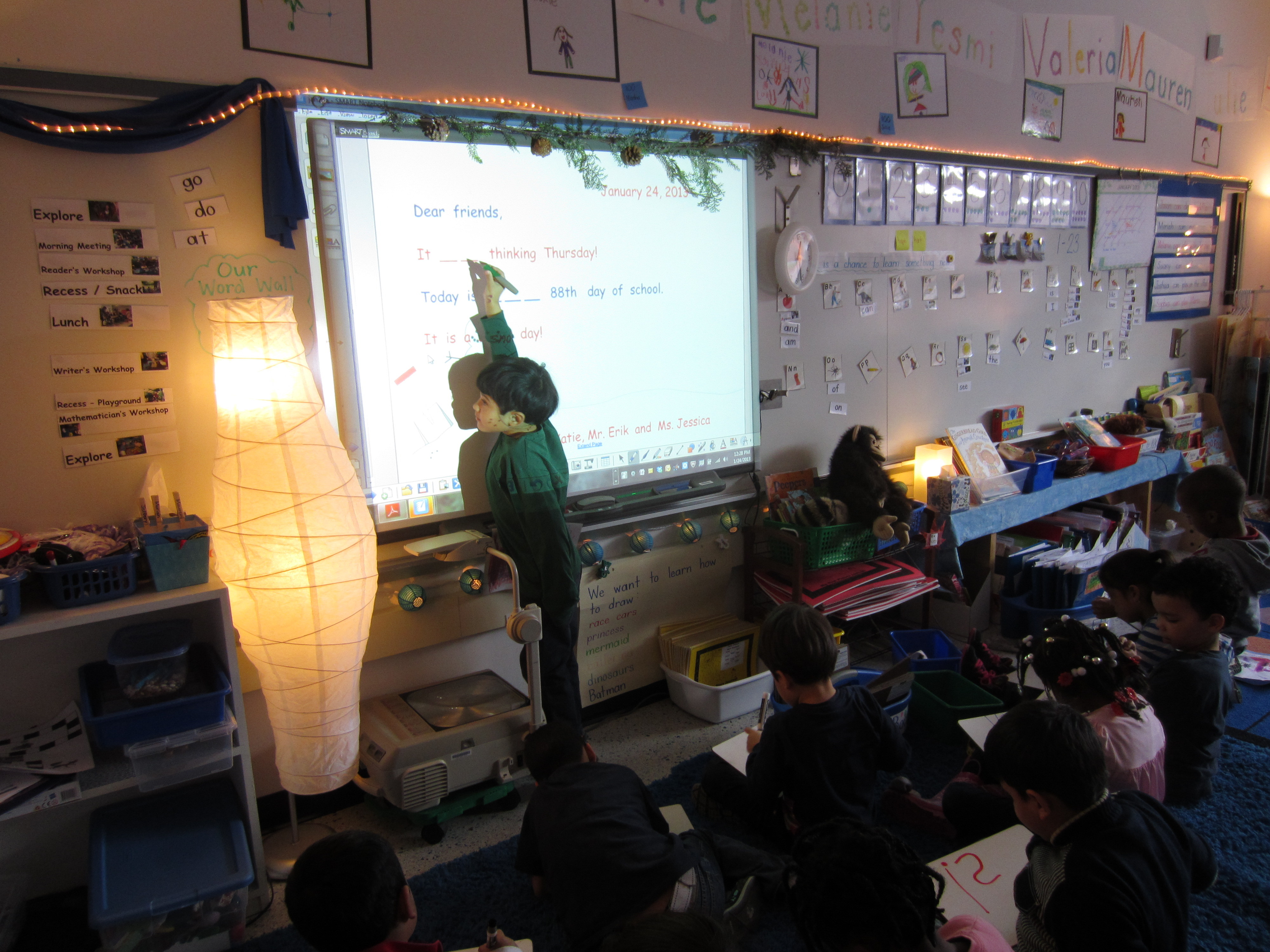
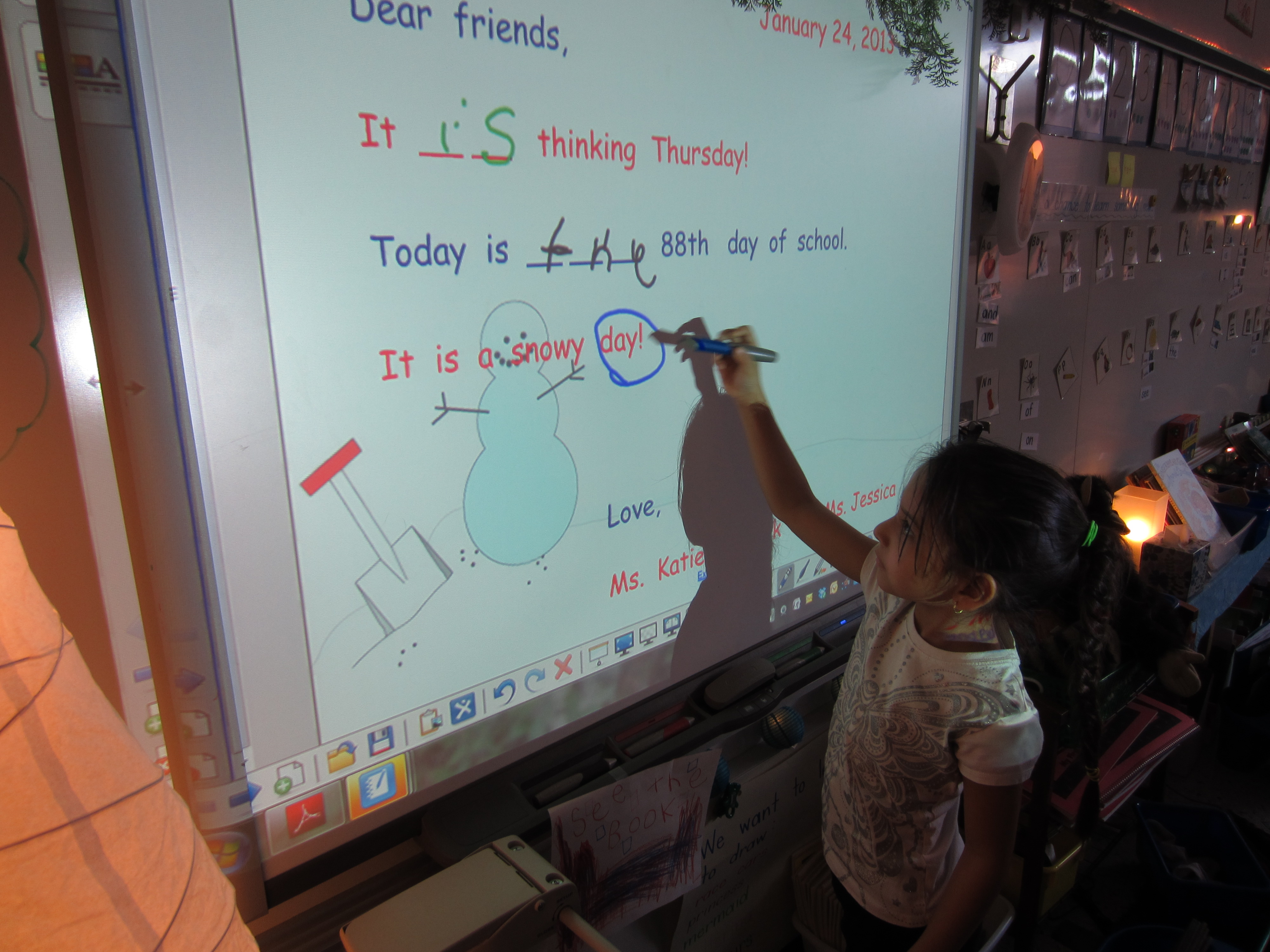
The morning message on the SMARTboard.

-A stronger focus on letters, sounds and other “item-based” things in the context of meaningful literacy work. One example is our daily morning message. It’s a 10 minute, highly focused, literacy event that kids love. I highlight a letter and how to correctly form it, we find words that start with that letter and say the sound the letter makes, we find that letter in the message and we look for other letters and words we know. We talk about words vs. letters, capital vs. lowercase letters, spaces between words, what letters are first and last in a word, and punctuation – just to name a few things that come up during morning message. This is all done through a meaningful message – keeping in mind that meaning making comes first. This message goes home with the kids to share with their families. I print a copy before we do our work together and then another copy that shows the work we did – I copy it 2-sided and send it home. I plan my focus each day based on where my children are and what they need next in their learning.
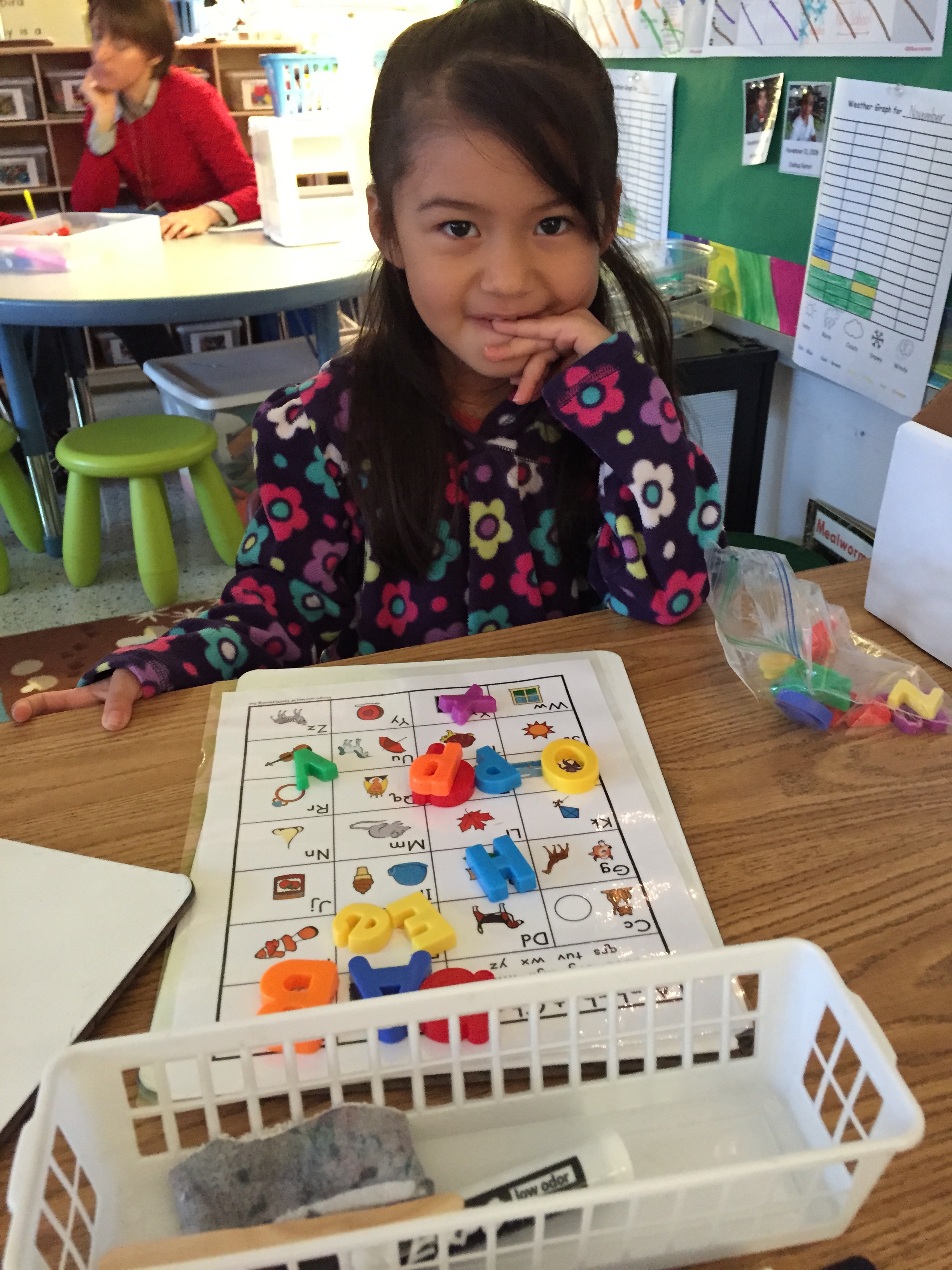
Matching letters to ABC chart

Matching letters to the ABC chart

-Guided reading groups with all children 3-4 times each week. Our kindergarten team is reading and discussing Jan Richardson’s book, The Next Step in Guided Reading. We looked carefully at the pre A – emergent lesson plans and structured our lessons around her framework. When I meet with my pre-A emergent groups (currently, 14 of the 18 children in my class – students who know fewer than 40 upper and lower case letters and hear few, if any, sounds and are lacking in early concepts of print), we go through a fast-paced, engaging lesson that includes working with names, working with letters, letter formation, working with sounds, a shared reading lesson where each child has a copy of the book and an interactive writing lesson. I have a record of where each child is in their letter, sound and link acquisition and can teach directly to their needs within the small group lesson. I love that these groups have the necessary item-based components AND the meaningful reading and writing piece that is so important. I reflect and assess often, changing the groups and the activities within the groups to make sure that they are matching the needs of my learners.

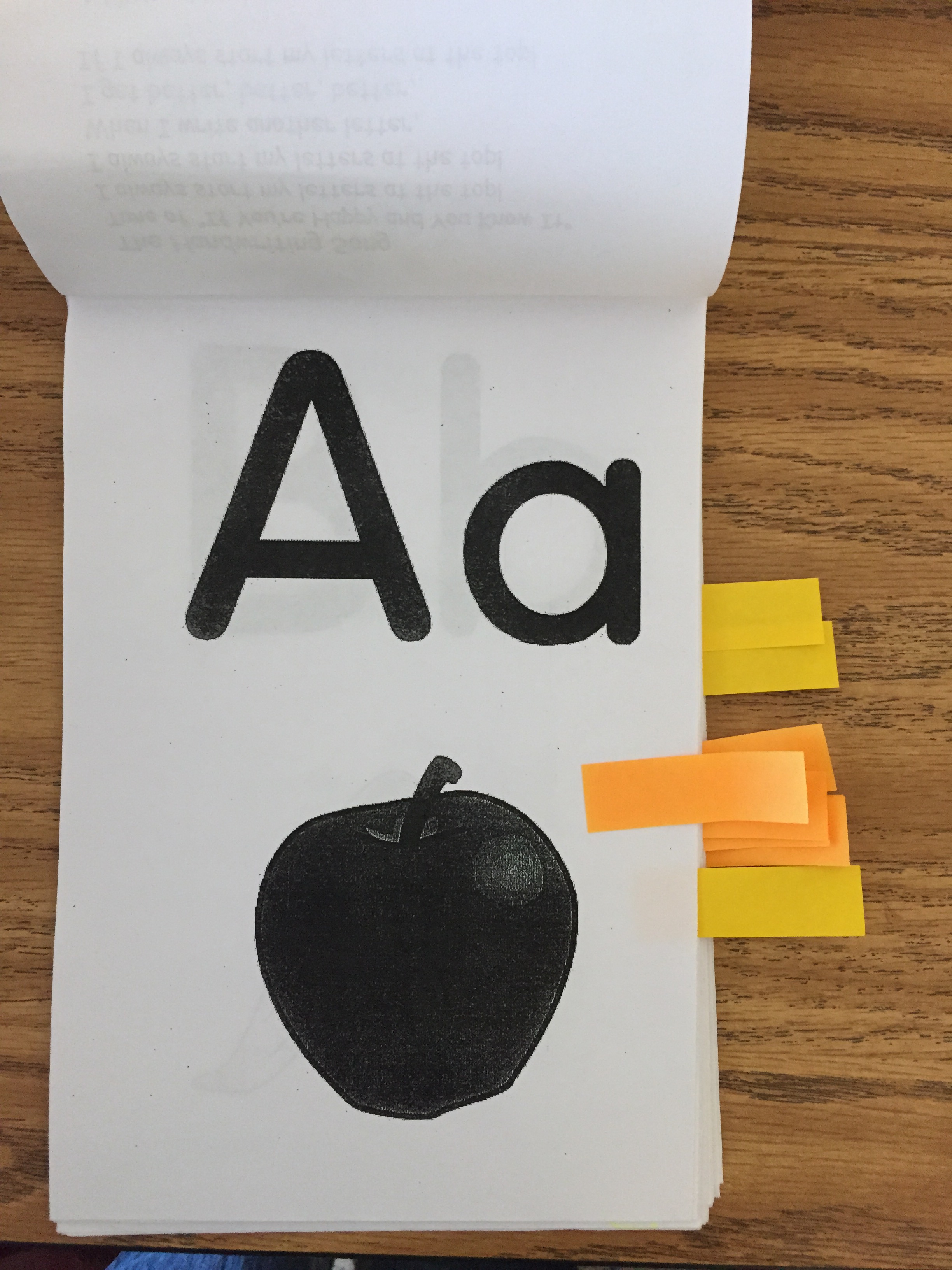
Our letter tracing books - known letters are marked with small Post-it notes.

Our letter tracing books – known letters are marked with small Post-it notes.

-Daily letter tracing books with my instructional assistant. Jan Richardson talks about tracing alphabet books in her book. I made paper ABC books with upper and lowercase letters and a picture and started by tagging the letters in their name with a Post-it.  The students take their finger and trace the letters using the correct formation path, then say the link. (A a apple) As they learn the letters, we add new letters for them to learn – tagging those letters with Post-it notes. Each day, our students have a 3-5 minute session with an instructional assistant or a volunteer, tracing and saying the letter names and links that are tagged. Eventually, they will have all 26 pages tagged with Post-it notes and will be able to trace, say and identify the link for all the letters. We have seen remarkable results in letter identification through daily use of the letter tracing books.

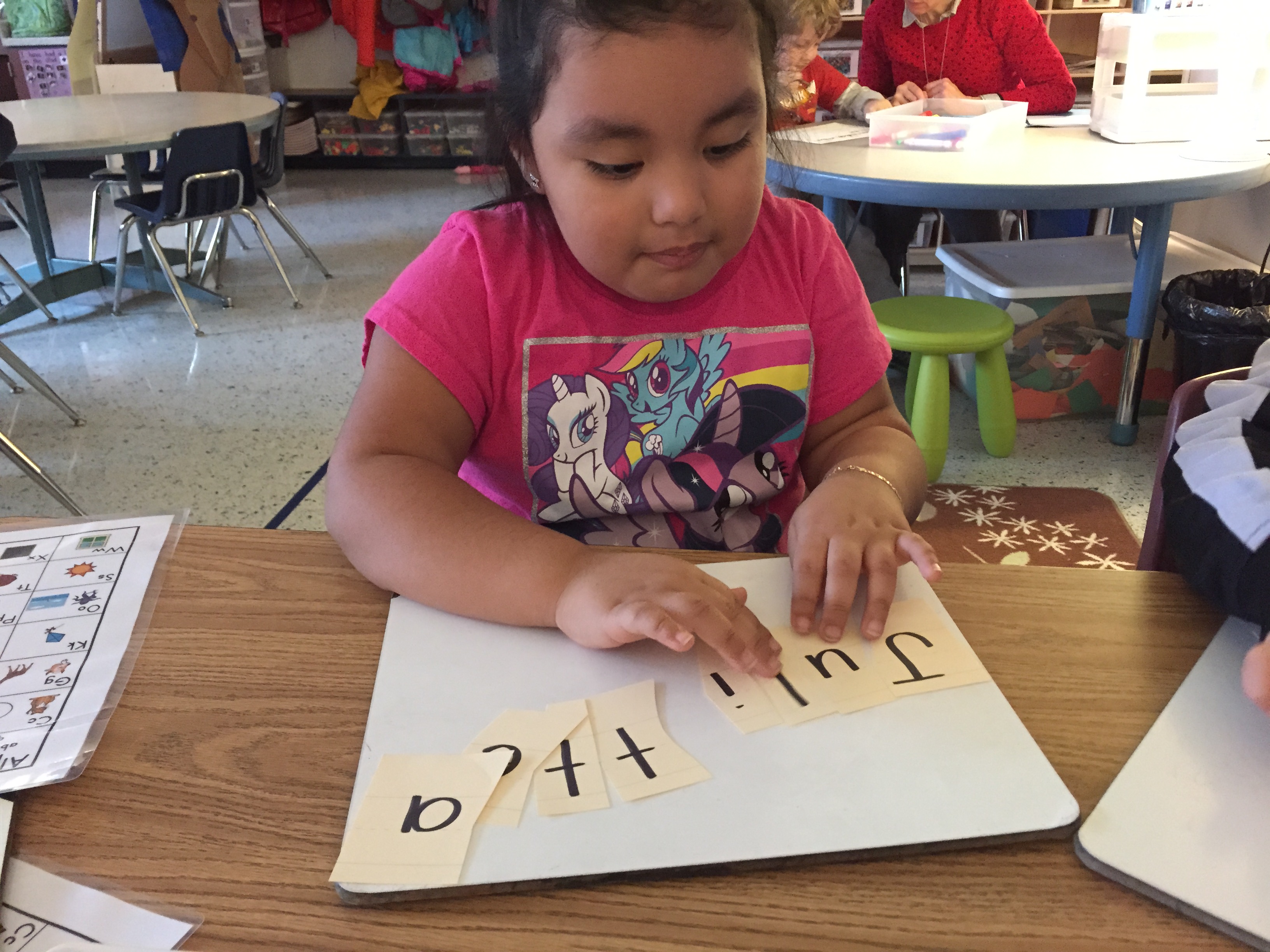
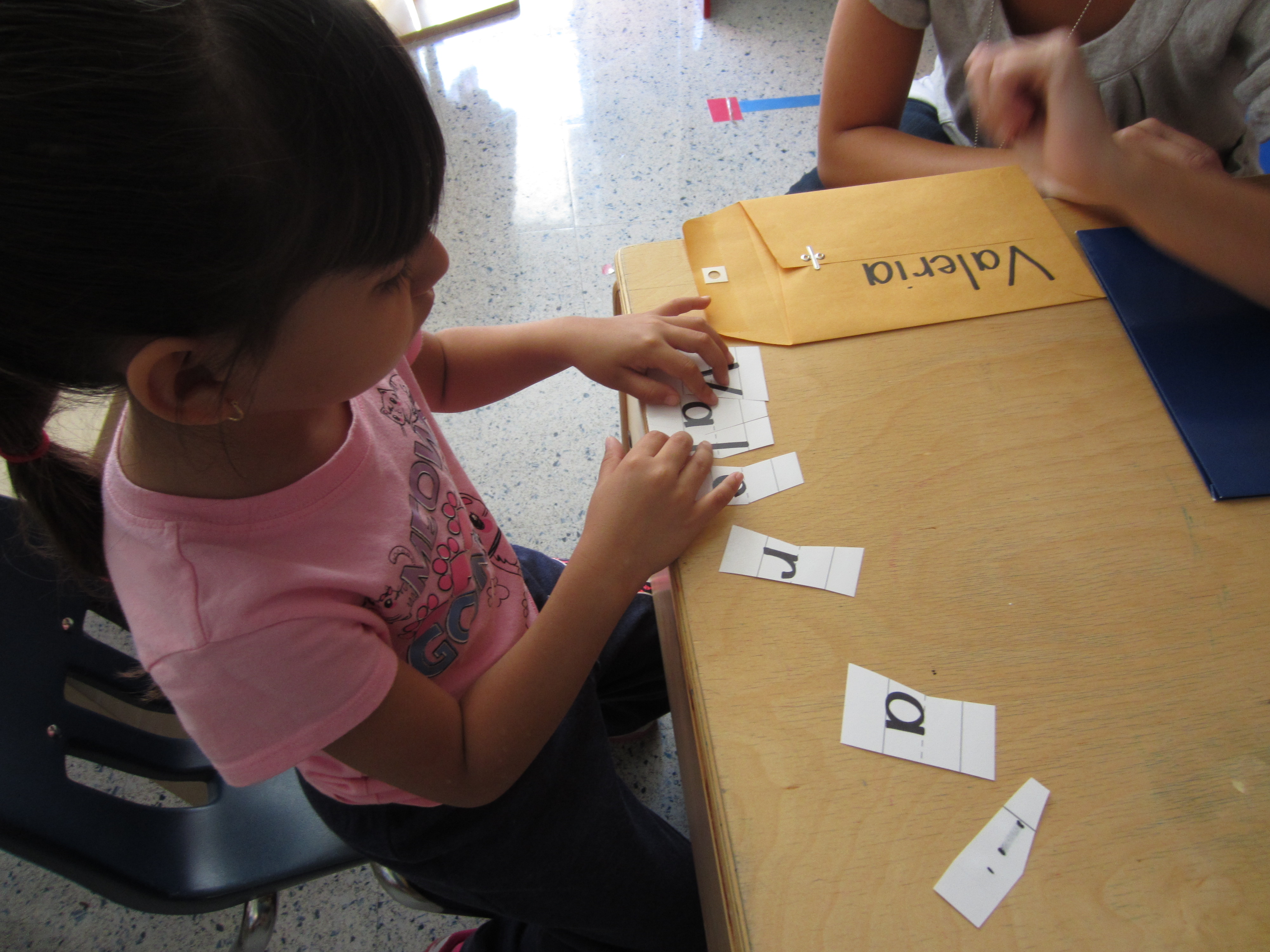
Name puzzles

Name puzzles

These are just a few of the ways I’m teaching with urgency this year. This is all in addition to many read-alouds throughout the day, rich discussions and purposeful talk in the classroom, a daily writer’s workshop, shared reading, community writing, inquiry based projects, listening to and responding to interests and wonderings that the children have, and building a strong community of learners.

NEW Mrs. Wishy-Washy Books and a Giveaway!

We love Mrs. Wishy-Washy!

We love Mrs. Wishy-Washy!

We love Mrs. Wishy-Washy in our kindergarten classroom. She becomes an old friend early in the year when we read the many  early stories of her adventures with the cow, duck, and pig. The big books become treasured items in our classroom. We act out the stories using tiny toys and create interactive writing pieces based on the books. The children beg for more stories about her and get very excited when Mr. Wishy-Washy is introduced.  Last year at the Reading Recovery conference, I was excited to see that there is a whole new series starring Mrs. Wishy-Washy by the wonderful Joy Cowley. I bought single copies of the books and they became fast favorites in our classroom.

Recently, I was contacted by the publisher, Hameray Publishing, and asked to review these new titles. I turned this task over to my kindergarteners. We read the books and used them in our study of story elements including characters, setting, problem and solution. Here are some thoughts from the voices of five and six year-olds – the perfect audience for the Mrs. Wishy-Washy series.

*I like the books because they have animals in them. I like Mrs. Wishy-Washy.

*They are so funny because Mrs. Wishy-Washy is always trying to give them a bath. I liked when the animals went to a car wash. (in the book Mrs. Wishy-Washy and the Big Wash) That was so funny!

*Joy Cowley is a smart writer. She knows how to make kids laugh. I love Mrs. Wishy-Washy!

*Mrs. Wishy-Washy is the best character ever. I like her and the Pigeon (from Mo Willems) the best!

*It was so funny when the animals put on Mrs. Wishy-Washy’s clothes (in the book Wishy-Washy Clothes). They looked funny and it made me laugh so hard!

*Joy Cowley writes books for kids that kids like. She makes the characters solve problems in a funny way. Sometimes Mrs. Wishy-Washy gets tricked by the animals. I like that!

As a teacher, I love these new books too! The Early Birds Collection is perfect for emergent readers, with easy to read text, meaningful story lines and engaging pictures and text. I’ve used these books for small group shared reading and independent reading. If I had multiple copies, they would be ideal for guided reading. The Joy Cowley Collection is excellent as well. These books are a bit more challenging, but still perfect for late kindergarten, first and second grade readers. The books engage children and provide multiple opportunities for predicting and thinking beyond the text. The stories are highly engaging and truly appeal to children at this age. Again, I have used these books in small group shared reading and for independent reading. They would be perfect guided reading texts as well.

I encourage you to visit the Hamaray website and see the new Mrs. Wishy-Washy series, as well as new books with Dan the Flying Man, the Meanies and the Hungry Giant. They also make finger puppets with the characters – perfect for a retelling station. If you love  Mrs. Wishy-Washy, you will love this new series! And if you’d like to win some of these books for your classroom, or a for the classroom of a favorite teacher, then read on…

The Joy Cowley Classroom Giveaway calls for teachers, parents, friends, relatives and anyone else who wants to nominate a classroom to possibly win 90 new titles from The Joy Cowley Collection and The Joy Cowley Early Birds Collection by beloved author and Mrs. Wishy-Washy creator, Joy Cowley! These two new collections of leveled readers, for K-2nd grade classrooms, are developed for shared, guided and independent reading. Finger puppets and 3 audio CDs will also be included. Please nominate your favorite early childhood classroom here. You can also find out more about Hameray Publishing, Mrs. Wishy-Washy and other fun activities on Pinterest, Facebook and Hameray Publishing. You can use the discount code, ZJCC13 for a 20% discount that expires 6/30/13.

Hamaray Publishing is also generously donating a Joy Cowley Big Book as a prize to a lucky winner on our blog! All you need to do is leave a comment below with your name and the grade level you teach before 5pm April 28. We’d love to hear your thoughts on using Joy Cowley’s books in your classroom as well! The winner will be randomly chosen April 28. Check back that evening to see who the winner is!

A few of our favorites...

A few of our favorites…

Disclosure: I received complimentary products for review. All opinions are my own and this is not a compensated post. 

#nf10for10 Nonfiction Picture Book Event!

Screen Shot 2013-02-04 at 11.55.24 PMIt’s the 10 for 10 Nonfiction Picture Book Event! We are joining up with many of our Twitter and blogging friends to participate in this event celebrating nonfiction books. Check out the jog here to see all the other posts sharing favorite nonfiction picture books!

Children love nonfiction. It engages, excites and helps children wonder, reflect and celebrate the world we live in.  Here are a few of our favorites. Enjoy!


Pat’s Picks:

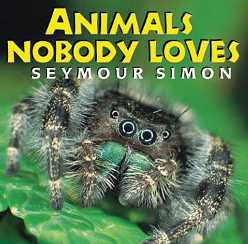
51BL21P6hlL._BO2,204,203,200_PIsitb-sticker-arrow-click,TopRight,35,-76_AA300_SH20_OU01_Anything by Seymour Simon is so well-researched and beautifully written.  Kids love reading about these animals who have been given a bad reputation.  Simon tells us, “Animals are not bad or evil.  They do what they must in order to survive.”  This one is written in easy-to-read text, but a few pictures might be too graphic for the very young.


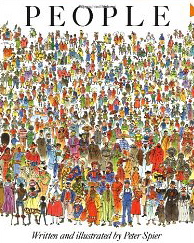
6146nrCbOwL._BO2,204,203,200_PIsitb-sticker-arrow-click,TopRight,35,-76_AA300_SH20_OU01_Yes, it’s been around a long time, but People, by Peter Spier, has always been a favorite of mine.  Of course, it’s perfect for helping kids realize the variations in homes, written languages, games, traditions, and so on, around the world. Not everyone considers the same things as “beautiful”, nor does everyone have the same tastes in foods. I love the message brought home on the last two pages of illustrations. “But imagine how dreadfully dull this world of ours would be if everybody would look, think, eat, dress, and act the same!”  This book pairs nicely with Mem Fox’s Whoever You Are. Both books will lead to great discussions, not only in schools with diverse populations, but in all schools.

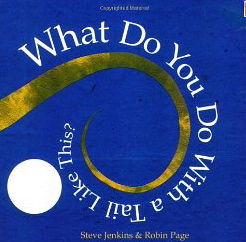
512-77Vd+aL._BO2,204,203,200_PIsitb-sticker-arrow-click,TopRight,35,-76_AA300_SH20_OU01_Steve Jenkins & Robin Page created the wonderful book What Do You Do With a Tail Like This? which is a Caldecott Honor Book.  I’m sure many of you already own this one!  It’s fun to learn what various animals do with their feet, eyes, ears, noses, and tails. I love the big question on a two-page spread (giving time for kids to wonder) and then the way the text is placed in so many different ways when the answers are given.


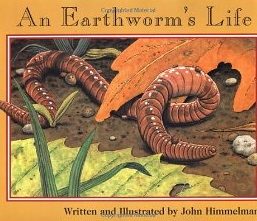
51M-XAFUa5L._BO2,204,203,200_PIsitb-sticker-arrow-click,TopRight,35,-76_AA300_SH20_OU01_With only one or two lines of text on each page, I’m amazed at how much information John Himmelman squeezed into his book.  Earthworms are so easy to find and set up for observation in the classroom.  My favorite part is when a little boy picks up the earthworm and moves him to the garden to avoid getting stepped on.  A good book for talking about respect for all creatures.


Here are three other titles that a librarian friend recommended to me that I have yet to find, but certainly will, because she never steers me wrong!

51HjAPgVnTL._BO2,204,203,200_PIsitb-sticker-arrow-click,TopRight,35,-76_AA300_SH20_OU01_

   51u-04HNT5L._SL500_AA300_51Qb7MzOl0L._SL500_AA300_

Katie’s Choices:

41kQ77hBvbL._SL500_AA300_Beautiful photographs and equally beautiful language make Step Gently Out a wonderful book to help children notice the world around them.


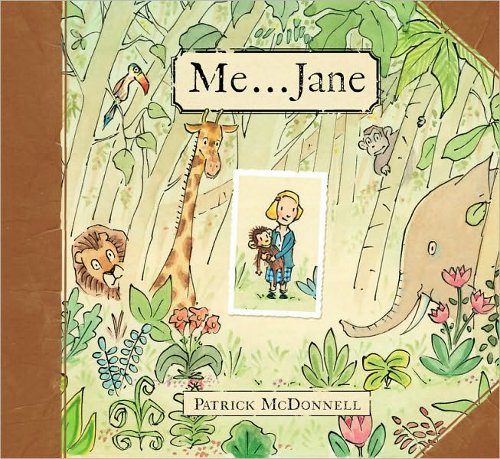
me-jane-coverMe…Jane is an amazing book that tells the true story of Jane Goodall. It inspires children to follow their dreams and live with wonder. It is written simply and is accessible to our youngest learners – and our older elementary or middle school students will also enjoy the story and the inspiration that Jane gives.


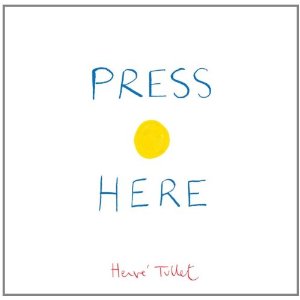
41fphodps0l__sl500_aa300_Press Here is one of the coolest books I’ve read in a while. It holds children spellbound as they interact and use their imagination in this magical book.


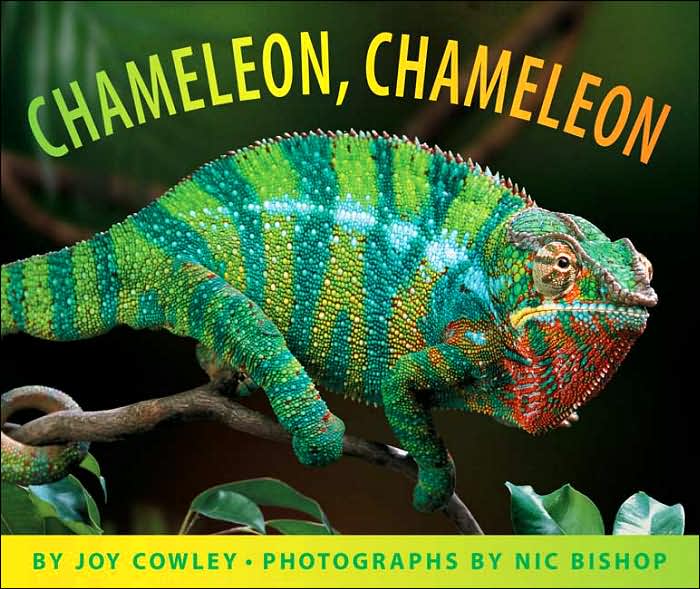
9780439666534-1Chameleon, Chameleon is a class favorite! I use this book early in the year as a writing mentor text. The children love the repetitive, yet rich, language and the detailed photographs. It is an excellent nonfiction text to read and reread.


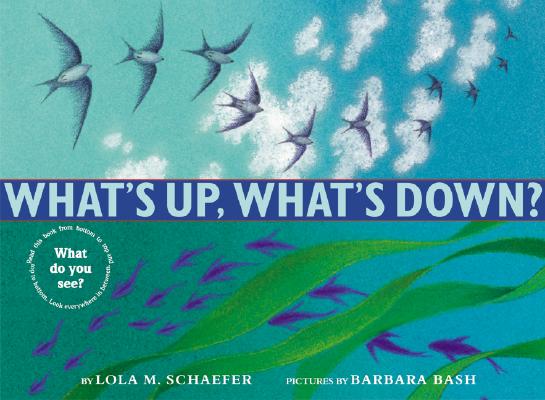
What-s-Up-What-s-Down-9780060297572What’s Up, What’s Down? is a book that is read in a variety of ways – from the bottom up, from the top down, sideways. It takes the reader on an exciting and engaging journey from many perspectives. Children will enjoy this fabulous celebration of nature as they read and interact with the book.


Thanks to Cathy and Mandy for starting this fun event! What are some of your favorite nonfiction books to read with children? Please share!

Morning Message

Morning Message on the SMARTboard

Morning Message on the SMARTboard

I recently sat down with my kindergarten team to look at our standards and do some big picture planning for the upcoming quarter. As we were unpacking the standards, we also talked about where in our day we could best teach the expected curriculum objectives. It became very evident to all of us how critical our morning message is, especially in the area of phonics and word work – but really in all curriculum areas. Morning message is a daily occurrence rich with learning possibilities.  It’s where the heart of my word work and phonics instruction occurs.

Morning message

Morning message

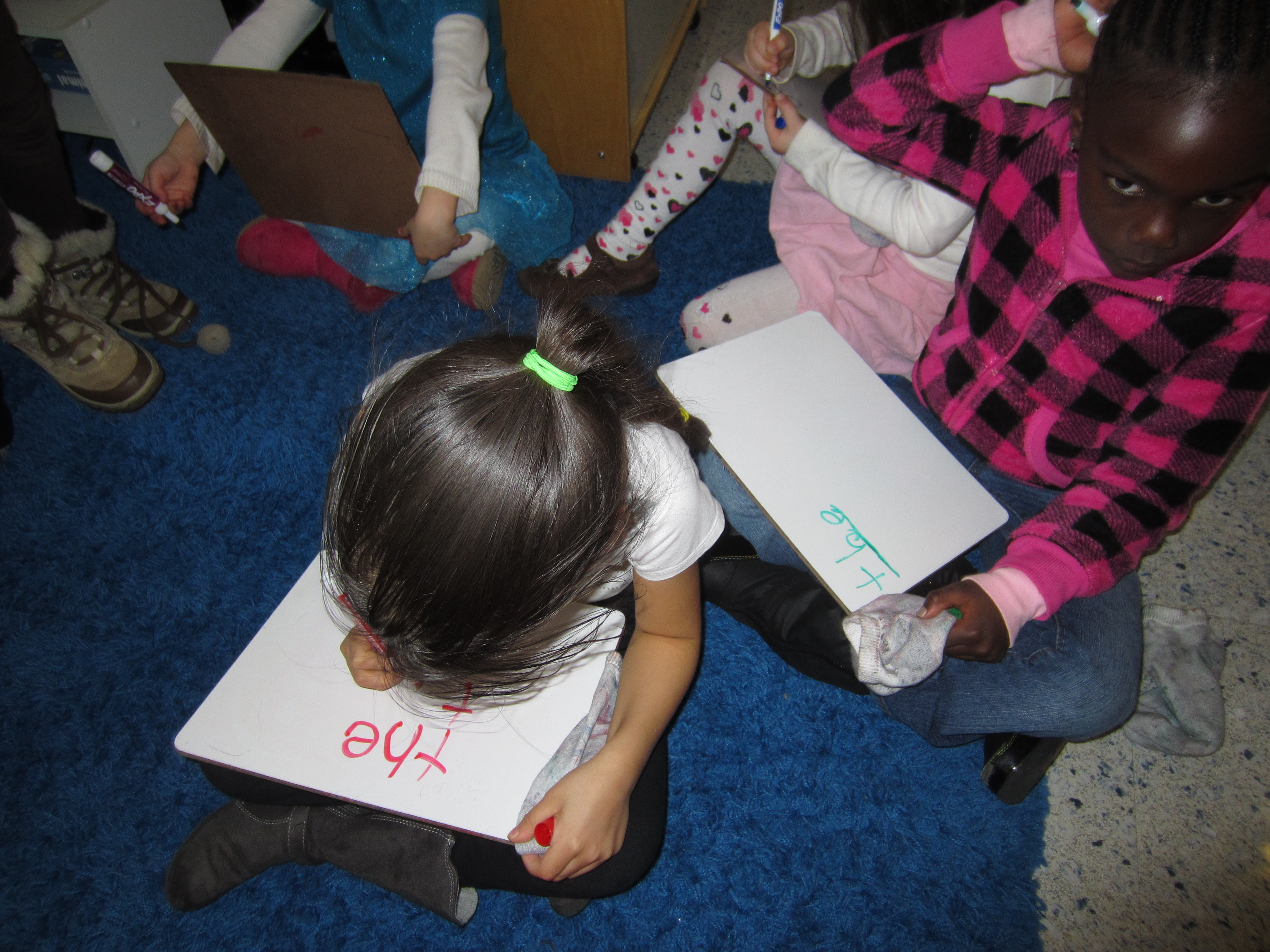
My children come together on our blue fuzzy rug in front of the SMARTboard with their own whiteboard and marker to begin this daily routine. The message is pre-written and carefully planned to address a variety of differentiated teaching objectives and to engage the children in playful learning. I often include pictures of the students and our classroom, book covers, things we are studying or wondering about, as well as predictable text that children can read. There are places for the students to fill in missing words and opportunities for them to interact with the message as we read and respond to questions within the message, circle or highlight words we know or things we notice, and fill in high frequency words to make our message make sense and sounds good.

We read it together first as a shared reading experience. Then we go back and fill in missing words and look for things we notice in the message. I ask the children “what do you notice?” and invite them up to the board to show us and explain what they see. The children follow along, writing on their own individual white boards while one child is writing on the SMARTboard. Children may notice familiar high frequency words, letters that are the same as in their names or a friend’s name, days of the week, numbers, punctuation that they have seen in another book, words they know, etc. I always ask them to share what they notice first, and then I move into my teaching point.

Interacting with the morning message

Interacting with the morning message

For many years I did this on chart paper but one great benefit of having a SMARTboard is that I can now print it out and send it home. I print a two-sided copy – one side is the message as it looks at the beginning of our learning before we have interacted with it, and the other side is printed after we have marked it up with our thinking. This message goes home daily and is a great way to share our learning with our families.
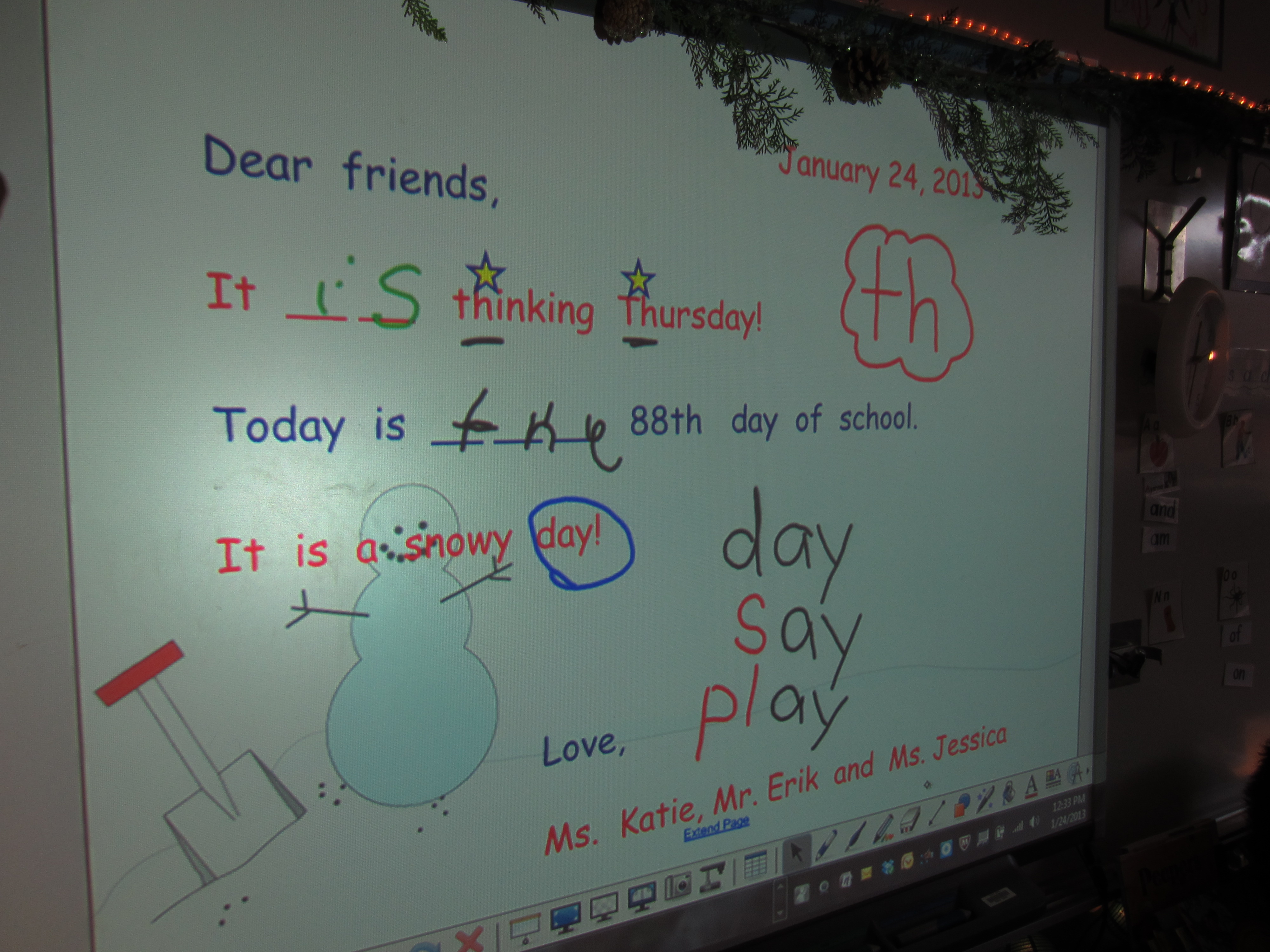
Here are some things to consider when teaching with a morning message:

  • Keep it simple and repetitive. My messages are typically 3-4 lines long. I keep the first two lines the same for most of the year and change the third or fourth line to go with a teaching focus. For example:

January 10, 2013

Dear friends,

Today is fabulous Friday.

It is the 70th day of school.

Do you think it will snow today?

Love,

Ms. Katie

  • Make your sentences obvious. I write one sentence on each line and alternate colors. This is similar to beginning texts that children are reading and helps children see the different sentences clearly. It provides another teaching opportunity to differentiate between a word and a sentence, as well as making it easier for children to read.
  • Always read the message together first and then read it again at the end of your lesson, especially if you have filled in missing words. You want to keep meaning at the forefront and give the children multiple opportunities to engage in shared reading of the text. I use a pointer to model one-to-one match and directionality.
  • Keep it short and fast paced. My morning message lessons typically last about 10 minutes. I choose 3 students each day to come up and interact with the message. Having individual whiteboards available allows all children to be engaged throughout the lesson.
Writing on the white boards while we do morning message

Writing on the white boards while we do morning message

Here are just a few teaching objectives that can be taught through morning message:

  • High frequency words – I use the morning message to introduce our new word wall words each week.
  • Word analogies – if “at” is in the message, you can make a list off to the side of words that you can write if you know how to write “at” (cat, sat, hat, fat, mat…)
  • Capital letter and lower case letter usage
  • Punctuation
  • The difference between a letter, word and sentence
  • Rhyming words
  • Blends, digraphs, clusters
  • Connections between children’s names and words in the message (“Can anyone find a word that begins the same way as David’s name?”)
  • Beginning and ending sounds
  • Vowels and consonants
  • Letter formation
  • New vocabulary for content areas
  • Surveys
  • Days of the week, months of the year
  • Friendly letter format
 A completed morning message

A completed morning message

There are so many possibilities for teaching with morning message. It’s a time that children love, it builds community and is rich with authentic literacy learning. Do you use a morning message in your classroom? What ideas do you have? Please share!

The Wonder of It All

“If I had influence with the good fairy who is supposed to preside over the christening of all children I should ask that her gift to each child in the world be a sense of wonder so indestructible that it would last throughout life, as an unfailing antidote against the boredom and disenchantments of later years, the sterile preoccupation with things artificial, the alienation from the sources of our strength.”

Rachel Carson, The Sense of Wonder


Discovering magnets for the first time!

Discovering magnets for the first time!

Kindergarteners come to school with a huge sense of wonder. They are constantly questioning, pondering, discovering, wondering, exploring – it’s just a natural part of who they are. I absolutely love this part of working with four and five year olds! I think it’s my job to keep that sense of wonder alive and to encourage it as a part of the learning experience. While most of us have a curriculum and/or state standards to follow, I find that the standards are simply a departure point. If I only teach the standards as they are written, in order to “cover” an objective, I miss many opportunities to get kids excited about learning. I once had an instructor tell me, “if you’re only going to cover something, you may as well bury it in the backyard.” This has stuck with me and I try very hard to create learning experiences that are ongoing, meaningful, deep and full of discoveries.

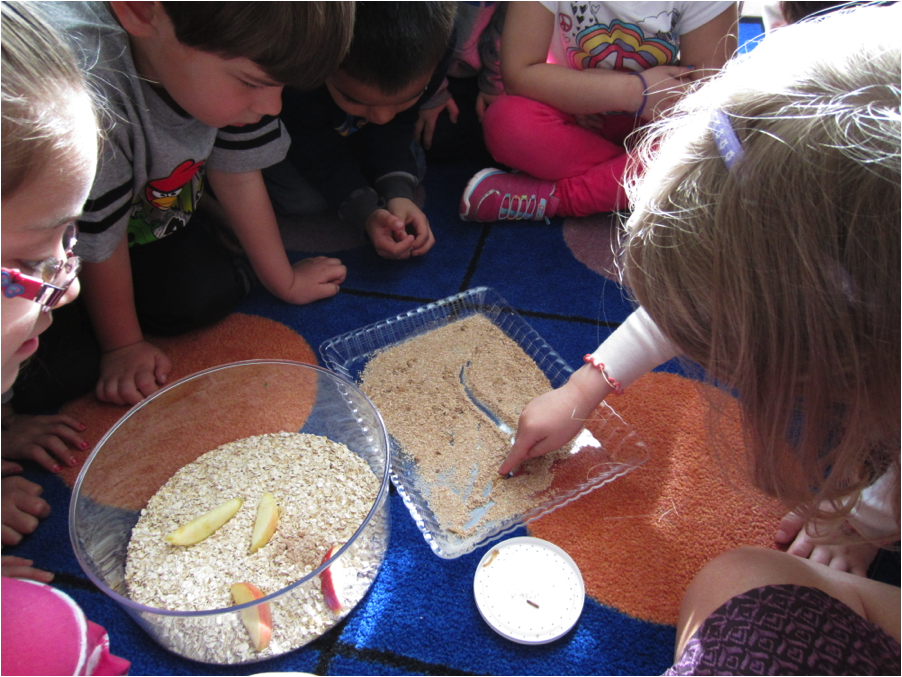
Setting up the baby beetle habitats – counting how many we have

Setting up the baby beetle habitats – counting how many we have

Life cycles are a part of our curriculum. Our county provides us with an ant farm, which is a fun way to study life cycles, but I like to go beyond that by extending this study throughout the year. We start the year with monarch caterpillars in our classroom. We witness the amazing transformation to butterflies and then track their migration to Mexico. In the winter we bring “baby beetles”, commonly called mealworms, into our classroom. The children observe the tiny wormlike critters go through their transformation into large, black beetles. We count, record and observe the changes. We get them out of their habitat and look at them closely, feel them crawling on our hands and experience their life cycle firsthand. We get an incubator in the spring and learn about chickens – watching the baby chicks hatch in our classroom. Through these many experiences, students truly learn our required standard about the life cycles of living creatures. They also learn much, much more.
Playing with the dinosaur sensory box while making a book about dinosaurs

Playing with the dinosaur sensory box while making a book about dinosaurs

This year my class is extremely interested in dinosaurs. I started a dinosaur box the first week of school in order to appeal to this interest. I filled it with dinosaur books, toy dinosaurs, pictures of dinosaurs and fabrics, rocks & stones to create dinosaur habitats. We also have a dinosaur sensory box, an app on our ipads that teaches kids how to draw dinosaurs as well as an app that teaches kids information about dinosaurs. Out of this play area, many children have written books to teach others about dinosaurs. They have learned how to read nonfiction texts with graphs, labels, captions, and various nonfiction text features. They are continuously drawn to the dinosaur play because it is something that interests them. They want to learn more and they want to share their learning with others. Are dinosaurs in my curriculum? No, but through the dinosaur play many of my literacy standards are being met.

Our class “Wonder Wall”

Our class “Wonder Wall”

Another way I try to keep wonder alive in our classroom is with our “Wonder Wall”. I first read about this idea in the fabulous book, A Place for Wonder by Georgia Heard and Jen McDonough. We have a special board in our room where we can put post-it notes about things we wonder about. This is a way to keep track of our thinking and to remind us about things we want to talk about, investigate, explore and learn more about. I keep a close eye on the Wonder Wall and use it as a launching place for classroom units of study, books we read, websites to visit and experts we might know that can come and share their knowledge with us. It’s a great way to keep track of the many wonders that kindergarteners have!

Playing with fake snow in a classroom sensory box

Playing with fake snow in a classroom sensory box

Deep learning and exploring happens when children are encouraged to follow passions, explore interests, inquire and wonder. Giving children time to explore and honoring their investigations, thoughts and discoveries allows for real learning that will stay with children forever. I try to not get caught up in the push to follow pacing guides and “cover” the curriculum. I want my teaching to be deep so that the learning sticks and is meaningful and exciting for the children. I follow the children’s lead while making sure I am accountable to the curriculum, standards and expectations of my county. It’s a juggling act of sorts, and it’s not easy, but it’s something that I can’t do any other way. I strive to be that “good fairy” and give my children the gift of a lifelong sense of wonder and to keep my sense of wonder alive each day in our classroom. I can only do that when my focus is on the children in our classroom, their interests and their needs, at this moment in time.

How are you keeping wonder alive in your classroom? 

This post is cross posted on the #kinderchat blog  as part of the NaBloPoMo project. Early childhood educators from all over the world have contributed to the #kinderchat blog this month for daily posts about teaching children in the early grades.  Join us for our weekly chat on Twitter – 9pm EST Mondays under the #kinderchat hashtag – and for a new Webinar series starting January 30. Katie will be leading a conversation about writing in the early years at 9pm EST January 30. Join us in Blackboard Collaborate for the first #kinderchat Campfire Webinar

Peace

“If we are to teach real peace in the world, we shall have to begin with the children.” -Gandhi

I was paging through some old photographs this morning and found this one from several years ago. I paused, remembering this wonderful class I looped with and our two year unit on “peace” initiated by a first grader who grew up in Afghanistan, and then I began to cry. This photo captured some of the emotions that have been roller coasting through my mind these past 9 days. It does begin with our children. I feel so lucky to be an educator and to have the opportunity to make a difference and truly teach peace.

February 21 001

King and Queen of the Day

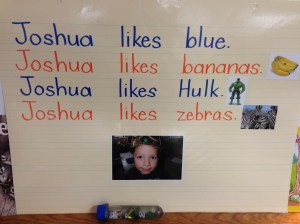
K 13th week 022Our latest shared writing experience is with the King or Queen of the Day. Each day a different child is chosen to be King or Queen. They get to wear a crown and get their picture taken. Then the class interviews them – asking them a few questions about things they like. I did a lot of modeling at the start, talking about what a question is and what kind of questions could help us learn more about each other. For example, we talked about how the question “what is your favorite animal?” has an answer, while the question “what is your favorite zebra?” doesn’t really have an answer  – and how “I like zebras.” isn’t a question. (huge concept for kinders!) The conversations about what is a question and what is a question that can be answered are great learning experiences and help me see who needs more support with this stage of their oral language development. And of course, we continue these conversations daily! After experiencing 18 interviews, I am hopeful that my kindergarteners will have a much deeper understanding of what a question is and how to ask someone a question to find out more about them.

I do the writing on a large chart as the children conduct the interview and negotiate the text together. We count the number of words first and rehearse what I should write on the chart. I have the kids help me write the words orally, especially the names. I show them how there needs to be a space between each word, and that each line is a sentence. I use language like:

-what letter comes first?

-what letter is next?

-what is the last letter?

-how do I write “like” – can you look on the word wall?

-what letter do you think “zebra” begins with?

-how many words are in this sentence?

-I need to make sure and start “Hulk” with a capital letter because it’s a name, just like Joshua

The interviews are daily opportunities to teach many of our phonics skills within a meaningful context. And the kids LOVE being the King or Queen of the Day!

Name bottles

Name bottles


After the interview, the King or Queen makes a name bottle. These are baby soda bottles from Steve Spangler Science. We put letter beads that spell the child’s first name in the bottle along with some glitter and sparkles. I fill it with water and close the lid tightly. As we make name bottles for everyone in the class, this becomes a game where kids can try to figure out the name in the bottle and match it to a name strip.

The last step in our King and Queen of the Day routine is to find pictures to match the words in the sentences and laminate the chart. We re-read the previous day’s charts before we do a new interview. This is a great shared reading experience, and the kids love to revisit the charts. After all the kids have had a chance to be interviewed, the charts are put together into a large class book. This is a favorite book to read throughout the year.

Shared writing chart after an interview.

Shared writing chart after an interview.


Name Books

Name puzzles

In my kindergarten class I have a wide range of learners – from the few who aren’t quite sure what a letter is to the few who are fluently reading Hattie and the Fox. I’m sure many of you can relate to this! I was reflecting on my work with the kids who had no known letters, or only a few, and wondering what our next steps were. I always start with the known, so names were my launching point. We did many name activities and these students were beginning to consistently know a few letters from their names. I wanted to create a book with them to keep in their book box and to help reinforce the teaching I was doing. These particular students were not quite ready to start an ABC book like the ones Pat and I refer to in Chapter 6 of Catching Readers. Since they had very limited letter knowledge, (2-5 known letters), I wanted to start with something more in their ZPD. So I decided to make them a “name book”.

“For almost every young learner, knowledge of one’s name unlocks a multitude of understandings. A name forms a link in helping a child learn about print.”

(Fullerton, 1997)

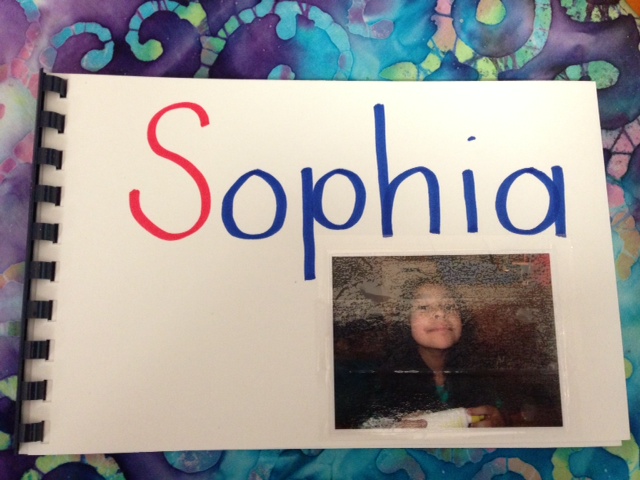
The cover of a name book.

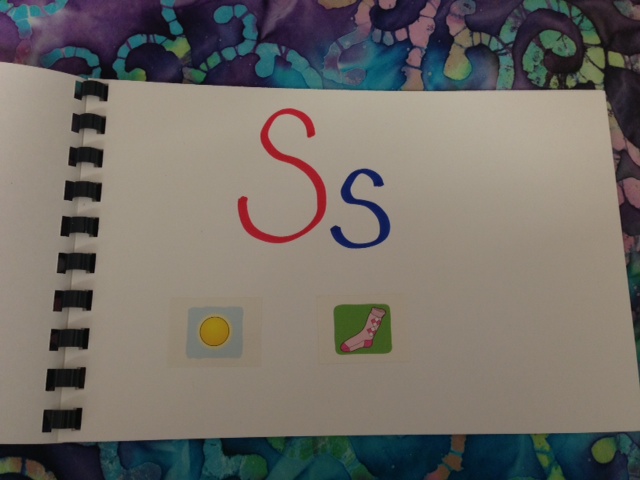
I made the books with enough pages for each letter in the child’s name and one additional title page. I wrote the full name (first name only – for now) on the cover, making the capital letters red and the lowercase letters blue. Then I put a picture of the child on the cover as well. On the inside pages I wrote the letters of the child’s name – one per page – again with the capital in red and the lowercase in blue. I sat down with each child as I created this and the child chose links (pictures or words) to go with each letter. They either put a sticker on that page or drew a picture. These books can now be read with the children, read independently and kept in book boxes or read with a buddy. Currently, I only made name books for my children who are working on learning their names and the letters in their names. But I think all the children would enjoy having one of these books. It would make a great book basket for our reading area and would allow children to learn each other’s names.The first page of Sophia's name book.

Some other concepts that can be taught by using names and the name books:

*The connections between letters and sounds

*That letters can be written in two ways (upper and lower case, like David)

*The same sound can be represented by different letters (Jasmin, Gerald)

*Concept of word vs. letter (“Jose’s name is a word. How many letters are in this word? Let’s count them.”)

*Long and short words (“Jackeline’s name is a long word, Bo’s name is a short word.”)

*Words have parts (“Let’s clap Alexander’s name. Let’s clap Ann. How many parts?”)

Names are such a powerful tool for teaching in the early grades. How else are you using children’s names to teach?