Is My Child Dyslexic?

If you have been teaching for a while you have probably come in contact with a parent of a child who is struggling learning to read who asks, “Is my child dyslexic?”  Here is what Frank Smith has to say about the term.

“This term is a label, not an explanation.  Dyslexia means, quite literally, being unable to read. Children are dyslexic because they can’t read.  To say that dyslexia is a cause of being unable to read is like saying that lameness is a cause of inability to walk.”

Is the brain of a struggling reader wired differently or is it permanently fixed as some parents and teachers might believe? With these questions in mind, let me digress a bit and share a story.

This past summer, my niece’s son, Josh (age 12) had brain surgery.  He had been experiencing seizures for the past year and a half.  Through all that time the doctors tried countless medicines to control the epilepsy but to no avail.  Surgery, to stop as many as 15 seizures a day, seemed the only option.  After months of tests to pinpoint the exact source of the seizures, a piece of his brain was cut out.  His parents were told that other parts of the brain would eventually take over the functions that were removed.

The good news is that Josh has been seizure free for several months now! Without going into too much detail, I will share that Josh lost considerable language skills and vocabulary immediately following the operation.   When questioned just days after the operation he could not come up with any answers to: “name some farm animals” or “name some video games” or “name some movies.” You can imagine the panic his parents experienced.  And yet after only 4 or 5 weeks, I saw Josh and his word retrieval issues had improved tremendously.  He recommended that I read Among the Hidden, a book he was reading for his English class. He then proceeded to tell me all about the book, including very specific details.  He is successfully functioning once again as a studious 7th grader!

This experience makes me realize all the more how malleable the brain is.  Carol Lyons talks about the plasticity of the brain. “Recent research in neuroscience shows that the brain can change its physical structure and its wiring long into adulthood through teaching and experience.”  She defines neuroplasticity, a power we have until old age, as “the ability of the brain to change in response to teaching.”

It is absolutely amazing what the brain is capable of! And yet, how many of us think that dyslexia is a permanent condition? How many teachers think that a child diagnosed with a learning disability implies that his brain is fixed forever?   How many doctors used to think that trying to rehabilitate a person with brain damage after a stroke was time wasted? I once heard the parent of an LD child say, “But he can’t do that because his brain works differently” as if there is a permanent situation that can’t be fixed. Now neuroscientists have proven all of those beliefs to be false.  This is great news!  Spread the word.

As teachers of reading we all have had those children who read ‘was’ for ‘saw’ or continually mix up b and d.  The longer the problem goes on, the harder it is to fix.  But there are ways to retrain the brain to work with these issues. And the earlier, the better. First and foremost, we need to teach reading as a meaning-making activity. A child who learns to read for meaning, will not mistake was/saw in. sentences such as, “Jesse saw the snake hidden under the rock” or  “I was having a hard time making up my mind between butter pecan and chocolate ripple.”  And if he does mistake it at first, he will quickly self-correct if he is reading for meaning.  You can also train the child to put a finger quickly under the first letter and make that sound.  It’s difficult to say the word ‘was’ if your lips are shaped and ready for an /s/ sound in ‘saw.” And vice versa.  Yes, these kids may have trouble with reversals, but we need to give them ways to solve those problems independently.

Ultimately the parent question I began with should really be, “Will you be able to teach my child to read?”  And hopefully we will answer, “Yes, I will keep working until I find the way to support your child in learning to read.”

What are your thoughts on this topic?  Do you believe that all children can learn to read?

To read more about how brain research relates to learning to read:

Lyons, Carol “Changing Lives Forever:  Looking Backward and Forward” Journal of Reading Recovery, Spring, 2010

Lyons, Carol.  Teaching Struggling Readers:  How to Use Brain-based Research to Maximize Learning, Heinemann, 2003.
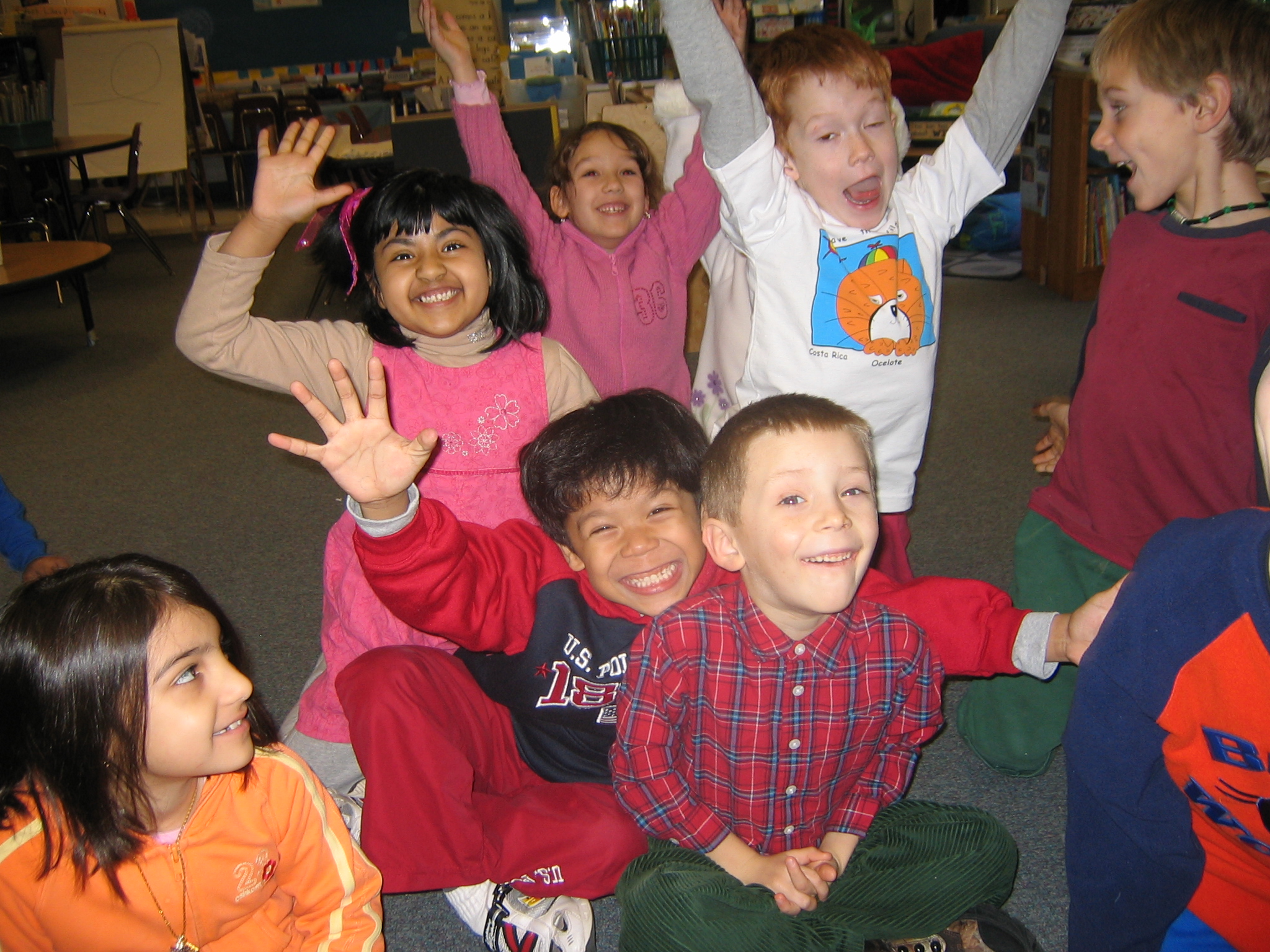
Joy

I’ve been thinking a lot lately about what brings me joy in my teaching life. Joy, by definition, is a source or cause of delight. I think back to my favorite teachers as a child, and it was clear that they found joy in teaching. I’m sure they had many of the same stressors that teachers today have, and yet, they remained joyful in spite of it all. Today, teachers are challenged daily with a zillion things that don’t hold a lot of joy, and in fact, some can be downright spirit crushing. But it’s up to us to create joy in our teaching lives, and share that joy with our kids and our colleagues.

Here are five things that bring joy to my teaching life.

  1. Sharing a new book with kids. I love books, and I love sharing books with kids. This week I shared a Piggie and Elephant book (We Are in a Book! by Mo Willems) with a class of first graders. Their laughter and excitement as I read the book was fabulous. They had such a hard time staying “criss-cross applesauce” on the rug – they wanted to stand up and get closer to the book.  And when I said they could find more of this series in the library they cheered. Seeing kids this excited about books and familiar authors is truly joyful!
  2. Inquiry. As a learner, I am most engaged when following a topic that I am passionate about and have a personal interest in. Inquiry projects with kids encourage questioning and allow them to pursue learning that directly relates to their lives. There is much joy in seeing a class constantly questioning and experiencing learning by co-constructing an evolving curriculum.
  3. Writing with kids. Teaching within a Writer’s Workshop is an amazing thing. I love how excited kids get when I share a new writer’s technique with them or when we discover something together about an author’s piece. I’m always impressed with how bravely and fearlessly young writers try on a new technique and play with it in their own writing. Sitting side-by-side with a writer gives me an opportunity to connect with that child and his or her writing and see the possibilities that hide within each writer. A child’s writing is something to celebrate and find joy in.
  4. Play. I believe in the importance of play. Through play we can learn so much about each other, the curriculum and ourselves. When we are playful, it is difficult to get upset, stressed out or cynical. Play should infiltrate our teaching lives (as well as our personal lives!).
  5. Kids. Kids bring joy to my life. The hugs, the funny things they say, the way they light up when they figure out a tricky part in a book or publish a story or solve a challenging math problem or discover a spider web on the playground.  My life wouldn’t be complete without a daily dose of kid joy.

What brings joy to your teaching life? 

Big Fans

I sat down to work with three fifth graders the other day, all three being struggling readers. They’ve been placed in my intervention group because they are reading more than three years behind grade level. It’s safe to say they are not big fans of reading. It was our first day meeting together, and I was nervous. I hoped my lesson would capture their attention enough that they’d enjoy coming to read with me in the future. I want so much for these readers. I want their learning to accelerate rapidly, I want them to see themselves as readers, and, in truth, I want them to become fans of reading.

I chose a nonfiction text that I thought might interest them. Being close to Halloween, I thought a book on bats might spark some curiosity, and hopefully hook them on a book. We talked about the book together first, then each child read the book by themselves. They were each reading at their own pace, but they stopped often to talk, wonder or comment on the bat facts the author was telling us. They flipped back and forth in the book as they read and talked about what they read. They shared common experiences and expressed disgust at some of the photos. Before we knew it, our half hour was over. And these fifth graders were begging for more books on bats! They couldn’t wait to take the book home to share with their families, and even wanted me to give them poster board so they could look up their questions on the internet and make bat posters to share with their class.

I was thrilled that this book was able to hook these reluctant readers. It reminds me of how important it is to carefully choose the texts we use with all of our readers – but especially our most struggling. I am also reminded of how important it is to interact with texts alongside our struggling readers. They need to see how books can be exciting, how books can make us wonder, think, question, get grossed out, and pull us in. They need to experience that sense of time passing quickly when you’re totally hooked into a book. As one of my fifth graders said, “no way! We can’t be done yet!!”

In Catching Readers, Pat and I often refer to engaging our readers by choosing high interest books, incorporating LOTS of talk and working in that child’s Zone of Proximal Development so they can feel successful and build upon prior knowledge. Take a minute today to reflect on those kids who are struggling in your classroom.  Are you choosing high-interest books for small group work? Are they choosing books that interest them for independent reading? Do they have lots of books available to them that are at a “just-right” level for them? Are they having multiple opportunities to talk about what they are reading? Are they seeing themselves as readers? Are they seeing all that books can offer?

How are you helping your readers become “Big Fans” of reading?

Our Crazy English Language

As I was sitting in For Eyes the other day waiting for my new glasses, I noticed the wallpaper was composed of running words that were synonyms for the word “look,” very apropos for an eyeglass store.  Written continuously it said, “peep, spy, view, gander, glance, survey, scan, investigate, skim, gape, google, peer, look, stare, gaze, inspect, scout, notice, glimpse,” and there were many more.  Who knew there were so many varied meanings for basically the same word!

As I left, I couldn’t help but think about our English Language Learners (ELLs).  There is so much vocabulary for them to learn!  But I also thought about how important it was that we continuously expose them to new vocabulary, not white out or cover up unknown words in the books they are reading.  It is through frequent exposure that they will acquire such synonyms or varied connotations of vocabulary words.  As teachers, we need to provide experiences with new vocabulary within the context of reading real books and writing authentic messages together.

When we are reading with a child, we try to be aware of:

1) when the child can pronounce the word but is confused because the word means something different in this situation, or

2)  the child has the concept of the word, but the particular vocabulary word in English might be new for him, or

3)  the child has neither the ability to recognize or pronounce the word and also does not have a concept for that word.

For each of these situations our support would differ.

In the first instance, the child may be able to read “’Come quickly!’ she cried’” but may only know the word “cry” as “shedding tears.” Teacher support may be necessary for helping the ELL understand that the word is being used in a new way.  In the second instance, the child may be able to figure out what the word might mean by using context clues.  He may know that something very funny just happened in the story and that’s why the character said, “That was hilarious!” even though the word hilarious is not in his speaking vocabulary.  Support from the teacher may be necessary to help the ELL realize the connection between funny and hilarious.  In the third situation, the ELL might not have the concept of the word as well as not being able to solve the word.  For example, some children may be unfamiliar with a hearth or a scarecrow or a skyscraper.  In this instance we not only have to help the child with word solving skills to be able to pronounce the word, but we also have to build the meaning of the vocabulary word with pictures or gestures or a more detailed explanation.

This week try paying close attention to the English language in the books your students are reading.  What examples are you noticing of vocabulary that might be tricky for an English Language Learner?

For further reading on this topic, see Chapter 7 of One Child at a Time (Stenhouse) where Pat and Katie work together to improve their book introductions for ELLs.

What’s RIGHT with education?

Lately there has been a lot of talk about education in the news. Unfortunately, it seems to be a lot of talk about what’s wrong with education and how we can fix it. We’d like to take a minute to share our list of what’s right with education. What does it look like when things are going well? What are the signs that a school or a classroom doesn’t need to be “fixed?”

Here are a few of our thoughts.

1.  Teachers are smiling.

We’re not just talking about the “nice to meet you smiles,” but the genuine “I love my job” smiles. Those authentic smiles to kids, parents and colleagues in the hallways, classrooms and teacher’s lounges are signs that teachers love what they do. Teachers smile a lot more when they are respected, trusted, encouraged and celebrated.  A school most likely doesn’t need to be fixed when the teachers are happy.

2.  Kids are smiling.

We want our kids to love learning, love school, enjoy what they are doing, and feel valued as contributing members of the classroom community. It’s our job as teachers to make sure we’ve created the environment for this to happen.  Kids smile when they have choice in what they read and write, when they are listened to and respected, and when they are encouraged to do their best. A school most likely doesn’t need to be fixed when the kids are happy.

3.  Kids are reading and writing daily and growing as literate beings.

A school that is working well has kids engaged in daily, meaningful literacy work. Kids have ownership of their reading and writing and are given sufficient time each day to practice.  Kids aren’t doing mindless worksheets or isolated activities just to have something to turn in to the teacher.  Rather, they are being treated as real readers and writers in the world.  Their teachers are supporting them and helping them grow into proficient readers and writers.  That growth is measured in multiple ways, not just with test scores. A school most likely doesn’t need to be fixed when kids are engaged in meaningful literacy work.

4.  It is noisy.

We’re not talking about just random noise, but purposeful, meaningful literacy talk. Kids should be talking about their reading and writing daily. Literacy is social and kids (and adults) need time to talk in order to construct meaning and see the purpose that literacy has in their lives. A school most likely doesn’t need to be fixed when kids are talking about their thinking, their learning and their literate lives.

5 .  More teaching than testing is going on.

Teachers need to be interacting with and responding to the students in their classrooms.  Time is spent constructing the curriculum, choosing the read alouds, planning instruction, meeting with children to talk about their reading and writing, and assessing students based on their specific needs as learners.  A school most likely doesn’t need to be fixed when teachers are teaching and not just testing.

What else is happening in schools and classrooms that don’t need to be fixed?  We look forward to your thoughts!

Commit to your own learning

Before you get swept away with all the things that you will be required to do at the beginning of the school year, why not make a personal commitment to your own learning and professional development?  It doesn’t have to an expensive or overwhelming commitment.  Katie and I work with so many teachers who want to remain learners.  We often remind each other, “No matter how busy I get, I’m going to try to find some time for me to grow as a literacy educator.” If you agree, read through the following suggestions we’ve collected from our fellow learners and choose one!

10 ways to grow as a teacher of reading and writing:

  1. Pick a literacy blog that you will commit to reading once a week.  We like these — (Choice Literacy, A Year of Reading, Two Writing Teachers, AM Literacy Learning Log) — but there are many to choose from.
  2. Go to one literacy conference this school year.  National Council of Teachers of English (NCTE), Reading Recovery (open to all teachers), and International Reading Association (IRA) conferences at the state, regional, or national level are not just for reading teachers.  They are for everyone!
  3. Have another teacher, someone you admire and trust, watch you teach. Invite that person to watch a guided reading lesson or a shared demonstration lesson, and then meet with that person for some critical feedback.
  4. Put your head together with a more knowledgeable teacher about a student who troubles you. Have that person read with your student, take some running records, and guide you as to what this child needs next as a reader.
  5. Start a teachers-as-readers group that meets before or after school once a month.  Even if only 4 or 5 teachers join, you can have a great discussion about the book you are reading. Several teacher books come with a study guide that provides questions, activities, or reflections for the chapters. (Our study guide for Catching Readers can be downloaded free at http://www.stenhouse.com)
  6. Encourage your grade-level team to save a little bit of time at meetings for discussion around specific kids who are struggling with reading or writing.  Take turns talking about a child, sharing writing samples or running records, and ask your teammates for input.
  7. Devote one lunchtime per week to eating alone and reading an article from a literacy journal.  If you don’t subscribe to any journals, your school professional library should have copies of this month’s Language Arts, Reading Teacher, or Educational Leadership.
  8. Ask your principal to provide coverage so that you can watch another teacher teach.  Or give up a planning time once a month to observe a teacher you think you can learn from.
  9. Participate in an online discussion on a literacy topic. Establishing a Professional Learning Network (PLN) on Twitter can give you many different perspectives about education. Educators send out daily links to articles, as well as information on weekly online chats. Many authors have Twitter accounts that you can link to from their blogs. Find an educator you trust, and see who they follow. Some great Twitter people to follow are: DonalynBooks, FrankiSibberson, ReadingCountess,  chrislehmann, and web20classroom. Catching Readers is on Twitter too!
  10. Start a “Ten minute tidbits” forum in the morning before school once every two weeks.  Have different teachers share a quick literacy idea that helped improve the reading/writing abilities of their students.

If you have other ways that you like to learn, please feel free to add them. Enjoy growing as a teacher of literacy this school year!

Katie and Pat

Talking with Parents

Sometime in the first month of school you can expect to have a Back-to-School night for parents.  I remember always freaking out about all the things I wanted to be sure to tell the parents or guardians, but now I realize that too much information just overwhelms them.  As a parent myself, I now realize that the parents come that night to find out what kind of person I am.  Will I keep their child safe and support him as a learner?  Will I love their child and find out his strengths and weaknesses?  Am I a kind and caring individual? Do I have a structure and organization to the classroom that will allow for guided learning as well as individual creativity? Do I seem knowledgeable about the curriculum for this grade level?

Our many years of experience have taught us that as the school year progresses there will be various opportunities to communicate with the parents and we don’t have to “get it all in” on this one evening.  Below we make five suggestions of what we like to get across to our children’s families on Back-to-School night.

  1. We will accept their child exactly as he or she is.  We will work hard to understand the strengths that their child brings to the group. We believe in developing a community of learners who work together cooperatively and support each other.
  2. Much of what we do in Social Studies and Science is inquiry-based learning.  As we begin projects, students have opportunity to ask questions about what they would like to know about the topic. A weekly newsletter will keep you abreast of what we are working on.
  3. The walls of our classrooms and outside in the hallways tell the story of our learning together.  Please feel free to come in and have a look.
  4. We believe in taking each child from where he is and helping him grow as a reader, writer, mathematician, artist, and so on.
  5. We want to develop children who not only CAN read and write, but LOVE to read and write. We promise that the children will fall in love with certain books and authors this year.  Look for the titles of our read aloud books in the newsletter.

In Catching Readers Before They Fall, Katie talks about the weekly newsletter on page 213.  See a sample of her Keier Flyer in Appendix 19 and her first letter home to parents in Appendix 17. Also, Chapter 11 answers questions commonly asked by parents throughout the school year.

We hope you will add an idea of what you share with parents on this special evening.

Pat and Katie

The possibilities in reading aloud

This week I had the pleasure of going around to classrooms, introducing myself as the new literacy teacher, and reading aloud to the kids. I loved it! It reminded me of the power of a well-chosen book – how it can build community, provide laughs, and allow you to connect to a group of kids in a matter of minutes.  In one fifth-grade class I read Rod Clement’s Grandpa’s Teeth. They loved the story and begged for me to read it again. For the rest of the week when I saw these kids they yelled “Grandpa’s Teeth – I love that book!” and “that was such a funny book you read – when are you coming back again?” What a great way to feel welcomed in my new school.

Whether you are teaching preschoolers, first graders, fifth graders or middle schoolers – don’t forget the many possibilities that a carefully chosen book can provide in your classroom. We believe that children should be read to daily – numerous times. Read alouds can be used in all subject areas, as well as just to connect, laugh and enjoy together. Below are a few of our favorite read alouds. In Catching Readers Before They Fall, (Appendix 8 ) you can find a lengthy list of favorite read alouds for a variety of purposes. And of course, talking to other teachers and spending a few hours in your favorite bookstore or library are some of the best ways to find your favorites.

The Sweetest Fig by Chris Van Allsburg

The Big Orange Splot, by Daniel Manus Pinkwater

Tough Cookie by David Wisniewski

Rough-Face Girl, by Rafe Martin

Every Living Thing, short stories by Cynthia Rylant

(thanks to literacy specialist Tania Dedham for some of these great suggestions for upper grade students!)

Stand Tall, Molly Lou Melon by Patty Lovell

Whoever You Are by Mem Fox

The Recess Queen by Alexis O’Neill

Skippyjon Jones series by Judy Schachner

Toot and Puddle series by Holly Hobbie

The Baby Beebee Bird by Diane Redfield Massie

ALL of Mo Willems’ books!

Koala Lou by Mem Fox

Edward the Emu, by Sheena Knowles

Owl Moon, by Martin Waddell

See Donalyn Miller’s (The Book Whisperer) blog for more great read aloud ideas, especially for your upper grade students.

What are some of your favorite read alouds? Please share!

Getting to know your readers

Most primary teachers early in the school year are busy trying to figure out what kind of readers they have in their classroom.  Some schools use standardized benchmark tests to level the students early in August or September, others use the data from the end of the last school year.  We’ve worked in schools where teachers are trained to use the DRA to assess all their students or they use parts of Clay’s Observation Survey tests to gather information.  We’ve also worked in other schools that use their own benchmark leveling system and others still that use only computer tests, spelling inventories, and word reading lists.

Whatever assessment system your school or district uses, we suggest that you also take time to just listen to your students read to you.  There is so much more than can be learned about a student by hearing him/her read in a comfortable setting.  You can hear how he attacks unknown words, how fluent he sounds, whether he rereads to check and confirm what he is reading, and so on.  By chatting with the student about the text, you can discover a lot about his comprehension. You are trying to discover what the child is able to do as a reader, what he can almost do, and some indications of what he still needs to learn how to do. Below is a list of tips of what to listen or watch for as each student shares a book with you.

  1. Watch for students who are reading to you in beginning pattern texts (levels 1-4) and seem to have memorized the book, but are not looking at the print.  Some may even be inventing the text based on the pictures and show no evidence of voice/print match. Encouraging one-to-one matching of text is your starting point with these students.
  2. Listen for all aspects of fluency.  Does the student read in groups of words or does it sound choppy like robot reading?  Does the child seem to attend to the punctuation to help her decide how the sentence should sound?  Is she reading in a monotone rather than making the dialogue parts sound like a character talking? Fluency (pacing, phrasing, intonation, and attention to punctuation) can be taught; it’s more than just a child’s speed and accuracy.
  3. Be on the alert for the student who shows no evidence of self-monitoring.  Is he skipping words he doesn’t know or just making garbled sounds when he doesn’t recognize the word instantly? Does he read phrases that make no sense, but doesn’t stop or reread to try and fix his error?  Teaching for self-monitoring behaviors needs to start with the earliest readers.
  4. Watch for students who seem to be able to read texts that they are familiar with, but then get stumped with a new book on similar levels.  These children don’t appear to have any strategies for solving words.  (It is possible for some students to slip by us, having memorized early level texts).  They need to learn beginning strategies for solving words and understanding texts.
  5. Watch for English language learners who read words with no meaning.  Some seem to “sound OK” when they are reading aloud to us, but we notice their comprehension is lacking.  Work to discover what is getting in the way.  Often a word in English that has multiple meanings, an unknown vocabulary word, an awkward phrase, or an idiomatic expression is what is tricky for the ELL.
  6. Make note of a student who only uses visual information (sounding out letters) for solving words.  He needs to learn how to integrate all the sources of information for figuring out new words.
  7. Notice those students who tested beyond level 10 and yet are not starting to take words apart.  They are still sounding letter-by-letter and are not looking for parts they know.  They will need to learn more about how words work.

For further reading about some of these topics see the following pages/chapters in Catching Readers Before They Fall:

Assessment: Chapter 10

Fluency: 37-39, 56-57, 124-127

Self-monitoring: 36-37, 123-124

Sources of information and/or word solving strategies: Chapter 4

Beginning reading strategies and behaviors:  Chapter 7

Working with ELLS: Chapters 6 and 7

Additional information in One Child at a Time: Fluency, chapter 4; Self-monitoring, chapter 5; ELLS, chapter 7.

Enjoy getting to know your readers this school year.  What are some of the things you are discovering?

Katie & Pat

What are you focused on?

This summer I discovered an amazing young adult series that started with The Hunger Games by Suzanne Collins. I devoured that book and immediately went to the bookstore to buy Catching Fire – the second book in the series. After I finished that in a day (and told all my reader friends that they MUST read these books!), I went online and googled Suzanne Collins. I discovered her website and learned that there was a third book coming out soon. I preordered it online and went on to be a Facebook fan of The Hunger Games site – while I continued to tell anyone that would listen how good these books were. I had great discussions with friends who had already read the books since none of us could stop thinking about the characters and the stories. My mom’s book club even decided to read The Hunger Games based on my excitement. I’m sure many of you have similar stories like this, where you have discovered an excellent book or author and went on to learn as much as you could about them, while sharing them with anyone who would listen.

I started thinking about the kids I teach. Am I sharing my enthusiasm for books and authors? Am I telling them how I stayed up all night reading a book that I couldn’t put down? Am I encouraging them to have a favorite author and to share about the great books they’ve read lately? Am I telling them about my conversations with friends about books we read? Am I showing them what readers do in the world – googling a book, becoming a fan of an author on Facebook, calling up friends and telling them they MUST read a great book?

We want all of our children to be readers.  We want them to be able to choose books, read them, and understand them. We want them to love books as much as we do. We want them to have a favorite author and recommend books to their friends. We want them to see how being a reader can help them succeed in the world. If this is to happen, then we need to model what readers do in the world. We can’t get caught up in levels or numbers that may give us valuable information as teachers – but aren’t necessary for kids to focus on. While kids certainly can have a goal like “work on making my reading sound smooth” and be able to articulate this – we don’t think they need a goal like “get 100% on my comprehension test” or “be a level 10”. When we ask a fifth grader what he is reading we want him to tell us a title or favorite author, not “level 40”. It’s up to us to determine what we focus on in our classrooms. And what we focus on is usually what we get.

(Oh, and if you haven’t read the The Hunger Games trilogy – you MUST!!)

Enjoy!

Katie & Pat