A look into what is possible in today’s schools. Enjoy!
What do you imagine as the future for education?
A look into what is possible in today’s schools. Enjoy!
What do you imagine as the future for education?
 We all want our students to do well on the standardized tests that are coming our way. But let’s teach them how to take tests in a smart way. Our main job is to help our kids become strong, strategic readers. In this way, they will be able to navigate the test language and do well.
We agree with what Greene and Melton say, “In order to be effective test takers, students must first be effective readers” (2007, p. 15). There is so much more to being a proficient reader than a passing standardized test score.
Test preparation can be easily integrated into the daily reading workshop if standardized tests are viewed as a specific genre. We use the language, format, and structure of tests in our mini-lessons during our regular reading workshop. But we do this for only a few weeks before the tests. We don’t sacrifice months of quality teaching in a sound reading workshop for test preparation.
In their wonderful book Test Talk (2007), Greene and Melton show how teachers can teach the test genre while maintaining best practice teaching. Test Talk includes sections on finding the main idea, identifying author’s intent, and inferring with very specific classroom lessons.
In this era of testing frenzy, teachers need to take a stand for keeping the teaching of literacy at the heart of our day — not test preparation. You do not need to purchase expensive workbooks or test prep software. Teaching children how to be good test takers can be done on the same material they are reading each day in reading workshop without giving up the essential elements of a comprehensive literacy approach.
How do you feel about the balance you provide between time spent on test prep and time spent on supporting students to be strong, strategic readers?
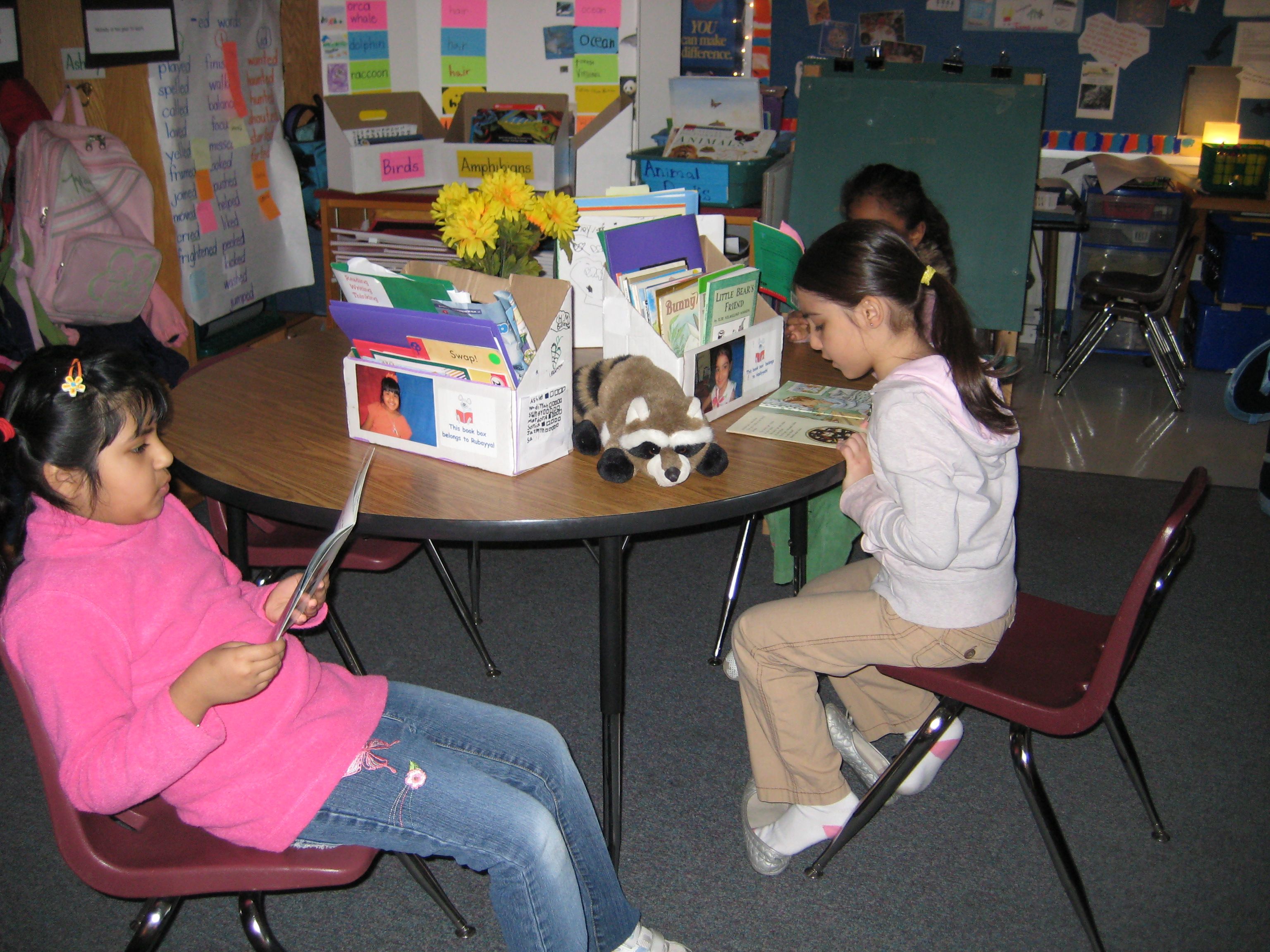 Last week I went into the second grade class where I go once a week to read with some struggling readers. I saved a little time to read with two other students, very capable and avid readers, who had been begging me to pick them every time I showed up at the door. It turned out to be a wonderful experience for them AND for me.
Since I spend all my time with readers who are struggling I sometimes wonder if I’m losing sight of the end goal of what proficient readers actually do. It’s always good to read one-on-one with the more capable readers to keep a clear perspective on what is expected of average and above average readers, to listen and watch what they do at the point of difficulty, and to create that vision of an effective reading process system.
Reading with Iman and Maysia (both successful ELL students) made me realize that all the things I’m trying to teach, support and reinforce with the struggling readers ARE the things that proficient second grade readers actually do. Both girls self-monitored their comprehension and fluency incredibly well — stopping and asking questions if there was a vocabulary word they were unsure of; rereading to confirm the flow of the sentence after noticing a punctuation cue; commenting on the storyline; spontaneously predicting what might happen next; and slowing down to break words apart and then picking up their pace when the problem was solved. When Maysia read “Manyara stole away in the quiet of the night…” (Mufaro’s Beautiful Daughters), she stopped and said, “That must be a different meaning of stole” and then offered an idea about the meaning. She asked a question when she got to the phrase “the old woman was silhouetted against the moon” because the concept of silhouettes was new to her.
For Iman, I picked the book Angel Child, Dragon Child. I did a short book introduction about the main character who comes from Vietnam and gets teased by classmates for the way she talks and the way she dresses. Right away Iman made connections to how she felt starting school coming from Pakistan. As she read the first part of the book to me she made comments about the mean attitudes of some of the classmates and later inferred that the girl had never seen snow saying, “I guess Vietnam doesn’t have any.” She solved several words quickly on the run using meaning, structure, and visual information. As she left to finish the book on her own, she said, “You know my mom bought me this book last year and I never wanted to read it. But now I see it’s really interesting.” I wondered what made the difference for her. Was it because of the book introduction I did that allowed us a few minutes to chat and get ready to read? Or was it because a visiting teacher had showed some interest in her as a reader?
Listening to capable students read and discuss texts and observing them with an eye and ear toward strategies and reading process helped me form the vision of what is possible for all readers at this grade level. The experience revitalized me, making me realize that the excitement, interest, and proficiency that these two girls showed is what I want for every student in the class.
How are you maintaining a clear perspective on what is considered “proficient for your grade?” Are you including more than numbers and levels in that vision?
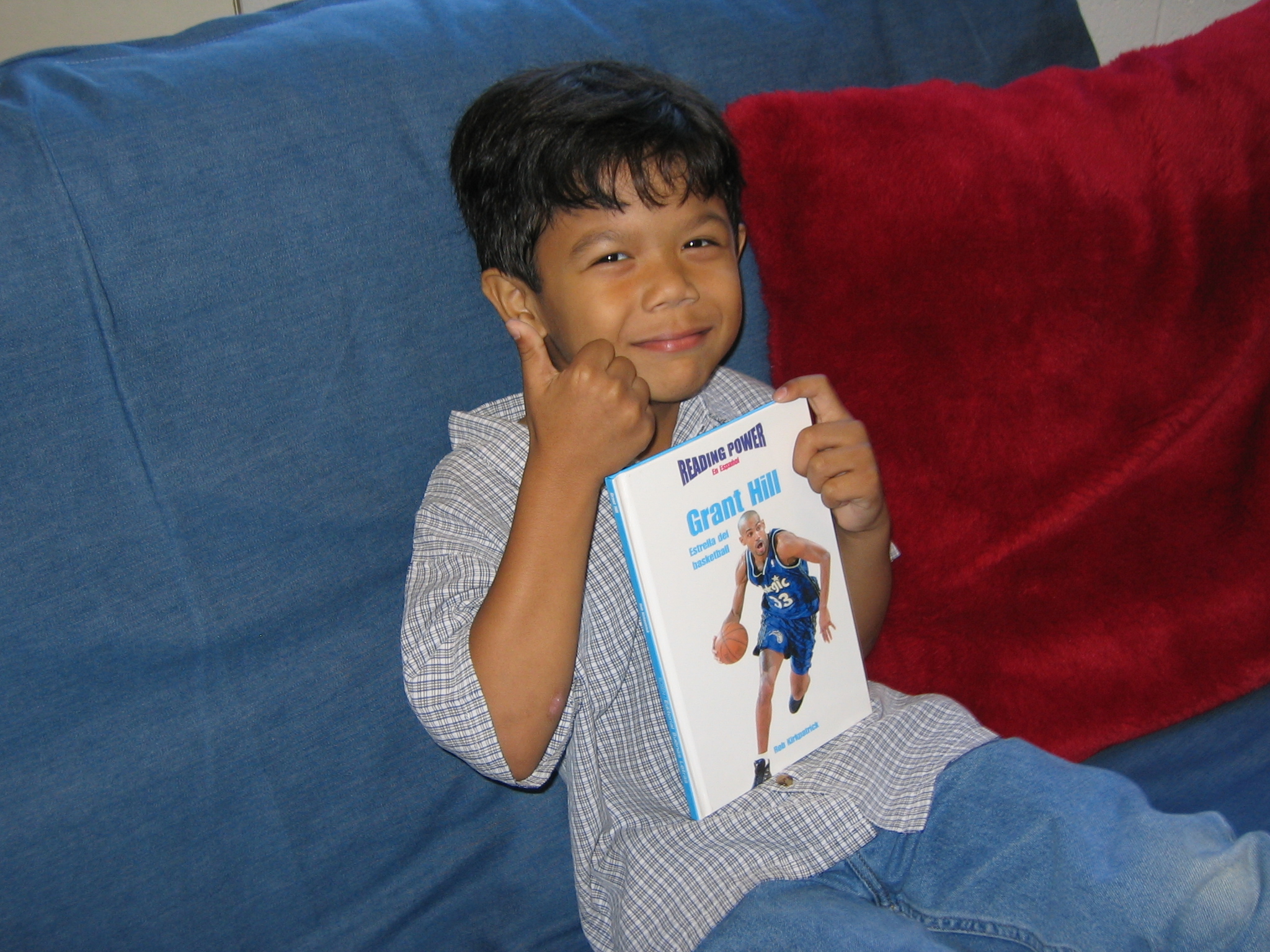
This hit home for us, as it connects with our belief that children should have choices and be able to pursue their passions in our classrooms and beyond. Choice motivates. By allowing our students choice in books and topics, we find that they read more often and more intensely. And in our classrooms, the freedom of choice is open to all students, not just the ones for whom reading comes easily. Think of your struggling readers? Are you giving them the chance to read about “NASA” and pursue their passions? Or are you feeding them a steady diet of “puppies”?
Reading in School
We feel that it’s important to make sure that the majority of time spent in reader’s workshop is time spent reading – not doing response activities, recording comprehension strategies used, or center activities that are not reading/writing based. Though we support the idea that reader’s workshops provide time for reading from “just-right” books, we believe in balancing those books with free choice, “fun” reading. So often, students don’t have the opportunity to pursue their passions in school. Teachers need to assist students in finding books, articles, and websites that extend their personal interests.
We often see that struggling students have limited opportunity to choose what they want to read and to have uninterrupted time to get lost in a book. Our struggling readers need a good balance of explicit literacy instruction and independent reading where they can practice putting a reading process system together. It is important that the books we choose for them in guided reading, as well as the books they choose, reflect their interests and passions. We want them to not only learn to read, but love to read.
Kelly Gallagher, in his book Readicide, says, “people who are undernourished need good food. Readers who are undernourished need good books – and lots of them.” We would argue that not only do they need good books, but they need books that they have chosen, about topics that interest them.
Reading at Home
We encourage reading at home by limiting our homework to “spend some time reading tonight.” When kids are in the middle of texts they are excited about, they want to return to the story at home. We tend not to add an assignment to the reading time, but have, on occasion, used a sheet to record the titles of books read at home which gives us some documentation. When reading time at home is coupled with an assignment, the whole reading experience becomes a chore. If we are serious about supporting kids in developing literate lives, then we need to treat them as real readers. Real readers don’t do an assignment when they put their book down for the night.
For our youngest learners, we include being read to by an adult as acceptable reading homework. We make sure to send home lots of books that are “just-right” for our students to share with their families. Sharing books at home is a way to create a special time for children and their families. We’ve heard from many families that this gave them motivation to make sure they are reading to their children every night. Also, as families listen to their child read, they get a better sense of how their child’s reading is progressing.
What about other types of homework? Unless it’s practice time of something that the child can do on his own, we don’t give it. There are too many variables that come into play. While some children have involved, educated parents who have the time and opportunity to help with homework, other kids have parents who work three jobs just to get food on the table or parents who don’t speak English. In order to be fair to all our students, we limit the other types of homework we give. We want to be sure that students have plenty of time to read every evening, so reading is our priority for homework.
Take a minute to think about your readers who struggle. Are they reading every day in school? What are their interests? What do they get excited about? What are they passionate about? Is is puppies? Or NASA? Do they have access to books they love? Are they choosing to read every night – because they want to, not because it’s a “read for 20 minutes” assignment?
Let’s make sure we are raising readers who not only CAN read, but CHOOSE to read.
Enjoy!
Pat and Katie
Pat and I had the honor of presenting at the Fairfax County Reading Teachers Association’s annual conference yesterday at George Mason University. What a wonderful day! (and a huge kudos for the teachers who chose to spend a warm Saturday learning with us!) We started the day with our keynote: Literacy Teaching: It’s All About the Passion. After a delicious lunch, we presented two break out sessions. Pat shared: More Meaning-Making, Less Rote: Working with Struggling Readers in Grades 3-6 and I shared: Merging the Old with the New: Literacy Teaching in the 21st Century, K-3. Below you can view Katie’s presentation. Enjoy!
 I heard some incredible literacy folks speak at the recent Reading Recovery conference in Columbus, Ohio. I’m just now finding some time to review my notes and reflect on some great lines I jotted down. Linda Dorn said in her keynote address, “The effectiveness of our teaching is measured NOT by what the child can do with us, but by what he can do independently.”
That really makes me think about my teaching. Am I teaching in ways that the child will take on and try what I am asking him to do? Will Eric dip down into his reading process system and try to put in a word that makes sense and then check to see if it looks right as I’ve been practicing doing with him? Will Rachel keep a constant check on herself to see if she is understanding what she is reading? Will Marcus listen to himself reading and stop if he thinks his reading sounds choppy and go back and try it again. Dorn further suggested that if the teaching has been precise and the scaffolding has been supportive and right on target for what the child needed, then the child will take on the strategic action or behavior that we were focusing on.
In another session, MaryAnn McBride mentioned that the two most important things a teacher can do for a struggling reader is to be reflective and responsive. We all complain about never having enough time to be as reflective as we want to be. And yet, what good are we doing the child if we don’t take a few minutes to look over our running records? We’re not just taking a running record to make sure the child is in the right level book. Rather we can use these records to zero in on what the child needs to learn next. Being responsive to each struggling reader means tailoring our teaching, thinking about what he can do, can almost do, and cannot do. Careful analysis of our on-going assessment leads to teacher decisions about instruction that make a difference for children. Betsy Kaye once said, “Children learn from where they are, not from where we are.”
Mary Fried reminded the Reading Recovery teachers in her audience that not only is reading a problem-solving activity, but that teaching, too, is a problem-solving activity. It’s our job to figure out what a struggling child needs and then “teach for the greatest payoff.” She warned against getting too comfortable with the routines of a Reading Recovery lesson and teaching on automatic pilot, rather than staying fresh and putting forth your best teaching effort at every moment.
All of these speakers seemed to have an underlying message of the urgency with which we must teach struggling readers. We have to be our best teaching selves in order to help them succeed. When I come from conferences like these I always feel inspired to do my best work. Are you ready to be the best you can be for the kids who are having trouble with literacy acquisition in your classroom?
 Conferences are always so inspiring. I love attending them and talking with like-minded educators, meeting new people and having time from my busy school life to reflect on my practice. This past weekend, Pat and I attended the Reading Recovery conference in Columbus, Ohio. We enjoyed meeting some of you and sharing our thinking at our sessions. We also enjoyed learning from the many smart people who presented. If you’ve never been, it’s a “must-do” February conference, so mark your calendars for next year!
I attended many fantastic sessions, but I continue thinking about Lucy Calkins’ keynote. She spoke about where education is today, and how we have a choice as to what role we might play in the future of public education. Her words, “as educators standing in this place in our field, we have a choice. We can look out and see problems and despair or possibility and promise,” have echoed in my brain all week as I returned to my school.
If we see our job and schools as sources of problems and despair, do we have the energy to make a difference with the kids we teach every day? Do we wake up full of joy and enthusiasm in our role as educators? No. But some days it’s very hard to look past the testing frenzy, the new mandates made by people who have never set foot in a classroom, the budget cuts, the overcrowded classrooms, the lack of support and so on and so on. It’s easier to see despair and problems over possibility and promise. Easier? Perhaps. Justified? Absolutely. But it sucks the life and energy out of us as teachers.
So what if we focus on the kids?
As Lucy said, “not one of us can be hiding behind someone else’s proclamation of what we need to do as teachers”. We are in this profession because we love kids. We want to make a difference in the world and see teaching as the way to do it. There have been way too many proclamations about what we need to do as teachers. It’s time for us to stand up and bring possibility and promise back to our schools, our teaching and our professional lives. Focusing on the kids, and what we know is best for them, allows us to see possibility for who we are as teachers, professionals and learners. Standing up for best practices and for our students is empowering. When we can be passionate learners and passionate teachers, when “our teaching is alive and powerful”, when “we are doing work that feels big and significant” – it’s hard to see the problems and feel despair. It’s much easier to see possibility and promise.
Lucy ended her keynote with this question, “are we going to be who we say we want to be? We have the choice as educators.” I am taking this opportunity to really think about who I say I want to be as an educator. And then make sure that my actions, thoughts and words reflect that vision. I want to walk into school every day looking towards possibility and promise. I want to rekindle the passion in teaching that called me to this profession 19 years ago. I want to remember that my focus is on the kids, and that my work here is “big and significant”, joyful and passionate.
How about you? What choice are you making?
 I was listening to David, a second grader, read the other day. He was reading a book about scientists finding dinosaur bones. I could tell he was very interested in it; he had read it many times before and chose it as one of his favorites. David asked questions as we read. “But wait, are there really no people here when the dinosaurs were here?” “Well, then, who was the first person here?” “How did the scientists know that dinosaur was a meat eater?” By his questions, comments, and self-corrections as he read, I could tell that David was self-monitoring his comprehension.
A little later that day, I read with Frannie. She read a book about a class taking a trip to the veterinarian’s office. She read ‘chart’ for ‘clinic’ in the phrase “we went to the vet clinic.” On another page she read ‘musta’ for ‘machine’ and ‘place’ for ‘picture’ in the sentence “The x-ray machine takes a picture of the dog’s bones.” She continued on although it made no sense whatsoever. Frannie was not self-monitoring and it was a big red flag for me.
Paying attention to a student’s self-monitoring ability, or lack of it, is high on my list of things to watch for as I read with students. Since reading is about making meaning of print, we want all children, even beginning readers, to think about what they are saying as they read. From the very earliest reading experiences that we have with children, we need to send the message that reading is supposed to make sense and that it’s their job to be checking that their reading IS making sense. We usually think of self-monitoring as ‘checking on one’s comprehension,’ however, there are lots of ways that children self-monitor:
Are you observing carefully enough to notice which of your students are reading for meaning and which are just reading words? What do you notice when listening to students read to you?
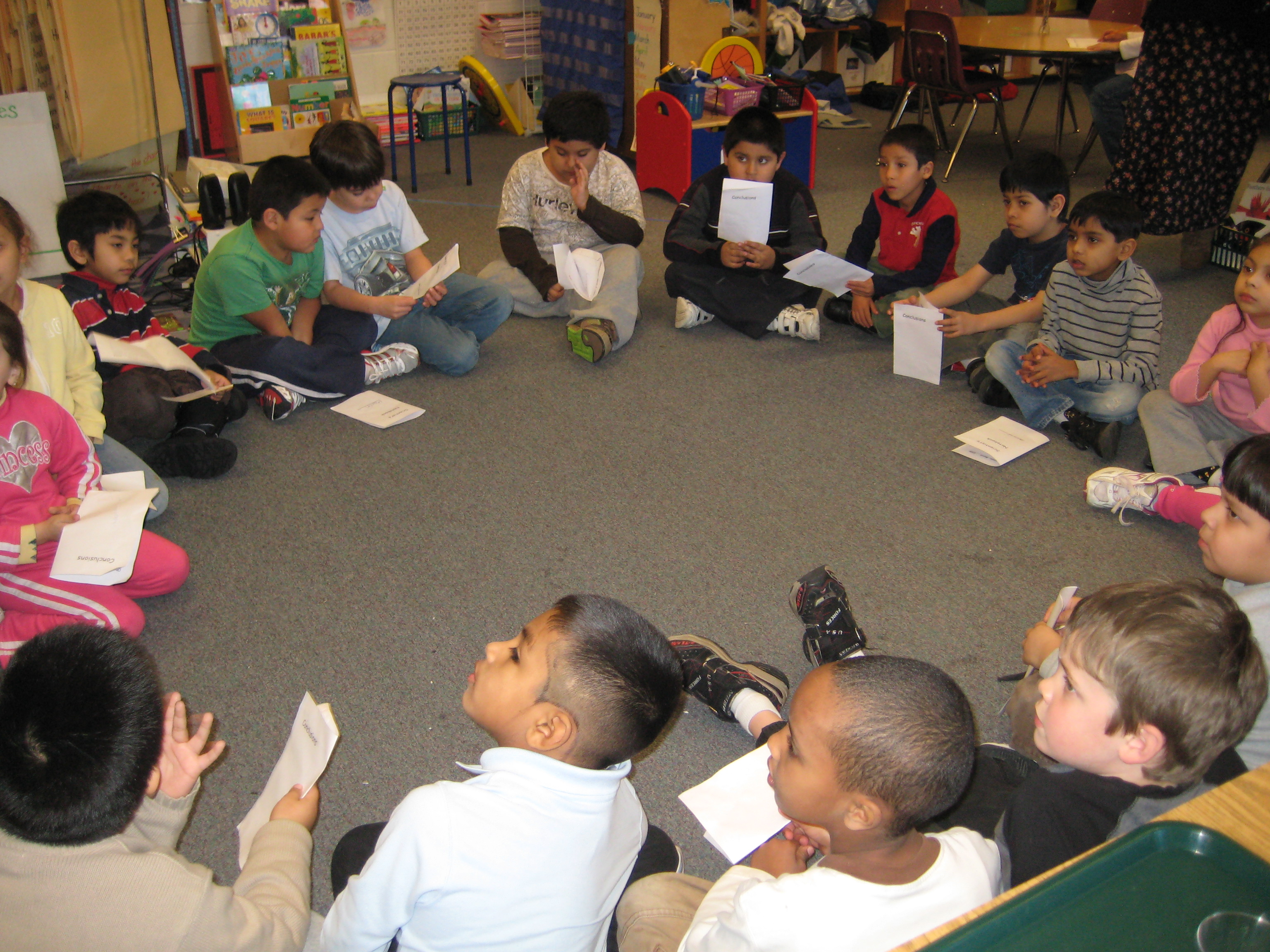 When I finished “Room” by Emma Donoghue the other day, all I wanted to do was talk about it with someone who had read it or suggest the title to others who hadn’t read it. Real readers do like to talk about what’s going on in their books. So I’m renewing my efforts in the New Year to make sure that kids get enough share time at the end of Reading Workshop. Some days can be very open-ended by merely saying, “We have 6 minutes, boys and girls, turn to a partner and share something about the book you were reading.” Or it could be more organized like the suggestions below.
Here are three different ways that teachers organize their 10 minute share at the end of Reading Workshop – 1) having selected students share, 2) having all students share with partners, or 3) do a “whip around the circle” share.
Selected students (ones you’ve encouraged to share as you were meeting with them in small groups or one-on-one) could share about something connected to your mini-lesson from that day:
* Something new they learned from a non-fiction book today
* A part where they were able to visualize or a connection they had
* A place they inferred the meaning of a word
* A prediction they are making for the ending of their book
* Or, just recommend their book to the group by telling why it’s a great read
All students can share with a partner about:
* The setting, narrator, or problem in their book
* Something about a character
* An exciting part of their book
* What they would like to ask the author of their text
* Something they did well as a reader today
* A new insight/discovery they made about their book today
Whip around the circle, giving each child the opportunity to share or pass, on topics such as:
* A line you liked
* The title, author, and genre of your book
* A line of dialogue from your book
* Something you noticed about how reading workshop went today
* What you plan to read next
Of course, these are only a few of the many ways to get kids talking about their books. What ideas do you have for share time at the end of Reading Workshop?
By the way, I’m 150 pages into “Rush Home Road” by Lori Lansens and really enjoying it. Anyone want to talk?
I am an avid reader. I’ll admit, it’s bordering on an obsession. There are stacks of books throughout my house, my office at school, and quite often, in boxes waiting for me on my front porch. I am passionate about books and reading and I love to share this passion with the kids I teach. Many former students have come back to visit and say the thing they remembered most was how much I loved books, and how I helped them learn to love books and reading.
But what if you’re a teacher who doesn’t love books? One who doesn’t read much beyond magazines, newspapers or articles on the web? One who doesn’t call herself or himself a “reader”? Can you still help foster a love of reading in the kids you teach?
One of my grad students recently shared that she really isn’t a reader. She recognized that this might be a problem since she’s expected to teach kids how to read and that she wants the students in her class to love reading. She decided to join a book club at her school, and shared with the class that it was the first novel she’s read since high school. I admire her honesty and willingness to be a learner alongside her students. I was thrilled when this same student came to class on the day we were doing our Young Adult literature book clubs saying that she was hooked on these kinds of books. She couldn’t wait to read the rest of the suggested books on our list and she was amazed at how quickly she had read her book. She discovered the hidden reader inside of her, and couldn’t wait to continue finding more good books to read.
I’ve always loved reading. It came easy for me, and I’ve always seen it as a huge part of who I am. Perhaps teachers who don’t consider themselves readers just haven’t found the right book or motivation. So what if this grad student found her way in to the reading world by starting with Young Adult novels. How we get there doesn’t matter. It’s finding that porthole that counts — a porthole that we can slip through to begin our life as a reader. Being a reader makes being a teacher of reading easier – it really does. When we “walk the walk” and not just “talk the talk” our kids notice. And that reading bug of ours eventually bites them and they become kids who love to read too.
 Catching Readers, Sparking Joy