Playing in 5th Grade

A few months ago I did a series of posts on Explore , a time for kids to play. I shared how we did this in my kindergarten classroom, and wondered how this might look in the upper grades. Well, two of my amazing colleagues, Devon Parks and Tara Boone, decided to take on the challenge of incorporating play into their daily lives – in 5th grade. Here is their story of how they started and what they are noticing in their classrooms. Enjoy!

“I feel like a Kindergartener!” 

“Yeah it feels good, doesn’t it?”

-Two 5th graders commenting on upper grade play

How can we foster creativity?  How can we encourage students to collaborate?  What can we do to incorporate choice in a jam-packed curriculum?  How can we foster a love of learning in ALL of our students?  These are questions that we asked ourselves as we entered our second year of teaching 5th grade.  Still feeling overwhelmed from the process of learning a new curriculum, and the pressure to produce high achieving students, we wondered what we could do in our day to address these questions and make school more enjoyable for both the students and teachers.

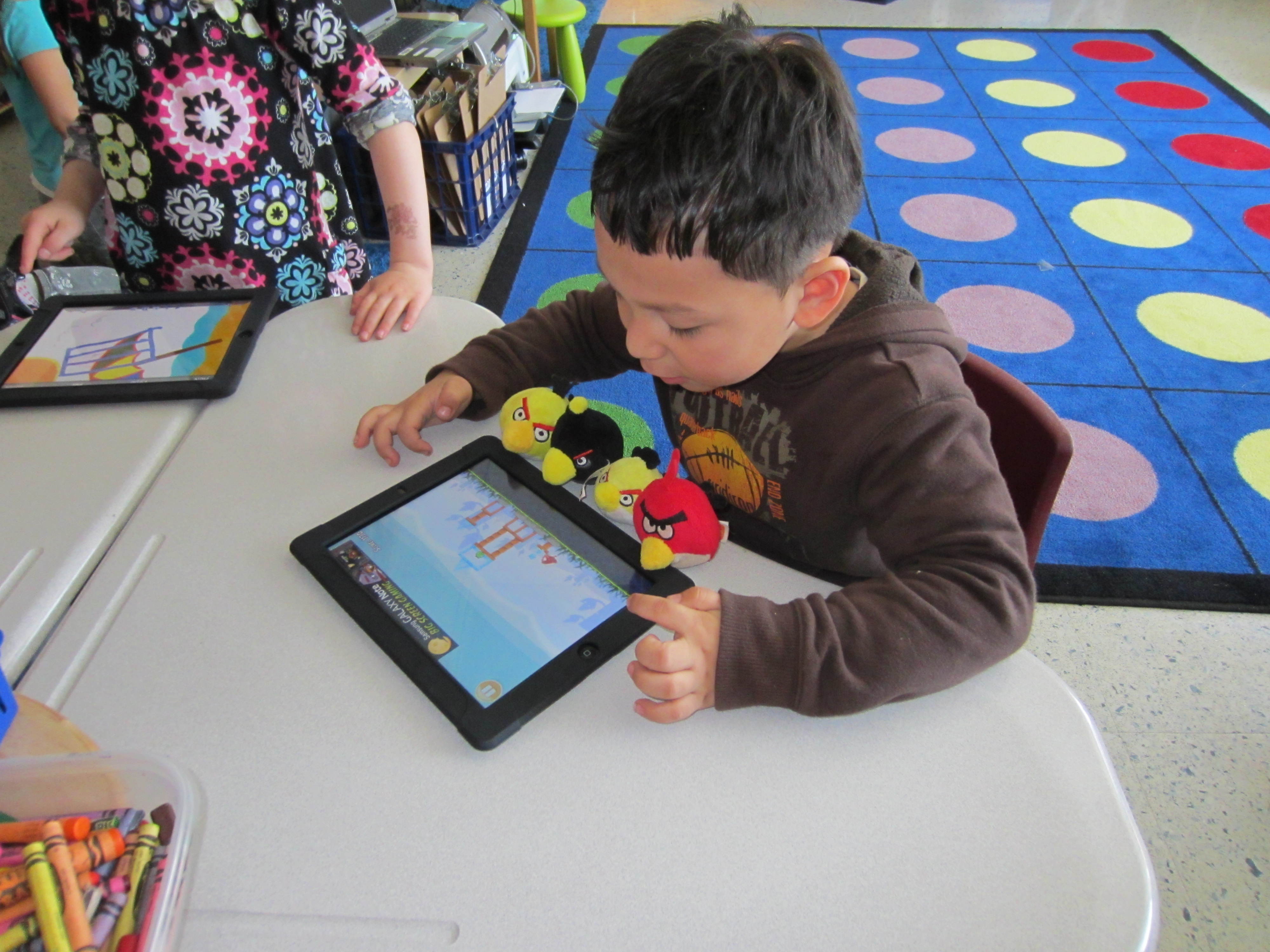
At a professional development staff meeting on play in the primary grades, we received the answers to our questions.  During a discussion about play in the primary grades, our principal provoked us to think about how play could be customized to work in the upper grades.  Why hadn’t we thought of this before!?  After sharing ideas about how play could work in the upper grades with teachers in a variety of grade levels, we went to the masters of play, Kindergarten.   We visited a Kindergarten classroom with our students and observed what play looks like in their rooms.  We were delighted with what we saw.  The Kindergarteners were working together to create wonderful projects using a variety of resources that had been left for them to decide how to use.  They were using technology in ways we had never imagined with children so young.  They were happy, they were collaborating, and they were passionately learning about topics that interested them. Play also created an opportunity for the teacher to work with kids one-on-one.  We left Kindergarten that day excited about the opportunities we could create for meaningful play in our own classrooms.

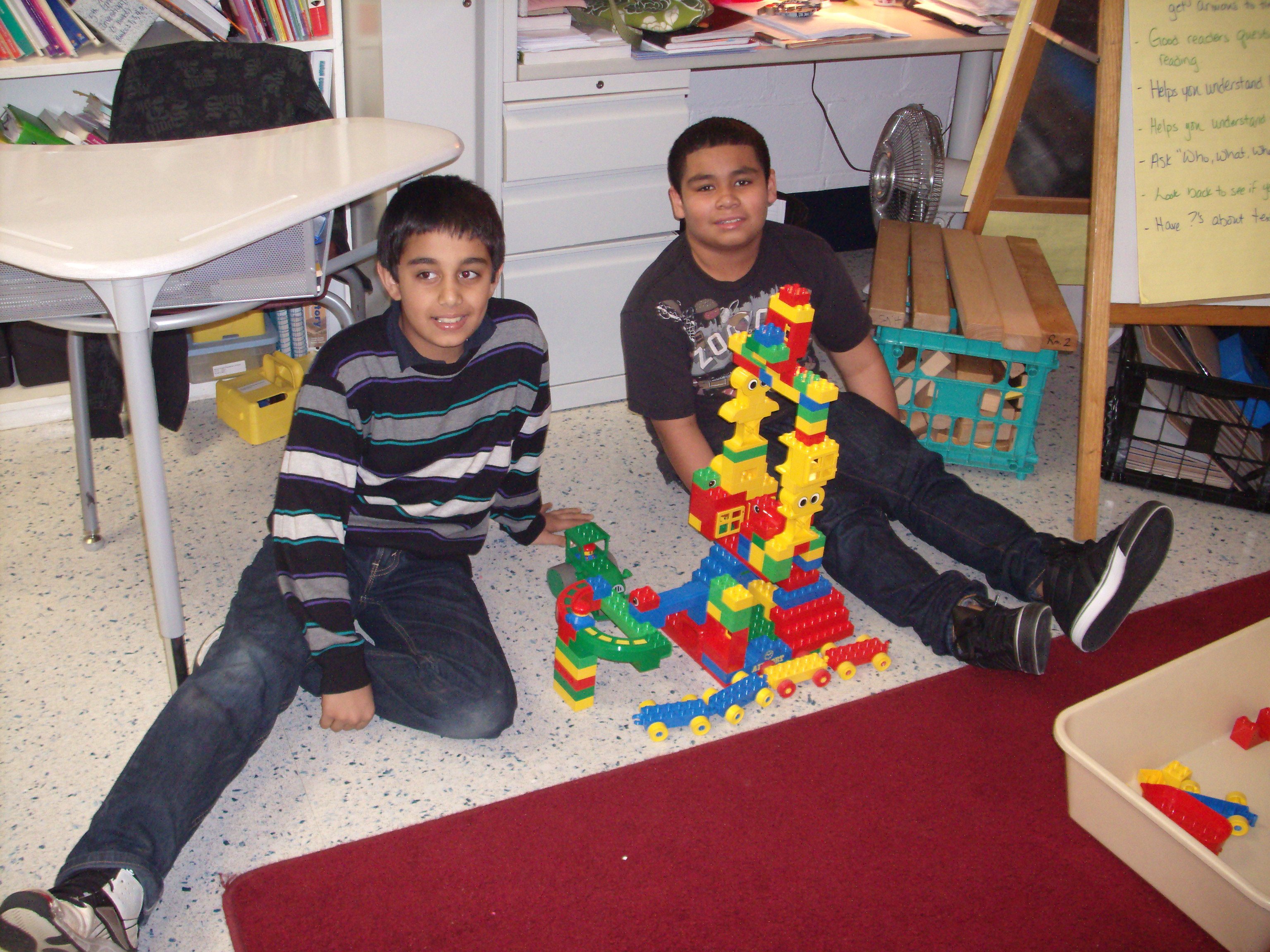
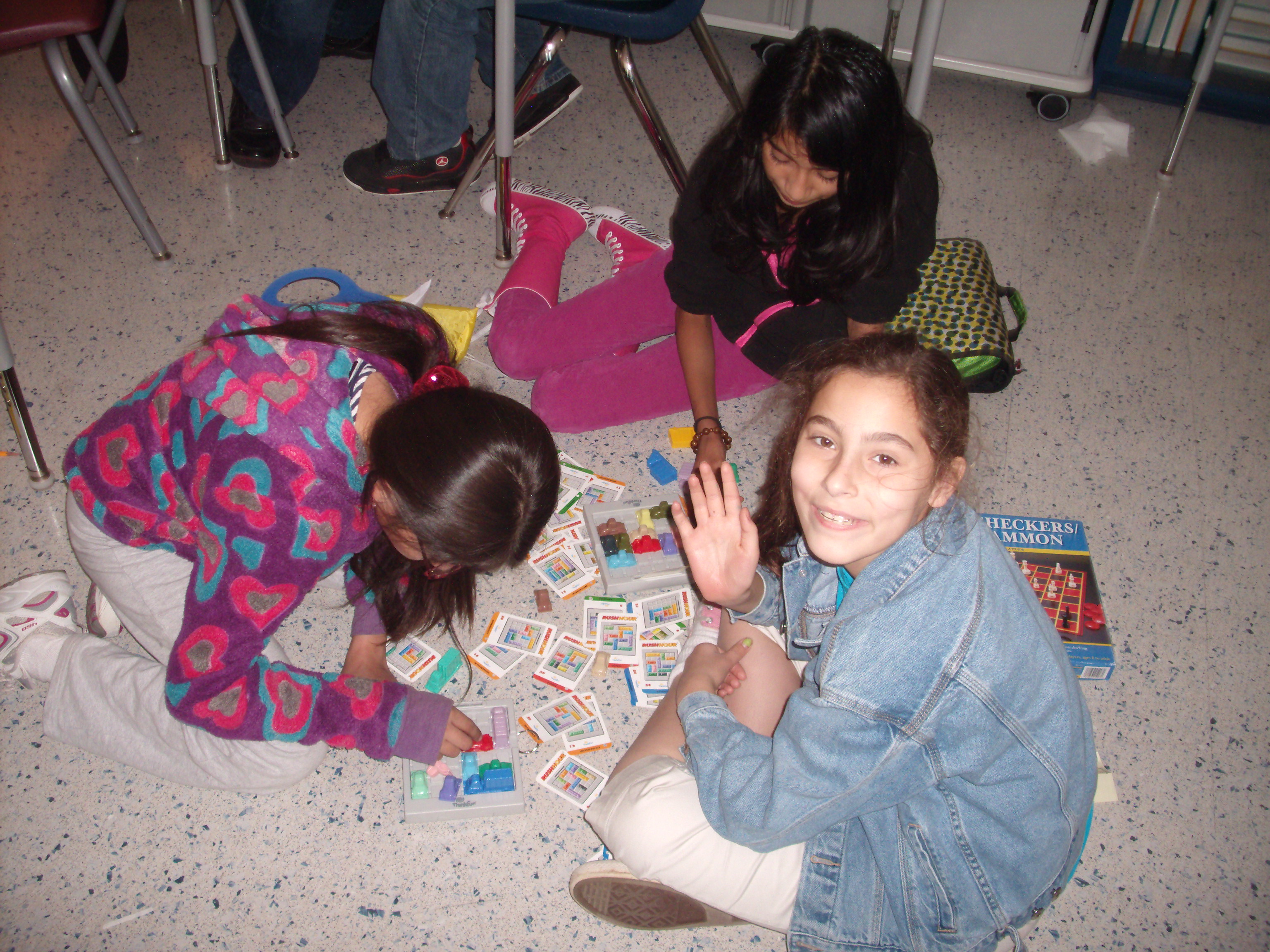
We began our centers by going through each subject area we covered and thinking about what materials we could use from those units to open up as a center.  At first it was difficult, but we soon realized as we went through our curriculum, materials quickly lent themselves as center items.  Students now use the jars, measuring cups, leftover water bottles, milk jugs and funnels to create their own water station where they estimate the volume of containers and measure to confirm their predictions.  Flashlights, mirrors, prisms and other materials from our light and sound unit are left for students to continue their explorations.  Our science lead teacher gathered prepared slides and taught the students how to use microscopes to look at specimens.  Links are posted and shared with students on our Blackboard site, opening another realm of possibilities for extensions of subject areas on classroom computers.  Notebook files and Internet links that are easily manipulated on the SMARTBoard are available for use on the class SMARTBoard.  Blocks and other materials allow students to build whatever structures they wish.  A variety of art supplies are available for students to use at free will.  All math supplies and games, as well as strategy games are available to students at this time as well.   Students choose the center they want to work at and are able to switch between activities at their discretion. Now we barely have to think about what we could make available for play.  The materials rapidly change as we move through our curriculum, keeping our students interested.

Since we implemented a time for play, our students have become masters of play.  We spent about 20 minutes the first day going over how materials should be used and put away and what the classroom should look and sound like at this time.  Visiting a Kindergarten classroom before we began really helped our upper grade students to understand how play should look.  Students work with a variety of partners encouraging one another through challenging tasks.  All students are engaged and working together while teachers are able to pull students for quick one-on-one attention.

The excitement and enthusiasm for play in our classrooms puts smiles on our faces and makes us feel like we are truly supporting and extending our curriculum in a meaningful and engaging manner.  We are lucky to work at a school where administration, teachers and staff are all interested in the best, most meaningful ways to reach our students and therefore, to have the opportunity to incorporate play into our regular day.  Although we can’t necessarily measure in numbers, the impact play has had on our classroom, we can observe our students engaged in a variety of opportunities for learning they would have never been exposed to otherwise.   However, we are able to measure students making academic progress in many areas while incorporating play in the daily schedule.  As it turns out, play has been the answer to our questions all along.

Devon Parks and Tara Boone – 5th grade teachers in a Title 1 public school

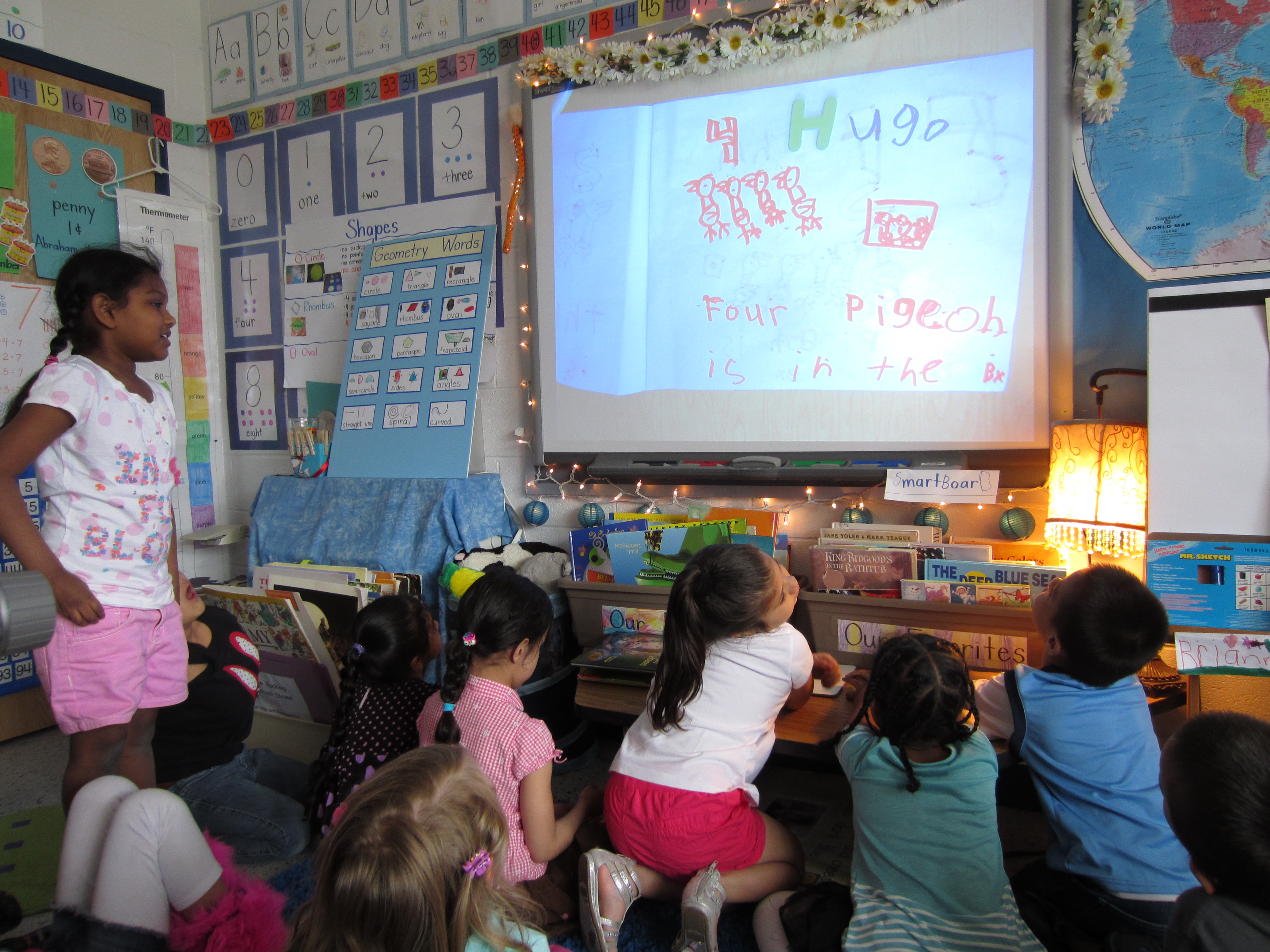
Interacting with our Interactive Whiteboard

Sharing our writing on the SMARTboard through a document camera

“The principle goal of education is to create men and women who are capable of doing new things, not simply repeating what other generations have done.” – Jean Piaget (quote taken from Literacy Smarts)

I am fortunate to teach in a school where each classroom has a SMARTboard – an interactive white board mounted to the wall. I’ve challenged myself to find ways to use this technology tool to engage my students and move beyond simply using it as a projector screen or a digital worksheet. This is the fourth year I’ve had access to an interactive whiteboard and I’m continuing to learn so much from my colleagues, my students, a few workshops and simply playing around with the tools. Here are just a few ways that I use my interactive whiteboard in our classroom.

Morning Message

1. Morning Message

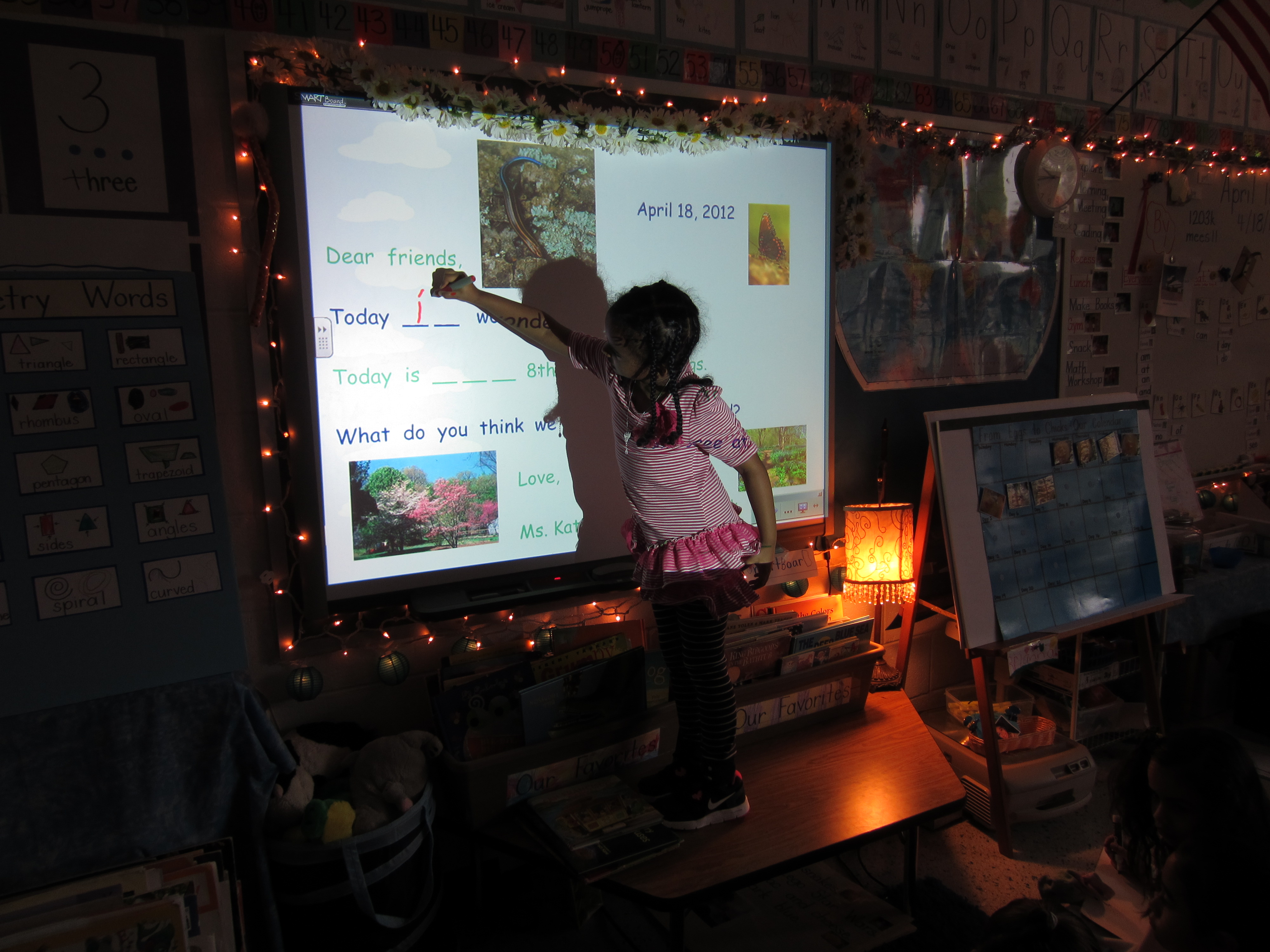
Every day I write a morning message in the form of a letter on the SMARTboard for us to interact with. I write one sentence per line in alternating colors so children can easily see different sentences. We read the message first, then fill in any missing words I left out for kids to write, read the message again to make sure it makes sense, looks right and sounds right, and finally use a variety of tools to highlight specific words, letters, punctuation, etc. Kids come up to the board to show us what they notice. For example, they may use the Magic Pen to spotlight a new sight word from the word wall. The highlighter pen is a favorite tool to highlight letters and words they know, as well as ending punctuation they are noticing. I may include a graph for kids to move their names to indicate what they would like for lunch on an upcoming field trip or what their favorite color is. All students have a traditional lap whiteboard of their own to follow along with what is happening on the SMARTboard. I find this helps keep all kids engaged and allows me to do a quick check of who is “getting it” and who needs additional support. I print one copy of the morning message before we interact with it. Then I print another copy when we are done that shows all the thinking and writing we have done. I then make a 2-sided copy to send home. This is the only homework I send home for my kindergarteners. Their job is to share the morning message with a family member and do the blank side with someone. Many of the kids “play school” with other siblings or their parents and they tell me they enjoy sharing the message at home. They do not return this to school. I ask families to save these at home in a notebook or folder for kids to revisit and read as the year goes on. It provides another text for kids to read and reread at home.

Exploring an alphabet poster on the SMARTboard

2. Playing with Art

We’ve done several projects focusing on visual art this year with the SMARTboard playing a key role in our unit. We used Kandinsky’s art to learn about geometry and recently we explored the alphabet through photographs. The children looked at alphabet posters on the SMARTboard and found the letters in the photographs. This was a station where kids could look at a variety of photographs and highlight the found letters with a variety of writing tools. We then went out and took our own alphabet pictures and are in the process of editing them into a slideshow and a poster like the ones we have studied. I love how the SMARTboard can allow children to see the art and interact with it. We have looked at a variety of art in math, science, social studies and language arts. With the SMARTboard the children have been able to experience the art as they write on it, trace over it, spotlight it, create their own and interact with it beyond what we can do with an art print. There are many art museums that allow you to download pictures of the art and save them. Google images also has many possibilities for images to use while teaching.

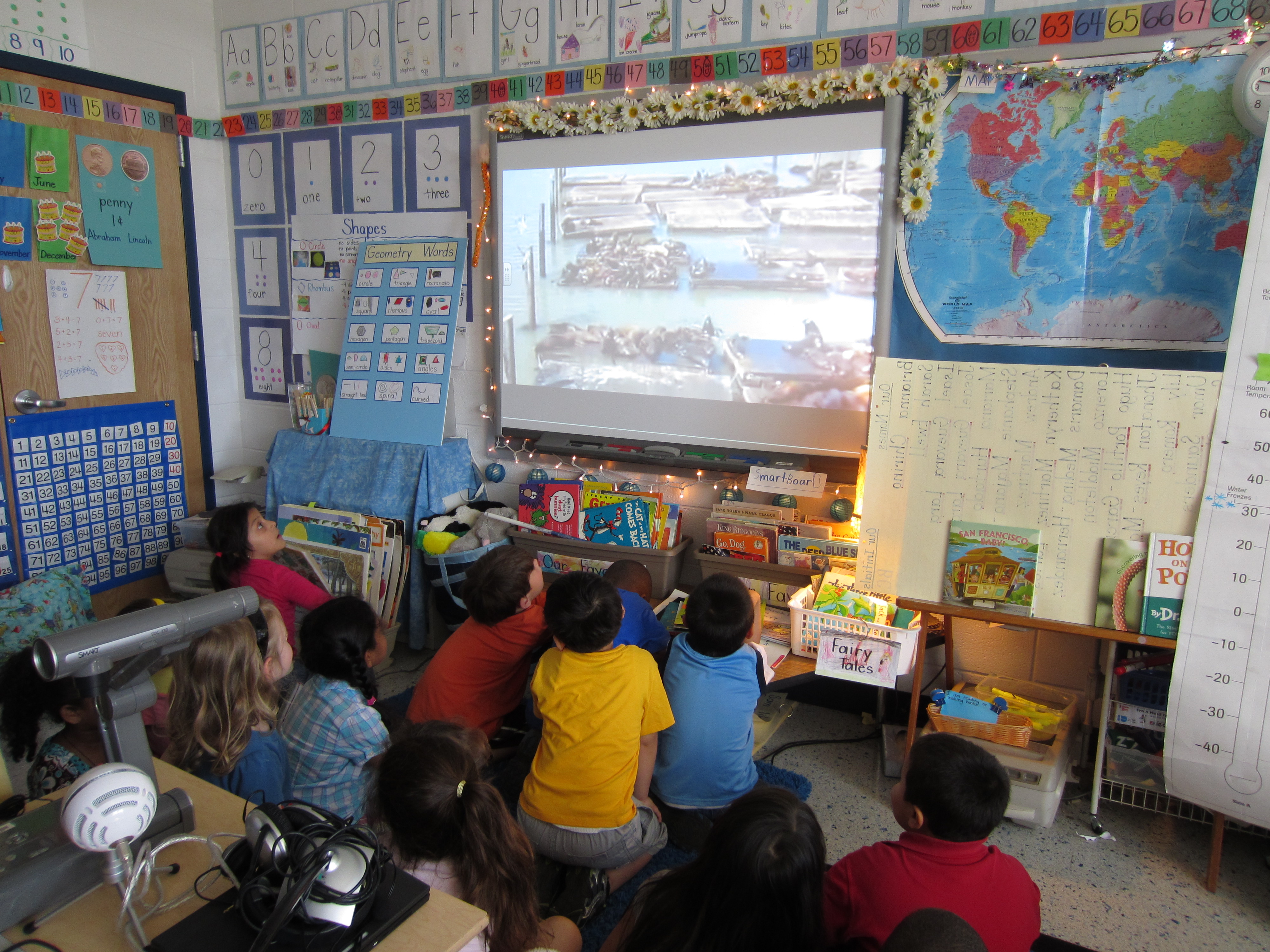
Watching a video clip of seals in Seattle from a student blog

3. Blogs, VoiceThread, Twitter

We use our SMARTboard not only to view and comment on class blogs that we follow, but also to create new posts on our class blog. We can do a shared writing piece with everyone participating as we create text to share on our blog and choose the accompanying photos. Recently, a student went to visit her grandparents and missed a week of school. She kept in touch with a blog. We looked at her blog every morning and commented on the posts she was writing. We’ve created several VoiceThreads this year and can use the SMARTboard to create, view and add new comments to existing VoiceThreads. We’ve shared favorite books, read a community writing piece and reflected on a field trip through VoiceThread. We also tweet on the SMARTboard – reading through our Twitter account and adding new tweets to our friends in other schools.

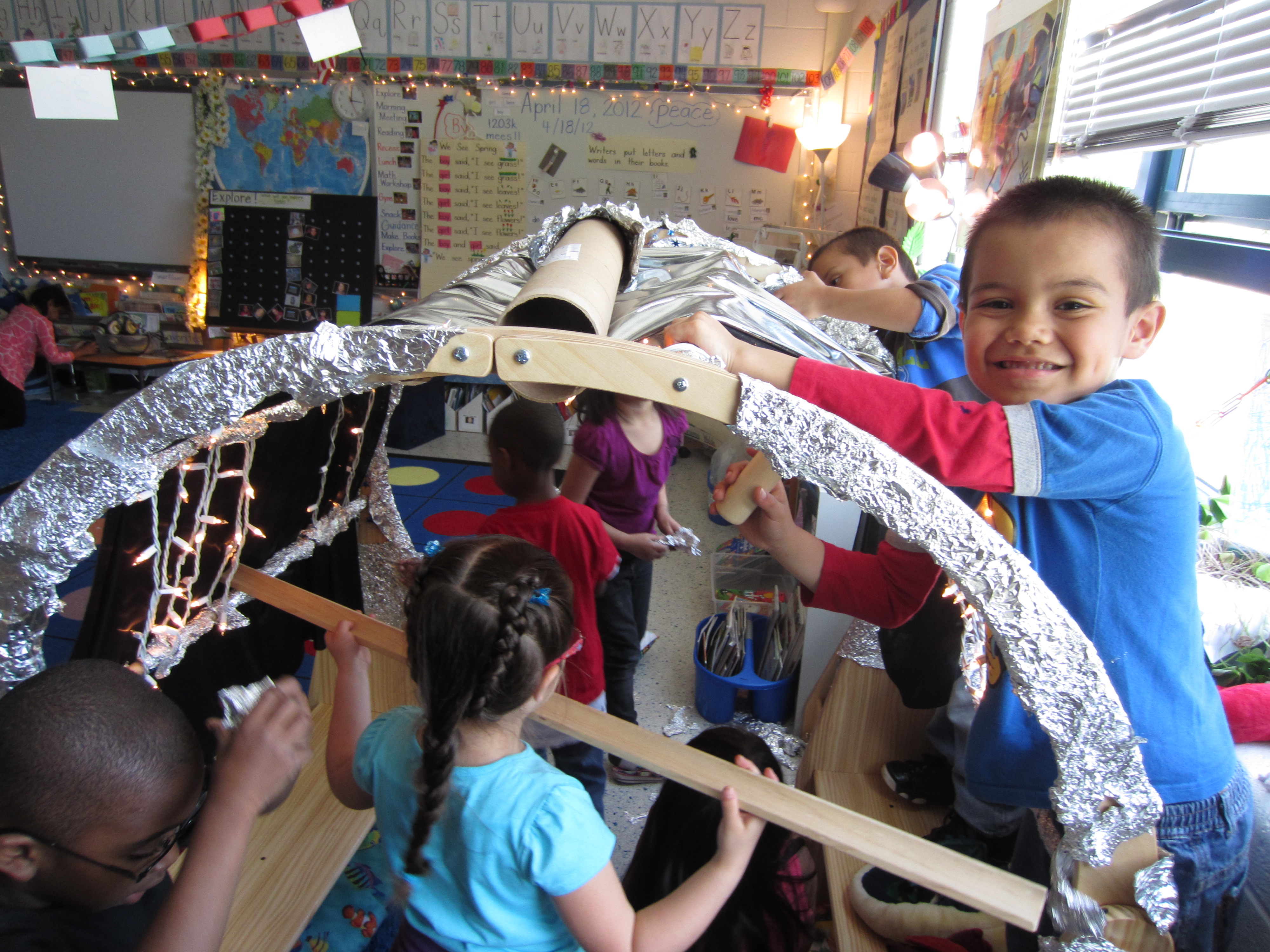
Making our space shuttle

4. Visual Texts

With an interactive whiteboard you can use screenshots from videos, YouTube clips, photographs, etc. and create with writing, drawing and audio right on the image. Recently the space shuttle Discovery flew over our school on its way to the Udvar-Hazy Center near Washington, DC. The kids were so excited to see this and wanted to learn more. I found clips of the space shuttle launch online, as well as a collection of photographs. I put them on the SMARTboard and the kids interacted with them, (while also using a collection of books I got from the library) – labeling parts they knew, circling parts they wanted to learn more about, creating a dialogue with the audio tool to talk about what they saw and what they still wondered about. Then they decided to build their own space shuttle in our classroom (with a LOT of aluminum foil!). This became a dramatic play area for a few weeks.

I feel like I learn and discover something new almost daily with my SMARTboard. We use it with Scribble Maps to draw on maps as we learn about geography to track the migration of monarchs, find a location from a book or to find where a Twitter friend lives. We use it with Pixie to model a visual representation of our thinking while sharing a math problem. We use it to practice concepts by sorting rhyming pictures or creating graphs for students to interact with. The possibilities are really endless!

One thing I feel strongly about, however, is that it’s not a replacement for shared writing on chart paper or a community writing book project. It can’t replace shared reading with big books or poems on charts. It’s a great resource to complement my teaching and I make sure my plans for using it have a specific purpose. I don’t use the SMARTboard for everything I do. I still use big books and highlighting tape for shared reading – but I may do a shared reading occasionally on the SMARTboard too if the text I want to use lends itself to being projected and used on the board and will benefit the kids this way. I view the SMARTboard as a tool FOR my students. It’s not just my board – it’s theirs too – that’s why it’s called interactive. I want them to use it independently, interact with it and be proficient with this tool.  I see the interactive white board as another tool to engage my students.

I recently read a great book published by Stenhouse called Literacy Smarts by Jennifer Harper and Brenda Stein Dzaldov. The authors share simple, yet meaningful, strategies for using an interactive whiteboard in your classroom. If you’re looking for more possibilities in using your interactive whiteboard, I highly recommend this book.

How do you use your interactive whiteboard in the classroom? We’d love to hear your ideas!

Who Nudges You?

I always remember Don Graves using the word “nudging.” He talked about nudging students to give them that gentle push to try something new in their writing.  I loved the concept.  It seemed to offer the student a challenge, yet something not too overwhelming. With the gentle nudge, it meant that they were supported in what they were taking a risk to try.   Not only do our students need these nudges, but sometimes we, as professionals, do also.

I started thinking the other day about the people who have nudged me in my career.  I remember when teacher friends of mine, Mary and Carleen, who were trained in Reading Recovery several years before I was, suggested that I might like getting trained.  Thanks, friends — Reading Recovery changed my understandings forever about how children learn to read, what we can do to support struggling readers, and how to teach responsively to the child’s needs.

Then there was Kathleen, my niece and fellow teacher.  There was a time when I was feeling like I was stagnating as a Reading Teacher in the school where I worked.  Things had become too routine and uninspiring.  Kathleen nudged me to change schools and come to her school.  That nudge resulted in my spending the last 6 years of my employment working with teachers who were true learners, who never gave up on students, who were creative, inquisitive, and willing to face problems head-on.

There were several people who nudged me to write, among them a teacher friend, Susan.  I had been giving many successful workshops talking to teachers about a variety of topics related to teaching reading.  I told Susan one day that “I just wanted to talk about literacy.”  She answered by saying, “but you can reach a lot more teachers by writing it down.”  So, eventually, out came One Child at a Time followed by Catching Readers Before They Fall, co-authored with Katie Keier.

I have to give credit to Katie for being one of my biggest nudgers of late as Katie is always ten steps ahead of me in technology.  Though I had taken the leap to join Facebook to keep up with my 25 nieces and nephews, their spouses, and their 58 children, Katie nudged me to try Twitter to form my “professional learning community.”  Though I’m still not an avid tweeter, I do find so many interesting articles and websites about literacy that I would not otherwise find.  Of course, I also have Katie to thank for nudging me to become a blog reader and blog writer.  Her latest nudge has been for me to try VoiceThread that I highly recommend.  It’s easy to use and very adaptable to many classroom endeavors.  I recently sent her kinder class a voicethread about a hike I took out west in Red Rock Canyon.  It was so fun to make, featuring pictures of the canyons, rock climbing, and all the desert animals that live in the region.

Take a minute to think about all the people who have nudged you in your life.  I know that I wouldn’t be the same without all my favorite nudgers.  Thanks to them all! Or comment on a student that you’ve given a gentle nudge to recently.

STICK-WITH-IT-NESS

In this fast-paced world of today, how much are we doing to teach our students about persevering? The idea of endurance, perseverance, and over-coming obstacles certainly seems worth discussing with our young readers, writers, and learners. Don’t we want students to stick with something even when the going gets tough?

The fifth graders I work with had the privilege of having a visit from Bernice Steinhardt, co-author of Memories of Survival. All her life, the author’s mother, Esther Nisenthal Krinitz, told her children stories of her own childhood during the Holocaust. When the Nazis took over Poland and ordered all Jews to report, Esther escaped with her sister and never saw their family again. As she got older and was living in the U. S. Esther made a quilt with each square illustrating one of the stories from her life. Bernice then added the text for each story as it was made into a picture book. It is a fabulous book and the students were very intrigued.

Based on a recommendation from their website, artandremembrance.org, the classroom teacher decided on three things after the author’s visit: 1) to immerse the students in read alouds and discussions relating to the theme of persevering; 2) to teach the students about the interview process so that they could conduct interviews with their parents, grandparents, or other relatives; 3) have the students choose one story of perseverance from their interviews to write and illustrate.  The Art Teacher joined in with a way to make a quilt out of the children’s illustrations. The “Stories of Perseverance Lesson Plan” can be found on their website.

My job in this endeavor was to bring in and booktalk many of the children’s literature texts on the theme of persevering.  As I rummaged through my own books, I realized the books fell into several categories.  Several books had characters who persevered through personal challenges, real-life or fictional: Wilma Unlimited (the story of Wilma Rudolph), Thank You, Mr. Falker and Junkyard Wonders (both about Patricia Polacco’s difficulties learning to read and being in special classes), Stone Fox (both main characters strive to overcome obstacles), and Half-A-Moon Inn (a young, mute boy perseveres to find a way back to his mother.) Each book lent itself to further ideas from the students.  For example, Wilma’s story reminded the children of many other athletes who also endured personal challenges.

Another category was made of all the holocaust-related books, like: Let the Celebrations Begin, The Story of Anne Frank, Hilde and Eli, The Number on My Grandfather’s Arm, Number the Stars, and so on.

I booktalked or read aloud a few picture books from the Civil Rights Era: Freedom Summer, Freedom School, Teammates and books about Martin Luther King and Rosa Parks.

Patrick Allen (author of CONFERRING: The Keystone of Reader’s Workshop) taught me about the book called Spirit of Endurance: The True Story of the Shackleton Expedition to the Antarctic by Jennifer Armstrong. This book will probably remind students of other true-life adventures books about climbing Mt. Everest, searching for the Titanic, and so on.

Many of the children in our school have families that have recently come to the United States from other countries and speak another language other than English as their first language.  Although this project is still in the making, we feel confident that the students will uncover many family stories of perseverance to share with the class.

Community Writing

Last week we finished a community writing project that we’ve been working on for several weeks. After completing a unit of study on fairy tales, we decided to write our own version – calling it The Three Gingerbread Kids. I posted the story in a VoiceThread below so we could share it with others. There is also a slide show that shows the illustration process.

In Catching Readers, I talk about community writing in Chapter 5 as a key component to a comprehensive literacy framework. Sharing the pen with the students as we negotiate the text together provides many excellent teaching opportunities. My kinders are making books like crazy during writer’s workshop. They are trying a variety of genres and all of them are adding words to their books – from labels to detailed sentences. I wanted to use this community writing piece as a way to support all writers in taking even bigger risks in their writing. I wanted to have them create a continuous text, based on what they learned about fairy tales, and practice strategic reading and writing actions and skills while we composed and wrote the text together. Within the context of community writing, we not only learned about letters, sounds and how words work but also about decisions writers make, such as what to include, how to best structure a sentence and how to organize their thoughts into a coherent piece of writing with a clear beginning, middle and end. I am also seeing a huge transfer in their own writing. The books they are making in writer’s workshop have more words, more details and show a clearer story structure. Kids are taking more risks as they attempt to write the words they need to create their books.

I also wanted to focus on the writer’s statement, “Writers make sure the pictures match the words.” We looked closely at our read aloud favorites and noticed that indeed, all writers make sure the pictures match the words. We took this into our illustration days, thoughtfully planning how our illustrations could not only match the words, but build upon the story, just like Mo Willems, Jan Thomas and other favorite mentor author/illustrators do. We chose to illustrate the book using a method I learned about from Ann Marie Corgill in Of Primary Importance (an excellent resource for writing). We used Sharpie permanent markers to outline our drawings. Then we filled in the colors with crayons. The bold outlines really make the illustrations pop.

Community writing is one of my favorite teaching contexts. It’s just so rich, meaningful, engaging and differentiated. It does build community and allows all children to shine. Rereading the book every day before we added a page had this book soon become a known favorite. We have it displayed in our hallway to revisit during reader’s workshop and to share with our school. Enjoy our story!

Illustrating “The Three Gingerbread Kids” on PhotoPeach

Vodpod videos no longer available.


Vodpod videos no longer available.

Three Things

Last week I was in Asheville for Spring Break, enjoying running the beautiful mountain trails there. I met two women at a bike & outdoor shop bar one evening and we started talking. The women were on a mountain biking vacation from Canada and had left their children and husbands at home. It came up in conversation that I was a kindergarten teacher, and one of the women asked me if I could tell her the top 3 things she should be doing to prepare her 2 and 4 year old children for kindergarten. Without hesitation, I told her – read to them, play with them and talk with them.

She seemed a bit surprised. She said of course she was doing those things – but what could she do to really prepare them? And then she immediately stopped, took a step back, and said, “wait – you mean everyone doesn’t do that?”

I wish all of my children came in to kindergarten with 4 years of rich, enjoyable read aloud experiences – tons of imaginative journeys they’ve taken with forts in their living rooms, fairy houses in the backyard, castles built out of refrigerator boxes, blocks and Lego creations, cardboard arcades built, time spent running from dragons, swimming with mermaids or whatever else their imagination created for them – and hours of talk with family members who not only ask questions but stop to really listen to what their young children have to say, wonder about, dream up and talk about. But the reality is that many of our kids don’t. So that’s my job. I want kindergarten to be a time for my students to hear hundreds of amazing books read aloud, to play for hours with things that interest them and with their own imaginations and to have lots and lots of time to talk and to listen, to talk and to be listened to.

Of course there are many other things that I rank with high importance as well, but my top 3…read, play and talk. Those are the things I wish all new parents knew about and made a priority for their child’s learning and development.

And the things I wish all early childhood classrooms provided for their young learners.

What are your 3 things ?

Literature Circles Continued

If you saw my post the other day, you’ll remember that I’ve been thinking a lot about literature circles or book clubs lately.  We can teach children to facilitate their own discussion groups.  I especially like to see these happening in grades 3-8, but I’ve also seen them work well in grade 2.

You might want to pick up a professional book on the topic this summer. Here are a few I’d suggest:

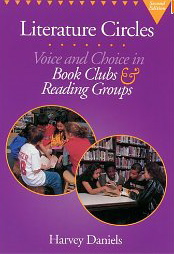
Harvey Daniels, Literature Circles: Voice and Choice in Book Clubs or Reading Groups, Stenhouse, 2002.

Harvey Daniels (or Smokey as he’s known to his friends) is probably the person most responsible for getting many teachers to think about literature circles.  In this second edition he clears up the confusion about “role sheets.”  In some classrooms, he says, they became “a hindrance, an obstacle, a drain.”  He explains that the roles are “intermediate support structures” and that each role was designed to “support collaborative learning by giving kids clearly defined, interlocking, and open-ended tasks.” In this text he moves from role sheets to a training process.  On pages 55-71 he gives four training options.

Jeni Day, et. al., Moving Forward with Literature Circles, Scholastic, 2002.

This book will really help you begin the year with careful practice of discussion groups.  The authors help you map out a way to begin with whole group read alouds and practice different ways of talking about text before moving students into running their own groups. The lists of prompts to get discussions going on various topics will be helpful to novice teachers.

Kathy Collins, Reading for Real: Teaching Students to Read with Power, Intention, and Joy in K-3 Classrooms, Stenhouse, 2008.

Although Collins is not talking about literature circles, she does use reading partnerships. The partnerships are student-led discussions and are meant to support students as they delve deeper into texts. The two members of the partnership read the same book or books by the same author and then “grow ideas” together about their book, characters, series, author, and so on.  Collins has the partners fill out a “Reading Partnership Contract” (an adaptation for book club members would be easy.)  Their contract begins, “We will try our best to work well together to help each other become stronger readers, thinkers, and talkers. Here is a list of things we will do as partners (book club members) that will help us do our best work together.” Then the students create a list and sign their contract.

Other ideas from Collins’ book involve the T-charts she often uses. For NonFiction reading:

Column 1: What we noticed, learned, and found in the text.

Column 2: What it makes us think, wonder, and question.

Or if students are reading fiction, make a T-chart about characters:

Column 1: What we noticed about our character.

Column 2: What ideas we grew about our character from the things we noticed.

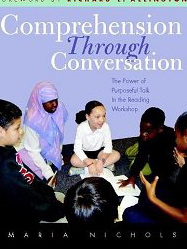
Comprehension Through Conversation, Heinemann, 2006

Maria Nichols has two wonderful books out – Talking about Texts, Shell Education, 2008 and Comprehension Through Conversation, Heinemann, 2006. Both texts will help you teach children about what good literature conversations look like and sound like.

Shelley Harwayne, Lasting Impressions, Heinemann, 1992.

This book is probably already on your shelf! Has it really been 20 years since I first read this book??? Consider rereading the first four chapters. Even though it’s mostly about writing, the reading connection is so profound.  She opens the year by encouraging kids to respond to great literature and poetry.  Again, literature circles are not mentioned specifically, but the idea of teaching kids how to delve deeply into texts is ever-present.

Please feel free to add any other ideas of professional texts, blogs, or articles that relate to implementing book clubs in your classrooms.

Literature Circles

Many teachers use some form of literature circles or book clubs, but many others do not and are even afraid to get them started. Literature circles are “small, peer-led discussion groups whose members have chosen to read the same story, poem, article, or book” (Daniels, 2002.) Some teachers worry that the kids will just fool around and not really run their own discussions. Setting up literature discussion groups in your classroom takes time, planning, modeling, as well as reflecting, reevaluating, and making changes when necessary.

One teacher I work with has decided to play around with book clubs now, at the end of the school year, then read and think more about them over summer break and get a great start with them next school year.  Previously her reading workshop looked like this: daily time for individualized reading, conferring 1:1 with her students, presenting mini-lessons on reading comprehension strategies, encouraging students to branch out and try different genres, having students write in response to their reading as well as keep a log of what they are reading, occasionally meeting with a small group with a non-fiction text, and so on.

Here are some of the ideas we talked about so that she can give book clubs a try.

1. Start by making a class chart with the students.  Make a T-chart and put “Interaction” on one side and “Interpretation” on the other side.  Tell the kids that interaction means ‘what a good discussion group might look like and sound like.’  The interpretation side means ‘these are some of the things we might be discussing in our group.’  The children make suggestions of what to put on the chart.  This acts as your anchor chart.  Here is what one class came up with.

INTERACTION

•Eyes/ears on the speaker

•Speak clearly, loud enough, slow enough

•Sit in circle; invite others in; make room

•Ask shy ones to share

•Don’t be the discussion hog

•Speak into the silence

•Ask for clarification

•Add on to another person’s thought

INTERPRETATION

•The plot

•Exciting, interesting, sad parts

•Predictions

•Characters thoughts, feelings, agree or disagree

•Reactions

•Connections

•Lines you like; author style

•Confusing parts

•Ask questions of each other

In Harvey Daniels second edition of his book Literature Circles he uses a similar chart, but the headings are “social skills” and “thinking skills.”

2. I tend to NOT use the roles that are sometimes suggested in certain books – for example, Connector (makes a connection), Literary Luminary (share words or phrases you liked), Summarizer, etc.  The ultimate goal is for kids to have deep discussions around texts and the roles sometimes sidetrack them.  They begin to think that the group’s purpose is to meet and have each person “do” their role job. (In my next post, I’ll share how Daniels clears up the misunderstandings about role sheets.)

3. Use picture books to model and practice the elements of a good discussion.  Read the book and break the class into small groups for discussion.  Then afterwards refer back to the anchor chart to see how the groups did.  Sometimes doing a fish bowl also works (a small group of students have a discussion and everyone else watches and makes notes about what the group did well).

4. Develop sheets for the groups to keep track of what they are reading, how far they should read between times, when the next meeting of the club will be,  and what to bring with you to the club meeting.

5. Allow groups to choose to read the same book or various books by the same author.

6. Suggest that the groups don’t OVER-meet.  Sometimes just meeting 2 times during the reading of the text is enough.  Then the club can have several meetings after the book reading is completed.  Once everyone has completed the book, the discussions are richer; students can return to various parts, develop theories about the texts, search for evidence of their ideas, and so on.  When students meet too often, after every chapter or every 10 pages, the book drags on and children loose interest.

In my next post, I’m going to review some professional books and their highlights. Perhaps you might want to read one over the summer if you wish to implement book clubs in your classroom next school year.