We make books!

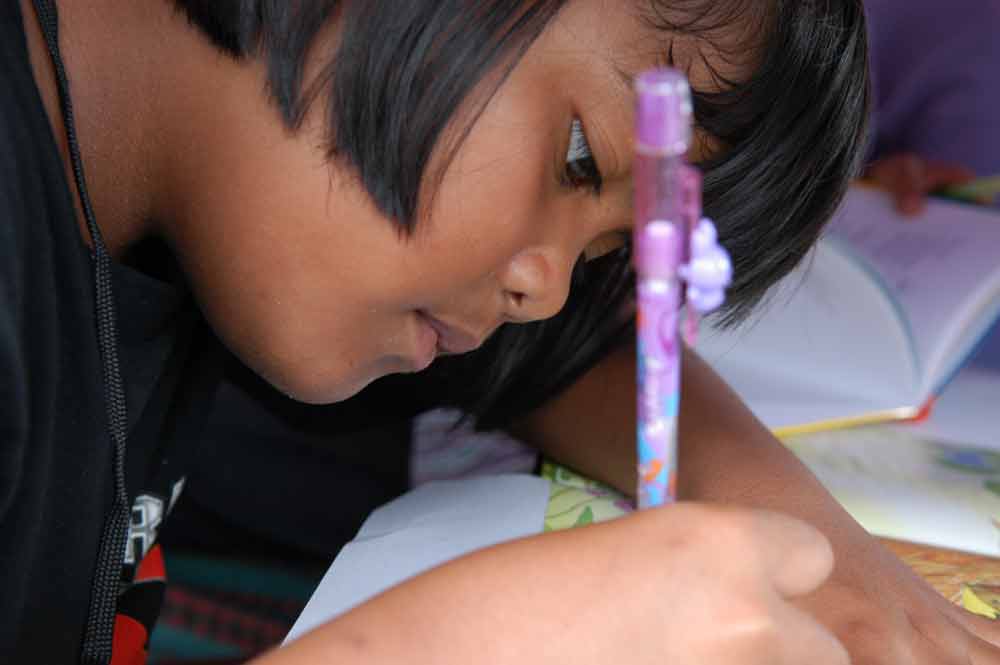
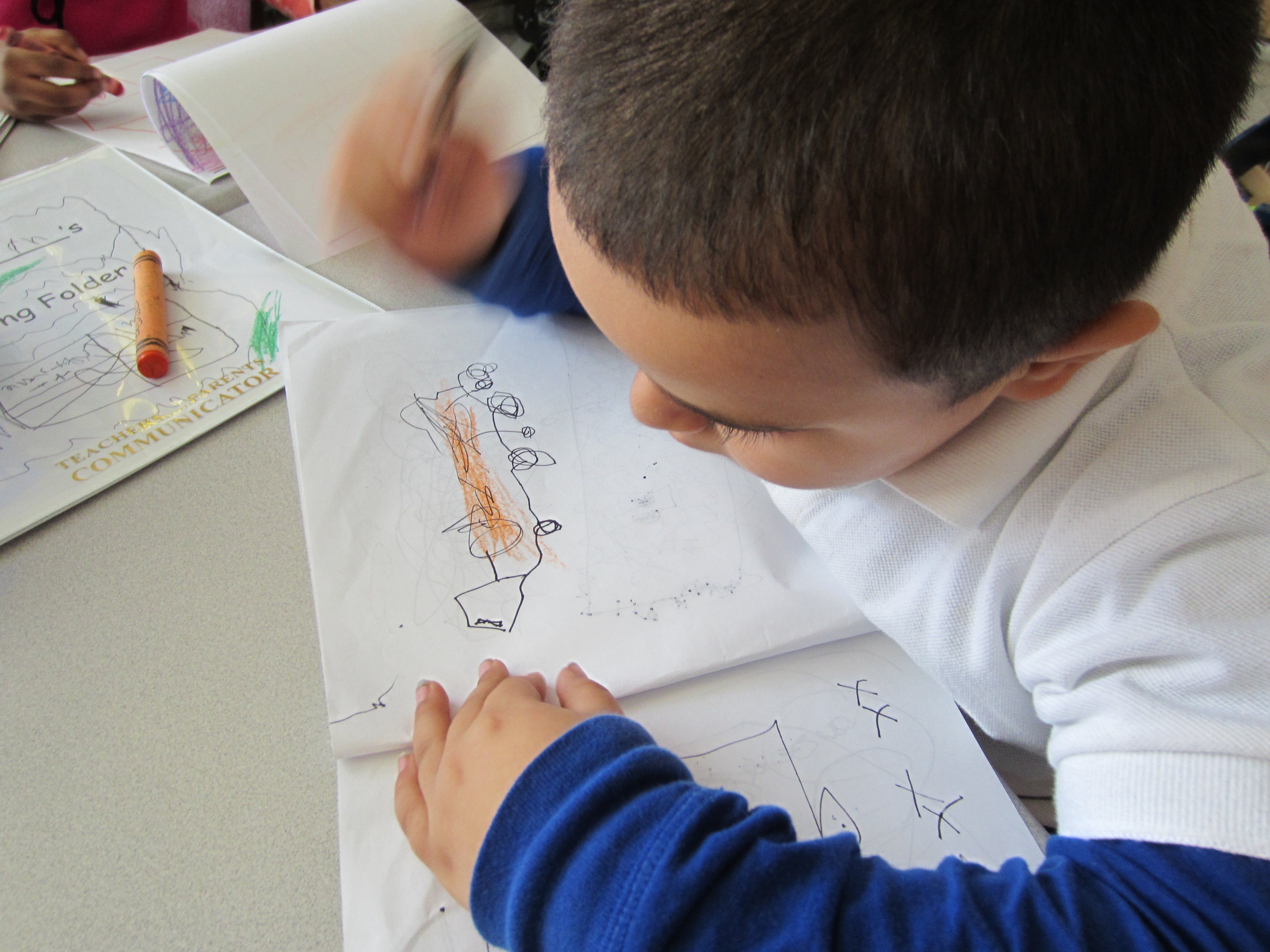
Friday was the 9th day of school – and the 9th day of Writer’s Workshop in our kindergarten classroom. We make books every day after lunch, a routine that was established on the very first day of school. Our Writer’s Workshop begins by reading or revisiting a book and talking about the author. I introduced David Shannon as the first author we studied. We read No, David! and I shared the author’s note on the inside cover where David talks about how he got the idea for this book. I sent my 4 and 5 year olds off with 5 pages of stapled, blank pieces of paper to “make books, just like David Shannon!” Every single one of my kindergarteners then proceeded to make a book – and many complained when I called them back to the rug after 30 minutes of writing time. I had to reassure them that we would have time tomorrow and every day to write. We shared our books then – princess books, dinosaur books, truck books, kitten books, cowboy books – all of the children had chosen a different topic and made a book about the topic that was important to them. If I didn’t know better, I would say it was magic.

But it’s not magic – it’s carefully planned teaching and honoring children’s imagination, development and ability. I call my students “authors” from Day 1. I set up that first day of Writer’s Workshop as a time that is so special, so wonderful, so extraordinary that we will do it every single day! I want them to see themselves as authors and live into that identity. I want them to understand what a writer is and what a writer does. I carefully choose books and authors to study that can help build this identity. We talk about how authors write about what they know. Joy Cowley wrote Chameleon, Chameleon because she knows a lot about chameleons. So if one of my kindergarteners knows a lot about dinosaurs, then it only makes sense that she makes a book about that. I don’t need to dole out topics – children come to us full of things they know about and things that are important to them. I help them see how anything can be made into a book and how they can start living like writers. A story that is shared during morning meeting, read alouds throughout the day, something that happens in the classroom or dramatic play scenarios all get my response of, “wow, you could make a book about that!” I help the young writers in my classroom see themselves as writers through a great deal of talk, a lot of book and author sharing and modeling my own writing. As Katie Wood Ray says, “Children need to understand that everyday, ordinary people make books by doing everyday, ordinary things – writing words and drawing pictures – and that they can make them too.” (Already Ready, Ray & Glover, 2008)

How is your Writer’s Workshop going?

What ways do you help your students create an identity as a writer?


Directionality and Backward Letters

A young mother recently asked me if she should worry about her daughter who had just started kindergarten that week.  She told me that her child could recognize and name all her letters and was very good with hearing most sounds, but when writing all on her own, she sometimes formed the letters backwards. Her preschool hadn’t done writing at all and so the child’s only experience with writing was playing in some workbooks at home that she enjoyed. Her mom happened to glance at a page where the little girl had filled in the first letters of cow, cat, snake, dog, and so on and more than 70% were written backwards.  The mom had heard that reversals are a sign of learning disabilities and she wasn’t sure if she should worry about this or not.

Writing letters backwards is very normal for many children, but at what point do we put a stop to it and help out?  When children are three and four years of age, I don’t interfere.  But the kindergarten year is a good year for some intervention.  I explained to the mom about many of the things the teacher might be doing throughout the day which would help her daughter start to realize that directionality does matter.  Every single day in many of her activities, the K teacher will be modeling writing in front of the students.  She’ll be talking about where to start the letter and how to form it as she does interactive writing and shared writing.  While the students are creating a real message together the teacher may have them use whiteboards to form some of the letters for practice. There will be so many hundreds of examples presented throughout the day that usually those backward letters will begin to disappear.

Keep in mind that when young children are learning to look at print, this is the first experience where order and directionality matter.  Prior to their encounters with print, they are used to recognizing things in their world in various positions.  Think about it.  There is really no sequential order or direction that matters when viewing a toy car.  The child will recognize it whether is it facing forward, backward, or upside down, and it is still a toy car, no matter what position it is in.  However, with printed text, such as words and letters, order and direction do matter.  A is only a when it is facing this way. An s is not an s if it is written backwards. I’m reminded of my own grandchild at 4 1/2 who wrote ‘cta’ on a piece of paper.  My husband asked, “What does that say?” She said, “It says ‘cat’.”  He told her that it really was only ‘cat’ when the ‘a’ was in the middle.  She answered quite confidently, “No Papa, it doesn’t matter, it’s still cat.” She, too, will soon learn that in the printed world, order does matter.

Now a word to kindergarten and first grade teachers.  This is the time to support children in learning how to form letters correctly. Does that mean I support 30 minutes of handwriting every day?  No.  In Chapter 5 of our text, Catching Readers Before They Fall, we talk about the comprehensive framework that we use in our classrooms. Please refer to that to see how Katie, in her primary classrooms, has always included directionality and learning letters and sounds through all sorts of reading and writing activities. If teachers are carefully observing their students during writing times, they can support them in learning ways not only to form letters, but also ways to become independent in checking on themselves. Problems only arise when children are left alone during their kinder and first grade years to make the backward letters over and over and over again.  Marie Clay says, “Only careful monitoring will assure me that the child is not becoming confused and practicing inappropriate behaviors…..(A child) may practice behaviors day after day for a year, and that will handicap his subsequent progress.” (Literacy Lessons I, page 11.) Therefore, kindergarten teachers should be constantly observing their writers.  It is so much easier to correct directionality issues at this early stage then to let it go and have a 2nd, 3rd, or 4th grade teacher try to ‘undo’ years of backwards letters and words.

I often recommend that K teachers make sure that the child has the letter ‘c’ under control.  Why?  Because ‘c’ is so useful in forming other letters that often become backward letters.  Make an ‘s’ – “It starts like a ‘c’ and then down and around.”  Make an ‘a’ – “It starts like a ‘c’ and then up and down.”  Make a ‘g’ – “It starts like a ‘c’, then up,  and the all the way down with a hook.”  So how do we get that ‘c’ solid; going in the right direction? It’s best to stand the child in front of a large white board or chalkboard (making the letter LARGE first is very helpful.)  If the child is right-handed, have her place her left hand, palm down on the board.  With the marker or chalk in her right hand, have her say, “towards my hand, ‘c'” as she is making the letter. (Reverse, if the child is left-handed, saying, “Away from my hand, ‘c’.”)

One last tip.  What about the famous b/d reversals?  I teach how to form these letters in two different ways.  When you teach both by starting with the stick, the child gets confused as to which side to put the ball on.  I teach ‘b’ by doing the stick first and then the ball, but then I give the child an index card with the capital B on it.  The child has to do the self-monitoring. Did I make the ball on the same side as the capital B? He now has a way to check it on his own.

For forming the letter ‘d’, I DON’T have them start with a stick. Instead I teach them to “start with a ‘c’ and then add the line.”  You can even sing the first four letters of the ABC song…. a, b, c, d (emphasize the letters c and d) as you form the letter ‘d’.

Hope this all makes sense.  It’s a lot easier to explain to someone who is right in front of me than to write it down.  The whole point is that for this particular mom it was too early to worry.  Her daughter seemed to be doing fine in all other aspects of literacy; she just had had little experience with writing. Hopefully with a strong kindergarten experience, the problem will take care of itself.  If, however, a teacher or parent finds the problems persist to the end of kindergarten and into first grade, you may want to try some of the activities on pages 117-119 of our text.  These would only be necessary in rare cases.
Take Them From Where They Are

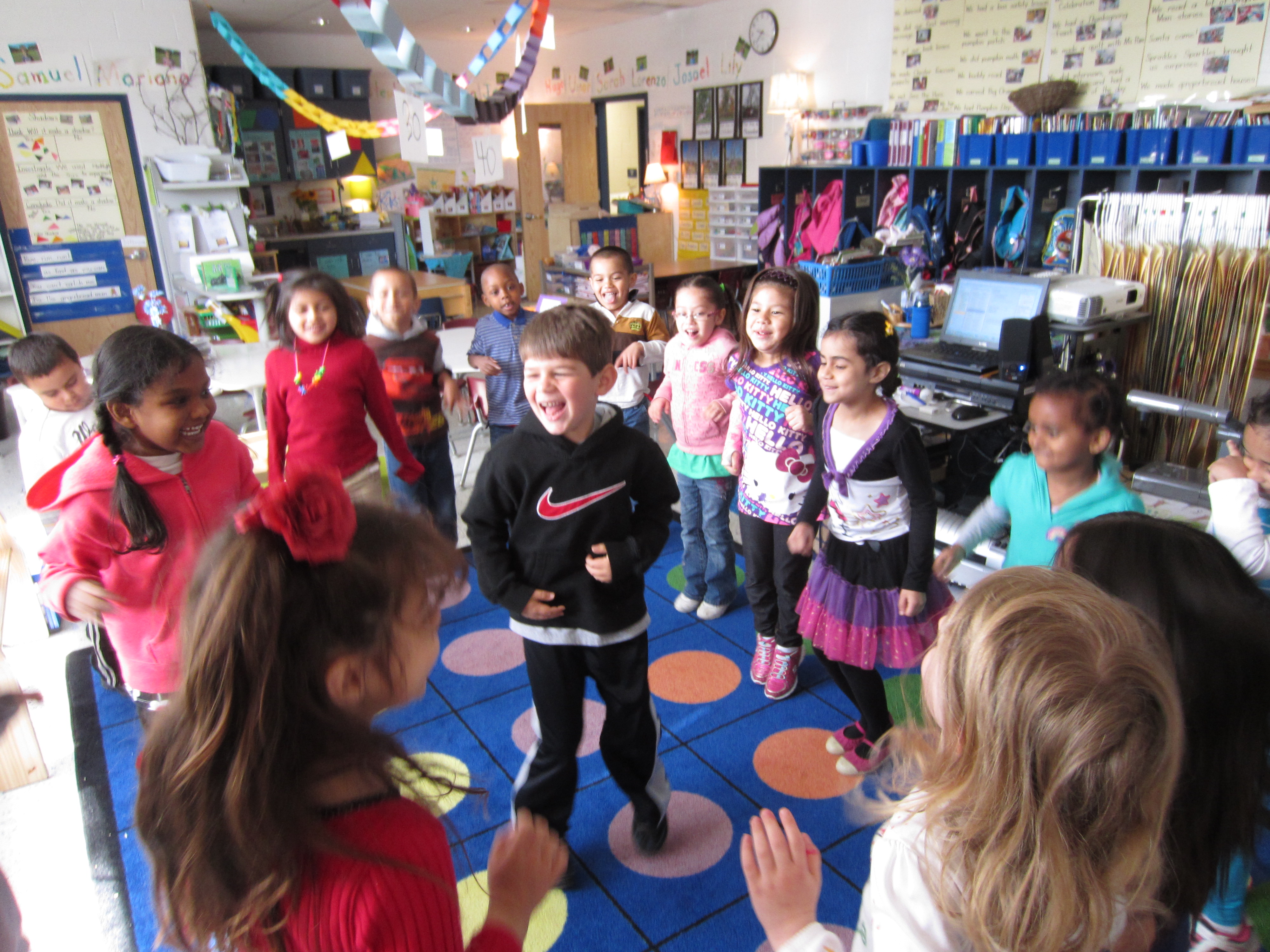
The first week of kindergarten just ended. It was exhausting, magical and fabulous all at once. I love my new students already. I enjoyed reading lots of books like Pete the Cat, The Kissing Hand, Me…Jane, No, David!, David Goes to School, The Magic Hat and Let’s Count Goats – to name a few. We made books during Writer’s Workshop, started our Explore stations and practiced routines to make our class run smoothly. We played outside, we counted objects, we wrote on our morning message on the SMARTboard. And we got to know each other and begin to build our community. We learned names, favorite colors, things we liked and what we were excited and worried about. We bravely explored our school, ate lunch in the cafeteria and lasted until 3:20 every day – without a nap. It was a success.

One thing that stands out for me, as it does every year, is how different all of  my students are. Some of my kiddos can read already, others aren’t quite sure what a letter is. Some can write their names, others can make squiggly lines on the sign in sheet. Some can count to 100, others can put the counting collections in lines. Some can share the crayons, others want the blue crayon “right this minute” – never mind that it’s in someone’s hand. Some can help a friend find the blank writing books, others wander throughout the classroom and lay on the rug. I love it. How boring would it be if all the kids were the same?

But I have a challenge – again, just like every year. I have an important job to take each child from right where they are to as far as they can go this year. A one-size-fits-all approach simply won’t do. So how does this look when you have 20-30 children who are very, very different –  in many ways? Here are a few things I consider as I plan my instruction to make sure my kids are getting what they need.

1-A workshop approach with lots of small group instruction. I do a lot of instruction in small groups or one-on-one. It just doesn’t make sense to do a lot of things whole group when I may be boring one child to death while I’m talking way over the head of another child. Of course, some things are done whole group – our morning meeting, morning message, read alouds with rich discussions, focus lessons to begin our mathematician’s, reader’s and writer’s workshops – to name a few. Our whole group time is essential to building a community of learners as well. But I try to limit that whole group time and really get to the heart of my teaching in small groups. That way I can plan my lessons to make sure I’m teaching children within their Zone of Proximal Development (ZPD) as much as possible. Is this more work and planning? Yep. But it’s my job and it’s what the kids need. It makes no sense to do something like “Letter of the Day” when several of your kids know the letter of the day just fine and several others don’t even know what a “letter” is yet. Either way, we are wasting children’s time and our children are only with us for 180 days – we need to make every minute count.

2-Teach children to be independent. So how can I meet with small groups and one-on-one? By teaching kids from Day 1 how to be independent. You need the tape? There it is. You need to use the bathroom? Make sure no one is in there and go. You need a drink? Get one. You need help finding a book? Ask a friend. I spend a lot of time the first weeks of school empowering children into believing that this is their classroom and they are “can-do” kids. I want them to be able to function without me. We model how to do things and declare “experts” as people to go to when you need your shoe tied or when you can’t find a book or when you need to know how to draw a guinea pig. This is part of creating our community together and it’s essential. But it also allows children to learn from each other and allows me to do a lot of uninterrupted teaching. I firmly believe in not doing anything for a child that they can do themselves. We want independent problem solvers, not robots that need to be told what to do constantly. I work hard at this from day one and throughout the year.

3. Model. Model. Role-play. Model. Repeat… The social curriculum is every bit as important as the academic curriculum. With community at the heart of our classroom, it’s a priority to teach children how to live, work and play together peacefully. I watch them like a hawk – celebrating when I see a friend help another friend and intervening immediately when I hear unkind words. We talk and act out  how to be friends and what we want our classroom to look like, sound like and feel like. There is a tremendous amount of teaching that goes on within the social curriculum. Having many opportunities available for play and free choice throughout the day gives me multiple opportunities to teach children how to get along in the world. This is every bit as important as teaching children how to read, write and do math.

Finally, I accept every child where they are. I do not spend a moment blaming their home life, their preschool teacher, their environment, etc…. There is no sense in blaming or wishing they were any different.  That just wastes time that I could be using to think about how I will teach them. All we can do is teach them. Right where they are. P. David Pearson says this beautifully:

 “…a teacher’s job is always to bridge from the known to the new.  Because there really is no other choice.  Kids are who they are.  They know what they know.  They bring what they bring.  Our job is not to wish that students knew more or knew differently.  Our job is to turn each student’s knowledge, along with the diversity of knowledge we will encounter in a classroom of learners, into a curricular strength rather than an instructional inconvenience.”

P.  David Pearson, 1997

So how do you differentiate your instruction – the academic and the social? 

We Teach Children

I just finished a week of preservice days – our children arrive on Tuesday. The week was a busy whirlwind of meetings, setting up the classroom, thinking through the first days and reconnecting with colleagues after summer vacation. As I left school on Friday I was reflecting on the week when I realized how inspired, energized and excited I am about the upcoming year. Our administration planned a wonderful week of meetings and activities that focused on creating community. We did not discuss test scores, school improvement plans or data. We spent time connecting with each other, exploring our strengths individually and as a team, and creating a shared vision for what the school year will bring and for the community we will all live in for at least 8 hours every day. There is plenty of time later to get into the scores, data and plans for the year – this week was all about creating that foundation that will allow us to work together as a team. It’s similar to that first week or so with our students. We have to spend time creating community, getting to know each other and making our classroom a safe space to learn. We need to go slow at first so that we can go faster later. I can’t express how much I appreciated my first week back being like that. And, yes, I do know how lucky I am. I wish everyone could experience a preservice week like that.

One of the things that I keep thinking about was something that was said during a math planning meeting. We have two new math specialists at our school so it was our first time meeting with them as a team. As we were discussing how we will go about planning instruction for our students, one of the math specialists said, “We teach children – not the standards, curriculum or tests. The children come first in our thinking and planning.” YES! This is so true. We DO teach children. We have to look at who they are as a learner, what they know, what they almost know, what they are struggling with and consider how they learn. Only after we have looked carefully at that can we consider the state standards, the textbook, the curriculum map or the information needed for the state tests. We have to put the children first.

So this year, when I am thinking, “what do I teach this week?” – my immediate answer will be “my children”. Only after I have thought about each of my learners will I look at the standards, curriculum, etc. and then decide the best way to make sure I am reaching the minds – and hearts – of the children entrusted to me every day.

Enjoy teaching children this year.

One Word

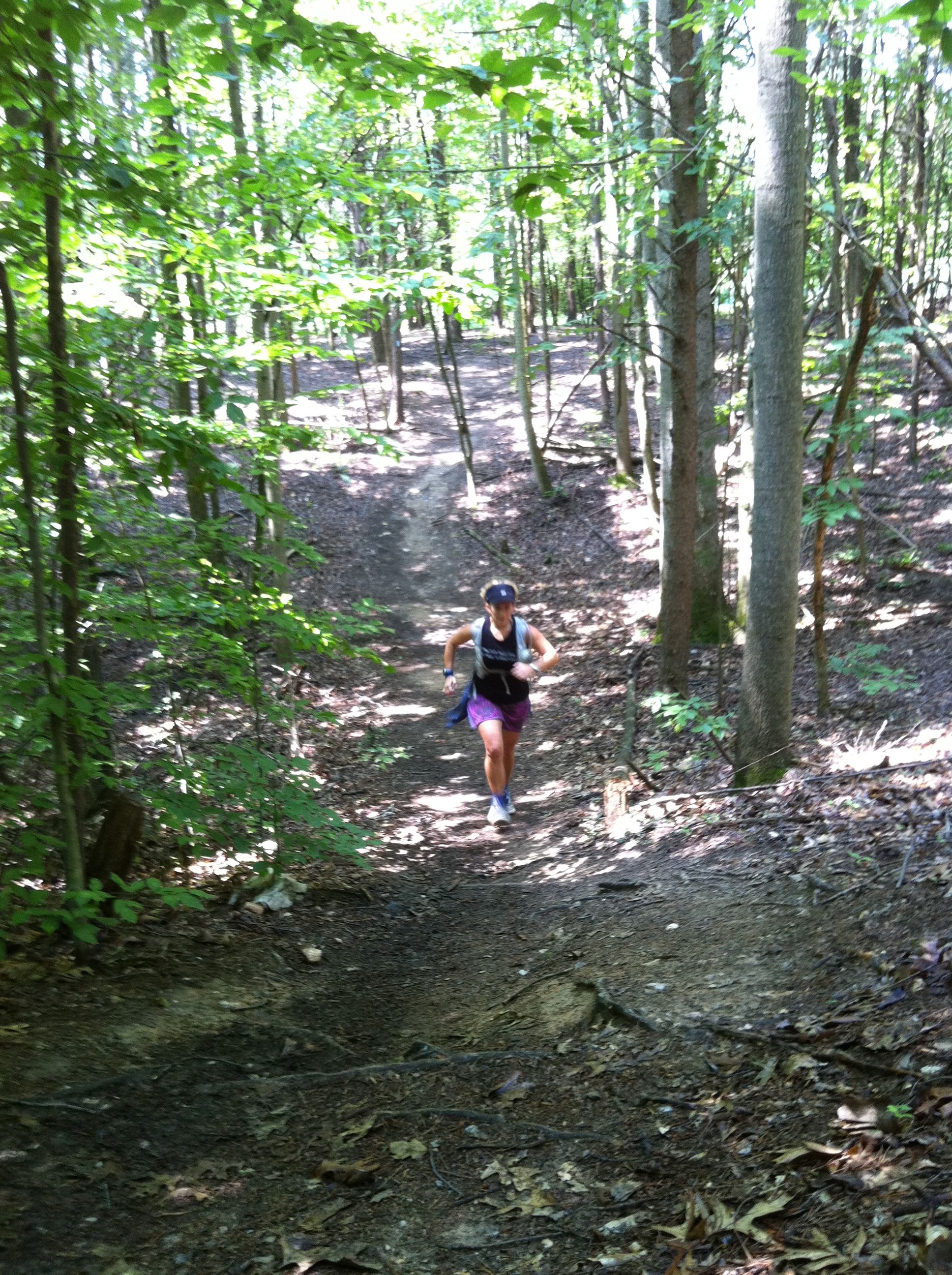
Lately I’ve been running a lot of miles on trails in the mountains. I’m training for a 100 mile trail race in October – what will be a huge challenge for me. I’ve come up with a mantra of sorts, a special word that keeps me going when I feel like cutting the run short or staying in bed instead of doing an early run. My word, grindstone, is not only the name of the race, but it also means “to work hard and perseveringly”. Saying this word motivates me, encourages me and keeps me on track to completing my goal. It reminds me of my commitment and helps me stay focused.

I like to do the same thing as I begin a new school year. Each year I choose a word to be my overarching reminder of what I envision for the upcoming school year. I put it on the cover of my notebooks, on my teaching table, in my planning notebook and around my room where I will see it. In years past I have used the words, balance, joy, energy, peace and breathe as my one word for the year. I’ve spent a lot of time thinking about this upcoming school year and figuring out what my word is. I’ve arrived at the word listen. I want to make sure I am truly listening to my students, my colleagues and my families this year. I love this Cuban proverb,

“Listening looks easy, but it’s not simple. Every head is a world.”

Listening will help me be more present with my students as they play, learn, share, are challenged and enjoy kindergarten. I hope being a better listener will enhance our community and allow my students to ask more questions, to wonder more and to learn to love school. Listening to families will help me understand where each family is coming from and what their concerns, wishes and thoughts are for their child. I hope it will encourage families to become a strong part of our school community, to feel like they are truly partners in their child’s education and to be comfortable in our school. Listening to colleagues will help me become a better teammate and collaborator and allow everyone’s strengths to shine and voices be heard. I hope it will help people feel more valued and respected.
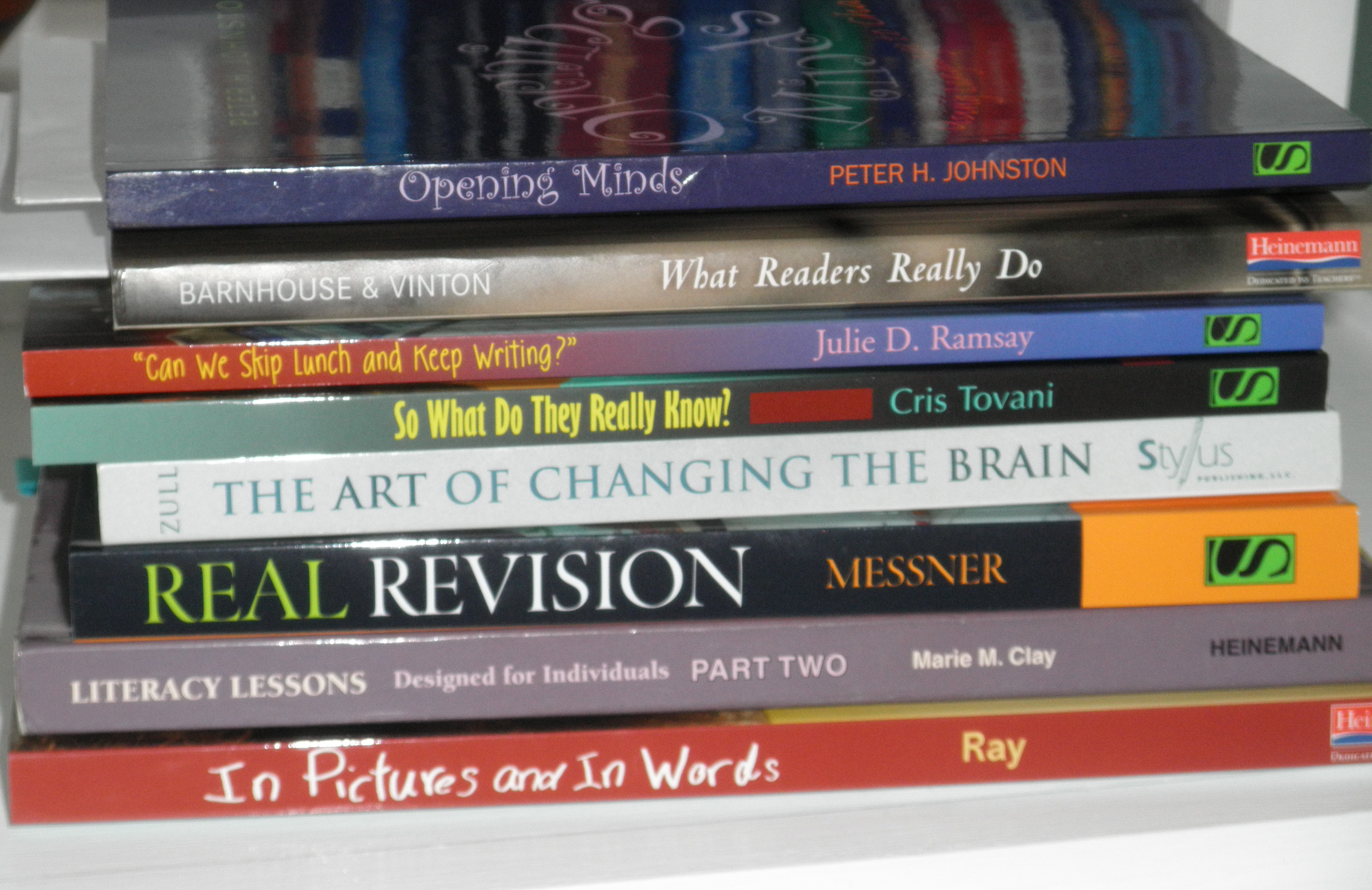
It’s funny how reading Peter Johnston’s Choice Words and Opening Minds this summer have caused me to think deeply about the language and talk I use in the classroom. And how my final take away was that I need to be a better listener.

“Listening is a magnetic and strange thing, a creative force. The friends who listen to us are the ones we move toward. When we are listened to, it creates us, makes us unfold and expand.”

— Karl Menninger
What is your One Word for the upcoming school year?

Book Discussion

“To read without reflecting is like eating without digesting.”  – Edmund Burke (as quoted by Barnhouse/Vinton)

I wrote a blog a while back called Sharing about meeting with a group of teacher friends to discuss Barnhouse and Vinton’s new book, What Readers Really Do.  When I posted about having that discussion, someone commented that she wished it were an on-line discussion.  Since it wasn’t, I thought I’d post a few thoughts from our get-together on August 14th.

First off, let me tell you what a joy it was to be able to meet at my house in summer time.  Though I highly recommend ‘teachers-as-readers’ groups during the school year, it was such a pleasure to sit in comfortable chairs drinking iced tea and lemonade.  No one was worried about picking up her students in 10 minutes from the art room.  No one was rushing off from an after school discussion to gather toddlers from daycare.  We’ll all be back to school soon (in the U. S.) and the memory of a relaxed discussion will soon give way to the juggling of events that takes over our lives every school year.

Here are some ideas that surfaced from the discussion:

  1. One reading teacher loved the idea of ‘back door’ teaching that the authors talk about.  They try not to define or even mention a strategy until after the students experienced what that kind of thinking felt like and sounded like. They believe in sticking closely to the text and not having students go off on tangents with connections they are making or pictures they are getting in their minds. These things will happen naturally and many strategies will overlap and interconnect as students make meaning from texts. Barnhouse and Vinton talk a lot about how to get students to do the ‘mind-work’ of reading. For example, “We never ask students to identify a theme; rather we help students construct an understanding out of which theme can emerge.” p. 166
  2. A Reading Recovery and LLI (Literacy Learning Intervention) teacher commented that even though the examples in the text were all from third through seventh grade classrooms, she found so much to reflect on.  The idea of ‘keeping meaning front and center’ is also paramount when she teachers her at-risk first graders.  She is careful to have conversations with children even about those beginning pattern texts.  (Mom is driving. Mom is cooking. Mom is running.) “Mom sure is a busy person in this book.  What about your mom?” The authors remind us, “What we need to teach is that reading is an act of accumulation, that meaning grows out of words that we begin to fit into patterns that we then connect and actively construct into ideas.  In other words, we read from the inside out.” p. 130.
  3. A Literacy Collaborative (LC) trainer said that she was going to keep this question in her pocket all school year — “Do we as readers do this, and if so, why and how?” p. 6.  She wants to apply that concept not only to teaching students but also when she does staff development for her Literacy Collaborative teachers. She also loved the word “hunches” that Barnhouse and Vinton use in their book.  The authors support their reason for using this term over the word “predictions.”
  4. Staying on the topic of LC, I invited everyone to wonder with me about how certain concepts that were mentioned in the book would develop into reader’s statements.  We looked at pages 73, 83, and 97 to think about creating reader’s statements.  It’s always good to take something we learn from a professional book and see how it fits with how we are already teaching students. (Everyone at the discussion that day was connected with a school that uses LC.)
  5. A fifth-grade classroom teacher wondered if she should use the idea of the KNOW/WONDER chart and looking for patterns in text with her whole class in a read aloud experience OR if she should try it first with a small group of struggling readers.  We all talked about the pros and cons of trying it one way or the other. Most felt that starting the year with a whole class one would be the most beneficial as it would level the playing field, i.e., the teacher would do the reading and therefore all students, even ELL and struggling readers, could participate in the discussion of the things they noticed, wondered about, or connected back to some other place in the text.
  6. Another reading teacher could think of several teachers in her school that would love to read this professional book with her, but worried about several brand new teachers in the upper grades.  Would this text be too overwhelming for them? Do they need to start first with understanding how a reading/writing workshop approach works?  Is there a place for teaching certain strategies, like visualizing, questioning, activating schema, and so on? Could she help new teachers learn about effective strategy teaching while also helping them support students in meaning-making? In other words, she was trying to synthesize what she’s learned from books like Strategies that Work along with this new text.
  7. We all liked being reminded by these authors about building lessons from the students’ thinking rather than our own interpretations of texts. Their KNOW/WONDER charts help you do that because the charts reflect the students’ ideas. “It helps us maintain our stance as teachers who facilitate thinking, not those who, in overt and subtle ways, sanction specific meaning.” p. 89.

As you can see, our conversation touched upon several issues as we agreed, disagreed, added onto each other’s thoughts, questioned each other, and listened carefully to add to our own knowledge base.  Thanks for coming, friends! I look forward to chatting about other texts in the future.

Think – Rethink – Layer

Recently someone asked me, “What kinds of things do you do in summer to get ready for the upcoming school year?”  I referred the person to Katie because I assumed the question meant “ideas for setting up your classroom or other things related to your organization, management, or curriculum for the next class of kids.”  Since I am no longer working full time in a school my first reaction was that I had no thoughts on the matter.  But over the past few weeks, I’ve come to realize that I do plenty in the summer to plan for the next year.  As a literacy consultant who does staff development with groups of teachers and as a volunteer who works in a school to support kids and teachers, I spend lots of time thinking, reading, rethinking, layering my knowledge base, and sometimes shifting my ideas about teaching reading, supporting children who struggle, and guiding teachers toward new understandings.

One way I do this is to read, read, read in the summer.  I read blog posts, professional books, children’s literature, and various articles referred to by colleagues on Twitter.

Here is a bit of the thinking that comes from all that reading:

1. I can’t stop reflecting on the idea of changing the way we talk to children so that they develop a sense of agency as Peter Johnston explains. He got me thinking about this with his first book, Choice Words, but took me even further with Opening Minds. He says we can support children in developing agentive narratives…. “I am a person who…” By the end of Opening Minds he gets us thinking about supporting kids’ moral compasses as they realize “I am a person who…acts when I see injustice or inequality.” But in the early chapters, Johnston shows us how to support all students, even kindergartners, as they create agentive narratives about themselves as readers and writers.  “I am a person who…. solve problems when I read; tries something and, if that doesn’t work, tries something else; goes back and rereads to keep the story in my head;  keeps checking to make sure that what I’m reading makes sense; and so on. He does this by giving us peeks into classrooms where teachers support these agentive narratives so well.  On pages 2-4, teacher Pageen loses her place during a read aloud because of an interruption.  She tells the students that she needs to go back and reread a page to remember what was going on.  Michael chimes in saying that he does that same thing.  Pageen asks him to tell the class more about that. The child describes how he does exactly what the teacher was just talking about. Later in the day the teacher attributes that idea to Michael when she mentions to the class, “Remember what Michael does when… ”  The teacher has “created a story line in which Michael was a particular kind of reader.” Michael nows owns this narrative.  He is a reader who...

2. I’ve also spent hours thinking about Barnhouse and Vinton’s idea of back door teaching — not naming a strategy for the students until they have actually experienced using it as they negotiate a text together (from What Readers Really Do.) Take character traits, for example.  How many times have we asked kids to name a trait of a particular character?  They often say, “she’s nice” or “not nice.”  To help them with better word choice, we’ve often brainstormed a list of traits for the kids to choose from and then ask them to provide evidence of why they think that trait applies. But Barnhouse/Vinton say we should help kids start with what’s in the text.  Help them learn to read carefully and notice what the character does or says.  Then ask, “what kind of person acts like that?” By doing this together, the students have actually done some inferring.  But there is no need to begin the lesson by defining or identifying “inferring” as a useful strategy.  Always begin with meaning making.

3. While reading  an article by Franki Sibberson in Choice Literacy, I got excited to share her ideas for setting up an upper elementary classroom with interactive wall displays.  She suggests a board with pictures of book characters, another with interesting/fun facts, graphs, surveys, or images; another display with word play ideas, and yet another with websites worth visiting.    She says, “Like a museum, I want the room to be filled with invitations and possibilities, with something for everyone.” I can see the kids in that room having so much to talk about and share while browsing the walls in the first few days.

4. From my reading of children’s lit, I am recommending several of my favorite chapter books to read aloud to 4th and 5th grades this year:  One for the Murphys, How to Steal a Dog, and The One and Only Ivan. Today I’m heading to a book store to look for Wonder because I loved what Katherine Sokolowski wrote about it in this week’s Choice Literacy.

What have you been thinking a lot about this summer?  

Are you changing anything next school year because of something you read or heard this summer?

August 10 for 10 – Picture Book Extravaganza!

It’s that time of the year again…the August 10 for 10 Picture Book Event! This is the third year that Cathy Mere and Mandy Robek have hosted this compilation of blog and Twitter posts (#PB10for10) about the 10 picture books you just can’t live without. I am excited to share the 10 books that I will most definitely enjoy again this year in my kindergarten classroom – a few of these suggested in posts from last year’s 10 for 10. Enjoy!

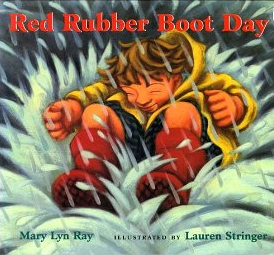
Red Rubber Boot Day

1. Red Rubber Boot Day  by Mary Lyn Ray – A wonderful celebration of a rainy day, stomping through puddles and enjoying the rain. This was  a writing mentor text we returned to often. Her book Mud is equally fabulous and pairs well with this one.

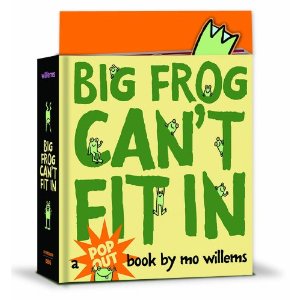
Big Frog Can’t Fit In

2. Big Frog Can’t Fit In by Mo Willems – Another fun book by Mo Willems, this complex pop-up, pop-out, flap book is the story of poor Big Frog who is too big for the book. With a little help from his friends he finds a solution to the problem.

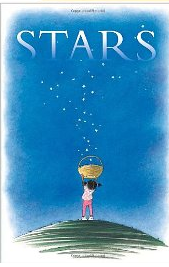
Stars

3. Stars by Mary Lyn Ray and Marla Frazee – The illustrations and story in this book are just lovely. From stars in the sky to stars on a magic wand, short lines of text explore stars and the many different ways stars can be seen and found in the world. Beautiful language and exquisite illustrations made this a book that many children “stood on the shoulders” of as they wrote their own books about stars.

Help!

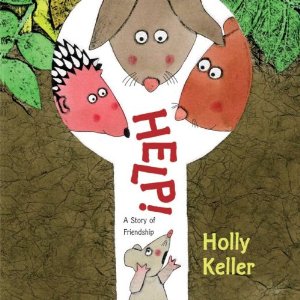
4. Help! A Story of Friendship by Holly Keller – The animals manage to convince Mouse that Snake wants to eat him instead of be his friend. Mouse listens to the gossip and becomes scared of Snake – until he gets into a situation where only Snake can help. This book launched some great conversations when we had  issues with children talking about others in unkind ways and helped the class come to the conclusion that problems are best solved when you go straight to the source, and making up stories about other people isn’t a good way to make friends. A pretty big concept for kindergarteners, and an important life lesson as well.

Me…Jane

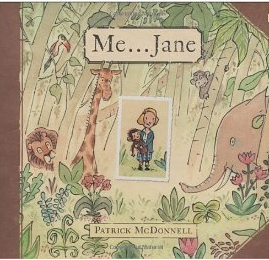
5. Me…Jane by Patrick McDonnell – This true story of Jane Goodall makes me tear up just thinking about it. A fabulous, simple text, yet deep story of following your dreams. I ended our last day of school with this read aloud (and many tears). I hope my kids remember the message it left us with that you can be anything you want to be – follow your passions and don’t let anything stop you.

If Rocks Could Sing

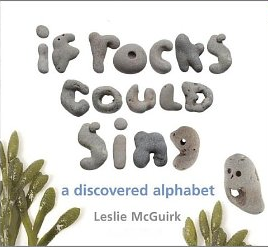
6. If Rocks Could Sing: A Discovered Alphabet by Leslie McGuirk – A wonderful addition to your alphabet books, this author found rocks that were in the shape of all the letters of the alphabet. She compiled the photos in this book along with short text to accompany and explain each of the rock shapes. It is great and the kids just loved seeing the alphabet in rocks. It inspired many of them to look for letters in rocks and outdoors as well.

Chickens to the Rescue

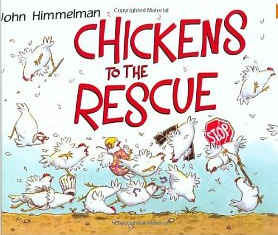
7. Chickens to the Rescue by John Himmelman – This was one of our all time favorites! It’s a laugh-out-loud, “read it again!” book that the kids love. A fun, crazy story about a family living on a farm who has many misadventures but never needs to worry because the chickens come to the rescue! Or maybe they DO need to worry… We had some great conversations about whether the chickens really were helping or just making more of a mess. This is the first in a series and each book ends with clues about the next book. Just go ahead and get the whole series (Pigs to the Rescue and Cows to the Rescue) – your kids will be begging to see what happens next!

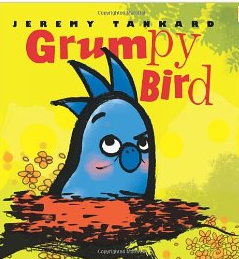
Grumpy Bird

8. Grumpy Bird by Jeremy Tankard – We all have bad days and Grumpy Bird is the best cure for a grumpy class (or teacher). Ha! A good story of friends helping out and turning a bad day around.

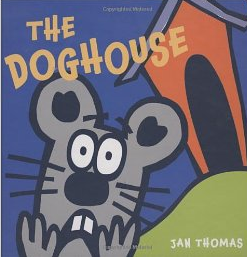
The Doghouse

9. The Doghouse by Jan Thomas – I discovered Jan Thomas this year and she immediately became a favorite author in our classroom. We used her books for mentor texts in writing and as “laugh out loud” favorite read alouds to revisit again and again. The Doghouse was a favorite.

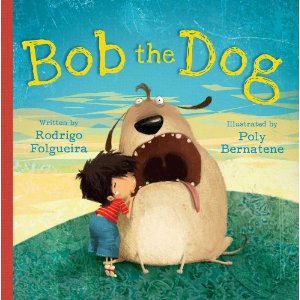
Bob the Dog

10. Bob the Dog by Rodrigo Folgueira – Pat gave this book to our class as a gift and it immediately went to the “Our Favorites” box. The illustrations are hilarious and tell much of the story. The kids fall in love with Bob, the dog who accidentally swallows a canary. Bob is distraught over this situation and tries many ways to get the canary out. It’s only Jeremy the Canary’s mom who can finally get him to come out. We loved learning why Jeremy went down Bob’s throat (because he didn’t want to clean his room), and what his punishment is (cleaning Bob’s room). We liked this book so much we made a VoiceThread of our comments and thoughts about the book.

What are some of your favorite books? Are any of my favorites ones you use in your classroom?

Be the Character

One thing I do during an interactive read aloud is have kids “be the character”.  I stop at a point in the text where the character is feeling an emotion or anticipating an upcoming event. I ask the kids to “pull out their masks” (I model pulling out an imaginary mask from my sock.) and put on their mask to be the character. I look to see them show what the character is feeling on their faces. Then I invite children who want to “be the character” to say what they are thinking or feeling (as the character). After we’ve shared briefly, I tell them to put their masks away (they put them back in their sock as a signal to come back to focus on the book) and we continue reading the book.

I’ve always thought this was a great way for me to teach inferring, engage children with the characters and events in the book, to predict and to show how readers read beyond the text. After reading Peter Johnston’s, Opening Minds (Chapter 6), I now see that having children imagine that they are experiencing another’s feelings or emotions is much bigger than all of that. It is also a key component in building social imagination.

Much of what happens in texts, personal interactions, academics and the “real world” happens inside our heads. Teaching children to imagine what is going on “behind the scenes”, in essence, is a highly important task. And how can we neglect this? As Johnston says, “social imagination is the foundation of civil society.” Children (and adults) need to be able to understand what others are feeling, to read people’s faces and expressions,  to imagine different perspectives, to make sense of abstract ideas, and to reason through this. While social imagination may not show up in a list of state standards, it’s a critical piece of education that we cannot leave out.

I’m looking forward to exploring this more in the upcoming school year. I see possibility in using this as we role-play problems that may arise in the classroom, as we read a variety of texts and as we interact with each other in the classroom. Kindergarten isn’t too early to start teaching children to look at multiple perspectives, to imagine alternate possibilities and to develop empathy. If we start there and continue building on throughout the school years imagine what kind of future we might have.

How do you build social imagination & social reasoning in your classroom?

Let Them Think

Barnhouse and Vinton say, “Our ultimate task is to remain teachers of thinking, not conveyors of thought.”  That statement really hit home for me  while reading What Readers Really Do.  I kept thinking of all the times I’ve tried to nudge students to come up with the same interpretation of a text that I had. Once, while reading Crow Boy to a class, I thought the students’ comments were way off the mark, so I tried to guide them toward what the “real theme” of the text was.  I knew it wasn’t good teaching as I was doing it, but I couldn’t stop myself.  Please tell me there are others out there who have trapped themselves in a similar way!

Here are some ideas that have inspired me from What Readers Really Do and will help me in the future:

1.  Barnhouse and Vinton use a KNOW/WONDER chart as their main tool.  They keep the idea of modeling to a minimum and instead let students make suggestions of what to put on the chart as they read aloud a text to the class.  They may read only a page or two of the book and then stop and let kids talk. Thus, from the very beginning the kids are negotiating their own meaning of the text. (Once the chart has a few entries, they read the rest of the first chapter uninterrupted.)

2. They teach the children to attend to details, not knowing at first which details may prove important down the line. The “not knowing” is all part of the process and is different from “not comprehending.”  You might not know what a character will do or what will happen next, but that “not knowing” is what keeps you reading and keeps you engaged.

3. Students notice patterns.  They ask the students, “Is there anything that keeps repeating; a character who keeps acting the same way, or phrases you notice that keep repeating?” Some patterns are listed together as a class on the chart, but the students can also keep track of their own patterns in a notebook.

4. Students come to realize how reading is a lot like writing in that we are constantly drafting and revising our ideas.

5. The authors say they let some misreadings go.  If we start correcting students who get off track noticing details that we know will eventually have no significance, we would only interfere with their sense of agency.

6. The authors don’t believe that the only reasons writers write are: to inform, to persuade, or to entertain (a poster you’ll often see in classrooms.) They’ve asked several authors of chapter books, “Why did you write this book?” and the answers don’t easily fit under one of those categories.

7. Barnhouse and Vinton tend not to introduce literary terms or strategy words to the students until they have actually experienced them. This fits exactly with my thinking about keeping meaning-making at the forefront and not teaching strategies for strategies’ sake.

7. They trust that if students follow patterns, keep wondering, make connections between some of the things they are thinking about, develop hunches, continuously draft and revise their ideas, then students will understand what they read at a much deeper level. When books are finished they give students time to think about what the author might be trying to say in this book about life or living and how that might impact the students’ own lives.

8. They suggest using several very powerful texts.  I’ve read all but one, so I concur on the strength of each text for multiple ways of thinking.  These include: Pictures of Hollis Wood, Because of Winn-Dixie, Just Juice, How To Steal a Dog, Miracle’s Boys, and  A Taste of Blackberries. And to their list, I’d add One For the Murphys, by Lynda Mullaly Hunt. I had seen so many recommendations for this book from teachers I respect, I just had to buy it.  There hasn’t been a girl character/foster child like this one since The Great Gilly Hopkins!

Barnhouse and Vinton want each of their students to leave their classrooms believing that “meaning is theirs to make.” I want that too, so I hereby vow to talk less, force-guide less, prompt for my ideas less, and let students do the talking and thinking!