Test Prep Overload?

We all want our students to do well on the standardized tests that are coming our way.  But let’s teach them how to take tests in a smart way.  Our main job is to help our kids become strong, strategic readers.  In this way, they will be able to navigate the test language and do well.

We agree with what Greene and Melton say, “In order to be effective test takers, students must first be effective readers” (2007, p. 15). There is so much more to being a proficient reader than a passing standardized test score.

Test preparation can be easily integrated into the daily reading workshop if standardized tests are viewed as a specific genre.  We use the language, format, and structure of tests in our mini-lessons during our regular reading workshop.  But we do this for only a few weeks before the tests. We don’t sacrifice months of quality teaching in a sound reading workshop for test preparation.

In their wonderful book Test Talk (2007), Greene and Melton show how teachers can teach the test genre while maintaining best practice teaching.  Test Talk includes sections on finding the main idea, identifying author’s intent, and inferring with very specific classroom lessons.

In this era of testing frenzy, teachers need to take a stand for keeping the teaching of literacy at the heart of our day — not test preparation.  You do not need to purchase expensive workbooks or test prep software.  Teaching children how to be good test takers can be done on the same material they are reading each day in reading workshop without giving up the essential elements of a comprehensive literacy approach.

How do you feel about the balance you provide between time spent on test prep and time spent on supporting students to be strong, strategic readers?

Keeping it all in check

Last week I went into the second grade class where I go once a week to read with some struggling readers.  I saved a little time to read with two other students, very capable and avid readers, who had been begging me to pick them every time I showed up at the door.  It turned out to be a wonderful experience for them AND for me.

Since I spend all my time with readers who are struggling I sometimes wonder if I’m losing sight of the end goal of what proficient readers actually do. It’s always good to read one-on-one with the more capable readers to keep a clear perspective on what is expected of average and above average readers, to listen and watch what they do at the point of difficulty, and to create that vision of an effective reading process system.

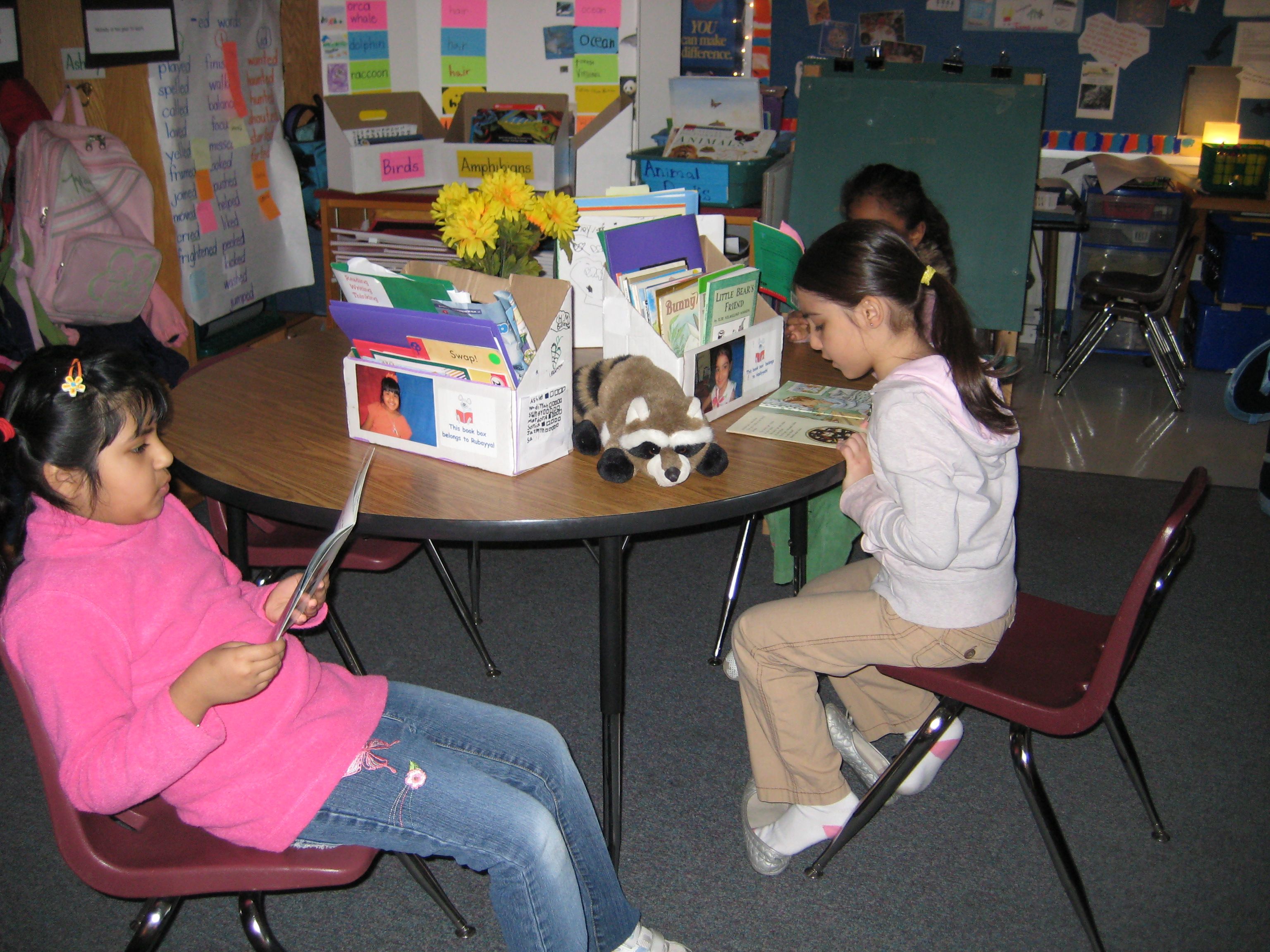
Reading with Iman and Maysia (both successful ELL students) made me realize that all the things I’m trying to teach, support and reinforce with the struggling readers ARE the things that proficient second grade readers actually do.  Both girls self-monitored their comprehension and fluency incredibly well — stopping and asking questions if there was a vocabulary word they were unsure of; rereading to confirm the flow of the sentence after noticing a punctuation cue; commenting on the storyline; spontaneously predicting what might happen next; and slowing down to break words apart and then picking up their pace when the problem was solved.  When Maysia read “Manyara stole away in the quiet of the night…” (Mufaro’s Beautiful Daughters), she stopped and said, “That must be a different meaning of stole” and then offered an idea about the meaning.  She asked a question when she got to the phrase “the old woman was silhouetted against the moon” because the concept of silhouettes was new to her.

For Iman, I picked the book Angel Child, Dragon Child.  I did a short book introduction about the main character who comes from Vietnam and gets teased by classmates for the way she talks and the way she dresses.  Right away Iman made connections to how she felt starting school coming from Pakistan.  As she read the first part of the book to me she made comments about the mean attitudes of some of the classmates and later inferred that the girl had never seen snow saying, “I guess Vietnam doesn’t have any.” She solved several words quickly on the run using meaning, structure, and visual information.  As she left to finish the book on her own, she said, “You know my mom bought me this book last year and I never wanted to read it. But now I see it’s really interesting.”  I wondered what made the difference for her.  Was it because of the book introduction I did that allowed us a few minutes to chat and get ready to read?  Or was it because a visiting teacher had showed some interest in her as a reader?

Listening to capable students read and discuss texts and observing them with an eye and ear toward strategies and reading process helped me form the vision of what is possible for all readers at this grade level. The experience revitalized me, making me realize that the excitement, interest, and proficiency that these two girls showed is what I want for every student in the class.

How are you maintaining a clear perspective on what is considered “proficient for your grade?”  Are you including more than numbers and levels in that vision?

Recent conference thoughts

I heard some incredible literacy folks speak at the recent Reading Recovery conference in Columbus, Ohio.  I’m just now finding some time to review my notes and reflect on some great lines I jotted down. Linda Dorn said in her keynote address, “The effectiveness of our teaching is measured NOT by what the child can do with us, but by what he can do independently.”

That really makes me think about my teaching.  Am I teaching in ways that the child will take on and try what I am asking him to do?  Will Eric dip down into his reading process system and try to put in a word that makes sense and then check to see if it looks right as I’ve been practicing doing with him?  Will Rachel keep a constant check on herself to see if she is understanding what she is reading?  Will Marcus listen to himself reading and stop if he thinks his reading sounds choppy and go back and try it again.  Dorn further suggested that if the teaching has been precise and the scaffolding has been supportive and right on target for what the child needed, then the child will take on the strategic action or behavior that we were focusing on.

In another session, MaryAnn McBride mentioned that the two most important things a teacher can do for a struggling reader is to be reflective and responsive. We all complain about never having enough time to be as reflective as we want to be.   And yet, what good are we doing the child if we don’t take a few minutes to look over our running records? We’re not just taking a running record to make sure the child is in the right level book.  Rather we can use these records to zero in on what the child needs to learn next. Being responsive to each struggling reader means tailoring our teaching, thinking about what he can do, can almost do, and cannot do.  Careful analysis of our on-going assessment leads to teacher decisions about instruction that make a difference for children.  Betsy Kaye once said, “Children learn from where they are, not from where we are.”

Mary Fried reminded the Reading Recovery teachers in her audience that not only is reading a problem-solving activity, but that teaching, too, is a problem-solving activity.  It’s our job to figure out what a struggling child needs and then “teach for the greatest payoff.”  She warned against getting too comfortable with the routines of a Reading Recovery lesson and teaching on automatic pilot, rather than staying fresh and putting forth your best teaching effort at every moment.

All of these speakers seemed to have an underlying message of the urgency with which we must teach struggling readers.  We have to be our best teaching selves in order to help them succeed. When I come from conferences like these I always feel inspired to do my best work. Are you ready to be the best you can be for the kids who are having trouble with literacy acquisition in your classroom?

Self-Monitoring: Watch for it, teach it, support it!

I was listening to David, a second grader, read the other day.  He was reading a book about scientists finding dinosaur bones.  I could tell he was very interested in it; he had read it many times before and chose it as one of his favorites.  David asked questions as we read. “But wait, are there really no people here when the dinosaurs were here?”   “Well, then, who was the first person here?”  “How did the scientists know that dinosaur was a meat eater?”  By his questions, comments, and self-corrections as he read, I could tell that David was self-monitoring his comprehension.

A little later that day, I read with Frannie.  She read a book about a class taking a trip to the veterinarian’s office.  She read ‘chart’ for ‘clinic’ in the phrase “we went to the vet clinic.”  On another page she read ‘musta’ for ‘machine’ and ‘place’ for ‘picture’ in the sentence “The x-ray machine takes a picture of the dog’s bones.”  She continued on although it made no sense whatsoever.  Frannie was not self-monitoring and it was a big red flag for me.

Paying attention to a student’s self-monitoring ability, or lack of it, is high on my list of things to watch for as I read with students.  Since reading is about making meaning of print, we want all children, even beginning readers, to think about what they are saying as they read. From the very earliest reading experiences that we have with children, we need to send the message that reading is supposed to make sense and that it’s their job to be checking that their reading IS making sense.  We usually think of self-monitoring as ‘checking on one’s comprehension,’ however, there are lots of ways that children self-monitor:

  • In early pattern books we want them self-monitoring for 1:1 matching.  Sometimes they use their finger to help themselves with voice/print matching.
  • Beginning readers need to learn to monitor that the words they are reading make sense, sound right, and look right.  They learn to cross check one source of information against another.
  • We want all students to self-monitor for punctuation cues that can help them make sense of text.  Take, for example, sentences like “Look – a dog park!” or “He roamed through the countryside, hungry and tired, until at last he saw a small hut.”  We know that the punctuation is important for reading each of these correctly.
  • Each student also needs to learn to monitor his own pacing and phrasing.  We need to support students as they learn to self-monitor their own fluency.  I always tell them, “If you catch yourself sounding a bit choppy, go back and put it all together.”
  • In longer texts, readers self-monitor as they are constantly thinking: Am I  following the storyline? Keeping track of which character is which? What’s happening in the plot? Where are the characters now (setting)?  Who is the narrator? and so on.
  • As readers read non-fiction texts we want them automatically thinking: Am I understanding this?  Is this new information for me? Does this part seem really important? If there are bolded words I’m unsure of, am I checking to see if the meaning is somewhere embedded in the text?

Are you observing carefully enough to notice which of your students are reading for meaning and which are just reading words?  What do you notice when listening to students read to you?

Share Time

When I finished “Room” by Emma Donoghue the other day, all I wanted to do was talk about it with someone who had read it or suggest the title to others who hadn’t read it. Real readers do like to talk about what’s going on in their books.  So I’m renewing my efforts in the New Year to make sure that kids get enough share time at the end of Reading Workshop.  Some days can be very open-ended by merely saying, “We have 6 minutes, boys and girls, turn to a partner and share something about the book you were reading.”  Or it could be more organized like the suggestions below.

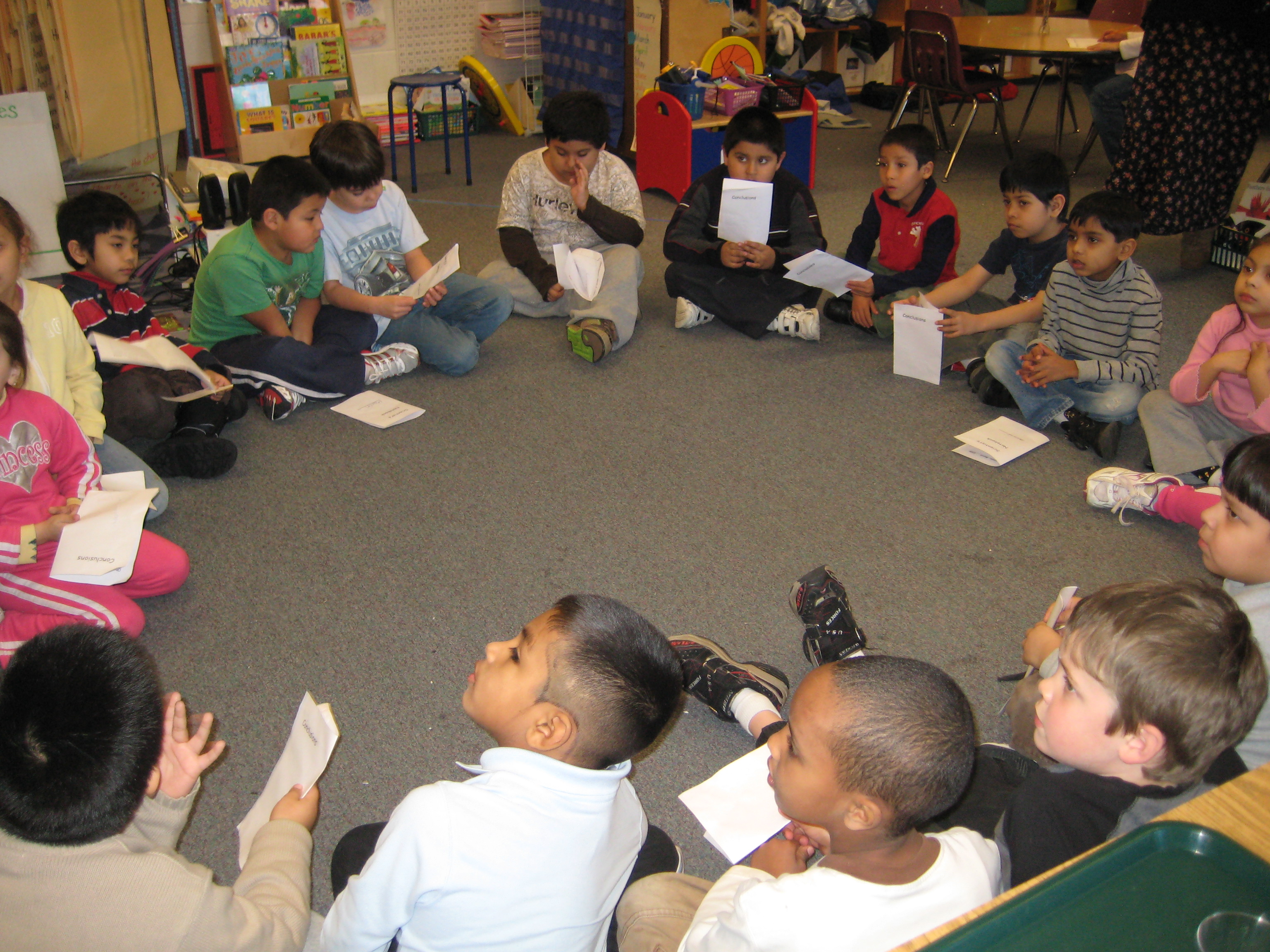
Here are three different ways that teachers organize their 10 minute share at the end of Reading Workshop – 1) having selected students share, 2) having all students share with partners, or 3) do a “whip around the circle” share.

Selected students (ones you’ve encouraged to share as you were meeting with them in small groups or one-on-one) could share about something connected to your mini-lesson from that day:

* Something new they learned from a non-fiction book today

*  A part where they were able to visualize or a connection they had

*  A place they inferred the meaning of a word

*  A prediction they are making for the ending of their book

*  Or, just recommend their book to the group by telling why it’s a great read

All students can share with a partner about:

*  The setting, narrator, or problem in their book

*  Something about a character

*  An exciting part of their book

*  What they would like to ask the author of their text

*  Something they did well as a reader today

*  A new insight/discovery they made about their book today

Whip around the circle, giving each child the opportunity to share or pass, on topics such as:

*  A line you liked

*  The title, author, and genre of your book

*  A line of dialogue from your book

*  Something you noticed about how reading workshop went today

*  What you plan to read next

Of course, these are only a few of the many ways to get kids talking about their books.  What ideas do you have for share time at the end of Reading Workshop?

By the way, I’m 150 pages into “Rush Home Road” by Lori Lansens and really enjoying it.  Anyone want to talk?

Is My Child Dyslexic?

If you have been teaching for a while you have probably come in contact with a parent of a child who is struggling learning to read who asks, “Is my child dyslexic?”  Here is what Frank Smith has to say about the term.

“This term is a label, not an explanation.  Dyslexia means, quite literally, being unable to read. Children are dyslexic because they can’t read.  To say that dyslexia is a cause of being unable to read is like saying that lameness is a cause of inability to walk.”

Is the brain of a struggling reader wired differently or is it permanently fixed as some parents and teachers might believe? With these questions in mind, let me digress a bit and share a story.

This past summer, my niece’s son, Josh (age 12) had brain surgery.  He had been experiencing seizures for the past year and a half.  Through all that time the doctors tried countless medicines to control the epilepsy but to no avail.  Surgery, to stop as many as 15 seizures a day, seemed the only option.  After months of tests to pinpoint the exact source of the seizures, a piece of his brain was cut out.  His parents were told that other parts of the brain would eventually take over the functions that were removed.

The good news is that Josh has been seizure free for several months now! Without going into too much detail, I will share that Josh lost considerable language skills and vocabulary immediately following the operation.   When questioned just days after the operation he could not come up with any answers to: “name some farm animals” or “name some video games” or “name some movies.” You can imagine the panic his parents experienced.  And yet after only 4 or 5 weeks, I saw Josh and his word retrieval issues had improved tremendously.  He recommended that I read Among the Hidden, a book he was reading for his English class. He then proceeded to tell me all about the book, including very specific details.  He is successfully functioning once again as a studious 7th grader!

This experience makes me realize all the more how malleable the brain is.  Carol Lyons talks about the plasticity of the brain. “Recent research in neuroscience shows that the brain can change its physical structure and its wiring long into adulthood through teaching and experience.”  She defines neuroplasticity, a power we have until old age, as “the ability of the brain to change in response to teaching.”

It is absolutely amazing what the brain is capable of! And yet, how many of us think that dyslexia is a permanent condition? How many teachers think that a child diagnosed with a learning disability implies that his brain is fixed forever?   How many doctors used to think that trying to rehabilitate a person with brain damage after a stroke was time wasted? I once heard the parent of an LD child say, “But he can’t do that because his brain works differently” as if there is a permanent situation that can’t be fixed. Now neuroscientists have proven all of those beliefs to be false.  This is great news!  Spread the word.

As teachers of reading we all have had those children who read ‘was’ for ‘saw’ or continually mix up b and d.  The longer the problem goes on, the harder it is to fix.  But there are ways to retrain the brain to work with these issues. And the earlier, the better. First and foremost, we need to teach reading as a meaning-making activity. A child who learns to read for meaning, will not mistake was/saw in. sentences such as, “Jesse saw the snake hidden under the rock” or  “I was having a hard time making up my mind between butter pecan and chocolate ripple.”  And if he does mistake it at first, he will quickly self-correct if he is reading for meaning.  You can also train the child to put a finger quickly under the first letter and make that sound.  It’s difficult to say the word ‘was’ if your lips are shaped and ready for an /s/ sound in ‘saw.” And vice versa.  Yes, these kids may have trouble with reversals, but we need to give them ways to solve those problems independently.

Ultimately the parent question I began with should really be, “Will you be able to teach my child to read?”  And hopefully we will answer, “Yes, I will keep working until I find the way to support your child in learning to read.”

What are your thoughts on this topic?  Do you believe that all children can learn to read?

To read more about how brain research relates to learning to read:

Lyons, Carol “Changing Lives Forever:  Looking Backward and Forward” Journal of Reading Recovery, Spring, 2010

Lyons, Carol.  Teaching Struggling Readers:  How to Use Brain-based Research to Maximize Learning, Heinemann, 2003.
Our Crazy English Language

As I was sitting in For Eyes the other day waiting for my new glasses, I noticed the wallpaper was composed of running words that were synonyms for the word “look,” very apropos for an eyeglass store.  Written continuously it said, “peep, spy, view, gander, glance, survey, scan, investigate, skim, gape, google, peer, look, stare, gaze, inspect, scout, notice, glimpse,” and there were many more.  Who knew there were so many varied meanings for basically the same word!

As I left, I couldn’t help but think about our English Language Learners (ELLs).  There is so much vocabulary for them to learn!  But I also thought about how important it was that we continuously expose them to new vocabulary, not white out or cover up unknown words in the books they are reading.  It is through frequent exposure that they will acquire such synonyms or varied connotations of vocabulary words.  As teachers, we need to provide experiences with new vocabulary within the context of reading real books and writing authentic messages together.

When we are reading with a child, we try to be aware of:

1) when the child can pronounce the word but is confused because the word means something different in this situation, or

2)  the child has the concept of the word, but the particular vocabulary word in English might be new for him, or

3)  the child has neither the ability to recognize or pronounce the word and also does not have a concept for that word.

For each of these situations our support would differ.

In the first instance, the child may be able to read “’Come quickly!’ she cried’” but may only know the word “cry” as “shedding tears.” Teacher support may be necessary for helping the ELL understand that the word is being used in a new way.  In the second instance, the child may be able to figure out what the word might mean by using context clues.  He may know that something very funny just happened in the story and that’s why the character said, “That was hilarious!” even though the word hilarious is not in his speaking vocabulary.  Support from the teacher may be necessary to help the ELL realize the connection between funny and hilarious.  In the third situation, the ELL might not have the concept of the word as well as not being able to solve the word.  For example, some children may be unfamiliar with a hearth or a scarecrow or a skyscraper.  In this instance we not only have to help the child with word solving skills to be able to pronounce the word, but we also have to build the meaning of the vocabulary word with pictures or gestures or a more detailed explanation.

This week try paying close attention to the English language in the books your students are reading.  What examples are you noticing of vocabulary that might be tricky for an English Language Learner?

For further reading on this topic, see Chapter 7 of One Child at a Time (Stenhouse) where Pat and Katie work together to improve their book introductions for ELLs.

Commit to your own learning

Before you get swept away with all the things that you will be required to do at the beginning of the school year, why not make a personal commitment to your own learning and professional development?  It doesn’t have to an expensive or overwhelming commitment.  Katie and I work with so many teachers who want to remain learners.  We often remind each other, “No matter how busy I get, I’m going to try to find some time for me to grow as a literacy educator.” If you agree, read through the following suggestions we’ve collected from our fellow learners and choose one!

10 ways to grow as a teacher of reading and writing:

  1. Pick a literacy blog that you will commit to reading once a week.  We like these — (Choice Literacy, A Year of Reading, Two Writing Teachers, AM Literacy Learning Log) — but there are many to choose from.
  2. Go to one literacy conference this school year.  National Council of Teachers of English (NCTE), Reading Recovery (open to all teachers), and International Reading Association (IRA) conferences at the state, regional, or national level are not just for reading teachers.  They are for everyone!
  3. Have another teacher, someone you admire and trust, watch you teach. Invite that person to watch a guided reading lesson or a shared demonstration lesson, and then meet with that person for some critical feedback.
  4. Put your head together with a more knowledgeable teacher about a student who troubles you. Have that person read with your student, take some running records, and guide you as to what this child needs next as a reader.
  5. Start a teachers-as-readers group that meets before or after school once a month.  Even if only 4 or 5 teachers join, you can have a great discussion about the book you are reading. Several teacher books come with a study guide that provides questions, activities, or reflections for the chapters. (Our study guide for Catching Readers can be downloaded free at http://www.stenhouse.com)
  6. Encourage your grade-level team to save a little bit of time at meetings for discussion around specific kids who are struggling with reading or writing.  Take turns talking about a child, sharing writing samples or running records, and ask your teammates for input.
  7. Devote one lunchtime per week to eating alone and reading an article from a literacy journal.  If you don’t subscribe to any journals, your school professional library should have copies of this month’s Language Arts, Reading Teacher, or Educational Leadership.
  8. Ask your principal to provide coverage so that you can watch another teacher teach.  Or give up a planning time once a month to observe a teacher you think you can learn from.
  9. Participate in an online discussion on a literacy topic. Establishing a Professional Learning Network (PLN) on Twitter can give you many different perspectives about education. Educators send out daily links to articles, as well as information on weekly online chats. Many authors have Twitter accounts that you can link to from their blogs. Find an educator you trust, and see who they follow. Some great Twitter people to follow are: DonalynBooks, FrankiSibberson, ReadingCountess,  chrislehmann, and web20classroom. Catching Readers is on Twitter too!
  10. Start a “Ten minute tidbits” forum in the morning before school once every two weeks.  Have different teachers share a quick literacy idea that helped improve the reading/writing abilities of their students.

If you have other ways that you like to learn, please feel free to add them. Enjoy growing as a teacher of literacy this school year!

Katie and Pat

Talking with Parents

Sometime in the first month of school you can expect to have a Back-to-School night for parents.  I remember always freaking out about all the things I wanted to be sure to tell the parents or guardians, but now I realize that too much information just overwhelms them.  As a parent myself, I now realize that the parents come that night to find out what kind of person I am.  Will I keep their child safe and support him as a learner?  Will I love their child and find out his strengths and weaknesses?  Am I a kind and caring individual? Do I have a structure and organization to the classroom that will allow for guided learning as well as individual creativity? Do I seem knowledgeable about the curriculum for this grade level?

Our many years of experience have taught us that as the school year progresses there will be various opportunities to communicate with the parents and we don’t have to “get it all in” on this one evening.  Below we make five suggestions of what we like to get across to our children’s families on Back-to-School night.

  1. We will accept their child exactly as he or she is.  We will work hard to understand the strengths that their child brings to the group. We believe in developing a community of learners who work together cooperatively and support each other.
  2. Much of what we do in Social Studies and Science is inquiry-based learning.  As we begin projects, students have opportunity to ask questions about what they would like to know about the topic. A weekly newsletter will keep you abreast of what we are working on.
  3. The walls of our classrooms and outside in the hallways tell the story of our learning together.  Please feel free to come in and have a look.
  4. We believe in taking each child from where he is and helping him grow as a reader, writer, mathematician, artist, and so on.
  5. We want to develop children who not only CAN read and write, but LOVE to read and write. We promise that the children will fall in love with certain books and authors this year.  Look for the titles of our read aloud books in the newsletter.

In Catching Readers Before They Fall, Katie talks about the weekly newsletter on page 213.  See a sample of her Keier Flyer in Appendix 19 and her first letter home to parents in Appendix 17. Also, Chapter 11 answers questions commonly asked by parents throughout the school year.

We hope you will add an idea of what you share with parents on this special evening.

Pat and Katie

Getting to know your readers

Most primary teachers early in the school year are busy trying to figure out what kind of readers they have in their classroom.  Some schools use standardized benchmark tests to level the students early in August or September, others use the data from the end of the last school year.  We’ve worked in schools where teachers are trained to use the DRA to assess all their students or they use parts of Clay’s Observation Survey tests to gather information.  We’ve also worked in other schools that use their own benchmark leveling system and others still that use only computer tests, spelling inventories, and word reading lists.

Whatever assessment system your school or district uses, we suggest that you also take time to just listen to your students read to you.  There is so much more than can be learned about a student by hearing him/her read in a comfortable setting.  You can hear how he attacks unknown words, how fluent he sounds, whether he rereads to check and confirm what he is reading, and so on.  By chatting with the student about the text, you can discover a lot about his comprehension. You are trying to discover what the child is able to do as a reader, what he can almost do, and some indications of what he still needs to learn how to do. Below is a list of tips of what to listen or watch for as each student shares a book with you.

  1. Watch for students who are reading to you in beginning pattern texts (levels 1-4) and seem to have memorized the book, but are not looking at the print.  Some may even be inventing the text based on the pictures and show no evidence of voice/print match. Encouraging one-to-one matching of text is your starting point with these students.
  2. Listen for all aspects of fluency.  Does the student read in groups of words or does it sound choppy like robot reading?  Does the child seem to attend to the punctuation to help her decide how the sentence should sound?  Is she reading in a monotone rather than making the dialogue parts sound like a character talking? Fluency (pacing, phrasing, intonation, and attention to punctuation) can be taught; it’s more than just a child’s speed and accuracy.
  3. Be on the alert for the student who shows no evidence of self-monitoring.  Is he skipping words he doesn’t know or just making garbled sounds when he doesn’t recognize the word instantly? Does he read phrases that make no sense, but doesn’t stop or reread to try and fix his error?  Teaching for self-monitoring behaviors needs to start with the earliest readers.
  4. Watch for students who seem to be able to read texts that they are familiar with, but then get stumped with a new book on similar levels.  These children don’t appear to have any strategies for solving words.  (It is possible for some students to slip by us, having memorized early level texts).  They need to learn beginning strategies for solving words and understanding texts.
  5. Watch for English language learners who read words with no meaning.  Some seem to “sound OK” when they are reading aloud to us, but we notice their comprehension is lacking.  Work to discover what is getting in the way.  Often a word in English that has multiple meanings, an unknown vocabulary word, an awkward phrase, or an idiomatic expression is what is tricky for the ELL.
  6. Make note of a student who only uses visual information (sounding out letters) for solving words.  He needs to learn how to integrate all the sources of information for figuring out new words.
  7. Notice those students who tested beyond level 10 and yet are not starting to take words apart.  They are still sounding letter-by-letter and are not looking for parts they know.  They will need to learn more about how words work.

For further reading about some of these topics see the following pages/chapters in Catching Readers Before They Fall:

Assessment: Chapter 10

Fluency: 37-39, 56-57, 124-127

Self-monitoring: 36-37, 123-124

Sources of information and/or word solving strategies: Chapter 4

Beginning reading strategies and behaviors:  Chapter 7

Working with ELLS: Chapters 6 and 7

Additional information in One Child at a Time: Fluency, chapter 4; Self-monitoring, chapter 5; ELLS, chapter 7.

Enjoy getting to know your readers this school year.  What are some of the things you are discovering?

Katie & Pat