Literature Circles

Many teachers use some form of literature circles or book clubs, but many others do not and are even afraid to get them started. Literature circles are “small, peer-led discussion groups whose members have chosen to read the same story, poem, article, or book” (Daniels, 2002.) Some teachers worry that the kids will just fool around and not really run their own discussions. Setting up literature discussion groups in your classroom takes time, planning, modeling, as well as reflecting, reevaluating, and making changes when necessary.

One teacher I work with has decided to play around with book clubs now, at the end of the school year, then read and think more about them over summer break and get a great start with them next school year.  Previously her reading workshop looked like this: daily time for individualized reading, conferring 1:1 with her students, presenting mini-lessons on reading comprehension strategies, encouraging students to branch out and try different genres, having students write in response to their reading as well as keep a log of what they are reading, occasionally meeting with a small group with a non-fiction text, and so on.

Here are some of the ideas we talked about so that she can give book clubs a try.

1. Start by making a class chart with the students.  Make a T-chart and put “Interaction” on one side and “Interpretation” on the other side.  Tell the kids that interaction means ‘what a good discussion group might look like and sound like.’  The interpretation side means ‘these are some of the things we might be discussing in our group.’  The children make suggestions of what to put on the chart.  This acts as your anchor chart.  Here is what one class came up with.

INTERACTION

•Eyes/ears on the speaker

•Speak clearly, loud enough, slow enough

•Sit in circle; invite others in; make room

•Ask shy ones to share

•Don’t be the discussion hog

•Speak into the silence

•Ask for clarification

•Add on to another person’s thought

INTERPRETATION

•The plot

•Exciting, interesting, sad parts

•Predictions

•Characters thoughts, feelings, agree or disagree

•Reactions

•Connections

•Lines you like; author style

•Confusing parts

•Ask questions of each other

In Harvey Daniels second edition of his book Literature Circles he uses a similar chart, but the headings are “social skills” and “thinking skills.”

2. I tend to NOT use the roles that are sometimes suggested in certain books – for example, Connector (makes a connection), Literary Luminary (share words or phrases you liked), Summarizer, etc.  The ultimate goal is for kids to have deep discussions around texts and the roles sometimes sidetrack them.  They begin to think that the group’s purpose is to meet and have each person “do” their role job. (In my next post, I’ll share how Daniels clears up the misunderstandings about role sheets.)

3. Use picture books to model and practice the elements of a good discussion.  Read the book and break the class into small groups for discussion.  Then afterwards refer back to the anchor chart to see how the groups did.  Sometimes doing a fish bowl also works (a small group of students have a discussion and everyone else watches and makes notes about what the group did well).

4. Develop sheets for the groups to keep track of what they are reading, how far they should read between times, when the next meeting of the club will be,  and what to bring with you to the club meeting.

5. Allow groups to choose to read the same book or various books by the same author.

6. Suggest that the groups don’t OVER-meet.  Sometimes just meeting 2 times during the reading of the text is enough.  Then the club can have several meetings after the book reading is completed.  Once everyone has completed the book, the discussions are richer; students can return to various parts, develop theories about the texts, search for evidence of their ideas, and so on.  When students meet too often, after every chapter or every 10 pages, the book drags on and children loose interest.

In my next post, I’m going to review some professional books and their highlights. Perhaps you might want to read one over the summer if you wish to implement book clubs in your classroom next school year.
Please keep ART

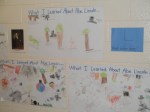
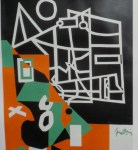
In the past few weeks I’ve seen a poster appear several times on Facebook that says “Earth without art is just eh.”  I love that!  I’ve also heard and read a lot about teachers saying that the pressures of the testing craze have caused them to cut back on art time (whether forced or by choice.)

But there is one school I know of that won’t buy into that (hopefully there are many more.)I spent my last six years of teaching at Baileys Elementary School in Fairfax County Virginia and that’s where I presently do my volunteering.  Teachers there believe that art is fundamental to a child’s education and they refuse to give it up.

Baileys has a partnership with the Kennedy Center called Changing Education Through the Arts where teachers take courses on arts integration and have the option of working with an arts coach. You can’t walk through the hallways without noticing how art plays a role in all subject areas.

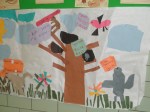
Kinder teachers use Horn and Giacobbe’s book, Talking, Drawing, Writing to help their students learn how to expand their drawings to add more details to their stories. And the many interactive writing murals include art made by the kids.

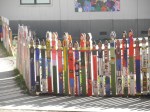
Many teachers study illustrations in picture books and discuss how the art adds to the mood/tone of the text.  I’m fairly sure that every child could name a famous artist or two because they study so many each year and make visits to local art galleries.  And check this picture out — even the picket fence around the butterfly garden is art!

Upper grade teachers have students write poems about works of art.

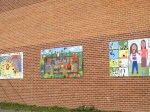
And take a look at the outside of the building.  There are over thirty large murals that decorate the outside of the building, done in partnership with local artists over the past several years.


I hope you are fighting to keep ART in your curriculum. (Click on a pix to see the gallery larger.)


Learning about Text Structures

In the fifth grade class I visit once a week, the students are busy learning with the teacher about different text structures.  The teacher began with compare/contrast articles.  Together they found signal words that would hint at this type of structure (see chart.) On other days they did some articles on the SmartBoard that were cause and effect structures.  On the day I joined the class, we worked together as a whole class on the famous San Francisco earthquake of 1906. The article was projected large for all to see. Once the students determined that it was a cause/effect article (and not a compare/contrast one), each student was given a paper with three causes listed.  As we reread the article students were to fill in the effects for each cause.  (Earthquakes caused buildings to collapse, people to be injured or killed, and a fire started.  The fire, that continued on for several days, caused more damage.)  It was interesting for the students to note that the fire which was listed as an effect of the earthquake, later became a cause.  They also noted that one cause could have one effect or many effects.

This week the class will be moving on to the  ‘sequence’ and ‘timeline’ text structures. The professional book from Scholastic called Guided Reading in Grades 3-6 by Mary Schulman offers many one page articles (that you are allowed to copy) for use in small group practice sessions.  I noticed a few that would work well as timeline structures on topics that would interest these fifth graders —  “Inventing a Game: How Basketball was Born” and “The History of Gum.”

Although the teacher and I do the introduction lessons with the whole class, further small group sessions are offered to students who need more practice. All the students, though, have been invited ‘on a search’ (of their Non-fiction books,  their on-line research, or in any of the magazines in the classroom) to identify and share articles they are discovering which represent the various text structures.

Although this work is certainly good for test preparation, we need to be sure that our emphasis in on comprehension.  Why is it important for kids to recognize a particular text structure?  The reason is that knowing how an article is organized can support your understanding of that article.  It’s easier to absorb the information once you’ve implied the text structure. Meaning making and understanding, after all, is the end goal.

One of my main beliefs about teaching reading is that the lessons we teach students should connect to real world reading.  That’s why I happily noted that Parade Magazine (part of Sunday’s Washington Post newspaper 3/11/12) had articles that fit all three structures. “The United States of Pizza” was a great timeline article.  “Happy 100th, Girl Scouts” compared the early troops with those today – the different badges girls could earn, the kinds and amounts of cookies sold, and so on.  And lastly, “Thyroid Cancer: Why is it on the Rise?” explained the causes of the increase in this type of cancer.  Sharing this with the students reinforced the value of their learning about text structures.

How Happy Are YOU?

Well, it’s not the best book I ever read, but I gave it a try when my book group recommended it.   And, among other reflections, I started thinking some things that relate to teaching and teachers, though it is NOT a professional book for teachers.

Gretchen Rubin writes about her 12 month project to feel happier in her life.  Although she felt she was happy enough with her job, husband, children and so on, she wanted to reach her full ‘happiness potential.’ It’s a bit of a twist on the typical self-help book.  The amount of research she has done was noticeable and interesting.

Each month was dedicated to a different topic — from getting rid of the clutter in her life to being more generous and kind to others to cutting down on her nagging and negative comments.  Many of the ideas were things I could relate to (and certainly use some improvement on), but others were not my cup of tea (I have no desire to write a novel in a month or start a collection.)  But the author states that each person’s happiness project would be different.

Her parenting chapters hit home for me as a teacher.  She worked on framing her statements in a more positive way which motivated her children to cooperate more and make better behavioral choices. Many of the scenarios were easily transferable to the classroom community.

But the real reason I’m mentioning this book is because it made me think of 3 types of teachers that I know:

1.) I have many teacher friends who are nearing retirement.  They are hesitant about leaving teaching because they fear not knowing what to do with their time. “I have no hobbies.” “I’m afraid I’d be bored.” “What would I do all day?”  This book could help.

2.) The other type of teacher is the one in the midst of her teaching career who gives so much time and effort to the job, there’s not much left for herself.  I know this feeling — of worrying so much about my students that it’s hard to let go and ‘have a life.’  These teachers have a hard time leaving the job at the schoolroom door.  I wish this book had been around when I was in that position and perhaps I would have been able to balance my job, home, and other parts of my life better.

3.)  The third type of teacher is the one that many of us have come in contact with at some point in our careers.  She/He is the complainer — “the students can’t do this… they can’t do that… they never…their parents don’t….” This book would definitely offer them some ideas of working on their negativity.

I’m interested in anyone’s opinion of this book or others you’d suggest.  I’m always looking for a good book recommendation.

Your Mindset and the Mindsets of Your Students

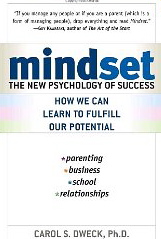
Sometimes you just get the urge to write about what you’re reading lately.  The book Mindset by Carol Dweck really had an impact on me.  I recently finished reading Peter Johnston’s latest book, Opening Minds (which is fabulous), and I noticed how often he referred to the work of Dweck.  Johnston’s fixed-performance theory of intelligence and knowledge vs. his dynamic-learning theory stems from Dweck’s fixed vs. growth mindsets.

Here is the basic premise of Dweck’s work.  She says that people have either a fixed mindset or a growth mindset (or a combination of those) and that “the view you adopt for yourself profoundly affects the way you lead your life.”  The folks with a fixed mindset believe that their qualities are more or less carved in stone; you have a certain amount of intelligence, a certain personality, and a certain moral character.  These are the people who say “I’m just not good at math” or “He has a natural talent for soccer” or when things go wrong, “Life stinks. I’m stupid.  Nothing good ever happens to me.” They also don’t cope with failures or mistakes very well because they see them as a reflection of their intelligence or character.  At times, they blame others when things go wrong.  And they often misestimate their true abilities.

The growth mindset people are oriented toward learning.  They think like this:  “If I’m not that good at math, I can put forth some more effort and improve.” “If I made a mistake in baseball that caused the team to lose the game, then there are certain skills I need to work on.”  “Just because I have a natural talent for golf, doesn’t mean that I can’t improve and work on my skills.” The growth mindset is based on the belief that your basic qualities are things you can cultivate through your efforts.

The wonderful thing about Dweck’s book is that she comes at this topic from so many different angles.  She shows how the two different mindsets work:

* In Sports – What’s the difference between a John McEnroe and a Michael Jordan? What’s different about the way some coaches coach athletes?

* In business – Why some CEO’s are better leaders than others and thus their companies are more successful?

* In relationships – Why do some marriages and relationships seem to work better than others?

* In parenting – How does the way we talk to our children affect the mindset they adopt?

* And in teaching.

I can’t recommend this book enough.  It has something for everyone.  As teachers, you will understand so much about children and they way they respond to situations, successes, and failures.  It will help you see “building self-esteem” and “motivating students” in a new light.  When reflecting on the CEO chapter, you can’t help but think about the qualities you want your principal to have.

The last chapters are filled with stories of people who have grown and changed.  Dweck’s advice can help anyone develop a growth mindset (obviously the better of the two for reaching your full potential.)  I hope others will read this book, especially if you are a person who loved Johnston’s Choice Words or Opening Minds.

Borrowing from other Poets

When students are writing poetry we often encourage them to choose a poet as a mentor and to try on what the poet is doing.  Sometimes students notice how a poet uses rhythm, a patterned rhyme, repetitive lines, alliteration, or onomatopoeia.  Sometimes they notice that the poet seems to be talking to someone or something; or the poet is pretending to be an object, like a mountain, a desert, or an animal.  The student then tries to use the idea in his/her own writing.

One day we came across this poem by Livingston:

ALONE

By Myra Cohn Livingston

Alone…

is when I’m tucked in bed

and little things think in my head

Alone…

is splashing out to meet

the ocean waves beneath my feet

Alone…

is in the apple tree

with no one looking up at me.

We talked about how Livingston took various situations that made her feel alone and listed them in her poem. (The poem reminded me of Charlie Brown’s Happiness is…) We had previously been talking about feelings that were coming through in various poems.  We brainstormed a list of feelings: anger, jealousy, love, courage, happiness, sadness, disappointment, fright, and so on.

First we tried writing a poem together, trying to imitate the form that Livingston used.  I asked the students to work with a partner and write on a post-it something that made them feel frightened.  As we shared all the possible answers, I wrote in front of them on a chart.

Fright is…

Watching a horror movie

by yourself.

Fright is…

The fifth-grade writing test.

Fright is…

The phone ringing

in the middle of the night.

Fright is…

The sound of cars

crashing right in front of you. (and so on.)

A few students tried the idea on their own during writing that day.  Here is one from fifth-grader Chris:

Anger

Anger is lava melting

Anger is yelling

Anger is red hot

Anger is building up

Anger is like a fireball.

Ralph Fletcher says that it’s even OK to borrow a line or two from a poet.  His idea works well with reluctant writers who just can’t get started.  On page 120 of Poetry Matters, Fletcher writes a poem about a memory of sitting with his brother on his kitchen floor after bath time.  He suggests that students go ahead and borrow his first and last line and fill in the middle with a special memory of their own.

Sometimes I remember

the good old days

……..

I still can’t imagine

anything better than that.

Thanks, Ralph!

What teacher of writing has not been influenced by the work of Ralph Fletcher?  I know I have.  I’ve read just about everything that he has written for teachers and have experimented with dozens of his lesson ideas.  His series of books for kids on writing are also fabulous and I have taken many an idea from his Poetry Matters to develop lessons for students of all grades.  Here are just a few I’ve tried:

1. Repetitive lines.  It’s easy to find poems with repeating lines.   “Every Time I Climb a Tree” by David McCord is a favorite.  I show several poems to the students with repeating lines and we talk about why the poet might have chosen to do that.  Sometimes the repetition establishes the rhythm of the poem; sometimes it’s just an important point the author is trying to make. Fletcher says, “Repetition is important glue that can hold a poem together” and then he suggests that the students experiment with the idea.  Read pages 38-40 to the students and share the poem that a fifth grader wrote about his place in the family, repeating “Little old me, stuck in the middle.”

 2. Use fragments, not full sentences.   Sometimes it’s the fragments and short phrases that help the readers of poems get great pictures in their minds.  Most poems are written like this, not in full sentences.  Young children oftentimes tell a story in complete sentences but merely shape it on the page to look like a poem.  Fletcher says, “If it sounds like a story, then it is a story, not a poem.”  Fletcher takes a poem a 4th grader wrote about the New York City subway (pg. 61) and then rewrites it in full sentences.  Students discuss how much better the fragment-poem conveys the real sense of the crowded, busy subway. You can do this with any poem.  I also keep this idea in mind when helping students revise.  Sometimes they need support to discover the great phrases they have in their poems. Help them cut down those long, wordy sentences to shorter phrases and see a better poem emerge.

3. The last line counts.  On pages 71-73 Ralph Fletcher shows us how much endings matter in poems.  I often show kids a poem my husband wrote for me on my birthday (the 22nd of Nov.)  Being an accountant and very interested in numbers, Rick once read that you can find combinations that add up to any number if you look hard enough.  So this poem has lines in it of all the things that add up to “22,” like the letters in our names or the last digits of everyone’s age in our family. It goes on for a while with some very funny combinations.  But the last line of his poem says, “Our being together just adds up!”  Of course, that’s what makes the poem so special to me. Fletcher suggests that students take the first draft of their poem and look for their best line.  Then rewrite the poem in a way that makes that line come out last.  He’s tried this many times himself with much success.  Along with this lesson I also show another favorite by Jean Little where the last line is what makes the whole poem work. It’s from her book of poems and vignettes called Hey, World, Here I Am:

Clothes

I like new clothes.

They seem brighter, smoother, shinier.

I move carefully in them.

I remember to hang them up.

I feel taller in them – and prettier—

And I don’t climb over barbed-wire fences.

I like old clothes too.

I don’t think about them much.

They are part of me.

Going where I go, doing whatever I feel like doing.

They are less bother and more comfortable.

They don’t expect me to be so tall.

They know my size exactly.

You know, it’s a funny thing —

Friends are like clothes.


Kids Write Poetry

I recently heard Katie Wood Ray at the Ohio Reading Recovery Conference.  She told us that kids need to read a hundred poems before they start to write poetry.  Her point is that kids need models – mentor authors and mentor texts. She wants kids to apprentice themselves under a poet, notice what that poet does, and “try it on” for a while.  In a few video clips, she shared how the student brought a mentor text to the 1:1 conference and how she supported the child in noticing what the poet did.  She helped the child envision how his/her own poem could look and sound.  I, too, believe in immersing kids in great poetry books to make discoveries about what poets do.  I’ve learned so much from teachers like K. W. Ray, Georgia Heard, Ralph Fletcher, Regie Routman, and Lucy Calkins.  All of them have acted as mentors to me — so that I can improve as a teacher of poetry.

No matter what grade I am teaching, I want the students to get the message that we can all write poems, that poems can be about anything, and that poets choose their words carefully, reading their poems over and over to make sure they sound the way they want.  One of the easiest ways to get them started is to show poems written by other students, as Regie Routman does in her series of books on poetry from Scholastic.  Regie gives us many poems written by students (both very able students and ones who struggle with writing). I began with several of Routman’s before I collected an assortment of my own.  We discuss the whole poem, the title and topic, the shape or rhythm, the word choice, the expression of feeling – whatever the students notice.  By reading and discussing several, my students can’t help but think, “Hey, if those kids can do it, so can I!”

I’ve also used many of Lucy Calkins’ lessons (from her Units of Study Poetry book, K-2) on various ideas to get kids writing poetry.

*  Write about what matters to you (pages 32-38)

*  Start with a strong feeling (pages 81-87)

*  Poets write with fragments or phrases (pages 115-123)

*  Poets sometimes surprise us and compare things in interesting ways (pages 89-102)

Poets often write about vivid memories.  I remember Georgia Heard writing about that in one of her early books.  Georgia suggested getting the kids to 1) start with a strong feeling, 2) then connect that feeling to a memory, 3) now write about the memory.  I always think it’s important for teachers to actually do what they are asking students to do, so I model this in front of the students before sending them off to try it.

I tend to stay away from the formula poems, like acrostics, diamontes, cinquains, and so on.  Kids will write more (and better poems) when not constrained by rhyme or a formula.  Free verse takes a lot of the weight off their shoulders.  I’ll share what I learned from R. Fletcher in the next post.  If you have any thoughts on how you get your students writing poetry, please feel free to comment.

Poems and Movement

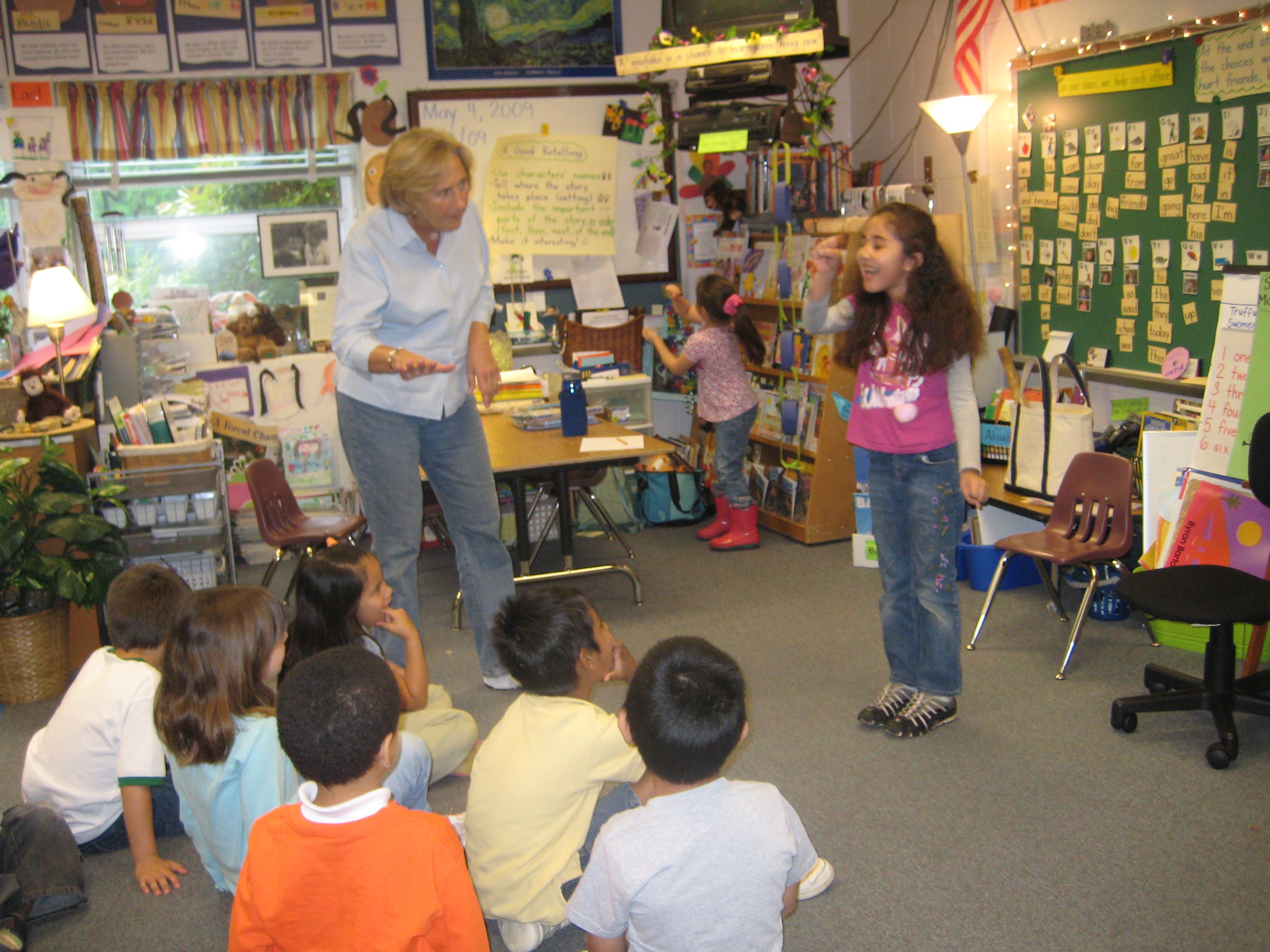
There is nothing more fun than getting kids to move with poems to enhance the meaning!  Here is how I do this lesson on creative dramatics and poetry.  Since it’s always important to gradually release responsibility when you are teaching something new, I start with modeling one poem, next I teach them how to put motions with another poem, then the students make suggestions for the motions of the next poem, and finally they are grouped into teams to plan a performance poem.  (Note: we don’t use props, just our bodies and our voices.)

I open by telling the kids we are going to move with the poems today; something I call ‘Creative Dramatics.’ We will use what the poem is about to help us decide how to move and what to do with our bodies.  In fact, I mention that I saw a group of students the other day moving with the Boa Constrictor poem. I begin by modeling with Shel Silverstein’s Lazy Jane.  The poem is short and easy to memorize.  Be sure to check out the picture that Shel has drawn with this poem. As I slowly say the first lines, “Lazy, lazy, lazy Jane. She wants a drink of water,” I slowly take three steps and plop into a chair. As I say “So she waits…. and waits….. and waits….” I merely lounge in that chair, pausing, sighing, and looking like I’m waiting.  And finally when I say the last line, “… and waits for it to rain,” I drop my head back with my mouth open towards the sky.  The kids clap and I say, “Great, thank you, that’s exactly what you should do when someone performs for you.” (I’m preparing them for later when I want them to applaud each of their group performances.)  We talk about the movements I chose and why I did it that way.  I even show them how it wouldn’t fit with the poem if I marched across the room quickly saying the first lines.

Next I teach them movements to the poem Jalopy by Sylvia Cassidy.  Don’t make the mistake of assuming kids know what a jalopy is; not one child in two 5th grade classes knew the meaning of the word.  We bounce in our chairs as we read most of the poem, using other motions for certain lines: “No top has my jalopy”/ wave your arm from front to back; “Drop, goes my jalopy”/ just dip your body down a bit; “Clop, goes my jalopy”/ stamp both feet… and so on.  You’ll figure it out.

Releasing a little more responsibility over to the students, I put up the poem When Tillie Ate the Chili by Jack Prelutsky.  After reading it through and talking about it’s meaning, I let different students offer suggestions of hand/body motions we can do for each line.  When all the motions are decided, we all perform it together.  (Note: for the line “she coughed, she wheezed, she sputtered” the students will model making coughing noises.  Be sure to tell them that they are just pantomiming the motion of coughing because they have to be saying the words of the poem.  Also, for the line “she ran totally amok” hopefully they will suggest running in place.)

They are finally ready to go off on teams to prepare their performances.  I use these four poems, but you can choose whatever you like.

Things, by Eloise Greenfield

Keep a Poem in Your Pocket, by Beatrice Schenk de Regniers

Rain Poem, by Elizabeth Coatsworth

The Storm, by Dorothy Aldis

If you haven’t been following my blogs on teaching poetry, feel free to check out the posts from February 3 and January 25th.

Reading Poems Out Loud

In my post on Jan. 25th I promised to write up some poetry lessons that I’ve done. I often begin with the idea that many poems should be read out loud.  On an overhead projector or Smartboard, I put up my first example, “All My Hats” from Richard Margolis’s Secrets of a Small Brother.  First I read the poem very fast, mumbling, in a monotone voice.  Then I read it a second time with all the vocal expression I can muster.

All my hats

Are hats he wore.

What a bore.

All my pants

Are pants he ripped.

What a gyp.

…… (several stanzas)

All my teachers

Call me by my brother’s name.

What a shame.

We then talk about which rendition was better and why, as well as some discussion of the meaning of the poem, which many kids can relate to personally.

I put up the poem Foghorns by Lillian Moore and read it aloud.  I tell the students that poets take time deciding how they want to arrange their poems on the page.  They not only use punctuation sometimes, but also white space.  The white space tells us where to pause and take breaths and how to read phrases together (for more on white space, read Fletcher’s Poetry Matters, pages 69-71.)  I show them the same poem Foghorns, but I’ve arranged it in two other ways on the page.  We practice how each one would be read differently because of the change in white space and arrangement of the words.

Now I want the students to get some enjoyment out of reading poems out loud together so we do some choral readings. (Eventually in future lessons we will do some creative dramatics and move with the poems, but today we are working only with voices.) We start with this one.

WASPS

by Dorothy Aldis

Wasps like coffee

Syrup

Tea

Coca-Cola

Butter

Me.

You might not think there is much to this poem.  But because of all the white space after each word, you must pause a lot.  Read it a few times and feel the beat in it; punch out the coke line.  The kids join me reading it with a beat. “Again, now clap it as we read.  Now snap it.  Now soft.  Now loud.”

Some other poems we read together are Good Books, Good Times, by Lee Bennett Hopkins.  This one works well in two voices, with one side of the room starting and the other side reading every other line. Another is Boa Constrictor, by Shel Silverstein.  The students enjoy having me read aloud a longer poem as they follow along, joining in on the repetitive lines.  I use Nathaniel’s Rap from Nathaniel’s Talking by Eloise Greenfield or Honey, I Love (and we belt out that line, “But, Honey, let me tell you that I love…”) Then I usually give out two pages with several poems that are fun to read aloud and have them try a few with a partner.  After that they all take a poetry book and read independently.  Many find a poem that they want to share with the whole group at share time.  In fact so many students wanted to do this that the teacher had to put up a sign-up sheet for three students a day for the next few days.

The wonderful thing I learned from doing these poems aloud with students is that they ALL wanted to participate.  Prior to doing this lesson, I had explained what I would do to the classroom teacher.  She worried a bit that her students were too shy or inhibited (worrying about what others might think, as fifth graders do).  But they were ready to roll!  They put all their energy into reading with the best vocal expression they had.