Book Discussion

“To read without reflecting is like eating without digesting.”  – Edmund Burke (as quoted by Barnhouse/Vinton)

I wrote a blog a while back called Sharing about meeting with a group of teacher friends to discuss Barnhouse and Vinton’s new book, What Readers Really Do.  When I posted about having that discussion, someone commented that she wished it were an on-line discussion.  Since it wasn’t, I thought I’d post a few thoughts from our get-together on August 14th.

First off, let me tell you what a joy it was to be able to meet at my house in summer time.  Though I highly recommend ‘teachers-as-readers’ groups during the school year, it was such a pleasure to sit in comfortable chairs drinking iced tea and lemonade.  No one was worried about picking up her students in 10 minutes from the art room.  No one was rushing off from an after school discussion to gather toddlers from daycare.  We’ll all be back to school soon (in the U. S.) and the memory of a relaxed discussion will soon give way to the juggling of events that takes over our lives every school year.

Here are some ideas that surfaced from the discussion:

  1. One reading teacher loved the idea of ‘back door’ teaching that the authors talk about.  They try not to define or even mention a strategy until after the students experienced what that kind of thinking felt like and sounded like. They believe in sticking closely to the text and not having students go off on tangents with connections they are making or pictures they are getting in their minds. These things will happen naturally and many strategies will overlap and interconnect as students make meaning from texts. Barnhouse and Vinton talk a lot about how to get students to do the ‘mind-work’ of reading. For example, “We never ask students to identify a theme; rather we help students construct an understanding out of which theme can emerge.” p. 166
  2. A Reading Recovery and LLI (Literacy Learning Intervention) teacher commented that even though the examples in the text were all from third through seventh grade classrooms, she found so much to reflect on.  The idea of ‘keeping meaning front and center’ is also paramount when she teachers her at-risk first graders.  She is careful to have conversations with children even about those beginning pattern texts.  (Mom is driving. Mom is cooking. Mom is running.) “Mom sure is a busy person in this book.  What about your mom?” The authors remind us, “What we need to teach is that reading is an act of accumulation, that meaning grows out of words that we begin to fit into patterns that we then connect and actively construct into ideas.  In other words, we read from the inside out.” p. 130.
  3. A Literacy Collaborative (LC) trainer said that she was going to keep this question in her pocket all school year — “Do we as readers do this, and if so, why and how?” p. 6.  She wants to apply that concept not only to teaching students but also when she does staff development for her Literacy Collaborative teachers. She also loved the word “hunches” that Barnhouse and Vinton use in their book.  The authors support their reason for using this term over the word “predictions.”
  4. Staying on the topic of LC, I invited everyone to wonder with me about how certain concepts that were mentioned in the book would develop into reader’s statements.  We looked at pages 73, 83, and 97 to think about creating reader’s statements.  It’s always good to take something we learn from a professional book and see how it fits with how we are already teaching students. (Everyone at the discussion that day was connected with a school that uses LC.)
  5. A fifth-grade classroom teacher wondered if she should use the idea of the KNOW/WONDER chart and looking for patterns in text with her whole class in a read aloud experience OR if she should try it first with a small group of struggling readers.  We all talked about the pros and cons of trying it one way or the other. Most felt that starting the year with a whole class one would be the most beneficial as it would level the playing field, i.e., the teacher would do the reading and therefore all students, even ELL and struggling readers, could participate in the discussion of the things they noticed, wondered about, or connected back to some other place in the text.
  6. Another reading teacher could think of several teachers in her school that would love to read this professional book with her, but worried about several brand new teachers in the upper grades.  Would this text be too overwhelming for them? Do they need to start first with understanding how a reading/writing workshop approach works?  Is there a place for teaching certain strategies, like visualizing, questioning, activating schema, and so on? Could she help new teachers learn about effective strategy teaching while also helping them support students in meaning-making? In other words, she was trying to synthesize what she’s learned from books like Strategies that Work along with this new text.
  7. We all liked being reminded by these authors about building lessons from the students’ thinking rather than our own interpretations of texts. Their KNOW/WONDER charts help you do that because the charts reflect the students’ ideas. “It helps us maintain our stance as teachers who facilitate thinking, not those who, in overt and subtle ways, sanction specific meaning.” p. 89.

As you can see, our conversation touched upon several issues as we agreed, disagreed, added onto each other’s thoughts, questioned each other, and listened carefully to add to our own knowledge base.  Thanks for coming, friends! I look forward to chatting about other texts in the future.
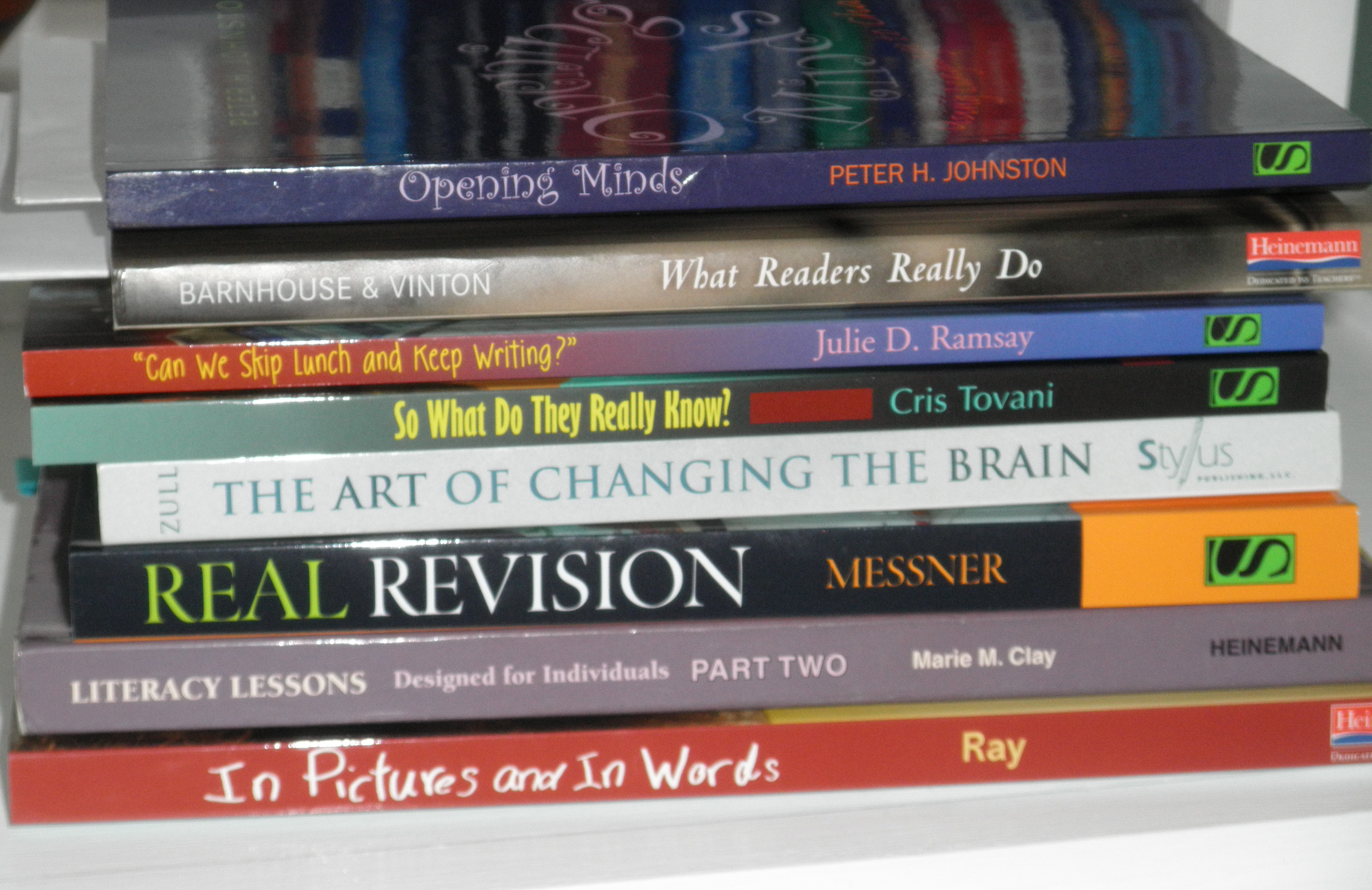
Think – Rethink – Layer

Recently someone asked me, “What kinds of things do you do in summer to get ready for the upcoming school year?”  I referred the person to Katie because I assumed the question meant “ideas for setting up your classroom or other things related to your organization, management, or curriculum for the next class of kids.”  Since I am no longer working full time in a school my first reaction was that I had no thoughts on the matter.  But over the past few weeks, I’ve come to realize that I do plenty in the summer to plan for the next year.  As a literacy consultant who does staff development with groups of teachers and as a volunteer who works in a school to support kids and teachers, I spend lots of time thinking, reading, rethinking, layering my knowledge base, and sometimes shifting my ideas about teaching reading, supporting children who struggle, and guiding teachers toward new understandings.

One way I do this is to read, read, read in the summer.  I read blog posts, professional books, children’s literature, and various articles referred to by colleagues on Twitter.

Here is a bit of the thinking that comes from all that reading:

1. I can’t stop reflecting on the idea of changing the way we talk to children so that they develop a sense of agency as Peter Johnston explains. He got me thinking about this with his first book, Choice Words, but took me even further with Opening Minds. He says we can support children in developing agentive narratives…. “I am a person who…” By the end of Opening Minds he gets us thinking about supporting kids’ moral compasses as they realize “I am a person who…acts when I see injustice or inequality.” But in the early chapters, Johnston shows us how to support all students, even kindergartners, as they create agentive narratives about themselves as readers and writers.  “I am a person who…. solve problems when I read; tries something and, if that doesn’t work, tries something else; goes back and rereads to keep the story in my head;  keeps checking to make sure that what I’m reading makes sense; and so on. He does this by giving us peeks into classrooms where teachers support these agentive narratives so well.  On pages 2-4, teacher Pageen loses her place during a read aloud because of an interruption.  She tells the students that she needs to go back and reread a page to remember what was going on.  Michael chimes in saying that he does that same thing.  Pageen asks him to tell the class more about that. The child describes how he does exactly what the teacher was just talking about. Later in the day the teacher attributes that idea to Michael when she mentions to the class, “Remember what Michael does when… ”  The teacher has “created a story line in which Michael was a particular kind of reader.” Michael nows owns this narrative.  He is a reader who...

2. I’ve also spent hours thinking about Barnhouse and Vinton’s idea of back door teaching — not naming a strategy for the students until they have actually experienced using it as they negotiate a text together (from What Readers Really Do.) Take character traits, for example.  How many times have we asked kids to name a trait of a particular character?  They often say, “she’s nice” or “not nice.”  To help them with better word choice, we’ve often brainstormed a list of traits for the kids to choose from and then ask them to provide evidence of why they think that trait applies. But Barnhouse/Vinton say we should help kids start with what’s in the text.  Help them learn to read carefully and notice what the character does or says.  Then ask, “what kind of person acts like that?” By doing this together, the students have actually done some inferring.  But there is no need to begin the lesson by defining or identifying “inferring” as a useful strategy.  Always begin with meaning making.

3. While reading  an article by Franki Sibberson in Choice Literacy, I got excited to share her ideas for setting up an upper elementary classroom with interactive wall displays.  She suggests a board with pictures of book characters, another with interesting/fun facts, graphs, surveys, or images; another display with word play ideas, and yet another with websites worth visiting.    She says, “Like a museum, I want the room to be filled with invitations and possibilities, with something for everyone.” I can see the kids in that room having so much to talk about and share while browsing the walls in the first few days.

4. From my reading of children’s lit, I am recommending several of my favorite chapter books to read aloud to 4th and 5th grades this year:  One for the Murphys, How to Steal a Dog, and The One and Only Ivan. Today I’m heading to a book store to look for Wonder because I loved what Katherine Sokolowski wrote about it in this week’s Choice Literacy.

What have you been thinking a lot about this summer?  

Are you changing anything next school year because of something you read or heard this summer?

Let Them Think

Barnhouse and Vinton say, “Our ultimate task is to remain teachers of thinking, not conveyors of thought.”  That statement really hit home for me  while reading What Readers Really Do.  I kept thinking of all the times I’ve tried to nudge students to come up with the same interpretation of a text that I had. Once, while reading Crow Boy to a class, I thought the students’ comments were way off the mark, so I tried to guide them toward what the “real theme” of the text was.  I knew it wasn’t good teaching as I was doing it, but I couldn’t stop myself.  Please tell me there are others out there who have trapped themselves in a similar way!

Here are some ideas that have inspired me from What Readers Really Do and will help me in the future:

1.  Barnhouse and Vinton use a KNOW/WONDER chart as their main tool.  They keep the idea of modeling to a minimum and instead let students make suggestions of what to put on the chart as they read aloud a text to the class.  They may read only a page or two of the book and then stop and let kids talk. Thus, from the very beginning the kids are negotiating their own meaning of the text. (Once the chart has a few entries, they read the rest of the first chapter uninterrupted.)

2. They teach the children to attend to details, not knowing at first which details may prove important down the line. The “not knowing” is all part of the process and is different from “not comprehending.”  You might not know what a character will do or what will happen next, but that “not knowing” is what keeps you reading and keeps you engaged.

3. Students notice patterns.  They ask the students, “Is there anything that keeps repeating; a character who keeps acting the same way, or phrases you notice that keep repeating?” Some patterns are listed together as a class on the chart, but the students can also keep track of their own patterns in a notebook.

4. Students come to realize how reading is a lot like writing in that we are constantly drafting and revising our ideas.

5. The authors say they let some misreadings go.  If we start correcting students who get off track noticing details that we know will eventually have no significance, we would only interfere with their sense of agency.

6. The authors don’t believe that the only reasons writers write are: to inform, to persuade, or to entertain (a poster you’ll often see in classrooms.) They’ve asked several authors of chapter books, “Why did you write this book?” and the answers don’t easily fit under one of those categories.

7. Barnhouse and Vinton tend not to introduce literary terms or strategy words to the students until they have actually experienced them. This fits exactly with my thinking about keeping meaning-making at the forefront and not teaching strategies for strategies’ sake.

7. They trust that if students follow patterns, keep wondering, make connections between some of the things they are thinking about, develop hunches, continuously draft and revise their ideas, then students will understand what they read at a much deeper level. When books are finished they give students time to think about what the author might be trying to say in this book about life or living and how that might impact the students’ own lives.

8. They suggest using several very powerful texts.  I’ve read all but one, so I concur on the strength of each text for multiple ways of thinking.  These include: Pictures of Hollis Wood, Because of Winn-Dixie, Just Juice, How To Steal a Dog, Miracle’s Boys, and  A Taste of Blackberries. And to their list, I’d add One For the Murphys, by Lynda Mullaly Hunt. I had seen so many recommendations for this book from teachers I respect, I just had to buy it.  There hasn’t been a girl character/foster child like this one since The Great Gilly Hopkins!

Barnhouse and Vinton want each of their students to leave their classrooms believing that “meaning is theirs to make.” I want that too, so I hereby vow to talk less, force-guide less, prompt for my ideas less, and let students do the talking and thinking!

SHARING

I’m sure you’ve seen the poster about “Everything I learned in life, I learned in Kindergarten.”  ‘Sharing’ was undoubtedly one of those things.  In fact, learning to share starts even before that.  Two of my grandchildren are two years old and we constantly remind them about sharing nicely.  When Reilly starts to complain at the pool because a little boy is using her watering can, I say, “Remember we brought those toys to share.”  And when Brenna lays on top of 100 legos trying to guard them with her life, her mom says, “Lincoln came over to play with you, Brenna, so you have to share your toys.”

Sharing.  It’s one of the reasons I love teaching so much.  Teachers are famous for sharing.  They share ideas, materials, books, lessons, quotes, and so on.  In other careers or businesses, it might be all about competition — who made the most sales this month or who has the best, new, innovative idea?  But teaching is much more about collaboration and sharing than competition (or, at least, it should be!)

Lucy Calkins once shared an idea with me by signing my copy of her book, The Art of Teaching Writing, many years ago.  She wrote, “…and when you get there, there is no there there.”  Now, granted, she may have written that to 100 others, but I got her message. It helped me stay a learner all these years. And it suggested to me that I should never think I have all the answers, but should remain open and tentative about what I believe the teaching of reading should be.  I use that example to show that sometimes just sharing a saying or quote can mean a lot to a teacher.

Just the other day, on this blog, Katie wrote about sharing what you are reading. She shared a few professional books on her pile this summer.  I’m sure more than a few teachers took note of her recommendations.   Also, have you noticed all the fantastic literacy blogs lately? They are usually nothing more than a teacher sharing his/her thoughts, ideas, and reflections. There’s never enough time to read them all, but I encourage you to sign up for a few.  And they’re FREE.

I just finished What Readers Really Do by Barnhouse and Vinton from Heinemann. It’s excellent. My favorite parts of the book are the charts that they put at the end of some chapters: What we used to do/ What we do now.  I’m always interested in the shifts in teachers’ thinking as they learn and grow.

While reading the text, I was reminded of the idea that Katie and I tried to sort out in Catching Readers Before They Fall.  Having concerns about some of the strategy teaching we’d seen, we talk about the difference between spotlighting a strategy as opposed to teaching strategies for strategy sake. We emphasize the integration factor and urge teachers to keep meaning-making front and center.  Well, the authors of this new text go much further with this idea than we did.  Their book is fabulous.  Even though their examples are from third, fifth, and seventh grade classrooms, there is definitely something for everyone in this text.  In fact, I liked it so much I emailed ten really smart teachers I know — some Literacy Collaborative folks, some K teachers, some 5th grade teachers, a university professor, a retired reading teacher — a nice mix of ages and experiences. They quickly bought it and began reading. Presently, we are picking dates to get together to share our ideas and reflections.

Teaching is all about sharing.  I hope you will share an idea, reflection, book, or even just a quote with another teacher this summer. Anything you’d like to share right now? Feel free to comment.

Children All Over the World

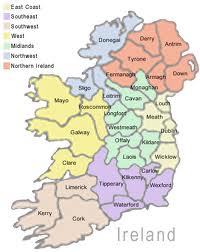
I just returned from my first trip to Ireland.  Had a fabulous time touring the southwest area with its many castles, heritage centers, forts, seaside towns, cathedrals, and beautiful scenery. What a “lovely” country (a word they use a lot in all the B & B’s.)  There were so many of the obvious differences — like the steering wheels on the opposite side and driving on the left side of the road. But the one difference that effected me the most is that THERE IS NO ICED TEA IN ALL OF IRELAND! And I’m an iced tea addict. They never even heard of making iced tea.  I would get the strangest looks when I finally tried to make my own in a McDonalds with a cup of hot tea and another cup of ice.

But there is one thing that is the same the world over…. and that is children and their love of story. One day we were visiting a fort and there was a group of 3rd graders with their two teachers. Unfortunately, it was a day of torrential rains.  The kids were soaked and cold as they trudged from building to building listening quietly to the tour guide who rattled on about battles and chiefs and life in the old fort.  The children’s eyes seemed to glaze over as they stood there shivering. My sister, who is quite a character, started telling the teacher that I was a storyteller and maybe the children would like a good story at the end of their tour.  The teacher was delighted and before I knew it I was up in front of 30 kids telling “Tailypo.” The class enjoyed it, of course, but I couldn’t get over how “the same” they were as kids in the U. S.  They laughed at the same places (especially the dogs’ names of Uno, Ino, and Cumtico Calico); they said “ewwww” in the same place (when the old man eats the chopped-off tail of the creature); and they sat on the edge of their seats in the same way when the creature returns for the third time to get his tail back (“Tailypo, tailypo, alls I wants, my tailypo” I said in my spooky voice.) Stories are universal and we need more of them in schools. What a treat it was for me to be up there in front of a group of wide-eyed kids!

After  chatting with them about the story, I said, “I hope you enjoyed your story gift from America.” One little girl raised her hand and said, “My aunt lives in America.” I asked, “Oh, really, what state?” And she said, “Ummm….. the United States!” I guess all of our third graders need a little more geography.  I’m sure if I asked a U. S. student “What county in Ireland is your aunt from?” she would have given me the same blank stare.  The teacher then asked a little boy to share his favorite fact from a report he had just finished on “The White House.”  He stood up and proudly told me, “The White House has 35 toilets!” And I live 15 miles from the White House and never knew that! My experience with those Irish children certainly left a warm place in my heart for children and stories all over the world.

A Quick and Easy Class Book

Kids of all ages find it easy to write from personal experiences. I’m a firm believer in getting kids to tell their own stories. And everyone has stories about older or younger siblings (or what it’s like being an only child.) With only a few weeks left before summer break, I was looking for something fun to do with the kids.  Between all the testing days, they needed something light.

So in two fifth-grade classes recently, I read aloud the book The Younger Brother’s Survival Guide by Lisa Kopelke.  We laughed together at the tips about switching glasses when your sister is not looking after she has made you a mystery concoction or rearranging her room while she is away at camp.  Being the youngest of six children I had plenty of my own tips to give so that kids wouldn’t get tricked like I had been so many times while growing up.  After the reading, I told three of my own stories and wrote my tips in front of them as models.  The students were brimming with ideas.

Next the students each wrote three tips of their own.  They could choose whether the tips were about surviving older sibs, younger ones, or being an only child (there was only one student in this last situation.) I took their papers home and chose one tip to type up for each student.  Then I cut them into strips.

Here are a few they came up with for living with younger siblings:

When your younger brother is mad or in a bad mood, watch out for your things. Guard them!

Don’t let your little sister play with water.  She’ll just flood the place.

When your younger sister is napping —- TIPTOE!  Don’t wake her up.

Don’t leave your books on the table for even five minutes.  You might come back and find some pages missing.

And a few tips for living with older siblings:

Don’t listen to your older brother when he says this roller coaster ride is like a kiddie ride.

Always agree with them.  Make life easy on yourself.

Take notes on your older sister.  See if she shows any patterns.  Then outsmart her by predicting and preparing for her next move.

Don’t believe your older brother if he says you will die from eating raw shrimp.  He just wants it all for himself.

On my return visit, we looked at the picture book again, but this time focused on the illustrations.  We noticed that the tip summarized the idea but that there was much more information in the pictures to each actual story.  I had the students illustrate their stories that led to their survival tips.  They glued their tip to the bottom of their drawing.  After that there was just a matter of a cover, a title page, and binding the books together. Each class has two books, one about older and one about younger (the only child tips were included in one of the books as a bonus section.)

It was quick and easy and I can’t tell you how much the kids enjoyed sharing their stories and survival tips!  The books are part of the classroom and the students choose to read them often.


Jumping Up and Down for Books and Stories

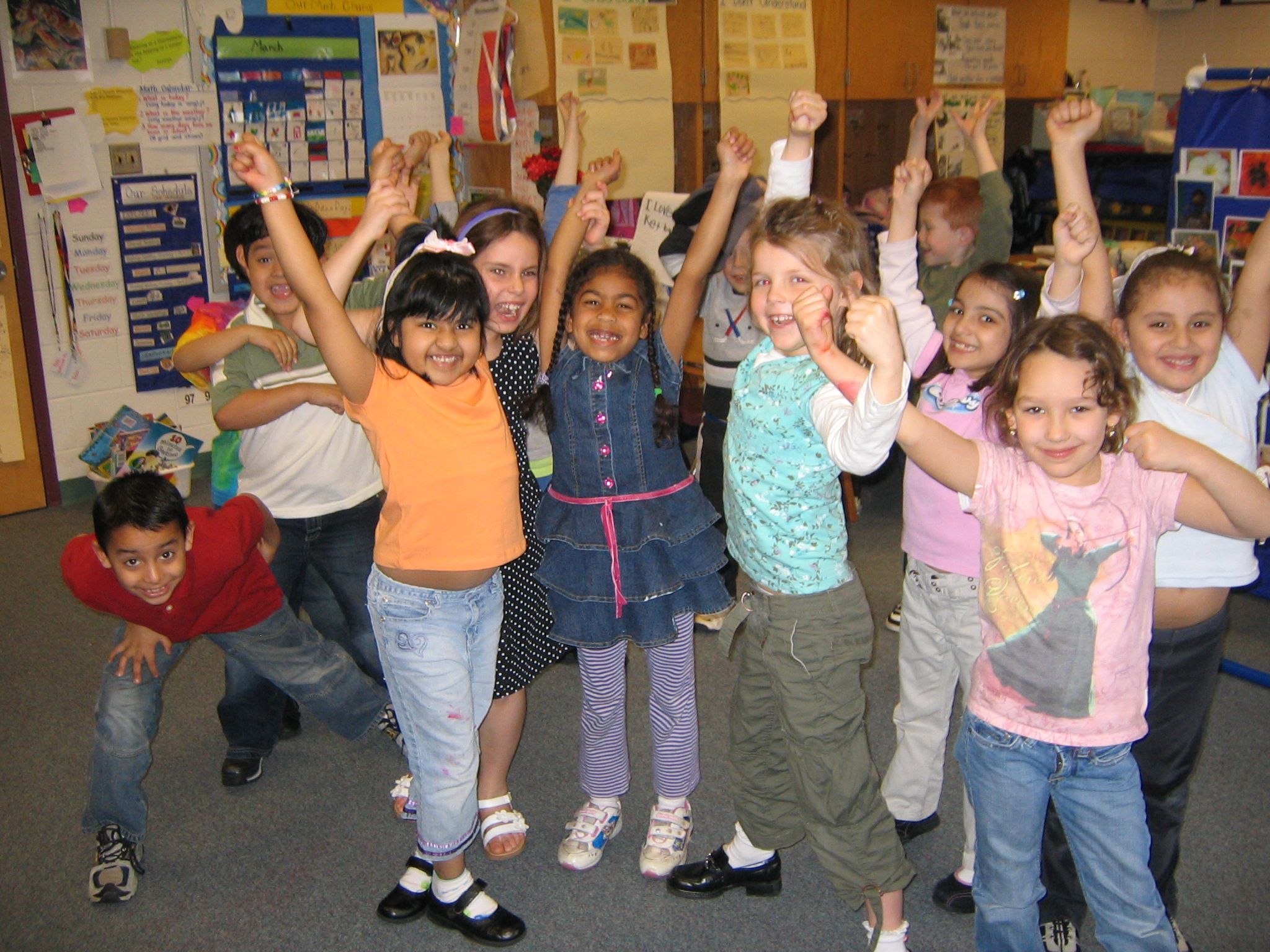
I’m a walker.  I try to walk 4-6 miles every day. A few days ago I was almost finished with my walk when I passed two little girls with their nanny. The older one (about 4 ½) let out a great big “HI!” with a big smile on her face.  So I stopped and our conversation went like this:

Pat:  Well, hello there, you guys look like you are going somewhere fun.  Are you on your way to the library or the park? (both nearby)

4 yr old: (practically screaming with excitement) We’re going to the library!

Pat: WOW, that sounds great.  Do you like books?  I love books.

4 yr. old:  Yes! (Now she’s literally jumping up and down) “And… And …. And…They have storytime!!!”

Pat:  Well, get going.  You don’t want to miss that.

Don’t you wish all our students, leaving us now at the end of the school year, would leave with that enthusiasm for books and stories?

I’ve noticed lately (as we only have 20 more school days) that talk in the teacher’s lounges centers around teachers’ worries about passing tests.  Did my students pass the fiction and non-fiction on the DRA tests?  Did they pass the standardized state tests in math, science, and social studies? Did they use punctuation correctly, spell lots of word quickly, and write a story with a beginning, middle and end to pass the writing prompt?

Though we have to answer the above questions, and we hope that all the answers are yes, wouldn’t it be great if our hopes or questions for our students could look more like these:

  • I hope my students are leaving with some fond memories of the books we shared together this year.
  • I hope they have lists or piles of books they want to read over the summer. Will they take time to read? Do they have favorite authors?
  • I hope they are leaving with a sense of inquiry.  Have I done enough this year to instill in them a desire to wonder about their world, live with questions, and search for answers?
  • I know they have grown as writers.  Do they know that writing can be powerful; persuade someone to change their opinion? Do they know they are full of ideas of what to write about and that their ideas and opinions matter?
  • Have I done a good job with building community this school year?  Will it help to stop the bullying?
  • And if perchance they do hurt someone’s feelings or injure them in any way, will they say they are sorry with heartfelt sincerity?
  • Do they treat others’ opinions with respect in discussions? Are they better listeners than when they first came to me?
  • And, finally, do they have the spirit of jumping up and down when they think about stories, poems, and informational texts?

What is the one question that you hope to answer with a resounding “YES” at the end of the school year?

Who Nudges You?

I always remember Don Graves using the word “nudging.” He talked about nudging students to give them that gentle push to try something new in their writing.  I loved the concept.  It seemed to offer the student a challenge, yet something not too overwhelming. With the gentle nudge, it meant that they were supported in what they were taking a risk to try.   Not only do our students need these nudges, but sometimes we, as professionals, do also.

I started thinking the other day about the people who have nudged me in my career.  I remember when teacher friends of mine, Mary and Carleen, who were trained in Reading Recovery several years before I was, suggested that I might like getting trained.  Thanks, friends — Reading Recovery changed my understandings forever about how children learn to read, what we can do to support struggling readers, and how to teach responsively to the child’s needs.

Then there was Kathleen, my niece and fellow teacher.  There was a time when I was feeling like I was stagnating as a Reading Teacher in the school where I worked.  Things had become too routine and uninspiring.  Kathleen nudged me to change schools and come to her school.  That nudge resulted in my spending the last 6 years of my employment working with teachers who were true learners, who never gave up on students, who were creative, inquisitive, and willing to face problems head-on.

There were several people who nudged me to write, among them a teacher friend, Susan.  I had been giving many successful workshops talking to teachers about a variety of topics related to teaching reading.  I told Susan one day that “I just wanted to talk about literacy.”  She answered by saying, “but you can reach a lot more teachers by writing it down.”  So, eventually, out came One Child at a Time followed by Catching Readers Before They Fall, co-authored with Katie Keier.

I have to give credit to Katie for being one of my biggest nudgers of late as Katie is always ten steps ahead of me in technology.  Though I had taken the leap to join Facebook to keep up with my 25 nieces and nephews, their spouses, and their 58 children, Katie nudged me to try Twitter to form my “professional learning community.”  Though I’m still not an avid tweeter, I do find so many interesting articles and websites about literacy that I would not otherwise find.  Of course, I also have Katie to thank for nudging me to become a blog reader and blog writer.  Her latest nudge has been for me to try VoiceThread that I highly recommend.  It’s easy to use and very adaptable to many classroom endeavors.  I recently sent her kinder class a voicethread about a hike I took out west in Red Rock Canyon.  It was so fun to make, featuring pictures of the canyons, rock climbing, and all the desert animals that live in the region.

Take a minute to think about all the people who have nudged you in your life.  I know that I wouldn’t be the same without all my favorite nudgers.  Thanks to them all! Or comment on a student that you’ve given a gentle nudge to recently.

STICK-WITH-IT-NESS

In this fast-paced world of today, how much are we doing to teach our students about persevering? The idea of endurance, perseverance, and over-coming obstacles certainly seems worth discussing with our young readers, writers, and learners. Don’t we want students to stick with something even when the going gets tough?

The fifth graders I work with had the privilege of having a visit from Bernice Steinhardt, co-author of Memories of Survival. All her life, the author’s mother, Esther Nisenthal Krinitz, told her children stories of her own childhood during the Holocaust. When the Nazis took over Poland and ordered all Jews to report, Esther escaped with her sister and never saw their family again. As she got older and was living in the U. S. Esther made a quilt with each square illustrating one of the stories from her life. Bernice then added the text for each story as it was made into a picture book. It is a fabulous book and the students were very intrigued.

Based on a recommendation from their website, artandremembrance.org, the classroom teacher decided on three things after the author’s visit: 1) to immerse the students in read alouds and discussions relating to the theme of persevering; 2) to teach the students about the interview process so that they could conduct interviews with their parents, grandparents, or other relatives; 3) have the students choose one story of perseverance from their interviews to write and illustrate.  The Art Teacher joined in with a way to make a quilt out of the children’s illustrations. The “Stories of Perseverance Lesson Plan” can be found on their website.

My job in this endeavor was to bring in and booktalk many of the children’s literature texts on the theme of persevering.  As I rummaged through my own books, I realized the books fell into several categories.  Several books had characters who persevered through personal challenges, real-life or fictional: Wilma Unlimited (the story of Wilma Rudolph), Thank You, Mr. Falker and Junkyard Wonders (both about Patricia Polacco’s difficulties learning to read and being in special classes), Stone Fox (both main characters strive to overcome obstacles), and Half-A-Moon Inn (a young, mute boy perseveres to find a way back to his mother.) Each book lent itself to further ideas from the students.  For example, Wilma’s story reminded the children of many other athletes who also endured personal challenges.

Another category was made of all the holocaust-related books, like: Let the Celebrations Begin, The Story of Anne Frank, Hilde and Eli, The Number on My Grandfather’s Arm, Number the Stars, and so on.

I booktalked or read aloud a few picture books from the Civil Rights Era: Freedom Summer, Freedom School, Teammates and books about Martin Luther King and Rosa Parks.

Patrick Allen (author of CONFERRING: The Keystone of Reader’s Workshop) taught me about the book called Spirit of Endurance: The True Story of the Shackleton Expedition to the Antarctic by Jennifer Armstrong. This book will probably remind students of other true-life adventures books about climbing Mt. Everest, searching for the Titanic, and so on.

Many of the children in our school have families that have recently come to the United States from other countries and speak another language other than English as their first language.  Although this project is still in the making, we feel confident that the students will uncover many family stories of perseverance to share with the class.

Literature Circles Continued

If you saw my post the other day, you’ll remember that I’ve been thinking a lot about literature circles or book clubs lately.  We can teach children to facilitate their own discussion groups.  I especially like to see these happening in grades 3-8, but I’ve also seen them work well in grade 2.

You might want to pick up a professional book on the topic this summer. Here are a few I’d suggest:

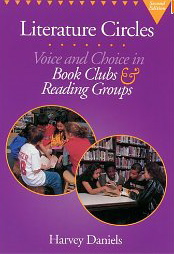
Harvey Daniels, Literature Circles: Voice and Choice in Book Clubs or Reading Groups, Stenhouse, 2002.

Harvey Daniels (or Smokey as he’s known to his friends) is probably the person most responsible for getting many teachers to think about literature circles.  In this second edition he clears up the confusion about “role sheets.”  In some classrooms, he says, they became “a hindrance, an obstacle, a drain.”  He explains that the roles are “intermediate support structures” and that each role was designed to “support collaborative learning by giving kids clearly defined, interlocking, and open-ended tasks.” In this text he moves from role sheets to a training process.  On pages 55-71 he gives four training options.

Jeni Day, et. al., Moving Forward with Literature Circles, Scholastic, 2002.

This book will really help you begin the year with careful practice of discussion groups.  The authors help you map out a way to begin with whole group read alouds and practice different ways of talking about text before moving students into running their own groups. The lists of prompts to get discussions going on various topics will be helpful to novice teachers.

Kathy Collins, Reading for Real: Teaching Students to Read with Power, Intention, and Joy in K-3 Classrooms, Stenhouse, 2008.

Although Collins is not talking about literature circles, she does use reading partnerships. The partnerships are student-led discussions and are meant to support students as they delve deeper into texts. The two members of the partnership read the same book or books by the same author and then “grow ideas” together about their book, characters, series, author, and so on.  Collins has the partners fill out a “Reading Partnership Contract” (an adaptation for book club members would be easy.)  Their contract begins, “We will try our best to work well together to help each other become stronger readers, thinkers, and talkers. Here is a list of things we will do as partners (book club members) that will help us do our best work together.” Then the students create a list and sign their contract.

Other ideas from Collins’ book involve the T-charts she often uses. For NonFiction reading:

Column 1: What we noticed, learned, and found in the text.

Column 2: What it makes us think, wonder, and question.

Or if students are reading fiction, make a T-chart about characters:

Column 1: What we noticed about our character.

Column 2: What ideas we grew about our character from the things we noticed.

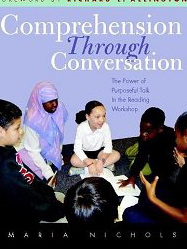
Comprehension Through Conversation, Heinemann, 2006

Maria Nichols has two wonderful books out – Talking about Texts, Shell Education, 2008 and Comprehension Through Conversation, Heinemann, 2006. Both texts will help you teach children about what good literature conversations look like and sound like.

Shelley Harwayne, Lasting Impressions, Heinemann, 1992.

This book is probably already on your shelf! Has it really been 20 years since I first read this book??? Consider rereading the first four chapters. Even though it’s mostly about writing, the reading connection is so profound.  She opens the year by encouraging kids to respond to great literature and poetry.  Again, literature circles are not mentioned specifically, but the idea of teaching kids how to delve deeply into texts is ever-present.

Please feel free to add any other ideas of professional texts, blogs, or articles that relate to implementing book clubs in your classrooms.