Morning Message

Morning Message on the SMARTboard

Morning Message on the SMARTboard

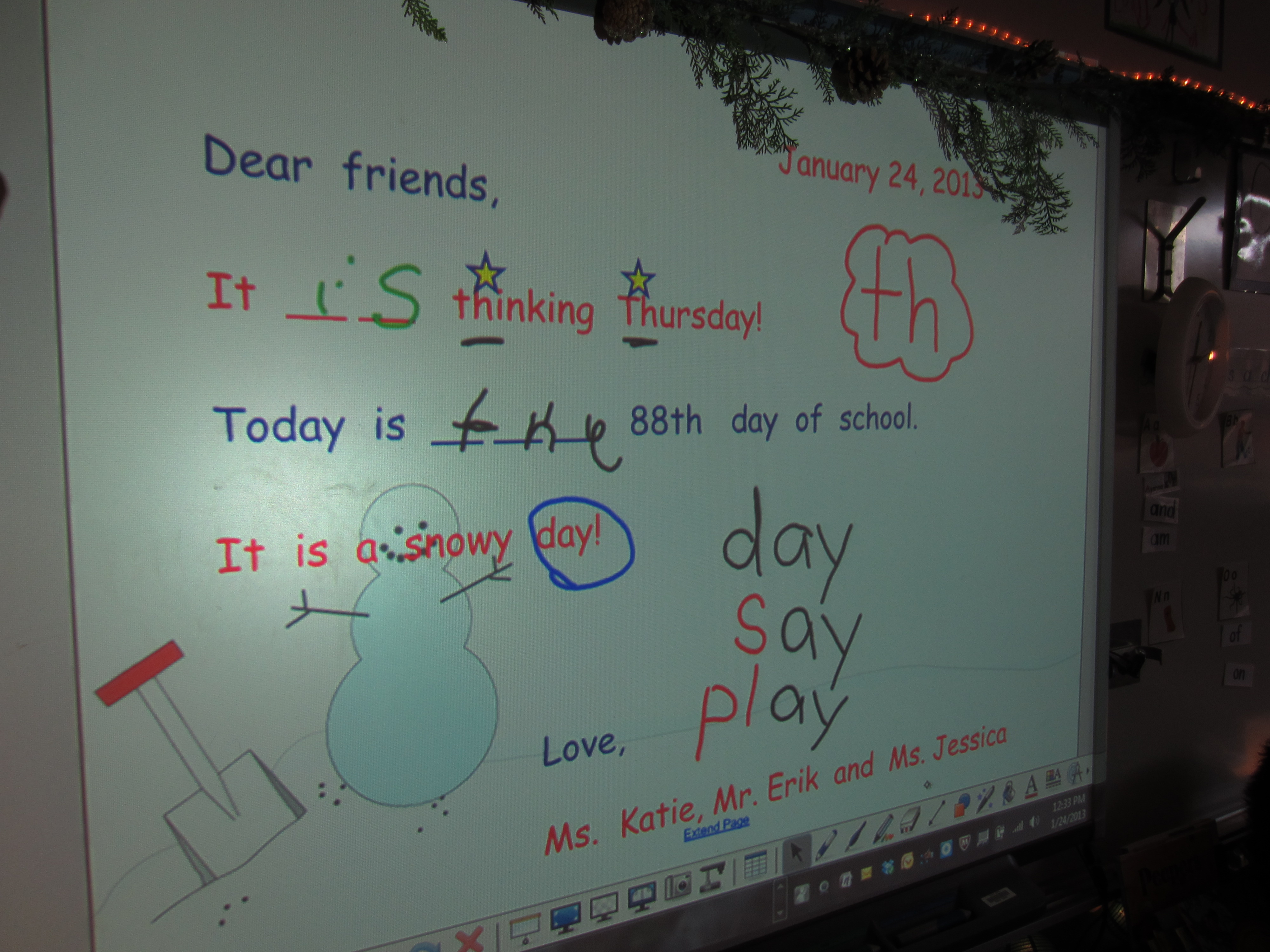
I recently sat down with my kindergarten team to look at our standards and do some big picture planning for the upcoming quarter. As we were unpacking the standards, we also talked about where in our day we could best teach the expected curriculum objectives. It became very evident to all of us how critical our morning message is, especially in the area of phonics and word work – but really in all curriculum areas. Morning message is a daily occurrence rich with learning possibilities.  It’s where the heart of my word work and phonics instruction occurs.

Morning message

Morning message

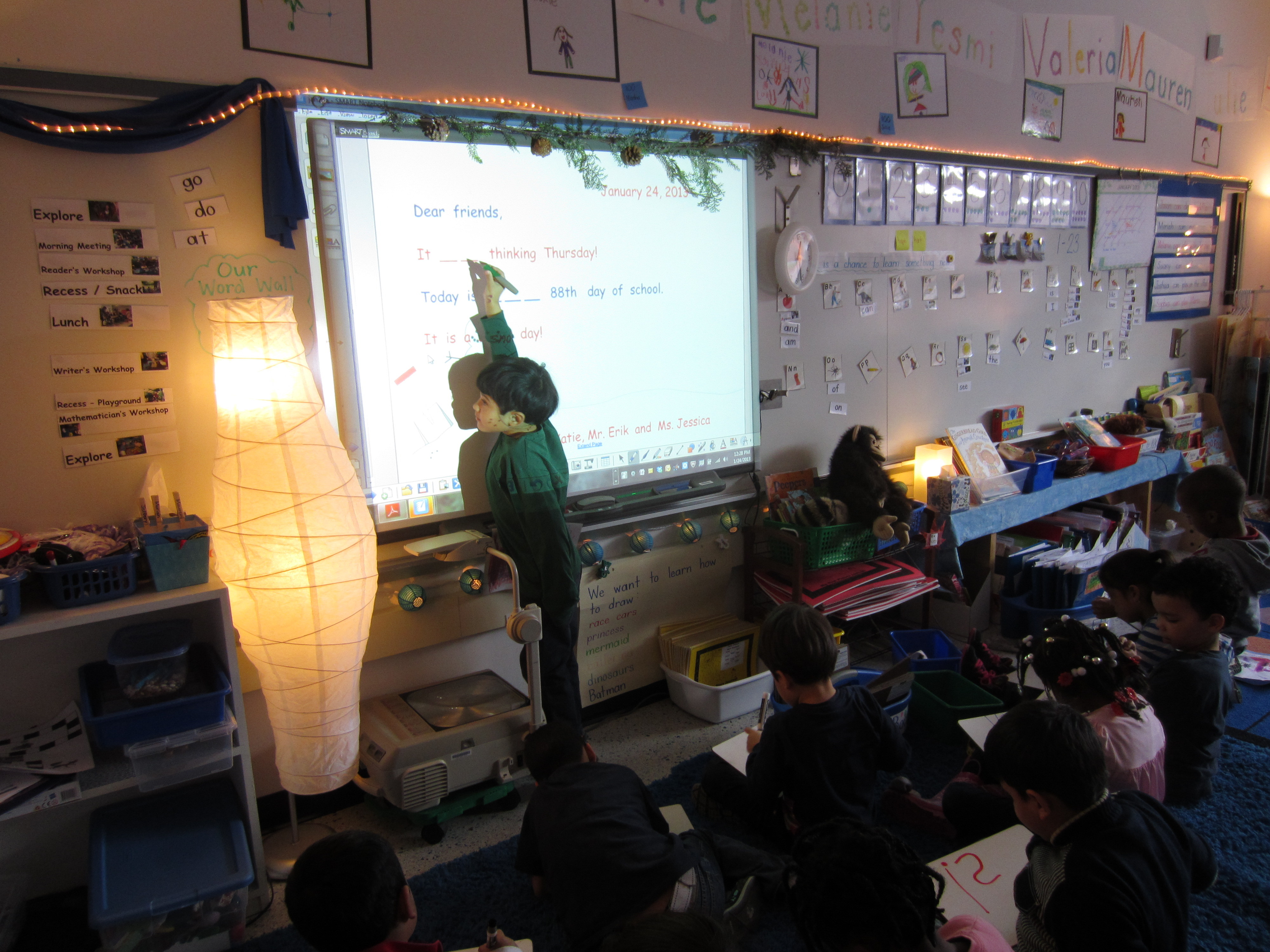
My children come together on our blue fuzzy rug in front of the SMARTboard with their own whiteboard and marker to begin this daily routine. The message is pre-written and carefully planned to address a variety of differentiated teaching objectives and to engage the children in playful learning. I often include pictures of the students and our classroom, book covers, things we are studying or wondering about, as well as predictable text that children can read. There are places for the students to fill in missing words and opportunities for them to interact with the message as we read and respond to questions within the message, circle or highlight words we know or things we notice, and fill in high frequency words to make our message make sense and sounds good.

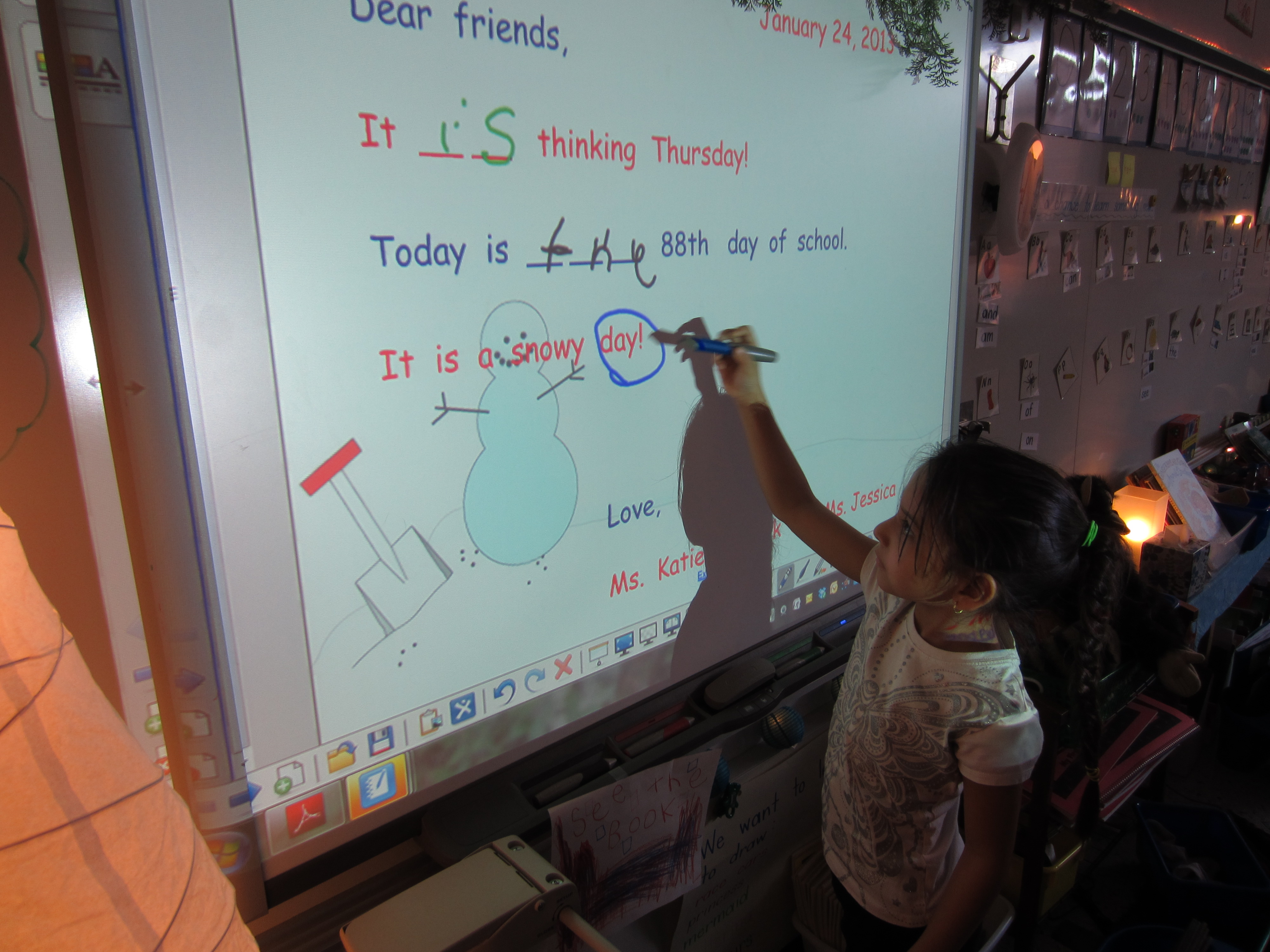
We read it together first as a shared reading experience. Then we go back and fill in missing words and look for things we notice in the message. I ask the children “what do you notice?” and invite them up to the board to show us and explain what they see. The children follow along, writing on their own individual white boards while one child is writing on the SMARTboard. Children may notice familiar high frequency words, letters that are the same as in their names or a friend’s name, days of the week, numbers, punctuation that they have seen in another book, words they know, etc. I always ask them to share what they notice first, and then I move into my teaching point.

Interacting with the morning message

Interacting with the morning message

For many years I did this on chart paper but one great benefit of having a SMARTboard is that I can now print it out and send it home. I print a two-sided copy – one side is the message as it looks at the beginning of our learning before we have interacted with it, and the other side is printed after we have marked it up with our thinking. This message goes home daily and is a great way to share our learning with our families.

Here are some things to consider when teaching with a morning message:

  • Keep it simple and repetitive. My messages are typically 3-4 lines long. I keep the first two lines the same for most of the year and change the third or fourth line to go with a teaching focus. For example:

January 10, 2013

Dear friends,

Today is fabulous Friday.

It is the 70th day of school.

Do you think it will snow today?

Love,

Ms. Katie

  • Make your sentences obvious. I write one sentence on each line and alternate colors. This is similar to beginning texts that children are reading and helps children see the different sentences clearly. It provides another teaching opportunity to differentiate between a word and a sentence, as well as making it easier for children to read.
  • Always read the message together first and then read it again at the end of your lesson, especially if you have filled in missing words. You want to keep meaning at the forefront and give the children multiple opportunities to engage in shared reading of the text. I use a pointer to model one-to-one match and directionality.
  • Keep it short and fast paced. My morning message lessons typically last about 10 minutes. I choose 3 students each day to come up and interact with the message. Having individual whiteboards available allows all children to be engaged throughout the lesson.
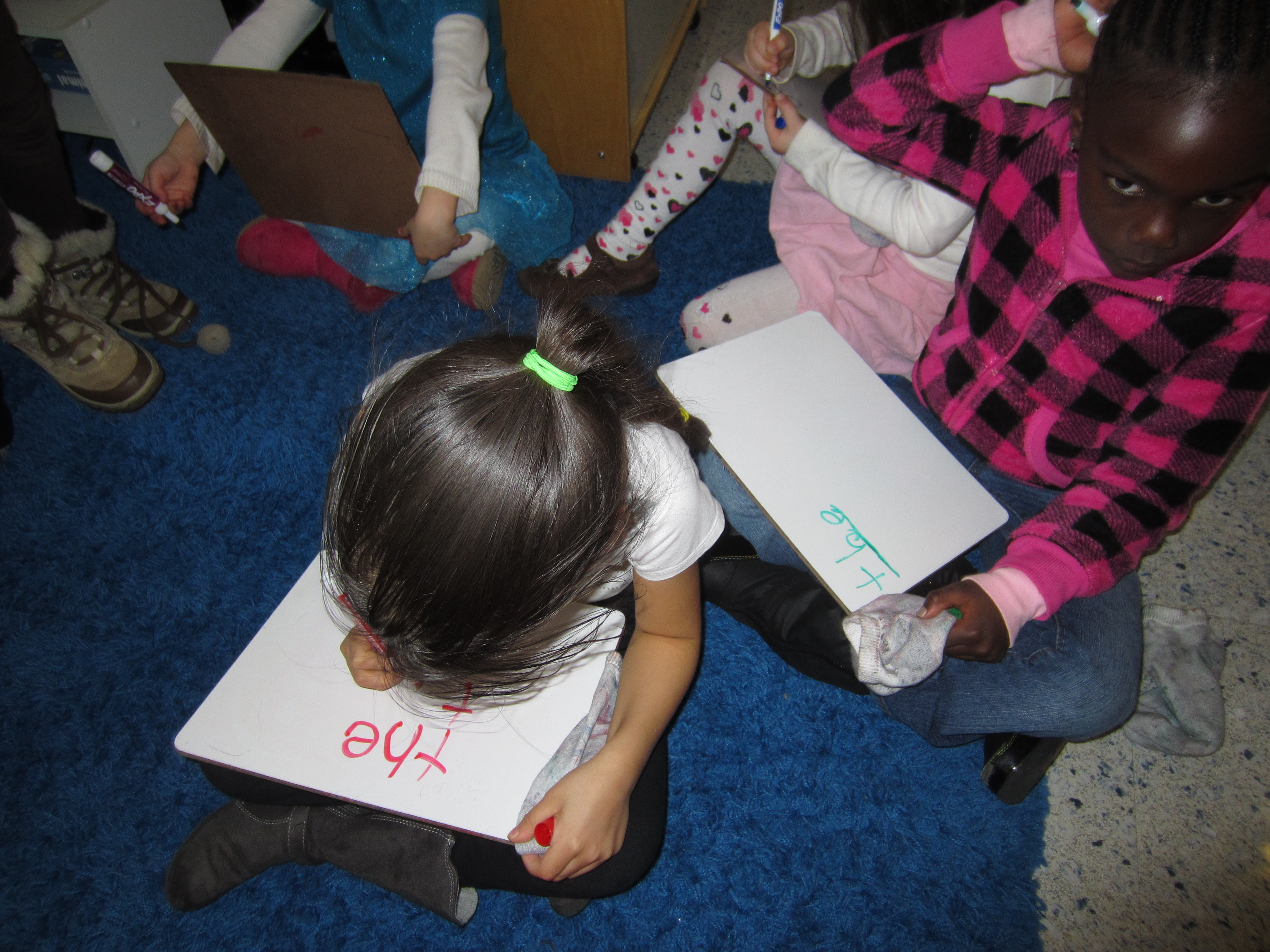
Writing on the white boards while we do morning message

Writing on the white boards while we do morning message

Here are just a few teaching objectives that can be taught through morning message:

  • High frequency words – I use the morning message to introduce our new word wall words each week.
  • Word analogies – if “at” is in the message, you can make a list off to the side of words that you can write if you know how to write “at” (cat, sat, hat, fat, mat…)
  • Capital letter and lower case letter usage
  • Punctuation
  • The difference between a letter, word and sentence
  • Rhyming words
  • Blends, digraphs, clusters
  • Connections between children’s names and words in the message (“Can anyone find a word that begins the same way as David’s name?”)
  • Beginning and ending sounds
  • Vowels and consonants
  • Letter formation
  • New vocabulary for content areas
  • Surveys
  • Days of the week, months of the year
  • Friendly letter format
 A completed morning message

A completed morning message

There are so many possibilities for teaching with morning message. It’s a time that children love, it builds community and is rich with authentic literacy learning. Do you use a morning message in your classroom? What ideas do you have? Please share!

Writing in Kindergarten

Writing has been a recent topic of discussion on the #kinderchat Twitter feed. I was honored to be invited to participate in the first #kinderchat Campfire Webinar series last week with an hour chat on “Writing Joyfully”. If you’d like to listen to our recorded discussion, you can listen here. For those of you who would rather have the “Cliff Notes” version, I’m writing this blog post to summarize a few of my current thoughts on writing with young children.
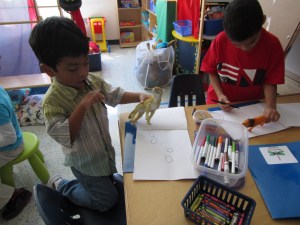
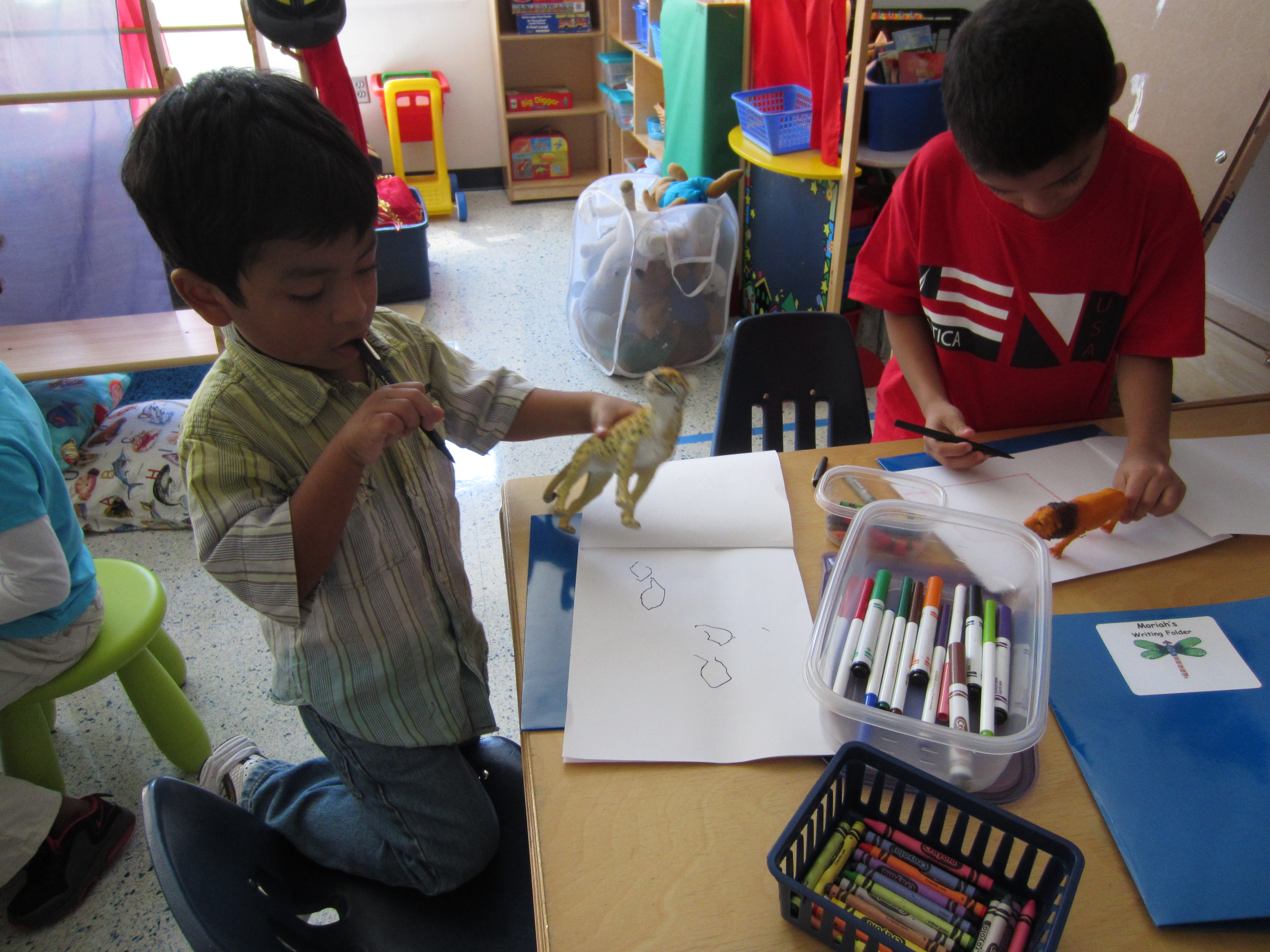
Making dinosaur books

Making dinosaur books

Writing, to young children, is play. It is natural, engaging and fun. Kids love to write. And they write like 3, 4, 5 or 6 year olds – not like we, as adults, may define “writing”. Their books, signs, labels, etc… are full of squiggly lines, pictures, scribbles, maybe some letters and even occasionally a word or two. However, when a child makes something, and you say, “Read it to me!”, he or she can “read” it to you. What they have put on the paper has meaning to them. And they love to share that!

I view writing in a similar way to how I view oral language development and reading. I think children need lots and lots of modeling in order to take something on as his or her own. We talk to our children from before birth, engaging with them in meaningful conversation, questioning, wondering and celebrating their first attempts at talking. We don’t insist on those early words being correct, and through lots of modeling, eventually our children become proficient speakers of our language.

The same goes for reading. We read to our children from before birth, immersing them in lots of bedtime stories, read alouds and play with books. We celebrate the first time our children “read” a familiar book – turning the pages as they retell a story they’ve heard many times before. We know they aren’t reading as adults read – but we celebrate this success and know it is paving the way to independent reading.
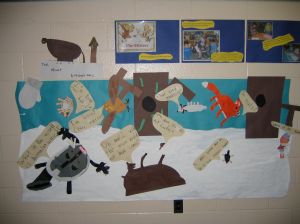
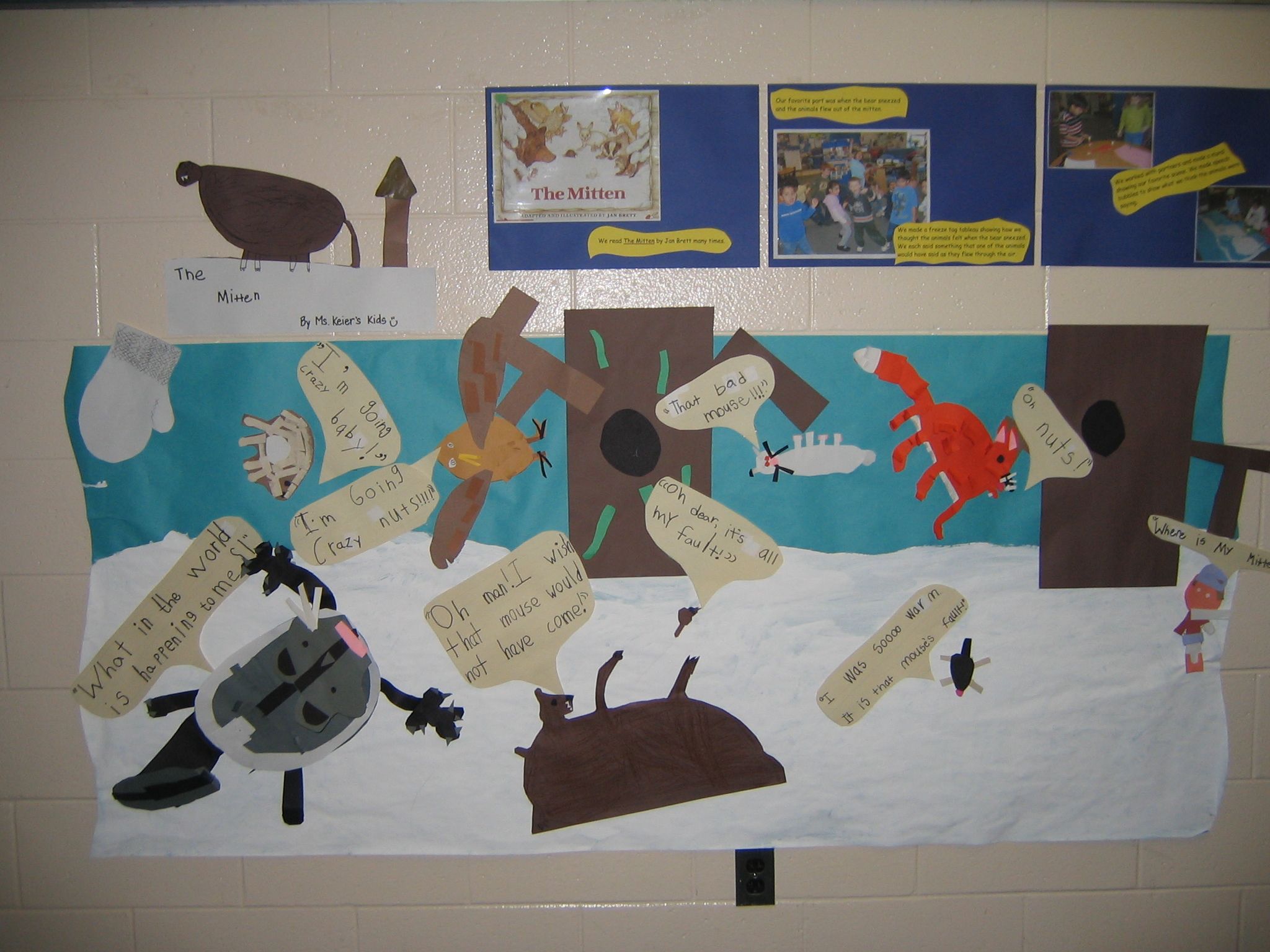
The Mitten - interactive writing

The Mitten – interactive writing

Week 10 039

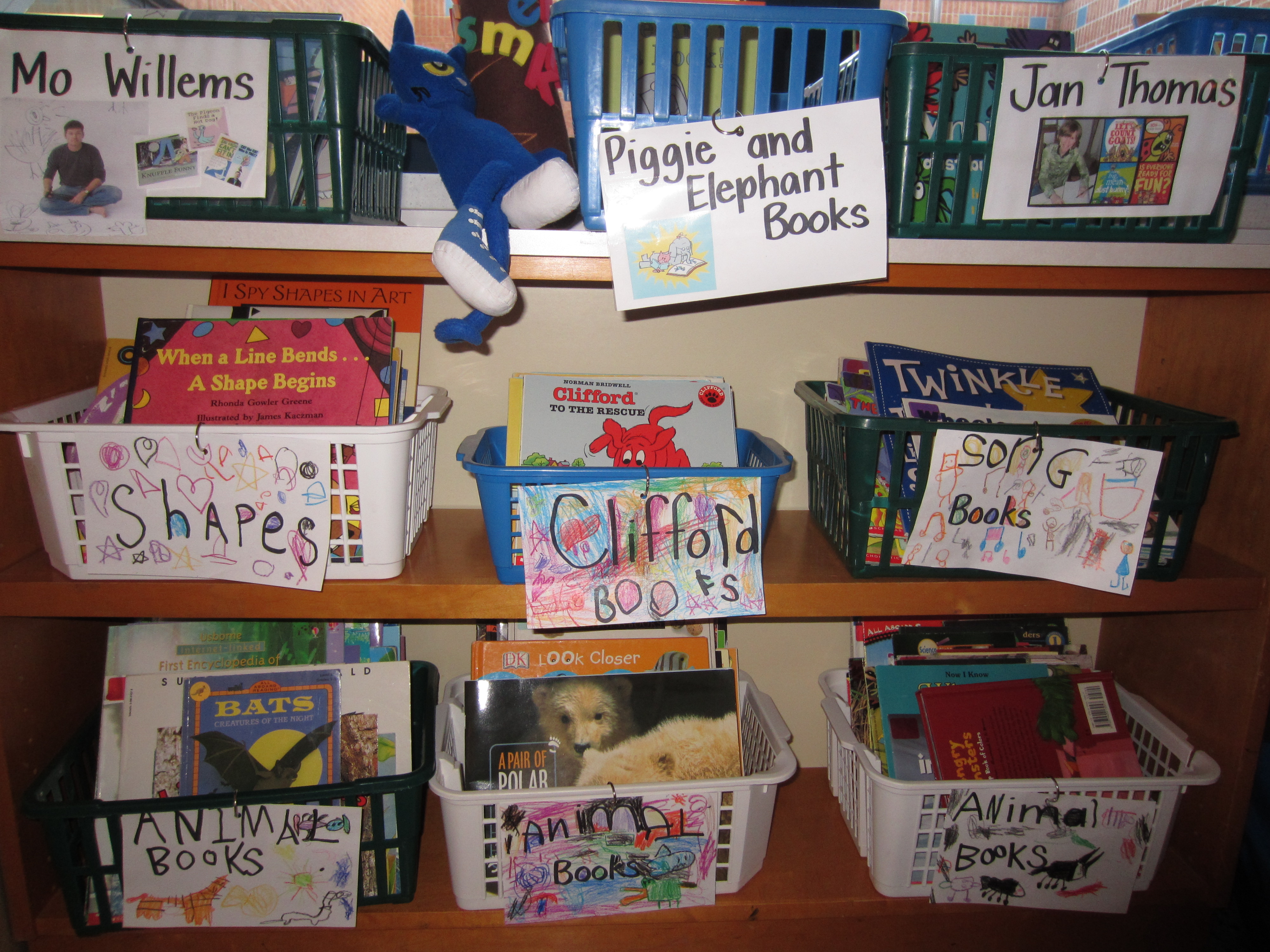
Community writing to label book baskets

I see writing in the same way. In our kindergarten classroom, we have two distinct types of writing- community writing and independent writing. Community writing, which includes shared writing (where the children are deciding what we want to say and the teacher is doing all of the writing – actually scribing what the children are saying in a small group or whole group setting) and interactive writing (where the children and teacher are deciding what to say and sharing the pen to write the words, again in a small or whole group setting). Both of these go under the umbrella of “community writing” because we are composing text as a community of learners together.  This is the time when I am modeling what writing is. The finished text for these projects is correctly spelled and written. The teacher is filling in what is out of reach of the children. (For example, if the word we are writing is “read” – the children might call out “r  e  d” – the teacher honors this approximation, has a child write the   r  and  e, then takes the pen to write the  a, saying “in this word there is an a that we don’t hear”, then allowing a child to write the ending letter  d)  It is a model of writing that becomes shared reading in our classroom. It’s essential that the writing is correct for that reason. I don’t want to display writing that is not correct for children to read and/or use as models for their own writing. The topics for these writing projects are mostly teacher driven – connecting to science, social studies, math or literature we have worked on together, as well as functional text for our classroom (schedules, labels, signs). I am modeling what correct writing looks like with the help of the children. It is an extremely supportive environment that helps our young writers in many ways. My students are seeing and hearing me think aloud as we compose the text together. Those children who are ready to write sentences have this opportunity to see what that looks like. Those children who are just beginning to label their pictures or are exploring letter/sound relationships also see this in our writing projects. All children are seeing the “in the head” thinking of a writer getting thoughts down on paper.  It is a daily teaching practice that models writing and allows children to participate within their zone of proximal development. It is paving the way to independent writing and encouraging children to take risks in their own writing.
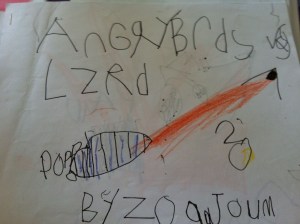
Photo Apr 20, 2 51 04 PM

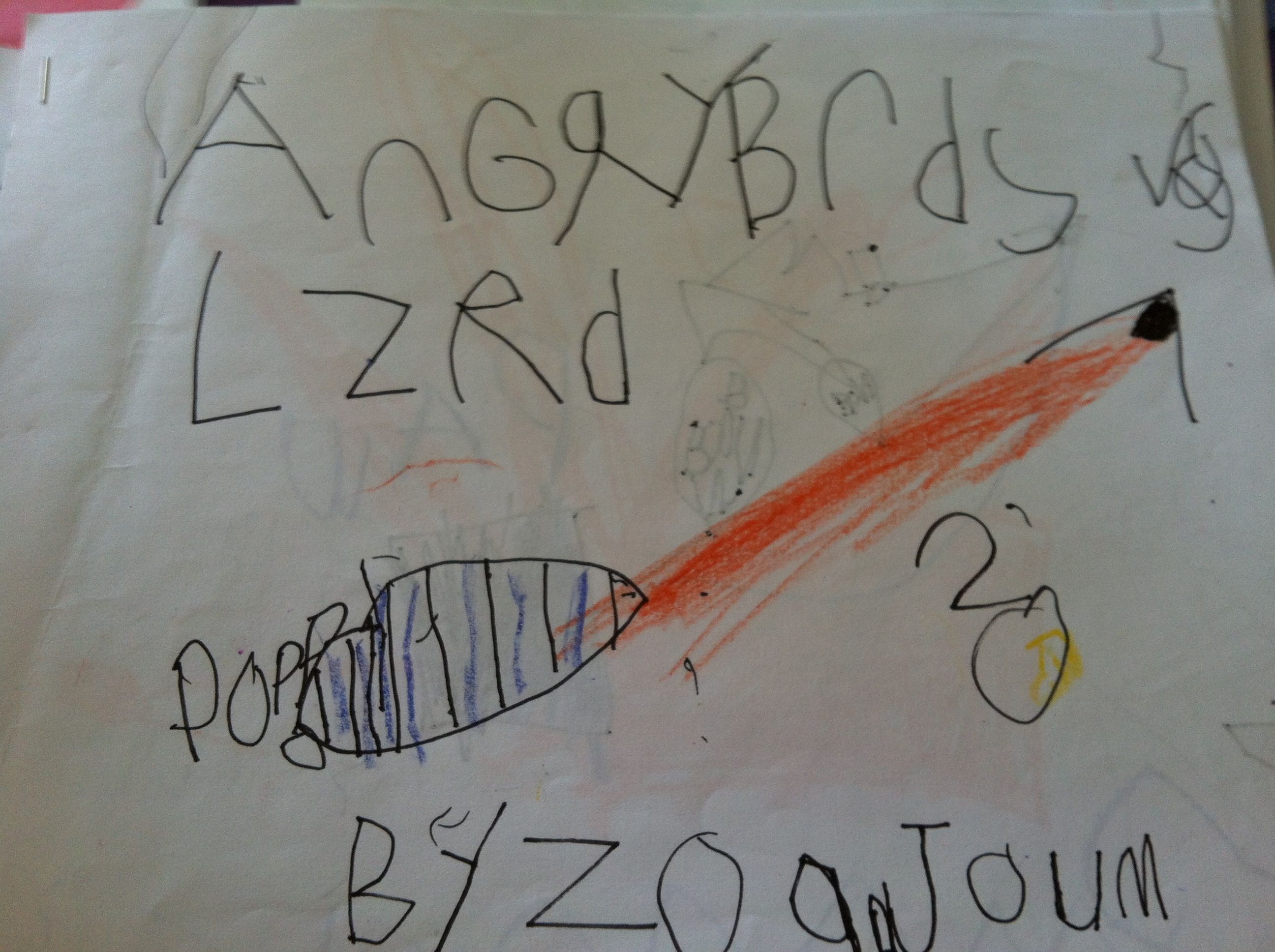
Angry Birds vs. Lizard – cover of a book
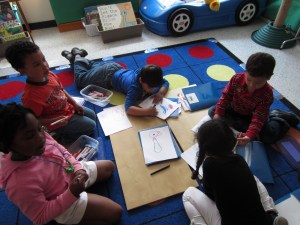
Writer's Workshop

Writer’s Workshop

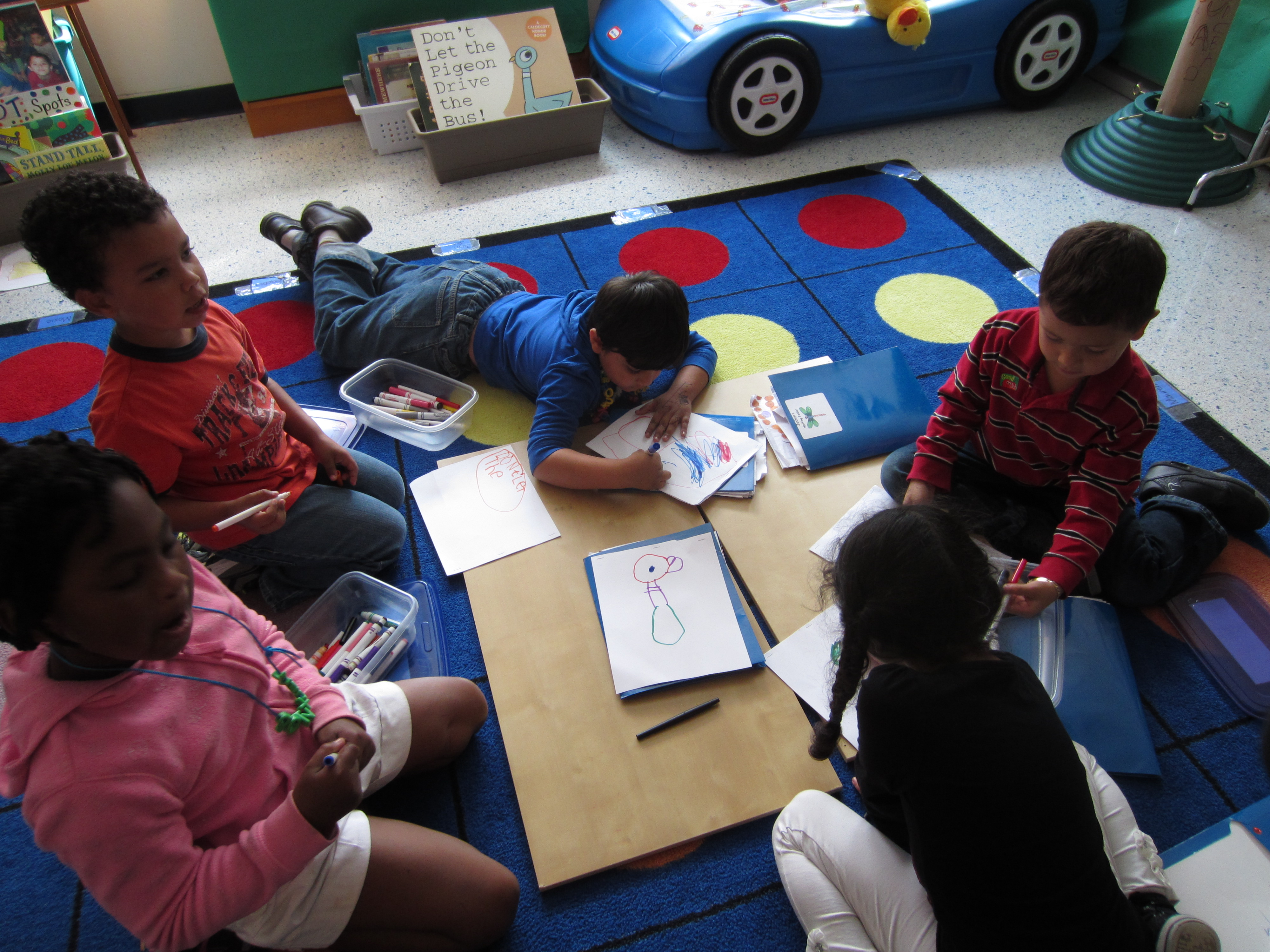
We also have a daily Writer’s Workshop, where children are engaged in independent writing. In our classroom, this is a time when we “make stuff”. Most of the time, this is books.  I model what book making is by reading lots and lots of wonderful books by authors we love. We start on day one, with 5 blank pages of paper stapled to make a book. This format evolves as a variety of book forms are discovered over the year.  During independent writing time the children are working on their own (for the most part – occasionally we have co-authored books with a friend), making books about topics of their choosing.  We read lots and lots of good books to use as our mentor texts, and learn from authors we love about making books. The children work at their own pace – sometimes taking many days to complete a book. I confer with the children as they are writing and they share their books with me and with the class. I take notes for myself as I talk with my writers, but I do not write on their books. If I need to remember what they wrote to take note on whether they are staying on one topic or have an understanding of how a particular genre works, for example, I write it down for me in my notes. I do not write on a child’s book at all. I teach each child differently, based on what they are ready for as a writer. I honor the fact that they are five, and are writing like a five year old. If a child decides to make a book and then I do the writing for him or her (either by writing under his or her writing, transcribing a word or two, or otherwise writing on the book), it is sending a strong message that I am the one who really knows how to write – not the child. It takes away ownership from the book. A child can “read” his or her book just fine – if we let them – and if we change our definition of what “reading” might look like – perhaps the book sounds different every time it is read. That’s fine. The child is the author and they can read it however they like.

This is a brief overview of writing in my classroom. There are many more examples and thoughts in the Webinar. Stay tuned for another post about how I use mentor texts in my classroom and how I support my young writers through various tools in our classroom. Here are a few of my mentor texts that have transformed my teaching of writing – I highly recommend: Already Ready, Interactive Writing: How Language and Literacy Come Together, Engaging Young Writers, In Pictures and In Words, Talking, Drawing, Writing: Lessons for Our Youngest Writers.

So what are your thoughts on writing? How do you help your young writers thrive?
The Wonder of It All

“If I had influence with the good fairy who is supposed to preside over the christening of all children I should ask that her gift to each child in the world be a sense of wonder so indestructible that it would last throughout life, as an unfailing antidote against the boredom and disenchantments of later years, the sterile preoccupation with things artificial, the alienation from the sources of our strength.”

Rachel Carson, The Sense of Wonder


Discovering magnets for the first time!

Discovering magnets for the first time!

Kindergarteners come to school with a huge sense of wonder. They are constantly questioning, pondering, discovering, wondering, exploring – it’s just a natural part of who they are. I absolutely love this part of working with four and five year olds! I think it’s my job to keep that sense of wonder alive and to encourage it as a part of the learning experience. While most of us have a curriculum and/or state standards to follow, I find that the standards are simply a departure point. If I only teach the standards as they are written, in order to “cover” an objective, I miss many opportunities to get kids excited about learning. I once had an instructor tell me, “if you’re only going to cover something, you may as well bury it in the backyard.” This has stuck with me and I try very hard to create learning experiences that are ongoing, meaningful, deep and full of discoveries.

Setting up the baby beetle habitats – counting how many we have

Setting up the baby beetle habitats – counting how many we have

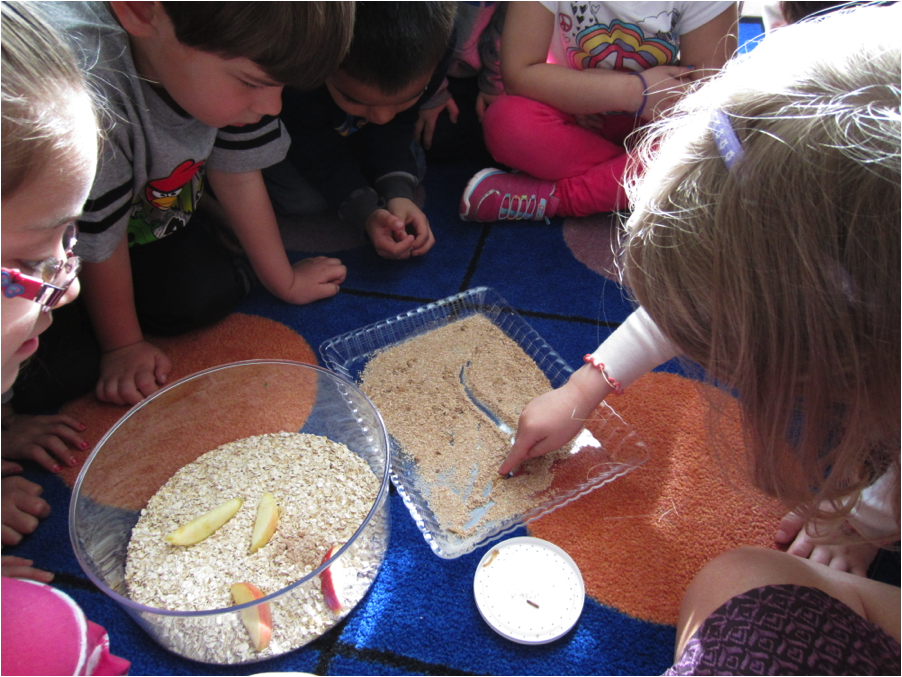
Life cycles are a part of our curriculum. Our county provides us with an ant farm, which is a fun way to study life cycles, but I like to go beyond that by extending this study throughout the year. We start the year with monarch caterpillars in our classroom. We witness the amazing transformation to butterflies and then track their migration to Mexico. In the winter we bring “baby beetles”, commonly called mealworms, into our classroom. The children observe the tiny wormlike critters go through their transformation into large, black beetles. We count, record and observe the changes. We get them out of their habitat and look at them closely, feel them crawling on our hands and experience their life cycle firsthand. We get an incubator in the spring and learn about chickens – watching the baby chicks hatch in our classroom. Through these many experiences, students truly learn our required standard about the life cycles of living creatures. They also learn much, much more.

Playing with the dinosaur sensory box while making a book about dinosaurs

Playing with the dinosaur sensory box while making a book about dinosaurs

This year my class is extremely interested in dinosaurs. I started a dinosaur box the first week of school in order to appeal to this interest. I filled it with dinosaur books, toy dinosaurs, pictures of dinosaurs and fabrics, rocks & stones to create dinosaur habitats. We also have a dinosaur sensory box, an app on our ipads that teaches kids how to draw dinosaurs as well as an app that teaches kids information about dinosaurs. Out of this play area, many children have written books to teach others about dinosaurs. They have learned how to read nonfiction texts with graphs, labels, captions, and various nonfiction text features. They are continuously drawn to the dinosaur play because it is something that interests them. They want to learn more and they want to share their learning with others. Are dinosaurs in my curriculum? No, but through the dinosaur play many of my literacy standards are being met.

Our class “Wonder Wall”

Our class “Wonder Wall”

Another way I try to keep wonder alive in our classroom is with our “Wonder Wall”. I first read about this idea in the fabulous book, A Place for Wonder by Georgia Heard and Jen McDonough. We have a special board in our room where we can put post-it notes about things we wonder about. This is a way to keep track of our thinking and to remind us about things we want to talk about, investigate, explore and learn more about. I keep a close eye on the Wonder Wall and use it as a launching place for classroom units of study, books we read, websites to visit and experts we might know that can come and share their knowledge with us. It’s a great way to keep track of the many wonders that kindergarteners have!

Playing with fake snow in a classroom sensory box

Playing with fake snow in a classroom sensory box

Deep learning and exploring happens when children are encouraged to follow passions, explore interests, inquire and wonder. Giving children time to explore and honoring their investigations, thoughts and discoveries allows for real learning that will stay with children forever. I try to not get caught up in the push to follow pacing guides and “cover” the curriculum. I want my teaching to be deep so that the learning sticks and is meaningful and exciting for the children. I follow the children’s lead while making sure I am accountable to the curriculum, standards and expectations of my county. It’s a juggling act of sorts, and it’s not easy, but it’s something that I can’t do any other way. I strive to be that “good fairy” and give my children the gift of a lifelong sense of wonder and to keep my sense of wonder alive each day in our classroom. I can only do that when my focus is on the children in our classroom, their interests and their needs, at this moment in time.

How are you keeping wonder alive in your classroom? 

This post is cross posted on the #kinderchat blog  as part of the NaBloPoMo project. Early childhood educators from all over the world have contributed to the #kinderchat blog this month for daily posts about teaching children in the early grades.  Join us for our weekly chat on Twitter – 9pm EST Mondays under the #kinderchat hashtag – and for a new Webinar series starting January 30. Katie will be leading a conversation about writing in the early years at 9pm EST January 30. Join us in Blackboard Collaborate for the first #kinderchat Campfire Webinar

Peace

“If we are to teach real peace in the world, we shall have to begin with the children.” -Gandhi

I was paging through some old photographs this morning and found this one from several years ago. I paused, remembering this wonderful class I looped with and our two year unit on “peace” initiated by a first grader who grew up in Afghanistan, and then I began to cry. This photo captured some of the emotions that have been roller coasting through my mind these past 9 days. It does begin with our children. I feel so lucky to be an educator and to have the opportunity to make a difference and truly teach peace.

February 21 001

King and Queen of the Day

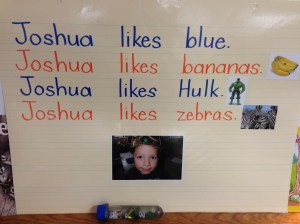
K 13th week 022Our latest shared writing experience is with the King or Queen of the Day. Each day a different child is chosen to be King or Queen. They get to wear a crown and get their picture taken. Then the class interviews them – asking them a few questions about things they like. I did a lot of modeling at the start, talking about what a question is and what kind of questions could help us learn more about each other. For example, we talked about how the question “what is your favorite animal?” has an answer, while the question “what is your favorite zebra?” doesn’t really have an answer  – and how “I like zebras.” isn’t a question. (huge concept for kinders!) The conversations about what is a question and what is a question that can be answered are great learning experiences and help me see who needs more support with this stage of their oral language development. And of course, we continue these conversations daily! After experiencing 18 interviews, I am hopeful that my kindergarteners will have a much deeper understanding of what a question is and how to ask someone a question to find out more about them.

I do the writing on a large chart as the children conduct the interview and negotiate the text together. We count the number of words first and rehearse what I should write on the chart. I have the kids help me write the words orally, especially the names. I show them how there needs to be a space between each word, and that each line is a sentence. I use language like:

-what letter comes first?

-what letter is next?

-what is the last letter?

-how do I write “like” – can you look on the word wall?

-what letter do you think “zebra” begins with?

-how many words are in this sentence?

-I need to make sure and start “Hulk” with a capital letter because it’s a name, just like Joshua

The interviews are daily opportunities to teach many of our phonics skills within a meaningful context. And the kids LOVE being the King or Queen of the Day!

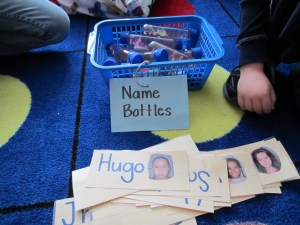
Name bottles

Name bottles


After the interview, the King or Queen makes a name bottle. These are baby soda bottles from Steve Spangler Science. We put letter beads that spell the child’s first name in the bottle along with some glitter and sparkles. I fill it with water and close the lid tightly. As we make name bottles for everyone in the class, this becomes a game where kids can try to figure out the name in the bottle and match it to a name strip.

The last step in our King and Queen of the Day routine is to find pictures to match the words in the sentences and laminate the chart. We re-read the previous day’s charts before we do a new interview. This is a great shared reading experience, and the kids love to revisit the charts. After all the kids have had a chance to be interviewed, the charts are put together into a large class book. This is a favorite book to read throughout the year.

Shared writing chart after an interview.

Shared writing chart after an interview.


Be the Change – Reflections on #NCTE12

I just spent four days in Las Vegas at the NCTE annual conference engaging, learning and sharing with some of the most amazing educators on the planet. My head is spinning, my brain is full, and I cannot wait to get back in my classroom tomorrow. I have many thoughts to reflect on and share in upcoming blog posts, but for now, all I can think of is how lucky I am to be a teacher. The last four days reminded me of how much hope, possibility, passion and love there is in education. It is so easy to get bogged down in the day to day struggles, the isolation that can occur in our profession, the frustration from policies, standards, inequities, injustices and the overall feeling that teaching is being disrespected as a profession. But spending the last four days with thousands of educators who took time off school, flew across the country, many (if not most) on their own dime, prepared presentations to share the joyful work they are doing with students, and engaged in dialogue about making the world a better place through teaching, reminded me just how committed teachers are.

We can make a difference. And we are. Let’s keep the conversations that began at NCTE going, and let’s invite others in. Twitter is a fabulous place to see what was shared and discussed at NCTE (#NCTE12), and I’m sure there will be many, many blog posts, articles and even books that come out of the networking, conversations and pure possibility that occurred in Las Vegas. There are many teachers all over this country doing amazing work with children – engaging them in pursuing their passions, collaborating all over the globe, supporting them in making sense of struggle and injustices in our world while encouraging them to take action and teaching them that their words are power and that their voices matter.

It’s truly a great time to be a teacher. And as Mahatma Gandhi said, “be the change you wish to see in the world.”

What change will YOU be?

Name Books

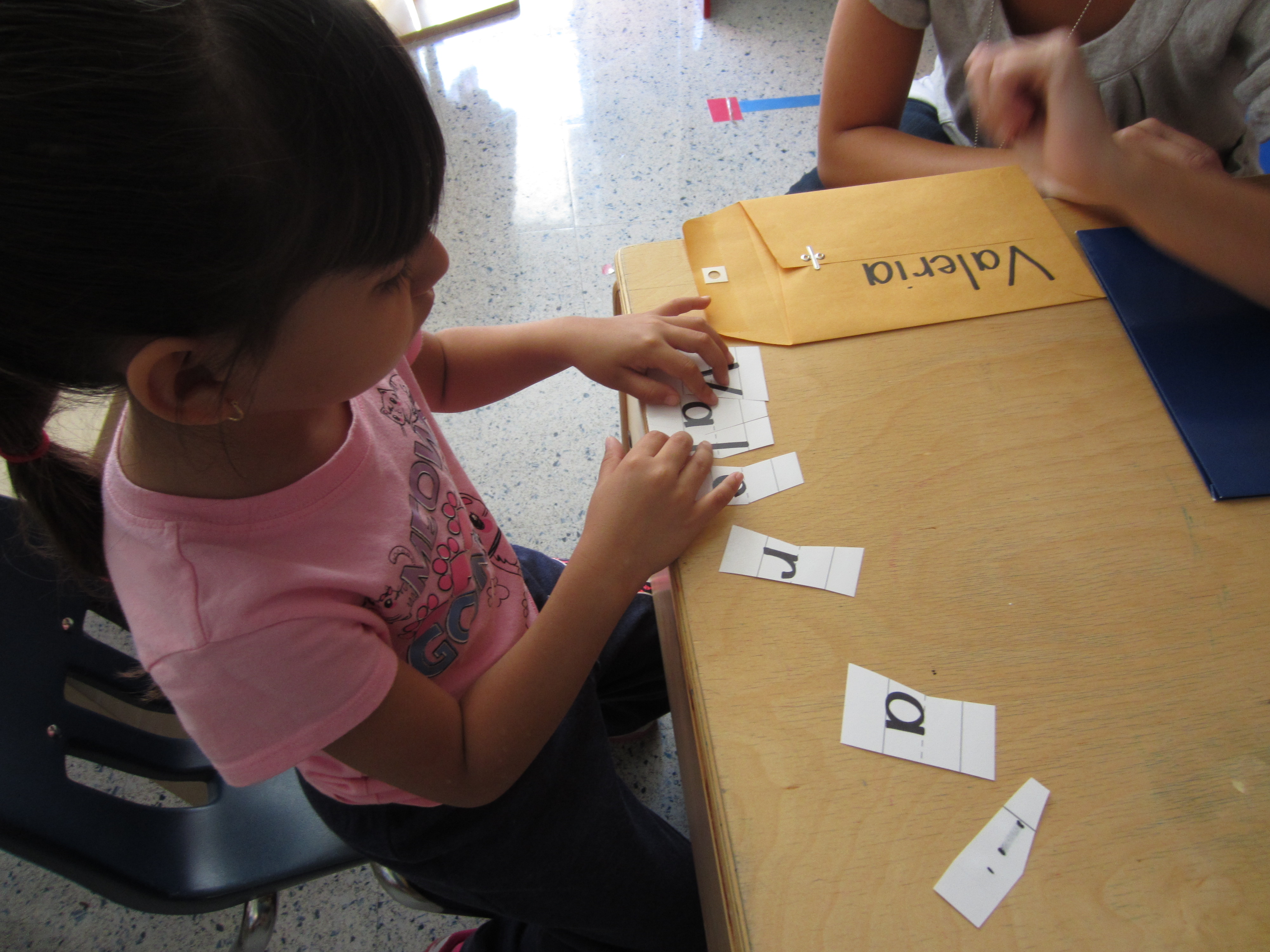
Name puzzles

In my kindergarten class I have a wide range of learners – from the few who aren’t quite sure what a letter is to the few who are fluently reading Hattie and the Fox. I’m sure many of you can relate to this! I was reflecting on my work with the kids who had no known letters, or only a few, and wondering what our next steps were. I always start with the known, so names were my launching point. We did many name activities and these students were beginning to consistently know a few letters from their names. I wanted to create a book with them to keep in their book box and to help reinforce the teaching I was doing. These particular students were not quite ready to start an ABC book like the ones Pat and I refer to in Chapter 6 of Catching Readers. Since they had very limited letter knowledge, (2-5 known letters), I wanted to start with something more in their ZPD. So I decided to make them a “name book”.

“For almost every young learner, knowledge of one’s name unlocks a multitude of understandings. A name forms a link in helping a child learn about print.”

(Fullerton, 1997)

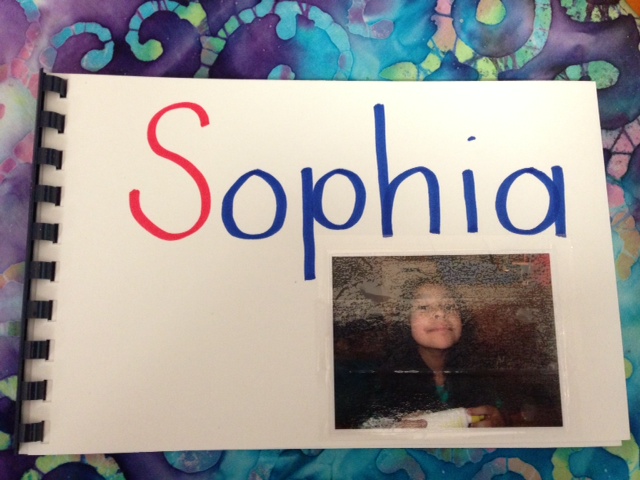
The cover of a name book.

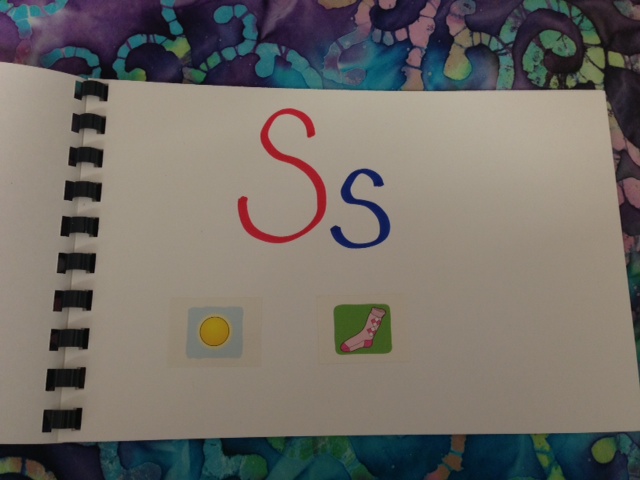
I made the books with enough pages for each letter in the child’s name and one additional title page. I wrote the full name (first name only – for now) on the cover, making the capital letters red and the lowercase letters blue. Then I put a picture of the child on the cover as well. On the inside pages I wrote the letters of the child’s name – one per page – again with the capital in red and the lowercase in blue. I sat down with each child as I created this and the child chose links (pictures or words) to go with each letter. They either put a sticker on that page or drew a picture. These books can now be read with the children, read independently and kept in book boxes or read with a buddy. Currently, I only made name books for my children who are working on learning their names and the letters in their names. But I think all the children would enjoy having one of these books. It would make a great book basket for our reading area and would allow children to learn each other’s names.The first page of Sophia's name book.

Some other concepts that can be taught by using names and the name books:

*The connections between letters and sounds

*That letters can be written in two ways (upper and lower case, like David)

*The same sound can be represented by different letters (Jasmin, Gerald)

*Concept of word vs. letter (“Jose’s name is a word. How many letters are in this word? Let’s count them.”)

*Long and short words (“Jackeline’s name is a long word, Bo’s name is a short word.”)

*Words have parts (“Let’s clap Alexander’s name. Let’s clap Ann. How many parts?”)

Names are such a powerful tool for teaching in the early grades. How else are you using children’s names to teach?

Together We Can Do Anything!

Hurricane Sandy is bearing down on the east coast as I write this. Like many of you, I made my preparations this weekend, and  am glued to the Weather Channel with flashlights, batteries, water and non perishables nearby. I went to visit my parents this weekend in central Virginia, and as I was driving back to DC Saturday evening there was a steady stream of convoys of utility trucks headed north on the interstate. They were coming from Alabama, Louisiana, Mississippi, Tennessee and Arkansas to help the mid-Atlantic states with what could very well be an unprecedented weather event. As I drove, I kept thinking of the amazing teamwork that utility companies must operate under. When others are in need, the calls are made and help is on the way. These men and women left their families back home to come and help millions of people who will be in need of their services. It brought tears to my eyes. While we may suffer through days of being inconvenienced with no power, the utility workers are risking their lives, far from home, to help restore power. I am very grateful for the brave men and women who do that job.

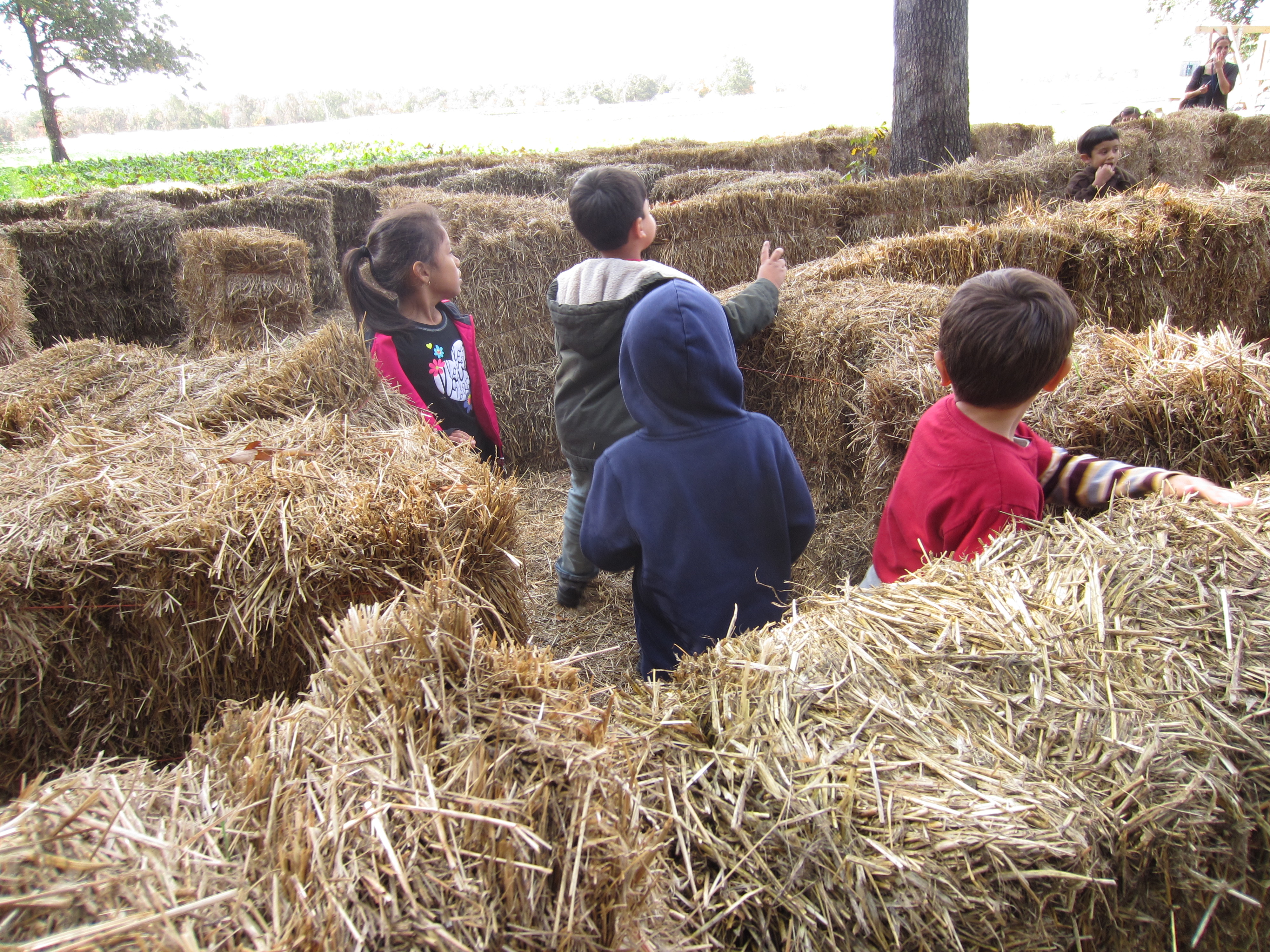
So what does this have to do with teaching? In education, I believe that teamwork, cooperation and community is at the heart of what we do. It’s what makes our classroom communities work and our professional learning communities successful. I worry about performance based pay situations or evaluation systems that are setting up teachers to compete against each other. How can that possibly be what’s best for kids or for teachers? Don’t we want schools and educational systems that are designed to help and support one another? I know that’s how I want my classroom to work. We recently took a field trip to a farm where they had a hay maze set up. The kids were running around and helping each other find their way through the maze. I didn’t think anything of it until the owner of the farm came up to me and said she had never seen another group of students help each through the maze. She was amazed at how well they worked together as a team. This was the best compliment we could have received as a class. Our community of learners focuses a lot on cooperation and teamwork. We have a class cheer  with hand motions – “kindergarten teamwork: together we can do ANYTHING!”- and I am constantly  asking kids how they can help each other and how we can work together to achieve a goal or complete a task. I don’t want to set my kids up to compete against each other. I want them to support each other, encourage each other and work together. Teamwork and cooperation are life skills that these 5 year olds will use for the rest of their lives. And it’s what will help them be kind to others as well as become confident readers, writers, mathematicians, scientists, artists, and more. For me, it’s a key part of our curriculum.

As my kindergarteners say, “together, we can do anything!” Teamwork and cooperation can help us in so many ways, whether it’s a new teacher evaluation system, a challenging situation in our classroom or school, a new set of standards – or a hurricane. Stay safe and take care of each other.

We are readers!

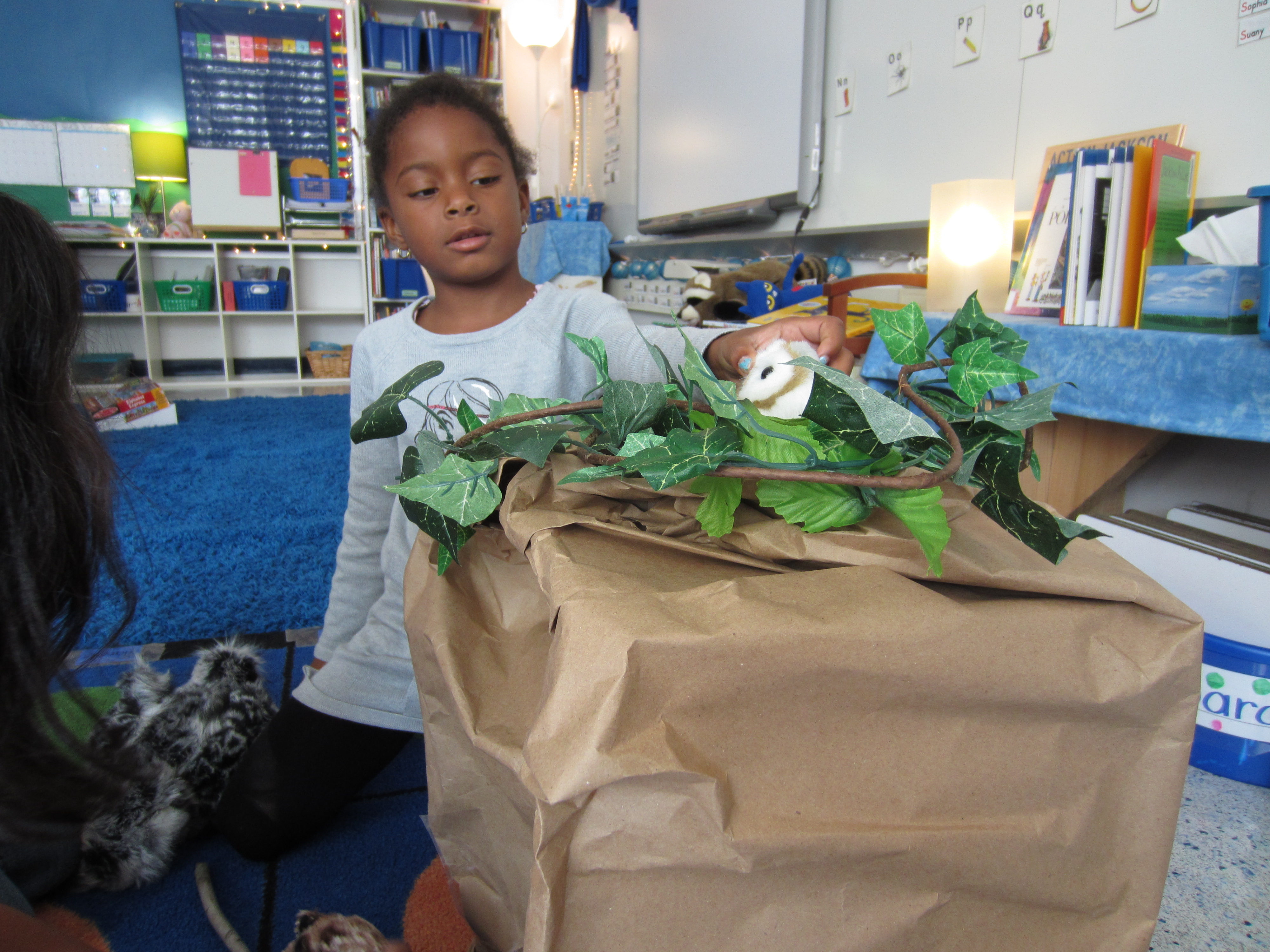
Retelling the story Owl Babies with props

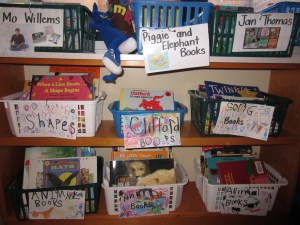
My kindergarteners are readers. Every single one of them. Every day we read poems and songs together on charts, we read art, we read the morning message on our SMARTboard, we read labels in our classroom, we read books that we write, we read on the iPads, we read Tweets and blogs, we read books by ourselves and with buddies and we listen to lots of books read aloud. The kids are learning to read the pictures, read the words and talk about the books. We retell and act out our favorite stories with toys that go along with the books. We spend a lot of time talking about authors and what authors do. Some of our favorite authors are: Mo Willems, David Shannon, Eric Carle and Eric Litwin. I refer to my students as “readers” throughout the day. I am helping build  and create that identity and have them see themselves as readers. It’s the foundation we build in kindergarten that will carry our readers through to a lifetime of reading.

Who are some of your favorite authors? How are your readers building their identity?