Beliefs and Practice

IMG_4634

I’ve been thinking a lot about beliefs lately. At the start of my Literacy Instruction and Assessment graduate course, I asked my pre-service teachers to write a “This I Believe” piece, reflecting on their beliefs as they begin our course. We will revisit these at the end of the course and see how our thinking has evolved. Doing this in my graduate program several years ago was a meaningful writing experience that I’ve revisited frequently. I think it’s important to continually revisit our beliefs and more importantly, ask ourselves…How does our practice reflect those beliefs?

Every move we make in our classroom speaks to our beliefs. Everything we do sends a message to our students, colleagues and families. And our practice needs to reflect our beliefs. I share two of my beliefs below. I feel like these are ones I hear other educators talking about. Perhaps you can relate, as well.

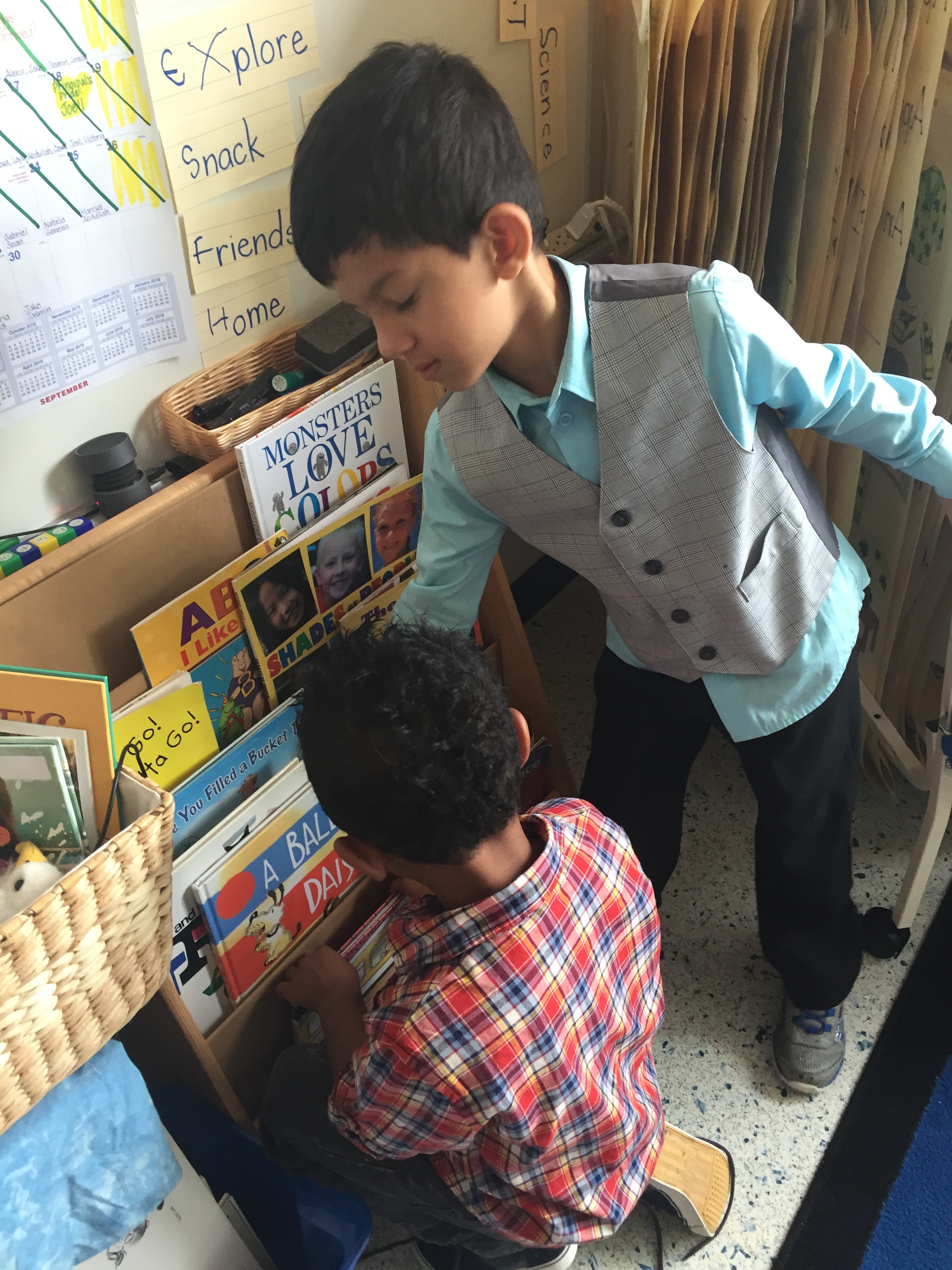
If we believe children are capable and we promote independence and problem solving, then…do we have a seating chart? Do we require children to sit in a certain way on the rug? (I’m talking to you, criss cross applesauce) Do we require straight, silent lines in the hallway? Do we hand out supplies like scissors, glue, tape, staplers when we think they are needed? Do we stick to a strict pre-determined schedule? Or…do we allow children to choose where and how to sit and move their bodies? Do we teach them how to be respectful of other learners in the school? Do we make supplies accessible all the time, for children to choose when they need them and how to use them? (yes, kindergarteners can use staplers independently) Do we negotiate the daily schedule to meet the needs of our learners that day? Do we honor and respect children and trust that they can make good choices about what they need – and if they aren’t able to, do we coach and help them learn how to make good choices?

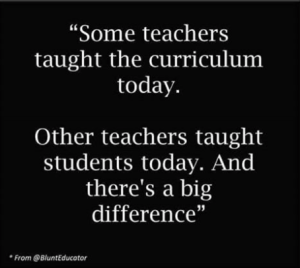
If we believe school should be a meaningful and authentic place of learning, then…do we tell children what they have to write about? Do we only allow children to read books that are on “their level”? Do we stick to the standards and curriculum and not allow time for inquiry and child initiated learning experiences? Do we allow pacing guides, standards or other outside forces to drive our teaching? Or…do we honor choice as a key element of everything we do from readers and writers workshop to play time? Do we teach reading and writing from a place that considers what readers and writers REALLY do? Do we use leveled texts as ONE PIECE (for teachers) of our readers workshop, and provide lots of time and choice for children to read self-selected books regardless of the level or genre? Do we provide lots of opportunities for authentic talk because learning is social? Do we set up learning opportunities based on what we see and hear in our current classrooms, following the children’s interests? Do we teach children first, not the curriculum?

I had the pleasure of hearing Vicki Vinton speak at NCTE this past November. It was a powerful talk, and left me with much to think about. She reminded me that Reggio Emilia is the alignment of beliefs and practice. This speaks to me louder than ever.  I’ve been questioning so much of my practice since leaving her session and have been challenging myself to truly look at my beliefs and how they are reflected in my practice. I challenge you to do the same. It can only make us better, more thoughtful educators. And isn’t that what our kids deserve?

What are your beliefs? How does your practice reflect these?

Learning & Growing in 2018

I remember writing my first professional resume. I was advised to write, “stays abreast of professional literature” by a mentor in my education program. I loved that line. And I’ve lived into it for 27 years of my teaching life.

I devour professional books, spend time on Twitter (@bluskyz and @catchingreaders) and Instagram (@bluskyz and @kinderunicorns), follow professional authors on Facebook and other social media, read many blogs, attend as many professional conferences as I can, take online courses, participate in book clubs, write in my journal, blog, seek out evening and weekend workshops locally, and love having dinners or texting sessions with my thoughtful teacher friends to “talk shop”. I love thinking, talking, reading, writing and thinking some more about education.

I’m in a place right now where I am hungry for professional learning. Perhaps more so than usual. I’m questioning and wondering and exploring many different aspects of my teaching.  I feel like I did when I pursued National Board certification and again when I started my master’s program in literacy studies. I felt this way when I left the classroom and became a literacy specialist and again when I became a kindergarten teacher for the first time. I am at a place, again, where I want to learn and grow and evolve into an even more reflective educator. It’s exciting! Right now, my passion lies with learning as much as I can about the Reggio Emilia approach. This is something I’ve been interested in for many years. I’ve taken some online courses and I’ve read extensively about this amazing approach to education. But right now, it makes more sense to me than ever before. I want to pursue learning about this as a teacher researcher and how this approach can make a difference with our most vulnerable students. I’m currently looking into ways to follow this path of interest as a teacher research project into 2018 and beyond. I’m very excited about what might be possible!

If we are passionately curious and pursue new learning opportunities as teachers, we model this for our students. We not only become better at what we do as educators, we impact student learning in powerful ways. So what will you do to continue growing as a learner and an educator in 2018 and beyond? Here are a few suggestions:

Order a new professional book or two or three.. from Stenhouse or Heinemann or Teachers College Press. Regie Routman’s new book, Literacy Essentials: Engagement, Excellence and Equity for All Learners and Practicing Presence by Lisa Lucas are the ones I’m starting in 2018. Get together with a friend or a group and have a book discussion club. I’m doing this with Powerful Book Introductions: Leading with Meaning for Deeper Thinking starting in January at my school.

Plan on attending a conference this year. The National Council of Teachers of English (NCTE) conference is the best professional conference I’ve ever attended.  It happens yearly, the week before Thanksgiving. In 2018 it is in Houston. The Whole Language Umbrella, a group within NCTE, has a yearly conference that is smaller. This year it’s in Baltimore in July. In addition to those two major conferences, I’m planning on attending the Annual Progressive Education Summit – Creating Cultures of Thinking in Baltimore in January and the Bank Street 2018 Teaching Kindergarten: Where Did the Garden Go? Democracy, Diversity, Dignity & Dewey Conference in NYC in April. The National Reading Recovery & K-6 Literacy Conference in Colombus, OH in February and the International Literacy Association Conference in Austin, TX in July are two other excellent conferences.  I can’t imagine my teaching life without attending conferences. These amazing learning meccas provide opportunities to connect with other educators, authors and friends, hear different perspectives and voices from outside your district and think deeply about your practice and take new learning, life and inspiration back to your school. While most of us take personal days and pay our own way – it’s worth every penny and any struggles you might have to endure to take the time out of the classroom and travel. Professional conferences are a critical piece of my learning and growing as a teacher.

Put in a proposal to present at a conference. Presenting is such a powerful way to reflect on your practice, to share with others the work you do, and to question and refine your own best teaching. Proposals are due soon for NCTE in Houston and WLU Literacies for All Conference: Sustaining Joy in Our Learning Communities during Challenging Times in Baltimore. I will be submitting proposals and making plans to attend both conferences.

Pursue other local professional development opportunities. The Kennedy Center’s Changing Education Through the Arts (CETA) evening workshops are available for people in the DC, Virginia and Maryland areas. Check out their website and invest in an evening of learning for yourself. This is outstanding professional development for only $20! Many universities have opportunities for professional development classes, Saturday workshops or conferences, as do many museums. Check out your local art or science museum for opportunities for teachers.

Create an online PLN (Professional Learning Network). Twitter has exploded over the past 7 years that I’ve been tweeting. There are so many chats and hashtags to follow, and an abundance of educators who tweet and share, question, reflect, inspire and challenge. I’ve recently become a big fan of Instagram. I love the photos and glimpses into people’s classrooms and teaching lives. I suggest finding someone you learn from (an author, a respected professional in the field, an organization, a friend, etc…) to follow and then see who they follow and follow them. Google areas that interest you and find out the chats that are available. Many of these are archived and you can get a feel for how they go. I’m amazed at how much I can learn by reading a few tweets at lunch or waiting for the copier or in line at the grocery store. I hope to be more involved in Twitter chats this year. There are so many good conversations going on out there!

What other ideas do you have for pursuing your professional growth and development? What is the best professional book you’ve read lately? What chats or favorite Twitter or Instagram accounts can you recommend? Please share! Here’s to a fabulous year of learning and growing in 2018!


Parents and Levels


img_1560.jpg

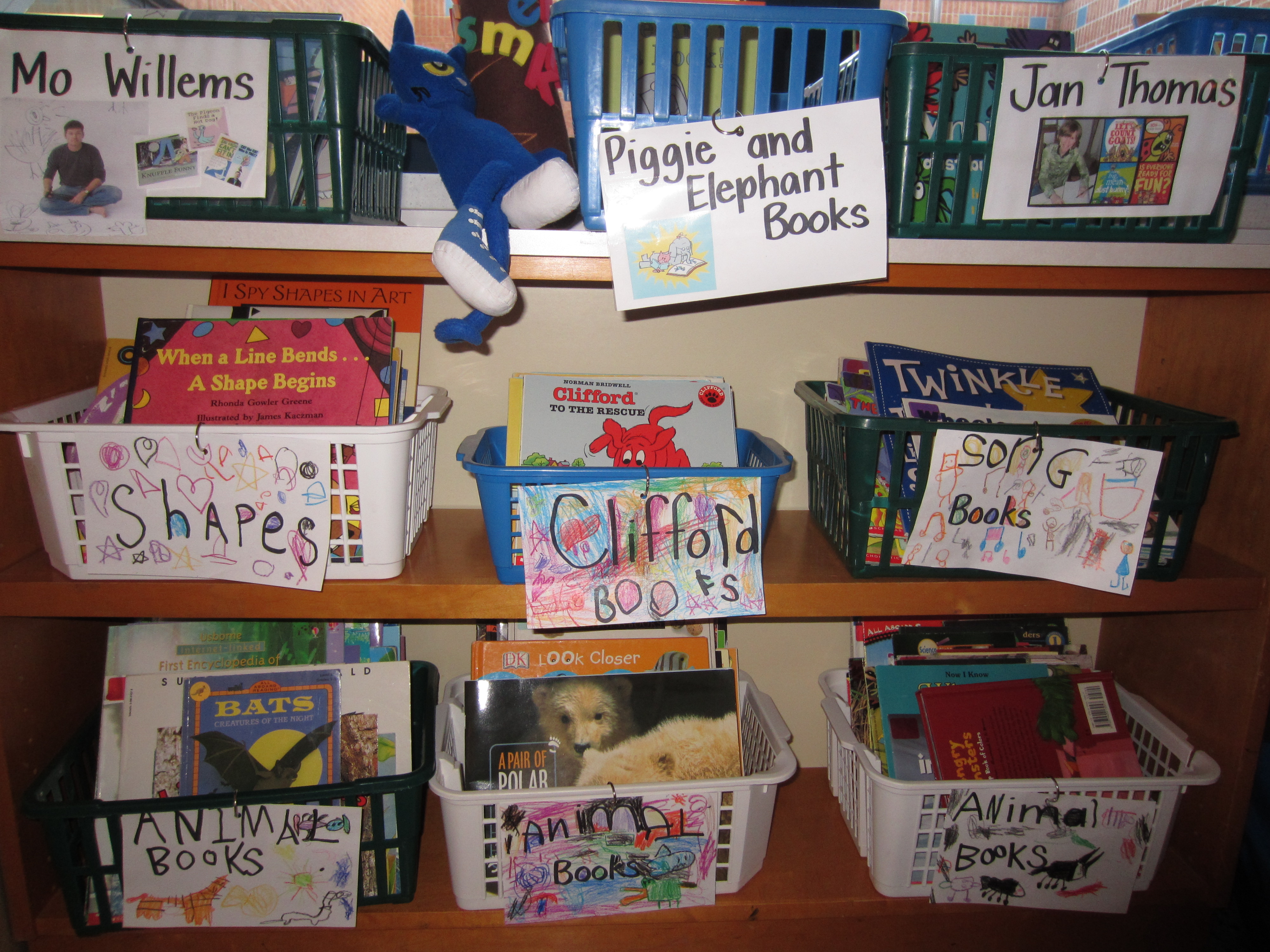
We have started organizing our classroom library by favorite authors and favorite topics.


Yesterday, during Readers Workshop, I suggested a book to one of my kindergarteners. He looked at it and then asked me, “what level is it?” I was stunned. Where had he heard about levels? It certainly wasn’t in our classroom. None of my books are leveled and I’ve never mentioned anything about levels in our talks about how readers choose books to read.

I asked him what he meant. He told me, “the level tells you whether you can read the book or not.” Wow. We went on to have a great conversation about how readers (not levels) decide if they can read a book. Readers can choose a book that interests them, an old favorite, a favorite author or character, and they can read the pictures, read the words or remember read.

But I couldn’t get this conversation out of my mind. This five year old has already heard about levels. A system that is meant for teachers to use to guide OUR instruction. (see my previous blog posts about this) Chances are, he heard about this from a well-meaning parent or adult in his community. Which led me to question – do parents need to know reading levels? What does that really tell our parents? It gives them a number or letter to compare their child to others. It gives them a number or letter to talk about with other parents at soccer practice, the playground or gym. It gives them a number or letter that, most likely, doesn’t really mean much more than a letter or a number that ranks their child. And it may give them a letter or number that their child uses to define himself or herself as a reader and that limits what they can read or not read.

Parent – teacher conferences are coming up in the next months. There are so many things we can share with parents to help them understand where their child is in reading. A level doesn’t really help them understand, and it can do harm.

  • What if we shared their child’s book box and shared the kinds of books their child enjoys?
  • What if we showed our parents texts that their child is reading in guided reading and then compared that text with benchmark texts – showing parents where we are headed?
  • What if we shared the goals their child has set to work on as a reader or the goals we have set for their child?
  • What if we shared how we are teaching strategies to help their child as a reader?
  • What if we shared language that parents can use to help their child talk about books or problem solve when they get to tricky parts?
  • What if we shared our class charts that help guide our readers? (I send these home in our weekly poetry notebooks so parents can see the language we are using and so that kids can share what they are learning in Readers Workshop.)
  • What if we shared lists of suggested books to check out from the library? (Most librarians aren’t going to be able to help you find a “level L” book – however, they can help you find Mo Willems or Jan Thomas books)

I think this is an important conversation to have in our schools. Are we sharing levels outside of our school? And if so, what is that purpose? I worry that talking about levels with parents serves no other purpose than to further define readers by a level and widen the gap between home and school. Choosing a book by the level is not an authentic way of choosing books in the real world. Libraries don’t level books. Book stores don’t level books. Speaking in terms of levels is a language most parents don’t understand, and it doesn’t serve our purpose of creating strong, lifelong readers who love to read.

How do you communicate with families about where their child is as a reader, and where they are headed? I’d love to hear your thoughts!

Update: Here is an interview published on October 12 with Fountas and Pinnell that echoes our thoughts on leveled texts and who the levels are for – from the experts who created this leveling system. Well worth a read!

IMG_1575.JPG

Why?

img_0877

Why?

As educators, I think this is the question we need to be asking. All. The. Time.

I’m worried. I’m worried that our profession is moving towards the timesavers, the quick fixes, the lessons-in-a-box (or book). I’m worried that we are easily accepting what we are asked to do without questioning, without asking for evidence that it is best practice, without asking whether it is what’s best for our students, without asking “why” we are doing this.  We are asked to follow scripts written by people who oftentimes aren’t even educators, to follow lessons written by well-meaning educators (but educators who have never met our children) without thinking them through, to put children in front of computers to assess their reading and math abilities (and, even worse, to deliver instruction) without asking why in the world we would rely on a computer instead of a trained professional educator to assess and teach our children.

We are busy. So. Very. Busy.  Believe me, I get that. But we can’t stop questioning. We can’t stop thinking.  We can’t stop “being brave enough to outgrow your own best teaching”, (as Lucy Calkins wrote). We can’t look for the quick fix, the timesaver, the intervention-in-a-box. We can’t stop believing that it is highly trained educators that can make the difference. Not for any children, but especially not for our most vulnerable children. Not for the kids that need us the most. These children need us to be thinkers. Questioners. Fighters. They need teachers who are willing to go the extra mile, who aren’t willing to give up, who realize that the fastest assessment or the quickest lesson plan or the packet on TPT  may not be the best. Teachers who view every lesson idea and plan through the lens of the children who are in their class at this moment. Teachers who put children above curriculum, standards or objectives. Teachers who are advocates and not afraid to speak up. Teachers who are willing to put their heads together to figure out what is going on and how to best help these children. Teachers who will never give up. Teachers who realize that we cannot waste time with activities and tasks that are not authentic and meaningful. Teachers who keep learning and thinking and talking and digging deeper into curriculum, assessment and most of all, the children in their rooms right now.

Teachers who collaborate, think and constantly question their practices, and what they are asked to do – are the ones who can, and will make a difference.

Be brave, my teacher friends. Be brave. Ask why. And keep making a difference every day.


Integration

img_1715Pat and I wrote about the importance of integrating strategies in Catching Readers Before They Fall. We love the analogy of an orchestra. In a symphony orchestra, all the instruments blend together to form incredible compositions extremely pleasing to the ear. The strategies in the head of the reader combine together to make meaning of the text just as each instrument joins the musical composition perfectly in tune with the others.
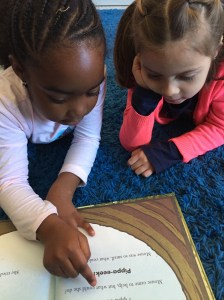
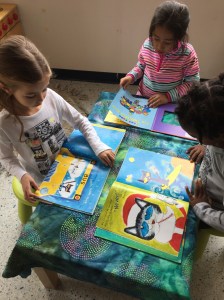
I’ve been thinking about this a lot as my kindergarten readers are taking off in their independent reading. Teaching integration right from the start is key to developing strategic readers. I teach many strategies through reading aloud, thinking aloud and showing kids how that strategy can help them as readers. Together, we create an evolving chart of what readers do. It’s important to me that this chart, and the language on the chart, is co-created with the kids so they have ownership.

As we add to our anchor chart of what readers do, I make sure to refer to this chart often by thinking aloud during interactive read alouds, and referring to it during small group instruction and conferences. I show the kids how we don’t just use one strategy at a time, rather, we use many of them simultaneously.

img_1971


I help the kids reflect on what they are doing as readers and see these strategies as tools to make meaning from text. I want them to have several things to pull from when meaning breaks down and when they are stuck on a tricky word. I keep small photos of our large, evolving, strategy chart around the room for them to refer to as they read.

As I send the kids off to read independently, we read over our anchor chart. I have them put up their fingers, one at a time, as we read each strategy. Then we weave our fingers together, showing that the strategies all go together. This physical movement symbolizes the integration of strategies.

Teaching integration right from the start helps build a solid foundation for our readers. How do you help readers see the importance of integration?


Fidelity vs. Thoughtfulness

img_9986 We live in a time right now when professional resources are abundant. We have endless access to lesson plans, problem based learning projects, activities, ideas, blog posts, professional books, teachers sharing with teachers, curriculum guides, programs, etc… I can Google any topic and find a wealth of resources. Teachers are not at a loss for what to teach and ideas for how to teach it. But there’s something that I keep coming back to:

Are we being thoughtful with what and how we teach?

There are now scripts written out for literacy workshops, charts to copy or simply post, literacy “cookbooks” of sorts with specific lessons for exactly what your students might need and other resources to make our lives easier and to save time. These are good things, for the most part. Don’t get me wrong. They are based in research, carefully thought out by expert educators who know how kids learn best, tested in real classrooms with real kids. I own most of these resources and use them as I plan – (as a resource, not as a script). And these are WAY better than any basal textbook series I’ve ever seen. These resources have definitely lifted the quality of literacy instruction in many schools. They’ve provided a scaffold for implementing literacy workshops.

But are we thinking deeply about the kids we are teaching? 

img_0082Years ago while teaching in Florida I was at a required basal textbook training for a series my county had just adopted. The representative said, “Look! Everything is written out for you. Even the teachable moments. You don’t even have to think!” And that’s when I walked out of the meeting. I didn’t go into teaching to not think. And I value my profession way more than to accept the idea that it would be a good thing if I didn’t have to think. It’s offensive and degrading to be told you don’t have to think.

It’s easy to flip open a book and have your lesson plan written out for you and ready to go. And chances are, with many of these resources, you would be teaching a good lesson. We get ideas from each other – that’s what teachers do. We don’t have to constantly recreate the wheel.  But I hope that we are still thinking. And reflecting. And connecting with OUR kids – the ones sitting with us in our classrooms at this very moment. I hope we are not taking exactly what’s handed to us and teaching it blindly because we were told to “teach with fidelity”. We need to think and question. We need to teach our kids to think and question. We need to continue learning as teachers and understand the WHY behind what we are doing. We need to be responsive and reflective as teachers.

img_0081A teacher leader in my county once helped me reflect on the idea of fidelity vs. thoughtfulness. I keep coming back to that. Perhaps we need to be implementing new structures, programs, etc. with “thoughtfulness”, rather than “fidelity”. We need to look at the programs, curriculums and expectations our district and administration give us with a critical eye. We need to be very careful with resources we find online. We need to tweak the “recipes” in these literacy “cookbooks” to meet the needs of our students. We need to use the pre-printed anchor charts as a temporary scaffold for us as teachers – and replace them with kid pictures and drawings and our own students’ words as soon as we feel solid in that teaching.  We need to deconstruct these things together with our team, be thoughtful in our implementation, question and reflect on what works and what doesn’t.  As one of my former principals always says, “the answer is in the room”.  Talk, reflect and think together – don’t just blindly follow something from outside. We need to use the abundance of resources we have as departure points to launch our own best teaching. We need to keep talking, questioning and thinking with our team and on our own.  As I’ve said before, we teach children, not curriculum, programs or standards.

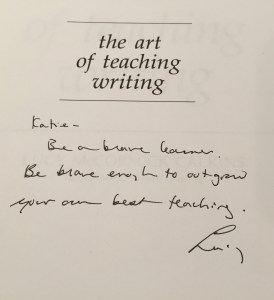
Be thoughtful. Question. Be willing to change your thinking.  And as Lucy Calkins once wrote in my copy of The Art of Teaching Writing, 

“Be a brave learner. Be brave enough to outgrow your own best teaching.”

img_0877

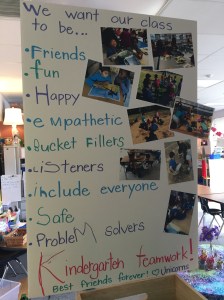
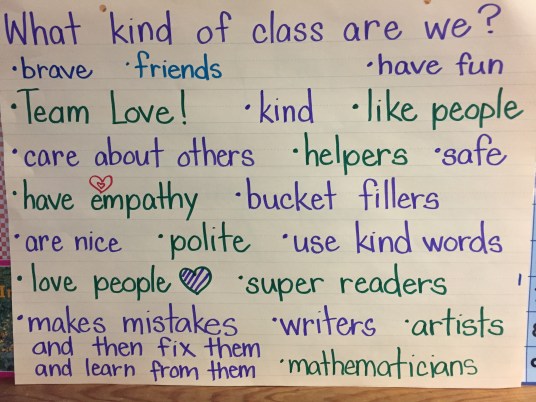
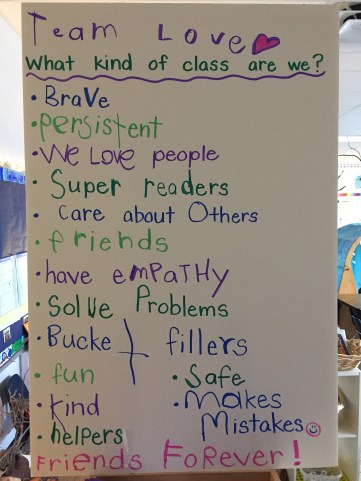
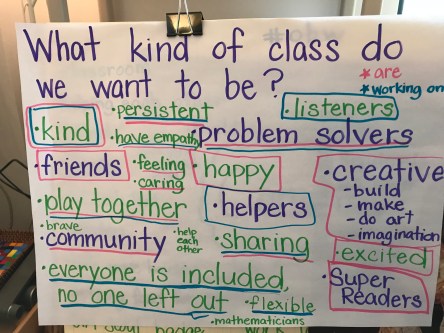
What Kind of Class Do We Want?

img_6072

*Update: After presenting at the WLU conference in July 2018, several people tweeted out my “Who We Are” charts. I’ve revised this previous blog post with charts from the past 3 years and updated book recommendations. Enjoy!

I love the way winter break is like pushing the reset button. I’ve enjoyed relaxed days with friends, family, books and the mountains. It’s been fabulous. It’s recharged my mind, my body and my soul. I’ve allowed myself to step away from my classroom (physically and mentally) and now I feel a renewed sense of excitement, energy and possibility as I get ready to return in a few days.

My kids and I have enjoyed 17 days off. While it’s been wonderful, I know that January 3rd is going to be like starting all over again in many ways. Seventeen days to a five and six year old is an eternity. But I love the idea of a second “first day” of sorts. It’s a chance to re-establish our community, to get to know one another again, to reteach those things that were falling apart in December and to revisit what kind of class we are. It’s like a blank slate that we can create together again.

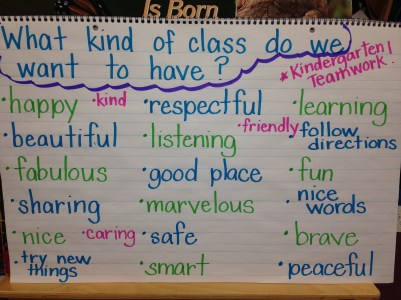
One thing I always do that first week back is to ask my kids, “what kind of class do we want to be? What kind of community do we want to have? Who are we?” Those are big questions, but my kindergarteners never fail to think deeply, to reflect on what was working and what wasn’t, and to create a promise of sorts that guides us for the rest of the year.

We start this conversation in our morning meeting on the first day back. I take notes on chart paper as we talk and start to determine what really matters to us. We read new books and revisit old favorites that first week back and talk about what makes characters kind and likable, or unkind and unlikable, and how that might look in our classroom. We talk about what makes us special and unique and about how we are different and alike. We talk a lot about how we treat each other when we agree and when we disagree. We read books like Grumpy Bird, Each Kindness, It’s Okay to Make Mistakes – and any Todd Parr book, Red, A Crayon’s Story, I Used to Be Afraid, Walter Was Worried, The OK Book, Elephants Cannot Dance, Ish, The Invisible Boy, Have You Filled a Bucket Today?  and Last Stop on Market Street – just to name a few of our favorites. Some more favorites to add to this list are: Love, Love the World, Sparkle Boy, I Am PeaceBe KindThe Big Umbrella, In My Heart: A Book of Feelings, Brave as Can Be: A Book of Courage, All My Treasures: A Book of Joy,  The Skin You Live InJulian is a Mermaid, Why Am I Me?, I Am Enough,  She Persisted, Be Who You Are, Not Quite Narwhal, Chocolate Me!, and A Unicorn Named Sparkle. The main idea here is to determine what would make our classroom a wonderful place to be, how can we respect and celebrate each others differences, how can we live in a joyful place together, how can we make a difference  – and how can we contribute to that.

We revisit the chart daily, adding and revising our thinking. After a week or so, we create our own chart – through interactive writing – that reflects who we are in this classroom. We always display it in a prominent place so that, as one of my kids said last year, “everyone who comes in here knows that this is how they have to be. You can’t be mean and come in our room.”

2014-01-09 15.38.53

Last year’s chart as a work in progress – adding things to it as we discuss. (2016)

This document serves as a class pledge or promise for the rest of the year. We read it and use it as a tool to solve problems, resolve issues and remind us of what kind of class we are. It’s a powerful tool to come back to when the inevitable problems arise.

img_5638

Last year’s  finished chart with photos! (2016)

How do you reset after a long winter break? Best wishes to everyone for a fantastic second “first day”!

Update: Here are the charts from 2017.

IMG_0826.jpgIMG_1036.jpg

And here are the charts from 2018:

IMG_5440.jpgIMG_5877.jpg

IMG_5926.jpg

What Really Matters

img_9753When I was a kid I was terrified of bees. Add tornadoes and getting left in a store after closing time and you have my top 3 fears as a child.
Never once was I fearful that I wouldn’t be allowed to return home after visiting my grandparents in their country. Never once was I scared that people would come and take my parents away. Never once was I terrified of getting taunted, bullied, beat up or shot because of my religion. Or culture. Or skin color. Or who I was in love with. Or the clothing I was wearing. Never.

But these are the fears that our children have today. The children I teach,  the children you may teach, your own children, the children in schools throughout our country. And many adults, as well. And these fears have magnified tremendously lately. As a teacher, it’s my  job to acknowledge what my students are feeling, listen to them, talk with them, comfort them and provide a safe space for them to feel loved and accepted. I can’t imagine doing anything less.

But it’s also my job to empower my students. Yes, they are five and six years old. Are we talking about immigration laws, our government system, electoral votes and checks and balances in our classroom? No. In my kindergarten class we are talking about empathy, kindness, collaboration and being a good person. I am teaching harder than ever about how important it is to be accepting, to have empathy and to be kind. I am teaching that it’s never okay to remain silent when you feel strongly about something. I am teaching the importance of making your voice heard. And the importance of listening to others’ voices.

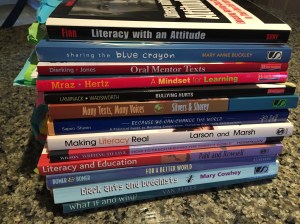
img_9789As I tend to do, I’ve reached for books over the past month as my comfort and my light. My professional mentors reminded me of what’s important, what’s necessary and what I must do as a teacher. My teaching must go beyond one to one match, directionality and making connections. Way beyond.
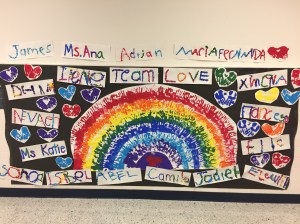
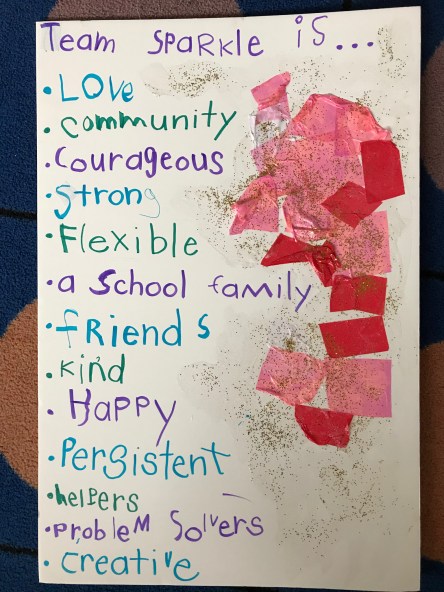
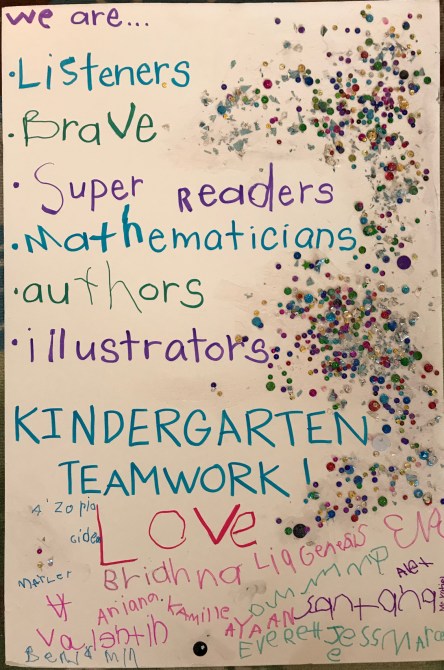
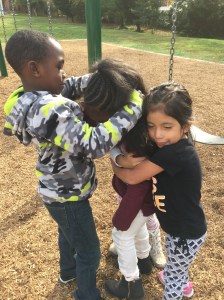
My children’s authors, once again, gave us those anchors in the classroom to come together as a community, to laugh, to cry, to learn about feelings, to be together and to think about how we are as people in the world. Mo Willems reminded us about the importance of empathy with  Leonardo, the Terrible Monster. We read Peaceful Piggies and learned what we can do when we are feeling sad, angry or frustrated. Todd Parr’s The Peace Book, Mem Fox’s Whoever You Are, Kathryn Otoshi’s One and Elephant and Piggie connected us, grounded us and reminded us of what is important. We read and reread Bret Baumgarten and Kathryn Otoshi’s Beautiful Hands and created a mural to share our class name, Team Love, and vision of Kindergarten Teamwork.img_0141

As I regroup over winter break and begin to think about my teaching in January, this is what will continue to guide me – children’s books and authors who serve as mirrors and windows for my kids and our classroom, as well as responsive teaching to what I see and hear every day in the classroom. Yes, the curriculum guides, pacing guides and standards are important, but I feel a much more urgent need to teach empathy, compassion, flexibility, perseverance and simply – how to be a good person.

Because the world needs good people.

Now more than ever.


I want my children to understand the world, but not just because the world is fascinating and the human mind is curious. I want them to understand it so that they will be positioned to make it a better place.

Howard Gardner


Teaching Students, Not the Curriculum

Screenshot 2016-01-27 10.13.41

Thanks to Heather for sharing this timely quote!

I often say, “I teach children – not the curriculum, program or standard”. I can’t remember where I first heard this statement, but I love it and I truly believe this. My children – the ones I’m teaching RIGHT NOW – are first and foremost in my mind as I plan, set up invitations and provocations and determine the next steps in my instruction. I use a wide variety of resources provided by the state, my county, my school, my colleagues and my own professional library – but I believe they are resources, not a prescribed script to follow. My plans are constantly changing and evolving, in response to the five and six year olds in my classroom. This doesn’t mean that I wing it. Not at all! I spend a lot of time planning the framework of our day, looking at individual students and where they are in their ZPD and making instructional decisions based on my research, beliefs and philosophy of how children learn. But I don’t consider myself a “Responsive Classroom” teacher or a “Units of Study” teacher. You will see much of the philosophy of Responsive Classroom because I believe in a constructivist approach and that the social curriculum is at the heart of what we do; you will see a balanced literacy approach and you will see Writer’s Workshop and Reader’s Workshop because I believe (and have believed and taught this way for 24 years) in a framework of time, choice and response. But within that framework, every year looks a little different – based on the kids in our room that year. It’s kind of like building a house. The framework stays the same on most houses, but what’s inside is different depending on who lives there. The framework of my teaching is the same – a workshop approach, balanced literacy approach, constructivist, inquiry-based learning – but the details of how it looks each year is different, based on who lives in our classroom that year.

I worry that in today’s climate of one-size-fits-all instruction, with increasing kits, units and books that pre-plan lessons down to the minute being hailed as the “answer” to educational problems, that teachers aren’t being challenged to think. Are we reading the script or lesson that another teacher used with her kids, blindly following what “the experts” say to do?

Or are we reading the lessons carefully, reflecting on how it will work in our classroom, with our students, discussing and collaborating with colleagues about the lessons, and then planning a lesson that we own, along with our current students? I hope we are. I hope we are trusting ourselves and supporting each other. And I hope our schools are providing the time and support for all teachers, and especially our new teachers, to think deeply about instruction.

We can’t stop thinking, reflecting, questioning and challenging our own best teaching – and the resources we use. And we can’t forget that we teach children – not a curriculum.

2016-01-20 10.28.07

A project coming to life in Writer’s Workshop.


Leveled Books – Questioning our Practice – Part II

2015-09-29 14.04.53Yesterday I wrote about questioning our practice with leveled books. Today I’ll continue those thoughts on using leveled books in my classroom.

I love that we have leveled texts, I really do! It was a game changer when Matching Books to Readers was published in 1999. I spent a lot of time with that yellow book trying to understand the levels and how to best choose books for my guided reading groups that would accelerate the learning of my readers. Thankfully, teachers have a text gradient to help us choose texts to instruct children in small-group guided reading and in one-on-one conferences. But we can’t rely solely on a level. We have to make good decisions as a teacher – and we have to teach children how to make good decisions as a reader.

I choose leveled books from our book room and from my own collection of leveled texts when I am teaching children in guided reading groups or conferring one-on-one. I use the level as a guide, and then look carefully at the texts and my teaching point to decide what book I will use in my instruction. I can’t just pull a level E book off the shelf because my reader is reading at a level E. I have to use that level as a guide and then make a good instructional decision as a teacher. For example, when a teacher knows that a student is reading at a level E, she also knows that at this level the child is expected to be able to rely much more on the print and less on the pictures, understand the punctuation marks, solve longer words, read sentences over 2-3 lines and over two pages and she knows how to choose a text that will support and challenge the reader who is ready for that.

2015-09-29 10.29.40I write the level in pencil on the inside cover of my own books, and keep them organized in bins under my teaching table for me to use. I do not have a leveled books section in our class library. Our school book room books have the level on the cover, and if a child asks what that letter or number is for, I tell them, “It is a way to help me as a teacher organize and choose books. You don’t need to worry about the letters/numbers at all. It’s for teachers.” It’s important for me to always keep the focus on the book and not on the level.

After a child reads with me, the leveled book goes in their book box. These books are kept in a large baggie inside the book box  – which holds “just-right” books for my readers. I will often take several leveled books and display them for kids to choose from. I help them decide whether the book is a good match by talking through the book just like I would do when I am choosing a book. I look at the cover, leaf through the book, read the back cover, talk about the author or genre, read a page or two and look at the pictures. This is a great opportunity for teaching children how to choose books that are just-right for them. For example, if I have a child who is reading at a level E, I may take several books that are a range of levels from B-D, and are about topics I think the child will like, and then I invite the child to choose from that pile. I never mention the level. I simply say that I think he or she might like some of these books – let’s take a look and see if they are a good match. Keep in mind, my children also have 5-7 “look books” in their book boxes that are self-chosen from our classroom library and can be any book that child wants to read. I often confer with readers in the class library – helping them decide whether books they are looking at are just-right books to go in their baggie, or look books that go in their book box. I will never tell a child that a book is too easy or too hard for them. I never want to discourage a child from picking up a book.

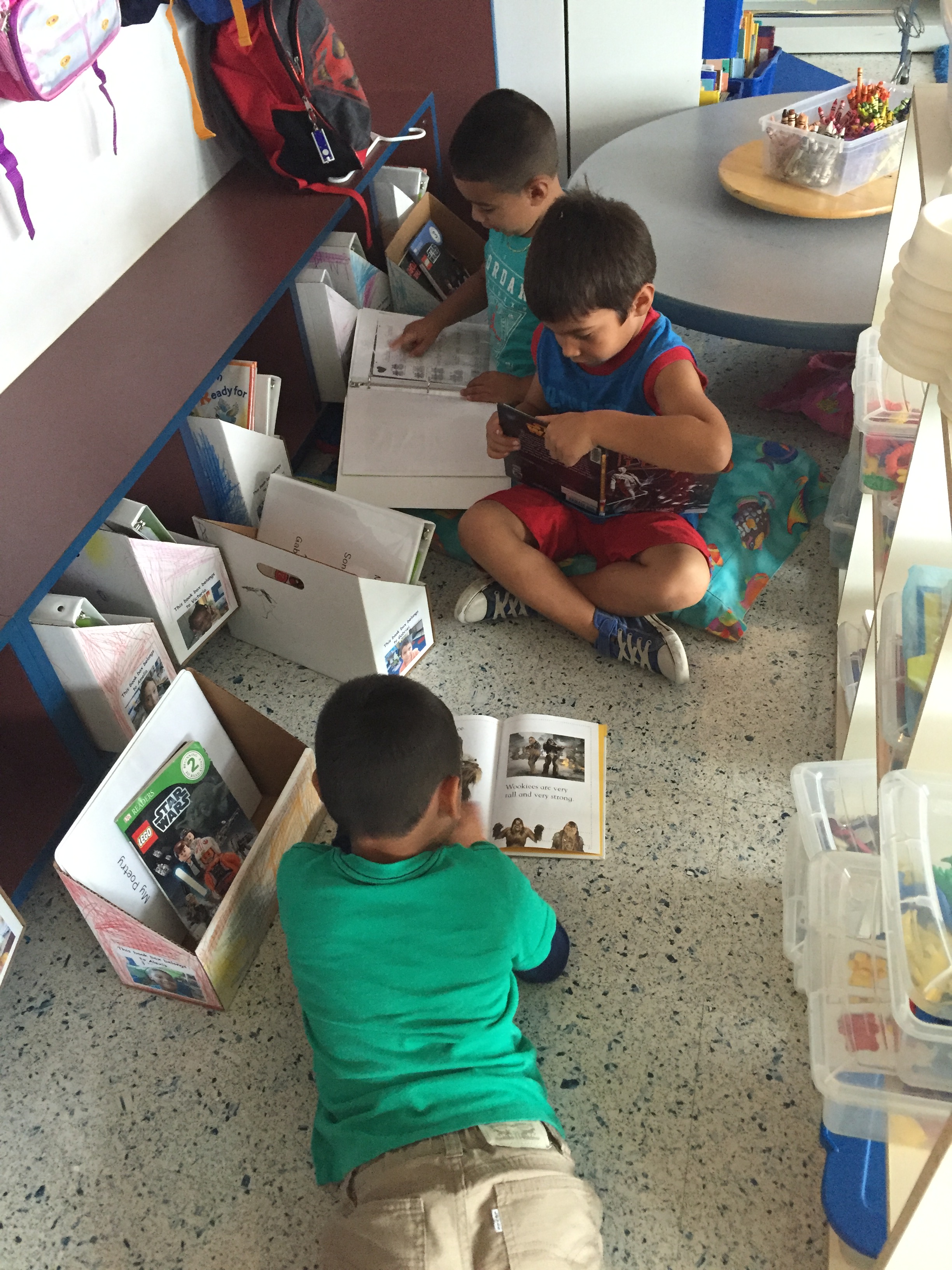
Week 10 039I believe that it’s important to authentically teach children how to choose books and how to enjoy books. Choosing by level is not authentic and I fear that it creates dependent children who don’t know how to choose for themselves when a book is not leveled. At the same time, it’s extremely important to me that children have many just-right books to read at their fingertips. After all, that daily reading practice is how our readers are going to construct a reading processing system for themselves. But it’s also very important that children have books that are just plain fun – books they have chosen about snakes and tornadoes and Star Wars and dogs and princesses – regardless of the level. Because that’s how our children are going to get turned on to reading and love to read. And isn’t that what we want?

I would love any thoughts on these posts. I realize this may make some people uncomfortable or unsure or questioning our practice. But isn’t that what we want to do as educators? I invite you to ask yourself, your team and your school “how are we using leveled texts, and why?” As Lucy Calkins wrote in my The Art of Teaching Writing book many years ago, “be brave enough to outgrow your own best teaching”. Questioning and challenging how levels are being used might be an area where we need to be brave.