A look into what is possible in today’s schools. Enjoy!
What do you imagine as the future for education?
A look into what is possible in today’s schools. Enjoy!
What do you imagine as the future for education?
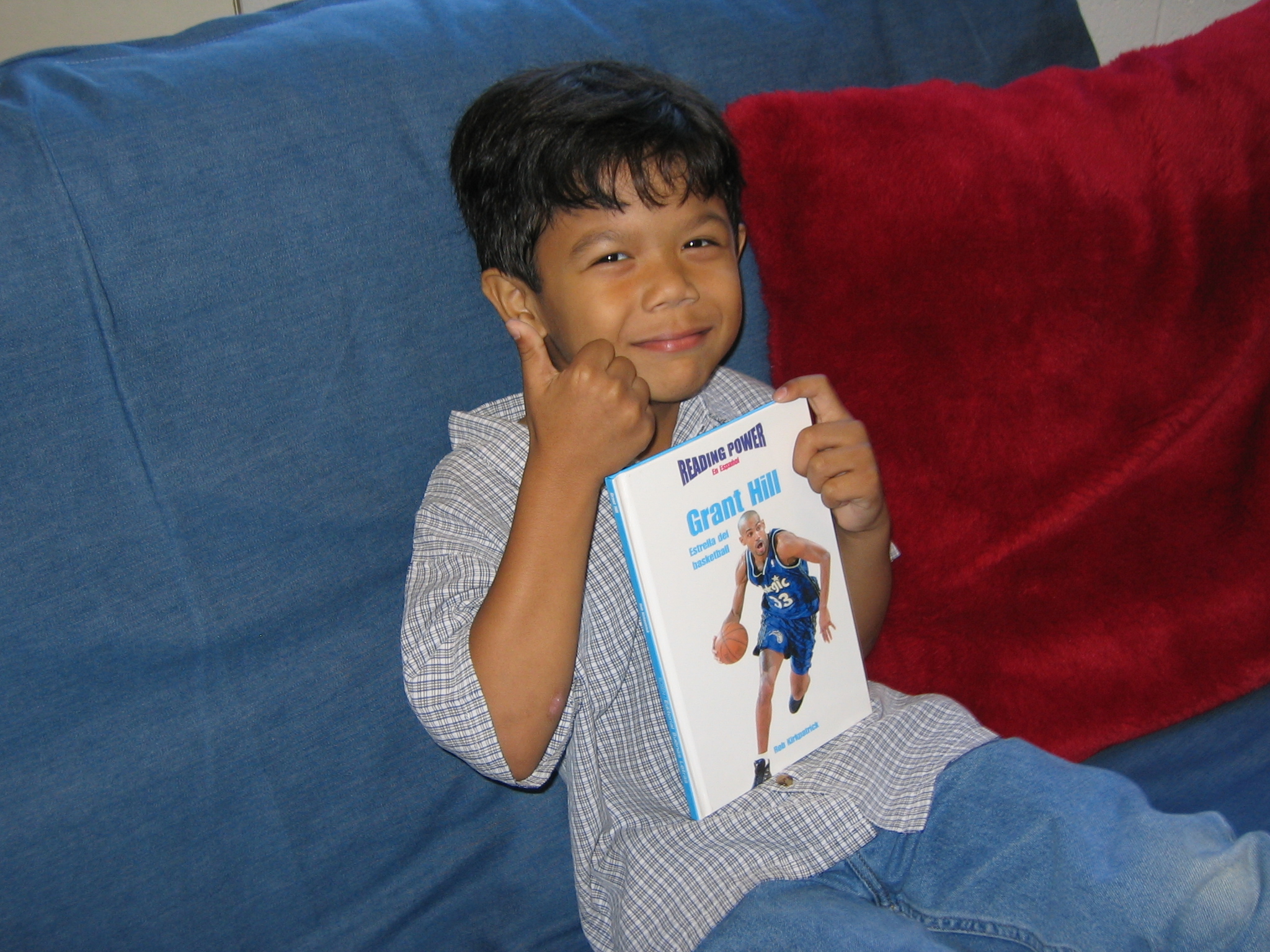
This hit home for us, as it connects with our belief that children should have choices and be able to pursue their passions in our classrooms and beyond. Choice motivates. By allowing our students choice in books and topics, we find that they read more often and more intensely. And in our classrooms, the freedom of choice is open to all students, not just the ones for whom reading comes easily. Think of your struggling readers? Are you giving them the chance to read about “NASA” and pursue their passions? Or are you feeding them a steady diet of “puppies”?
Reading in School
We feel that it’s important to make sure that the majority of time spent in reader’s workshop is time spent reading – not doing response activities, recording comprehension strategies used, or center activities that are not reading/writing based. Though we support the idea that reader’s workshops provide time for reading from “just-right” books, we believe in balancing those books with free choice, “fun” reading. So often, students don’t have the opportunity to pursue their passions in school. Teachers need to assist students in finding books, articles, and websites that extend their personal interests.
We often see that struggling students have limited opportunity to choose what they want to read and to have uninterrupted time to get lost in a book. Our struggling readers need a good balance of explicit literacy instruction and independent reading where they can practice putting a reading process system together. It is important that the books we choose for them in guided reading, as well as the books they choose, reflect their interests and passions. We want them to not only learn to read, but love to read.
Kelly Gallagher, in his book Readicide, says, “people who are undernourished need good food. Readers who are undernourished need good books – and lots of them.” We would argue that not only do they need good books, but they need books that they have chosen, about topics that interest them.
Reading at Home
We encourage reading at home by limiting our homework to “spend some time reading tonight.” When kids are in the middle of texts they are excited about, they want to return to the story at home. We tend not to add an assignment to the reading time, but have, on occasion, used a sheet to record the titles of books read at home which gives us some documentation. When reading time at home is coupled with an assignment, the whole reading experience becomes a chore. If we are serious about supporting kids in developing literate lives, then we need to treat them as real readers. Real readers don’t do an assignment when they put their book down for the night.
For our youngest learners, we include being read to by an adult as acceptable reading homework. We make sure to send home lots of books that are “just-right” for our students to share with their families. Sharing books at home is a way to create a special time for children and their families. We’ve heard from many families that this gave them motivation to make sure they are reading to their children every night. Also, as families listen to their child read, they get a better sense of how their child’s reading is progressing.
What about other types of homework? Unless it’s practice time of something that the child can do on his own, we don’t give it. There are too many variables that come into play. While some children have involved, educated parents who have the time and opportunity to help with homework, other kids have parents who work three jobs just to get food on the table or parents who don’t speak English. In order to be fair to all our students, we limit the other types of homework we give. We want to be sure that students have plenty of time to read every evening, so reading is our priority for homework.
Take a minute to think about your readers who struggle. Are they reading every day in school? What are their interests? What do they get excited about? What are they passionate about? Is is puppies? Or NASA? Do they have access to books they love? Are they choosing to read every night – because they want to, not because it’s a “read for 20 minutes” assignment?
Let’s make sure we are raising readers who not only CAN read, but CHOOSE to read.
Enjoy!
Pat and Katie
Pat and I had the honor of presenting at the Fairfax County Reading Teachers Association’s annual conference yesterday at George Mason University. What a wonderful day! (and a huge kudos for the teachers who chose to spend a warm Saturday learning with us!) We started the day with our keynote: Literacy Teaching: It’s All About the Passion. After a delicious lunch, we presented two break out sessions. Pat shared: More Meaning-Making, Less Rote: Working with Struggling Readers in Grades 3-6 and I shared: Merging the Old with the New: Literacy Teaching in the 21st Century, K-3. Below you can view Katie’s presentation. Enjoy!
 Conferences are always so inspiring. I love attending them and talking with like-minded educators, meeting new people and having time from my busy school life to reflect on my practice. This past weekend, Pat and I attended the Reading Recovery conference in Columbus, Ohio. We enjoyed meeting some of you and sharing our thinking at our sessions. We also enjoyed learning from the many smart people who presented. If you’ve never been, it’s a “must-do” February conference, so mark your calendars for next year!
I attended many fantastic sessions, but I continue thinking about Lucy Calkins’ keynote. She spoke about where education is today, and how we have a choice as to what role we might play in the future of public education. Her words, “as educators standing in this place in our field, we have a choice. We can look out and see problems and despair or possibility and promise,” have echoed in my brain all week as I returned to my school.
If we see our job and schools as sources of problems and despair, do we have the energy to make a difference with the kids we teach every day? Do we wake up full of joy and enthusiasm in our role as educators? No. But some days it’s very hard to look past the testing frenzy, the new mandates made by people who have never set foot in a classroom, the budget cuts, the overcrowded classrooms, the lack of support and so on and so on. It’s easier to see despair and problems over possibility and promise. Easier? Perhaps. Justified? Absolutely. But it sucks the life and energy out of us as teachers.
So what if we focus on the kids?
As Lucy said, “not one of us can be hiding behind someone else’s proclamation of what we need to do as teachers”. We are in this profession because we love kids. We want to make a difference in the world and see teaching as the way to do it. There have been way too many proclamations about what we need to do as teachers. It’s time for us to stand up and bring possibility and promise back to our schools, our teaching and our professional lives. Focusing on the kids, and what we know is best for them, allows us to see possibility for who we are as teachers, professionals and learners. Standing up for best practices and for our students is empowering. When we can be passionate learners and passionate teachers, when “our teaching is alive and powerful”, when “we are doing work that feels big and significant” – it’s hard to see the problems and feel despair. It’s much easier to see possibility and promise.
Lucy ended her keynote with this question, “are we going to be who we say we want to be? We have the choice as educators.” I am taking this opportunity to really think about who I say I want to be as an educator. And then make sure that my actions, thoughts and words reflect that vision. I want to walk into school every day looking towards possibility and promise. I want to rekindle the passion in teaching that called me to this profession 19 years ago. I want to remember that my focus is on the kids, and that my work here is “big and significant”, joyful and passionate.
How about you? What choice are you making?
I am an avid reader. I’ll admit, it’s bordering on an obsession. There are stacks of books throughout my house, my office at school, and quite often, in boxes waiting for me on my front porch. I am passionate about books and reading and I love to share this passion with the kids I teach. Many former students have come back to visit and say the thing they remembered most was how much I loved books, and how I helped them learn to love books and reading.
But what if you’re a teacher who doesn’t love books? One who doesn’t read much beyond magazines, newspapers or articles on the web? One who doesn’t call herself or himself a “reader”? Can you still help foster a love of reading in the kids you teach?
One of my grad students recently shared that she really isn’t a reader. She recognized that this might be a problem since she’s expected to teach kids how to read and that she wants the students in her class to love reading. She decided to join a book club at her school, and shared with the class that it was the first novel she’s read since high school. I admire her honesty and willingness to be a learner alongside her students. I was thrilled when this same student came to class on the day we were doing our Young Adult literature book clubs saying that she was hooked on these kinds of books. She couldn’t wait to read the rest of the suggested books on our list and she was amazed at how quickly she had read her book. She discovered the hidden reader inside of her, and couldn’t wait to continue finding more good books to read.
I’ve always loved reading. It came easy for me, and I’ve always seen it as a huge part of who I am. Perhaps teachers who don’t consider themselves readers just haven’t found the right book or motivation. So what if this grad student found her way in to the reading world by starting with Young Adult novels. How we get there doesn’t matter. It’s finding that porthole that counts — a porthole that we can slip through to begin our life as a reader. Being a reader makes being a teacher of reading easier – it really does. When we “walk the walk” and not just “talk the talk” our kids notice. And that reading bug of ours eventually bites them and they become kids who love to read too.
 I’ve been thinking a lot lately about what brings me joy in my teaching life. Joy, by definition, is a source or cause of delight. I think back to my favorite teachers as a child, and it was clear that they found joy in teaching. I’m sure they had many of the same stressors that teachers today have, and yet, they remained joyful in spite of it all. Today, teachers are challenged daily with a zillion things that don’t hold a lot of joy, and in fact, some can be downright spirit crushing. But it’s up to us to create joy in our teaching lives, and share that joy with our kids and our colleagues.
Here are five things that bring joy to my teaching life.
What brings joy to your teaching life?
 I sat down to work with three fifth graders the other day, all three being struggling readers. They’ve been placed in my intervention group because they are reading more than three years behind grade level. It’s safe to say they are not big fans of reading. It was our first day meeting together, and I was nervous. I hoped my lesson would capture their attention enough that they’d enjoy coming to read with me in the future. I want so much for these readers. I want their learning to accelerate rapidly, I want them to see themselves as readers, and, in truth, I want them to become fans of reading.
I chose a nonfiction text that I thought might interest them. Being close to Halloween, I thought a book on bats might spark some curiosity, and hopefully hook them on a book. We talked about the book together first, then each child read the book by themselves. They were each reading at their own pace, but they stopped often to talk, wonder or comment on the bat facts the author was telling us. They flipped back and forth in the book as they read and talked about what they read. They shared common experiences and expressed disgust at some of the photos. Before we knew it, our half hour was over. And these fifth graders were begging for more books on bats! They couldn’t wait to take the book home to share with their families, and even wanted me to give them poster board so they could look up their questions on the internet and make bat posters to share with their class.
I was thrilled that this book was able to hook these reluctant readers. It reminds me of how important it is to carefully choose the texts we use with all of our readers – but especially our most struggling. I am also reminded of how important it is to interact with texts alongside our struggling readers. They need to see how books can be exciting, how books can make us wonder, think, question, get grossed out, and pull us in. They need to experience that sense of time passing quickly when you’re totally hooked into a book. As one of my fifth graders said, “no way! We can’t be done yet!!”
In Catching Readers, Pat and I often refer to engaging our readers by choosing high interest books, incorporating LOTS of talk and working in that child’s Zone of Proximal Development so they can feel successful and build upon prior knowledge. Take a minute today to reflect on those kids who are struggling in your classroom. Are you choosing high-interest books for small group work? Are they choosing books that interest them for independent reading? Do they have lots of books available to them that are at a “just-right” level for them? Are they having multiple opportunities to talk about what they are reading? Are they seeing themselves as readers? Are they seeing all that books can offer?
How are you helping your readers become “Big Fans” of reading?
 Lately there has been a lot of talk about education in the news. Unfortunately, it seems to be a lot of talk about what’s wrong with education and how we can fix it. We’d like to take a minute to share our list of what’s right with education. What does it look like when things are going well? What are the signs that a school or a classroom doesn’t need to be “fixed?”
Here are a few of our thoughts.
1. Teachers are smiling.
We’re not just talking about the “nice to meet you smiles,” but the genuine “I love my job” smiles. Those authentic smiles to kids, parents and colleagues in the hallways, classrooms and teacher’s lounges are signs that teachers love what they do. Teachers smile a lot more when they are respected, trusted, encouraged and celebrated. A school most likely doesn’t need to be fixed when the teachers are happy.
2. Kids are smiling.
We want our kids to love learning, love school, enjoy what they are doing, and feel valued as contributing members of the classroom community. It’s our job as teachers to make sure we’ve created the environment for this to happen. Kids smile when they have choice in what they read and write, when they are listened to and respected, and when they are encouraged to do their best. A school most likely doesn’t need to be fixed when the kids are happy.
3. Kids are reading and writing daily and growing as literate beings.
A school that is working well has kids engaged in daily, meaningful literacy work. Kids have ownership of their reading and writing and are given sufficient time each day to practice. Kids aren’t doing mindless worksheets or isolated activities just to have something to turn in to the teacher. Rather, they are being treated as real readers and writers in the world. Their teachers are supporting them and helping them grow into proficient readers and writers. That growth is measured in multiple ways, not just with test scores. A school most likely doesn’t need to be fixed when kids are engaged in meaningful literacy work.
4. It is noisy.
We’re not talking about just random noise, but purposeful, meaningful literacy talk. Kids should be talking about their reading and writing daily. Literacy is social and kids (and adults) need time to talk in order to construct meaning and see the purpose that literacy has in their lives. A school most likely doesn’t need to be fixed when kids are talking about their thinking, their learning and their literate lives.
5 . More teaching than testing is going on.
Teachers need to be interacting with and responding to the students in their classrooms. Time is spent constructing the curriculum, choosing the read alouds, planning instruction, meeting with children to talk about their reading and writing, and assessing students based on their specific needs as learners. A school most likely doesn’t need to be fixed when teachers are teaching and not just testing.
What else is happening in schools and classrooms that don’t need to be fixed? We look forward to your thoughts!
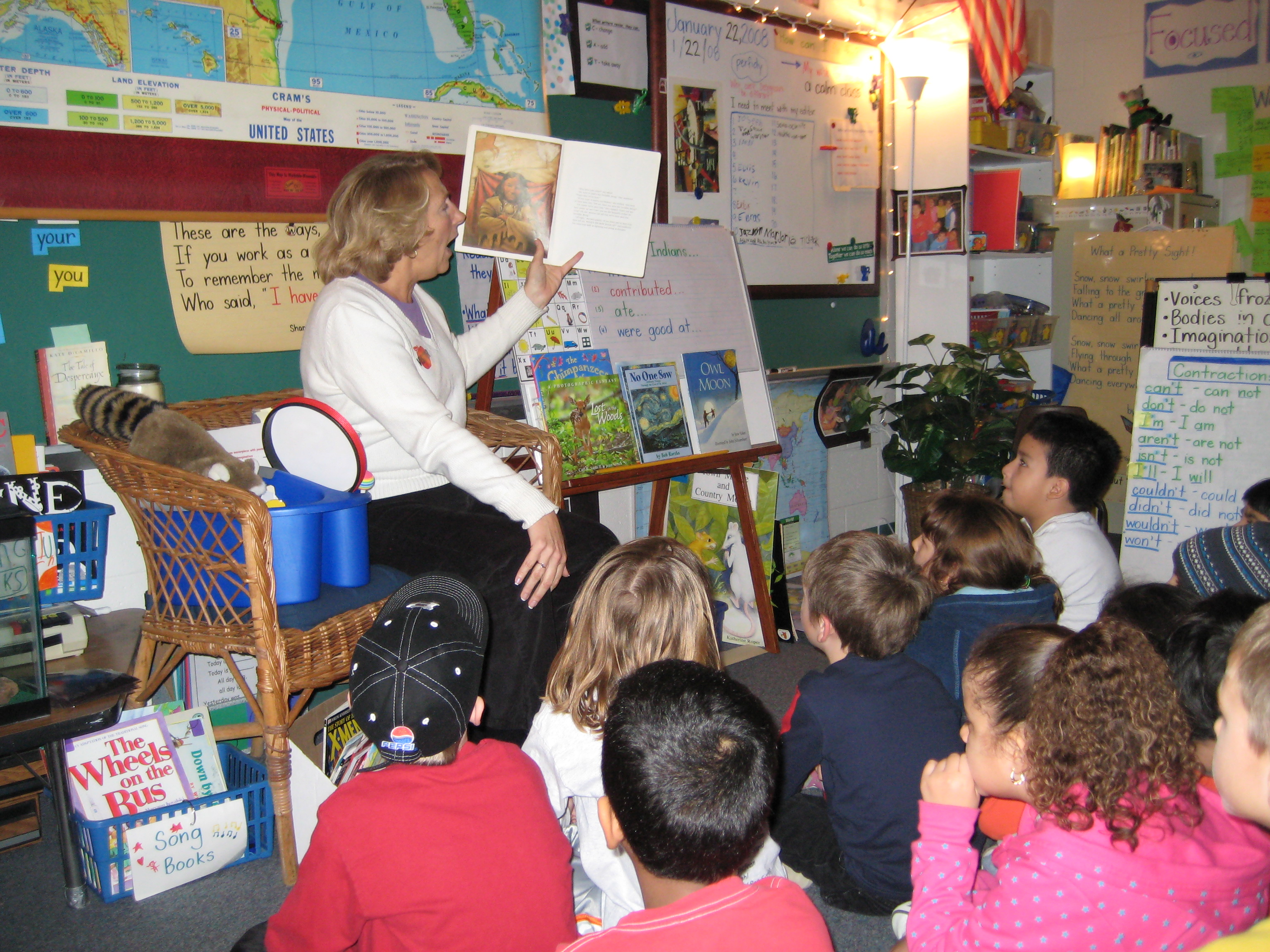 This week I had the pleasure of going around to classrooms, introducing myself as the new literacy teacher, and reading aloud to the kids. I loved it! It reminded me of the power of a well-chosen book – how it can build community, provide laughs, and allow you to connect to a group of kids in a matter of minutes. In one fifth-grade class I read Rod Clement’s Grandpa’s Teeth. They loved the story and begged for me to read it again. For the rest of the week when I saw these kids they yelled “Grandpa’s Teeth – I love that book!” and “that was such a funny book you read – when are you coming back again?” What a great way to feel welcomed in my new school.
Whether you are teaching preschoolers, first graders, fifth graders or middle schoolers – don’t forget the many possibilities that a carefully chosen book can provide in your classroom. We believe that children should be read to daily – numerous times. Read alouds can be used in all subject areas, as well as just to connect, laugh and enjoy together. Below are a few of our favorite read alouds. In Catching Readers Before They Fall, (Appendix 8 ) you can find a lengthy list of favorite read alouds for a variety of purposes. And of course, talking to other teachers and spending a few hours in your favorite bookstore or library are some of the best ways to find your favorites.
The Sweetest Fig by Chris Van Allsburg
The Big Orange Splot, by Daniel Manus Pinkwater
Tough Cookie by David Wisniewski
Rough-Face Girl, by Rafe Martin
Every Living Thing, short stories by Cynthia Rylant
(thanks to literacy specialist Tania Dedham for some of these great suggestions for upper grade students!)
Stand Tall, Molly Lou Melon by Patty Lovell
Whoever You Are by Mem Fox
The Recess Queen by Alexis O’Neill
Skippyjon Jones series by Judy Schachner
Toot and Puddle series by Holly Hobbie
The Baby Beebee Bird by Diane Redfield Massie
ALL of Mo Willems’ books!
Koala Lou by Mem Fox
Edward the Emu, by Sheena Knowles
Owl Moon, by Martin Waddell
See Donalyn Miller’s (The Book Whisperer) blog for more great read aloud ideas, especially for your upper grade students.
What are some of your favorite read alouds? Please share!
This summer I discovered an amazing young adult series that started with The Hunger Games by Suzanne Collins. I devoured that book and immediately went to the bookstore to buy Catching Fire – the second book in the series. After I finished that in a day (and told all my reader friends that they MUST read these books!), I went online and googled Suzanne Collins. I discovered her website and learned that there was a third book coming out soon. I preordered it online and went on to be a Facebook fan of The Hunger Games site – while I continued to tell anyone that would listen how good these books were. I had great discussions with friends who had already read the books since none of us could stop thinking about the characters and the stories. My mom’s book club even decided to read The Hunger Games based on my excitement. I’m sure many of you have similar stories like this, where you have discovered an excellent book or author and went on to learn as much as you could about them, while sharing them with anyone who would listen.
I started thinking about the kids I teach. Am I sharing my enthusiasm for books and authors? Am I telling them how I stayed up all night reading a book that I couldn’t put down? Am I encouraging them to have a favorite author and to share about the great books they’ve read lately? Am I telling them about my conversations with friends about books we read? Am I showing them what readers do in the world – googling a book, becoming a fan of an author on Facebook, calling up friends and telling them they MUST read a great book?
We want all of our children to be readers. We want them to be able to choose books, read them, and understand them. We want them to love books as much as we do. We want them to have a favorite author and recommend books to their friends. We want them to see how being a reader can help them succeed in the world. If this is to happen, then we need to model what readers do in the world. We can’t get caught up in levels or numbers that may give us valuable information as teachers – but aren’t necessary for kids to focus on. While kids certainly can have a goal like “work on making my reading sound smooth” and be able to articulate this – we don’t think they need a goal like “get 100% on my comprehension test” or “be a level 10”. When we ask a fifth grader what he is reading we want him to tell us a title or favorite author, not “level 40”. It’s up to us to determine what we focus on in our classrooms. And what we focus on is usually what we get.
(Oh, and if you haven’t read the The Hunger Games trilogy – you MUST!!)
Enjoy!
Katie & Pat
 Catching Readers, Sparking Joy