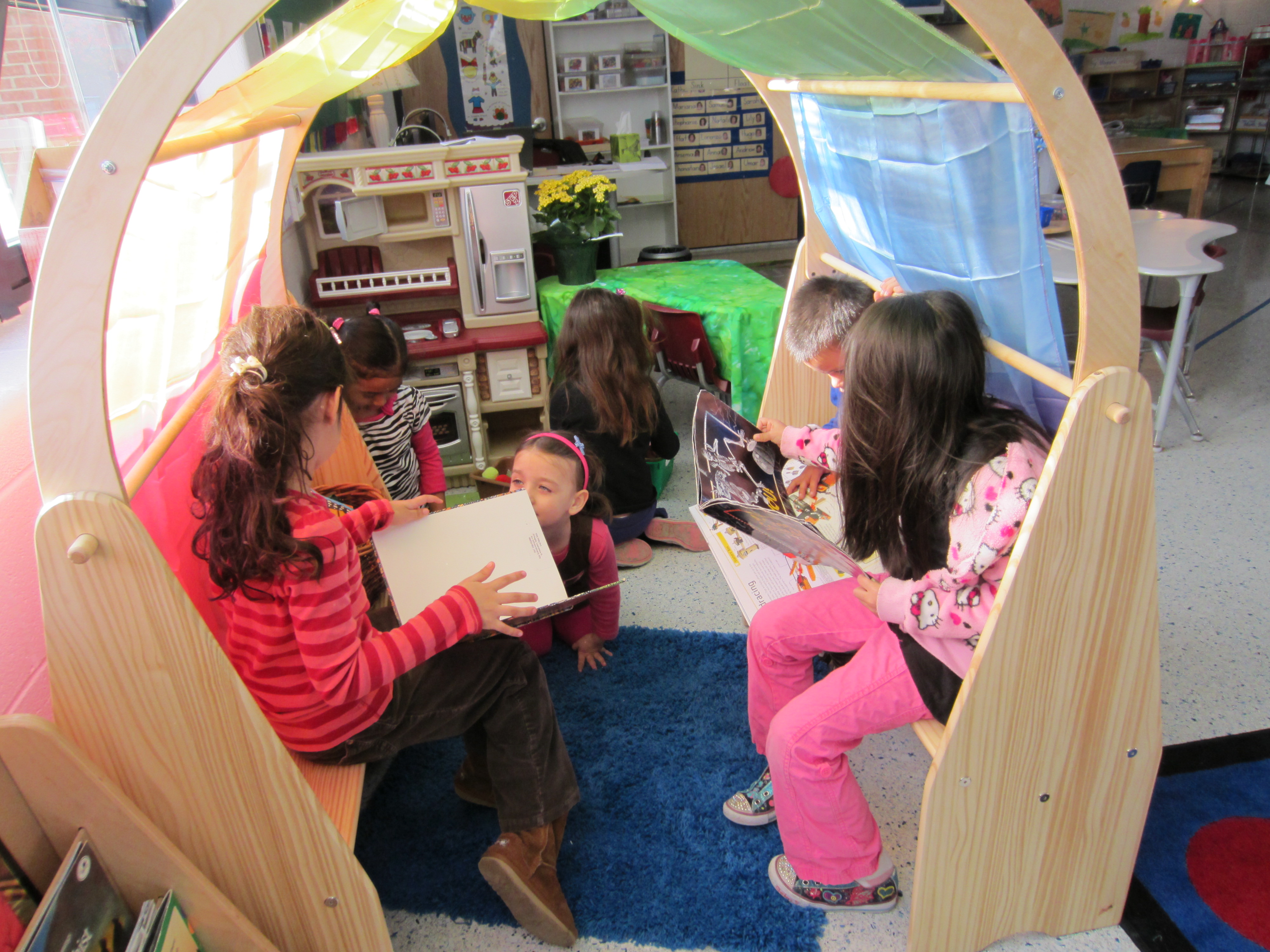
Standing on the Shoulders of Authors

We write every day in our kindergarten classroom. I love it and the kids love it. Most days we start our writer’s workshop with a read aloud and lots of talk about author’s craft, the illustrations, what kind of book it is, etc. I always tell the kids, “maybe you could try (whatever we noticed and talked about), just like this author did”. I want them to see themselves as authors and to envision themselves doing the wonderful things we notice that Mo Willems, Eric Carle, Jan Thomas or whatever author we are currently reading, is doing.

This past week we read and LOVED John Himmelman’s Chickens to the Rescue. If you haven’t read it yet, it’s a week in the life of the Farmer Greenstalk and his family. They have problems like the farmer’s watch falling down the well and a duck taking the farmer’s truck, plus several more. Every time, it’s the chickens that come to the rescue. The repetitive pattern and the hilarious illustrations had my kids wanting to hear it again and again. What was really great was how several kids chose to “stand on the shoulders” (as Katie Wood Ray says) of John Himmelman, and write their own ________to the Rescue! books. We had Jayden to the Rescue, a story of bad guys doing things like stealing purses (not sure where that one came from!) and Jayden, a superhero, coming to the rescue. And Pigeon to the Rescue, the story of our favorite pigeon (from Mo Willems’ books) saving the day in our classroom when crayons spill, the sandbox dumps over and the SMARTboard breaks. I loved how my young writers got the gist of Himmelman’s book and carried it over into their own writing. They weren’t copying his book, they were creating their own work – standing on his shoulders. It was amazing!

What mentor texts are you using in your writer’s workshop?

How do your writers stand on the shoulders of their favorite authors?

Playing with the Big Kids

This morning on the CBS Morning Show there was a story about a high school student who has possibly figured out a cure for cancer. Angela Zhang got interested in bio-engineering as a freshman. She started reading doctorate level papers and began to see it as a puzzle that she wanted to decode. She eventually talked her way into the lab at Stanford University and was doing her own research as a junior in high school. What I kept thinking as I watched this story is that she was playing. She found something that interested her and made the time to play around with it. She had the support of teachers who encouraged her to go beyond the curriculum, to follow a passion and to play. And look what happened.

So what if we built time for students to play into the school day? Not only in our primary grades – but in the upper elementary grades, middle school and high school as well? Recently at a staff professional development session my principal asked us what Explore time would look like in the upper grades. I’ve been thinking a lot about this. I think there are so many possibilities for having an open-ended exploration and play time in all grades. After watching the CBS show this morning I’m even more convinced that carving out the time for this (our biggest challenge, perhaps) would be worth so much. Having this time would engage our struggling students as they find things they are interested and successful in and are motivated to pursue. Our students would be able to challenge themselves and pursue areas to research and explore that may not be part of our standard curriculum. We would help students find a passion and stick with a project over time, creating, problem solving, exploring and playing.

A few ideas I came up with for Explore time in grades 2-6 are:

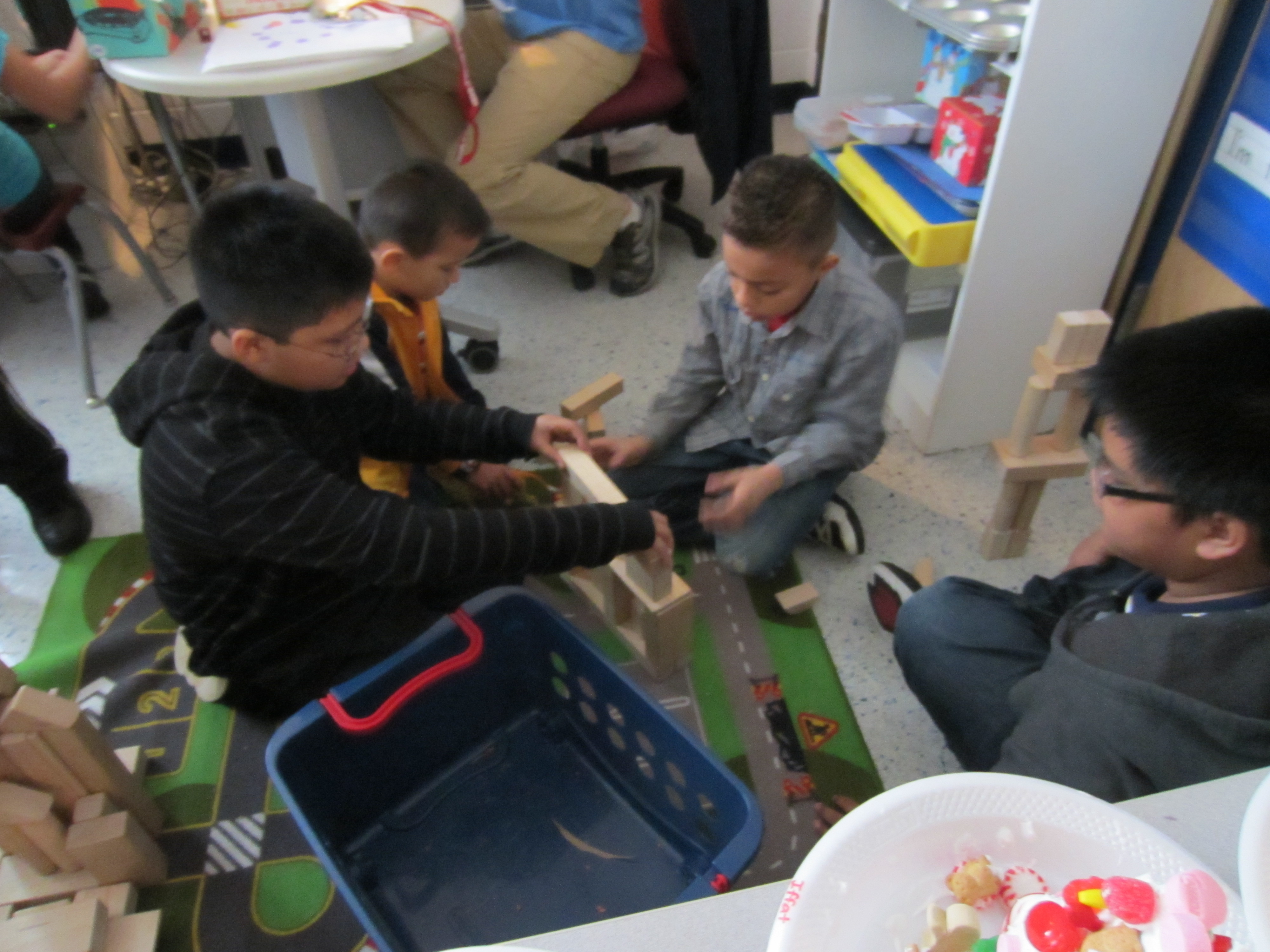
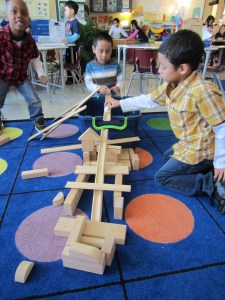
*Legos, blocks and ramp building – including architectural design books and magazines as well as websites for constructing (this is a picture of kindergarteners building ramps – can you imagine how much further older kids could take this?)
*games – Scrabble, Boggle, Life, Monopoly, Yahtzee – just to name a few – these games are full of fun learning opportunities, yet we often don’t have time to play them in school

*science experiments – I think of all the cool experiments and projects at Steve Spangler Science, and countless other science resources, and think that older kids could experiment and play with a variety of science tools, engaging in problem solving, hypothesizing and persistence to a task they are interested in

*photography – children could explore photography and various editing tools that allow you to manipulate and alter photographs such as ColorSplash and Photoshop, using digital cameras,  iPods or iPads

*art – exploration with a variety of mediums, as well as books, websites, etc. to get ideas from

*technology – kids could Tweet, create their own blogs, create digital stories, make movies, etc… there are SO many possibilities here

*reading – I know I would love an extra 30 minutes or so in each day to read whatever I chose – books, magazines, blogs, etc.

*writing – kids could work on their own books and stories or work with others to create collaborative pieces

*projects and research on topics in the curriculum that kids want to explore further or topics that students choose

I feel that with older kids simply giving them the time and then challenging them to create a project of their choosing would be all you really need to do. Of course, you would provide materials, guidance, etc. – but I think they could come up with ideas beyond what we can think of. Finding the time is a challenge in an educational climate where it seems as if every minute is planned with curriculum objectives and pacing guides – with the standardized tests being the ultimate goal. But don’t we want thinkers, problem solvers, engaged learners, and motivated students in addition to good test scores? I would argue that providing this time would improve test scores, especially in your reluctant, struggling students who aren’t invested in school. It would get them hooked on learning, motivated to learn more and I think great results in math, reading, writing and the content areas would be seen. Isn’t it worth a try?

I’d love to hear from you if you are trying anything like this with your students.

How do you make the time? What types of Explore activities/projects/etc. are your students engaged in? What advice do you have for teachers wanting to try this?
Literacy Explore

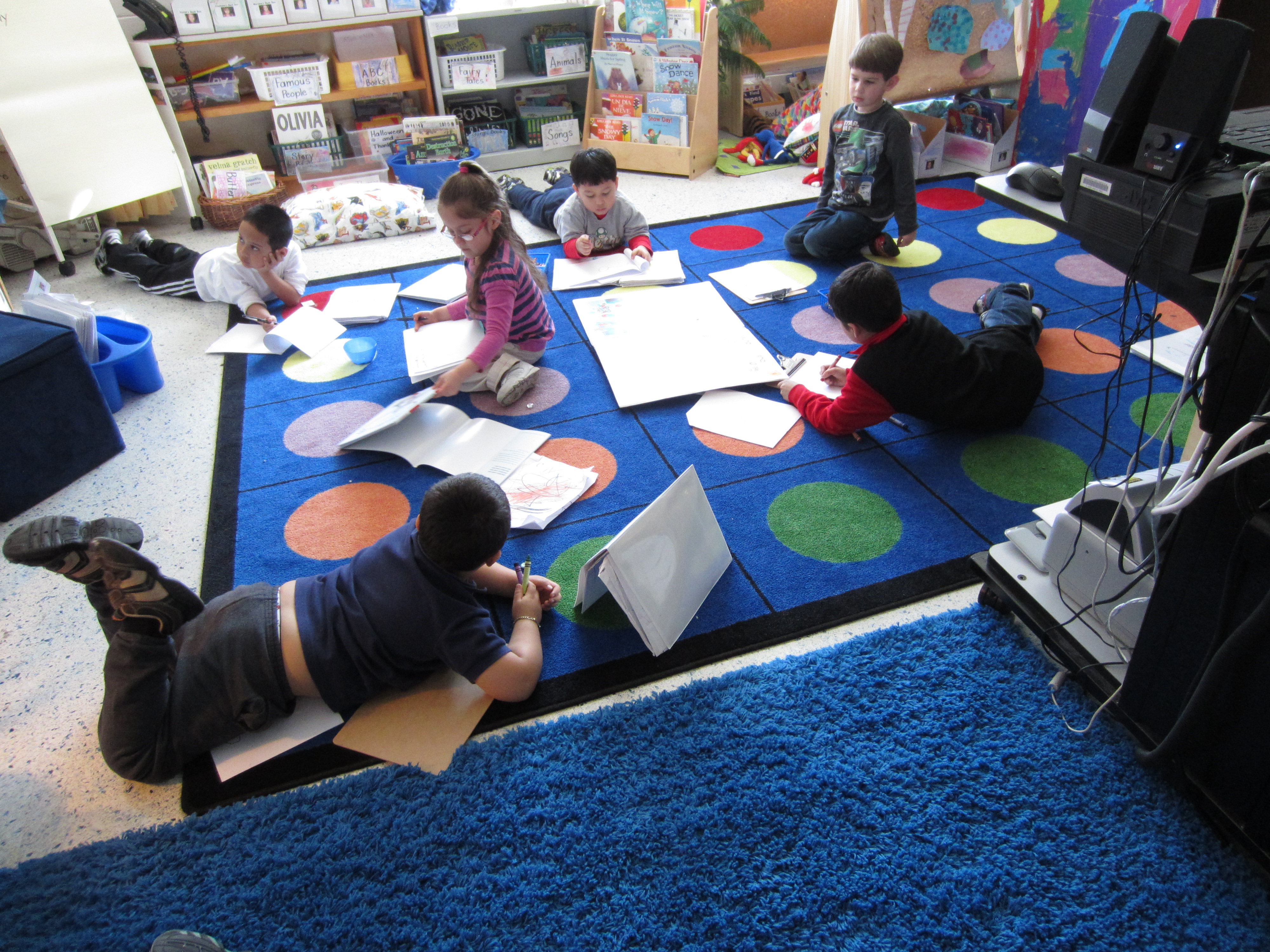
Our kindergarten literacy block is structured with time for whole group instruction, small group & one on one instruction, book box time, sharing and choice stations. Literacy Explore is similar to reading and writing stations. In fact, I call it that so the children know that it’s not quite as open-ended as our Explore time. During this time I expect the kids to be engaged and playing in a literacy activity of their choosing. The children choose from the choices on our work board. They can move freely from station to station, as long as there is room. Reading from book boxes or our classroom library and writing are always a choice with no restrictions on how many kids can be doing this. I also have a time when everyone is reading from book boxes or the classroom library – in addition to our literacy Explore time. I want to make sure that everyone is engaged in texts of their choosing at some point in our day, in case they are not choosing this during Explore.

An example of some of the choices available as reading and writing stations are:

-reading around the room (children have pointers and can walk around the room looking for letters or words they know)

-writing around the room (children have clipboards and can walk around the room writing down letters or words they see)

-big books (all the big books we have read, as well as class big books we have made are in a bin for children to reread – I also have a big picture dictionary they love to read)

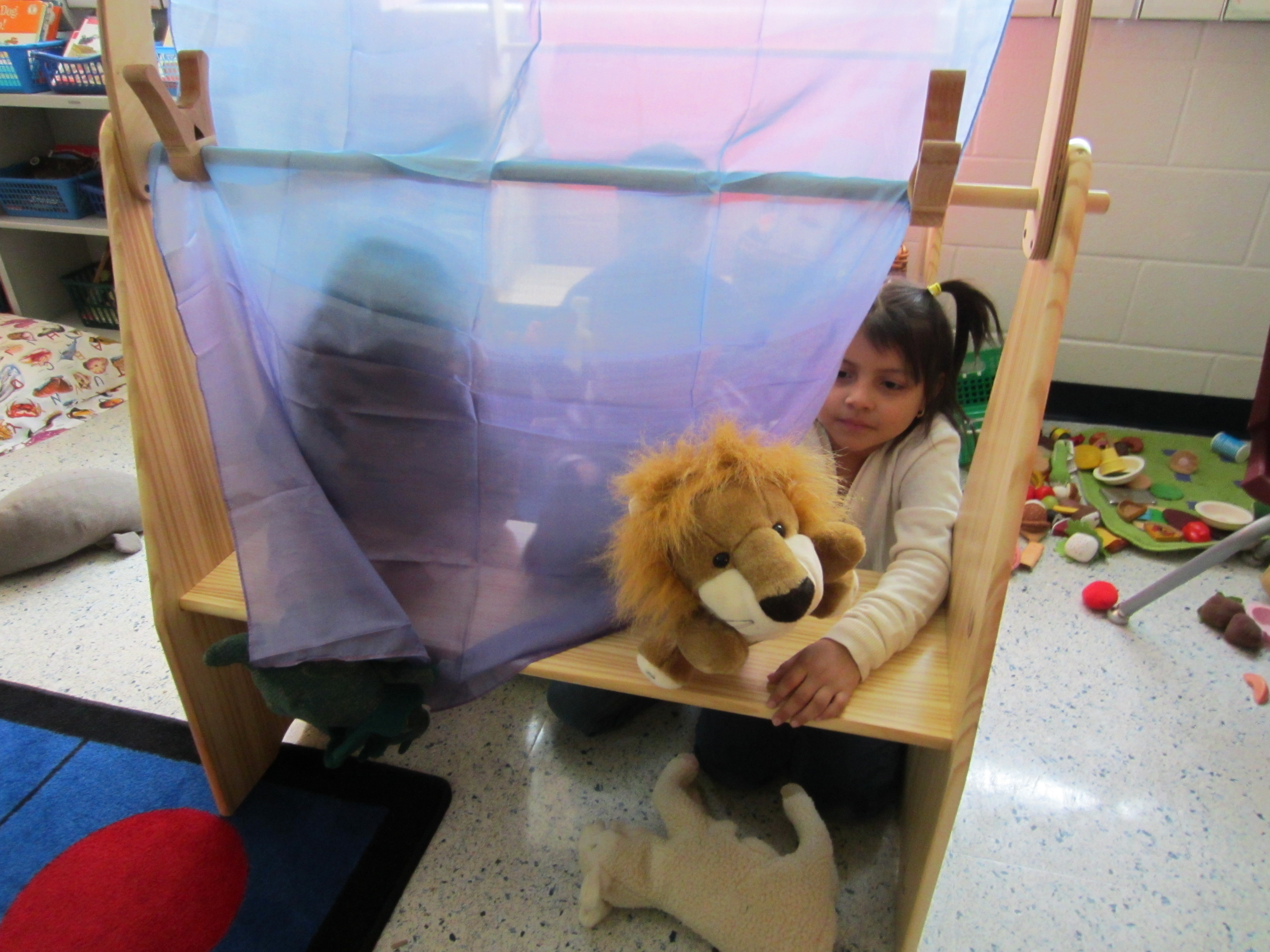
-puppets (I have a variety of puppets and stuffed animals from books we have read. Kids can create their own puppet stories or retell books we have read.)

-magnetic letters (a variety of magnetic letters and words on an oil drip pan and cookie sheets for kids to make words, match and sort letters, etc.)

-letter sand boxes (see this previous post for a photo and description)

-name bottles (we interviewed each child and then created a name bottle for them – it’s a bottle with all the letters of their name plus some glitter – kids can match a name bottle with a name card at this station) 

-story retelling (I have props for several stories we have read numerous times – the children can retell the story with the props)

-rhyming and letter games (various games where kids can match objects that rhyme, objects to a letter chart, objects with similar beginning or ending sounds, etc. – a good source for ordering lots of little objects is from Time for Tots on Etsy)

-poems and songs on charts (Children can reread familiar poems and songs with pointers at this station. I laminate all of our charts, tape a plastic hanger to them, and hang them on a chart stand. I have several hooks around the room for kids to hang the charts on while they are reading them.)

-iPad and iPhone (A variety of literacy apps are available at these stations – I especially like the digital story apps Fotobabble, StoryKit, and Storyrobe) as well as the SMARTboard (literacy games and websites).)

-letter stamps (Kids can make books, stamp names or words, sort letters, etc. with the ABC stamps.)

-flannel board (I love my “old school” flannel board! It is great for retelling stories and creating new ones from having multiple felt pieces available. Story Time Felts has a wide variety of stories available on felt and for a few dollars extra, they come pre-cut. Check with your librarian, many times old flannel boards are just in a closet, not being used.)

This is just a sampling of some ideas. I leave the choices up for a few weeks, adding new ones in and rotating ones out if I see that kids aren’t going to that station. I can then reintroduce a station later with renewed interest.

For our youngest literacy learners (and really, all literacy learners), I feel that it’s particularly important to make literacy accessible, playful, meaningful and engaging. When children have the opportunity to choose from a wide variety of stations they are certain to feel empowered, successful and in control of their learning. This helps set the foundation for strong literacy learning, and allows our stronger children the chance to go beyond the curriculum.

I’m sure there are many more literacy based exploration ideas out there. How do you do literacy stations? Please share!

Explore!

“In play a child always behaves beyond his average age, above his daily behavior. In play it is as though he were a head taller than himself.”

Lev Vygotsky

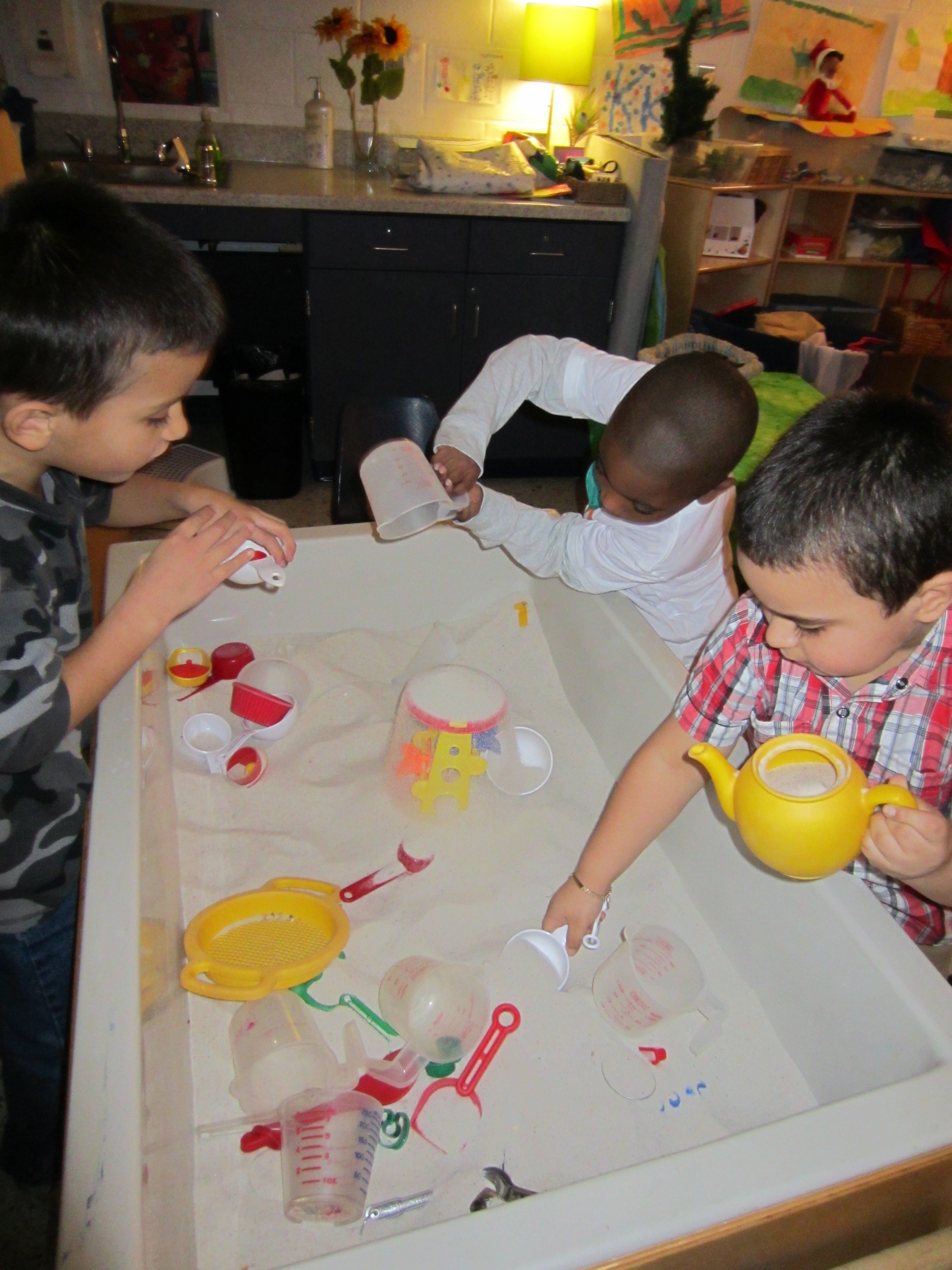
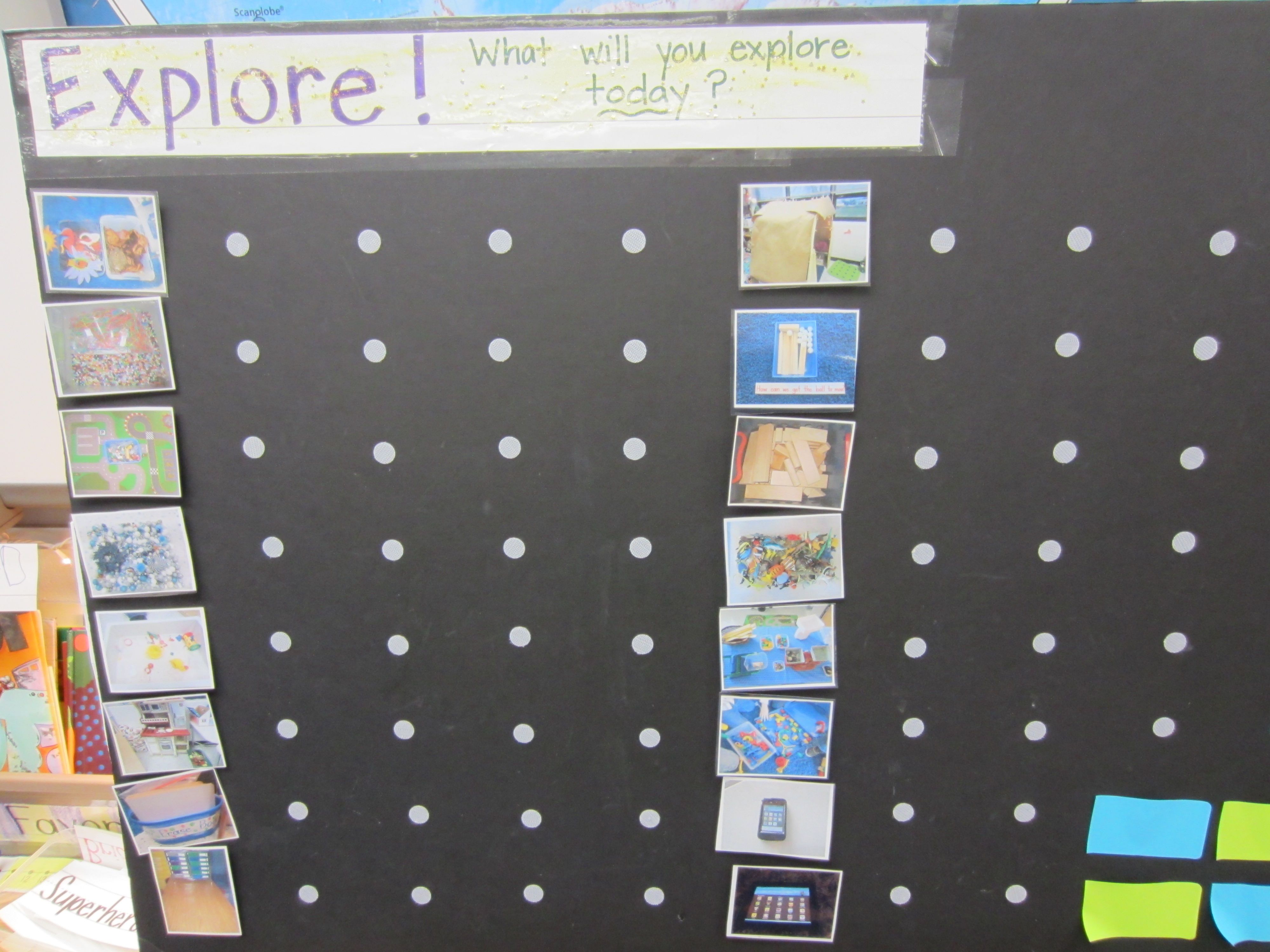
Several years ago I had a huge “a-ha” moment while reading Serious Players in the Primary Classroom: Empowering Children Through Active Learning Experiences. If you’re interested in meaningful, purposeful play and learning then this book is a must-read. My “a-ha” moment resulted in creating one of my favorite times of the day – Explore. I started Explore when I was teaching second grade, and have done it with first grade and now kindergarten. We start and end each day with 15-30 minutes of Explore time. When my students enter our room every morning they unpack and then choose an Explore station. I have a work board where the children move their name to indicate their choices. Choices might be: blocks, art, iPad, dramatic play, sand table, garden rocks, Legos, puppets, puzzles, games, math manipulatives, play-dough, building ramps, etc. Reading in the library and writing are always choices.  I typically have 12-16 choices with space for 4 children at each station.

Because my room is on the small side, I don’t have the supplies out in pre-set stations, for the most part. I teach the children where to get the materials and how to put them away. Children are free to move from station to station as they wish – as long as there is room, they can change stations as much as they’d like. As the year goes on, it is my hope that Explore will turn into student-generated projects and stations that they create as an extension of our curriculum. I leave the board up with different options each week, but the children know they can let me know if they would like to create their own Explore station.

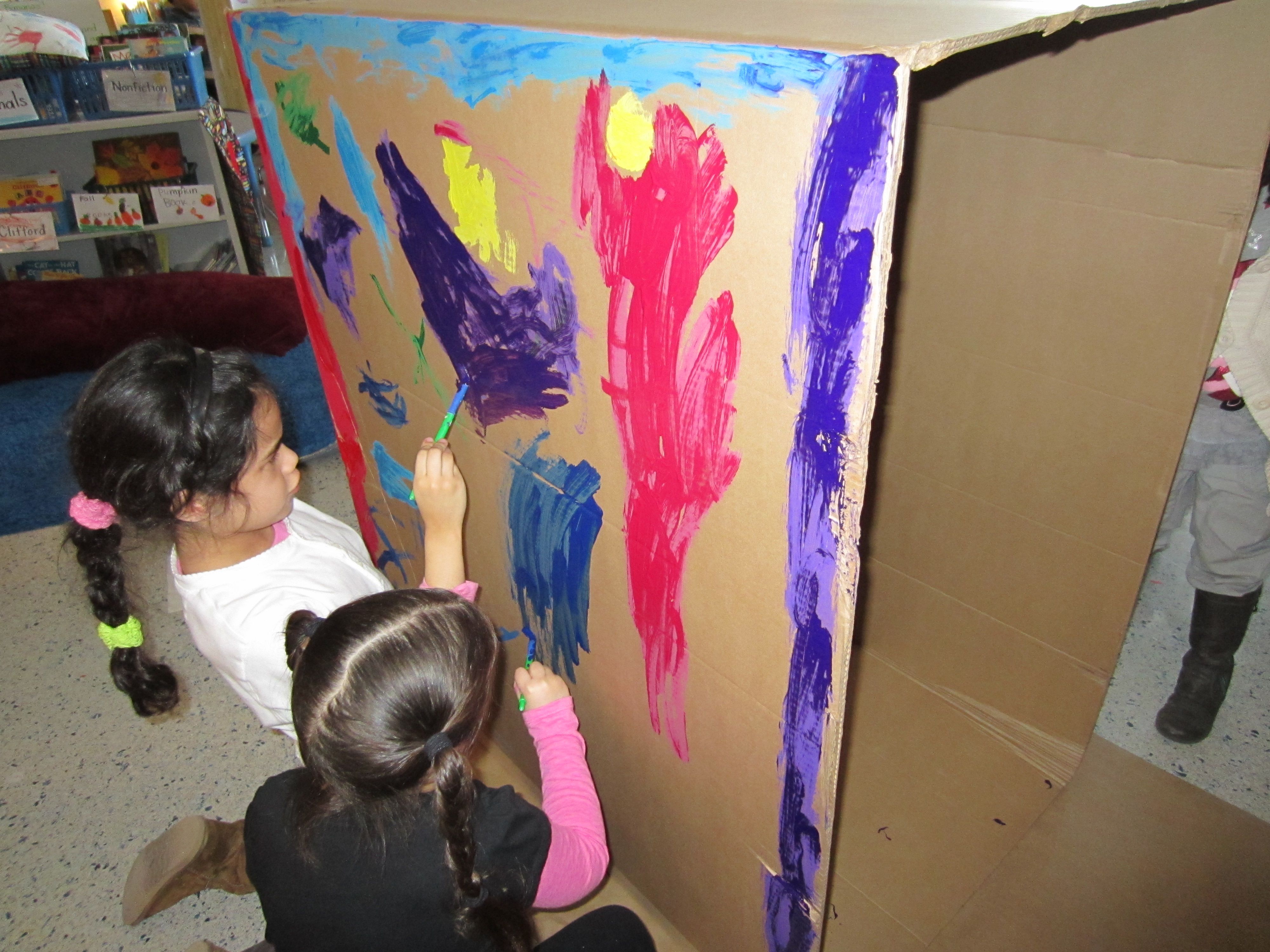
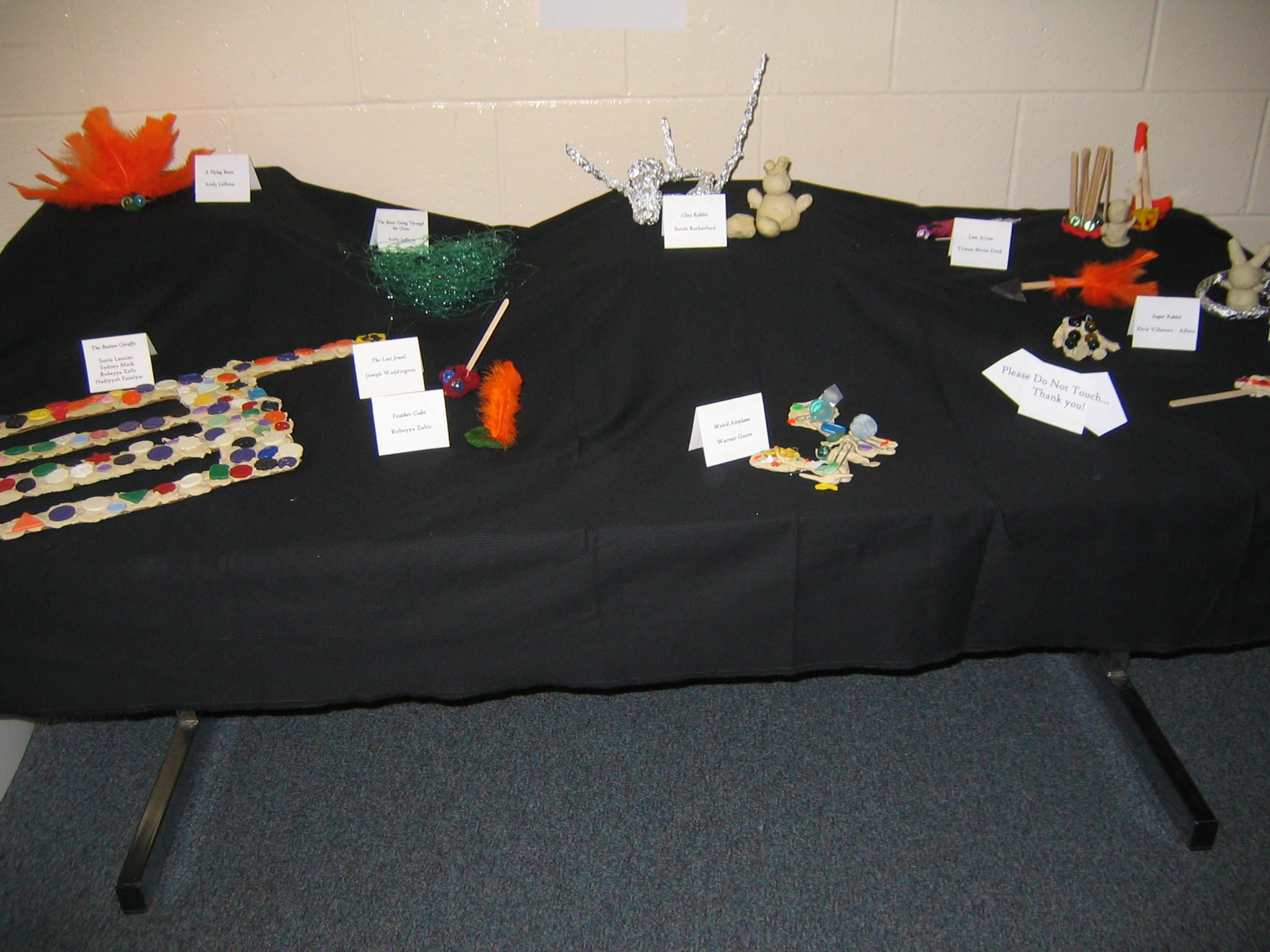
One year after a trip to a folk art exhibit at the Smithsonian American Art Museum, a group of second grade students decided to create their own folk art exhibit during Explore time. Just the other day we found a HUGE box in the hallway waiting to be taken out with the trash. We grabbed that box and it is currently being painted as a Fairy Princess Castle House. What will happen next is yet to be seen. It’s up to the children what they choose to do with the box. It’s up to me to provide the supplies and space for their creativity to shine.

During Explore I want kids to do exactly that – explore different things in our classroom and play! This is an important time for me to interact with the children. Walking around the room I take pictures, engage in play with students, ask questions, wonder out loud and observe. Kid-watching during Explore time gives me tons of anecdotal notes to help guide my teaching. This is a time rich with oral language opportunities and a chance for all students to be successful, empowered problem solvers. They are engaged, invested and learning a tremendous amount.

Explore is a time in our day that I couldn’t live without. It’s messy, fun, productive, exciting and full of learning that may not happen within the normal day and set curriculum. I can easily say that I don’t have the time for this. But I believe that we make time for what is important. And this is important work for children.

Have you tried a version of Explore? Please share your experiences with open ending exploration and play time for children. We would love to hear new and different ideas!

I’ve taken the idea of Explore and carried it over into math and literacy as well. Stay tuned for my next post on how Literacy Explore works in our classroom. And check out Kassia Omohundro Wedekind’s post on Math Explore over at Math Exchanges.

A Leader

“If your actions inspire others to dream more, learn more, do more and become more, you are a leader.”  

 -John Quincy Adams

Once in a while we get the opportunity to work with an amazing administrator. One who really understands and believes in kids, who trusts teachers as professionals, who learns alongside his or her students and staff, and who is a strong leader, empowering his or her teachers and students to be the best they can be. We feel respected as educators, are listened to when concerns arise and appreciated for the job we do every day as teachers.

And then they leave. They retire, or move to a different leadership role or get called to a different school where their leadership is needed. It’s how the education system works. We can only count on things to be somewhat static for a year at a time – and sometimes that doesn’t even happen.

I am the leader in our kindergarten classroom – even though much of my leadership is shaped and created through the interactions with my students, much like the leadership of a school is shaped and created by the teachers in that school. My wish for my students is to take all they learn in kindergarten and carry it into their lives. I won’t be with them, but I can hope that the hours spent reading aloud, playing together, sharing our stories and learning together for 180 days will stay with them and help shape who they are. I guess that’s how we can look at a good principal. The teachers at a school with strong leadership carry that strong leadership with them into their classrooms every day. And when that leader leaves, a piece of them stays with us – shaping who we are as teachers and who we are as a school.

This week has been an emotional one. My principal’s last day was yesterday. He is leaving to open a new school – a wonderful opportunity for him. I’m certain our county has picked the best person possible to start a school on a successful learning journey. While I am very excited for him, I’m sad that I won’t see his smiling face in my classroom every day, reading on the floor with kids, high-fiving kids in the hallway and sharing his passion for learning and teaching with us. He will be missed.

As we walked back to the classroom from our good-bye assembly, a very wise kindergartener held my hand and looked up at me. She said, “Ms. Katie, I know you’re sad Mr. Butler is leaving. But we still have all the teachers and Ms. Austin (our AP) to take care of us. It will be OK.”

She’s right. It will be OK. Our school has a strong foundation of collaboration, respect, caring, high expectations and continued learning. We are a team, committed to our kids. It’s who we are – a way of being. It will be OK.

Buddies

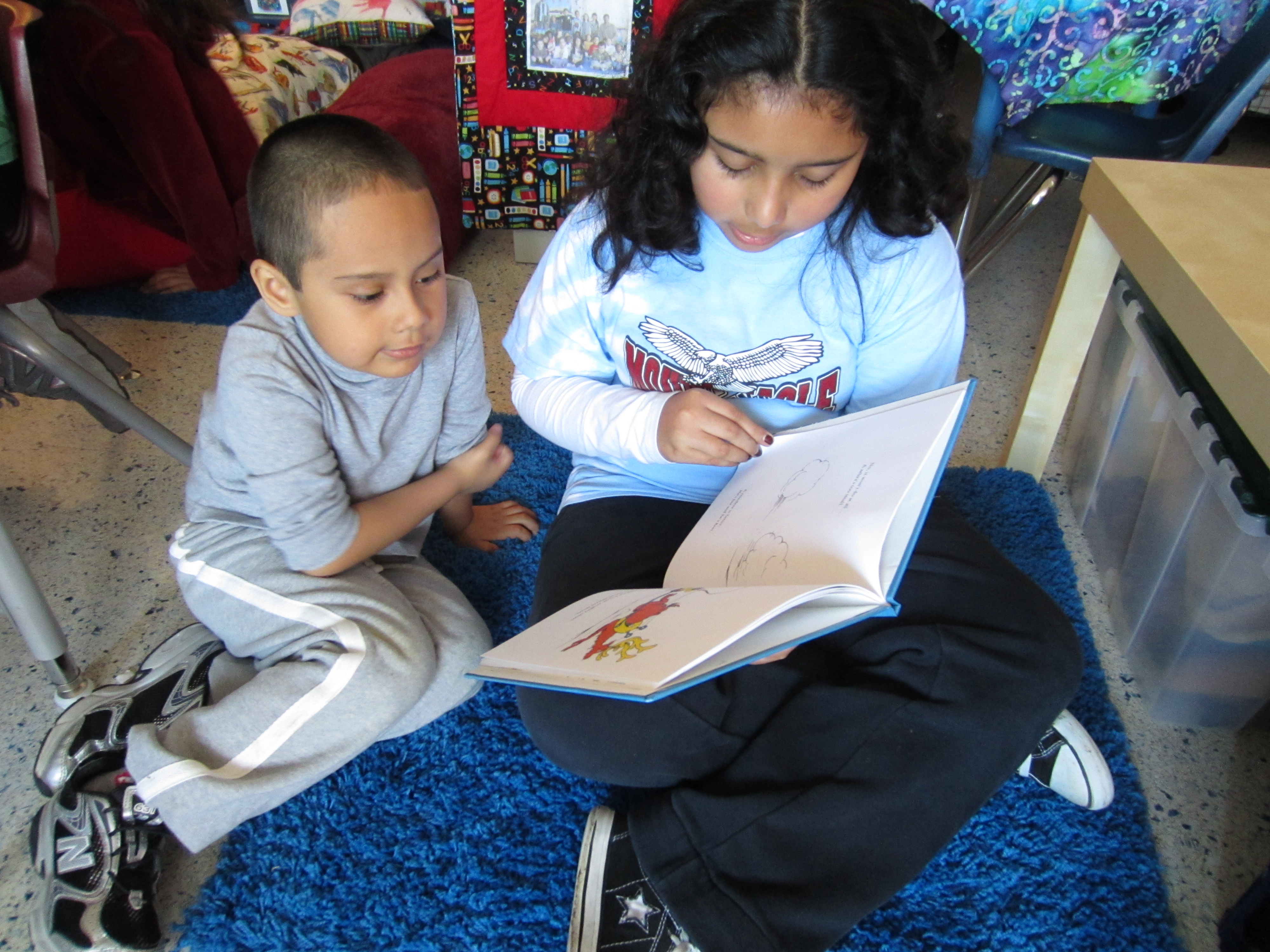
Just as teachers need strong mentors, so do our young readers. We are very lucky to have our 5th grade book buddies! Every other week, the 5th graders check out a library book to share with their kindergarten buddy.  After they finish reading their book, the kinders pick a book from our classroom library to share with their book buddy. Last week we invited our 5th grade book buddies to do Explore with us. They loved playing with blocks, the iPad and pretending in the dramatic play area with their kindergarten buddies. It was so fun watching the kids interact and play together. Do you have a buddy class? We’d love to hear what you do!

Book Boxes: From Shared to Independent Reading

Many teachers use book boxes or book bags in their classrooms as a place for students to keep the books they are reading and to use during independent reading time. We like using the book boxes from Resources for Reading in our primary grades, because they are big enough for the oversized picture books that our readers enjoy. I have a baggie in each book box to keep students “just-right” books. At this point in our kindergarten class, the baggies include: ABC books created with the student, familiar shared reading poems and songs that we have read multiple times in class (copied and stapled into books), books created with the students using their names, predictable books created from class shared writing charts (I can write. I can draw. I can play Nintendo.  etc…) and guided reading books.

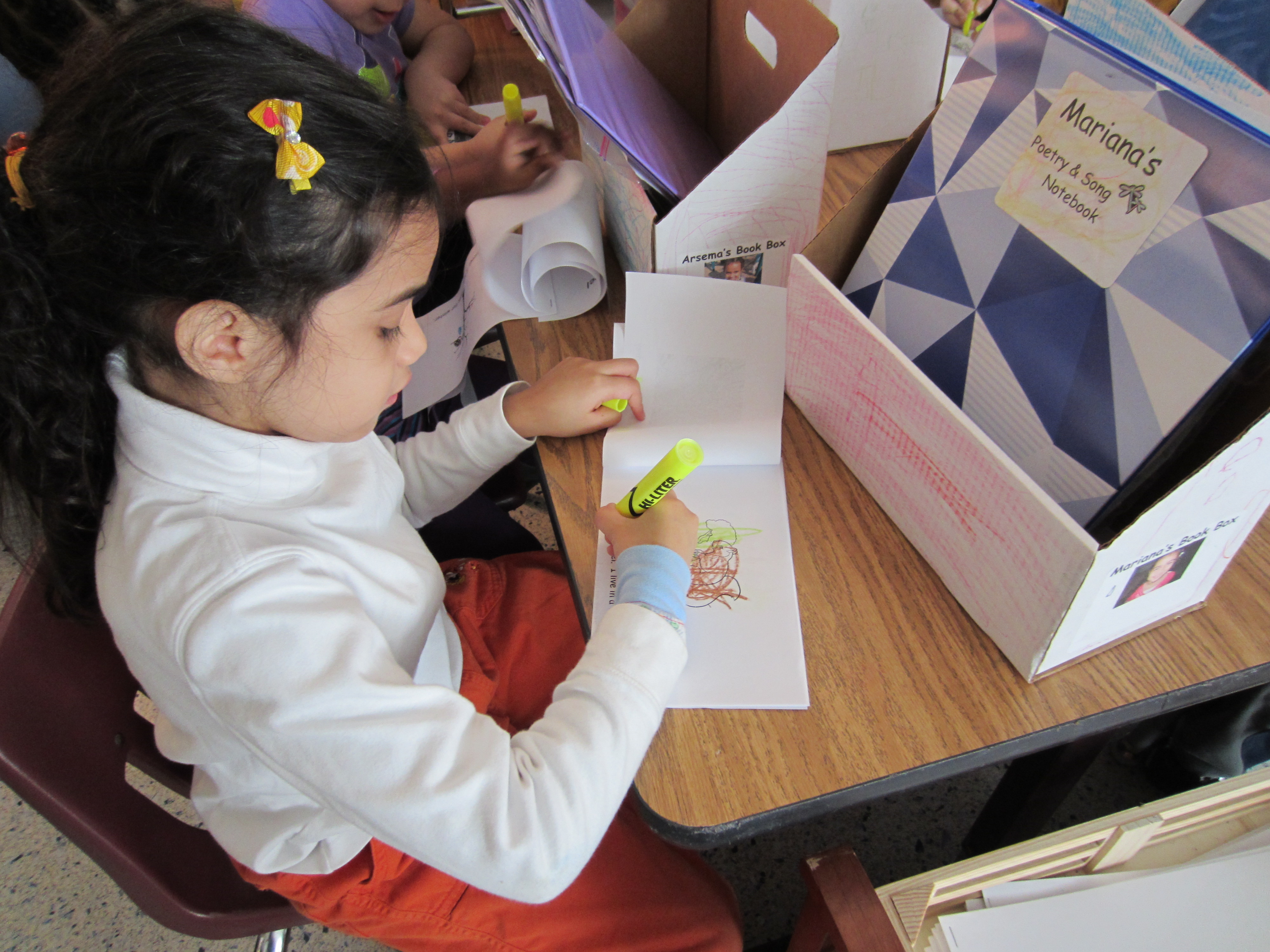
The book boxes also contain a Poetry Notebook where we add poems after we have read them all week during shared reading lessons.  This is a 3-ring binder. I copy our new poem each week and we add it on Friday. Students illustrate the poem and take home the notebook every Friday to share with families. The Poetry Notebook is returned on Monday. (and yes, they are all returned – students LOVE reading from these all week, so they are really good about returning them) Students can also add 3-5 books from our classroom library as “look books”. These are favorites that have been read aloud or books that interest kids from our library. Students know they can read the pictures in these books, even if most of them can’t read the words.

During shared reading I often use highlighter tape to highlight words we know from our word wall. The words that go on our word wall are high-frequency words that children are using a lot in writing and seeing in our shared reading texts. I also use the Fountas and Pinnell lists from their Phonics books to decide what words to focus on each week. We add 3 new words each week. We do a great deal of word work with our shared reading texts on large chart paper. These shared reading texts are put into student book baggies as paper mini books. During our book box independent reading time, students can get a highlighter pen and look for words they know from our word wall in the books from their baggies. (just the paper books!) I stress the importance of reading the book first, as I always want the focus to be on reading continuous text and making meaning from the reading.  This activity allows the students to try this task on their own, in the books they are able to read from their book boxes. I model this very explicitly, as I don’t want it to turn into a “let’s color our book yellow” activity. Highlighters are a very fun tool for our young learners! We started with everyone finding one word from our word wall and highlighting it. The next time we looked for two specific words. After a few times of doing this whole group, I put out the highlighter pens and invited the children to do this for any of the word wall words during book box time.


These paper books stay in the baggies for several weeks, and then I send them home for the kids to share with families. I sent home a sturdy freezer Ziploc bag with a label saying “Books I Can Read”. I tell the students to keep these books at home in a safe place and to continue reading them at home. For students who do not have a lot of books in their house, this provides one way to keep books available at all times.

Using mini books and poems as shared reading texts and then putting these in book boxes has allowed everyone in the class to have a wide variety of texts they can read during independent reading time. There are many great places out there to look for mini books (see below for a list of some links) and of course, you can always create your own. My teammates are experts at creating books for our kinders to read based on the curriculum and what our interests are. When the kids are engaged and interested during independent reading time, you’ll have a hard time getting them to put the book boxes away!

How are you making sure your readers have lots of “just-right” texts at their fingertips?

Links to find mini books for making into charts for shared reading:

http://mrsjonesroom.com/teachers/minibooks.html

http://www.hubbardscupboard.org/printable_booklets.html

Pinterest also has some great links for printable books