One Word

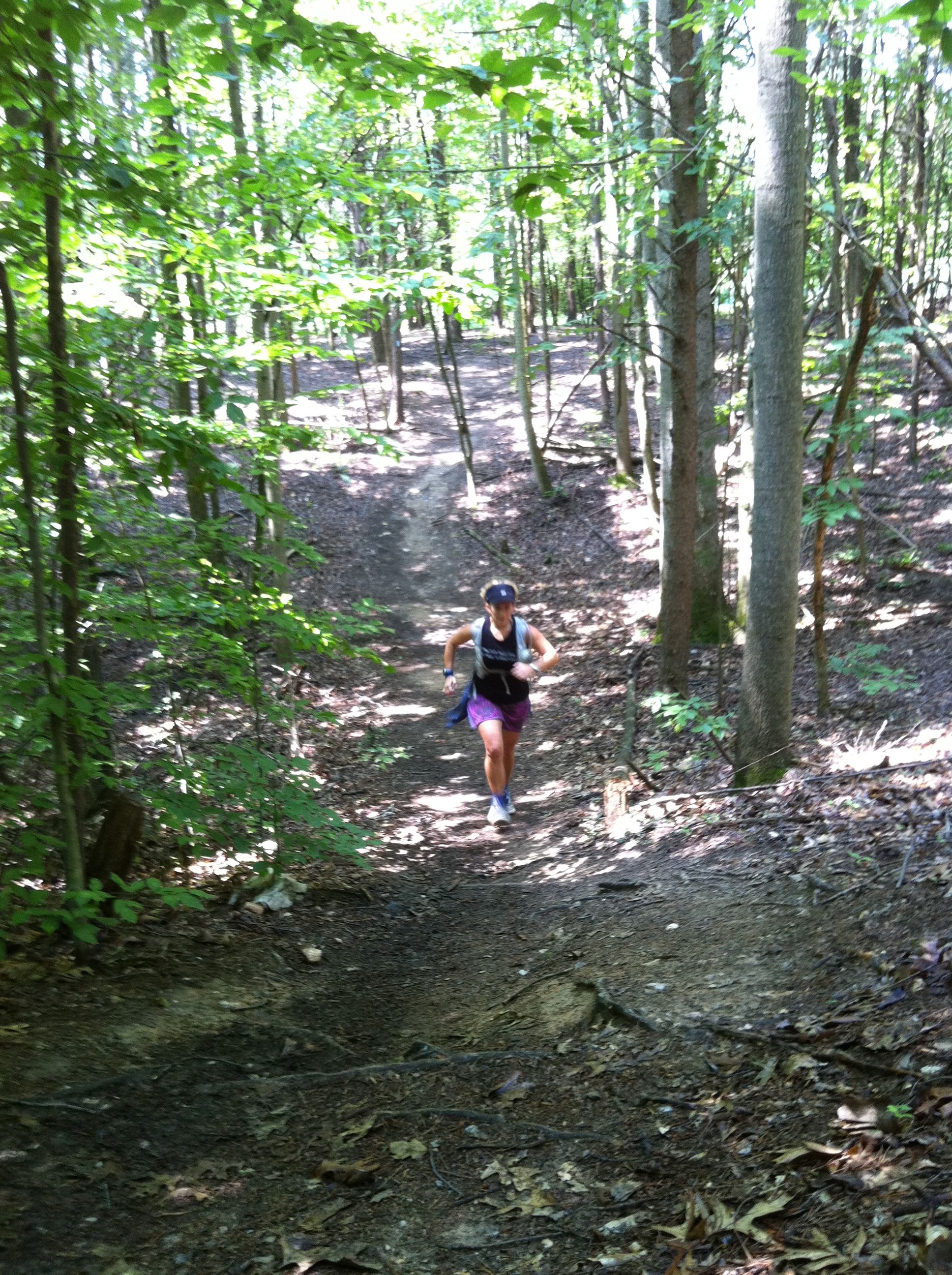
Lately I’ve been running a lot of miles on trails in the mountains. I’m training for a 100 mile trail race in October – what will be a huge challenge for me. I’ve come up with a mantra of sorts, a special word that keeps me going when I feel like cutting the run short or staying in bed instead of doing an early run. My word, grindstone, is not only the name of the race, but it also means “to work hard and perseveringly”. Saying this word motivates me, encourages me and keeps me on track to completing my goal. It reminds me of my commitment and helps me stay focused.

I like to do the same thing as I begin a new school year. Each year I choose a word to be my overarching reminder of what I envision for the upcoming school year. I put it on the cover of my notebooks, on my teaching table, in my planning notebook and around my room where I will see it. In years past I have used the words, balance, joy, energy, peace and breathe as my one word for the year. I’ve spent a lot of time thinking about this upcoming school year and figuring out what my word is. I’ve arrived at the word listen. I want to make sure I am truly listening to my students, my colleagues and my families this year. I love this Cuban proverb,

“Listening looks easy, but it’s not simple. Every head is a world.”

Listening will help me be more present with my students as they play, learn, share, are challenged and enjoy kindergarten. I hope being a better listener will enhance our community and allow my students to ask more questions, to wonder more and to learn to love school. Listening to families will help me understand where each family is coming from and what their concerns, wishes and thoughts are for their child. I hope it will encourage families to become a strong part of our school community, to feel like they are truly partners in their child’s education and to be comfortable in our school. Listening to colleagues will help me become a better teammate and collaborator and allow everyone’s strengths to shine and voices be heard. I hope it will help people feel more valued and respected.
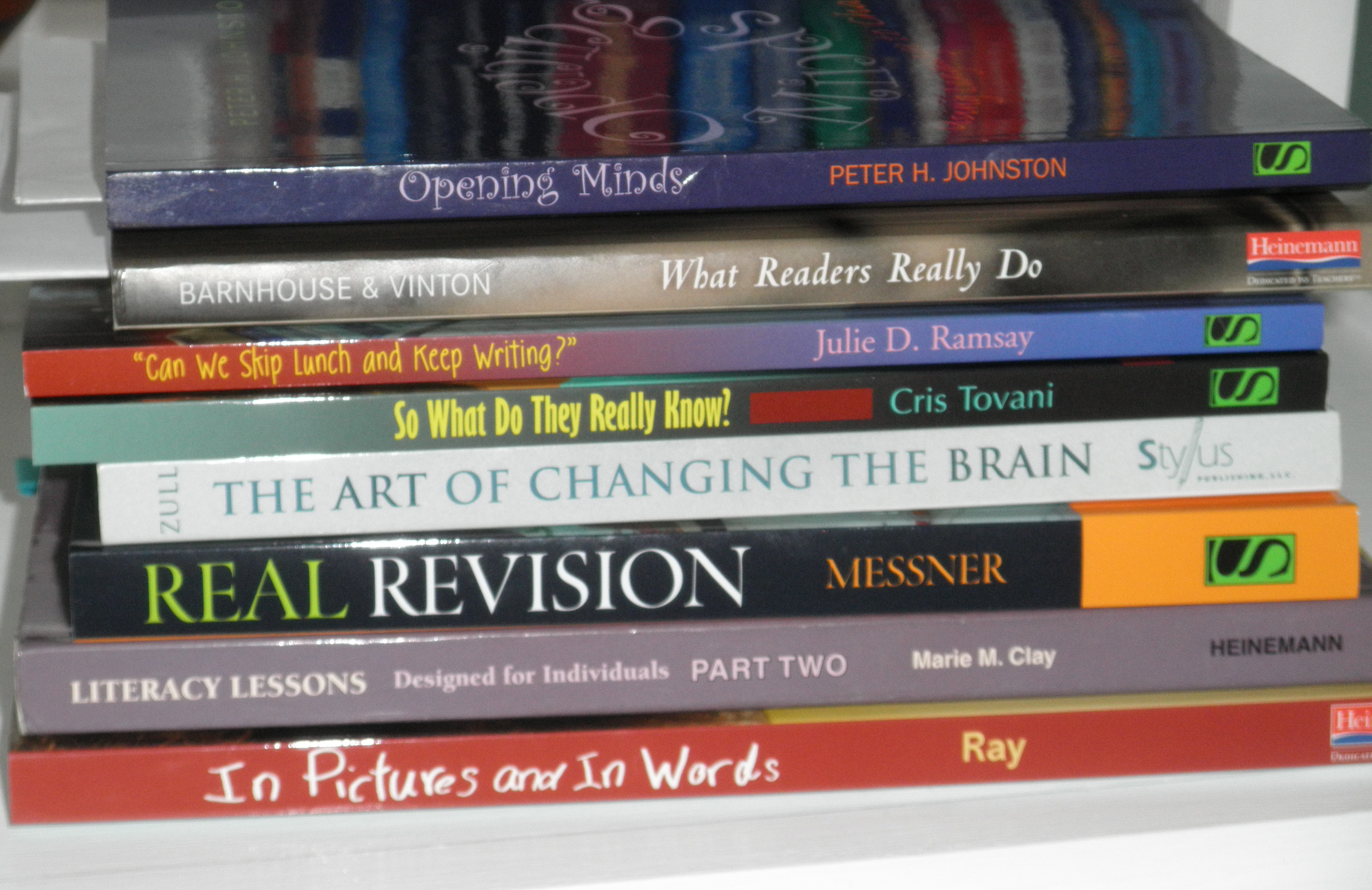
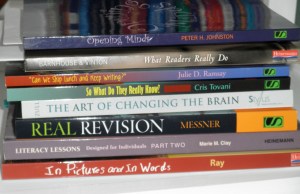
It’s funny how reading Peter Johnston’s Choice Words and Opening Minds this summer have caused me to think deeply about the language and talk I use in the classroom. And how my final take away was that I need to be a better listener.

“Listening is a magnetic and strange thing, a creative force. The friends who listen to us are the ones we move toward. When we are listened to, it creates us, makes us unfold and expand.”

— Karl Menninger
What is your One Word for the upcoming school year?

Book Discussion

“To read without reflecting is like eating without digesting.”  – Edmund Burke (as quoted by Barnhouse/Vinton)

I wrote a blog a while back called Sharing about meeting with a group of teacher friends to discuss Barnhouse and Vinton’s new book, What Readers Really Do.  When I posted about having that discussion, someone commented that she wished it were an on-line discussion.  Since it wasn’t, I thought I’d post a few thoughts from our get-together on August 14th.

First off, let me tell you what a joy it was to be able to meet at my house in summer time.  Though I highly recommend ‘teachers-as-readers’ groups during the school year, it was such a pleasure to sit in comfortable chairs drinking iced tea and lemonade.  No one was worried about picking up her students in 10 minutes from the art room.  No one was rushing off from an after school discussion to gather toddlers from daycare.  We’ll all be back to school soon (in the U. S.) and the memory of a relaxed discussion will soon give way to the juggling of events that takes over our lives every school year.

Here are some ideas that surfaced from the discussion:

  1. One reading teacher loved the idea of ‘back door’ teaching that the authors talk about.  They try not to define or even mention a strategy until after the students experienced what that kind of thinking felt like and sounded like. They believe in sticking closely to the text and not having students go off on tangents with connections they are making or pictures they are getting in their minds. These things will happen naturally and many strategies will overlap and interconnect as students make meaning from texts. Barnhouse and Vinton talk a lot about how to get students to do the ‘mind-work’ of reading. For example, “We never ask students to identify a theme; rather we help students construct an understanding out of which theme can emerge.” p. 166
  2. A Reading Recovery and LLI (Literacy Learning Intervention) teacher commented that even though the examples in the text were all from third through seventh grade classrooms, she found so much to reflect on.  The idea of ‘keeping meaning front and center’ is also paramount when she teachers her at-risk first graders.  She is careful to have conversations with children even about those beginning pattern texts.  (Mom is driving. Mom is cooking. Mom is running.) “Mom sure is a busy person in this book.  What about your mom?” The authors remind us, “What we need to teach is that reading is an act of accumulation, that meaning grows out of words that we begin to fit into patterns that we then connect and actively construct into ideas.  In other words, we read from the inside out.” p. 130.
  3. A Literacy Collaborative (LC) trainer said that she was going to keep this question in her pocket all school year — “Do we as readers do this, and if so, why and how?” p. 6.  She wants to apply that concept not only to teaching students but also when she does staff development for her Literacy Collaborative teachers. She also loved the word “hunches” that Barnhouse and Vinton use in their book.  The authors support their reason for using this term over the word “predictions.”
  4. Staying on the topic of LC, I invited everyone to wonder with me about how certain concepts that were mentioned in the book would develop into reader’s statements.  We looked at pages 73, 83, and 97 to think about creating reader’s statements.  It’s always good to take something we learn from a professional book and see how it fits with how we are already teaching students. (Everyone at the discussion that day was connected with a school that uses LC.)
  5. A fifth-grade classroom teacher wondered if she should use the idea of the KNOW/WONDER chart and looking for patterns in text with her whole class in a read aloud experience OR if she should try it first with a small group of struggling readers.  We all talked about the pros and cons of trying it one way or the other. Most felt that starting the year with a whole class one would be the most beneficial as it would level the playing field, i.e., the teacher would do the reading and therefore all students, even ELL and struggling readers, could participate in the discussion of the things they noticed, wondered about, or connected back to some other place in the text.
  6. Another reading teacher could think of several teachers in her school that would love to read this professional book with her, but worried about several brand new teachers in the upper grades.  Would this text be too overwhelming for them? Do they need to start first with understanding how a reading/writing workshop approach works?  Is there a place for teaching certain strategies, like visualizing, questioning, activating schema, and so on? Could she help new teachers learn about effective strategy teaching while also helping them support students in meaning-making? In other words, she was trying to synthesize what she’s learned from books like Strategies that Work along with this new text.
  7. We all liked being reminded by these authors about building lessons from the students’ thinking rather than our own interpretations of texts. Their KNOW/WONDER charts help you do that because the charts reflect the students’ ideas. “It helps us maintain our stance as teachers who facilitate thinking, not those who, in overt and subtle ways, sanction specific meaning.” p. 89.

As you can see, our conversation touched upon several issues as we agreed, disagreed, added onto each other’s thoughts, questioned each other, and listened carefully to add to our own knowledge base.  Thanks for coming, friends! I look forward to chatting about other texts in the future.

Think – Rethink – Layer

Recently someone asked me, “What kinds of things do you do in summer to get ready for the upcoming school year?”  I referred the person to Katie because I assumed the question meant “ideas for setting up your classroom or other things related to your organization, management, or curriculum for the next class of kids.”  Since I am no longer working full time in a school my first reaction was that I had no thoughts on the matter.  But over the past few weeks, I’ve come to realize that I do plenty in the summer to plan for the next year.  As a literacy consultant who does staff development with groups of teachers and as a volunteer who works in a school to support kids and teachers, I spend lots of time thinking, reading, rethinking, layering my knowledge base, and sometimes shifting my ideas about teaching reading, supporting children who struggle, and guiding teachers toward new understandings.

One way I do this is to read, read, read in the summer.  I read blog posts, professional books, children’s literature, and various articles referred to by colleagues on Twitter.

Here is a bit of the thinking that comes from all that reading:

1. I can’t stop reflecting on the idea of changing the way we talk to children so that they develop a sense of agency as Peter Johnston explains. He got me thinking about this with his first book, Choice Words, but took me even further with Opening Minds. He says we can support children in developing agentive narratives…. “I am a person who…” By the end of Opening Minds he gets us thinking about supporting kids’ moral compasses as they realize “I am a person who…acts when I see injustice or inequality.” But in the early chapters, Johnston shows us how to support all students, even kindergartners, as they create agentive narratives about themselves as readers and writers.  “I am a person who…. solve problems when I read; tries something and, if that doesn’t work, tries something else; goes back and rereads to keep the story in my head;  keeps checking to make sure that what I’m reading makes sense; and so on. He does this by giving us peeks into classrooms where teachers support these agentive narratives so well.  On pages 2-4, teacher Pageen loses her place during a read aloud because of an interruption.  She tells the students that she needs to go back and reread a page to remember what was going on.  Michael chimes in saying that he does that same thing.  Pageen asks him to tell the class more about that. The child describes how he does exactly what the teacher was just talking about. Later in the day the teacher attributes that idea to Michael when she mentions to the class, “Remember what Michael does when… ”  The teacher has “created a story line in which Michael was a particular kind of reader.” Michael nows owns this narrative.  He is a reader who...

2. I’ve also spent hours thinking about Barnhouse and Vinton’s idea of back door teaching — not naming a strategy for the students until they have actually experienced using it as they negotiate a text together (from What Readers Really Do.) Take character traits, for example.  How many times have we asked kids to name a trait of a particular character?  They often say, “she’s nice” or “not nice.”  To help them with better word choice, we’ve often brainstormed a list of traits for the kids to choose from and then ask them to provide evidence of why they think that trait applies. But Barnhouse/Vinton say we should help kids start with what’s in the text.  Help them learn to read carefully and notice what the character does or says.  Then ask, “what kind of person acts like that?” By doing this together, the students have actually done some inferring.  But there is no need to begin the lesson by defining or identifying “inferring” as a useful strategy.  Always begin with meaning making.

3. While reading  an article by Franki Sibberson in Choice Literacy, I got excited to share her ideas for setting up an upper elementary classroom with interactive wall displays.  She suggests a board with pictures of book characters, another with interesting/fun facts, graphs, surveys, or images; another display with word play ideas, and yet another with websites worth visiting.    She says, “Like a museum, I want the room to be filled with invitations and possibilities, with something for everyone.” I can see the kids in that room having so much to talk about and share while browsing the walls in the first few days.

4. From my reading of children’s lit, I am recommending several of my favorite chapter books to read aloud to 4th and 5th grades this year:  One for the Murphys, How to Steal a Dog, and The One and Only Ivan. Today I’m heading to a book store to look for Wonder because I loved what Katherine Sokolowski wrote about it in this week’s Choice Literacy.

What have you been thinking a lot about this summer?  

Are you changing anything next school year because of something you read or heard this summer?
August 10 for 10 – Picture Book Extravaganza!

It’s that time of the year again…the August 10 for 10 Picture Book Event! This is the third year that Cathy Mere and Mandy Robek have hosted this compilation of blog and Twitter posts (#PB10for10) about the 10 picture books you just can’t live without. I am excited to share the 10 books that I will most definitely enjoy again this year in my kindergarten classroom – a few of these suggested in posts from last year’s 10 for 10. Enjoy!

Red Rubber Boot Day

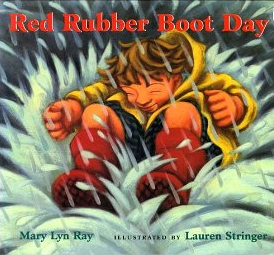
1. Red Rubber Boot Day  by Mary Lyn Ray – A wonderful celebration of a rainy day, stomping through puddles and enjoying the rain. This was  a writing mentor text we returned to often. Her book Mud is equally fabulous and pairs well with this one.

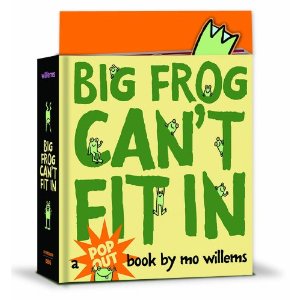
Big Frog Can’t Fit In

2. Big Frog Can’t Fit In by Mo Willems – Another fun book by Mo Willems, this complex pop-up, pop-out, flap book is the story of poor Big Frog who is too big for the book. With a little help from his friends he finds a solution to the problem.

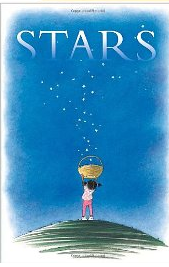
Stars

3. Stars by Mary Lyn Ray and Marla Frazee – The illustrations and story in this book are just lovely. From stars in the sky to stars on a magic wand, short lines of text explore stars and the many different ways stars can be seen and found in the world. Beautiful language and exquisite illustrations made this a book that many children “stood on the shoulders” of as they wrote their own books about stars.

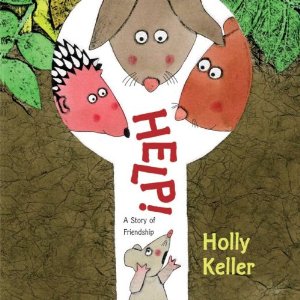
Help!

4. Help! A Story of Friendship by Holly Keller – The animals manage to convince Mouse that Snake wants to eat him instead of be his friend. Mouse listens to the gossip and becomes scared of Snake – until he gets into a situation where only Snake can help. This book launched some great conversations when we had  issues with children talking about others in unkind ways and helped the class come to the conclusion that problems are best solved when you go straight to the source, and making up stories about other people isn’t a good way to make friends. A pretty big concept for kindergarteners, and an important life lesson as well.

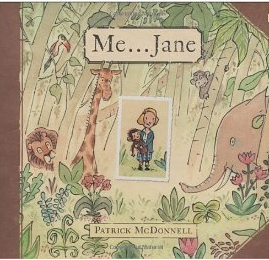
Me…Jane

5. Me…Jane by Patrick McDonnell – This true story of Jane Goodall makes me tear up just thinking about it. A fabulous, simple text, yet deep story of following your dreams. I ended our last day of school with this read aloud (and many tears). I hope my kids remember the message it left us with that you can be anything you want to be – follow your passions and don’t let anything stop you.

If Rocks Could Sing

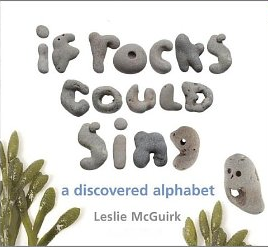
6. If Rocks Could Sing: A Discovered Alphabet by Leslie McGuirk – A wonderful addition to your alphabet books, this author found rocks that were in the shape of all the letters of the alphabet. She compiled the photos in this book along with short text to accompany and explain each of the rock shapes. It is great and the kids just loved seeing the alphabet in rocks. It inspired many of them to look for letters in rocks and outdoors as well.

Chickens to the Rescue

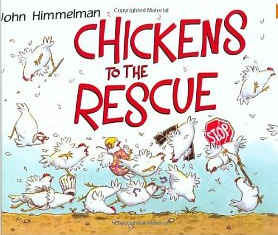
7. Chickens to the Rescue by John Himmelman – This was one of our all time favorites! It’s a laugh-out-loud, “read it again!” book that the kids love. A fun, crazy story about a family living on a farm who has many misadventures but never needs to worry because the chickens come to the rescue! Or maybe they DO need to worry… We had some great conversations about whether the chickens really were helping or just making more of a mess. This is the first in a series and each book ends with clues about the next book. Just go ahead and get the whole series (Pigs to the Rescue and Cows to the Rescue) – your kids will be begging to see what happens next!

Grumpy Bird

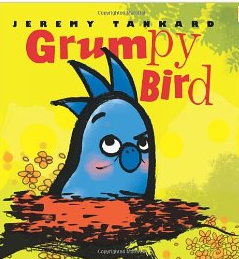
8. Grumpy Bird by Jeremy Tankard – We all have bad days and Grumpy Bird is the best cure for a grumpy class (or teacher). Ha! A good story of friends helping out and turning a bad day around.

The Doghouse

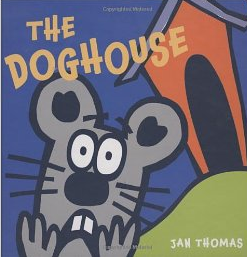
9. The Doghouse by Jan Thomas – I discovered Jan Thomas this year and she immediately became a favorite author in our classroom. We used her books for mentor texts in writing and as “laugh out loud” favorite read alouds to revisit again and again. The Doghouse was a favorite.

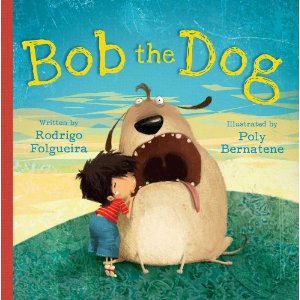
Bob the Dog

10. Bob the Dog by Rodrigo Folgueira – Pat gave this book to our class as a gift and it immediately went to the “Our Favorites” box. The illustrations are hilarious and tell much of the story. The kids fall in love with Bob, the dog who accidentally swallows a canary. Bob is distraught over this situation and tries many ways to get the canary out. It’s only Jeremy the Canary’s mom who can finally get him to come out. We loved learning why Jeremy went down Bob’s throat (because he didn’t want to clean his room), and what his punishment is (cleaning Bob’s room). We liked this book so much we made a VoiceThread of our comments and thoughts about the book.

What are some of your favorite books? Are any of my favorites ones you use in your classroom?