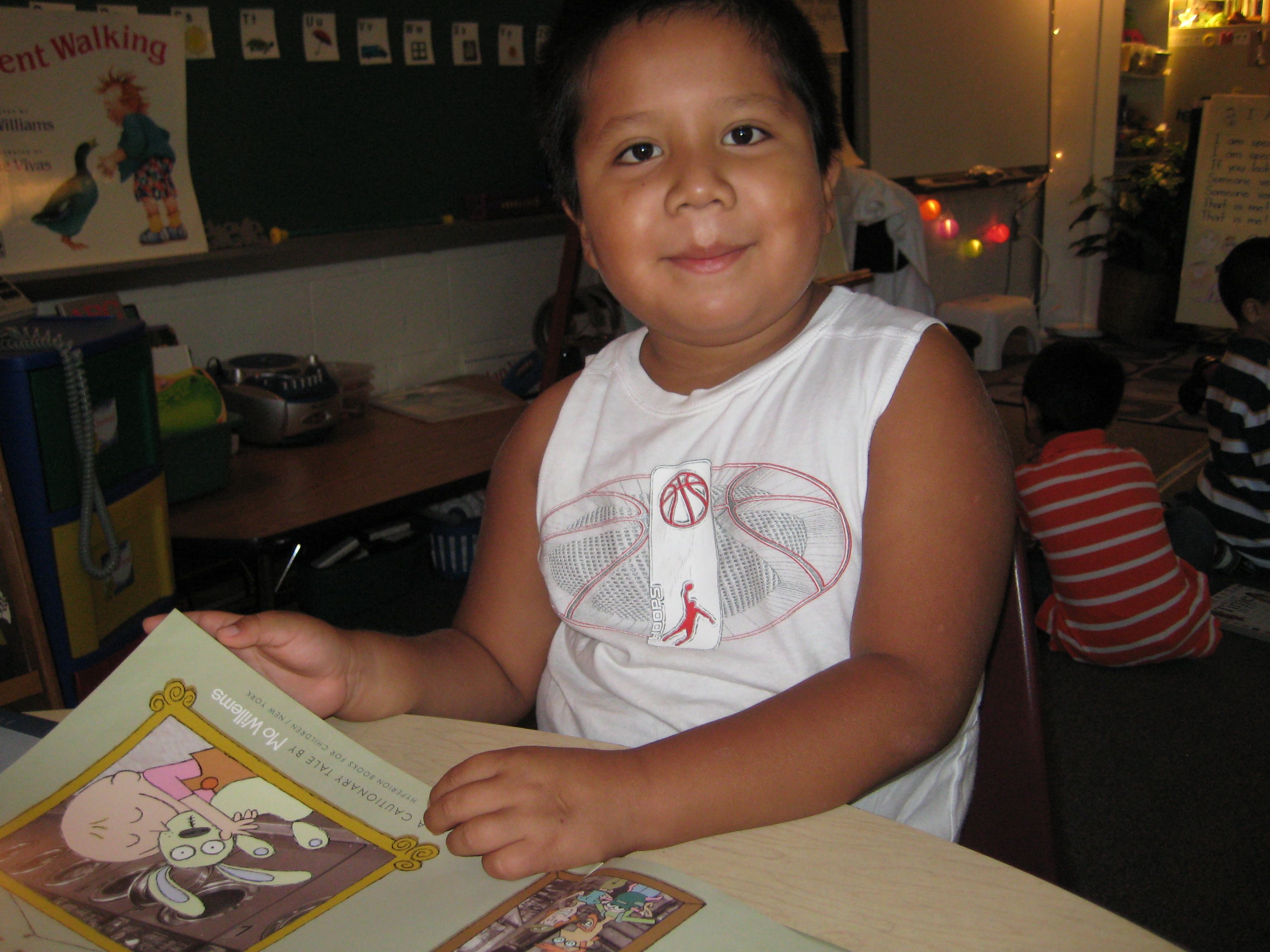
 I was listening to David, a second grader, read the other day. He was reading a book about scientists finding dinosaur bones. I could tell he was very interested in it; he had read it many times before and chose it as one of his favorites. David asked questions as we read. “But wait, are there really no people here when the dinosaurs were here?” “Well, then, who was the first person here?” “How did the scientists know that dinosaur was a meat eater?” By his questions, comments, and self-corrections as he read, I could tell that David was self-monitoring his comprehension.
A little later that day, I read with Frannie. She read a book about a class taking a trip to the veterinarian’s office. She read ‘chart’ for ‘clinic’ in the phrase “we went to the vet clinic.” On another page she read ‘musta’ for ‘machine’ and ‘place’ for ‘picture’ in the sentence “The x-ray machine takes a picture of the dog’s bones.” She continued on although it made no sense whatsoever. Frannie was not self-monitoring and it was a big red flag for me.
Paying attention to a student’s self-monitoring ability, or lack of it, is high on my list of things to watch for as I read with students. Since reading is about making meaning of print, we want all children, even beginning readers, to think about what they are saying as they read. From the very earliest reading experiences that we have with children, we need to send the message that reading is supposed to make sense and that it’s their job to be checking that their reading IS making sense. We usually think of self-monitoring as ‘checking on one’s comprehension,’ however, there are lots of ways that children self-monitor:
- In early pattern books we want them self-monitoring for 1:1 matching. Sometimes they use their finger to help themselves with voice/print matching.
- Beginning readers need to learn to monitor that the words they are reading make sense, sound right, and look right. They learn to cross check one source of information against another.
- We want all students to self-monitor for punctuation cues that can help them make sense of text. Take, for example, sentences like “Look – a dog park!” or “He roamed through the countryside, hungry and tired, until at last he saw a small hut.” We know that the punctuation is important for reading each of these correctly.
- Each student also needs to learn to monitor his own pacing and phrasing. We need to support students as they learn to self-monitor their own fluency. I always tell them, “If you catch yourself sounding a bit choppy, go back and put it all together.”
- In longer texts, readers self-monitor as they are constantly thinking: Am I following the storyline? Keeping track of which character is which? What’s happening in the plot? Where are the characters now (setting)? Who is the narrator? and so on.
- As readers read non-fiction texts we want them automatically thinking: Am I understanding this? Is this new information for me? Does this part seem really important? If there are bolded words I’m unsure of, am I checking to see if the meaning is somewhere embedded in the text?
Are you observing carefully enough to notice which of your students are reading for meaning and which are just reading words? What do you notice when listening to students read to you?
 Catching Readers, Sparking Joy